3 C
New York
Home Blog Page 914

ABB’s solution will help customers minimize environmental impact

0

The ABB Ability™ Condition Monitoring for measurement devices is an innovative, digital solution that will keep continuous gas analyzers under control to ensure clean air operations. The ground-breaking, first-to-market solution will be launching at Hannover Messe in April 2020.

The new digital solution keeps track of the health of ABB measurement devices. Performing real-time data analysis, the ABB Ability™ Condition Monitoring for measurement devices identifies problems fast, drawing attention to significant or undesirable changes in device conditions.

Regular health check reports provide users with recommendations based on health status, allowing on-site personnel to leverage their own expertise and enabling remote assistance from ABB when required.

Christine Declerck, Global Service Manager Measurement & Analytics, said:

“By implementing the predictive maintenance approach of ABB Ability™ Condition Monitoring for measurement devices, equipment can be actively monitored and managed to prevent problems from arising. This enables customers to make informed decisions resulting in optimized operations.

Customers are facing increased emissions regulations. ABB is committed to helping them address environmental impact through solutions like the ABB Ability™ Condition Monitoring for measurement devices, improving energy efficiency and increasing industrial productivity.”

Predictive maintenance reduces customers’ potential safety risks and helps them avoid fines. It also lowers operating and maintenance costs due to less emergency maintenance and fewer unplanned outages. When carried out through Condition Monitoring it ensures the highest level of availability and reliability of equipment, reducing repairs and preventing downtime.

Furthermore, Condition Monitoring for measurement devices allows the customer to move to a planned upgrade cycle for assets, resulting in product lifecycle extension and an increase in return on investment. The digital solution also provides a streamlined process with one supplier responsible for all equipment management and maintenance. It can be used together with ABB Ability™ Remote Assistance for measurement devices and Dynamic QR code assistance for analyzers or as a stand-alone solution.

The new digital solution is part of the ABB Advanced Services offering for Measurement & Analytics which is dedicated to enabling improved utilization and performance of automation equipment, processes, and personnel. Other services include ABB Ability™ Verification for measurement devices, and My Measurement Assistant.

ABB Ability™ Verification for measurement devicesisan extensible application that connects with field devices over their applicable protocols to provide in-situ verification. My Measurement Assistant is a web application that offers commissioning and troubleshooting checklists as well as maintenance video tutorials.
Seaspan to purchase a fleet of four eco-modern containerships

0

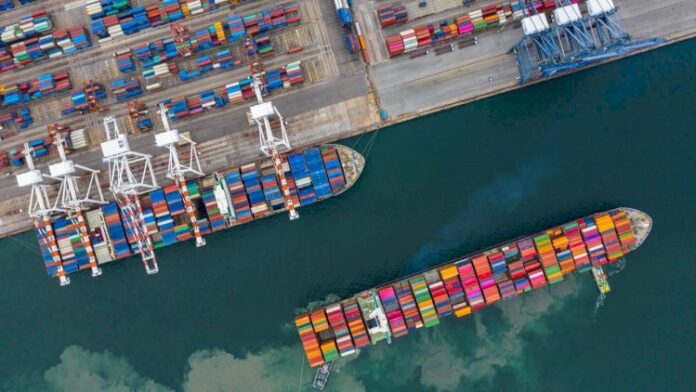
Seaspan Corporation ("Seaspan") has announced that it has agreed to purchase a fleet of four containerships (the "Acquired Vessels") for approximately $367 million in cash.

The purchase of the Acquired Vessels is expected to be financed from additional borrowings as well as cash on hand.  Seaspan expects to take delivery of the Acquired Vessels during March and April 2020, subject to customary closing conditions.  The transaction is expected to be immediately accretive to Seaspan's earnings per diluted share.

The Acquired Vessels are comprised of four 12,000 TEU vessels, with three built in 2018 and one built in 2017, which will operate under long-term time charters with a leading global liner. Pro-forma for this acquisition, Seaspan's global fleet exceeds one million TEU at 123 vessels and 1,023,000 TEU1, bringing the total contracted revenue to $4.6 billion with a weighted average remaining lease period of approximately 4.2 years. Seaspan continues to be the market leading independent owner and operator of containerships, with pro forma market share of approximately 7.9% of the global fleet2.

Top 10 Containership Lessors by Size of Fleet (TEU in thousands)(2) (CNW Group/Seaspan Corporation)

Bing Chen, President and Chief Executive Officer of Seaspan, commented:

"I am proud of the Seaspan Team's consistent focus on creative customer partnerships, while taking our capital allocation competencies to the next level. Not only have we further enhanced our scale, flexibility and efficiency, but more importantly strengthened Seaspan's role as the solutions provider to all parties involved. I am confident that more creative opportunities will arise as we broaden and deepen these partnerships.

The acquisition of four high-quality, young, sizeable, eco-modern vessels marks our eleventh containership acquisition in the past five months, in aggregate adding approximately 117,000 TEU to our global fleet, which now exceeds one million TEU. With our unique business model backed by a strong balance sheet and robust cash flow, we will accelerate sustainable value creation through executing high-quality growth opportunities, as well as continue to be the trusted and preferred partner for our leading global liner customers."

Ryan Courson, Chief Financial Officer, added:

"This strategic acquisition further demonstrates our ability to source and execute large-scale investments at high rates of return on invested capital. With this transaction, we will have deployed over $2.6 billion of capital across our shipping portfolio since 2018, meaningfully improving Seaspan's returns and increasing long-term contracted cash-flows to $4.6 billion.

Through these $2.6 billion of investments, we remain committed to a strong credit profile, balance sheet and access to liquidity while providing a best-in-class cost of capital to our portfolio via innovative financing structures. Our stakeholders can continue to expect a disciplined approach in our capital allocation decisions as we relentlessly seek additional high return, low risk, strategic growth opportunities that meet our qualitative and quantitative investment criteria."
 

Heerema’s Aegir completes installation for Qatargas

0

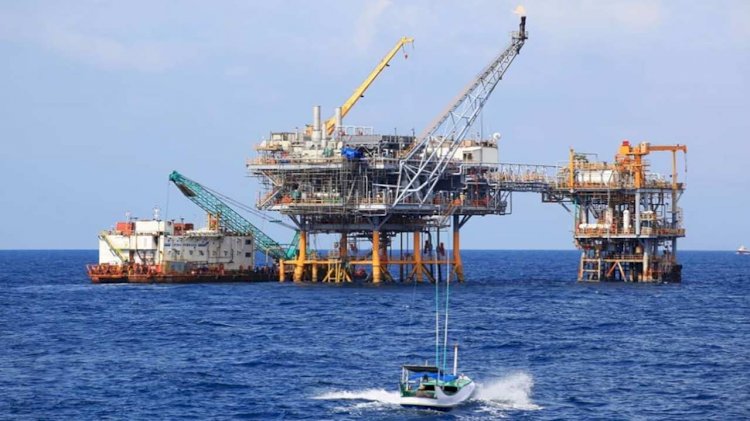
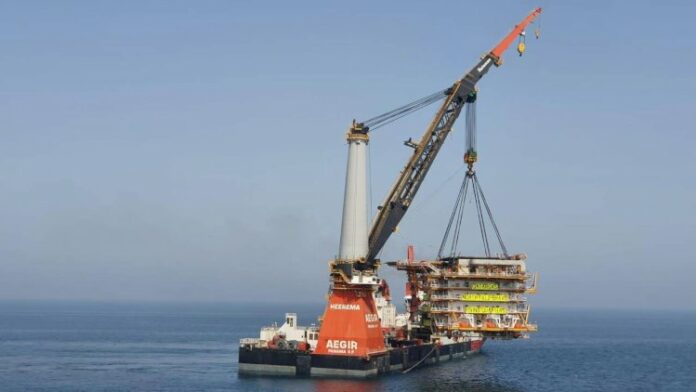
Heerema's Aegir vessel has safely completed the installation of the 4.000 mT jacket and topside for Qatargas' North Field Bravo Living Quarters Expansion project.

The project itself was a historic milestone for Qatar, with the fabrication for the offshore living quarter expansion being done locally – a first for the nation.

The Aegir firstly mobilized to Qatar's Ras Laffan Port where both structures were constructed by Heerema's client Rosetti Marino at the N-Kom yard. On February 14, the Aegir picked up the jacket horizontally from the quay side. The 1.000 mT structure was then sailed to the offshore site, upended, and positioned in a process that was first tested in Heerema's simulation center to ensure the safest and most efficient methods were used.

In the subsequent days the main piles, consisting of a leadsection and two ad-ons, were installed and driven to target penetration. Before the Aegir returned to the N-Kom yard to pick up the Qatar made topside on February 22, lifting the 3.000 mT structure from the quay side and setting it onto the Aegir deck. The next morning the Aegir set sail to the construction site, where the deck was successfully installed around midday. With both mobilizations being completed within 18 hours this was a significant and notable achievement for Heerema.

The project was finalized on February 25, with both the jacket and topside safely installed by Heerema for Qatargas.

MOL to start joint development for the digitalization of FSRU

0

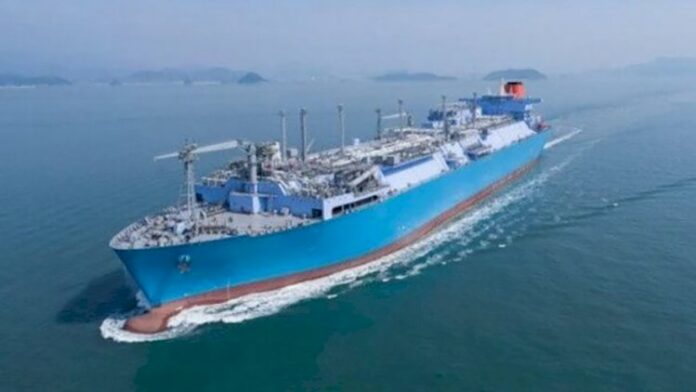
Mitsui O.S.K. Lines has announced that it has reached an agreement for joint development of technologies and solutions for the digitalization of Floating Storage and Regasification Unit (FSRU), in partnership with Daewoo Shipbuilding & Marine Engineering.

Through this collaboration, detailed operational data will be collected from FSRU and stored in a cloud-based data platform to develop applications for advanced remote operation monitoring and optimizing etc. The project will enhance safe and efficient operation, which will further deepen cooperation between FSRU and shore-based facilities.

MOL works on this collaboration in cooperation with MOL's "FOCUS" Project intended to enhance the collection and application of FSRU operation data.

Earlier MOL and DSME join forces to develop an Environmental Friendly FSRU Technology

First ever battery-electric top handlers operating at two Long Beach terminals

0

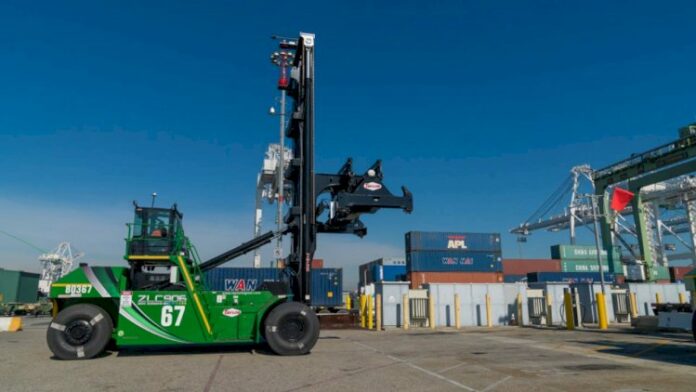
Two shipping terminals at the Port of Long Beach are putting new, zero-emissions equipment known as top handlers through the rigors of operating in a real world environment to test their ability to meet the challenging duty cycle at a busy seaport.

The terminals, Long Beach Container Terminal and SSA Marine at Pier J, will demonstrate three never-before-tested Taylor battery-electric top handlers (two at SSA and one at Long Beach Container Terminal) for approximately six months. International Longshore and Warehouse Union members are operating the vehicles.

The equipment is part of the Port of Long Beach’s Commercialization of POLB Off-Road Technology Demonstration Project (C-PORT), which is designed to leverage Long Beach’s market position as the nation’s second-busiest seaport to test the viability of the zero-emissions vehicles that will be used on the docks to meet the Port’s 2030 goal of a zero-emissions cargo handling fleet.

The demonstration project is part of California Climate Investments, a statewide initiative that puts billions of cap-and-trade dollars to work reducing greenhouse gas emissions, strengthening the economy and improving public health and the environment — particularly in disadvantaged communities.

Paul Gagnon, vice president of SSA Terminals, said:

“These are the first zero-emissions top handlers working at a seaport. SSA is pleased to participate in this demonstration of technology that shows the potential to both clean the air and speed cargo flow.”

LBCT President Anthony Otto said:

“At Long Beach Container Terminal, electric vehicles move containers from the ship to the sorting yard, where electric stacking cranes ready them for pick up. Seeing what it takes to add an electric top-handler to make our groundbreaking operations even greener is something we're very interested in, and we're happy to be part of this collaborative project.”

Long Beach Harbor Commission President Bonnie Lowenthal said:

“This is an important step for the Port's transformation to zero-emissions. The partnership we see at the Port of Long Beach between the goods-movement industry, equipment manufacturers and agencies like CARB is the way we will reach our zero-emissions goals.”

Port of Long Beach Executive Director Mario Cordero said:

“We expect these battery-electric top handlers to be able to make it through the daily two-shift cycle before needing a recharge. We're eager to see the advancements in technology that come from this demonstration, and what it means for the commercialization of this equipment.”
 

Halliburton awarded digital transformation contract in Indonesia

0

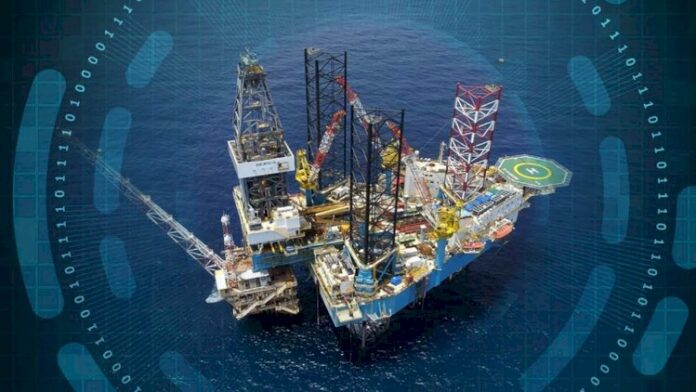
Halliburton Company has announced that Pertamina, the largest Indonesian oil and gas company, deployed all of their petro-technical applications on the iEnergy® cloud, a hybrid cloud offering from Landmark, a Halliburton business line, which manages operators’ E&P applications.

The iEnergy® cloud helps reduce corporate infrastructure costs and improve the effectiveness and efficiency of integrating, managing and supporting well data across the company’s units and subsidiaries.

The multiyear contract will deploy capabilities including artificial intelligence, machine learning and data analytics to solve upstream challenges and support Pertamina’s digital transformation initiatives. DecisionSpace® 365 applications will enable the company to streamline their workflows across exploration and production, improve drilling performance, enhance decision-making and increase production.

Nagaraj Srinivasan, senior vice president of Landmark and Halliburton Digital Solutions, said:

“We are pleased to collaborate with Pertamina on their digital transformation to enable greater efficiency and maximize the value of their assets. By integrating all third party, Landmark petro-technical applications and data running on the iEnergy® cloud, Pertamina has laid the foundation to generate new insights to further accelerate their digital journey.” 

Photo: Pertamina

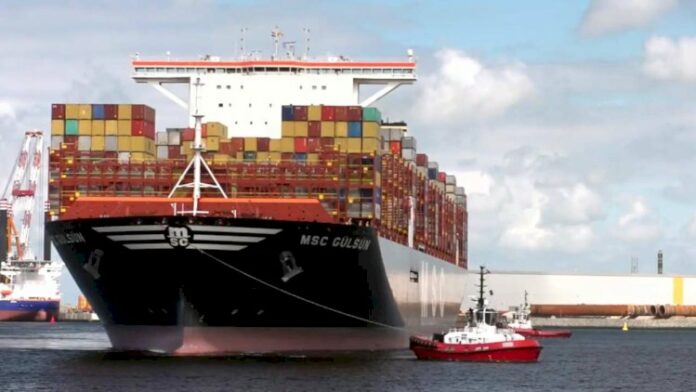
MSC Gülsün class vessels use the world’s first on-deck firefighting monitors

0

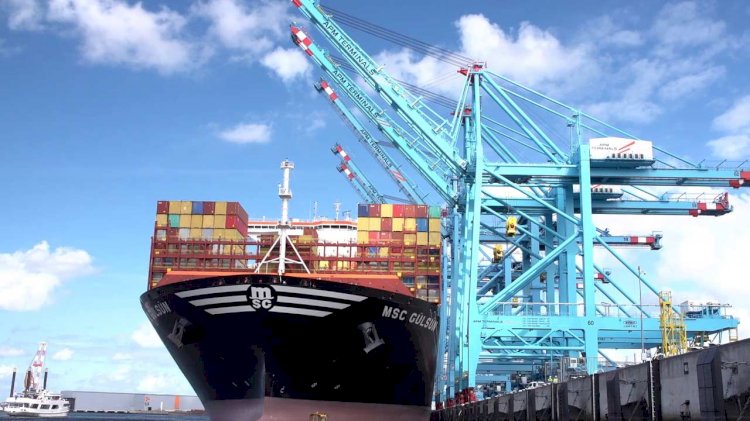
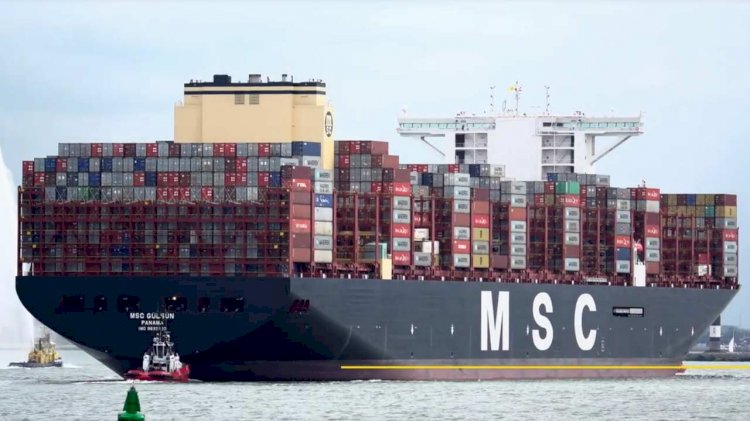
At DNV GL's recent annual London press briefing, DNV GL – Maritime CEO Knut Ørbeck-Nilssen announced the classification society had awarded a ground-breaking new class notation to mitigate fire risks on container ships to MSC Mediterranean Shipping Company. The notation has been implemented on the largest container ships in the world, the 23,000+ TEU MSC Gülsün class.

The MSC Gülsün class vessels use the world's first on-deck firefighting monitors – fixed water cannons to slow and stop the spread of fire by cooling, which have a reach of more than 100 metres.

The new FCS notation is targeted exclusively towards container ships. It is designed around a function-based approach, for an enhanced safety level beyond present SOLAS requirements, an increased hazard awareness, and an enhanced ability to detect and fight container fires. Applicable to both newbuildings and ships in operation, the notation is set up in a modular way. Owners can decide on the set of qualifiers best suited to their safety objectives and then choose the most efficient measures and technologies to reach these objectives.

DNV GL can support hazard assessment and will ensure that targeted functions are fulfilled. This approach is designed to foster the application of new and advanced technologies and ensuring that safety objectives are met in the most efficient way.

Knut Ørbeck-Nilssen, CEO, DNV GL – Maritime, said:

"In shipping, we must always have safety at the forefront of our thinking. As we move forward in design and in operation, becoming more sustainable and more efficient, safety must still underpin every decision. Therefore, we are so proud to work with innovators like MSC, who when they push the envelope with designs like the MSC Gülsün class, are also looking to initiate a step change in safety. This new notation enables owners and operators to work with yards and designers to take advantage of new technology, in a way that suits their requirements and mitigates fire risk."

Giuseppe Gargiulo, Head of Newbuildings, MSC Mediterranean Shipping Company, explained:

"Container ships have grown much larger in recent years and the volume of cargo carried on deck has expanded exponentially. Container fires, especially with the volume of cargo now being carried, can present a substantial risk to the safety of the crew, cargo and the vessel.

This is why MSC decided to install new dual-tower fire-fighting system with high-capacity pumps to further enhance the safety of seafarers onboard and protect cargo carried across the whole deck of the ship. Ensuring crew and cargo safety is MSC's No. 1 priority. Being awarded this new class notation from DNV GL complements the significant amount of work done by our ship management companies in recent years to ensure safe working conditions onboard." 

The FCS notations have been developed and piloted in cooperation with MSC, and their 23,000+ TEU MSC Gülsün class are the first vessels to be awarded the notations. After a HAZID workshop with DNV GL, MSC worked to develop a set of operational and technology measures to mitigate the fire risks onboard the vessels. These included the world's first use of on-deck firefighting monitors – fixed water cannons to slow and stop the spread of fire by cooling, which have a reach of more than 100 metres. In addition, a unique thermal camera system was installed on MSC Febe, one of the Gülsün class ships, which tracks irregularities and alerts the crew to potential fires. DNV GL witnessed testing of the systems in operation, to verify that they meet the requirements of the notations.
 

Høglund to supply fuel gas supply systems to RMC

0

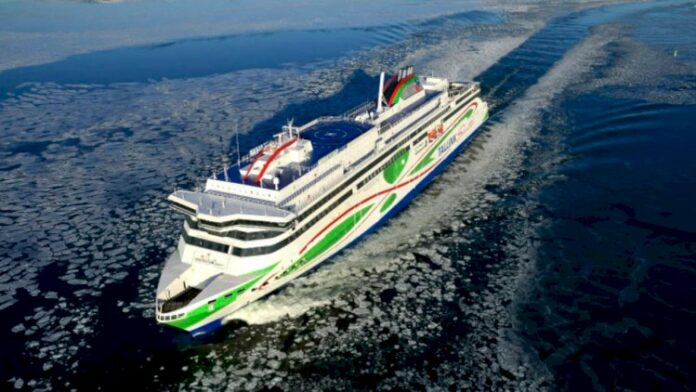
Høglund Marine Solutions will supply Fuel Gas Supply Systems (FGSS) to Rauma Marine Constructions (RMC) for Tallink Grupp’s newest LNG powered ferry, MySTAR.

Høglund will work with Finnish tank manufacturer West Welding to design and supply the systems that will handle LNG onboard MySTAR, constructed by Rauma Marine Constructions. MySTAR will sail on Tallink's Tallinn – Helsinki route.

The design and engineering of FGSS solutions is a key challenge for the future development of LNG powered shipping, particularly for passenger vessels. The process must take into account complex safety concerns stemming from impacts on the engine cooling system, hazardous area management, and ventilation systems.

Høglund will bring their years of experience in gas control and automation solutions to this project. Høglund’s FGSS solutions are integrated with the ship’s IAS (Integrated Automation System) which enables better access to data in the system for playback, analysis and optimisation. It also allows better integration between onboard systems such as alarms, emergency shutdown and power management.

Commenting on this announcement, Børge Nogva, CEO of Høglund Marine Solutions:

“I’m very happy Høglund has been chosen to be the supplier of the FGSS for Tallink Grupp’s newest LNG fueled vessel MySTAR. It’s great to see the cruise and ferry operators continue to realise the potential of LNG as a viable fuel option, and we are thrilled to be working with our partners across Scandinavia and the Baltics on this new project.

It is important to remember that in order to have an effective and efficient LNG vessel, you need a smarter FGSS. At Høglund we combine gas solutions with system automation to put the control of the FGSS at the fingers of the crew, providing improved reliability, efficiency and safety for the FGSS and the vessel. The crew and operators at Tallink will also have peace of mind that the FGSS is backed up with 24/7 technical support."

Jyrki Heinimaa, President and CEO at Rauma Marine Construction said:

“RMC is happy to include the FGSS by Høglund to its newbuilding NB6003 with the trust that Høglund will provide a sophisticated and reliable solution in time to our dear customer for its newest shuttle ferry MySTAR”.

Captain Tarvi-Carlos Tuulik, Head of Ship Management at Tallink Grupp commented on the news:

“Tallink Grupp is continuously looking for ways to bring innovative and green solutions both onto the Baltic Sea and to shipping in general. So, it is great to work with companies like Høglund who also have innovation and environmentally friendly solutions at the heart of their business and together we can work towards achieving sustainable shipping goals.”

Following on from Tallink’s latest vessel, Megastar, the new shuttle ferry MyStar will be dual fuel operated with an overall length of 212m and a passenger capacity of 2,800. Delivery is scheduled for January 2022 and production will start during spring 2020.

Kongsberg Maritime to equip four new cruise ships

0

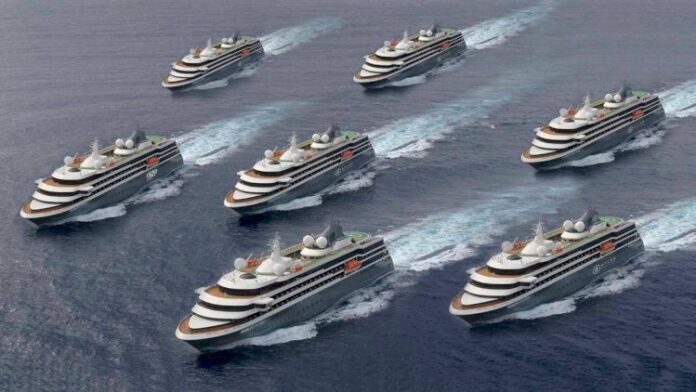
Kongsberg Maritime has won contracts worth approximately 300 MNOK to equip three adventure cruise ships, with a fourth to follow. Built by WestSea Viana Shipyard in Portugal and destined for delivery to Portuguese cruise company Mystic Cruises, the vessels are to be used for expeditions in the polar regions.

The 126m, 9,300-tonne luxury craft will join an existing trio of sister ships to bring the fleet to seven identical vessels, the first of which – World Explorer – entered service in 2019. Designed by Italian naval architect Giuseppe Tringali, the ships have an operating cruise speed of 16 knots and have hulls and propellers strengthened for use in ice, making them suitable to visit destinations which are not accessible to larger cruise liners. Each has luxury suite and cabin accommodation for an exclusive 200 passengers.

Vitor Figueiredo, Board Member, West Sea Shipyard, commented:

“These new orders reflect the excellent work achieved with the three previous ships. Having been entrusted by Mystic Cruises with the expansion of its fleet of Explorer vessels, we look forward to successfully overcoming this new challenge in partnership with Kongsberg Maritime, maintaining of course the highest quality standards.”

Kongsberg Maritime will deliver main engines, auxiliary engines, motion control, propulsion, power electric systems, automation and control systems. The hybrid propulsion system allows the engines to operate at variable speeds, maximising their efficiency for the required power and reducing fuel consumption and CO2 emissions, while KONGSBERG’s dynamic positioning technology allows the vessel to hold position without using anchors, protecting fragile ecosystems on the sea bed.

Egil Haugsdal, President, Kongsberg Maritime, said:

“These repeat contracts are a strong endorsement of Kongsberg Maritime’s commitment to the active cruise market, which is growing rapidly, as shown by this fleet expansion to seven ships. It is a great pleasure to work with WestSea Viana and Mystic Cruises, both leaders in their industries, to deliver these truly innovative vessels. Our advanced propulsion and control systems continue to make us a clear choice for customers looking for efficient, reliable technologies that minimise the impact of maritime activities on our ocean environment, and we are confident that our equipment will continue to deliver efficient and sustainable operation for Mystic Cruises as they explore some of our planet’s most remote locations.”

The equipment is scheduled for delivery on a per-vessel basis throughout 2020 and 2021.

Foreship scrubber enquiries surge as owners clear the air

0

Independent naval architect and marine engineering specialist Foreship reports a growing number of owners are reviewing their decisions on the best way to meet IMO 2020 emissions restrictions.

The consultancy says it has seen an unprecedented surge of enquiries on how exhaust gas cleaning systems can be fitted at short notice, following emerging market misgivings over the quality and availability of 0.5 per cent sulphur content fuel oils.

After entry into force of the new rules limiting fuel sulphur content on 1 January, many of the shipowners that implemented scrubbers have reported a relatively smooth transition through IMO 2020 rule changes. Conversely, the higher costs of very low sulphur fuel oils (VLSFOs) have been aggravated by concerns that include an unexpected black carbon emission issue.

Foreship EGCS Project Lead Olli Somerkallio says:

“The realities of IMO 2020 have caught many off guard, with some in the market quickly shifting from contemplating whether a switch to scrubbers was advantageous to considering how soon they can practically do so. Uncertainty surrounding low-sulphur fuel oils is causing owners to reconsider whether they made the right choice on scrubbers, with fresh enquiries on equipment evaluation and installation arriving almost daily.”

Latest figures from consultancy CRU indicate that 3,756 vessels have exhaust gas scrubbers either installed or on order. By the end of 2020, up to 15 per cent of ocean-going freight capacity will employ the machinery, with the number now expected to rise to 20 per cent by 2025.

Having built an expert team of 15 engineers specialised in scrubber consultancy over nine years and a 58-ship reference list spanning six vessel types, Somerkallio says Foreship has played its part in bringing scrubber payback times down to 12–18 months. He adds that, in the run up to the 1 January 20-20 deadline, equipment suppliers worked hard to reduce installation times, with a number of ro-ro freight vessel, tanker and bulker projects involving scrubbers installed as pre-outfitted modules to minimize works onboard. Nevertheless, shipowners still need assurance that the systems have been fully evaluated and optimised, whatever the time pressures.

He says:

“We understand that this is a difficult moment for ship operators who have followed the rules only to find themselves at a competitive disadvantage. While VLSFOs may well be costing more day-to-day, the scrubber is still a multi-million-dollar item whose evaluation, selection and installation will benefit from advice that is independent of the supplier and the shipyard.”