9.2 C
New York
Home Blog Page 913

Nexans to supply the HV submarine power cables for Marjan field

0

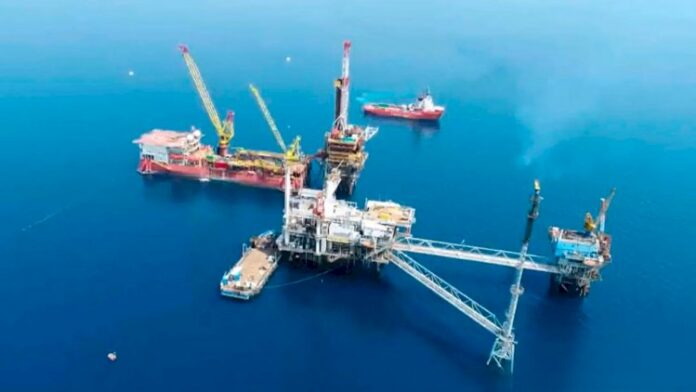
Nexans was awarded a significant Purchase Order to supply 180 km of 230 kV cables for the offshore Marjan increment development mega-project on the eastern coast of the Arabian Gulf.

Discovered in 1967, the Marjan field is one of the oldest and biggest offshore oil and gas fields in the Arabian Gulf. It is currently undergoing expansion under the Marjan Increment Programme announced in 2017.

Nexans will supply two lengths of 90 km of 230kV HVAC three-core submarine power cables with an internal fiber optical element. Nexans is one of the very few suppliers in the world capable to manufacture, test, store, transport and install such very long length cables in one complete segment without the need for offshore joints.

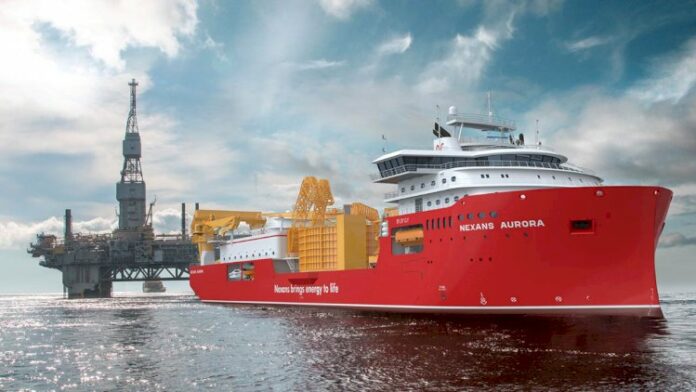
Nexans was selected owing to its, extensive subsea experience and commercial competitiveness. The Group’s brand-new cable-laying vessel to come, Nexans Aurora will be deployed in the Marjan Program.

Ole Kristian Mysen, Export Sales Manager Submarine & Land Systems at Nexans, said:

“Nexans is delighted with the trust shown in us, and we’re looking forward to adding the Marjan increment development project to our strong track record of subsea projects, building on over 60 years of experience in submarine cable systems around the world.”

The composite submarine cables for the link will be produced by Nexans Norway plant in Halden, while the fiber optical cable will be produced at Nexans Norway specialized factory in Rognan.

Cable installation is expected to commence in February 2022.

Intellian launches its next generation v240MT Gen-II antenna

0

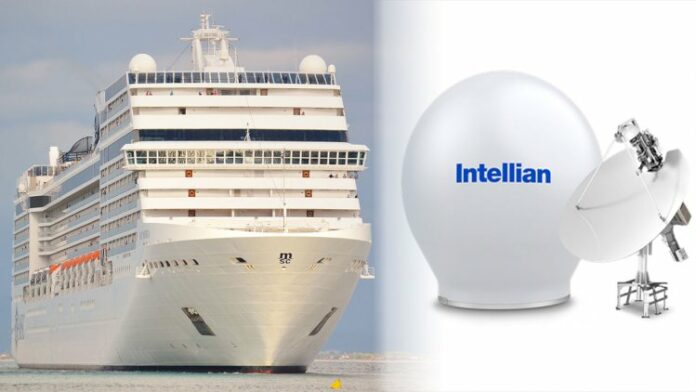
Intellian, the global leader of mobile satellite communication antenna systems, has announced the launch of its next generation tri-band product, the v240MT Gen-II antenna.

Developed from the award-winning tri-band v240MT – the first multi-orbit, multi-frequency and auto-switching antenna in the market, with  over 150 systems [u1] already deployed – the new product adds a host of additional features and value, including the ability to operate multiple antennas seamlessly via its dual datacenter capability and enhanced Ku-band performance.

The ability to automatically switch between C-, Ku-, and Ka-bands, and between GEO, MEO and LEO orbits, makes the v240MT Gen-II truly vendor agnostic and allows customers to select the best and most economical provider at any time, without hardware modifications.

The device is also modem agnostic, effectively allowing users to connect to any network, anywhere, delivering on Intellian’s stated aim to make maritime communications as simple, intuitive and seamless as possible. This flexibility is reinforced by the option to choose BUCs from 40W up to 400W, enabling unprecedented high throughput out of the box.

Installation and setup have been further simplified, bringing costs down, while the optional intelligent mediator enables operation across different frequency bands by providing an interface between multiple modems and/or multiple antennas. With a single antenna this allows best use of the diversity of a tri-band antenna by managing modems for all three bands, while in a dual antenna setup this functionality is extended to ensure seamless connection, as the mediator will switch automatically between antennas if one becomes blocked.

Eric Sung, CEO of Intellian, said:

“The v240MT Gen-II sets a new standard for maritime communications, providing customers with enhanced features and a  higher performance than ever seen before. As our network partners continue to introduce more powerful satellite services to help support customers increased data demands, the v240MT Gen-II is the best solution to maximize the user experience and network efficiency across these services.

The future-proof design and system capabilities ensure  customers have access to the most advanced technology today, as well as a seamless and cost-effective pathway to new services as they become operational."

New research on the development of digital twin model for the vessel main engine

0

Mitsui O.S.K. Lines, Ltd. has signed a contract with the National Institute of Maritime, Port and Aviation Technology (MPAT), National Maritime Research Institute (NMRI); on joint research related to a digital twin model development of vessels' main engine.

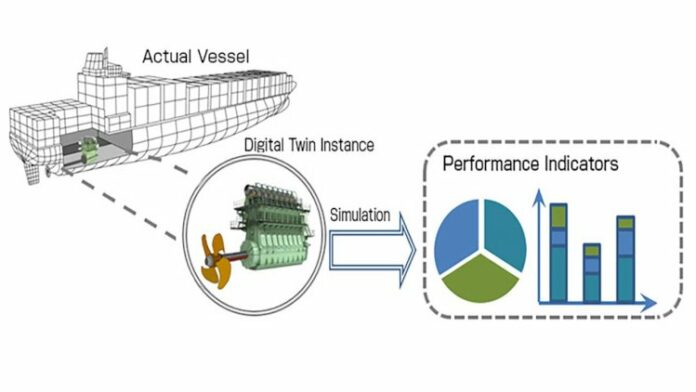
In this research, MOL and NMRI agreed to jointly develop and verify the digital twin model (Note 1) of two-cycle main diesel engine by using operational data collected from MOL-operated vessels in service, with the goal of enabling visualization of the main engine's operational status.

The research aims to create a visual twin model that would identify and quantify the status of the main engine (amount of scavenging air, exhaust gas heat, etc.), which is difficult to grasp during ship operation and to increase the accuracy of estimates for the engine's operating state and degree of degradation over time. The project contributes to the establishment of Condition Based Maintenance (CBM) (Note 2) while improving the accuracy of diagnosis technology for the engine failure state. Furthermore, it provides observers to more accurately grasp the main engine's performance during its transient state in adverse weather conditions, leading to optimal and safe engine operation, such as prevention of torque-rich (Note 3) conditions and suppression of torque variation.

MOL has moved ahead with advanced support of safe operation and reduction of its environmental impact, as set out in the "ISHIN NEXT – MOL SMART SHIP PROJECT -," which started in November 2016, and aims to become customers' first choice as a logistics partner by applying ICT technology to improve service quality and efficiency.

Note 1. Digital twin technology-A method to digitally reproduce events in the physical world in real-time. It establishes a simulation space on the system like twin and is used for optimization and engine operating state monitoring and its failure sign diagnosis through design changes and individual customization.

Note 2. Condition Based Maintenance (CBM)-In contrast to conventional Time-Based Maintenance (TMB), which specifies maintenance at a specific time interval, CBM is designed to pinpoint the need for maintenance of devices and components based on precise monitoring and analysis of their operation and performance.

Note 3. Torque rich-A phenomenon that causes a slowdown in main engine speed and engine overload, due to factors such as hull fouling and engine contamination or damage.

BW LPG to retrofit 12 of its VLGCs with pioneering LPG propulsion technology

0

BW LPG has announced that it has exercised another option for the delivery and retrofitting of a further four dual-fuel LPG propulsion engines. With this, BW LPG has committed to retrofit 12 of its Very Large Gas Carriers (VLGCs) with pioneering LPG propulsion technology.

This announcement follows a press release dated 30 August 2018, where BW LPG announced a world’s first initiative to deliver and retrofit four LPG dual-fuel engines in its fleet, and 10 February 2020, where it subsequently exercised an option for an additional four dual-fuel engines on the back of stronger-than-expected performance during rigorous type-approval tests.

Anders Onarheim, BW LPG CEO, says:

“The Board and Management at BW LPG continue to emphasize a deep corporate commitment to sustainable development. For us, as the world’s largest owner and operator of VLGCs, this means that we invest significant resources and expertise to pioneer technology that can be used to push our industry towards decarbonization without the need for dedicated newbuilding orders. We thank our industry partners who have worked in close collaboration with us to ensure that this pioneering technology is safe and reliable for implementation”.

Delivery and retrofitting of these 12 dual-fuel engines into BW LPG’s fleet will begin as planned in 2020 and will be completed in 2H 2021.

Iridium’s service provides the fastest L-band speeds in the industry

0

Existing Iridium Certus™ terminals are being upgraded to industry-leading speeds through a simple firmware update

Iridium Communications Inc. has announced that the Iridium Certus 700 service is commercially available and is providing the fastest L-band speeds in the industry.

When first launched in early 2019, Iridium Certus provided L-band upload and download speeds of up to 352 kbps. With the upgrade to Iridium Certus 700, provided at no additional cost to Iridium Certus 350 subscribers, top download speeds have now doubled to up to 704 kbps. That is more than 270 kbps faster than the top download speed of the closest competitive L-band solution, for the same price per kilobit as Iridium Certus 350.

Unique in the satellite industry, Iridium Certus is the only broadband service that provides truly global, weather-resilient coverage for on-the-move internet and high-quality voice access. Delivered through small form factor, cost-effective antennas and terminals currently available from Cobham and Thales, Iridium Certus has seen growing adoption by the maritime and land-mobile/connected vehicle markets.

Delivered through the Cobham SAILOR 4300 and VesseLINK by Thales satellite terminals, Iridium Certus serves as either a primary ship communications solutions or as a VSAT companion service.  Regardless of a vessel's location at sea, Iridium Certus 700 delivers high-speed L-band connectivity, enhancing ship business applications, IoT services and connected ship communications. Crew members on board vessels equipped with Iridium Certus terminals can also enjoy faster web surfing and reliable use of smartphone applications such as WhatsApp or WeChat, even in poor weather. 

For the vehicular and land-mobile market, MissionLINK by Thales has been providing railways, first responders, governments and NGOs with comms-on-the-move connectivity regardless of their geography. While enabling capabilities like positive train control and mobile-office functionality, including internet, email and voice calls, the MissionLINK terminal can also switch from satellite to cellular connectivity as needed to help manage costs.

In addition, the faster speeds available can enhance applications such as telemedicine for remote aid workers, command and control or situational awareness updates for militaries, and remote database access or video monitoring for first responders and police. Governments and enterprises can also take advantage of the enhanced speeds for business and operational continuity efforts, ensuring they maintain communications when terrestrial connectivity is unavailable.

Bryan Hartin, executive vice president, Iridium, said:

"There is nothing on the market today that matches the quality, reliability, speed and global coverage Iridium Certus delivers, and the Iridium Certus 700 upgrade clearly demonstrates this. Iridium Certus is now the standard when it comes to providing primary maritime or VSAT companion service, and a reliable weather-resilient broadband solution for mobile applications supporting railways, first responders, and any industry regularly working beyond the reach of terrestrial coverage."

With Iridium Certus 700, no new hardware is required for existing users, and the upgrade process is simple. Current subscribers can take advantage of a simple firmware update rolled out through their service provider, while all new terminals will already have Iridium Certus 700 activated. 

Matt Desch, CEO, Iridium, said:

"Iridium Certus continues to gain momentum, and we continue to deliver on our promises by providing the fastest L-band speeds in the industry. As we see this increasing adoption, we also look ahead to our coming Iridium Certus midband class of devices currently in development, which opens the door to enhanced capabilities for autonomous systems, remote sensors and a new generation of satellite-powered personal communicators."

Iridium Certus is the company's new technology platform that offers the flexibility to scale device speeds, sizes and power requirements both up and down based on the needs of the end-user. Made possible by the upgraded Iridium satellite constellation, the Iridium Certus service goes beyond serving solely as a connectivity solution. It provides a platform for the company's partners to develop specialized broadband, midband and narrowband applications made possible by Iridium's crosslinked L-band network.

Submarine components from 3D printers to enter series production

0

thyssenkrupp Marine Systems plans to use 3D printers increasingly in manufacturing submarine parts. This offers decisive advantages over conventionally produced components. 

The corresponding quality and safety approvals have already been granted. Through acquisition of the thyssenkrupp TechCenter Additive Manufacturing (in Mülheim an der Ruhr, North Rhein-Westphalia), the required technology and expertise will now come to the Kiel Fjord. It is planned to complete the transition by June 2020.

Dr. Luis Alejandro Orellano, COO of thyssenkrupp Marine Systems:

"3D printing opens up completely new potentials for us. In the design engineering, we no longer have to consider the limits of conventional manufacturing processes everywhere. In this way, we give our customers more freedom in the design of the boats. At the same time, we can produce components faster and more cost-effectively. Bringing the necessary expertise and equipment to serve us in Kiel is the prerequisite for being able to make smaller batches quickly and easily in series in the future."

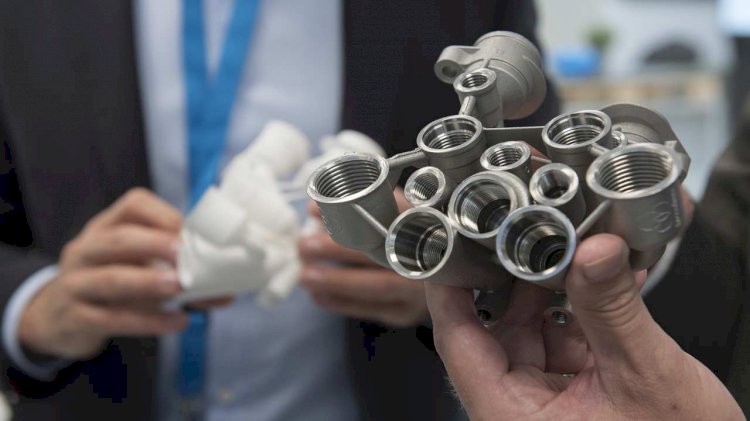
The printers can be used to produce more complex structures that are at the same time more robust, stronger and lighter than components produced by conventional methods, which often require many small elements to be manufactured and then assembled. For example, by using a 3D printer to make the hydraulic block for a submarine, 83 percent of the weight was saved – from 14 down to 2.1 kilograms.

Photo: thyssenkrupp

In summer 2019, the thyssenkrupp TechCenter Additive Manufacturing was the world's first producer of 3D printed components for maritime applications to receive manufacturer approval from the renowned classification society DNV GL. The certificate guarantees the material properties of the finished component in accordance with specified standards issued by independent testing bodies.

In future, thyssenkrupp Marine Systems plans to use 3D printers mainly in manufacturing the parts that are required in small batches for a submarine. The company will focus not only on components for newbuildings, but also on spare parts production.

The thyssenkrupp TechCenter Additive Manufacturing is currently located in Mülheim an der Ruhr and will move to the Kiel facilities of thyssenkrupp Marine Systems by summer 2020.

ABS Group launches new safety and risk-based services

0

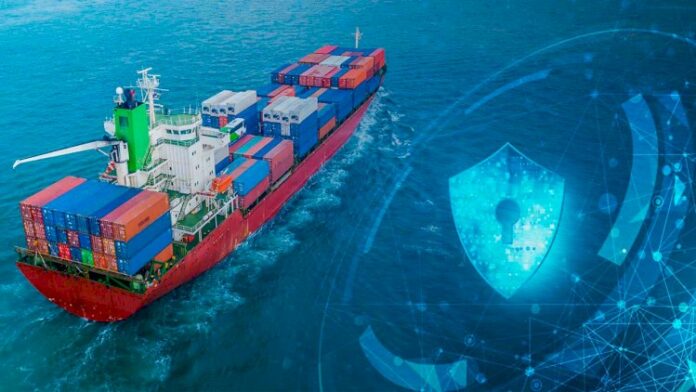
ABS Group of Companies, Inc. (ABS Group) has launched a new set of safety and risk-based services to support compliance to the 2021 Cyber Risk Management (CRM) guidelines recommended by the International Maritime Organization (IMO).

The IMO CRM guidelines encourage maritime organizations to address cyber risk management in a safety management system (SMS) no later than the first annual verification of the company's Document of Compliance after 1 January 2021.  

ABS Group's new cyber security services will help clients understand how to align to the IMO guidelines and other accepted standards and build comprehensive cyber security capabilities that address enterprise and ship level cyber controls as identified in the IMO guidance. CRM capabilities will span both information technology (IT) and operational technology (OT) systems in accordance with IMO, Baltic and International Maritime Council (BIMCO), National Institute of Standards and Technology Cyber Security Framework (NIST), ISO/IEC 27001 and other accepted standards.

Ian Bramson, Global Head of Cyber Security at ABS Group, says:

"Using a 'defense in depth and breadth' approach, owners and operators must protect their critical assets with a comprehensive set of risk controls. We are working closely with industry stakeholders and regulators to reduce cyber risk and lessen the impact of cyber incidents that can have serious financial, operational and environmental consequences. Looking beyond 2021 compliance, our Cyber Security consultants understand this is a long-term challenge that will continue to affect OT assets in an increasingly connected world. Building robust OT cyber security capabilities will provide better control, visibility and management of risk across maritime operations."

ABS Group's cyber security portfolio offers risk-based capabilities at every stage of cyber defense and includes the proprietary Cyber Risk Reduction and Cyber Risk Rating (CybeR2) program. CybeR2 builds on the award-winning ABS FCI Cyber Risk™ Model developed with the Maritime Security Center, a U.S. Department of Homeland Security Center of Excellence. 

Energean to acquire of Total’s stake in Block 2, offshore Greece

0

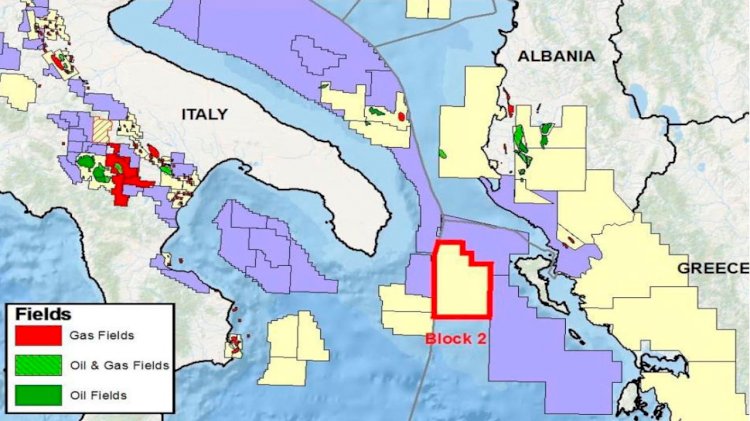
Energean Oil and Gas plc, the oil and gas producer focused on the Mediterranean, has announced that it has signed an agreement for the acquisition of Total’s stake in Block 2, offshore Western Greece, providing further material exploration opportunities in its core area of the Eastern Mediterranean with limited financial exposure.

The deal further enhances the future growth potential of Energean’s portfolio and medium-term optionality to deliver value to all of stakeholders.

On completion, Energean would acquire Total’s entire 50% Working Interest share and Operatorship. Energean’s net remaining expenditure towards satisfaction of the minimum work obligation, which includes 1800km of 2D seismic acquisition and processing – activity which Energean believes could significantly de-risk the prospectivity of the licence – is approximately €0.5 million. Energean believes this is a highly attractive transaction in the context of the early stage prospectivity identified on the Block.

Work to date on the licence has identified that Block 2 contains part of a large, potential target comprising of a four-way closure at the Top Jurassic Apulia platform. The prospect is thought to be an analogue to the Vega field offshore Italy, in which Edison E&P operates with a 60% working interest. The structure is covered by sparse 2D seismic which could be de-risked through the seismic programme that will be acquired as part of the minimum work programme.

The feature straddles the Greek and Italian maritime border with approximately 60% of the prospect within the Block 2 license with the remaining area part in Italian waters. Edison E&P, of which Energean expects to complete its acquisition of during 1H 2020, as well as holding a 25%.

Working Interest in Block 2 also participates in the adjacent 84F.R-EL block offshore Italy, pending award. Post completion of the Edison E&P transaction, Energean will then own a 75% Working Interest in Block 2. Hellenic Petroleum owns the remaining 25% Working Interest.

GSBN: Nine industry-leading operators signed a shareholders’ agreement

0

CargoSmart Limited, a leading logistics technology solutions provider, today announced that nine industry-leading ocean carriers and terminal operators, namely CMA CGM, COSCO SHIPPING LINES, COSCO SHIPPING Ports, Hapag-Lloyd, Hutchison Ports, OOCL, Port of Qingdao, PSA International, and Shanghai International Port Group (SIPG), have signed a shareholders’ agreement indicating their intention to become shareholders of the proposed Global Shipping Business Network (GSBN).

The signing of the agreement symbolized the fortified cooperation among the consortium as well as the conclusion of an important step towards the GSBN’s official establishment. Once all regulatory approvals have been obtained and the GSBN is formed, it will lead the development of innovative applications to create value to stakeholders in the supply chain. 

The shareholders’ agreement for the nine shareholders of the GSBN confirms the consortium’s governance structure and nature of the business. The GSBN will be established as a not-for-profit organization that operates and facilitates a secure and trusted data exchange platform for all stakeholders along the supply chain. The consortium will nurture community participation and introduce a wide range of innovative services and applications to streamline operation processes and overall efficiency. To support this vision, CargoSmart will be the technology solutions provider and platform operator for the GSBN. 

Martin Gnass, Managing Director IT of Hapag-Lloyd, said:

“The signed shareholders’ agreement symbolizes an important milestone towards securing an industry-wide secured digital collaboration platform that aims to benefit all parties in the global supply chain. We expect the trusted blockchain platform will accelerate the sharing of verified logistics and cargo data, streamline business operations across the whole supply chain, and create value to each stakeholder.”  

Ding Songbing, Manager of Strategy & Research Department of SIPG, said:

“Existing data exchange and practices in the shipping industry do not adequately address all terminal operational details, leading to missed opportunities to improve overall efficiency. With terminal operators being founding members of the blockchain platform, we believe the GSBN will capitalize on new and existing opportunities on the terminal side and expedite digital transformation in the industry.”  

In preparation for the establishment of the GSBN, CargoSmart has conducted a number of proof-of-concepts (PoC) to validate opportunities to generate value for the participants in the GSBN. One example is the PoC with eTradeConnect^, the trade finance blockchain consortium facilitated by the Hong Kong Monetary Authority (HKMA).  

The PoC proved that the GSBN and its associated technologies will be able to bring actual benefits to the industry. It also demonstrated how the GSBN’s unique combination of carriers and terminal operators can provide a more balanced perspective, bringing up new ideas to transform the industry by going beyond the conventional carrier-centric business model.  


NxtPort and Port+ present Bulkchain platform

0

5 March is the day, when after a successful "proof of concept" NxtPort and Port+ present the Bulkchain central collaboration platform. 

Bulkchain is a collaborative platform built on NxtPort technology, dedicated to build the Breakbulk port of the Future. Originally founded in the heart of the Antwerp Breakbulk community, the platform allows participants to work together on the administrative processes to ship breakbulk cargo. By sharing data on shipments early in the supply chain, efficiency of the entire process increases, reducing time spent and administration efforts. In the end, all parties involved benefit from working together through the NxtPort platform.

The Bulkchain concept was devised in 2018, and a year later a beta version was demonstrated at the Antwerp XL breakbulk trade fair. Then in October 2019 ArcelorMittal and PSA joined the pilot project.

According to Bulkchain product manager Steven Schutter, the breakbulk community has long been in search of a digital solution to catch up with their colleagues in the container sector. More efficient and transparent communication is essential for all stakeholders. He explains:

"We're doing away with the constant copying-and-pasting, carbon copies and superfluous phone calls. Bulkchain will streamline the entire logistics process. It means much less administrative hassle and more efficient communication among the correct locations, eliminating avoidable errors."

How does the application work in practice? William Moyersoen, CEO of ArcelorMittal Logistics Belgium, says:

"Setting up integration with Bulkchain just once opens the door for all member parties to exchange data in the same way."

For each consignment Bulkchain creates a single file that links all import and export partners, so that all parties involved in the movement are constantly up to date. 

Dennis Verbeeck, General Manager of PSA Breakbulk, declares:

"This is the next step towards a paperless work environment, an area in which breakbulk has a lot of room for improvement in comparison with other sectors."