5.7 C
New York
Home Blog Page 907

Wärtsilä to upgrade its VTMS installed in Indian port

0

The technology group Wärtsilä will upgrade its Vessel Traffic Management System (VTMS) installed in the Indian port of Cochin. The system was originally delivered in 2008, and by adding the latest technology, significant additional benefits can be gained. The order with Wärtsilä was placed in February 2020 by the Cochin Port Trust (CoPT).

The upgraded Wärtsilä VTMS will enable seamless coverage of the port’s radar and automatic identification system (AIS) for traffic monitoring and control, thereby raising the existing safety and efficiency levels. The Navi-Harbour VTS software also provides an interactive and user-friendly interface for the system’s operator. Wärtsilä and CoPT have also signed a 5-year Comprehensive Annual Maintenance Contract (CAMC) for the upgraded system and a 6-year CAMC for the existing equipment.

Capt. Joseph Alapat Dy. Conservator (DC) Cochin Port Trust, India, says:

“Ports all around the world are getting busier and a VTMS is essential for ensuring that the port’s operations are safe and efficient. The existing system at Cochin Port is completing 11 years of continuous use, during which time the number of vessels visiting the port has increased by more than 35 percent. The Wärtsilä VTMS has helped the port to integrate the traffic from major projects, such as the Single Point Mooring (SPM), the International Container Transshipment Terminal (ICTT), and the LNG Terminal, into the existing shipping channels. Because of the continuing growth in shipping traffic, it was necessary to upgrade the VTMS to make it fully technically compliant, and to cope with future requirements.”

The upgrading project is scheduled for completion by the end of July 2020.

Cochin is a major port on the Arabian Sea – Laccadive Sea – Indian Ocean sea route, and is one of India’s largest ports. The Cochin Port Trust is owned by the Indian Government’s Ministry of Shipping.

The Wärtsilä VTS software has extensive functionalities, and the solution is modular, scalable, and accessible for future upgrade developments. Wärtsilä is a market leader in this field with more than 300 Vessel Traffic Management Systems installed in 70 countries around the world.
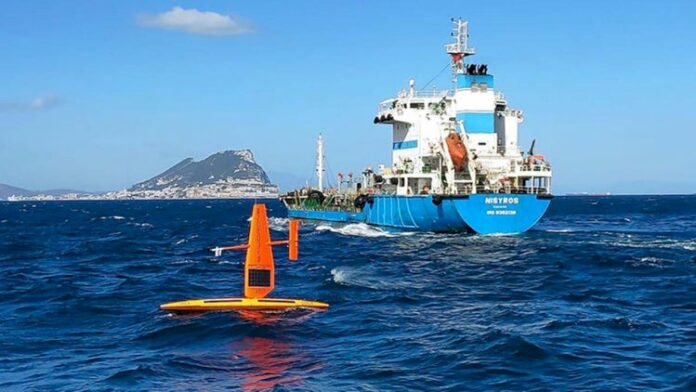
Saildrones complete first unmanned passage of Strait of Gibraltar

0

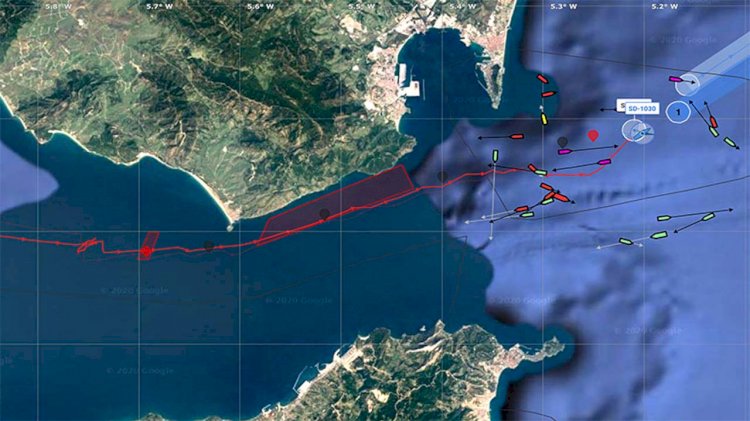
Today, the 31-nautical mile (58-kilometer) passage between Europe and Africa is one of the busiest waterways in the world. The strait is only seven nautical miles (13 kilometers) across at its narrowest and 23.7 nautical miles (44 kilometers) at its widest. Approximately 300 ships cross it every day, about one ship every five minutes. Add to that dozens of fishing boats and recreational vessels. And, on March 6, 2020, at approximately 16:16 UTC, two Saildrone unmanned surface vehicles (USVs) completed the first autonomous passage of the Strait of Gibraltar.

SD 1030 and SD 1053 were escorted by a patrol boat from the Spanish Armada’s Instituto Hidrográfico de la Marina (IHM) and a research vessel from the University of Cadiz throughout the nine-hour passage. The saildrones were deployed from a facility in the Canary Islands operated by the Oceanic Platform of the Canary Islands (PLOCAN) in October on a six-month mission to survey eddies and air-sea carbon fluxes and perform cross-calibrations with European Research Infrastructure (RI) sites in the Atlantic Ocean and Mediterranean Sea. The Strait of Gibraltar passage is a significant milestone on the ATL2MED mission.

The tides and currents through this narrow inlet are incredibly complex. The water in the Atlantic Ocean is less saline and therefore less dense than that of the Mediterranean Sea. Currents through the Strait of Gibraltar are primarily caused by an exchange of water of different salinities; a surface layer of water—to a depth of 125 meters (410 feet) on average—flows into the Mediterranean from the Atlantic at an average speed of two to three knots (3.7 – 5.5 kph). Tidal flows up to four knots (7.4 kph) can either speed up or slow down the eastward surface current. Conditions in the strait are the roughest when the current is at its max speed and a levanter is blowing against it. 

The exchange of water of different salinities and tidal interaction with topography near the Camarinal Sill, the shallowest area of the seafloor between the Iberian Peninsula and Africa, causes a high amplitude internal wave, upwelling of nutrient-rich water and attracting whales, dolphins, and turtles to the region, despite the heavy traffic.

Saildrone founder and CEO Richard Jenkins said:

“This is another significant accomplishment for the Saildrone fleet and demonstrates our vehicles are just as comfortable in the ice of the Arctic, the huge storms of the Southern Ocean, or one of the most confined and busy shipping lanes in the world. We are thrilled to have achieved this milestone and to move on to the next stage of the mission, our first sailing in the Mediterranean. I’d like to thank the local authorities, the PLOCAN staff, and the University of Cadiz for their assistance with logistical support and escorting the vehicles through the strait.”

Saildrone was born out of a 10-year research and design project to break the world land speed record and has continued its record-breaking tradition ever since.

Prysmian secures offshore wind grid connection project in France

0

The Group deploys all needed capabilities and resources to enable the energy transition. Submarine cable technologies are key to support the growth of renewable energy.

Prysmian Group, world leader in the energy and telecom cable systems industry, has been awarded a contract worth over €150 million by Réseau de Transport d’Électricité (RTE) for the development of two submarine and land export power cable systems to connect the offshore wind farm located in between the islands of Yeu and Noirmoutier to the French mainland power grid.

The offshore wind farm is being developed by the company Les Eoliennes en Mer d’Ile d’Yeu et Noirmoutier which was awarded around 500 MW capacity production by the French government. RTE, the French transmission system operator appointed by the French government, will design, build, maintain and operate the two 225 kV links (submarine and land) to connect the offshore wind farm to the grid. The offshore wind grid connection project will be able to export 500 MW of green and renewable energy, covering a submarine cable route of around 27 km and an underground cable route of around 30 km.

Prysmian will provide its comprehensive turn-key approach for the design, supply, installation, and commissioning of two HVAC 225 kV three-core extruded export submarine cables with single-wire armouring which will reach the landfall area at La Barre-de-Monts beach. Prysmian will be also responsible for the supply and jointing of two HVAC 225 kV extruded land cables circuits that will link the landfall area to the substation at Soullans.

Submarine cables will be produced at Prysmian’s centres of excellence in Pikkala (Finland) and Arco Felice (Italy), while land cables will be manufactured in Gron (France). Installation operations will be performed by the Cable Enterprise, one of the three Group’s state-of-the-art cable laying vessels. Delivery and commissioning are scheduled for 2023, conditional upon the receiving of the notice to proceed expected by March 2020 as regard the preliminary studies, and by June 2020 for the overall project.

Hakan Ozmen, EVP, Projects Business Unit, Prysmian Group, stated:

“We are proud to be contributing to the development of infrastructures of such great strategic importance. This contract not only consolidates our relationship with RTE, but also confirms Prysmian’s worldwide leadership in addressing the increasing need for upgraded power grids to support the energy transition.”

Prysmian is already playing an important role in providing RTE or other customers with efficient and sustainable power transmission solutions, having recently been involved in key projects in France like Fécamp, Courseulles-sur-Mer and St. Nazaire offshore wind farms and the Provence Grand Large floating offshore wind farm (awarded by EDF Renewables), in addition to the IFA2 interconnection linking the UK and France, the Piedmont-Savoy interconnection between Italy and France, and the INELFE interconnection linking Spain (Santa Llogaia) and France (Baixas).

New Tidal’s system is able to track and model salmon behaviours

0

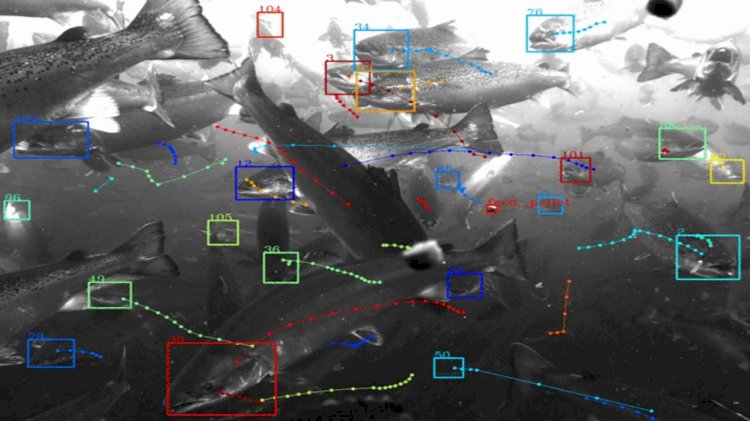
Over the last three years, Mowi has been researching and testing a new sensing system developed by Tidal at Alphabet’s X. After an extensive research and development period involving field testing and data collection, the project is now ready for commercial validation and Mowi will roll out the technology to multiple sites across Norway.

Tidal has been developing an advanced underwater sensing and software analysis platform that gathers intelligence on real-time growth, weight distribution, feeding control, and automatic lice counting for salmon. Using a combination of new camera technology as well as machine learning and machine perception, Tidal’s system is able to track and model fish behaviours, environmental conditions, and the health of salmon over time.

Mowi CEO, Ivan Vindheim, said:

“Mowi’s vision is to be leading the Blue Revolution. As the biggest salmon farmer in the world we have a special responsibility to engage in the development of technology to improve our competitive advantage and to optimise our farming of healthy and sustainable food from the ocean. Thus, it is very encouraging to work with Tidal to further develop ocean farming technology.”

Tidal’s technology brings multiple capabilities into a single hardware and software platform and provides farmers with real-time information, so that they can confidently manage their daily operations. By employing artificial intelligence to analyse big data, Mowi hopes to understand and respond to long-term trends in fish behaviour and thereby further optimise ocean farming.

Mowi CTO, Øyvind Oaland, said:

“With a combined vision to fully realise the potential of our seas for sustainable food production, our Research and Development department collaborated with the Tidal team as they developed their underwater sensing and analysis platform. This is the start of a journey towards finding new and innovative uses of technology throughout our value chain in the years to come.”

Tidal’s General Manager, Neil Davé, said:

“Tidal’s mission is to protect the ocean and preserve its ability to support life and help feed humanity, sustainably. Our initial area of focus is on developing technologies that bring greater visibility and understanding of what’s happening under the water. We are delighted to be working with Mowi to provide tools that we hope can help Mowi make their operations more sustainable.”
 

Ocean Infinity completes ground-breaking survey project with Total E&P

0

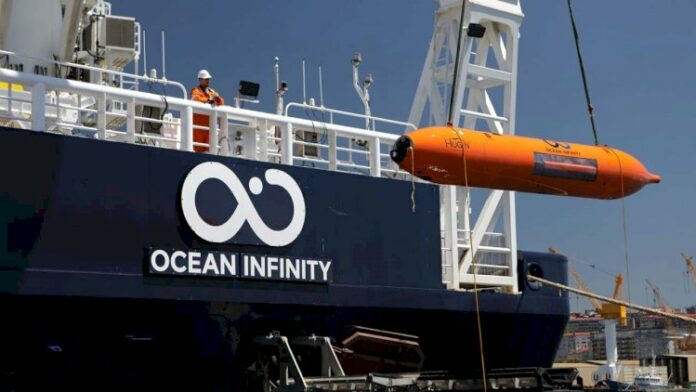
Ocean Infinity, the next generation marine robotics company, is pleased to announce that it has successfully completed its project with Total E&P in Angola, one of the main branches of Total, a major energy player worldwide.

The project was the first time that geophysical, geotechnical, and seismic data has been gathered at the same time. This was achieved through simultaneous operations of Ocean Infinity’s state of the art Autonomous Underwater Vehicles (AUVs) with geotechnical and seismic equipment based from one surface vessel.  The successful completion of this project, which was all done from one vessel and on a single cruise out to the project site, is a major breakthrough in maximising efficiency on sub-sea survey operations.

The 28-day project, carried out from the host vessel ‘Normand Frontier’ using Ocean Infinity’s innovative technology, conducted 2D Ultra High-Resolution Seismic surveys and Seabed soil Sampling in Block 32 and Block 17. The success of the project is testament to Ocean Infinity’s market leading technology in deep water data acquisition.

Ocean Infinity’s recent expansion to their fleet of autonomous underwater vehicles and further advancements in pioneering battery technology, ensures that high-quality data is gathered for the client in the safest, most efficient way driven by its market leading technology.

Josh Broussard, Ocean Infinity’s CTO, said:

“We are very pleased to have completed this survey project for Total E&P in Angola, which has been a resounding success and has evidenced significant progress in the efficiency of collecting data. Our technology continues to be at the forefront of innovation and we are delighted to have demonstrated this by gathering three sets of high-quality data through multiple AUVs deployed simultaneously with geotechnical and seismic equipment, from a single vessel, a first for the industry.

This success is further endorsement of Ocean Infinity’s ability to meet the growing demand for a high value, low impact method to accurately collect ocean data. We have a strong track record of delivering results for leading international energy corporations and our commitment to increasing the efficiency and sustainability of our operations only enhances our ability to do so.”
 

Opinion: Carbon taxes can help the sea turn green

0

Hege Økland, CEO of NCE Maritime CleanTech, urges for more concrete actions to make the green shift forward.

The world needs to wake up to the warming of our seas. We are like a lobster in a slowly boiling pot of water as ocean temperatures rise due to the seas absorbing up to 90 percent of all human-generated carbon emissions. Can we hop out of the pot before things reach a boiling point?

Hege Økland thinks so – with carbon taxes. The CEO of NCE Maritime CleanTech, Økland has been on a mission to shake up the industry at home and abroad since 2011. Since Norway has benefited greatly from the oil and gas industry, she thinks it’s only right for the country to help lead the way by using public funds to develop and demonstrate zero-emissions solutions. The public sector is also a big purchaser of transport services. The industry has challenged the public purchasers to set stricter environmental criteria. This has resulted in 70 electrical ferries operating along the Norwegian coast.

Hege Økland says:

“In Norway, we have long maritime traditions and advanced competent electrification and hybrid system industries. So, we are very well positioned to concentrate on projects in energy efficiency, reducing emissions and helping others embrace new technologies.”

With its long coastline, Norway is an optimal location for conducting maritime research into what is possible. Once tested, industrialized and optimized in Norway, Økland says, these solutions can be exported on a global level.

But how is it possible to convince the politicians and the industry of the sustainable and economically sound opportunities of using new technologies and fuels to decarbonize shipping?

Hege Økland says: 

“We’ve been working a lot with the Norwegian political decision makers over the years, urging them to make braver political decisions and concrete action plans, such as implementing stricter emission regulations in sensitive areas and also setting requirements for low emission in logistic operations along the Norwegian continental shelf.

The main barrier for implementing low-carbon fuel is the bunker price of heavy crude oil and marine diesel oil. A carbon tax needs to be implemented at a global level, and we hope that this will be decided by IMO in the near future.”

This will make green alternatives more competitive and then make a good business case for the industry, Økland says:

“It could be organized the same way as the Norwegian NOx fund, where the shipowner pays a NOx tax but then can apply for funding from this special fund when taking NOx-reducing measures on board the ship. Investments that can be partly covered by a CO2 fund can be used to buy greener fuel, make hybrid installations or take other actions to help the ship lower its NOx emissions.”

As a result of ambitious and global climate targets, Økland is observing that shipowners are taking carbon reductions into consideration when designing new ships. Økland says these actions need to be repeated throughout the rest of the business, including foreign oil companies and vessels supplying offshore wind, and the value chain, including cargo owners, harbors and shipowners. Today, they’re very isolated within their own systems, she adds, and everyone needs to work closer together.

Some positive signals can also be seen from the financial sector and the world’s leading banks. These institutions have put climate risk high on the agenda and are starting to measure and disclose the carbon footprint of their own portfolio. The shipowners that can refer to a low-carbon fleet with a strong commitment to energy efficiency and low emissions will achieve better financial conditions. This is a very important driver to push the shipping industry in a greener direction.

Økland underscores the urgency of the situation. She concludes:

“I feel the whole world is a bit impatient now. We need to start acting much faster and not just waiting for others to make this happen. A carbon tax could help make a green shift forward.”

Word’s smallest imaging sonar launched

0

Impact Subsea has launched the world’s smallest imaging sonar.

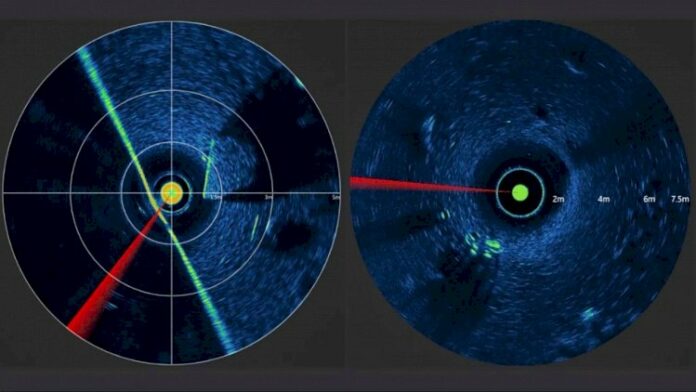
At only 72mm high and 47mm wide the ISS360 sonar provides excellent image clarity with a range capability of up to 90 meters / 295 feet.

Depth rated to 4,000 meters / 13,123 feet the ISS360 is an ideal navigation and target identification sonar for the smallest to the largest underwater vehicles. The ISS360 Sonar can be supplied with an integrated Attitude and Heading Reference System (AHRS) providing highly stable Heading, Pitch and Roll readings.

The sonar provides a full 360° field of vision with the aid of a mechanically scanned transducer. The transducer utilises inductive coupling to the sonar electronics for operation without the use of slip rings. This ensures excellent longevity in operation by removing the requirement to periodically replace slip rings.

A broadband composite transducer coupled with an advanced CHIRP acoustic engine enables excellent image clarity and range capability previously unseen from a sonar of this size.

To accompany the ISS360 Sonar, a new version of the company’s software platform has also been launched.  seaView V2 allows for sonar imagery to be displayed and all sonar settings to be fully software configured.  The seaView sonar application is highly intuitive to use, ensuring range, resolution and other settings can quickly and easily be adjusted.

Commenting on the launch, Ben Grant, Managing Director stated:

“The ISS360 sonar provides a step change in range capability and resolution in the miniature mechanically scanned sonar market. For ROV and AUV users looking for full 360° field of vision, image clarity and long range, the ISS360 provides an ideal solution”.

New funding programme to further offshore renewable energy research

0

The Supergen Offshore Renewable Energy (ORE) Hub has launched its second round of Flexible Funding to advance research into the opportunities and challenges of offshore wind, wave and tidal energy.

This second round of Flexible Funding will award a total of up to £1.2m to researchers at UK Higher Education Institutions (HEIs), Research Council Institutes and Centres, and Independent Research Organisations (IROs) approved by UKRI, to seed areas that complement existing research, fill gaps or add cross cutting activities to explore the transfer of research findings between sectors within ORE.

In this round of funding, the Supergen ORE Hub has additional in-kind contributions from the Offshore Renewable Energy Catapult. The Offshore Renewable Energy (ORE) Catapult is supporting the funding call by offering in-kind research resource from one or more of its network of Research Hubs. This will involve a collaboration with some of the winning projects and the provision of Catapult support and additional PhD/PDRA Research Hub resource for up to 12 months.

Paul McKeever, Head of Electrical Research for ORE Catapult and Chair of the Supergen ORE Hub Industry Advisory Board, said:

“The Catapult’s network of Research Hubs, covering wind turbine blades, electrical infrastructure and powertrains, works to align industry-driven innovation priorities with applied academic research so that we can drive new products and services into the sector, improving productivity and efficiency and reducing energy costs.

Aligning our relevant research priorities with Supergen ORE’s Flexible Funding calls is a win-win – encouraging vital collaboration between industry and academia to solve many of the technology challenges facing the offshore renewable energy sector today.”

Professor Deborah Greaves OBE, Head of the School of Engineering, Computing and Mathematics at the University of Plymouth, and Director of the Supergen ORE Hub, said:

“The UK is at the forefront of development, adoptions and export of offshore renewable technologies, and this second round of flexible funding will allow UK-based researchers to deliver fundamental and applied research to advance the sector. Additional industrial support from ORE Catapult strengthens academic-industry collaboration in the ORE sector.”

In 2019 the Supergen ORE Hub awarded almost £1m to ten projects in its first round of Flexible Funding. Funded projects included investigations into the recycling process of wind turbine blades, the development of underwater robotic fish for device inspection, and using satellite data for enabling cost reduction of marine renewables. A full list of the previous awardees can be found online.

Expressions of Interest (EOI) for the Flexible Funding are open now, with a closing date of 5:00pm (GMT) on 3 April 2020. 

VIDEO: Ulstein’s designer explaining how X-BOW works

0

The ULSTEIN X-BOW®, the inverted bow concept, redefined marine engineering. The X-BOW (and later, the X-STERN) is one of ULSTEIN's main contributions to maritime history. X-BOW vessels are being built at shipyards on many continents. Currently, more than 100 vessels with this bow concept are being constructed or in operational work around the world. The X-BOW hull line design has been tried in most weather conditions.


SCHOTTEL to supply medium-sized EcoPellers to Norled

0

SCHOTTEL has won a contract from Ada Shipyard in Turkey to supply propulsion units for two double-ended Ro-Pax ferries.

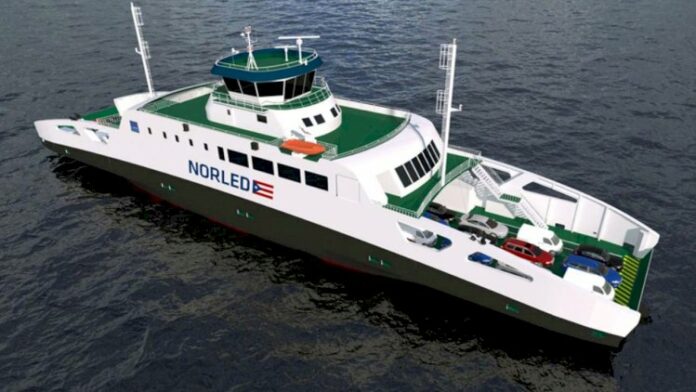
As part of the deal, the German propulsion manufacturer will provide a total of four SCHOTTEL Rudder EcoPellers (SRE) for the LMG 60 DE design vessels ordered recently by Norwegian ferry operator Norled. The move further strengthens SCHOTTEL’s position in the Norwegian ferry market.

The ferries’ main propulsion consists of two SCHOTTEL EcoPellers type SRE 270 (810 kW each) with 1.85 m diameter fixed pitch propellers (one at each end of the ferry). Each of the azimuth thrusters is driven by two bio-diesel engines through a twin-in-single-out gearbox. These thrusters allow the vessel to achieve cost effective operation at a service speed of 11.5 knots. Through its efficiency, the EcoPeller contributes to the ship’s low fuel consumption. This, in turn, results in low operating costs and reduced emissions.

With medium-sized azimuth thrusters such as the SRE 270, SCHOTTEL meets new challenges on the international maritime market. These include shifted engine power classes, new ice class rules and the growing trend towards electrically or hybrid driven vessels. Combining the latest technologies in mechanical engineering, hydrodynamics, and digitalization, the medium-sized azimuth thrusters are available in two sizes corresponding to the common engine power classes: SRE 210 (560 kW) and SRE 270 (900 kW).

Both ferries are tailored for their future operation on the Finnøy connections in southwestern Norway. Each of the 74.00-metre-long vessels will be able to accommodate up to 199 passengers and crew members and be capable of carrying 60 cars.

Deliveries of the ferries are scheduled to take place during the first quarter of 2021.