8.4 C
New York
Home Blog Page 908

Gasum joins forces with Deltamarin and Wärtsilä to optimize ships for the future

0

Gasum recently joined forces with ship design company Deltamarin and Wärtsilä, a leader in maritime technologies, for cleaner maritime transport.

Emissions from ships are sulfur oxides (SOx), oxides of nitrogen (NOx), particulate matter (PM) and carbon dioxide (CO2). These emissions are caused by ship fuels, but also to some extent by the type and design of the engine. SOx and PM emissions are also influenced also by the relative fuel sulfur content. 

The International Maritime Organization’s (IMO) ambitious GHG strategy calls for massive emission reductions by 2050. At the same time, the pace of digitalization is accelerating. This is why the companies are working together to show how they can help shipowners meet challenges, seize opportunities and contribute to saving the environment, all while keeping business profitable:

  • Deltamarin offers future-proof design with high cargo capacity and low-energy consumption
  • Wärtsilä delivers next generation propulsion machinery solutions with future fuel flexibility
  • Gasum enables the transition to cleaner energy

Sulphur oxides (Sox) are known to be harmful to people and the environment. Ship emissions are a significant source of SOx and they may cause respiratory difficulties and even lung disease. Sulphur in the atmosphere may also lead to acid rain harming species in forests and in the ocean. Inhabitants living close to ports and the sea are more vulnerable than others when it comes to sulfur from the shipping industry. 

To protect people and various species, the global regulations for sulfur oxide emissions are becoming increasingly strict. From 1 January 2020, the limit for sulfur in the fuels of ships operating anywhere in the world will be 0.5% m/m (mass by mass). This will significantly benefit the environment and general health in the world through improved air quality. 

Regulations for air emissions are established worldwide by the International Maritime Organization, as well as national and regional authorities. 

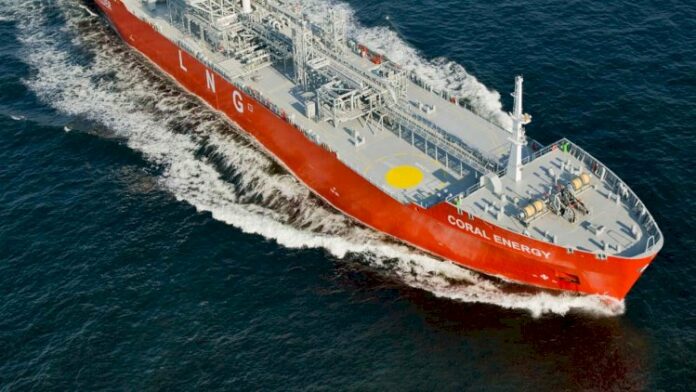
Gasum is already supplying a wide range of ship operators with liquefied natural gas (LNG) that contribute to reducing greenhouse gas emissions. Choosing LNG is a decision for shipowners as well as the operators of a vessel. Charter companies also have a say in the transportation of goods and passengers in a cleaner and environmentally friendly manner. Already in the decision phase, Gasum may share its experience with shipbuilders and designers. This could be information regarding practical details or equipment, optimized design for smooth LNG bunkering operations, or the provision of information necessary for LNG availability and market prices.  

LNG is the most environmentally friendly shipping fuel available and meets the requirements set by the Sulphur Directive for shipping as well as the stricter future limits set for emissions such as NOx, particulates and CO2. Read more about LNG as a maritime fuel.

Gasum is attracting increasing interest from the maritime segments regarding fuel and services. The company will continue to invest in the LNG supply chain and work together with maritime partners towards a cleaner future.

BHP selects contractors for Pre-FEED Design Competition for Trion FPU

0

BHP today confirmed that SBM Offshore USA, Inc., Technip USA, Inc. dba Genesis North America and McDermott, Inc. have been selected to deliver an early engineering study for a Semisubmersible Floating Production Unit (FPU) for the Trion field in the deep-water Gulf of Mexico offshore Mexico.

The design contracts have been awarded following a competitive tender process, and the work is anticipated to be completed within six months. 

BHP President Operations Petroleum, Geraldine Slattery, said:

“This is another step forward for the Trion project which allows for early engagement with the chosen contractors to optimize the design together with the contracting and execution strategy options for the FPU delivery. We look forward to working with the selected contractors through this study phase.”

BHP holds a 60 per cent interest (and operatorship) in Trion. PEMEX holds a 40 per cent interest.

Cruise line makes changes to cancellation policy

0

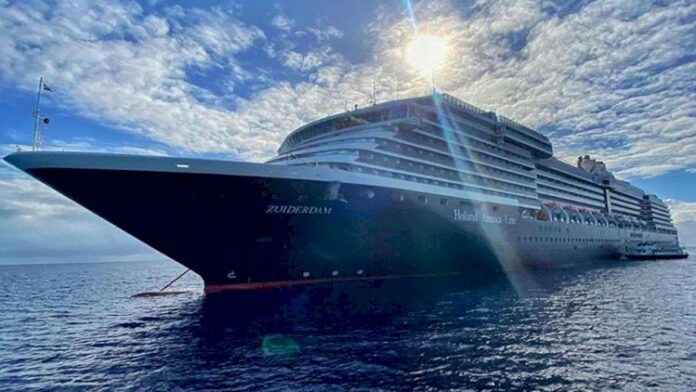
In order to give travelers greater peace of mind surrounding their upcoming vacation plans, Holland America Line is announcing new programs to offer greater flexibility and choice during these uncertain times.

For guests currently booked on upcoming cruises, Holland America Line is temporarily changing its cancellation policy and allowing guests to cancel their cruise or Alaska Land+Sea Journey departing through May 31, 2020.

Any cancellation will receive a Future Cruise Credit (FCC) for the amount of the paid fare which can be used for another cruise in 2020 or 2021. The FCC must be booked by Dec. 31, 2020, and the cancellation must be made with a minimum of 72 hours in advance of departure date but no later than March 31, 2020. However, guests booked between now and March 9, 2020 may also cancel under this new policy despite being within 72 hours.

For those who choose to keep their cruise plans on departures through May 31, 2020, an Onboard Spending Credit of $200 per stateroom/$100 per person for voyages longer than 7 days and US$100 per stateroom/US$50 per person for voyages less than 6 days will be automatically applied to their shipboard account as a thank you.

For those guests who are able to provide supporting documents from their health care provider, Holland America Line will issue them a Future Cruise Credit. This “Compassion Policy” offer is available for guests booked on any sailing, regardless of departure date.

Holland America Line also is offering a new Book with Confidence program that allows for cruise and Land+Sea Journey cancellation.

Under Book with Confidence, guests who make a new booking by April 30, 2020, for itineraries that depart on or before Oct. 15, 2020, can cancel for any reason and receive a FCC in the amount of any cancellation fees applied. The cancellation must be made up to 30 days before departure.

Orlando Ashford, Holland America Line’s president, said:

“We fully understand that travelers are uncertain about their future vacations, so we have created two new programs to give both our current booked guests and those who want to cruise later this year more options and confidence for their planning. 

It’s always important that travelers protect their vacation investment, and our Cancellation Protection Plan is one of the most robust available, allowing guests to cancel for any reason. And our plans cover today’s circumstances, which many policies do not; so when combined with our new programs it’s one of the most assured ways to confidently plan your cruise today.”

Holland America Line’s Cancellation Protection Plan can also be purchased for new cruise or Alaska Land+Sea Journey bookings or existing bookings as long as it is purchased before the date cancellation fees begin to accrue. The program, offering a Standard or Platinum plan, allows guests to cancel up to 24 hours before cruise departure with Standard and right up to departure under Platinum and receive refunds from 80 to 90% of eligible amounts paid. The cost varies by cruise fare and is nonrefundable. 

Book with Confidence and the Cancellation Protection Plan can be combined with all Holland America Line promotions, including Pack These Values that began this week on select 2020 cruises or Alaska Land+Sea Journeys, giving travelers even more reasons to book a Holland America Line vacation.

Port of LA and Nagoya Port Authority sigh new cooperative agreement

0

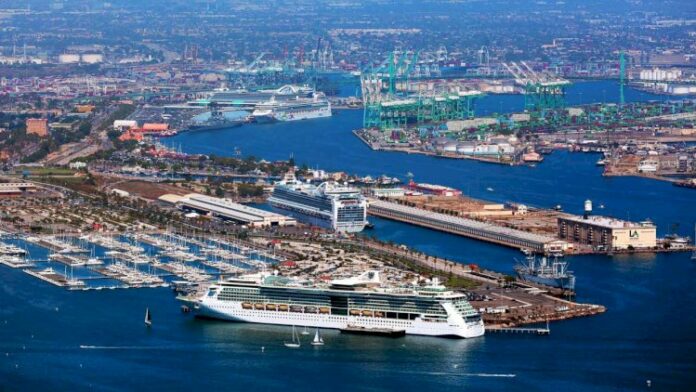
Building on more than 60 years of collaboration, the Port of Los Angeles and Port Authority of Nagoya, Japan  have signed a Memorandum of Understanding (MOU) to further cooperate and exchange information on projects focused on operational efficiency and environmental sustainability.

Gene Seroka, Executive Director of the Port of Los Angeles, said:

“International cooperation among ports is essential to assuring that our global supply chain and ports of entry are the most efficient and environmentally sustainable as possible. Furthering our collaboration on these priorities with the Port of Nagoya is a natural next step, given our long-term sister port relationship and mutual interest in advancing port innovations and technology.”

Hideaki Ohmura, President, Nagoya Port Authority and Governor of Aichi Prefecture, said:

“The Port of Los Angeles is undertaking visionary projects such as the development of the Port Optimizer and testing near-zero and zero-emissions heavy duty trucks. This agreement will increase our collaboration and bring further developments in efficiencies and environmental sustainability.”

Expanding on the two ports’ strong relationship, the newly signed MOU outlines more formal cooperation and exchange of information on port community systems and end-to-end supply chain information sharing platforms; development and deployment of zero-emission vehicles and equipment; and other activities connecting science, industry and start-ups that could contribute to both ports’ efficiency and environmental priorities.

Operational efficiency projects of interest under the MOU include the development of port community systems like the Port Optimizer, the digital data platform used at the Port of Los Angeles to improve systems efficiency and supply chain information sharing. Also of interest will be the Port of Nagoya’s centralized terminal operation system and centralized queuing gate process, both of which have helped make the port one of the most productive and efficient in Japan.

Environmental sustainability projects highlighted in the MOU include Nagoya’s innovative incentive system for LNG-fueled and LNG-bunkering vessels, and the Port of Los Angeles’ current demonstration project with Toyota Motor North America that is testing hydrogen fuel-cell electric heavy-duty drayage trucks and container handling equipment.

The Los Angeles and Nagoya Sister City Affiliation began as a part of President Eisenhower’s Citizens’ International Exchange Program in 1959. The primary goal of the sister city program is to foster mutual understanding between the people of Los Angeles and Nagoya through cultural, educational and people-to-people exchange activities. Over the decades, the two ports relationship has been celebrated by numerous visits, exchange programs and meetings.

ICS issues new Coronavirus guidance for shipping industry

0

The International Chamber of Shipping (ICS) has issued brand new guidance for the global shipping industry to help combat the spread of the Coronavirus (COVID-19).

The comprehensive 22-page document has been produced in collaboration with prominent international bodies including:

  • The World Health Organization (WHO)
  • The International Maritime Organization (IMO)
  • The European Centre for Disease Prevention and Control (ECDC)
  • The International Maritime Health Association (IMHA)

Among a raft of measures highlighted in the guidance the document contains advice on managing Port Entry Restrictions, offers practical Protective Measures Against COVID-19 for Seafarers, including an Outbreak Management Plan. The guidance document also provides information around important topics including Port Entry Restrictions, Pre-boarding Screening, Education and what to do in Suspected Cases of Infection. There is also straightforward advice on Hygiene Measures for Seafarers on Ships, Managing High Risk Exposure, Case Handling, Isolation and Cleaning, Disinfection and Waste Management.

The guidance also comes with posters which can be printed out and placed onboard ships as well as a Sample Pre-Boarding Passenger Locator Form and a WHO COVID-19 Support and Logistics Supplies List.

Speaking at a meeting with Kitack Lim, Secretary General of the IMO, to discuss the ongoing challenges facing the sector, Guy Platten, Secretary General of the International Chamber of Shipping said:

“With no vaccine currently available to tackle the Coronavirus, all industries and governments must take appropriate steps to contain the spread. Shipping is responsible for 90% of global trade and recognises its responsibility in helping tackle this global health issue whilst ensuring that the wheels of global trade continue to turn.

This document in the result of careful and considered collaboration with international partners. It is intended to be comprehensive, but also easy to understand and implement. Providing shipowners and operators who are dealing with the sharp end of the crisis with the reassurance and guidance needed to continue to carry out their operations. We are, however, conscious of the fluid nature of the situation, and will continue to work with international bodies to ensure our guidance is in line with the most up to date developments.”

The guidance document has been designed to support all types of ships which operate in international waters with the most up to date and effective information needed to limit the spread of the Coronavirus.
 

VIDEO: Northrop Grumman tests its AQS-24 mine hunting sonar

0

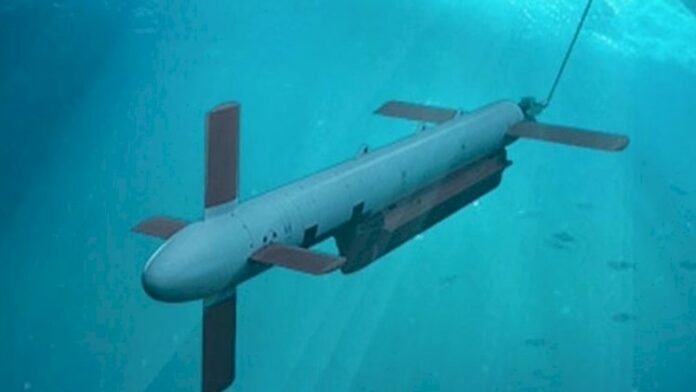
Northrop Grumman's AQS-24 mine hunting sonar completing initial in-water testing of a next-generation Deploy and Retrieval (D&R) payload.

Operated from the Mine Countermeasures Unmanned Surface Vessel (MCM USV), the AQS-24 D&R demonstrates the unmanned operations needed to perform a mine hunting mission off the MCM Mission Package aboard the littoral combat ship (LCS). 

Northrop Grumman was the first to field electro-optic mine identification and developed the first long-range synthetic aperture sonar for mine warfare, the first mine warfare unmanned surface vessel (jointly with the Naval Undersea Warfare Center) and mine warfare unmanned underwater vehicles.
The AQS-24B has significantly improved image resolution and real-time sonar processing.

Advanced Capabilities and Performance Designed to Meet Current and Future Minehunting Challenges:

  • The only deployed and operationally proven high-speed airborne mine detection system in the world.
  • High-resolution, side-scan sonar for real-time detection, localization and classification of bottom and moored mines at high area coverage rates.
  • Laser line scanner provides precision optical identification of underwater mines and other objects of interest.
  • Simultaneous operation of laser with sonar provides gap-filling capability and tactically advanced Target Detect and Target ID modes.
  • Thousands of tow hours logged from a variety of platforms.


AIOC awards services contract in the Caspian Sea

0

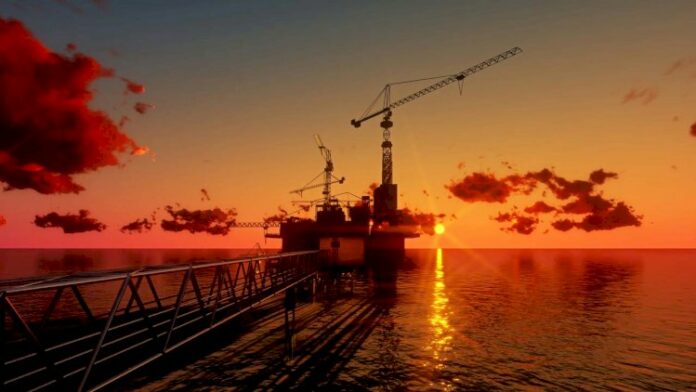
Azerbaijan International Operating Co. (AIOC) has awarded Worley a contract for engineering, procurement and construction services as part of a gas lift project. AIOC is operated by BP. 

Under the contract, Worley will provide engineering, procurement and construction services to support production operations on the Chirag platform in the Caspian Sea.

The project scope includes new gas lift flowlines and production manifolds.The services will be jointly executed by Worley’s Aberdeen and Baku locations, bringing together the offshore engineering expertise within the Aberdeen offices and the local operating knowledge and national expertise within the Baku office.

Chris Ashton, Chief Executive Officer of Worley, said:

“We look forward to continuing to support both AIOC and BP with their long-term production strategy in the Caspian Sea.”

Energy Observer sets sail on its 4-year voyage around the world

0

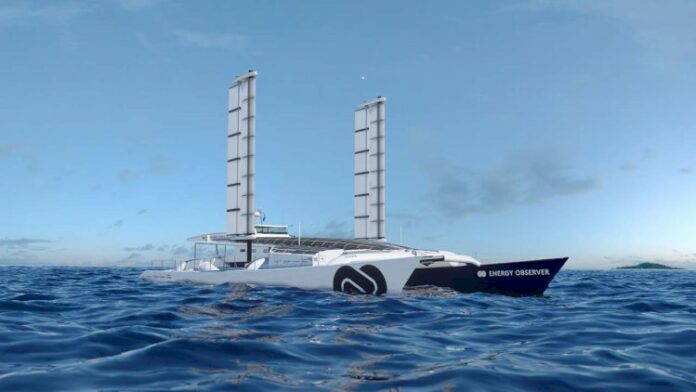
Energy Observer, the first vessel powered by renewable energies and hydrogen, cast off on her epic 4-year round the world voyage.

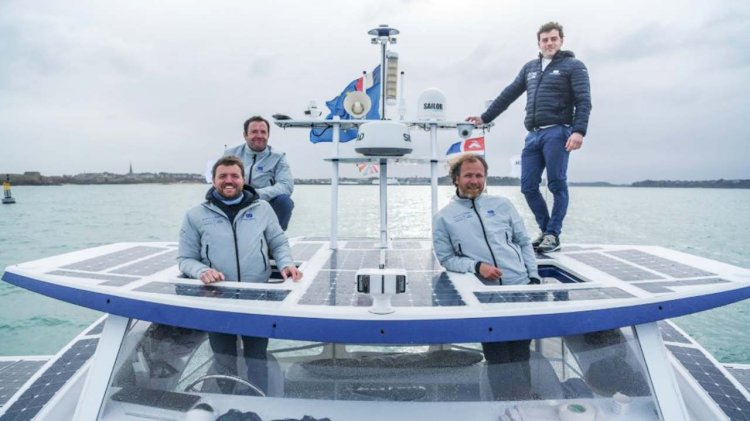
Aboard the boat on leaving Saint Malo in northern Brittany is a substantial team that includes her two historical leaders, the two captains, the ship’s engineers as well as engineers from Energy Observer Developments, who will be present to keep an eye on the setting in motion of all the innovative systems in what still promises to be a difficult sea state as far as Portugal. 

A boisterous introduction awaits then, but it’s a key phase in the bid to make the most of a small weather window in the slew of storms sweeping across the North Atlantic in recent weeks.

On the horizon is a highly colourful 2020, which will see the French vessel cross 2 major oceans and make 9 stopovers, with its two leaders, Victorien Erussard and Jérôme Delafosse, helping to relay the Olympic flame to Japan in early July.

After 3 years navigating her way round Europe having all her on-board technologies tested and developed, Energy Observer has been further optimised over the course of the winter. Equipped with a new Toyota fuel cell, additional solar panels, now notably vertical and using screen-printing technology (increasing the park’s total surface area to 202m²), as well as new variable pitch propellers and two optimised and fixed Oceanwings®, Energy Observer, which is powered by a combination of several sources of renewable energies and a green hydrogen-fuelled production and storage system, is all systems go for her future sea passages, completely self-sufficient in energy.

Some key stopovers to document the revolution in energy and hydrogen and meet up with more protagonists involved in ecological transition.

There are 20,000 nautical miles or nearly 37,000km to be covered in 2020, which equates to nearly the circumference of the earth. After Morocco or the Canaries, then on to Saint Barthélémy in the French West Indies. The negotiation of the Panama Canal (and a stopover in the eponymous capital) will enable the crew to make Hawaii and finally Tokyo, from 24 July to 9 August, during the Olympic Games.

Victorien Erussard, Captain and founder of Energy Observer, said:

“These Games, where the dominant theme is hydrogen, will be the opportunity for Energy Observer to bear witness to a series of spectacular initiatives in this direction! For example, considerable investment has gone into developing infrastructure and transport. In this way, the government has set itself a target of having 40,000 vehicles running on fuel cells in circulation in the country this year and no fewer than 800,000 by 2030. A prime example of clean mobility!”

The fuel cell already equips over 250,000 Japanese households for their energy supply. Several hydrogen production facilities have already been installed. Air Liquide is a key protagonist in this transition, with a profusion of infrastructure projects, and Toyota will supply  some 500 hydrogen cars, as well as around a hundred hydrogen buses during these Games.

As such, like its Korean and Chinese neighbours, Japan has witnessed a sea change in the hydrogen revolution, and Energy Observer is keen to bear witness to this clean, respectful, decentralised, digitalised society that is self-sufficient in energy and to which future generations aspire.

After this historic 3-week Japanese stopover, another Pacific crossing will follow, destined for California with three main stopovers, San Francisco in October, Los Angeles in November, and San Diego in December.

Jérôme Delafosse, Expedition leader and Film director, said:

“Today this State is demonstrating a remarkable pioneering spirit in terms of energy and ecological transition, in a country largely fuelled by hydrocarbons elsewhere. The State of California, which is particularly exposed to climate change, water stress, large fires and a rise in water levels, has switched course and now invests heavily in sustainable solutions, which we’re eager to document through our audiovisual productions.”


Port of Amsterdam uses floating battery as clean energy source

0

Skoon Energy and the Port of Amsterdam have launched a floating battery service to bring mobile stored power into the port and inner city of Amsterdam.

The battery, which is placed on a barge and powered by local, renewable energy, will help balance the electricity grid. Because it is placed on a barge, the battery can deliver electricity anyplace close to water. Skoon operates a platform that enables mobile battery sharing to optimize the economics for battery owners and user. This concept of battery sharing facilitates all services for energy users who are in temporary need of electricity.

In April and May, the number of river cruise calls is at its peak, due to the flower field season. Current grid connections do not provide sufficient capacity to meet the vessels’ power demand. Consequently, some of them run diesel generators to generate power whilst moored. This leads to noise pollution and additional harmful emissions in the centre of Amsterdam. The floating battery is silent and supplies green energy. The battery will be charged from renewable energy sources, such as Windpark Ruigoord, solar panels from rooftops in the port area and energy from biomass by waste-to-energy company AEB.

Koen Overtoom, CEO at Port of Amsterdam:

“We have started this project with Skoon, as it is in line with our ambition of creating partnerships that will help us become a zero-emission Port. Together with Skoon and Zoev City, the floating battery will also be deployed in the city centre of Amsterdam, when it is not needed to deliver power to river cruise vessels at berth.”

Peter Paul van Voorst tot Voorst, Founder of Skoon:

“The use cases for mobile batteries are endless. Think about construction or maintenance activities on quays or bridges in the canals of Amsterdam, for example. Batteries provide a clean alternative to diesel generators. Additional benefits of the floating battery include transport by an electrically powered barge to the customer. This reduces noise pollution, emissions and traffic on the already busy streets. Also, the barge will not take up any parking space. This makes it a faster, smarter and cleaner solution.”

Skoon is backed by clean energy conglomerate Koolen Industries, which also owns Super B, the company supplying lithium batteries to the barges as well as to tourist boats in Amsterdam, and Smart Grid, which supplies the battery system. Kees Koolen, CEO, Koolen Industries: “Amsterdam is admired for its pioneering clean energy initiatives. The canal boats are being converted from diesel to electric power, and the charging infrastructure for electric vehicles is expanding rapidly. This idea to transport mobile batteries by barges is a neat addition to this city’s clean energy system.”

The floating battery will be on the barge for six months. It will support river cruise vessels two weeks per month. During the other two weeks, the battery will be utilised by various projects in the city of Amsterdam, such as construction projects, film sets or events that often need temporary energy sources and traditionally rely on diesel generators.

With a growing network of large batteries and reliable grid connections, the step to turn to a zero-emission solution is even simpler. Zoev City is the partner involved in transporting the battery through the canals, with its full-electric vessels. The Port of Amsterdam will host a demonstration container near its headquarters, to inform people about Project Clean Amsterdam and its role in the electrification of the industry and larger Amsterdam area, based on renewable sources.

ABB wins digital service contract to increase offshore wind reliability

0

ABB has won a 10.6 million euro order for ABB Ability™ digital products and services at DolWin5 (Epsilon), which will support Germany’s energy transition through reliable delivery of enough renewable energy to power about one million homes.

ABB will enable the reliability, safety and security of the energy transmission from DolWin5 (Epsilon) by providing a comprehensive system for IT infrastructure, OT1 security, plant-wide condition monitoring, SCADA and remote access services to facilitate stable power transmission to the German national grid.

The DolWin5 (Epsilon) platform will deliver 900 megawatts of zero-carbon electricity from three connected wind farms in the North Sea, 100 km off the German coast. In addition to a converter platform offshore, there is an onshore converter station located in Emden/Ost in Germany.

Per Erik Holsten, Managing Director, ABB Norway, said:

“This order enables ABB to leverage its expertise in remote, unmanned operations and advanced digital services with the shift to a more diversified energy mix. With our intelligent project delivery experience, ABB is uniquely positioned to assure the safety,security and reliability of renewable assets worldwide. We look forward to supporting the delivery ofclean, efficient power for Germany’s energy transition.”

The offshore wind industry may be integral to Europe’s energy system by as soon as 2030, with Germany planning to generate 65 percent of electric power from renewable sources by 2030, including 20GW from offshore wind farms.

The high risks associated with power disruptions, require effective energy management for offshore wind plants. ABB received the order from Aibel Keppel consortium ANS in Norway. Aibel/Keppel FELS consortium will design, construct, and build the High Voltage Direct Current transmission system.