8.5 C
New York
Home Blog Page 898

GNV reconverted its vessel into a “floating hospital”

0

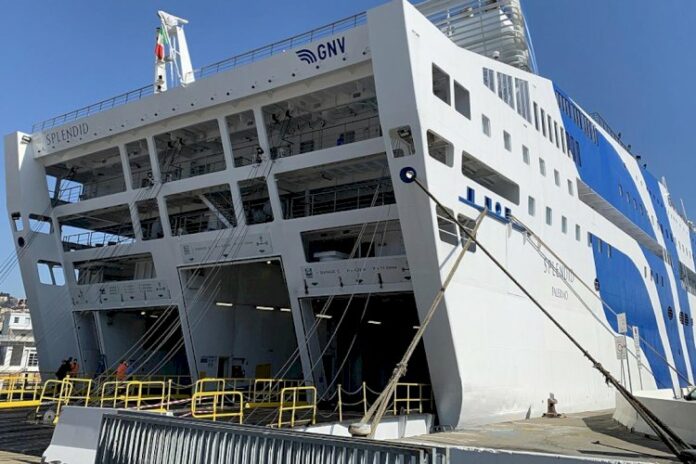
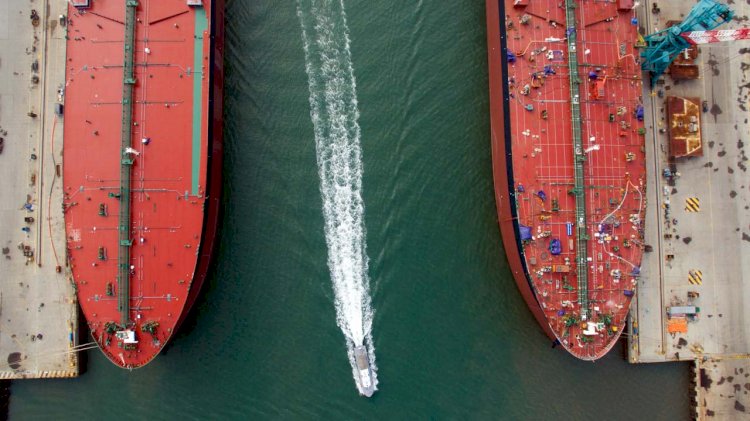
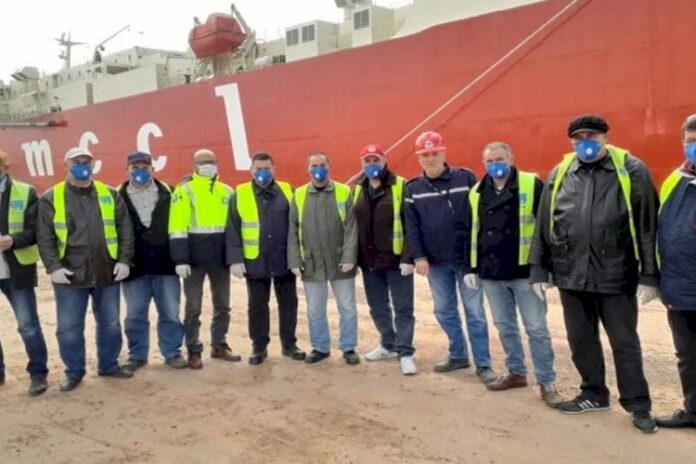
The Liguria Region takes delivery of the Splendid “floating hospital”, stationed at Ponte Colombo in Genoa’s Ferry Terminal.

Amid the coronavirus emergency, on behalf of the regional health care authority of Liguria, the ferry liner GNV has reconverted its ferry passenger vessel into a facility fully equipped to assist COVID-19 patients under quarantine, and patients during convalescence.

The Port Authority President, Paolo Emilio Signorini, announced:

“The deployment of the “floating hospital” is the result of the relief efforts made on the part of the Regional authority, the health care service and private companies to help ease crowded hospitals across Genoa and Liguria, and is a a prime example of how the port can serve a new role for the city.”

The project is the brainchild of GNV of the MSC group, together with RINA, in strict cooperation with the Liguria Health Care Service and Civil Defense, and the ship was successfully sent into action in a short space of time.

The floating hospital can provide treatment to hundreds of patients, and expand capacity in land-based hospitals to treat cases of COVID -19, not only in Liguria, but also in other parts of the country. A group of Genoa-based and other Italian companies have offered their services and supplies to this worthy iniziative.

‘We Will Be Back’: Carnival Cruise Line is lighting up all of its ships

0

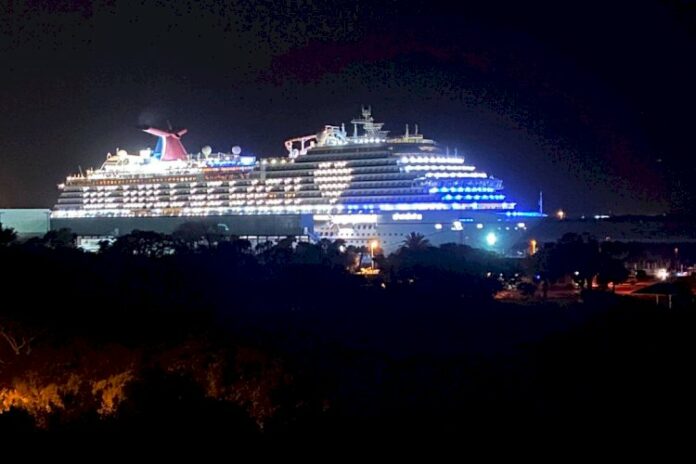
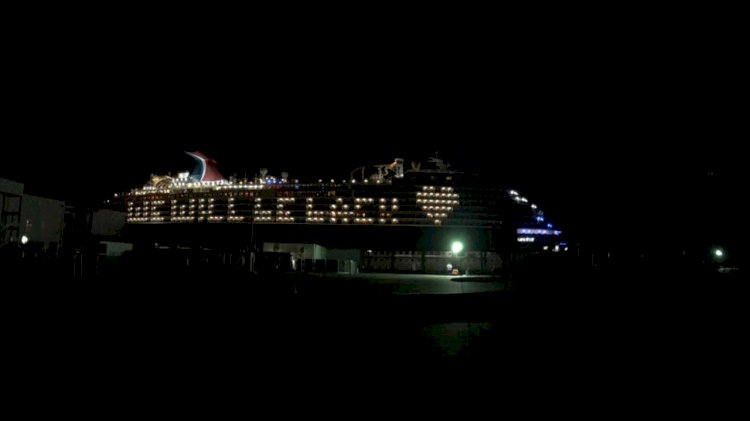
In the midst of an industry-wide pause in operations, Carnival Cruise Line is lighting up all of its ships in North America and Australia with an inspirational message for its crew, guests, travel advisors, port partners and communities in this unprecedented time of challenge.

The “We Will Be Back” message is meant to uplift spirits and serve as a reminder that cruising creates a lifetime of wonderful vacation memories.

Illuminating ships with messages was a little tricky but fun at the same time, according to Stefan Christoffersson, Carnival’s vice president of housekeeping who is part of the team that worked on the project.

It’s a process that took coordination between Carnival’s Miami headquarters and ships docked in ports along the East and West Coasts, Gulf of Mexico, Southern California and Australia or anchored at sea.

After reviewing deck plans for each of the company’s ships to determine which staterooms will spell out this hopeful message, shipboard teams had to physically turn on the lights of hundreds of staterooms – all without knowing what the finished product would look like.

Christoffersson said that overall these highly synchronized projects are going off without a hitch:

“In the end, it’s very similar to turning on your Christmas tree once you’re done decorating and seeing how it all turned out. We haven’t had one ‘We Will Be Bock’ or ‘We Will Be Buck.’

The crew takes a great deal of pride in their jobs and this project in particular has extra important meaning to them. More than anything our crew members want everyone to know that they are doing well and can’t wait to get back to the business of creating memories.” 

All ships in port or anchored where visible from land will be lit up.

Analysis: global oil storage infrastructure is in trouble

0

The largest oil supply surplus the world has ever seen in a single quarter is about to hit the global market from April, creating an imbalance of around 10 million barrels per day (bpd).

An exclusive Rystad Energy’s analysis shows global storage infrastructure is in trouble and will be unable to take more crude and products in just a few months.

The current liquid balances show supply surpassing oil demand by an average of nearly 6 million bpd in 2020, resulting in an accumulated implied storage build of 2.0 billion barrels this year.

Rystad Energy finds that the world currently has around 7.2 billion barrels crude and products in storage, including 1.3 billion to 1.4 billion barrels currently onboard oil tankers at sea. Rystad Energy estimates that, on average, 76% of the world’s oil storage capacity is already full.

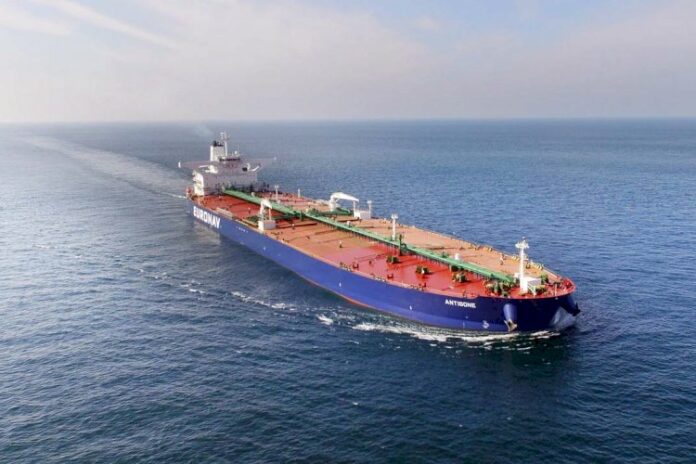
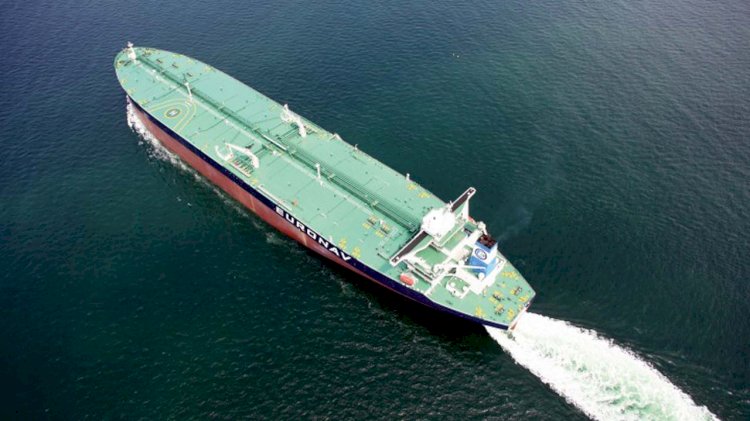
There is essentially no idle storage capacity available on tankers, as Saudi Arabia and other producers might have already wiped out the available population of Very Large Crude Carriers (VLCC) for March and April 2020. 

Photo: Euronav

Rystad Energy’s data shows that the theoretical available storage capacity at present is just 1.7 billion barrels onshore for crude and products combined. Using the estimate of an average of 6.0 million bpd of implied oil stock builds for 2020, in theory, it would take nine months to fill all onshore tanks. However, in practice we will hit the ceiling within a few months due to operational constraints.

Paola Rodriguez-Masiu, Rystad Energy’s Senior Oil Markets analyst, says:

“The current average filling rates indicated by our balances are unsustainable. At the current storage filling rate, prices are destined to follow the same fate as they did in 1998, when Brent fell to an all-time low of less than $10 per barrel.”

Floating storage normally uses VLCCs, which can carry about 2.0 million barrels. There are about 802 VLCCs active globally with a combined capacity of 250 million deadweight tonnage (dwt), capable of collectively storing 1.8 billion barrels. The entire global fleet, including smaller Suezmax and Aframax vessels, is estimated to have a combined capacity of 630 million dwt or 4.6 billion barrels.

However, to keep oil flowing between regions, a ballast of around 50% is necessary as cargos often need to travel with no cargo to the destinations where they pick up oil, meaning that at any given time around half of the world’s fleet is booked traveling to consumer destinations, while the other half is empty on their way to pick up oil. This reduces the number of available vessels to about 57.

In addition, the workable available capacity is significantly lower as many of these vessels are under long-term charter deals or locked in ownership agreements, such as COSCO vessels with PetroChina. Waiting time at ports and repairs further shrinks the workable available capacity.

Photo: Euronav

Due to the above-mentioned factors, using supertankers to float oil offshore might not be a viable option this time, as the planned OPEC+ output hike has not only limited the workable available vessels but also caused a surge in tanker freight rates. The cost of renting a VLCC on the spot market has risen from about $20,000 per day last month to between $200,000 and $300,000, depending on destination.

Rodriguez-Masiu concludes:

“We find that liquid supply will have to be reduced by around 3.0 million to 4.0 million bpd compared to the current production planning to bring the implied stocks builds closer to 2.0 million to 3.0 million bpd for 2020, which is the level of implied stocks build that we find sustainable in the short to medium term.“

OneWeb successfully launches 34 more satellites into orbit

0

OneWeb, the global communications company with a mission to bring connectivity to everyone everywhere, announced today the successful launch of 34 more satellites, aboard a Soyuz launch vehicle from the historic Baikonur Cosmodrome, Kazakhstan.

Lift-off occurred on March 21stat 17:06 UTC. OneWeb’s satellites separated from the rocket and were dispensed in nine batches with signal acquisition anticipated in the coming hours.

This is the second of its 34 satellite launches in six weeks, an achievement made possible by the pace and execution of OneWeb Satellites’ high-volume production factory in Florida. This launch brings the total number of satellites in the constellation to 74, further solidifying OneWeb’s position as a leading global communications company.

This third successful launch is another proof point of the rapid progress OneWeb has made over the past year. The company has now successfully deployed and tested satellites, installed ground stations globally, secured valuable spectrum and has a range of user terminals in development to meet customer needs. In the execution phase of its system deployment, OneWeb looks forward to bringing its services to markets including aviation and maritime, and working with carriers to provide services in rural and remote areas.

The current global health and economic crisis underscores the tremendous need and demand for connectivity, especially for rural and under-connected communities worldwide. From remote working, to online learning, to accessing healthcare information and medical advice, there is an overwhelming need to have more solutions available to connect people everywhere. OneWeb is making significant strides to deliver the connectivity that is currently lacking around the world.

Adrian Steckel, CEO of OneWeb, said:

“We are very proud of the progress we have made so far in 2020 and I would like to show the utmost gratitude for the time, effort, and expertise of the OneWeb company, our partners and our people as we come together and support one another.

In these unprecedented times following the global outbreak of COVID-19, people around the world find themselves trying to continue their lives and work online. We see the need for OneWeb, greater now more than ever before. High-quality connectivity is the lifeline to enabling people to work, continue their education, stay up to date on important healthcare information and stay meaningfully connected to one another.

The crisis has demonstrated the imperative need for connectivity everywhere and has exposed urgent shortcomings in many organizations’ connectivity capabilities. Our satellite network is poised to fill in many of these critical gaps in the global communications infrastructure.”

Coronavirus: ITF and ICS calls on global agencies to keep maritime industry

0

The ITF and the International Chamber of Shipping (ICS) have jointly written an open letter to the United Nations agencies for the global maritime industry calling on them to recognise the vital role of seafarers in this extraordinary crisis.

The letter says this should include ensuring that all seafarers, regardless of nationality, are treated as ‘key workers’ and that governments of UN member states are made aware of the critical role seafarers play to the world trade.

In addition, the ITF and ICS request that:

  • this topic be added urgently to the appropriate high-level meetings
  • national governments call tripartite meetings to find immediate solutions to the challenges facing seafarers in performing their duties, in particular crew change and the movement of seafarers

ITF seafarers’ section chair David Heindel welcomed the joint letter: “Governments, workers’ unions and social partners need to come together and agree practical and necessary measures to ensure that seafarers are provided protection in order to safeguard their health and the health of all maritime workers they are in contact with.

The ICS represents the world’s national shipowners’ associations and over 80 percent of the world’s merchant shipping tonnage.
The full text of the joint letter:

JOINT OPEN LETTER TO UNITED NATIONS AGENCIES FROM THE GLOBAL MARITIME TRANSPORT INDUSTRY

FACILITATING CREW CHANGES TO KEEP WORLD TRADE MOVING THROUGHOUT THE COVID-19 CRISIS

To:
Director General, United Nations International Labour Organization Secretary-General, United Nations International Maritime Organization Secretary-General, United Nations Conference on Trade and Development Director General, World Health Organization.

As the COVID-19 pandemic takes hold it is vital that all governments keep maritime trade moving by continuing to allow commercial ships access to ports worldwide and by facilitating the movement and rapid changeover of ships’ crews.

We are writing on behalf of the International Chamber Shipping (ICS), which represents the world’s national shipowners’ associations and over 80% of the world’s merchant shipping tonnage, and the International Transport Workers’ Federation (ITF), which speaks on behalf of approximately two million seafarers who operate the world’s internationally-trading commercial ships.

As the COVID-19 pandemic takes hold, it is important for the world’s governments to fully understand that around 90% of global trade is transported by commercial shipping, which moves the world’s food, energy and raw materials, as well as manufactured goods and components – including vital medical supplies and many products sold in supermarkets, items that are necessary (due to complex supply chains) for the preservation of many jobs in manufacturing – without which modern society simply cannot function.

In this time of global crisis, it is more important than ever to keep supply chains open and maritime trade and transport moving.

In particular, this means keeping the world’s ports open for calls by visiting commercial ships, and facilitating crew changes and the movement of ships’ crews with as few obstacles as possible.

Every month, around 100,000 seafarers need to be changed over from the ships which they operate in order to comply with relevant international maritime regulations, governing safe working hours and crew welfare, so that they can continue to transport global trade safely.

We therefore wish to emphasise the vital need for the world’s professional merchant seafarers to be granted appropriate exemptions from any national travel restrictions, when joining or leaving their ships, in order to keep the world’s maritime supply chains functioning.

In view of their vital role during the global pandemic, we suggest that professional seafarers, regardless of nationality, should be treated as any other international ‘key workers’, such as airline crew and medical personnel. As such, they should be afforded special consideration and, notwithstanding the need to comply with emergency health protocols, treated with pragmatism and understanding when seeking to travel to and from their ships.

We therefore call on your organisations to highlight the critical importance of this issue with the governments of your member states.

We request, as a matter of urgency, that this topic be added to the agenda of appropriate high level meetings, and that national authorities in your organisations’ member states should be encouraged to engage immediately with their national shipowners’ association and national seafarers’ union, in order to find rapid solutions to this serious problem which otherwise risks impeding global efforts to address the COVID-19 pandemic.

Yours faithfully,

_____________________________

Guy Platten, Secretary General International Chamber of Shipping

________________________________

Stephen Cotton, General Secretary International Transport Workers’ Federation

PGS’ Hammerfest Basin high-resolution dataset is now available

0

PGS’ Hammerfest Basin ultra-high-density high-resolution dataset is now available and will be extended further in 2020.

Full integrity data includes open acreage, and resolves the challenges in this complex area through an innovative combination of streamer setup and advanced imaging technologies.

Key features are revealed with this dataset that extends from the Finnmark Platform in the southwest into the Hammerfest Basin in the northeast

  • Deep marine sand deposits along the southern flank of the Hammerfest Basin show variable seismic amplitude anomalies
  • The combination of densely recorded data and high-end imaging technologies result in a high-resolution seismic image. At Top Kolmule the tuning thickness is reduced down to approximately 8 m
  • Clear identification of seismic amplitude anomalies within various stratigraphic units.
  • Structural traps in the Realgrunnen sandstones and Triassic fluvial channel deposits in the Snadd and Kobbe formation

Diving Deeper to Resolve the Challenges of the Barents Sea
As shown in the image above, an innovative acquisition configuration was designed as the best solution to resolve mixed depth targets in the Barents Sea. It combines novel streamer setup and advanced imaging technologies.

PGS’ planned 2020 survey extension includes open acreage in the Barents Sea and the overall area accounts for around half of the undiscovered resources on the NCS, according to the Norwegian Petroleum Directorate.

Key target areas for hydrocarbon plays in the southwestern Barents Sea are the shallow Kapp Toscana Group sandstones, and deeper, middle Triassic Kobbe Formation sandstones and potentially karstified, Carboniferous/Permian carbonates. Proven discoveries made in both geological regimes show the great hydrocarbon potential of this area, but a key challenge in producing an accurate image of the subsurface is creating a reliable velocity model that accounts for the area’s complex geological regime.

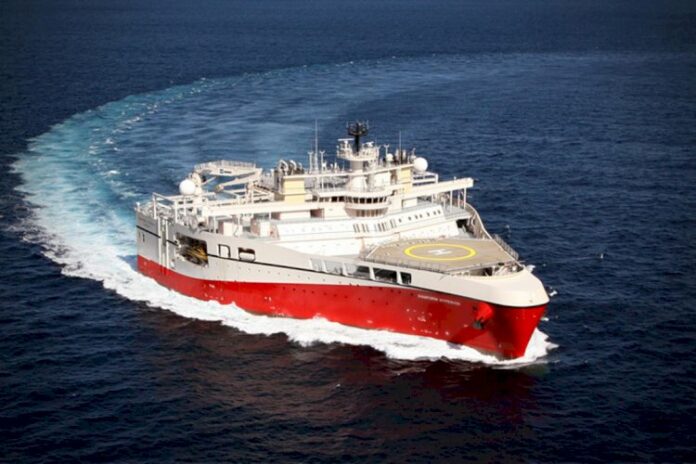
Tailored acquisition and imaging solutions provide the right seismic data in order to unlock shallow and deep targets in the Barents Sea. Ultra-high capacity vessels, like the PGS Ramform fleet, can operate with highly effective spreads with variable streamer lengths, e.g. including a sparse set of long streamers for FWI-based velocity model building. This acquisition and imaging concept offers the flexibility to address exploration challenges in the Barents Sea, as well as other basins with complex geological regimes around the world, by adding sources or operating with wide-tow source configurations.

VIDEO: MEYER WERFT’s 50th cruise ship leaves Papenburg

0

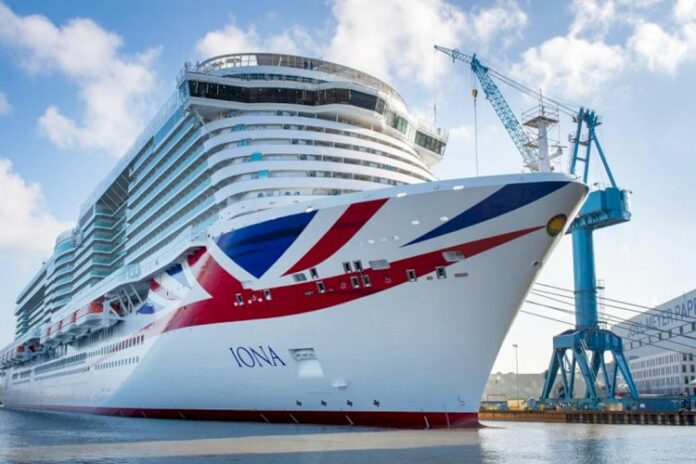
Iona for P&O Cruises started her conveyance down the River Ems on Wednesday, March 18 2020, as MEYER WERFT‘s 50th cruise ship. The new cruise ship for British P&O Cruises, Iona, to be conveyed on the river Ems to Eemshaven (NL). The ship is planned to arrive in Eemshaven on Thursday evening. Later on the ship will go through several days of technical and nautical sea trials on the North Sea.

Maritime Social eLearning Platform

0

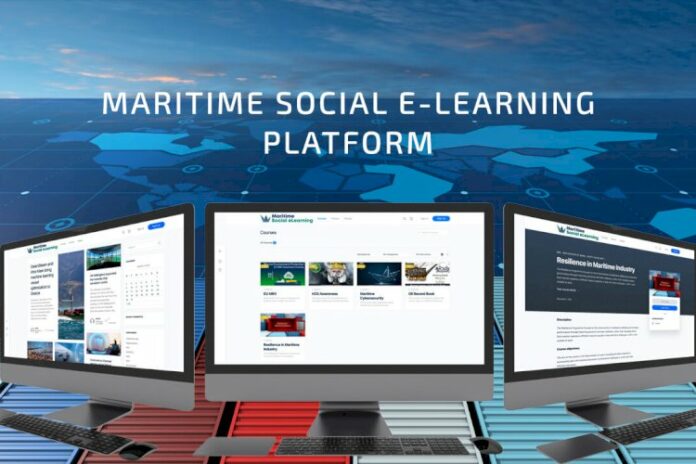
The Maritimemedia OÜ has launched a pilot project for all seafarers – Maritime Social e-Learning platform

You can now take classes from Maritime Training Providers in the safe haven of your home, and they are free.

Robertas Vjuzaninas, Managing Director and co-Founder “The Maritimemedia OÜ“, said:

“With the coronavirus changing the ins and outs of our daily lives and public health officials imploring us to stay home and socially isolate ourselves, many of us will have some time on our hands”.

Several eLearning courses are specialized in the industry’s most pressing operational challenges. The first phase of e-courses focuses on Cyber Security as an operational imperative. The e-courses to follow will be tailored to safety, risk and compliance management topics ranging IMO Guidelines, Safety Management, Quality, Environment, Risk Management Standards, Hazard Analysis,  Management of Change and International and Offshore Oil and Gas Regulations and Standards.

All e-course materials are introductory, with the option of customization for advanced or industry-specific training. The solution enables structured training, micro-learning, social learning and gamification for an engaging learning experience.

Members can connect and engage with each other on topics within forums, groups and private chats.

Visit the platform to learn more: https://seawanderer.net

The largest crane vessel in the world will arrive in Rotterdam

0

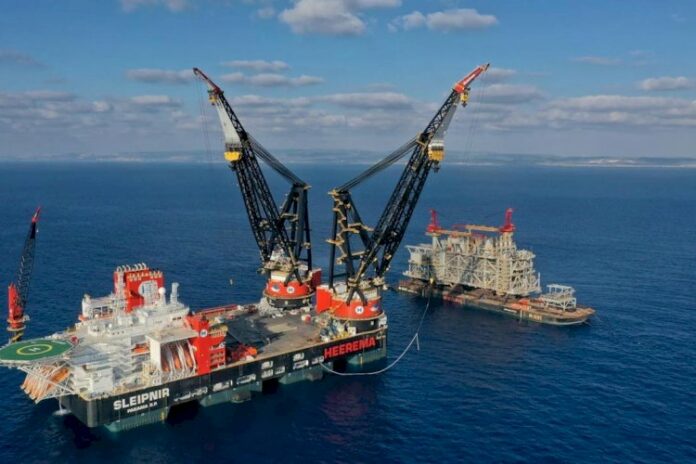
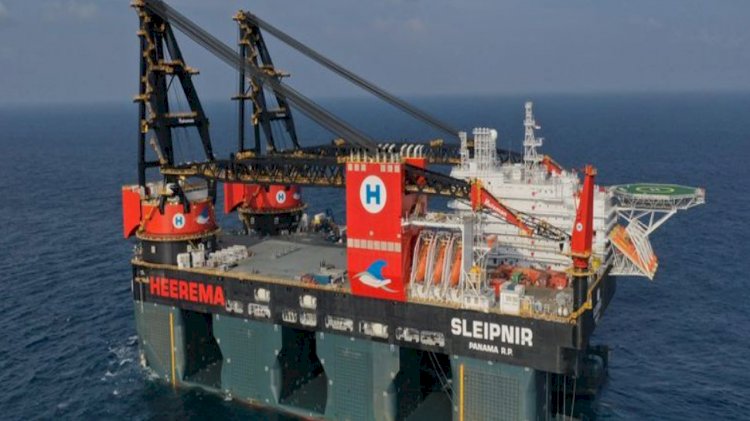
The world’s largest semi-submersible crane vessel Sleipnir will arrive in the Port of Rotterdam for the first time on Sunday, March 22. 

Sembcorp Marine, a Singaporean ship and offshore builder, completed the construction of Heerema’s Sleipnir in July 2019. Since then, the vessel has been busy across the globe.

Named after the Norse God Odin’s eight-legged stallion, the vessel stands at 220 meters long, 102 meters wide, can accommodate 400 employees, and weighs 119,000 tons. As equally impressive as its mythical namesake, the vessel has already broken lifting records for crane vessels with a 15,300 lift in September 2019.

The semi-submersible vessel has two cranes onboard, each capable of lifting 10,000 metric tons. This ability makes it suitable for the largest offshore jobs, such as building wind turbines at sea, dismantling old platforms, or constructing the most significant offshore structures.

Due to Sleipnir’s two large streamlined floats, the vessel can sail relatively quickly (on average, twenty kilometers per hour) with limited fuel consumption. What is especially unique about Sleipnir is that it has ‘dual fuel’ propulsion and can, therefore, run entirely on the emission-reducing fuel LNG.

Heerema actively invests in sustainability measures, most recently trialing alternative fuels on Thialf, a semi-submersible crane vessel with a 14,200 metric ton lifting capacity. Alongside, the ongoing Shore Power Caland Canal project in collaboration with Eneco to provide 100% renewable energy to Heerema vessels that moor in the Port of Rotterdam.

Sleipnir arrives following a successful project execution in Trinidad, having already worked in Brazilian and Israeli waters. The vessel arrives to prepare for future decommissioning work across the North Sea. By using Sleipnir, Heerema is working on cleaning up retired drilling platforms in the cleanest possible way with their use of emission reducing LNG. The vessel is due to depart at the end of March for the first of several jobs.

TenneT’s offshore power socket ready for sea voyage to Borssele

0

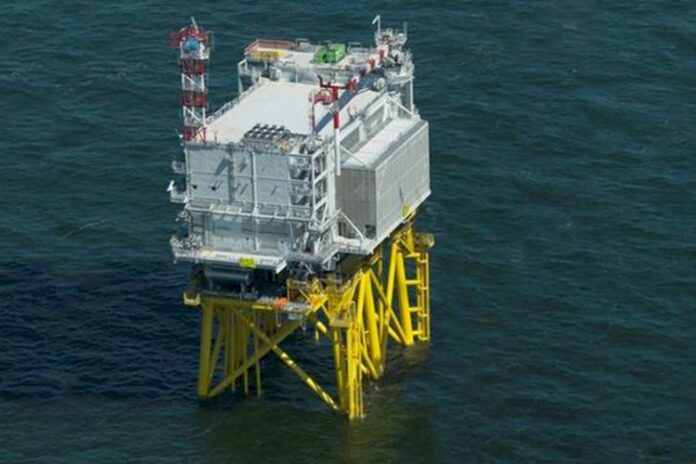
The superstructure (topside) of TenneT’s offshore transformer platform for the Borssele III, IV and V wind area is ready for its sea voyage. Right on schedule, the offshore power socket, Borssele Beta, will provide access to the wind energy generated by the offshore wind farms Borssele III, IV and V that are still under construction, and bring it onshore starting in 2020.

The 700 MW offshore station is expected to be operational according to schedule on 1 September. From that point onwards, the wind farm being constructed approximately 22 km from the coast of the Province of Zeeland by the Blauwwind consortium will be plugged into this power socket. The electricity generated by the offshore Borssele III, IV and V wind farm will subsequently be brought onshore to the high voltage substation in Borssele by means of two 67-kilometre long cables. The platform was built by HSM Offshore in Schiedam (NL).

Marco Kuijpers, Director Offshore Projects:

“With this platform, the offshore grid that TenneT is building in the Dutch North Sea is definitively taking shape. Borssele Beta is the second offshore grid connection built by TenneT. Over the coming eight years we will build a new offshore connection every year. I am proud that we are able to make such a significant contribution to the energy transition in which offshore wind energy plays a crucial role.”

Sandor Gaastra, DG Climate and Energy, Ministry of Economic Affairs and Climate Policy (EZK):

“The construction of the Dutch wind farms in the North Sea is well on track. This is in part due to the coordinated construction of an offshore electricity grid by TenneT. The second ‘offshore power socket’ will transport approximately 2.5% of the electricity used in the Netherlands from the wind farm to the mainland.”

On the 22th of  March, the pontoon carrying the topside will sail through the New Waterway in the direction of the Borssele III and IV wind area. At this site, a crane vessel will place the topside on top of the substructure (jacket).
The superstructure (topside) consists of three interior levels (main deck, utility deck, control deck) and an outer deck (roof deck). The topside is 25 metres high, 58 metres long and 32 metres wide. The topside weighs 3,650 tonnes.

The Borssele Beta transformer platform also contains a monitoring station with various monitoring systems, such as nautical radars, meteorological systems (for wind, precipitation, clouds and temperature) and ecological monitoring systems for birds and bats. A similar Maritime Information Provision Service Point (MIVSP) is being installed on every offshore transformer platform by the Directorate-General for Public Works and Water Management (Rijkswaterstaat) in cooperation with TenneT. These monitoring stations will be used to collect unique and detailed information along the entire Dutch coastal area. In addition to the Coastguard, other organisations, such as port authorities, universities, the Dutch Meteorological Office (KNMI), and wind farm operators will make use of this data.

Forty percent of the Netherlands’ electricity supply will come from offshore wind farms by 2030. As such, offshore wind energy is an important pillar of the energy transition. The Netherlands is on track towards achieving its climate objectives. TenneT is making an important contribution to the energy transition by installing offshore wind farms on schedule and within budget. Borssele Alpha was delivered on time (September 2019) and Borssele Beta now also will be installed offshore on schedule to connect the wind farms that are now being constructed.

The Borssele III and IV wind farms will have a total capacity of 700 megawatts (MW). This corresponds to the electricity generation requirements of approximately one million households. The power will be connected through TenneT’s offshore Borssele Beta connection to the Borssele high voltage substation, from which it will be distributed to the onshore grid. TenneT will connect the wind farms off the coast of the Zeeland, Zuid-Holland and Noord-Holland provinces and the area above the West Frisian Islands the same way. Eight times over, TenneT will use the same 700 MW transformer platforms that are located close to the wind farms, and the same type of cable connection to the coast. This standardisation will allow these projects to be completed more efficiently, more quickly and more economically.