8.5 C
New York
Home Blog Page 897

Svitzer announces 10-year extension of a marine service contract in Sakhalin

0

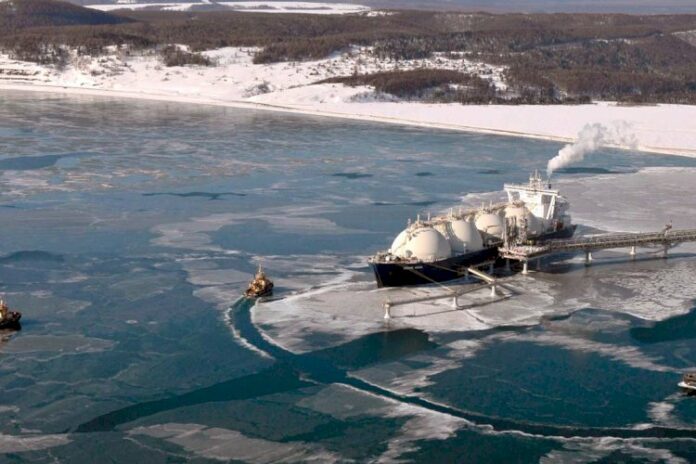
Svitzer is announcing a ten-year extension of their marine service contract with Sakhalin Energy Investment Company Ltd., a consortium set up to develop and manage the Sakhalin-II project, aimed at producing and exporting oil and liquefied gas.

Svitzer has been providing towage services to the Sakhalin-II project since 2007. The extension, which comes into effect in November 2022, supports the mooring of more than 1800 gas carriers with a vessel fleet of 4 Robert Allen ice-breaking tugs and 2 mooring boats. These vessels are operated by a team of 58 Russian crew members, supported by nine onshore staff.

With the COVID-19 virus making life difficult for people and putting a strain on global trade, towage plays a crucial part in the logistics value chain – bringing vessels and cargo safely in and out of ports and terminals.

Commenting on the extension, Alan Bradley, Cluster Manager – Asia, said:

“We are very pleased that Sakhalin Energy Investment Company Ltd. have chosen Svitzer as their preferred partner for 10 more years. With the extension we are able to continue to play an important role in ensuring that oil, gas, food and supplies are reaching people and homes. Our goal is to ensure we always support the customer’s business by providing efficient marine services in their terminal – the extension of a contract as significant as this one gives us confidence that we are adding value. To witness the dedication and pride our colleagues in Sakhalin take in their jobs day-to-day makes me very proud, and gives me confidence in our ability to deliver safe, efficient and high quality services in the most challenging of environments.”

With this long-term agreement Svitzer remains committed to ensuring reliable and safe marine operations for Sakhalin Energy Investment Company Ltd. in a harsh and remote area of the world. The operation in Sakhalin is part of Svitzer’s Asia and Middle East region (AMEA) here Svitzer employs 1.225 people and 109 vessels, delivering marine services to global and regional customers across 10 countries.

ICS and IAPH call to support the maritime sector and global supply chains

0

The International Chamber of Shipping (ICS) and the International Association of Ports and Harbours (IAPH) have joined forces to call on G20 leaders to act quickly to protect global supply chains from the impact of COVID-19.

In an open letter the two organisations representing the global shipping industry and the worlds ports and harbours set out that:

“In this time of global crisis, it is more important than ever to keep supply chains open and maritime trade and transport moving. Leadership from the G20 in calling for a co-ordinated approach by governments, working in conjunction with the UN International Maritime Organization, WHO, and other relevant agencies is therefore of the utmost importance.”

The letter also highlighted that around:

“90% of global trade is transported by commercial shipping, which moves the world’s food, energy and raw materials, as well as manufactured goods and components – including vital medical supplies and many products sold in supermarkets, items that are necessary (due to complex supply chains) for the preservation of many jobs in manufacturing – without which modern society simply cannot function.”

The joint letter has been sent to G20 government leaders and UN bodies ahead of their extraordinary G20 summit on Tuesday, 24 June 2020.

Guy Platten, Secretary General of the International Chamber of Shipping said:

“Shipping is the lifeblood of the world. Without the efficient and safe transportation of food, medical supplies, raw materials and fuel, countries could face an even more difficult situation than the one we are all facing. We need nations, led by the G20, to work together to provide coordinated rather than kneejerk restrictions to protect us all from COVID-19. We need pragmatic, science-based and harmonised guidance for the global maritime sector that ensures the safe delivery of the goods that we are all going to rely upon in the coming months. This is a simple ask that can deliver a win-win for all.”

Patrick Verhoeven, Managing Director of the International Association of Ports and Harbors added:

“Whilst the primary objective of protecting public health should not be jeopardised in any way, ports must remain fully operational with all their regular services in place, guaranteeing complete functionality of supply chains. Governments should support shipping, ports and transport operators in doing everything possible to allow transport of goods in and out of ports so that food, medicine and other vital supplies will continue to reach people worldwide.”

Global Offshore announces a five-year export cable repair framework with BBE

0

Global Offshore, a leading provider of cable installation, repair and trenching services to the offshore renewables, utilities and oil & gas markets and part of the Global Marine Group, announced today a five-year export cable repair framework with Balfour Beatty Investments and Equitix (BBE), covering the three OFTOs they own: Humber Gateway, Gwynt Y Môr and Thanet.

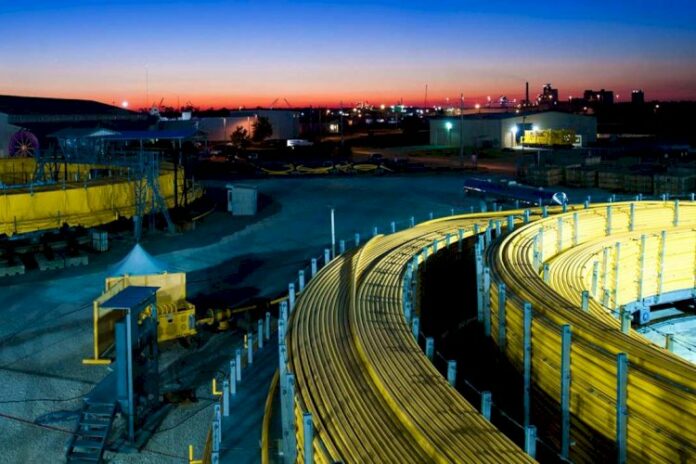
The Complete Cable Care solution is designed to respond quickly to power cable damage and therefore brings new standards of readiness and responsiveness to the industry. The service is supported by Global Marine Group’s fleet of cable ships and CTVs, a maintained stock of universal power joints and cable, with access to qualified jointers, prepared to respond to a fault or incident on any of the OFTOs covered by this agreement.

With a total of 152km of export cable covered, the framework agreement, which began in February, sees BBE join Transmission Capital Partners, Ørsted, Scottish & Southern Electricity Networks and Vattenfall all with export or array cable being safeguarded under similar agreements with Global Offshore.

Director of Power Cable Maintenance, Andrew Lloyd, commented:

“Export cable faults have serious implications on the amount of energy that can be harnessed and utilised from an offshore wind farm, so proactive intervention before they happen as well as quick action when they do occur make all the difference to minimising any loss in revenue. With our reliance on renewable energy ever increasing, we’re pleased to be working with BBE as their risk reduction and repair partner across these three important UK sites.”

Lloyd continued:

“As an active player in the sector since the very first European wind farm installation 20 years ago, and to date managing multiple frame agreements covering over 2,000km of power cable, we’re able to utilise pre-engineered scenario plans alongside access to the right cable spares, joints, jointers and assets, all part of our Complete Cable Care solution, to reduce the average 100 day export cable repair time considerably.”

John Sinclair representing BBE said:

“BBE has developed a suite of contingency plans to address all credible events that could impact on OFTO availability. The contingency plan for a subsea cable fault identified the potential time and cost savings that could be achieved by entering into a framework agreement with a marine repair contractor, so BBE is delighted to have signed this five year agreement with the Global Marine Group.”

UAE’s first greenfield commercial bulk liquid storage terminal

0

Abu Dhabi Ports has signed a strategic agreement with Saudi Arabia based Arabian Chemical Terminals (ACT) that will see the development of the emirate’s first greenfield commercial bulk liquid storage terminal at its flagship, deep-water Khalifa Port.

Further diversifying Abu Dhabi Ports’ portfolio with enhanced capabilities in the handling of liquid bulk products and gases, the project will benefit existing customers and attract new customers in the region seeking liquid bulk storage.

Serving as the first terminal to be developed by ACT in the UAE and specifically in Abu Dhabi, the facility’s strategic location and advanced facilities, which will deliver world-class logistics and industrial services, is expected to appeal to ACT’s current clientele that includes some of the world’s largest oil and gas firms. Both new and existing customers will be able to take advantage of Khalifa Port’s strategic location combined with its improved maritime, logistics, and industrial capabilities.
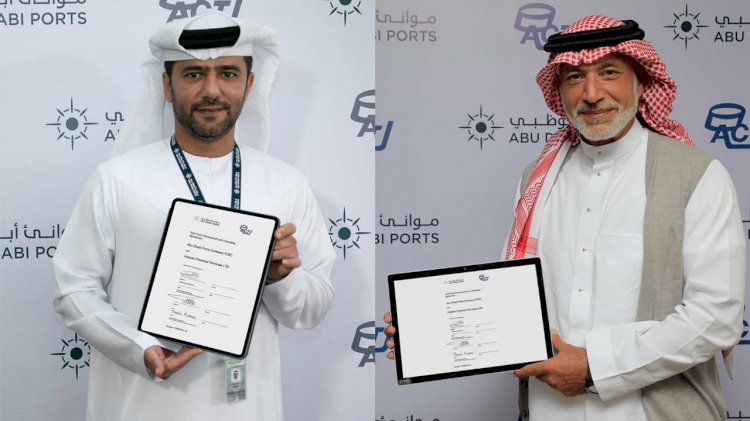
The agreement for the bulk liquid terminal, which will be developed on a 50,000 square metre land plot adjacent to a 16 metre deep-water quay access, with option for an additional 150,000 square metres of land, was signed by Captain Mohamed Juma Al Shamisi, Group CEO of Abu Dhabi Ports and Rakan Alireza, Managing Director of Arabian Chemical Terminals Ltd and Deputy Managing Director of Reza Investment Company Ltd.

As per the agreement, the project is set to be completed in two phases with the first stage slated for commissioning in the second half of 2022 entailing the deployment of 44 storage tanks sized 1250 and 3000 tonnes each. The terminal’s second phase will commence following expansion of the surrounding area and will consist of a number of larger industrial storage tanks and spheres.

Upon completion, the facility will be able to handle a number of liquid bulk products. Broadening the range of capabilities and value offering for Abu Dhabi Ports’ clients, the new bulk liquid storage terminal at Khalifa Port will provide customers with the opportunity to reduce their costs of outsourcing their liquid and gas expenditures.

Both new and existing customers will be able to take advantage of Khalifa Port’s strategic location combined with its improved maritime, logistics, and industrial capabilities.

Photo caption: Captain Mohamed Juma Al Shamisi, Group CEO of Abu Dhabi Ports and Rakan Alireza, Managing Director of Arabian Chemical Terminals Ltd and Deputy Managing Director of Reza Investment Company Ltd, sign the strategic agreement to develop emirate’s first greenfield commercial bulk liquid storage terminal at Khalifa Port.

Captain Mohamed Juma Al Shamisi, Group CEO of Abu Dhabi Ports, said:

“Providing technology-rich, end-to-end logistics solutions for customers of all sizes and industries is at the core of Abu Dhabi Ports’ diversification strategy. Working closely with ACT, we are pleased to now offer a comprehensive suite of integrated logistics solutions that are powered by the most advanced technologies available in the market”.

Rakan Alireza, Managing Director of Arabian Chemical Terminals Ltd and Deputy Managing Director of Reza Investment Company Ltd. said:

“We’re excited to be spearheading the development of our first commercial tank farm in the UAE, here in Abu Dhabi, as we previously pioneered in KSA. Located between Abu Dhabi, Ruwais, and Dubai industries, the new liquid terminal will not only prosper as a result of its strategic location, but will be further bolstered by Khalifa Port’s multi-modal connectivity with access to the sea and UAE’s extensive road and future GCC railway network. In addition to supporting our overseas expansion strategy, the project will also provide the foundation for other potential terminal activities within the emirate of Abu Dhabi.”

Beyond the development of the bulk liquid terminal, ACT is exploring different opportunities to expand its service offering at Khalifa Port and its surrounding environment. This expansion includes the facilitation of fuel bunker services for port customers, drumming and ISO filling services, the development of an independent laboratory, realisation of MARPOL slops reception facilities, ADR qualified trucking and distribution services, as well as offering stevedoring services that will support other liquid product custody transfers.

ACT is also considering new avenues to support KIZAD and its clients, such as providing them with feedstock offerings or assistance in selling their yields, in addition to cooperating with the industrial zone to develop warehouses for both dry and liquid goods.

Aker Solutions wins 20-year umbilicals master order with Chevron

0

Aker Solutions has entered a master agreement to provide umbilicals for Chevron-operated oil and gas fields in the US Gulf of Mexico. The company also secured the first work order under the new master agreement, to provide 24 kilometers (15 miles) of umbilicals for Chevron’s Anchor project.

The scope of the Chevron agreement includes the delivery of engineering, design and manufacturing of dynamic and static control umbilicals, dynamic and static power umbilicals, and service and installation support.

This agreement lays the foundation for a long-term collaborative relationship incentivizing both Chevron and Aker Solutions to jointly improve long-term performance both technically and commercially through multi-project synergies, execution excellence and repeatability, and life-of-field thinking.

Luis Araujo, chief executive officer of Aker Solutions, said:

“We are honored to have entered this master order with Chevron and to have been awarded the Anchor work order. This demonstrates the mutual trust between the two organizations, as well as the capabilities and experience of our umbilicals manufacturing organization in the US.”

Aker Solutions was at the same time awarded the first work order under the Chevron master order for the Anchor project in the US Gulf of Mexico. The scope includes about 24 kilometers (15 miles) of 20,000 psi dynamic steel tube- and power umbilicals and distribution equipment. The deepwater field is located approximately 225 kilometers (140 miles) offshore Louisiana at a water depth of 1,524 meters (5,000 feet).

Aker Solutions’ facility in Mobile, Alabama in the United States will perform the engineering, design and manufacturing of the umbilicals. The work will start up immediately.

The contract will be booked as order intake in the first quarter of 2020.

Wärtsilä delivered a navigation simulator to SAMK in Finland

0

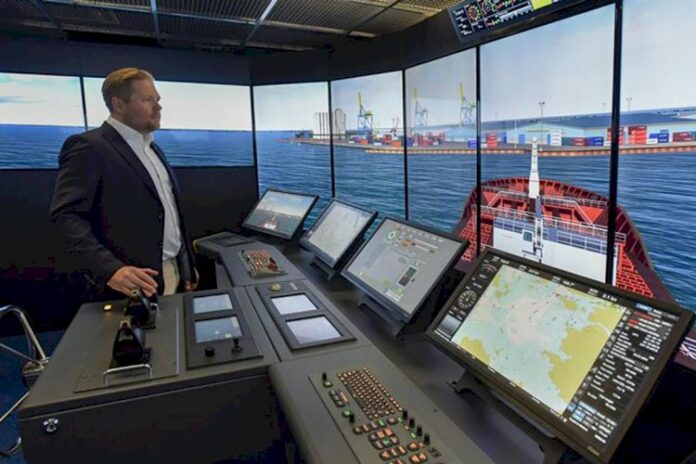
The technology group Wärtsilä has delivered a navigation simulator and specific mathematical models to the Satakunta University of Applied Sciences (SAMK) in the city of Rauma, Finland.

These will be used as an essential enabler in the Intelligent Shipping Technology Test Laboratory (ISTLAB) project, which aims at creating a technically precise testing environment for remotely controlled, autonomous vessels. The contract with Wärtsilä was signed in the 4th quarter of 2019. 

The test laboratory project is the first of its kind in the world, and its unique approach makes it of great interest, and of great value, to the global maritime community. The programme will, in turn, identify and open the prospects and possibilities for remote pilotage. 

Alexander Ozersky, Deputy General Manager, Voyage Solutions, Wärtsilä, says:

“This project is yet another example of how Wärtsilä’s simulation technology can enable an essential testing environment for future, ready-to-go, smart marine solutions. The results of this project, and the technology involved, can be utilised worldwide to deliver enhanced safety and efficiency in marine operations.”

Meri-Maija Marva, Training Manager, Satakunta University of Applied Sciences, says:

“The intention is to eventually develop an actual case study. However, first we need to carry out simulated testing, and for this the Wärtsilä technology is essential. The overall support from Wärtsilä in this tremendously important project has been critical.”

Wärtsilä and SAMK have worked in close cooperation for more than 20 years. The university already has a full mission simulator with six bridges at its facility, which was installed in 2016. 

Tracerco secures first subsea inspection project for a new pipelay development

0

Tracerco, part of Johnson Matthey Plc, has recently been awarded a deep-water subsea inspection project to assess the integrity of a new pipelay in the Gulf of Mexico (GoM).

As a method of ensuring maximum value and profitability, whilst safeguarding operational personnel and the environment, the operator will deploy DiscoveryTM, Tracerco’s Subsea CT Scanner, to obtain critical baseline integrity data on the new pipeline system.

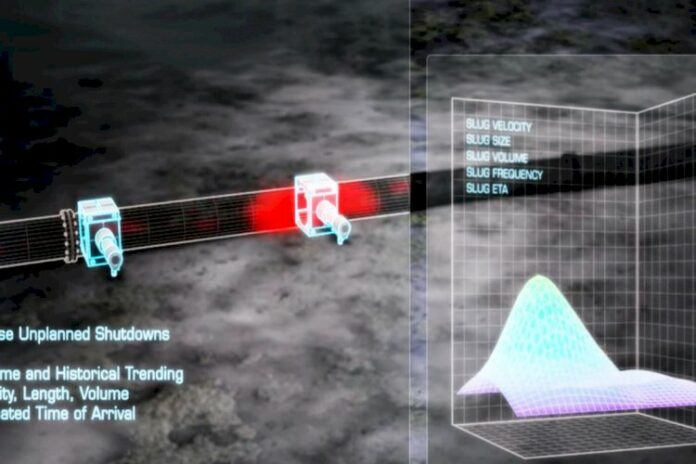
Via the use of corrosion modelling, multiple inspection locations will be identified by the operator along the pipe. DiscoveryTM will then be deployed to scan each pre-defined inspection area to obtain critical baseline data and identify and characterise any potential metal loss anomalies, defects or general wall loss. By obtaining this accurate integrity data on areas of future potential concern, the operator will ensure they have the data needed to be confident going forward, that the condition of their pipeline system meets all safety and regulatory requirements, whilst ensuring that maximum production is achieved.

After the initial inspection campaign, DiscoveryTM will be deployed annually to reinspect the new pipeline system to measure corrosion growth rates and identify any potential integrity concerns.

DiscoveryTM, was deemed the most suitable technological solution for the inspection campaign, as it can provide real time data on a variety of integrity issues including pipeline corrosion, pitting and wall thinning, without interrupting production. DiscoveryTM inspections are also non-intrusive, meaning the risk of damage to the pipeline is minimised as there is no requirement to remove any protective coating – regardless of thickness and material.

New tug to serve Pacific Northwest and California ports

0

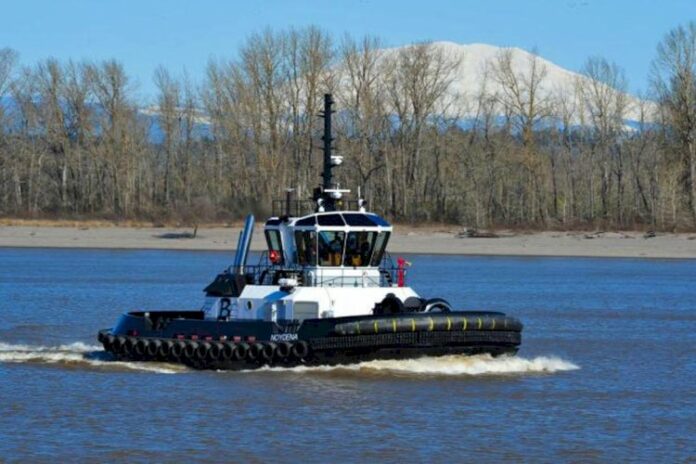
Crowley Maritime Corp.’s marine services group has entered into a bareboat charter with Brusco Tug and Barge for an all new RApport-design tractor tug to serve Pacific Northwest and California ports, performing ship assist and harbor escort work.

The vessel, which Crowley will rename Hercules after delivery next week, was designed by Robert Allan Ltd., and constructed by Diversified Marine in Portland, Oregon, for Brusco. The 82-foot, 6000-horsepower tug is powered by twin Caterpillar 3512, U.S. EPA Tier IV-compliant engines. The engines drive two azimuth stern drive (ASD) thrusters, and provide 81 tons of bollard pull while still remaining nimble while assisting ships.

Johan Sperling, vice president for Crowley’s marine service group, said:

“This high performing tug exemplifies our continued commitment to providing the best technology and performance in our fleet of tugboats on the West Coast. Our customers count on our fleet to be efficient and dependable, and Hercules adds another highly reliable asset.”

The Tier IV engines are environmentally friendly and fuel efficient, while maximizing performance, and exceed federal and the State of California’s environmental regulations. With high safety and operational capabilities, the tug is specifically designed to handle all manner of conditions a vessel may face. It will start service in Puget Sound but is capable of handling operations in Crowley-serviced ports throughout California.

Porter Sesnon, general manager of Crowley’s ship assist and escort services, said:

“The technology on the Hercules will ensure our customers get in and out of port efficiently to meet the demands of their supply chains, whether their vessel is a large tanker, a modern container ship, or other craft.”

Crowley’s marine services group, with U.S. West Coast operating headquarters in Seattle, utilizes one of the most advanced fleets of ship assist and tanker escort tugs in North America. Crowley safely assists the ships through some of the tightest, most environmentally sensitive waterways in the world. Crowley entered the ship assist business at the start of the 20th century, operating steam-powered tugs in San Francisco Bay in 1906.

New study: LEGO bricks could survive in ocean for up to 1,300 years

0

A study led by the University of Plymouth examined the extent to which items of the ever-popular children’s toy were worn down in the marine environment.

By measuring the mass of individual bricks found on beaches against equivalent unused pieces and the age of blocks obtained from storage, researchers estimated that the items could endure for anywhere between 100 and 1,300 years.

They say it once again reinforces the message that people need to think carefully about how they dispose of everyday household items.

The research, published in the journal Environmental Pollution, focused on bricks of LEGO found washed up on the coastlines of South West England.

Over the past decade, voluntary organisations from Cornwall – including Rame Peninsula Beach Care and the LEGO Lost at Sea Project – have retrieved thousands of pieces and other plastic waste during regular beach cleans.

Previous studies have indicated that many of these could have either been lost during beach visits or entered the environment via the household waste process.

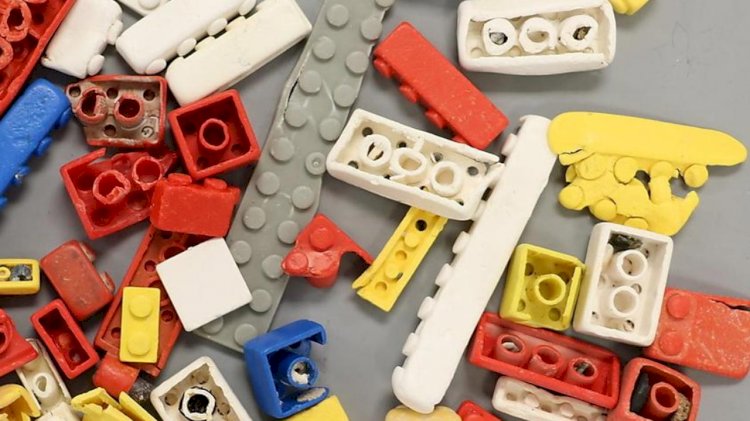
For this particular study, 50 pieces of weathered LEGO – constructed of acrylonitrile butadiene styrene (ABS) and collected from beaches – were washed and then weighed in labs at the University, with the size of the studs also being measured.

Photo: The University of Plymouth

The chemical characteristics of each block were then determined using an X-ray fluorescence (XRF) spectrometer, with the results used to confirm the age of individual pieces based on the presence of certain elements no longer in use.

By pairing those items with unweathered sets purchased in the 1970s and 80s, researchers were able to identify levels of wear and – as a result – how long the pieces might continue to endure in the marine environment.

The study was led by Dr Andrew Turner, Associate Professor (Reader) in Environmental Sciences, who has previously conducted extensive research into the chemical properties of items washed up as marine litter:

“LEGO is one of the most popular children’s toys in history and part of its appeal has always been its durability. It is specifically designed to be played with and handled, so it may not be especially surprising that despite potentially being in the sea for decades it isn’t significantly worn down. However, the full extent of its durability was even a surprise to us.

The pieces we tested had smoothed and discoloured, with some of the structures having fractured and fragmented, suggesting that as well as pieces remaining intact they might also break down into microplastics. It once again emphasises the importance of people disposing of used items properly to ensure they do not pose potential problems for the environment.”

Doosan to supply 12 transfer cranes to Busan New Port

0

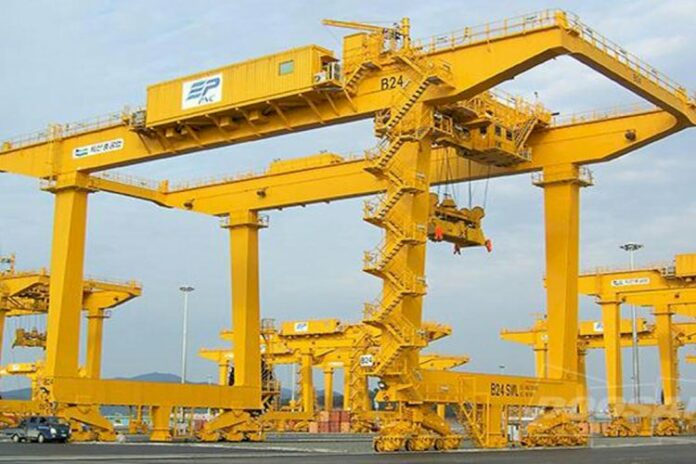
Doosan Heavy Industries & Construction (DHIC) announced on March 17 that it had signed an agreement with Busan Port Authority (BPA) to supply twelve transfer cranes to Busan New Port’s West Pier by March 2022 for its Phase 2-5 installation.

A transfer crane is used to load and transfer containers in a terminal yard via remote unmanned operations. Opened in 2006, Busan New Port currently operates more than 230 transfer cranes, most of which are Chinese imports, except for 49 units that DHIC had supplied for Phase 1-1 back in 2006.

Hongook Park, head of DHIC’s Power Service BG, said:

“This agreement means that Busan New Port will have its first batch of domestically manufactured cranes in fifteen years. We will cooperate with our partners in order to continue supplying high-quality cranes that deliver outstanding performance.”

BPA also plans to order port equipment from domestic manufacturers for the following Phase 2-6 project. The next order is expected in 2023, with the opening to follow in 2026. According to the “2nd Basic Plan for New Port Construction” announced by the Ministry of Oceans and Fisheries in August 2019, a total of twelve additional piers will be constructed at Busan New Port and Incheon New Port with the aim of boosting the competitiveness of domestic ports.