4.9 C
New York
Home Blog Page 899

Wind industry unites to drive sector’s digital transformation

0

With big data, digitalisation and cybersecurity hot topics for the wind industry, the Offshore Renewable Energy (ORE) Catapult is spearheading the sector’s digital transformation through its Wind Digital Innovations Forum (WDIF).

A joint initiative with the Digital Catapult, the Forum was formally launched in February 2020 and is chaired by Mike Anderson, co-founder and ex-Chief Technical Officer for RES, and current Chair of ETIPWind. It brings together wind owner/operators and asset managers including BayWa, Vattenfall, Innogy, Natural Power and Wood, with academia and small innovators, such as Cognitive Business and Cyberscape, to drive forward the sector’s digital transformation.

The group’s work will build on the ORE Catapults’ extensive experience and existing portfolio of wind related digital and data initiatives such as SPARTA, WEBS and POD and will focus on four key strategic work programmes:

  • Cyber Security – investigating the importance and ease with which security could be breached, especially with the proliferation of Internet of Things (IoT) technology being used by data owners and their supply chain.
  • Data Maturity – looking at how data owners use data within their businesses and the proliferation of data analytics to improve performance and reduce operational costs.
  • Data Integration – in conjunction with the data landscape programme developed by ORE Catapult and Accenture, this workstream will investigate systems and operational data “touch points” within data owners.
  • Digital Supply Chain Engagement – engaging with the Digital Catapult to translate wind industry challenges and market opportunities into the technical language of the digital supply chain, whilst mapping the best-in-class game changers in IoT, artificial intelligence and virtual reality/

The outcomes from the three work programmes will be available exclusively to WDIF members.

Vattenfall Head of Offshore Wind, and Chair of WindEurope, Gunnar Groebler, said:

“Digitalisation is at the top of our agenda. It will offer us a large potential for further cost improvement, for example via the development of data-driven models and operations for the maintenance of our wind farms. Our company is focussed on continuous automation, especially with regard to the operation of our assets optimised for the electricity markets.”

With 1GW of operating wind in UK, and a further 4GW in development, Vattenfall sees participation in the WDIF as a valuable opportunity in achieving its ambitions.

Steve Ross, ORE Catapult’s Data and Digital Business Lead, said:

“The WDIF is a unique collaboration of data owners and solution providers, working together to overcome some of the key data issues facing the wind industry and offering their own perspectives on how we might tackle them. The Forum will also develop disruptive strategies to help progress the digitalisation of the sector as well as potentially starting to develop standards and protocols for data management that do not currently exist.

In order for the Forum to be a success, we need as wide a representation from across the industry as possible, bringing together different perspectives, viewpoints and ideas. Data management and cybersecurity are beginning to impact on all areas of the offshore wind industry, and so I’d encourage as many companies as possible to consider the benefits of being a member of the WDIF.”

George Garforth from Innogy added:

“The WDIF is an exciting collaborative approach to developing digital solutions to the problems faced in wind farm operations. The Forum facilitates collaboration between operators and technology firms on key digital topics such as data integration, cyber security and artificial intelligence. This feels like an opportunity to make genuine progress in an area which desperately needs it.”

SCHOTTEL to equip a new tugboat for SLSDC with azimuth thrusters

0

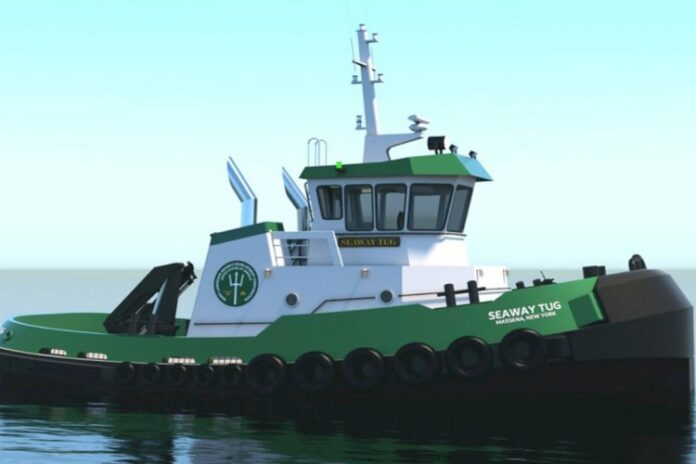
German propulsion manufacturer SCHOTTEL has been selected to equip a newly built harbour tugboat for the Saint Lawrence Seaway Development Corporation (SLSDC) with medium-sized azimuth thrusters.

The vessel is under construction at the U.S. shipyard Washburn & Doughty in Maine. The HT-60, the smallest in the harbour tug series developed by the Seattle-based naval architecture firm Glosten, is scheduled for delivery in 2021.

Craig Middlebrook, Deputy Administrator of the SLSDC:

“This new vessel will be used to carry out a variety of construction and maintenance duties for the U.S. portion of the St. Lawrence Seaway. These duties include routine maintenance of lock gates, maintenance and positioning of aids to navigation, ice management and removal of accumulated ice from lock walls.”

Two SCHOTTEL Rudderpropellers type SRP 210 FP (500 kW each) with propellers measuring 1.4 metres in diameter are powered by a pair of EPA Tier 3 diesel engines. As a result, the ASD tug will achieve a free running speed of approximately 14.5 knots. The thrusters will be equipped with SCHOTTEL’s patented and DNV-GL type-approved LEACON system, which ensures permanent monitoring of the propeller shaft and steering seals. Considered as a non-oil-to-water interface, this system complies with VGP regulations of the Environmental Protection Agency (EPA) without the need to use environmentally acceptable lubricants (EALs).

At 18.30 metres in overall length, the tug is the right size for manoeuvring inside lock chambers. At the same time, it has an 8.50-metre-wide beam for improved performance in ice and enhanced stability for deck crane operations.

Seagull Maritime and Videotel provide free training video about COVID-19

0

In the wake of the pandemic COVID-19, Seagull Maritime and Videotel have launched a new programme called: “Coronavirus- How to Beat it.”

Available free to the maritime industry, the programme outlines the common symptoms that seafarers need to be aware of and details the key precautions that individuals onboard can take to minimise the spread of this highly contagious virus.
Frequent hand washing is one of the ways to reduce infection and the programme demonstrates the correct way to thoroughly wash hands using liquid soap and warm water.
It also gives advice to crew on the procedures to follow onboard if they think they have become infected, to reduce the likelihood of spreading the infection.

The Videotel training film contains advice on:

  • How to recognise the symptoms of Coronavirus
  • How to protect yourself from getting infected
  • How to properly wash your hands
  • How to protect others

Saipem cooperates with Equinor to develop floating solar

0

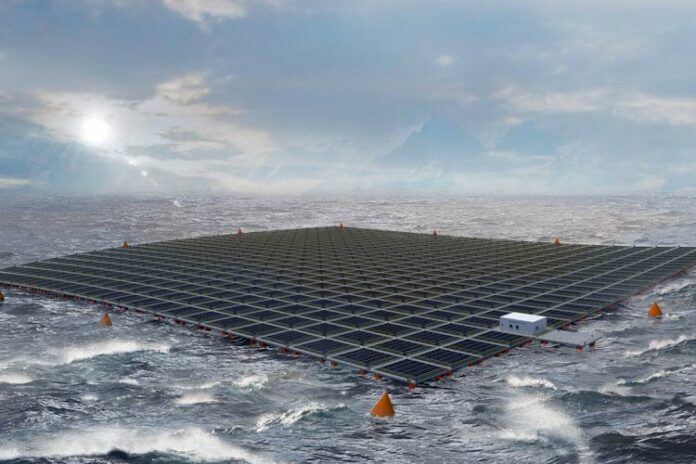
Saipem and Equinor have recently signed a cooperation agreement to develop a floating solar panel park technological solution for near coastal applications.

The technology will be based on the in-house developed concept by Moss Maritime, part of Saipem’s XSIGHT division dedicated to high value-added services, which is a modularized system, designed for easy fabrication, transportation and installation at operation site.

The technology provides the same benefits as already established by solar photovoltaic solutions for calm sea locations (Floating Photovoltaic). However, being designed for more rough weather conditions, additional locations can now be considered. The Moss Maritime solution has a dual application: it is suitable for areas where there are no large water reservoirs and also for very windy areas.

As part of the cooperation agreement, Equinor and Moss Maritime will combine their experiences and know-how to further develop the concept with a competitive and cost-effective approach that shall meet the increasing demand for renewable energy solutions. The ambition is to be one of the leading providers of near coastal and offshore solutions for floating solar panel parks.

Ida Husem, CEO of Moss Maritime, commented:

“The agreement with Equinor goes in the direction taken by Saipem and Moss Maritime towards the development of new technologies related to clean energy. Moss Maritime is constantly looking for opportunities where to apply its expertise in engineering design and services also in the renewable energy sector”.

Big grants for disposal of marine debris that was caused by hurricanes

0

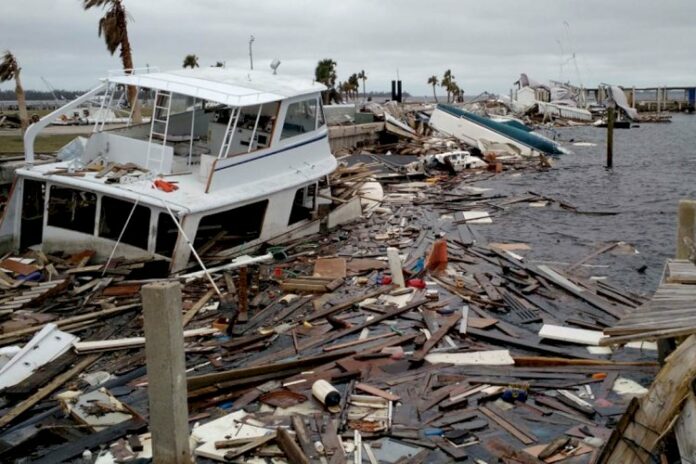
The US National Fish and Wildlife Foundation and NOAA’s Marine Debris Program have announced $8.2 million in six new grants for the assessment, removal and proper disposal of marine debris that was caused by hurricanes Michael and Florence in Florida and North Carolina, and Typhoon Yutu in the Northern Mariana Islands.

Contributions from the grantees will bring the total conservation impact to nearly $8.6 million. 

Severe storms can cause significant marine debris, including capsized vessels, displaced fishing gear, wrecked docks and piers, and flooding that deposits large land-based debris such as trees, cars, and parts of homes and buildings. This debris can cause both immediate and prolonged harm to coastal communities, affecting navigation safety and coastal and marine industry and tourism. Marine debris can also harm wildlife, which can become entangled in it and feed on harmful materials.  

Retired Navy Rear Adm. Tim Gallaudet, Ph.D., deputy NOAA administrator, said:

“Our own human well-being and economic prosperity depend upon the health and resilience of natural and social systems. These grants will help communities recover from storm damage by assessing, removing and disposing of storm-generated debris that continues to affect wildlife, habitats and coastal communities.”

NFWF, in partnership with NOAA, launched the Hurricane Response Marine Debris Removal Fund offsite linkin 2019 to support on-the-ground projects to assess, remove and dispose of debris created or moved by severe storms. Grant awards will help coastal communities fill in the gaps of other available funding to clean up their coasts and waterways of potentially damaging debris. 

Jeff Trandahl, executive director and CEO of NFWF, said:

“Storm debris fields in nearshore waters and coastal beaches and environments impact economic recovery and vitality, as well as ecological integrity. This new Hurricane Response Marine Debris Removal Fund is an excellent approach to quickly get storm debris removal funds to those communities impacted by Hurricanes Michael and Florence and Typhoon Yutu, as Congress intended.” 

The projects supported by the six grants will remove large structural debris in four Florida counties, derelict and abandoned vessels from sensitive coastal habitats in North Carolina, and large storm debris from coral reefs in the Northern Mariana Islands. Grants for this fund are awarded based on how marine debris can harm coastal communities and resources, and to prevent further damage to sensitive marine habitats and species listed under the Endangered Species Act.

COVID-19 outbreak adds further woes for the oil and gas industry

0

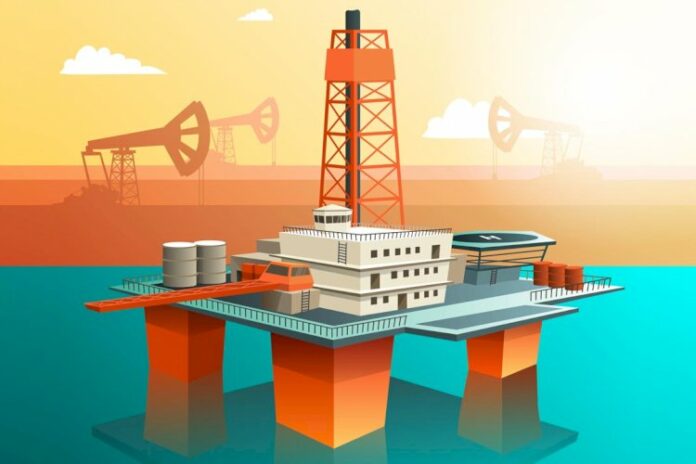
The recent coronavirus (COVID-19) outbreak is adding further woes for the oil and gas industry, which is already plagued by oversupply and declining prices.

This is expected to affect the completion of announced and planned mergers and acquisitions (M&A) deals, according to GlobalData, a leading data and analytics company.

GlobalData’s deals database identifies that a total of 262 M&A deals were announced in the global oil and gas sector during January 1, 2020 – March 15, 2020, which indicates a decline of 26% over the 354 deals announced during the same period in 2019. The corresponding deal value also declined by 15%.

Oil prices have been falling with concerns around oversupply. The production race and price war between Saudi Arabia and Russia are also contributing to the decline. Moreover, on the back of canceled events and travel restrictions due to the COVID-19 outbreak, the demand for jet fuel, as well as other fuel types, has been declining -resulting in a further drop in oil prices.

The Organization of the Petroleum Exporting Countries (OPEC) also revised and reduced its 2020 global oil demand forecast due to the outbreak. The average price of crude oil, which stood at US$63.4 per barrel (b) in December 2019, fell to US$61.6/b in January 2020 and US$53.3/b in February 2020. Furthermore, according to OPEC, oil prices fell by more than 30% during the first ten days in March 2020.

With a slowdown in demand amidst the COVID-19 pandemic and the drop in oil prices, a cloud of uncertainty looms over several announced and planned M&A deals in the oil and gas sector.

Aurojyoti Bose, Lead Analyst at GlobalData, comments:

“Arranging finance for pursuing deals may emerge as a challenge. Completion of some of these deals is likely to be delayed, while some may be called off. For instance, in January 2020, BCE-Mach III LLC entered an agreement to acquire assets of Alta Mesa Holdings. However, on March 10, 2020, BCE-Mach III said that completion of the transaction fell into doubt, as the US$320m financing from UBS fell apart over the COVID-19 epidemic and the drop in oil prices.”

New strategic partnership covering 27 vessels

0

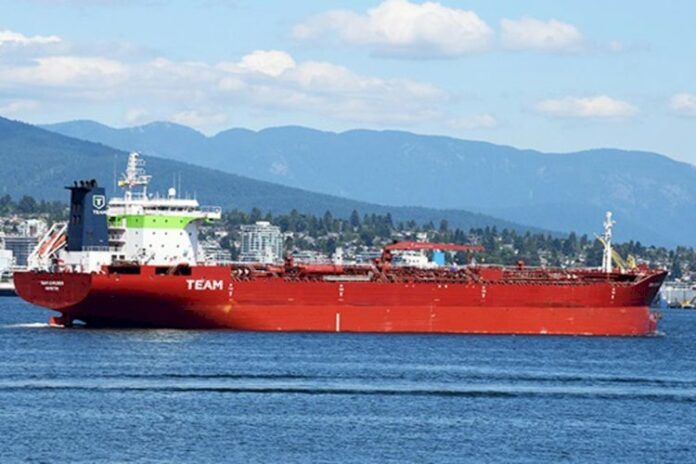
Team Tankers International’s strong position within chemical tankers and Maersk Tankers’ industry-leading commercial management have been brought together in a new cooperation. With this, Maersk Tankers takes over the commercial management of 27 tankers from Team Tankers International, and establishes two new pools.

The cooperation will contribute to both companies’ strategies. Team Tankers International will gain access to Maersk Tankers’ digital approach to commercial management, with its strong emphasis on reducing CO2 emissions and improving partner returns. For Maersk Tankers, the agreement will increase its fleet under management to more than 225 vessels across a range of different segments, while cementing the position as one of the market leaders in the Medium-Range (MR) segment, where it manages a pool jointly with Cargill.

As part of the agreement, employees within Operations, Chartering and Bunker Management will transfer from Team Tankers International to Maersk Tankers’ offices in Copenhagen, Houston and Singapore.

Hans Feringa, President & CEO at Team Tankers International, says:

“The cooperation is a further step towards building scale for our tanker fleet. We believe the timing of the cooperation is good as the medium and longer-term outlook for the product and chemical tanker market is positive, and the order book is at a historically low level. We look forward to working with Maersk Tankers to achieve both companies’ goals.”

Out of the 27 tankers, nine are 13,000-tonners, four are Flexis (25,000 DWT) and 14 are MR tankers (46-49,000 DWT). By taking over the vessels, Maersk Tankers enters two new segments, in which it establishes two new pools. This allows the company to serve customers with greater flexibility, while expanding its products to pool partners. 

Claus Gronborg, Chief Investment Officer, Maersk Tankers, says:

“The cooperation between Team Tankers International and Maersk Tankers is powerful, and we look forward to welcoming our new colleagues. With this, we are taking yet another step to deliver our strategy of building scale through partnerships forged by the common goal of using digitisation to reduce CO2 emissions and increase partner returns. The growth in capacity means we can offer our customers additional flexibility in transporting their cargoes and improve our returns to existing and new pool partners.”

The cooperation will commence on 1 April 2020 and the vessels are planned to enter the pool during the following months. It is the ambition of Maersk Tankers to build further partnerships in the existing and new segments and further increase the pools’ capacity.

Stena Line closes the Oslo-Frederikshavn route permanently

0

Due to the coronavirus (COVID-19) and travel restrictions imposed by several countries, Stena Line has, like many other companies within the travel industry, seen a drastic decline in travel bookings.

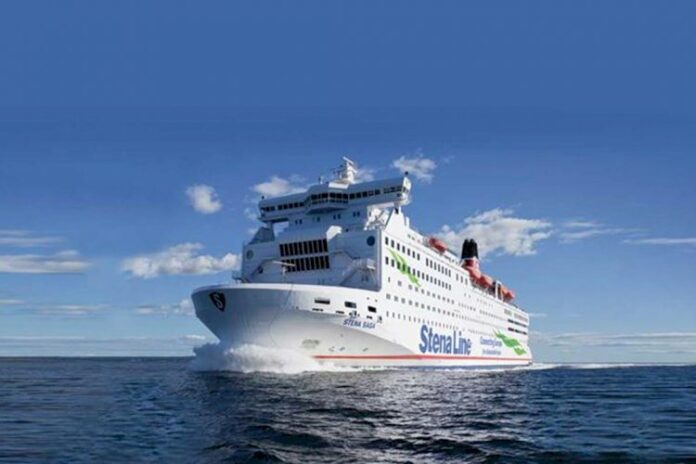
The effect has been the worst in Scandinavia and on Saturday, 14 March, Stena Line stopped operating the Oslo – Frederikshavn route until further notice. Today, Thursday 19 March the decision was made to permanently close the route after more than 40 years in operation.  

The decision means Stena Line will close their office in Oslo which will affect 30 shore-based employees. The vessel Stena Saga is currently in lay up in its port of registry, Gothenburg.

Niclas Mårtensson, CEO Stena Line, says:

”This is a tough decision to make, but we are experiencing tough times in general as a company. The Oslo-Frederikshavn route is totally dependent on its passenger service and summer peak season. We estimate that we due to the Coronavirus won´t have a peak season this year and we simply can´t afford to wait and hope until next year.”

Earlier, Stena Line has announced 950 planned job redundancies in Sweden.

Top tips to move towards a digital workforce during COVID-19 pandemic

0

As companies globally are increasingly shifting to remote working to help stop the spread of Coronavirus, Hanseaticsoft, a leading provider of maritime software has put together a series of tips to help shipping companies keep their business and workforce agile.

Some of the biggest companies in the world including Oracle, Apple, Google and Amazon have already restricted travel and asked employees to work remotely[i]. With the situation changing daily shipping companies need to prepare as much as they can to minimise business disruption.

Alexander Buchmann, Managing Director, Hanseaticsoft said:

“The coronavirus pandemic is causing an unprecedented change in the way people work. Whilst not every company will be able to introduce remote working practically, those that can are being asked to do so.

However some shipping companies that could introduce remote working are held back because of a lack of digital infrastructure. This can also jeopardise operations if staff go off sick or have to self-isolate as other employees may not be able to access their work.

To help shipping companies prepare for the coming months we’ve gathered a collection of tools and best practices that could help reduce these risks and ensure it is business as usual, as far as possible. All these tools can help shipping companies move towards a digital workforce that can help them become more efficient now and in the future.”

  • Ramp up cybersecurity before giving employees laptops – Companies need to ensure they have adequate security for employees opening up laptops on unprotected home networks. It’s also essential to give employees training on security best practices and proper mobile device management for remote administration. Plus its best practice to ensure that all hard drives are encrypted in case of a loss and login credentials are not left on any sticky notes on devices.
  • Ensure employees have a good internet connection – Ensuring team members’ at home wifi setups are robust is essential. There is nothing worse than choppy wifi or constant drops during a conference call. One option is to cover the difference between low-cost wifi and upgraded speeds and invest in upgraded modems and wifi routers and expert installation for team members. Depending on the size of the workforce this could be a hefty upfront investment, but it will help keep the business running if employees are forced to work at home.
  • Messaging – Without regular face to face communications businesses could find information flow is much slower, so it’s important to establish good communication systems, using phone, email or messaging services like WhatsApp, iMessage, etc. We’d recommend setting up a channel for every department and every fleet team to replicate the physical office space, alongside some standard channels for general announcements and the water cooler gossip corner for casual chats.
  • Web Conference Software – A group chat however cannot always replace the efficiency of a face to face team meeting. In this case, tools like Microsoft Teams, Google Hangouts Meet, LogMeIn GotoMeeting, or Zoom are available. Vendors like Google, LogMeln and Microsoft have started to offer special plans for their conferencing software solutions due to coronavirus.
  • Central File Storage – With physical filing cabinets out of reach and accessing a shared local file server not an option, it’s time to migrate to cloud-based data storage. While having shared Outlook folders may be an option, it doesn’t scale that well for every use case. Companies may want to take a more in-depth look at Microsoft OneDrive for Business, Dropbox for Business or Google Drive to utilise globally available secure file storage with fine-grained control and visibility settings to centralise team files.
  • Project Tracking – Set up a formal company-wide project tracking software system. For companies that rely on whiteboards and sticky notes, tools like Trello or Asana are good options. It’s important to establish some kind of traceable mechanic to enable everyone to see what others do to avoid duplication of work and to prevent manual questioning through the messaging service.
  • Rules, Regulations, and Expectations – Freedom needs restrictions. For employees working away from the usual office environment it’s important to have strict written policies around rules and regulations, and what is expected of them during work time. These policies will help everybody to know how to meet expectations and to sustain self-discipline.
  • Introduce industry specific software – Hanseaticsoft’s Cloud Fleet Manager (CFM) is used by a growing number of shipping companies to streamline business and management processes to achieve greater efficiencies and profitability. CFM is improving collaboration between teams on shore and at sea and creating a connected workplace culture that supports strategic business goals.

Alexander Buchmann, Managing Director, Hanseaticsoft said:

“Increasingly the shipping industry is embracing digital ways of working, which are helping employees work together more easily and efficiently. The digital workplace provides opportunities for a company’s employees to communicate, connect, and collaborate.

It also eliminates the risk of information silos and supports employees in keeping track of their tasks. We recommend that shipping companies not already using digital tools introduce these so they can improve the way they work and ensure they remain competitive in a digital world.”

3D based design can improve digital solutions in the ship industry

0

Leading Classification Society ClassNK, Japan Marine United (JMU), and NAPA have completed a joint feasibility study on 3D model based plan approval using 3D CAD models as part of their technical investigation project.

Shipbuilding designs are gradually transitioning from 2D drawings to those designed with 3D CAD software. Classification societies, whose plan approvals are currently based mostly on 2D drawings, are also required to develop a scheme for 3D CAD models from their submission to their examination completion.

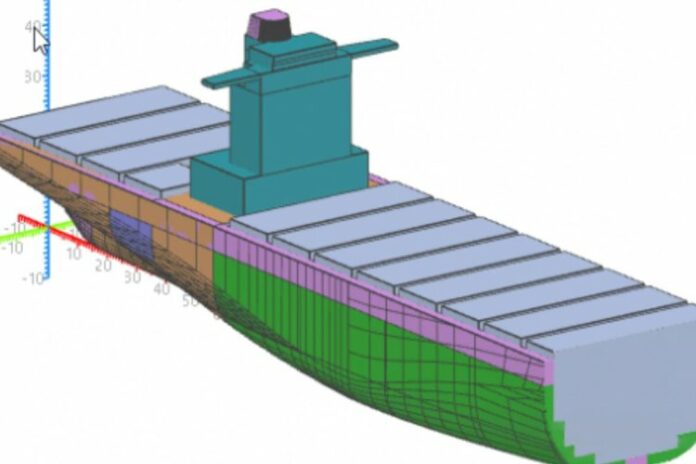
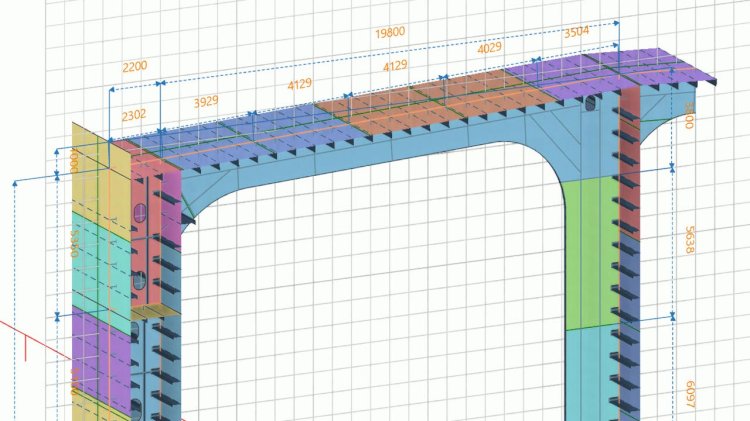
This project was conducted to examine the technical development required in each process of plan approval by JMU, NAPA, and ClassNK to realize 3D model based plan approval. In the feasibility study, ClassNK conducted a trial evaluation for hull structural design on a 3D CAD model of 300,000DWT ore carrier designed and created by JMU, using “NAPA Designer” (*1), a 3D CAD software application for ship design developed by NAPA, as a 3D model viewer. Plan submission, storage, and notification of examination results were made using the Society’s electronic plan examination system “NK-PASS” (*2).

The investigation concluded that information required for class approval can be confirmed through a 3D CAD model, and that “NK-PASS” is also compatible with 3D CAD models. The results of this survey will serve as a basis for future technical studies, and the Society will continue to work with the industry to realize 3D model based plan approval.

Speaking on the occasion, Mr. Hayato Suga, Corporate Officer and Director of Plan Approval and Technical Solution Division said:

“This study has proven the future potential of 3D model based approvals. 3D based design can be the key to improving digital solutions in the ship industry, including the ship design process, approval process and later fleet maintenance. I hope that the entire industry will also quickly realize the many opportunities and increased efficiency that can be achieved as a result of this initiative. The vessels of the future will be able to accommodate much better and safer designs in shorter amounts of time.”

Tapio Hulkkonen, NAPA Design Solutions Director, Product Management, said:

“3D model-based approval is an essential part of naval architecture’s future. By continuing to rely on 2D drawings the sector wastes hundreds of thousands of manhours each year, as well as increases the likelihood of avoidable errors in their designs. Ships are three-dimensional objects, and we need to be able to assess them in every plane. This study demonstrates that the technology is ready to go.

NAPA Designer is the perfect tool for viewing and evaluating 3D designs, enabling designers, engineers and class societies to rely on a single source of truth. 3D model-based approval also opens the door to greater use of digital twins for safety and optimization, where real-world data can be compared against a virtual model of a ship, and vice versa, to identify problems and validate performance data.”

*1 3D CAD software for ship designs developed and sold by NAPA. For more information visit www.napa.fi
*2 Plan review system provided by the Society which can be used to send plans, check/ manage review progress, and receive returned plans.