2.6 C
New York
Home Blog Page 843

Wärtsilä to deliver advanced emissions abatement technology for KNOT’s tankers

0

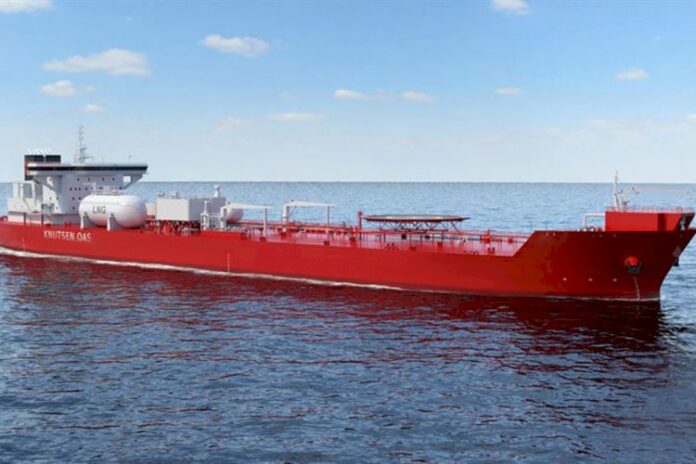
The company will provide its Volatile Organic Compounds (VOC) Recovery System, together with an LNG Fuel Gas Supply System, for two new 124,000 DWT shuttle tankers.

The ships have been ordered by Knutsen NYK Offshore Tankers (KNOT), a leading independent owner and operator of shuttle tankers, and will be built at the Daewoo Shipbuilding & Marine yard in Korea. The order with Wärtsilä was placed in April. 

With this technology, the liquefied VOC is mixed with LNG and used as fuel for the main and auxiliary engines. By using LNG as the primary fuel and supplementing this with the energy recovered from the VOC, these vessels will be able to lower their emissions of CO2 equivalents by 30 to 35 percent, a minimum of 30,000 tons per year, compared to conventional oil-fuelled shuttle tankers. These savings are roughly the equivalent of the total emissions from approximately 20,000 cars. 

Hans Jakob Buvarp, General Manager, Sales, Wärtsilä Marine, says:

“Wärtsilä has developed its VOC abatement technology over the past 20 years, and our competence in this field is unmatched in the marine sector. It means that for these vessels, with the combination of Wärtsilä’s VOC Recovery and LNG fuel systems, they will not only be extremely sustainable environmentally, but will also be commercially attractive. The VOCs that would otherwise be emitted to the atmosphere can instead be burned as fuel.”

Jarle Østenstad, New Building Director, Knutsen OAS, says:

“Our industry is rapidly changing towards greater environmental awareness and improved operational efficiency. These two new ships will reflect this change, thanks largely to Wärtsilä’s advanced technology. They will truly represent the new generation of shuttle tankers, with vastly reduced emissions and lower fuel costs.”

The Wärtsilä solutions will be delivered to the yard commencing in November of this year. When delivered, the tankers will operate in the North Sea oil fields.

World’s largest super-eco ship completes maiden voyage

0

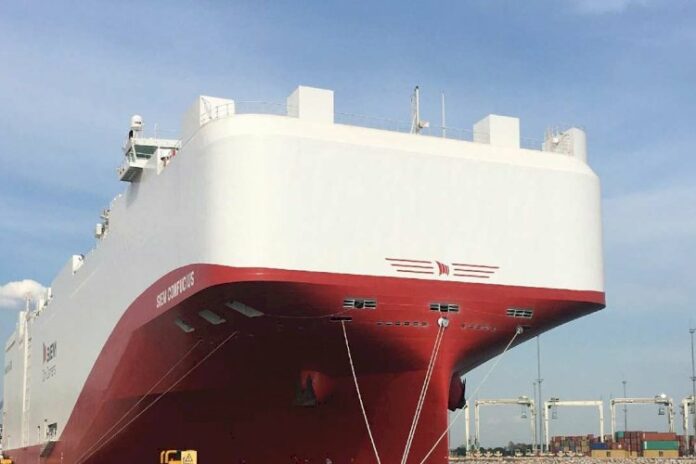
The world’s largest, LNG powered Pure Car and Truck Carrier ship, “SIEM Confucius”, began its maiden voyage as it departed the Port of Xiamen on March 14, crossed the Indian Ocean and navigated through the Persian Gulf, and arrived in Emden, Germany where she will enter the SCC/Volkswagen service.  

The vessel is 200 meters long, 38 meters wide with a maximum draft of 10 meters and her sailing speed of up to 19 nautical miles per hour. She is a part of SIEM CAR CARRIERS fleet and dedicated to Super-Eco service for the Volkswagen Group.

Siem Confucius can carry 7,500 CEU! However, regardless of the ship’s size and the huge volumes, her CO2 emissions are in fact at the much lower level than the high target that European Union has established for the upcoming 2030 Rules.

Jeffrey Campbell, President, Siem Car Carriers, said:

“Thanks to the amazing work of all the people involved in the building of a great, new age vessel. Having launched such a revolutionary and innovative ship, fueled by Liquid Natural Gas, Siem Car Carriers will assist in the further lessening of global emissions and keep this world cleaner and greener.”

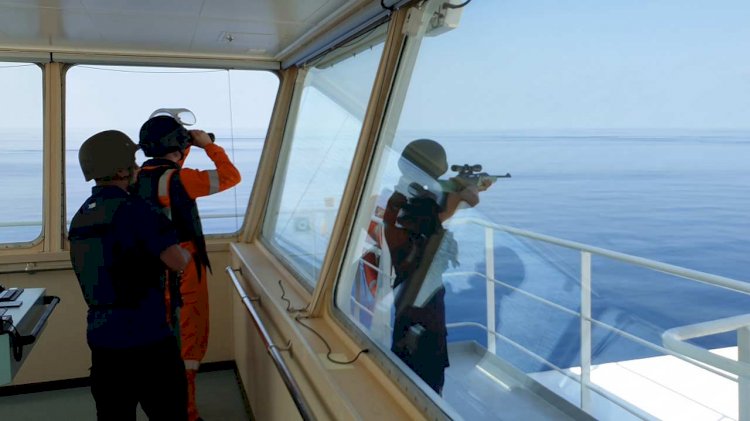
The vessel will be managed by sister company – Siem Ship Management based in Gdynia, Poland. During the transit the Siem Ship Management team took and will continue to take every precaution necessary to ensure the safe delivery of the vessel and its crew, one such precaution was during the voyage armed guards have been hired to sail with the vessel.

Safehaven Marine delivers an Interceptor 42 pilot boat to the port of San Ciprian

0

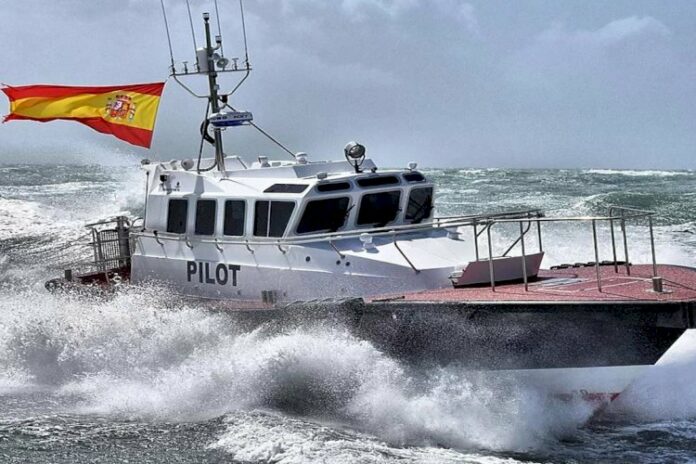
San Cibrao is the 14th pilot 42 model built and the 43rd Pilot vessel Safehaven Marine has delivered to ports worldwide.

As the pilots in San Ciprian have to deal with the challenging seas of the Bay of Biscay in wintertime, Safehaven wanted to ensure she was up to the task. She is due to be shipped overland shortly where she is needed urgently to ensure essential pilotage to ships entering and departing the Port in Northern Spain.

San Cibrao is powered by a pair of Volvo D9 engines rated at 425hp and has a maximum speed of 23.5kts. She is heavily fendered all round and incorporating Safehaven’s sacrificial fender system protecting the vessel at her boarding area and softening the inevitable hard impact that can occur in poor conditions. Safehaven’s proven MOB recovery system is fitted on the transom allowing a casualty to be easily recovered in a MOB situation.

A full suite of Furuno electronics are installed at her central helm position and she provides seating for 4 pilots on CAB suspension seats in her very nicely fitted out main cabin, which provides a comfortable relaxed environment for pilots and crew during transfers with additional accommodation in her f/wd cabin incorporating seating and berths, a separate heads compartment, dedicated electrical room and galley area.

First cohort of partner cities for Urban Ocean Program

0

The Circulate Initiative, Ocean Conservancy, and Global Resilient Cities Network has announced the first cohort of partner cities that will take part in the Urban Ocean program.

The program empowers cities in South and Southeast Asia and Latin America to develop circular economies, reduce plastic waste and build cleaner, healthier and more resilient communities for the long term, particularly as they weather the impacts of the current COVID-19 crisis. 

Scientists estimate that 8 million metric tons of plastic enter the ocean each year due to mismanaged waste – waste that is either never collected or not adequately contained. That’s the equivalent of one garbage truck of plastic entering the ocean every minute. While plastic pollution costs an estimated US$2.5 trillion to the global economy annually, the issue has serious impacts on human health and safety as well as the environment. Unfortunately, the COVID-19 pandemic has both worsened existing vulnerabilities within our waste management systems and exposed new ones.  

Over the next 15 months, Urban Ocean will work closely with city leaders in Can Tho, Vietnam; Melaka, Malaysia; Semarang, Indonesia; Pune, India; and Panama City, Panama, known as “learning cities,” as well as other cities from the Global Resilient Cities Network community, known as “mentor cities,” to link them to opportunities that improve waste management and recycling systems; reduce the amount of plastic flowing into the ocean; promote circular economies; support inclusive and equitable economic development; and build resilience for the long term.

The Circulate Initiative, Ocean Conservancy and Global Resilient Cities Network recognize that collaboration between leading cities and partners willing to invest in change at scale will help address these challenges. This first cohort of cities was selected because of their commitment to improving waste management as part of resilience-building efforts and their potential to provide solutions in geographies with high waste leakage rates (learning cities), or because they are leading the way in the fight against river and ocean plastic or in implementing circular economy approaches (mentor cities). Pune, India, is an example of a city doing both through its successful work with the informal sector, and has been selected as both a learning and mentor city. 

Susan Ruffo, Executive Director at The Circulate Initiative, said:

“Waste management is a critical and complex challenge for all cities around the world. We need to work with committed city leaders and innovative partners to find implementable and scalable on-the-ground solutions to fight ocean plastic and advance the circular economy. We believe that working with Ocean Conservancy and Global Resilient Cities Network, in partnership with these leading cities, we will be able to develop and deliver solutions where action is needed most, at the local level.”

Chever Voltmer, plastics initiative director at Ocean Conservancy, said:

“The COVID-19 pandemic has laid bare just how critical waste management systems are to public health and the environment. This is especially true in urban areas where population density and waste generation are greatest. Through Urban Ocean, we will help cities weather this storm and better prepare for future ones, while reducing plastic pollution in our ocean.” 

Lauren Sorkin, Executive Director Global Resilient Cities Network, said:

“Having worked with 98 member cities for more than six years to address resilience challenges, we understand that moving beyond waste management towards a circular economy requires collaboration across all levels of a municipality. With the additional strain on city systems from COVID-19, we will accelerate city-to-city knowledge sharing through Urban Ocean to give waste a new life with innovative solutions that provide multiple benefits like safer and healthier jobs, stronger local economies and a healthier environment.”

The Urban Ocean program also includes other implementation partners such as the University of Georgia’s New Materials Institute and The Incubation Network. Additional implementation partners may be selected based on specific program needs during its implementation. 

As the COVID-19 crisis is seriously disrupting existing solid waste management systems, the partners have also come together to provide knowledge and tools to all cities looking for support to implement immediate actions through the Global Resilient Cities Network’s Cities for a Resilient Recovery (C2R) initiative. 

Search-and-rescue algorithm identifies hidden ‘traps’ in ocean waters

0

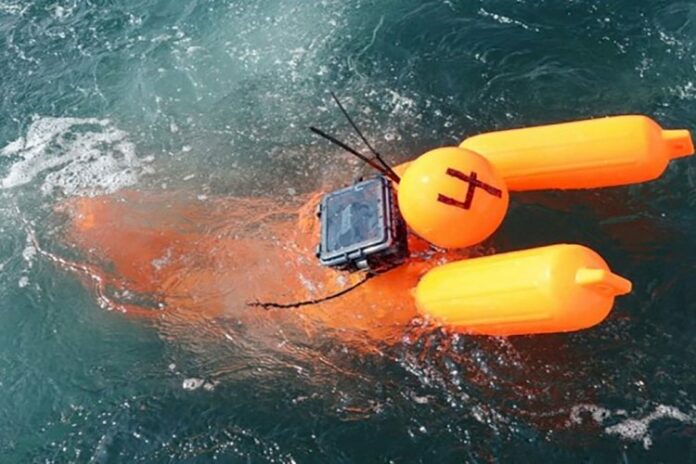
When an object or person goes missing at sea, the complex, constantly changing conditions of the ocean can confound and delay critical search-and-rescue operations.

Now researchers at the Massachusetts Institute of Technology, the Woods Hole Oceanographic Institution, Virginia Tech and other institutions have developed a technique they hope will help first responders quickly zero in on regions of the sea where missing objects or people are likely to be. The results of the National Science Foundation-funded study are published in the journal Nature Communications.

The technique is a new algorithm that analyzes ocean conditions such as the strength and direction of ocean currents, surface winds, and waves, and identifies in real time the regions of the ocean where floating objects are likely to converge.

The team demonstrated the technique in several field experiments in which they deployed drifters and human-shaped mannequins in various locations in the ocean. They found that over the course of a few hours, the objects migrated to the regions the algorithm predicted based on the current ocean conditions.

The algorithm can be applied to existing models of ocean conditions in a way that allows rescue teams to quickly uncover hidden “traps,” where the sea may be steering missing people at a given time.

Thomas Peacock, a mechanical engineer at MIT, says:

“This new tool can be run on various models to see where these traps are predicted, and thus the most likely locations for a stranded vessel or missing person. The method uses data in a way that it hasn’t been used before, so it provides first responders with a new perspective.”

Shipyard De Hoop delivers its expedition cruise vessel to Silversea

0

Intended for cruising the Galápagos Islands, this small cruise ship formulae turned out to be such a big success that soon the Royal Caribbean Group / Celebrity Cruises took an option for a second ship. However, after the takeover of Silversea Cruises by Royal Caribbean (becoming the majority stockholder with almost 67%), the option was handed over to Silversea.

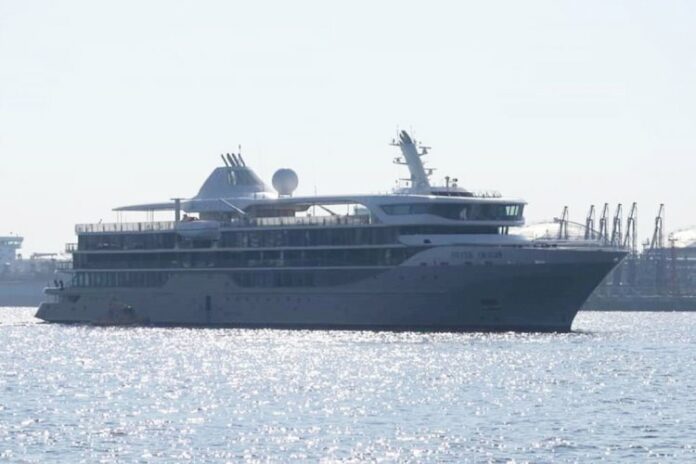
This vessel, to be named Silver Origin, was launched on the 30th of December 2019. After recent completion of successful sea trials, the innovative expedition cruise vessel, tailored in design and build to provide high-end luxury cruising in the Galápagos area, has been delivered to Silversea Cruises on the 3rd of June in the Rotterdam harbour area.

The management at De Hoop are certain that more than a decade of participating in smaller seagoing cruise vessel projects, with the associated design development and investment in knowledge, has now paid off. De Hoop’s CEO, Patrick Janssens, states that this was the ideal basis for entering the growing market of expedition cruise vessels – their designers were fully prepared when the Galápagos Islands cruises challenge arose. Furthermore, with many Dutch suppliers and subcontractors on the clientapproved ‘makerslist’, this project presented a great opportunity for the Dutch shipbuilding industry as a whole.

The power supply for two rudder propellers, two bow thrusters and other consumers, is supplied by four caterpillar C32 diesel generator sets of 994kW each. The emergency diesel generator is a Scania of 339ekW. The diesel engines are equipped with an SCR (Selective Catalytic Reduction) installation, whereby the emission of nitrogen oxide (NOx) is greatly reduced. The rudder propellers, type 20 CRP of 1450kW each, were supplied by Steerprop from Finland, while the 400kW bow thrusters are provided by Veth from the Netherlands. With this configuration, a 12-knot cruising speed can easily be achieved and a high-manoeuvrability is guaranteed.

The introduction of this advanced propulsion system, the hull configuration (improved with CFD calculations) and the specially developed diesel engine arrangement, guarantee an average 25% reduction in hull resistance, 15% reduction in fuel consumption and equivalently fewer exhaust emissions. These characteristics make this cruise ship one of the most energy-efficient ships in its class, in addition to being IMO Tier III compliant. One glance at the ship’s profile reveals the flared bow with an integrated bulb. This bulbous bow both reduces resistance in waves when in transit and saves energy when staying in position, similarly due to the higher efficiency of the bow thruster. The exterior design of this vessel was successfully boosted by the works of Dutch yacht designer Cor D. Rover who worked in close cooperation with De Hoop and Silversea to combine the efficient hull lines with a truly special and highly functional exterior design. The top deck design, especially, now adds a destination to the journey.

To further reduce the environmental footprint, the cruise ship accommodates an enhanced sewage plant to improve the quality and reduce the amount of wastewater. An improved HVAC system and improved thermal insulation, as a result of energy-efficient low-emissive glazing, leads to 50% less energy consumption. It almost speaks for itself that the HVAC equipment, installed by Heinen & Hopman, is capable of handling the challenging environmental parameters, warmer seawater and higher outside air temperatures of the Galápagos. In the electric system, many more energy-saving measures have been taken. All electronics were successfully integrated and installed by Droste Electro, following a multi-year subcontractor relationship with the yard.

Shipyard De Hoop delivers its expedition cruise vessel to Silversea

0

Intended for cruising the Galápagos Islands, this small cruise ship formulae turned out to be such a big success that soon the Royal Caribbean Group / Celebrity Cruises took an option for a second ship. However, after the takeover of Silversea Cruises by Royal Caribbean (becoming the majority stockholder with almost 67%), the option was handed over to Silversea.

This vessel, to be named Silver Origin, was launched on the 30th of December 2019. After recent completion of successful sea trials, the innovative expedition cruise vessel, tailored in design and build to provide high-end luxury cruising in the Galápagos area, has been delivered to Silversea Cruises on the 3rd of June in the Rotterdam harbour area.

The management at De Hoop are certain that more than a decade of participating in smaller seagoing cruise vessel projects, with the associated design development and investment in knowledge, has now paid off. De Hoop’s CEO, Patrick Janssens, states that this was the ideal basis for entering the growing market of expedition cruise vessels – their designers were fully prepared when the Galápagos Islands cruises challenge arose. Furthermore, with many Dutch suppliers and subcontractors on the clientapproved ‘makerslist’, this project presented a great opportunity for the Dutch shipbuilding industry as a whole.

The power supply for two rudder propellers, two bow thrusters and other consumers, is supplied by four caterpillar C32 diesel generator sets of 994kW each. The emergency diesel generator is a Scania of 339ekW. The diesel engines are equipped with an SCR (Selective Catalytic Reduction) installation, whereby the emission of nitrogen oxide (NOx) is greatly reduced. The rudder propellers, type 20 CRP of 1450kW each, were supplied by Steerprop from Finland, while the 400kW bow thrusters are provided by Veth from the Netherlands. With this configuration, a 12-knot cruising speed can easily be achieved and a high-manoeuvrability is guaranteed.

The introduction of this advanced propulsion system, the hull configuration (improved with CFD calculations) and the specially developed diesel engine arrangement, guarantee an average 25% reduction in hull resistance, 15% reduction in fuel consumption and equivalently fewer exhaust emissions. These characteristics make this cruise ship one of the most energy-efficient ships in its class, in addition to being IMO Tier III compliant. One glance at the ship’s profile reveals the flared bow with an integrated bulb. This bulbous bow both reduces resistance in waves when in transit and saves energy when staying in position, similarly due to the higher efficiency of the bow thruster. The exterior design of this vessel was successfully boosted by the works of Dutch yacht designer Cor D. Rover who worked in close cooperation with De Hoop and Silversea to combine the efficient hull lines with a truly special and highly functional exterior design. The top deck design, especially, now adds a destination to the journey.

To further reduce the environmental footprint, the cruise ship accommodates an enhanced sewage plant to improve the quality and reduce the amount of wastewater. An improved HVAC system and improved thermal insulation, as a result of energy-efficient low-emissive glazing, leads to 50% less energy consumption. It almost speaks for itself that the HVAC equipment, installed by Heinen & Hopman, is capable of handling the challenging environmental parameters, warmer seawater and higher outside air temperatures of the Galápagos. In the electric system, many more energy-saving measures have been taken. All electronics were successfully integrated and installed by Droste Electro, following a multi-year subcontractor relationship with the yard.

Datum Electronics announces AI-enabled condition monitoring tech

0

After spending years, collaborating with Innovate UK & the University of Strathclyde on gathering data, running algorithms and profiling diesel generators, as well as many months of design, development and testing, Datum Electronics is ready to announce its revolutionary AI-enabled condition monitoring technology, aimed at improving fuel efficiency and reducing maintenance & operational costs.

Datum Hawk is the future if condition monitoring, offering real time analysis into power output, engine speed, torque, fuel flow, SFOC, and much more. At 2,000 samples per second, the system can detect problems quickly and display valuable information for each cylinder of the engine separately, providing you with the up to date status of your engine. By incorporating AI self-adaptive algorithms, Datum Hawk is designed to greatly improve your engine’s lifespan and longevity.

Mark Gladdis, Business Development Manager of Datum Electronics, said:

“What sets us apart is our focus on torsional vibration, which is the most accurate and reliable, and cost-effective method of condition monitoring. Listening to the needs of our marine customers, we decided to bring in the most advanced condition monitoring technology with high sampling rate to make it possible to profile each individual cylinder of an engine or diesel generator for its own profile signature and identifying specific changes within them.”

The most recent push for green initiatives such as the EU Green deal, the UK’s clean maritime plan, as well as the possible introduction of further measures in the IMO’s agenda, in addition to the global economy’s volatility, constitute a targeted bottom-up approach to making savings foe marine industry essential. In response, we are required to create a new level of informed decision making, based on deep insight and operational management of the internal combustion engines employed in the shipping industry. This can be achieved by condition based maintenance, which monitors specific parameters. When the latter ones are analysed, they provide the ability for informed decision making, optimising service intervals, reduces down time, and makes for more efficient and compliant engines.

Amongst the most critical parameters suitable for continuous measurement is the instantaneous crankshaft torque. This a highly reliable and easily obtainable measurement that, when analysed, can provide insights regarding the degradation of components such a fuel injectors, cylinder liner and piston rings, and correspond those conditions to specific cylinders. The key to extracting information from this measurement is by understanding crankshaft dynamics, and the relationship between the in-cylinder pressure and the measured instantaneous crankshaft torque recorded at the flywheel.

Dr. Gerasimos Theotokatos, DNV GL Reader on Safety of Marine Systems at Maritime Safety Research Centre (MSRC) of the Department of Naval Architecture, Ocean & Marine Engineering at the University of Strathclyde, explained:

“Everything that is happening in the engine is reflected by instantaneous torque. That means that with one simple measurement, Datum Hawk is capable of extracting the information about engine components without the need of measuring the pressure in an individual cylinder. This provides an advantage of being able to identify the errors early, making maintenance significantly cheaper.”

Coupled with theDatum Shaft Power Meter, Datum Hawk represents the ultimate torque sensor system for real-time condition-based ship monitoring, allowing for sharply-focused preventative maintenance, thereby providing savings of both time and money.

Developing tool to reduce impact of choppy seas on offshore wind workers

0

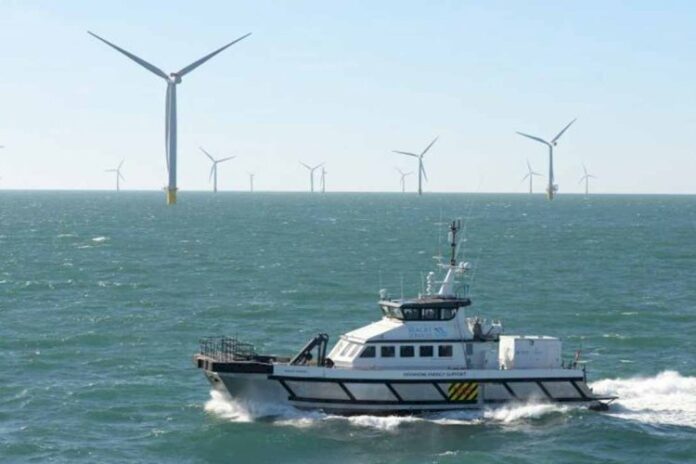
A €3.6 million European project to study the psychological and physiological wellbeing of crew being transferred to offshore wind farms in rough waters, has produced a sail/no sail decision-support tool for marine coordinators, as well as a new understanding of seasickness and how it develops.

Unscheduled operations and maintenance operations on offshore wind installations account for almost a quarter of the lifetime cost of an offshore farm, but a large portion of that is time wasted in failed crew transfers or workers unable to carry out their duties as a direct result of adverse weather conditions.

The two-year DemoWind2-funded Improving the Safety and Productivity of Offshore Wind Technicians in Transit (SPOWTT) project, coordinated by the Offshore Renewable Energy (ORE) Catapult through its O&M Centre of Excellence collaboration with the University of Hull, completed in March 2020. The project involved seven partners from across Europe, including Siemens Gamesa Renewable Energy (SGRE), the University of Hull, marine coordinators SMC Ltd, Dutch research institutes MARIN and TNO, and BMO Offshore, a data service provider to the offshore wind industry.

The data-driven model seeks to understand the complex relationship between environmental conditions and vessel design and their combined impact on technicians and has given us a new understanding of seasickness and how likely it is to develop. Studies were carried out, both in the field and in controlled conditions, on various vessel types to understand how they behave in different weather conditions. Empirical data was also gathered directly from the technicians themselves during transit over a period of several months.

TNO used this seasickness model, coupled with vessel behaviour data from MARIN (validated with measurements by BMO), to provide more realistic logistics simulations to assist offshore wind farm planners. UK marine consultants SMC Ltd. is building on this to commercialise decision-support software aimed at marine coordinators, which could transform the industry’s approach to technician-led operations and maintenance activities.

Andrew Stormonth-Darling, ORE Catapult’s Project Manager, said:

“This project has been ground-breaking. For the first time, we have used data, gathered in laboratories and out in the field, to truly understand the psychological and physiological impacts on offshore wind farm technicians during transit.

The model and tool will improve the health, safety and wellbeing of technicians and the productivity of offshore wind farms, allowing wind farm marine coordinators to make more informed decisions on vessel design for particular sites and when to authorise transits.”

Clark McFarlane, Managing Director for Siemens Gamesa Renewable Energy said:

“SGRE is proud to have taken part in this important project; the safety and wellbeing of staff has always been in the core of our business. For anyone to arrive at their place of work in a safer, healthier and more content manner, while additionally delivering efficiency gains through the clever application of technology is great for the future of the industry as a whole. These studies show an industry working hard together with SGRE playing a vital part.”

Dr Fiona Earle, a senior lecturer in psychology and Director, Centre for Human Factors at the University of Hull added:

“Looking at the health, wellbeing, safety and productivity of technicians in CTVs is complex, requiring knowledge of human factors, ship motions and the offshore wind domain. By collaborating in this multi-discipline team, we have been able to increase our understanding considerably about what “sea-sickness” is; how it manifests in technicians; the effects it has on wellbeing, fatigue and fitness to work; and the effect of vessel movements, as well as other factors such as the previous night’s sleep. As well as useful guidance for operators, and input to the decision-support tool, this study has given a great basis for further study into the causes and effects of technician sea-sickness.”

DSNS and HML contract gives Combat Support Ship a lift

0

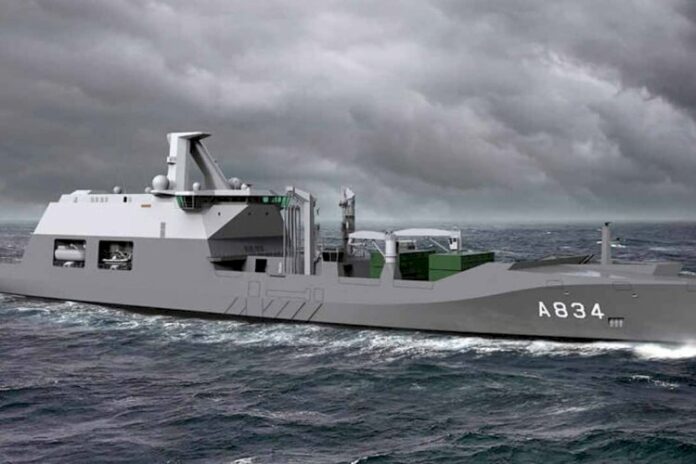
Damen Schelde Naval Shipbuilding (DSNS) has signed a contract with Holland Marine Lifts (HML) for the design, engineering, equipment manufacture and servicing of the ammunition elevator for the Royal Netherlands Navy’s (RNLN) Combat Support Ship (CSS).

HML is a family-owned Dutch business based in Hendrik-Ido-Ambacht, renowned for creative and high-quality elevator solutions for the Netherlands’ shipbuilding and offshore industries. Damen’s cooperation with HML began in 2006, when DSNS contracted the company for the supply of the passenger elevator and a cargo elevator for Landing Platform Dock HNLMS Johan de Witt.

Since then, HML has collaborated with Damen on numerous projects including the ammunition and passenger elevators for the RNLN’s Ocean-Going Patrol Vessels of the Holland Class and the Joint Support Ship HNLMS Karel Doorman. HML has also supplied ammunition elevators to the Moroccan Navy’s SIGMA Frigates, the Mexican Navy’s POLA Frigate and the Indonesian Navy’s SIGMA Frigates, as well as cargo elevators for the Australian Antarctic Division’s RSV Nuyina.

During these collaborations, Damen and HML have developed extensive experience. This has led to an increasingly high product quality and the development of further capabilities for complex projects. Continuing to work together ensures the companies can apply lessons learned from previous projects to the CSS.

Following the signing of the contract, HML will commence engineering. Equipment supply to the CSS is scheduled to begin mid-2021.

The same week, DSNS signed a contract with RH Marine for a container monitoring system for the CSS. This follows RH Marine’s contract in March 2020 for design, engineering and equipment manufacturing for electrical, bridge and automation systems for this ship.