2.5 C
New York
Home Blog Page 842

Svitzer joins the Maritime Anti-Corruption Network

0

The MACN is a global network of maritime companies working towards a maritime industry free of corruption.

Established in 2011 by a small group of committed stakeholders, including our parent company Maersk, the MACN has grown to include 130+ companies globally. Svitzer is the first towage company to join the network which is made up of many of our customers and valued industry partners.

Late last month, Svitzer signed a Collaboration Agreement with the MACN pledging to deliver on their vision of eliminating corruption from the maritime industry to ultimately enable fair trade to the benefit of society at large. The network’s mission is to instil successful, lasting change that tackles unethical behaviours in ports and across the maritime supply chain. On the topic of Svitzer joining the MACN, our General Counsel, Jacob Ulrik, expressed:

“Svitzer’s membership of MACN emphasises our commitment to a global marine services industry without corruption. MACN will allow us to work together and collaborate with like-minded companies in the maritime industry to achieve this important objective.”

To date, the MACN’s collective works have led to reductions in demands for facilitation payments in the Suez Canal; new regulations in Argentina that make it more difficult for officials to demand bribes; and improved ease of operations in Nigerian ports.

VIDEO: Austal launches the high-speed trimaran ferry Queen Beetle

0

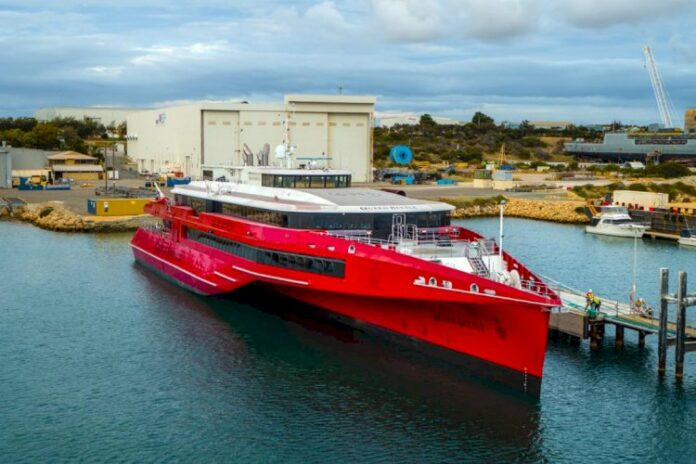
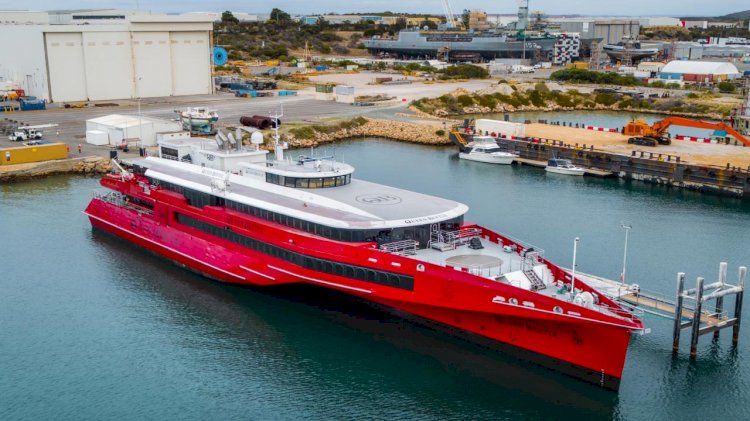
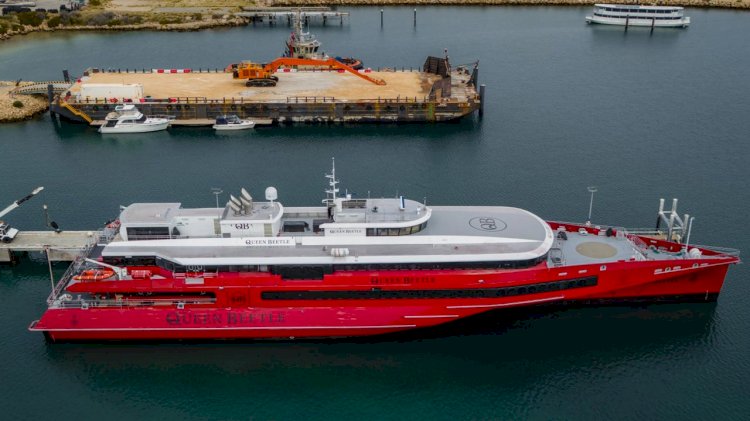
A next generation 83 metre trimaran ferry for JR Kyushu of Japan, designed and built by Austal at its shipyard in Western Australia, the Queen Beetle was launched on 24 April 2020 and will soon be in service between South Korea and Japan.

The Austal Passenger Express 83 trimaran, with a capacity for 502 passengers and an operational speed of 37 knots, will service JR Kyushu Jet Ferry’s key strategic route between Fukuoka, Japan and Busan, South Korea. The vessel will feature a very high quality customised interior, developed by respected Japanese design house, Don Design Associates, led by Mr Eiji Mitooka, famous for the luxuriously appointed interiors of JR Kyushu’s high-end passenger trains.

The 83 metre ‘Passenger Express 83’ high-speed trimaran ferry will operate between Fukuoka, Japan and Busan, South Korea, can transport 502 passengers at speeds of 37 knots. The vessel features a customised interior, developed by respected Japanese design house, Don Design Associates, famous for the luxuriously appointed interiors of JR Kyushu’s high-end passenger trains.

Equinor launching maritime climate ambitions

0

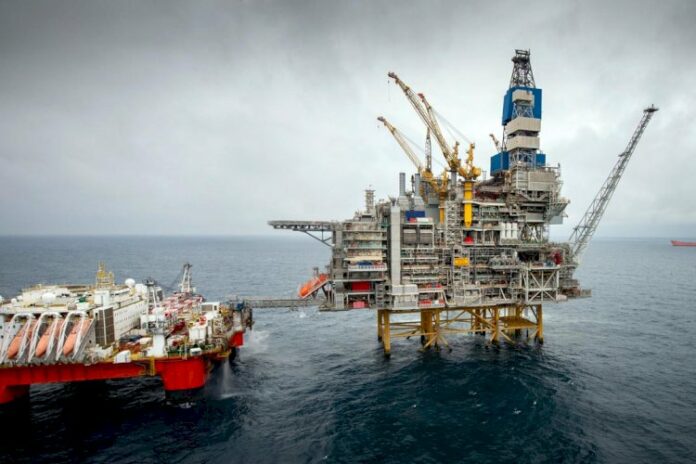
Equinor’s maritime climate ambitions are embedded in the company’s climate roadmap launched on 6 February 2020. The climate roadmap aims to ensure a competitive and resilient business model fit for long-term value creation and in line with the Paris agreement.

The maritime sector represents 6% of total greenhouse gas emissions in Norway and 2–3% of global emissions. Being both a producer and a supplier of fuel to the maritime sector, Equinor has extensive maritime activity around the world, including around 175 vessels on contract with the company at any time.

Irene Rummelhoff, Equinor’s executive vice president for Marketing, Midstream and Processing (MMP), says:

“As a producer and user of maritime fuel, Equinor has a good opportunity to help decarbonise shipping. From our position on the Norwegian continental shelf (NCS), we will develop new solutions contributing to substantial emission reductions together with the maritime industry in Norway and internationally.”

Equinor has set the following ambition for its maritime activity:

  • By 2030: Halving maritime emissions in Norway compared to 2005 emissions.
  • By 2050: Halving global emissions compared to 2008 emissions.

As a supplier of fuel to the maritime sector, Equinor’s ambition is as follows:

  • By 2030: Escalating its production and use of low-carbon fuels.
  • By 2050: Strongly increase production and use of zero-emission fuels

Equinor will continue supporting the development of low-carbon fuels for the industry. 

Rummelhoff says:

“Equinor will play an important role in developing new zero-emission fuels for ships, such as hydrogen and ammonia, in combination with carbon capture and storage. As a major maritime player and a producer of maritime fuels we can help establish new value chains in the sector, for example by pilot projects together with other players. We see this as an exciting business opportunity that fits the company’s strategy and technological advantages as well as Norway’s role as a laboratory for new maritime technology.” 

Equinor has identified the following areas for developing zero-emission fuels for the maritime sector:

  • Increasing the share of biofuel in marine fuels
  • Developing ammonia and hydrogen from natural gas in combination with carbon capture and storage or by electrolysis of water from renewable power. 

Kjetil Johnsen, vice president for the shipping, ship technology and vetting unit, says:

“From 2015, Equinor has gradually renewed its tanker fleet, which is an important contribution to reaching Equinor’s ambitions. We expect the total carbon intensity for the tanker fleet to be reduced by 45% in 2025, compared to 2008.”

BMT’s first design of windfarm support vessel for Japan

0

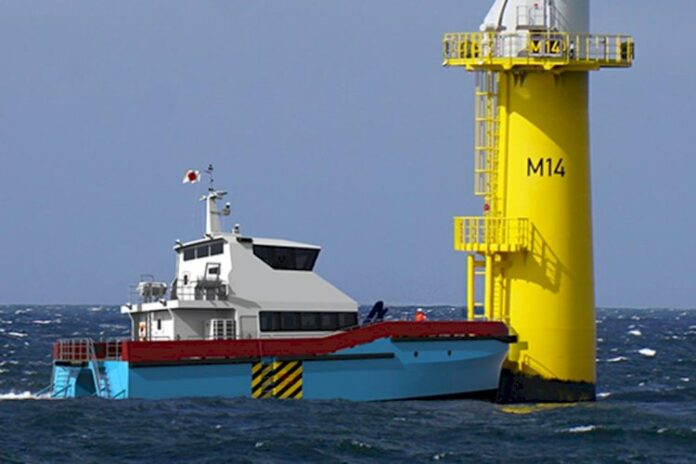
The optimised design for a windfarm support vessel (WFSV) under the Japanese flag adds to BMT’s expanding portfolio of WFSV’s operating worldwide and establishes a presence for BMT in the country’s fast-growing offshore wind sector.

BMT have recently designed their first two WFSV’s, specifically designed for operation in Japan. Currently in build by Cheoy Lee Shipyards at their Hin Lee (Zhuhai) Shipyard facility, the two 27m WFSV’s add to BMT’s growing portfolio with the shipyard. 

BMT have designed the new 27m vessel specifically for operations and maintenance of the Akita and Noshiro offshore wind farms, in the Akita Prefecture region of Japan. The farm is the first large-scale commercial offshore wind project in the country with an expected combined output of 139 MW. BMT undertook metocean data studies which have enabled the vessel design to be tailored to the local conditions, ensuring the manoeuvrability, performance and redundancy of the vessel are optimum for its operational environment.

James Lewis – BMT Specialised Ship Design sector lead for Offshore Energy, said:

“As the first utility-scale offshore wind project in Japan, BMT are pleased to secure this vessel design order and to support Akita Offshore Wind Corporation (“AOW”) in the development and operation of the Akita Noshiro Offshore Wind Farm Project.”

Mr Lewis added:

“As Japan progresses towards a clean energy future powered by offshore wind, BMT are ready to play our part, along with the rest of the AOW partners.”

The design is a fully classed vessel, built to Class NK rules, ensuring the highest of build standards. Fitted with BMT’s patented Active Fender System™, they are capable of carrying 12 technicians and 3 crew and will provide safe, comfortable and reliable technician transfers allowing AOW to carry out efficient operations and maintenance activities off the shores of Japan.

Powered by four engines with four waterjets, the vessel will provide good fuel efficiency during different modes of operation as well as unrivalled redundancy. The new 27m WFSV will travel at up to 25 knots, with a deadweight capacity of 30 tonnes to meet ever expanding O&M requirements for wind turbines. The first 27m WFSV is set to be launched in December this year, with the delivery to the operator in early 2021.

Singapore’s first LNG bunkering vessel launches

0

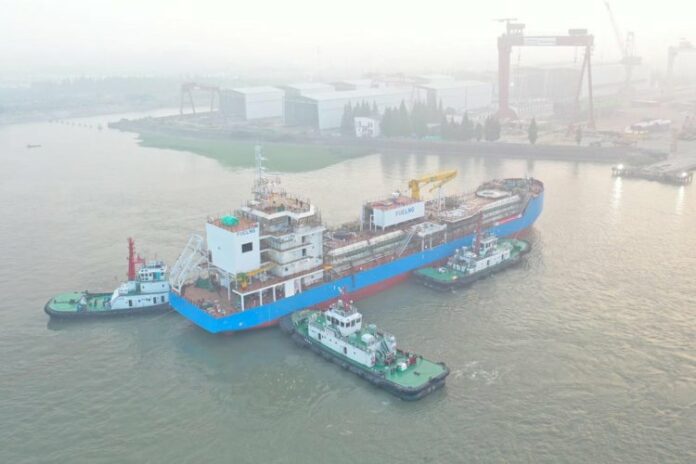
FueLNG, a joint venture between Keppel Offshore & Marine Ltd (Keppel O&M) and Shell Eastern Petroleum (Pte) Ltd, has announced the launch of Singapore’s first LNG bunkering vessel in Keppel Nantong Shipyard in China. She was moved from land to water on 28 May 2020.

The LNG bunkering vessel will enable FueLNG to be the first in Singapore to provide regular ship-to-ship LNG bunkering services within the Singapore port. It supports initiatives implemented by the Maritime and Port Authority of Singapore (MPA) to increase the adoption of LNG as a marine fuel, facilitating the growth of Singapore as a global LNG bunkering hub.

Mr Saunak Rai, General Manager of FueLNG, said:

“There is a growing number of LNG-fuelled vessels in the world and FueLNG is well-positioned to seize LNG bunkering opportunities in Singapore. We have safely completed more than 200 truck-to-ship bunkering operations with no incidents, a testament to our high standards and operational expertise. Building Singapore’s first LNG bunkering vessel demonstrates FueLNG’s confidence in LNG as a marine fuel. The vessel will enhance our range of services and boost our efforts to further increase the availability of LNG in the market.”

FueLNG’s bunkering vessel will further enhance the LNG bunkering infrastructure in Singapore and support the growth of the industry through the development of best practices such as technical standards. The expansion of the LNG bunkering infrastructure will also create more opportunities in adjacent sectors in Singapore, such as ship design, construction, operation and repair, as well as in LNG trading.

The vessel, which is able to run on both LNG and marine diesel oil, is currently being built to the proprietary MTD 7500U LNG design developed by Keppel O&M’s technology arm, Keppel Marine and Deepwater Technology (KMDTech) for cleaner and safer bunkering activities. Key features of the vessel include high manoeuvrability which enables bunkering without tug assistance, compatibility with a wide range of vessels, as well as propulsion and power management systems that optimise fuel consumption. The vessel has a filling rate range of up to 1000m3 of LNG per hour and is able to supply LNG to various types of vessels at heights ranging from 3m to 23m above water level.

Maersk’s AE19 ocean-rail service from Europe to Asia picking up pace

0

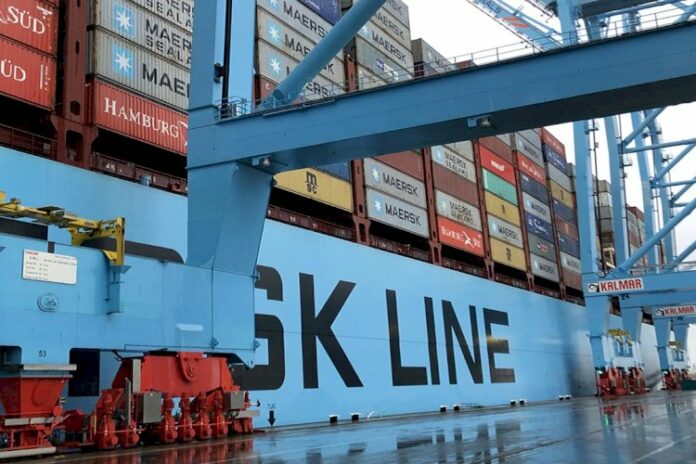
Maersk’s Asia-Northern Europe ocean-rail service, previously offered on monthly basis in west-bound direction only, will now be provided fortnightly both export from Asia to Europe and return from Europe to Asia.

This is expected to help many customers who are currently facing difficulties with their imports/export logistics, due to COVID-19. Maersk recently announced that its combined Ocean and Rail service, AE19, will now be offered on a regular basis for both directions through close cooperation with Pantos Logistics. Customers would practically see the benefits of weekly service combining Maersk’s fortnightly AE19 service and Pantos Logistics.

AE19 managed to successfully position itself as an attractive alternative to Ocean and Rail services for customers who are currently experiencing problems with transporting their cargo, such as blank sailing, lack of containers, and sky-rocketing air rates, due to COVID-19.

The entire journey, starting from Busan to Vostochy in a vessel, followed by Vostochy to St. Petersburg by rail, takes a mere 16 days. In this way, AE19 can offer highly competitive transit times for customers. Following a successful pilot launch of the West-bound service last August, the recent launch of the bi-directional service has also been highly successful. Transit times from South Korea and Japan to Northern Europe have been reduced to 23-32 days from the previously 52-57 days through intermodal transportation. Jason Park, Head of Maersk Korea, adds:

“Frequent cancellations and congestions in ports and airports around the world due to COVID-19 have made the usual Ocean and Air services less attractive for customers. Evidently, AE19’s volumes have increased by approximately 30% compared to pre-COVID-19, compensating for the reduced demand for our other services.”

The transition to a fortnightly service is proving to have a positive impact in attracting more customers for Maersk. As regularity, timeliness, and cost-friendliness are all equally important factors to consider for many customers, AE19 gains its competitiveness by offering lower rates than Air, while still ensuring a faster transit time compared to Ocean for their high-value, large-volume cargos.
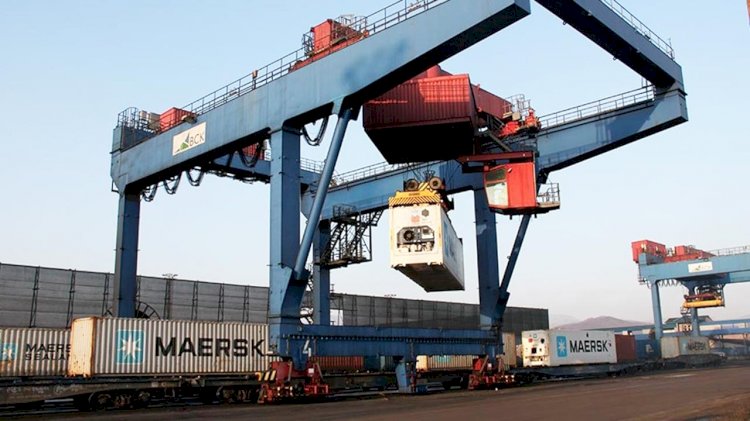
Photo: Maersk

For customers who are used to using either only Ocean or only Air services originally, AE19 now offers an option to diversify their transportation routes as the pandemic continues. Moreover, because the rail service only operates within Russia, customers can also avoid border congestions that are typically associated with intercontinental transportation within the route and expect a more seamless service overall. Key Client Manager, Sung Don Yang said:

“AE19 service attracts many customers by allowing them to manage transportation risk, providing cost competitiveness and connecting various origins and destinations.”

The possibility to now transport dangerous cargo through rail, and not only through ocean, demonstrates one of Maersk’s many efforts coming into fruition. Automotive batteries, one of Maersk’s key transported products, are classified as dangerous cargo. Up until now, this product would not have been permitted on the TSR (Trans-Siberian Railway), due to its dangerous cargo classification. However, through close cooperation with Russian Railways and Modul LLC as Rail transport providers of AE19, Maersk is leading dangerous cargo transportation by TSR. For a railway company that places safety as its utmost priority, this news comes to show that Maersk’s long-established expertise in dangerous cargo transportation has been fully appreciated. Pantos Rail-Transport Business division director, Ha Hyeong Lee, said:

“We expect this to become an important milestone in bringing Eurasian international railing service to the next level – by combining rail transportation services with Maersk’s current capabilities as a global shipping company.”

Maersk plans to further increase volume by targeting customer segments dealing with high-value and/or lead-time-sensitive cargos, such as Automotive, Electric, and Facilities sectors. Park emphasizes that:

“Simplified supply chains pose significant risks to businesses in case of a global pandemic like COVID-19. The intermodal AE19 service offers a compelling alternative to the long transit times in Ocean transportation and the expensive rates in Air transportation”.

Total joins the “Getting to Zero Coalition” to contribute to shipping industry’s decarbonization

0

The Getting to Zero Coalition’s ambition is to help achieve the target set by the International Maritime Organisation to reduce Greenhouse Gases emissions from shipping by at least 50% by 2050 – compared to 2008 levels.

To that extent, the Coalition is aiming, through its members, at getting commercially viable deep-sea zero-emission vessels powered by zero-emission fuels into operation by 2030. 

Joining the Coalition marks a step further in Total’s commitment alongside its customers in the maritime sector and underlines the Group’s will to act on their energy demand, by supporting them in their own emissions’ reductions. Leveraging its expertise, Total will contribute in to the Coalition’s focus areas including fuels, marine lubricants, and ship zero-emission technologies.

Patrick Pouyanné, President and CEO of Total, underlined:

“As a major energy player, Total is already developing cleaner fuels for the maritime industry. We share the ambition to get to net-zero emissions by 2050, together with society, for our global operations. By joining the Getting to Zero Coalition, we want to push innovation and foster collective actions with all the stakeholders of the industry, thus contributing more efficiently to the reduction of the carbon footprint of maritime transport and its energy value chains.”

Total is already actively working on improving the environmental footprint of the shipping industry, through the development of marine LNG supply infrastructure, fuel-efficient lubricants, biofuels and batteries. It has also recently announced the long term chartering of 2 LNG-propelled VLCCs.

UN entities and private sector join forces to tackle invasive species

0

The GIA brings together stakeholders in the private sector and the GloFouling Partnerships, a project led by United Nations entities to address the transfer of harmful aquatic species through biofouling. 

The new GIA will accelerate the development of solutions to improve the management of marine biofouling, which is the build-up of aquatic organisms on ships’ hulls or submerged structures such as platforms and aquaculture installations. Biofouling can lead to the introduction of potentially invasive species to new environments, where they may threaten native species and cause irreversible damage to biodiversity. It also has measurable impacts on a number of economic sectors such as fisheries, aquaculture and ocean energy. Once established in a new ecosystem, invasive species are extremely difficult – if not impossible – to eradicate. 

The new Global Industry Alliance (GIA) for Marine Biosafety brings together private sector companies from various industries affected by biofouling, including shipping, aquaculture, offshore oil and gas and ocean renewable energies. These maritime champions will work together with the GloFouling Partnerships Project, a joint initiative between the Global Environment Facility (GEF), the United Nations Development Programme (UNDP) and the International Maritime Organization (IMO). The key aims of the GIA are to leverage human, technological and financial resources; facilitate industry input into policy developments and a positive pull for reform processes; and the development and dissemination of technological solutions to improve biofouling management.  

The work of the GIA will also contribute to a significant reduction in greenhouse gas emissions. Biofouling increases the drag of ships, forcing them to burn more fuel to maintain speed. The new global alliance is expected to promote solutions to improve the hydrodynamic performance of ships and thereby contribute to a significant reduction of the carbon footprint of the shipping industry. 

The GIA was officially inaugurated on 8 June during an online meeting attended by representatives of the founding industry members as well as IMO and UNDP.   

IMO Secretary-General Kitack Lim said the new alliance will, for the first time, bring together all maritime industries in finding solutions to two key environmental issues affecting our planet – protecting marine biodiversity and reducing greenhouse gas emissions.  

Andrew Hudson, Head of UNDP’s Water & Ocean Governance Programme, said:

“At UNDP we are very pleased to witness the creation of a new GIA that can help us all to work together to remove key barriers, whether they be informational or technical, to transform maritime industries and channel their contribution towards achieving the targets of the Sustainable Development Goals and the reduction of greenhouse gas emissions from shipping.”  

Four companies have become the founding members of the Global Industry Alliance for Marine Biosafety: CleanSubSea, ECOsubsea, HullWiper and Sonihull. It is expected that more companies will join the GIA.  

Jose Matheickal, head of IMO’s Department for Partnerships and Projects, said:

“This alliance is about the collective pioneering efforts by all maritime industries in undertaking the fight against invasive species and all the creativity and innovations that are being brought to the table to develop technological solutions. Forging such an alliance among the current four founding partners lays the foundations of a potentially very large global partnership among maritime industry players.”

Minesto progresses its tidal energy project in the Faroe Islands

0

The leading marine energy developer has completed the first offshore installation phase of the project, as the gravity-based foundation for the powerplant has been installed at the site in Vestmannasund.

David Collier, COO at Minesto, said:

“We are very pleased to have the first sub-sea hardware in place. The operations team has managed to safely progress the offshore installation campaign, adapting the plan to overcome both unfavourable weather conditions and logistical challenges related to the ongoing pandemic.”

The novel gravity-based foundation, designed and fabricated by Leask Marine in Orkney, UK, consists of a base frame and a number of doughnut-shaped ballast weights.  Each component has been individually lowered to the seabed using the Leask multicat vessel C-Fenna.

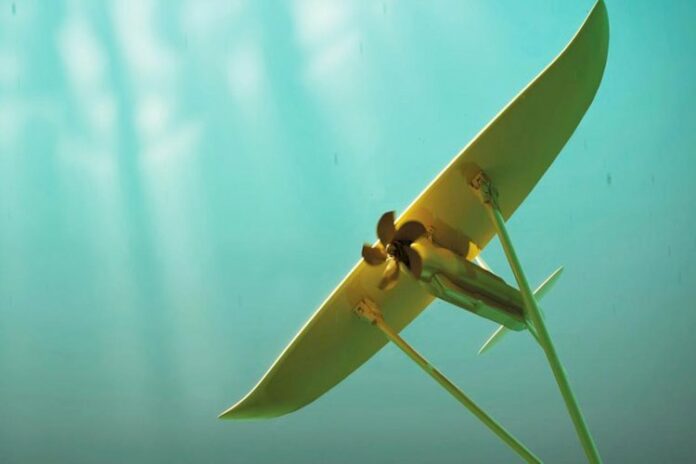
The foundation will provide the connection point for Minesto’s DG100 tidal kite system.  When installed to the foundation, the bottom joint of the kite system provides a pivoting connection point for the tether, allowing the kite to operate freely in its automatically controlled figure-of-eight trajectory. This enables the system to generate predictable renewable tidal electricity.

David Collier said:

“The gravity-based structure developed for the Vestmannasund project has a new cost-effective modular design, which among other things means that we can use smaller vessels for transportation and installation.”

The next installation phase involves the sub-sea export cable that distributes electricity generated by the powerplant to the electric grid operated by Minesto’s partner SEV.

ABB marine software to boost ship safety and efficiency for Roll Group

0

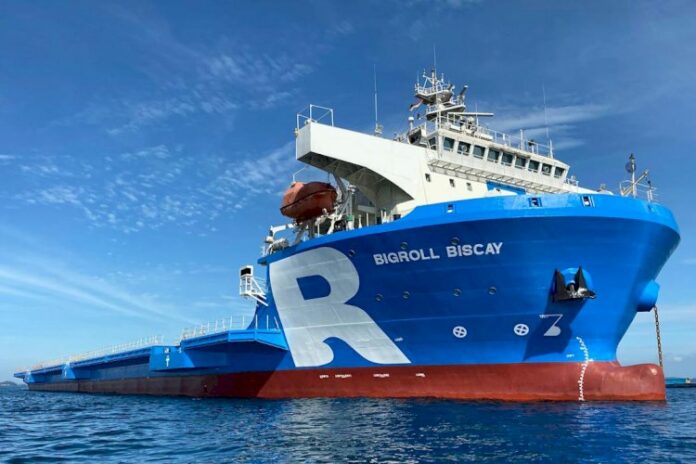
BigRoll Biscay is the eighth vessel in Dutch heavy lift specialist’s fleet to rely on ABB marine software, which improves the safety and efficiency of ship operations by optimizing the route based on weather and forecasted vessel motions.

Vessel motion monitoring and forecasting is critical for heavy lift vessels that need to move safely when in transit. ABB Ability™ Marine Advisory System – OCTOPUS software helps find the most optimal transit based on changes in weather and wave conditions, making it a vital tool for ship safety and route planning.

Joep Janssens, Sr Project Engineer, said:

“Protecting cargo through motion monitoring and forecasting is key, considering the value of the heavy loads Roll Group takes care of. OCTOPUS provides advice that helps us avoid sea areas where excessive vessel motions are likely to occur, protecting our cargo from damage. While minimizing the environmental forces, motion-based route optimization also decreases fuel consumption and helps cut emissions as a result.”

The 146-meter long, 12,285 DWT module carrier, which allows project cargoes to be rolled or lifted on board, has joined the Roll Group fleet in early 2020. The BigRoll Biscay order extends a relationship between ABB and Roll Group that has been developing since 2009, when the first contract for ABB Ability™ Marine Advisory System – OCTOPUS was signed.

BigRoll Biscay will also access the ABB Ability™ Marine Fleet Portal, which allows shipowners to track vessels continuously and download data for further evaluation.

Joep Janssens, Sr Project Engineer, said:

“The combination of OCTOPUS and Marine Fleet Portal means that we maintain full visibility of the asset and get up-to-date data that allows us to improve our operations.”

Juha Koskela, Managing Director, ABB Marine & Ports, said:

“OCTOPUS has been proving its value to Roll Group in heavy lift vessel management, crew and cargo safety for over a decade. Once more, a customer renowned for the highest standards is placing its trust in ABB Ability™ advisory software to deliver increased operational safety, extended operational window, lower fuel consumption and reduced emissions. Working together, OCTOPUS advisory software and the ABB Ability™ Marine Fleet Portal offer a prime example of ABB’s ‘Electric. Digital. Connected.’ strategy in action.”

ABB estimates that ABB Ability™ Marine Advisory System – OCTOPUS is currently supporting 90 percent of the semi-submersible heavy lift ships in operation.