0 C
New York
Home Blog Page 84

OMV and its partners drill a dry well on the “Horatio” prospect in the North Sea

0

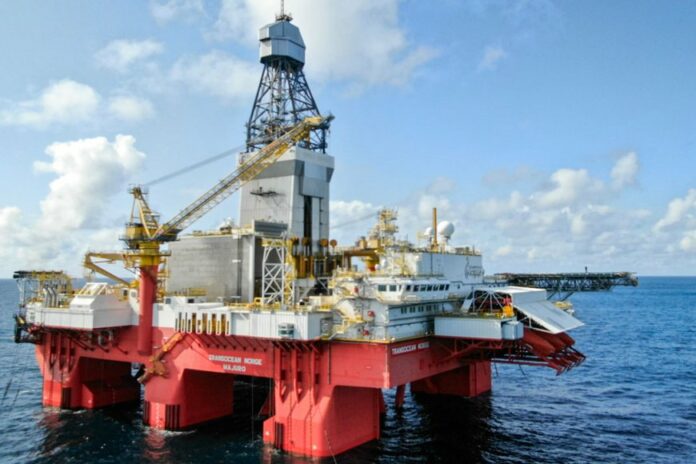
The well – which is the first to be drilled in this production licence – was drilled using the Transocean Norge rig.

The primary exploration target for the well was to prove petroleum in Lower Cretaceous reservoir rocks in the Agat Formation. The secondary exploration target was to prove petroleum in Lower Cretaceous reservoir rocks in the Åsgard Formation.

The well encountered the Agat Formation with a total thickness of about 176 metres, where a total of 79 metres was sandstone layers with poor to moderate reservoir quality. Around 137 metres were registered in the secondary exploration target, a total of 75 metres of which were sandstone layers with poor to moderate quality. The well is classified as dry.

Well 35/6-6 was drilled to a vertical depth of 3840 metres below sea level, and it was terminated in the Åsgard Formation in the Lower Cretaceous. Water depth at the site is 353 metres. The well has been permanently plugged and abandoned.

Konecranes gets order from Saguenay Port Authority in Quebec

0

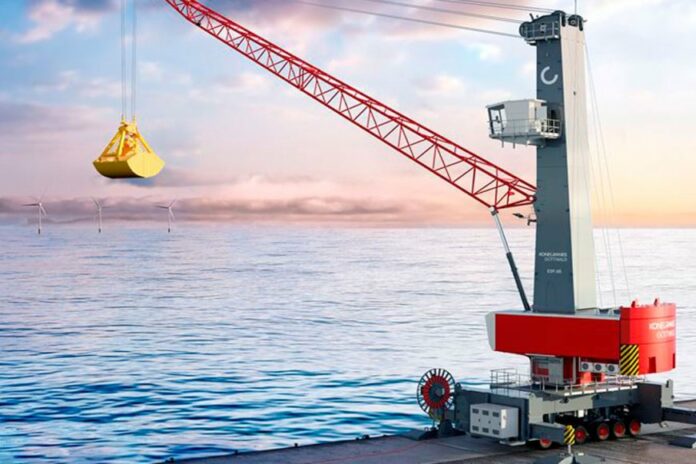
Situated on North America’s only navigable fjord, Port Saguenay provides cargo ships with year-round access to north-central Quebec. The natural deepwater port can accommodate vessels of up to 100,000 tonnes. Capitalizing on this strategic location, the port authority is now expanding its facilities to handle more cargo traffic.

The order was booked in Q1 2025, with handover scheduled for Q3 2025.

This deal marks the start of a new partnership with the Saguenay Port Authority, which chose Konecranes for the flexibility, eco-efficiency and strong performance of its electric drives. The mobile harbor crane will run mainly on an external power supply, significantly reducing emissions compared to diesel-powered alternatives.

The ESP.6B comes equipped with an electric cable reel at the boom top to operate an electric hook rotator and spreaders. With these special features and its 125-tonne maximum lifting capacity, the crane can handle bulk materials – like de-icing salt and iron ore – as well as containers and general cargo.

“By enabling the use of electricity, the Konecranes equipment will be instrumental in helping us to reduce our carbon footprint. With the extra handling features we’ve chosen, the crane is a true asset for the planned growth of the port and the world-class industrial port zone, one of the largest In North America,” says Carl Laberge, Chief Executive Officer at Saguenay Port Authority.

“Konecranes’ industry-leading electric drive concept played a decisive role in securing this agreement. We are very happy to have the Saguenay Port Authority on board as we help more and more customers to reduce emissions while maintaining high operational performance,” says Andreas Moeller, Senior Sales Manager, Konecranes Port Solutions.

CMA CGM and ABB collaborate on parametric roll algorithm to enhance ship safety

0

ABB and the CMA CGM Group are collaborating on a new parametric roll algorithm to improve ship safety. The solution integrates a theoretical framework developed by CMA CGM into the ABB Ability™ OCTOPUS Marine Advisory system.

Parametric rolling has been a challenge to ship safety for decades. Particularly affecting container ships, ro-pax vessels, and car carriers, it means that a vessel experiences large rolling motions as it moves in waves. The phenomenon is hard to predict and poses a threat to vessel, cargo, and crew safety.

By detecting and helping to prevent extreme parametric rolling, the new algorithm will help enhance operational safety by reducing the risk of accidents, vessel damage, and cargo loss at sea. By reducing the risk of cargo loss incidents at sea that can lead to oceanic pollution, it will help protect the marine environment. Preventing parametric roll incidents can also help avoiding potential costs associated with repairs and cargo damage. Furthermore, through its integration into ABB’s OCTOPUS system, the solution will allow real-time monitoring and response, improving voyage efficiency and reducing downtime caused by adverse weather conditions.

As part of its commitment to the safety of its crew members, vessels and customers’ cargo, CMA CGM will deploy the solution across its global fleet and offer comprehensive training services for the users. These trainings will also be available for the wider shipping industry. ABB’s scope of supply covers the installation of the OCTOPUS onboard system as well as complete engineering, project management, and commissioning services.

“We are excited to collaborate with ABB on this parametric roll algorithm, a groundbreaking integration of the CMA CGM theoretical framework with the ABB Ability™ OCTOPUS Marine Advisory system. This solution not only enhances safety and operational efficiency but also helps to minimize risks for cargo damage and loss at sea. This collaboration represents a major leap forward for the industry, enabling more efficient operations and safer voyages,” said Emmanuel Delran, Vice President Group Operations, CMA CGM Group.

“Recent development in the maritime sector has focused increasingly on safety and sustainability,” said Tomas Arhippainen, Head of Marine Service and Digital, ABB Marine & Ports. “Our partnership with CMA CGM on the parametric roll algorithm underscores our commitment to improving vessel safety and operational efficiency as well as contributing to environmental protection. By providing a tool that helps to mitigate the risks associated with parametric roll, we are taking a meaningful step forward in the global shipping industry.”

ABB and CMA CGM have a longstanding relationship, with around 200 vessels equipped with ABB’s OCTOPUS system. Building on that, this new collaboration sets a benchmark for safety and technological advancement, encouraging also other companies to develop and adopt new innovations.

Damen Naval hands over new CSS Den Helder to the Command Materiel and IT Organisation

0

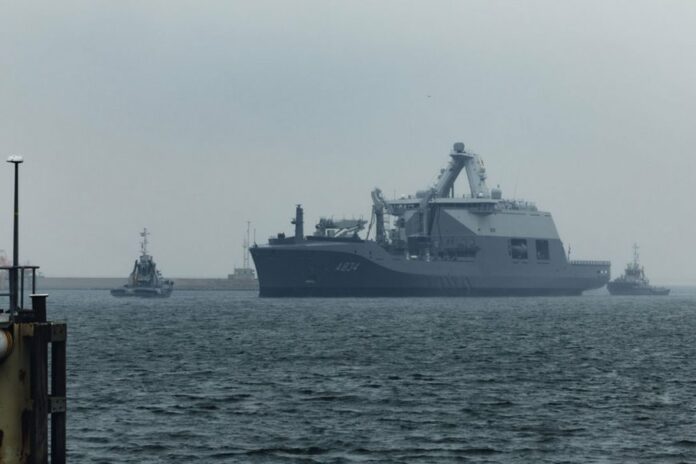
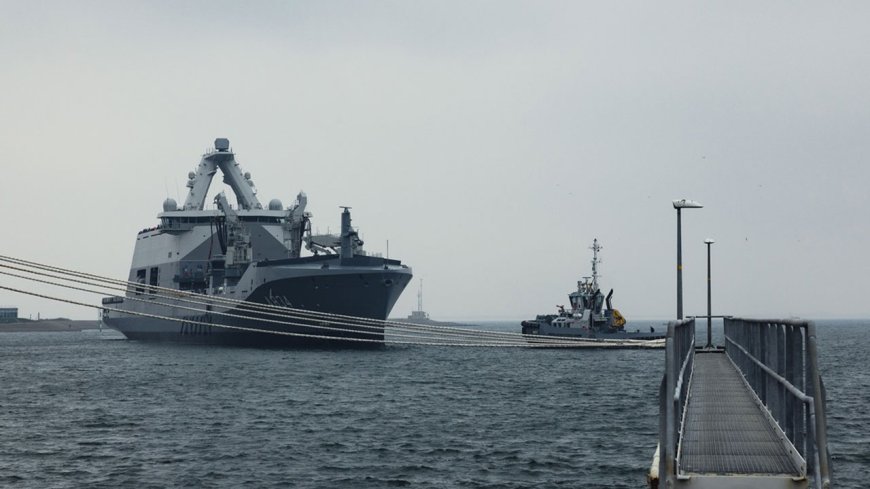
Naval shipbuilder Damen Naval has handed over the new Combat Support Ship (CSS) Den Helder to the Command Materiel and IT organisation (COMMIT).

During a ceremony in Den Helder, the home port of the supply and support vessel, Damen Naval Managing Director Roland Briene and COMMIT Commander Vice Admiral Jan Willem Hartman made the handover official. The CSS marks the first phase in the large-scale fleet renewal programme for the Royal Netherlands Navy.

The Combat Support Ship is of vital importance to the Royal Netherlands Navy’s permanent support and supply capacity, as well as that of its NATO partners. This innovative vessel is deployable worldwide and can provide ships at sea with fuel, food, water, ammunition, and other goods.

With a sense of pride, Damen Naval’s Managing Director Roland Briene said: “It is a special moment to hand over this complex and robust ship to COMMIT. From Vlissingen, the Den Helder has now arrived in its home port of Den Helder. The CSS is the first in a series of ships that will strengthen and modernise our fleet. With this, the Netherlands once again plays an important role in European naval shipbuilding. Cooperation in the production of defence materiel is becoming increasingly important, and Zeeland demonstrates it is playing at the highest level.”

Damen Naval Project Director Arjan Risseeuw adds: “After an intensive outfitting period in Vlissingen, we carried out a number of final tests during the transit of the ship to Den Helder. We have now largely addressed the points for attention from the earlier sea trials. Following the handover, we will assist with the integration of the weapon systems with the platform systems and finalise the remaining outstanding tasks. It has been a wonderful period of shipbuilding in Vlissingen, which certainly leaves us wanting more.”
Cooperation between Damen Naval and the Ministry of Defence is now running at full speed. As a strategic partner, Damen Naval is working closely with the Ministry on current and future projects, strengthening the naval construction sector.

“It feels good that the CSS is now in the port of Den Helder and that I have the honour of receiving the ship on behalf of COMMIT from Damen,” said COMMIT Commander Vice Admiral Jan Willem Hartman. “During the sea trials, the CSS performed as the robust supply vessel the Royal Netherlands Navy needs. Along with a new ship being handed over, we are also receiving all the ILS data required to ensure the ship’s continued operation. This means a significant part of the maintenance and support for the future is already being provided, ensuring the ship’s long-term readiness. As strategic partners, I have every confidence that we will continue to work together in close cooperation.”

CSS Den Helder was built at the Damen Naval yard in Galați, Romania, and departed from there in November 2024 for its first sea trial and the voyage to the Netherlands. The ship arrived on 13 December 2024 in Vlissingen-Oost, where Damen Naval carried out further work. On 22 February this year, the vessel was christened by Her Royal Highness the Princess of Orange.

On Friday 14 March, the CSS departed the Vlissingen yard to continue the sea trials. Various Sea Acceptance Tests (SATs) were conducted, including a replenishment at sea (RAS) with HNLMS Johan de Witt. Now that the ship has been handed over to COMMIT, work will continue under the responsibility of the Directorate of Materiel Sustainment (DMI) and the Joint IV Command (JIVC). They will begin commissioning the Sensor, Weapon, and Command System, and will manage the hardware-software integration within the Combat Management System. Later this year, the ship will be formally transferred to the Royal Netherlands Navy and, upon entering service, will receive the royal designation: HNLMS Den Helder.

Vattenfall builds Germany’s largest offshore wind farm

0

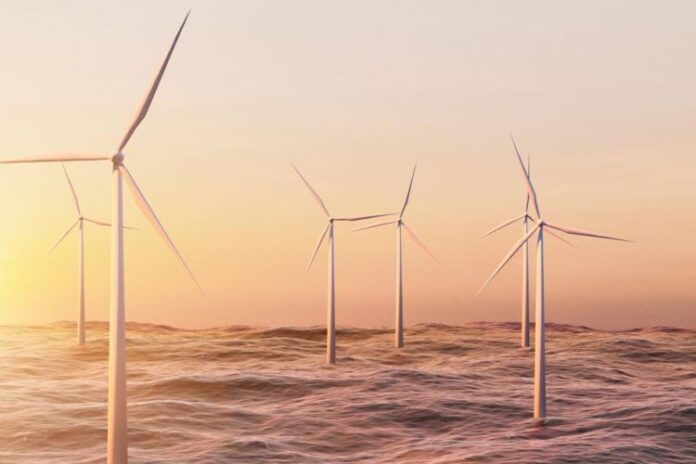
Construction of the Nordlicht 1 and 2 wind farms is planned to begin in 2026, and Nordlicht 1 is set to become Germany’s largest offshore wind project. The wind farms are expected to be operational in 2028. 

“The Nordlicht offshore wind cluster makes a significant milestone in the path to enabling fossil freedom. By accelerating Germany’s energy transition and supporting industrial decarbonisation, it will provide clean, reliable energy while driving innovation and sustainability in the sector. We look forward to realising this important project in close collaboration with our supply chain partners,” says Helene Biström, Head of Business Area Wind at Vattenfall.

Vattenfall will repurchase the shares in the Nordlicht cluster that BASF acquired in 2024. At the same time, BASF secured access to long-term supply of renewable electricity, continuing the collaboration. This agreement will secure renewable power for BASF’s chemical production in Europe at a time when such additional supply will be needed.

The Nordlicht wind cluster will have a net capacity of more than 1.6 GW, with Nordlicht 1 becoming the largest offshore wind farm project in Germany. As part of Vattenfall’s sustainability efforts, both wind farms will feature wind turbines towers partially made with low-emission steel, reducing their overall carbon footprint by 16 percent.   

The final investment decision for Nordlicht 2 has been made on a conditional basis, pending the receipt of the necessary permit.  

Wärtsilä supplies Wärtsilä 25DF dual-fuel engines for new Ibaizabal LNG Bunkering vessel

0

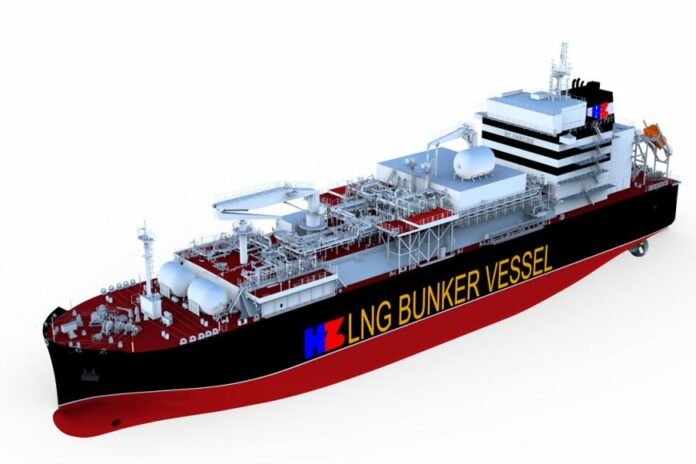
The engines will feature Wärtsilä’s innovative NextDF technology, which dramatically reduces methane emissions when operating with LNG fuel. The ship is being built at the Hudong-Zhonghua Shipbuilding yard in China, and the order was booked by Wärtsilä in Q4 2024.

LNG is an important transition fuel as the marine industry strives to reduce its carbon footprint. However, the main component of LNG is methane and when burned as a fuel, a very small amount may not combust properly, leading to methane escaping into the atmosphere.

The Wärtsilä 25DF engine has already set an industry benchmark for low methane emissions, down to as low as 1.4 percent at certain load points. The NextDF feature further reduces methane emissions, achieving as low as 1.1 per cent in a wide load range. What’s more, the nitrogen oxide (NOx) emissions are lower than on the standard Wärtsilä 25DF engine which already has low emission levels below IMO Tier III.

“Our company strategy and commitment is for our vessels to be as environmentally friendly and sustainable as possible. In line with current and anticipated regulations – both at an international and regional level – we carefully evaluated the fuel consumption and emission performance together with Wärtsilä, concluding that the Wärtsilä 25DF engine with the NextDF feature would best support us with achieving our sustainability goals,” says Jose Maria Torre, Fleet Director of Ibaizabal Group.

Torre continues: “Wärtsilä’s state-of-art technology not only represents a major step forward in achieving our own decarbonisation strategy for our fleet, but for the charterer of the vessel. The decision by them to charter this vessel was down to it having the best performance and lowest emissions for that type of vessel.”

The Wärtsilä 25DF engine is the most efficient and most environmentally friendly marine engine in its power range. With its modular, upgradeable, and flexible design, the engine platform helps operators to significantly reduce fuel consumption and emissions, whilst improving the efficiency of vessels. The NextDF feature will enable operators to go even further in reaching their decarbonisation targets. In addition to lower emissions levels, the NextDF feature improves engine efficiency by up to 0.5 percentage points.

In addition to the engines, the scope of supply also includes two Wärtsilä Steerable Thrusters (WST) which will deliver superior hydrodynamic performance for maximum propulsion efficiency and dynamic positioning capability.

“The incorporation of our NextDF feature into the Wärtsilä 25DF engine provides enhanced fuel economy together with a significant cut in emissions. We share Ibaizabal’s commitment to decarbonising shipping operations and applaud them for being the first operator to take advantage of this new groundbreaking technology for the Wärtsilä 25DF engine,” comments Stefan Nysjö, Vice President of Power Supply, Wärtsilä Marine.

The equipment is scheduled for fast-track delivery to the yard, commencing in September 2025. The ship is expected to be delivered before the end of 2026.

MODEC secures operations and maintenance contract for Shell’s Gato do Mato FPSO Project

0

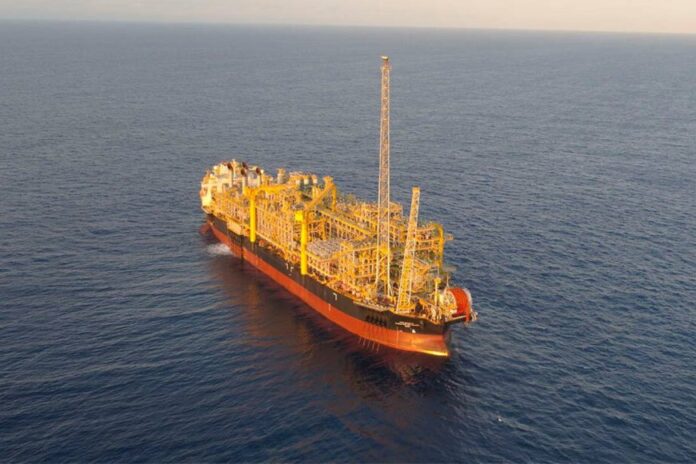
MODEC announces that Shell Brasil Petróleo Ltda has made its Final Investment Decision (FID) for a Floating Production Storage and Offloading (FPSO) vessel for the Gato do Mato oil field, offshore Brazil. 

Following the successful execution of the Front-End Engineering Design (FEED) contract, which was awarded in March 2024, MODEC has signed a Purchase and Sales Agreement, and a contract for the operations and maintenance of the FPSO for a period of 20 years with Shell.

When installed, FPSO Gato do Mato will be capable of producing 120,000 barrels of oil per day (BOPD), as well as associated gas and water, and will be moored at a water depth of approximately 2,000m, around 200km South of Rio de Janeiro. MODEC will be responsible for the design of the hull and all related topsides facilities for the FPSO, which will be moored by a SOFEC Spread Mooring system. The produced stabilized crude will be stored in the FPSO tanks, and the oil will be offloaded to shuttle tankers to go to market.

The FPSO will feature a new built, custom-made Next Generation Hull to meet the 25-year design life.

The FPSO Gato do Mato will be the 19th FPSO to be developed by MODEC for Brazil. It will be the second unit to be delivered directly to Shell by MODEC for operation in Brazil.

Value Maritime and MOL complete carbon capture first

0

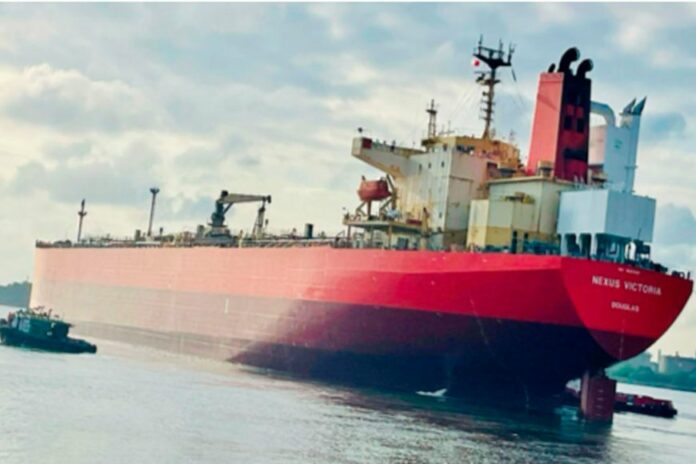
Value Maritime (VM) has successfully installed its unique Exhaust Gas Cleaning System (EGCS) and Carbon Capture unit aboard Nexus Victoria, an LR1 product tanker owned by Mitsui O.S.K. Lines, Ltd. (MOL). 

VM’s 15MW next-generation EGCS Filtree system can filter sulphur and (ultra)fine particulate matter and can capture 10% of the vessel’s CO2 emissions with potential scalability to 30% if needed. Nexus Victoria, with a deadweight tonnage (DWT) of 75,000, is now the largest vessel to incorporate VM’s SOx scrubber with advanced carbon capture technology and the first-ever LR1 tanker to sail with this system. The installation was completed in Singapore under the supervision of VM’s specialised technical team.

“Our first commissioning in Singapore is a milestone for Value Maritime,” said Alican Kilinc, Operations Director at Value Maritime. “We appreciate MOL’s trust in our technology and are excited to support their decarbonisation efforts. Collaborating with one of the world’s leading shipowners drives us to push innovation forward and provide the industry with the most effective emission-reducing solutions.”

MOL has established the “MOL Group Environmental Vision 2.2” as a roadmap to achieve net zero greenhouse gas (GHG) emissions by 2050 and promote the sustainable development of people, society, and the Earth. MOL positions the environmental strategy as one of the main strategies in its management plan, “BLUE ACTION 2035.”

“This system represents a crucial step in decarbonising vessels that cannot yet transition to next-generation fuels,” said Hiroyoshi Kubo, Executive Officer – Tanker Unit at MOL. “Together with Value Maritime, we are committed to advancing carbon capture solutions and building a CO2 value chain that contributes to a sustainable, carbon-neutral industry.”

VM’s Filtree system is designed to filter sulphur, CO2 and  (ultra)fine particulate matter from the vessel’s exhaust stream. The system’s plug-and-play design includes onboard CO2 capture and storage capabilities, enabling captured CO2 to be offloaded onshore for reuse in greenhouse cultivation, methanol production, and even the food industry.

“End-to-end carbon capture solutions are essential to achieving industry-wide decarbonisation,” said Christiaan Nijst, Co-founder and Director of Value Group. “By integrating maritime carbon capture with onshore utilisation, we’re closing the loop on emissions and creating a more sustainable shipping ecosystem.”

Carnival Corporation coats 16th vessel in AQUATERRAS, following latest drydock

0

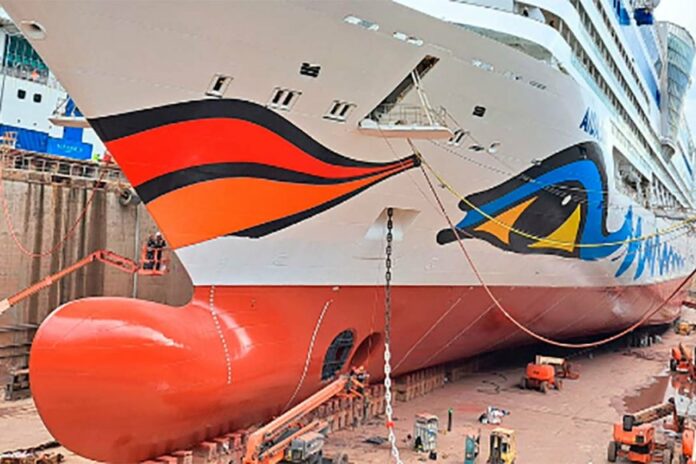
Nippon Paint Marine announces the latest application of AQUATERRAS to AIDAdiva, operated by AIDA Cruises. This application further represents the 16th vessel in the Carnival group to fully be applied with Nippon’s biocide-free coating.  

In 2022, based on previous experience, Carnival applied AQUATERRAS to AIDAdiva to provide the highest performance, biocide-free underwater hull protection. At the time, AIDAdiva became the third Carnival cruise vessel to be fully coated with AQUATERRAS. 

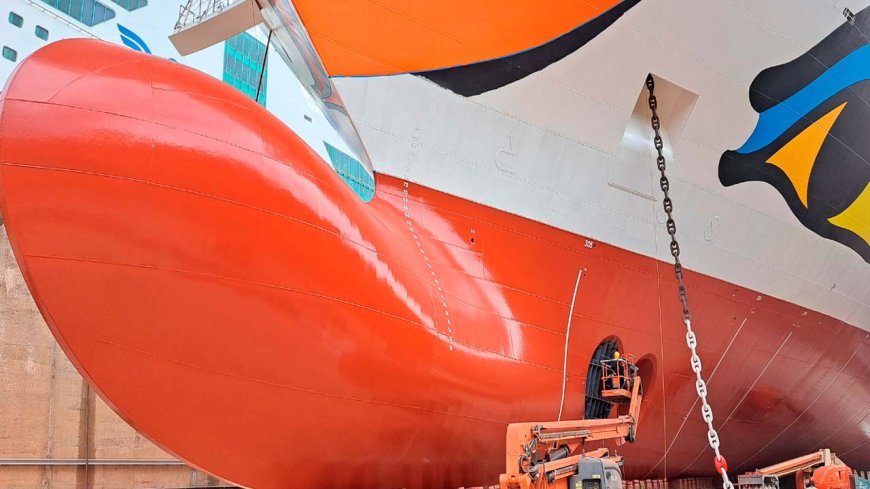
Although the ship operated in challenging itineraries in both the Caribbean and in Europe, it was seen on arrival in dock at Marseille in 2025 that AIDAdiva’s vertical bottom was completely free of any fouling, despite it not having any underwater cleaning during the ship’s three-year service period. The arrival in dock photos were taken before any high-pressure freshwater washing had been done. 

According to Carnival Maritime, the maritime service unit for AIDA Cruises, the performance provided by AQUATERRAS’s excellent protection from biofouling had reduced the vessel’s environmental impact by both lowering emissions and reducing propulsive power demands as well AQUATERRAS’s biocide-free composition lowering the ship’s impact on the marine environment.  

During the global pandemic and the worldwide suspension of cruise operations, Carnival found that the hulls of the two vessels that had been previously fully applied with AQUATERRAS remained much cleaner than other vessels in their fleet, even over the 18-20 month period before regular operation or cruising resumed. 

Johan Wilckens, Managing Director at Nippon Paint Marine (Europe), said: “Since its release, AQUATERRAS has provided outstanding fouling protection, reduced emissions and costs, whilst also lowering the impact on the marine environment. The effect of our products on vessels like those seen on AIDAdiva, showcase the industry leading capability of our R&D team, who maintain an unrelenting commitment to enhancing our coating technology to ensure our solutions align with the evolving needs of our customers.” 

A spokesperson for Carnival Corporation, said: “We were extremely pleased with the results of AQUATERRAS. Its outstanding performance eliminated the need to carry out any in-service cleaning, and as a biocide-free product, the coating supports our ambition to become as environmentally friendly as we possibly can. Furthermore, due to the hull’s excellent condition, we have been able to reduce fuel emissions in our operations without compromising on vessel performance.”  

Released in 2017, AQUATERRAS represents a world-first in the development of fouling protection. The technology’s hydrophilic and hydrophobic microdomain structures provide market leading fouling performance, whilst its biocide-free composition protects the marine environment by eliminating the discharge of any metals or biocides into our seas.  

BERG delivers the world’s first GreenForge® shafts to the maritime market

0

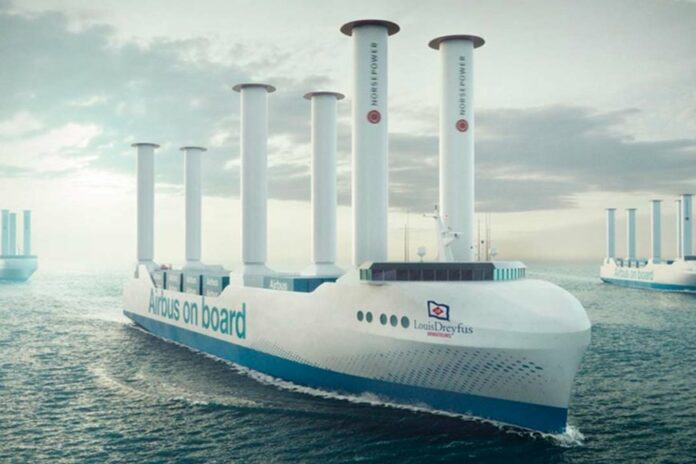
Three Louis Dreyfus Armateurs (LDA) ro-ro vessels due in service from 2026 to carry aircraft parts across the Atlantic are already set to take advantage of sustainable wind power, courtesy of their rotor sails, while their hybrid propulsion, power management and control technology is coming from BERG.

In addition, BERG will supply propeller shafts made from recycled scrap steel, using the GreenForge® production – a process developed by Björneborg Steel which draws on renewable electricity sources and makes pioneering use at scale of the fossil-free biogas rDME or bio-propane instead of propane. The process is audited as cutting 95% of the CO2 generated in conventional production, with other measures mitigating the remaining emissions to ensure full climate neutrality.

Björneborg Steel indicates that producing the six propeller shafts for LDA using the GreenForge® process will result in a reduction of 160 tonnes of CO2 compared to the conventional method.

Kajsa de Mello, Operations Director, BERG Propulsion said: “BERG is delighted to work with Sweden’s cutting-edge steel industry and pioneer the use of maritime GreenForge®. We are proud to be the first supplier in the world to offer customers propeller shafts using this process. It is fitting that the first sea-going application should be low emission ships.

The world’s first climate neutral propeller shaft for LDA is due delivery from Björneborg Steel to the BERG plant in Hönö, Sweden in March, with five more to arrive before the end of June 2025.

The EU’s ‘Clean Industrial Deal’ is expected to help revitalize European industries by including measures to incentivize renewable energy, remove barriers to investing in clean technologies, and offering aid and tax breaks to cut carbon. Penalties are also coming for CO2 emissions in industry that will improve the competitive position of processes such as GreenForge®. CO2 emission ‘rights’ are being withdrawn from EU steelmakers, meaning they can switch to climate neutral processes or face penalties and higher production costs. By 2030, Björneborg Steel projects emission free processes will be cheaper than their legacy counterparts.

“The sustainability case for carbon neutral steel is compelling and, while it is currently at the premium end of the market, its use will offer marine equipment buyers a route around escalating fossil-based production costs,” said de Mello. “BERG is proud to lead where others will have to follow.”

Håkan Dedorsson, CEO, Björneborg Steel, said “Like other industries, maritime has its share of sustainability leaders and stakeholders open to the innovations needed for the challenges ahead.  

“We are ramping up production based on the cutting-edge GreenForge® process, subject to the availability of biogases and we look forward to helping BERG’s customers make the green choice that will benefit generations to come.”

Based on demand, Björneborg aims to shift its full production to the GreenForge® process in 2027.