-0.4 C
New York
Home Blog Page 85

Naming ceremony for Damen electric Fast Ferry

0

Reederei Norden-Frisia has held a naming ceremony for its latest vessel, the Frisia E-I. In a boost for sustainable public transport, the vessel, a Damen Fast Ferry 3209 Electric, is the first fully electric catamaran to operate in Germany. Charged with electricity generated by onshore solar panels, the ferry offers a carbon neutral service.  

Amongst the guests attending the naming ceremony, held at Reederei Norden-Frisia’s location in Norddeich, were Department Head for Waterways and Shipping in the Federal Ministry for Digital and Transport Dr. Wibke Mellwig, Member of the Board of Reederei Norden-Frisia Carl-Ulfert Stegmann, Chairman of the Supervisory Board of Reederei Norden-Frisia Karin Pragal, and Damen Sales Manager for Germany Joschka Böddeling.  

“We are working on the sustainable transformation of shipping and investing in an emissions-free future, and this vessel will help us in this journey,” said Carl-Ulfert Stegmann, Board Member of AG Reederei Norden-Frisia. 

Joschka Böddeling added, “Having been involved with this project from the outset, it is a pleasure to be here today to witness this special event. The naming of the Frisia E-I is a milestone moment in the operation of the first fully electric catamaran ferry in German waters. With this vessel, Reederei Norden-Frisia has sent a clear message, underscoring its commitment to a greener operation. This, and the many other steps that the company has taken in this direction, serve as commendable examples for us all. They are also a signal that, if we work together towards our goals, a sustainable maritime future is achievable.” 

The ferry is the first vessel that Reederei Norden-Frisia has built outside of Germany in its long history of over 150 years. The company was attracted to Damen by its track record in the construction of electric vessels.  

Additionally, Damen provided Reederei Norden-Frisia with support for the charging infrastructure and mooring facilities required, offering an efficient way to tackle the full scope of the project.  

The route that the ferry will serve – between Norddeich and the island of Norderney on the East Frisian coast – called for the development of a unique vessel. To sail in the shallow waters of the Wadden Sea, the ferry required a draught no more than 1.2 metres.  

Additionally, the Wadden Sea is a UNESCO World Heritage site with strict criteria for maritime operations. To ensure the protection of this environmentally valuable area, the vessel is restricted to sailing at relatively low speeds. Even with these restrictions in place, however, the Fast Ferry 3209 Electric reduces the current sailing time by half, transporting up to 150 passengers in just 30 minutes. The vessel is recharged during (dis)embarkation of passengers over the course of 28 minutes.  

Reederei Norden-Frisia has committed itself to providing an environmentally friendly operation. In addition to offering a fully electric crossing, the company has established an electric car and bicycle hire service for its clients. It is also installing wind turbines and solar panels in its car parking areas so that passengers can return from a visit to the Frisian Islands to vehicles fully charged with renewable energy.  
Dajin Heavy Industry secures $135 million offshore wind power contract in Europe

0

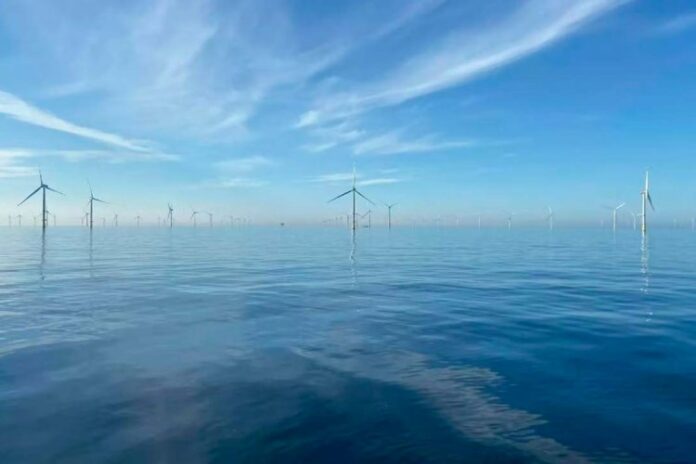
Dajin Heavy’s subsidiary Penglai Dajin Ocean Heavy Industry will make super-large monopiles and supply them to a European developer of offshore wind projects, the Beijing-based parent company announced yesterday. The delivery is expected to be completed by the end of next year.

The order value equals nearly 23 percent of the firm’s audited operating revenue in 2023, Dajin Heavy noted, without revealing the client’s name, just mentioning that it is a global energy leader.

Dajin Heavy is one of the few global marine engineering suppliers with end-to-end delivery capabilities and a top-tier provider in the European market. Its client portfolio, project volume, and delivery regions are constantly expanding.

Dajin Heavy has secured several big orders from European offshore wind projects since 2022, including the Dogger Bank Wind Farm off the East coast of Yorkshire in the UK, the Ile D’Yeu et Noirmoutier in the Bay of Biscay France, and the Moray West Offshore Wind Farm Project in northeastern Scotland in the UK.

Source: yicaiglobal 

PANYNJ reaches landmark agreement with APM Terminals on lease extension

0

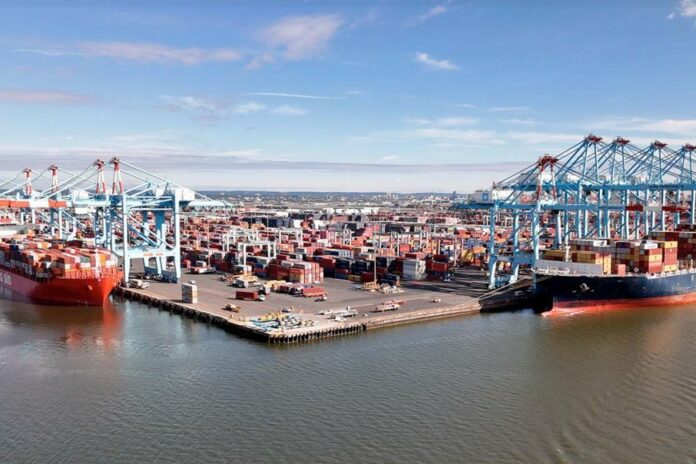
Originally set to expire in 2029, the lease extension marks a significant milestone in the company’s enduring partnership with the port, which dates back over a century. The 33-year lease extension paves the way for major infrastructure investments which will enhance capacity and transport velocity, create jobs and strengthen the US economy. The proposed deal is subject to vote by Port Authority Board of Commissioners on March 27.

“We are deeply honored and grateful for Chairman Kevin O’Toole and Executive Director Rick Cotton’s support to extend our lease at APM Terminals Elizabeth,” said Keith Svendsen, CEO, APM Terminals. “We look forward to the Board confirming the agreement and continuing our work with the Port Authority to be an engine of commerce and contribute to the prosperity of the communities we serve.”

APM Terminals Elizabeth currently handles over 25% of the annual container throughput in the port complex, supported by more than 1,100 members of the International Longshoremen’s Association (ILA). Throughout the previous lease, APM Terminals has consistently invested in infrastructure and equipment, including a recent additional investment of $200 million to modernize the terminal. These investments, along with the tireless efforts of the ILA, have ensured uninterrupted operations throughout the period of the COVID-19 shutdowns, benefiting customers, truckers, and other stakeholders to keep the region’s supply chain moving.

“This lease extension will be another milestone for APM Terminals, which moved record volumes for the port in 2024,” said Henrik Kristensen, Managing Director, APM Terminals Elizabeth. “Working side-by-side with the ILA, the extension will allow us to continue our investment in the terminal to support jobs and the growth of the local economy for many years to come.”

Looking to the future, APM Terminals envisions a larger, more efficient container terminal. The company is committed to significant future investments to enhance the capacity and efficiency for its customers. Planned upgrades include the optimization of the terminal layout, electrification of container handling equipment, and future-proofing container berths. These efforts will support the export of goods to foreign markets, contributing to the local and national economy, and creating numerous job opportunities to support the growth of the local community.

“This landmark agreement with APM Terminals underscores the essential role the Port of New York and New Jersey will continue to play in powering the regional and national economy,” said Port Authority Chairman Kevin O’Toole. “APM Terminals has been a trusted partner at the port for decades, and we’re eager to build on that strong foundation as we push towards our shared goals of growing this gateway’s productivity, efficiency, and dependability for the good of the region and the nation.”

“This lease extension secures transformative infrastructure and capacity enhancements at the second-largest container terminal in the East Coast’s busiest port,” said Port Authority Executive Director Rick Cotton. “These commitments will enable the Port of New York and New Jersey to move more goods, create more jobs, and further cement its role as an essential driver of our region’s economy and our nation’s supply chain.”

Crowley and Naturgy deploy first U.S. LNG carrier to serve Puerto Rico

0

The milestone will provide Puerto Rico with increased access to the reliable supply of U.S.-produced LNG, helping address the island’s ongoing power demands.

Crowley and Naturgy have entered into a multi-year agreement that provides for the regular delivery of the U.S. mainland-sourced LNG to Naturgy’s operating facility in Penuelas, Puerto Rico.

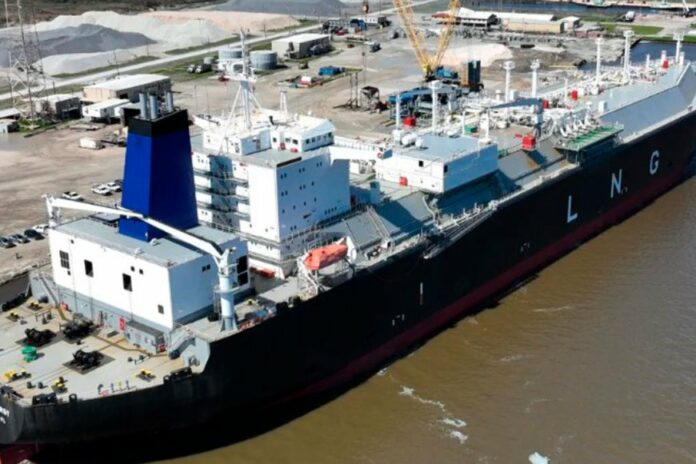
The Crowley-owned carrier American Energy, which has capacity of 130,400 cubic meters (34.4 million gallons) per voyage, will operate in accordance with the U.S. Coast Guard Authorization Act of 1996. The vessel has a CAP 1 rating, certifying its top rating for safety and vessel condition, and its compliance with all regulatory requirements.

“The entry into service of American Energy marks a significant step for fuel supply reliability in Puerto Rico for our energy grid, which will greatly benefit our people,” said Puerto Rico Gov. Jenniffer González-Colón. “This partnership is an initiative to act using existing regulations to increase access to a U.S.-based LNG source that expands our options for the stabilization of our energy grid, as we work towards providing our residents and businesses a more consistently reliable power generation source.”

The 900-foot-long (274 meters) LNG carrier builds on Crowley’s 70-plus years commitment to Puerto Rico. The company also operates the full-service marine Isla Grande cargo terminal in San Juan for its container and roll-on/roll-off vessels, including two LNG-fueled ships, and logistics services. Crowley annually delivers more than 94 million gallons of LNG through its LNG Loading Terminal in Penuelas as well as provides ocean delivery and land transportation using ISO tank containers.

At capacity, each delivery of LNG aboard American Energy provides enough energy to power 80,000 homes for a year. LNG is also a lower-carbon fuel emitting less greenhouse gas (GHG) emissions compared to diesel and other traditional energy sources.

American Energy will be crewed by U.S. mariners and provide regular service from the U.S. Gulf Coast to Puerto Rico.

“AMO is proud to be a part of this historic partnership that benefits the people of Puerto Rico,” said American Maritime Officers National President Willie Barrere. “U.S. Merchant Mariners, many of whom were born in Puerto Rico, sailing on Jones Act vessels, have been reliably delivering goods to the Commonwealth for decades. Now we will deliver LNG fuel to power the residents and further strengthen the bond between Puerto Rico and our U.S. seafarers.”

“The SIU is tremendously excited about providing crew members for the American Energy,” said David Heindel, president of the Seafarers International Union (SIU). “Our members have a long, proud history of working aboard LNG vessels, and our affiliated school in Piney Point, Maryland, regularly conducts U.S. Coast Guard-approved curriculums that help prepare mariners for this kind of work. We congratulate Crowley, and we look forward to helping safely operate the newly reflagged ship.”

Barrow granted royal status to recognise its UK nuclear submarine-building heritage

0

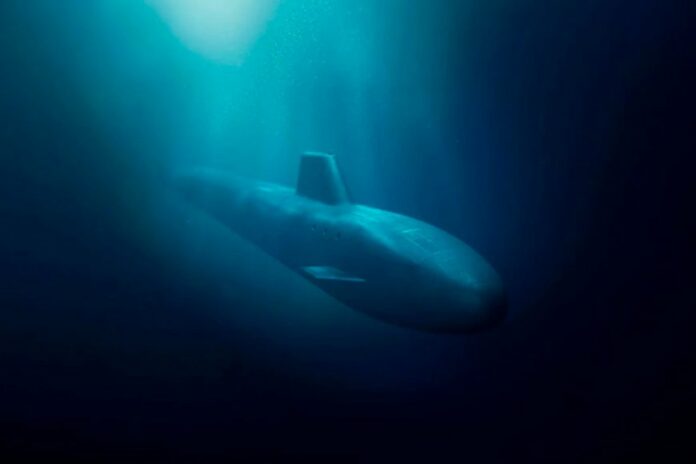
According to a statement published by the British Royal Navy of the United Kingdom on March 20, 2025, the British Royal Navy has marked a major milestone in the renewal of the nation’s nuclear deterrent with the keel-laying of HMS Dreadnought, the first in a fleet of four next-generation nuclear-powered ballistic missile submarines.

The event, held at BAE Systems’ state-of-the-art submarine facility in Barrow-in-Furness, represents a significant step forward in what is the UK’s most advanced and complex naval program to date.

Keel laying itself is largely symbolic with modern methods of warship construction; first steel was cut for Dreadnought nearly a decade ago and huge sections have already been completed.

“This keel laying ceremony is considered the ‘birth’ of a vessel and I congratulate all those involved across the Alliance for reaching this important milestone in the life of HMS Dreadnought and look forward to bringing this exciting and highly capable submarine into service,” said First Sea Lord Admiral Sir Ben Key.

“Whilst the Vanguard Class of submarines continues to deliver our Continuous At-Sea Deterrent today, the Royal Navy is greatly looking forward to operating highly sophisticated and advanced Dreadnought Class submarines.”

Displacing more than 17,000 tonnes, the length of 14 buses and with a crew of around 130, HMS Dreadnought will be the most-advanced boats of their kind in service anywhere, featuring – for the first time – ‘adaptive’ lighting to simulate day and night on board.

With a lifespan of in excess of 30 years, the four boats will carry the Silent Service past the century milestone of undertaking the nation’s No.1 military mission.

Royal Navy submariners have borne the responsibility of the aptly-named Operation Relentless 24/7/365 since 1969.

Building the Dreadnought class is a national endeavour, with some 30,000 people involved in the project from design through to delivery, with the construction phase of the four submarines – HMS Valiant, Warspite and King George VI follow the first in class – expected to take 20 years.

The boats themselves are being built in 16 ‘units’ which, when ready are grouped into three ‘mega units’ and moved to the Devonshire Dock Hall for assembly; the first ‘mega block’ of Dreadnought was delivered in the autumn of 2023.

Dreadnought is due to begin her deterrent patrols next decade as the existing V-boats (the oldest, Vanguard, is already 33 years old, the youngest, Vengeance, 27) are phased out.

During his visit to Barrow, the premier met some of the crew of HMS Agamemnon, the sixth Astute-class submarine which is nearing completion.

For much of its operational life, ‘Aggie’ will form part of the multi-layered defence around the strategic deterrent, from RAF Poseidon maritime patrol aircraft to new Type 26 frigates (under construction on the Clyde), Merlin Mk2 submarine hunting helicopters, and a string of uncrewed systems and subsea sensors.

New portable system to aid coral reef restoration goes remote in the Maldives

0

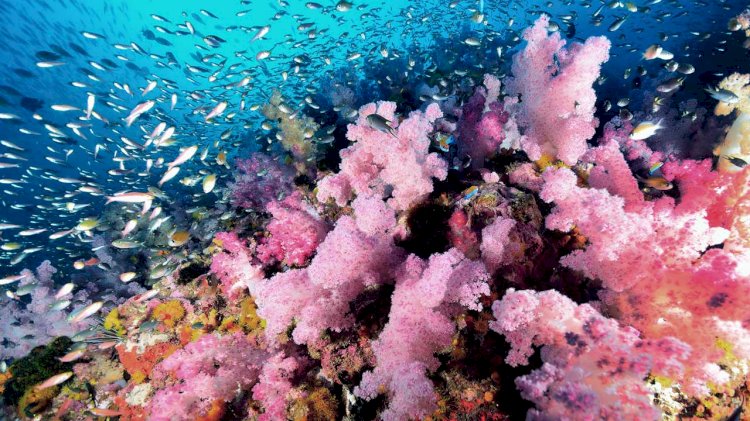
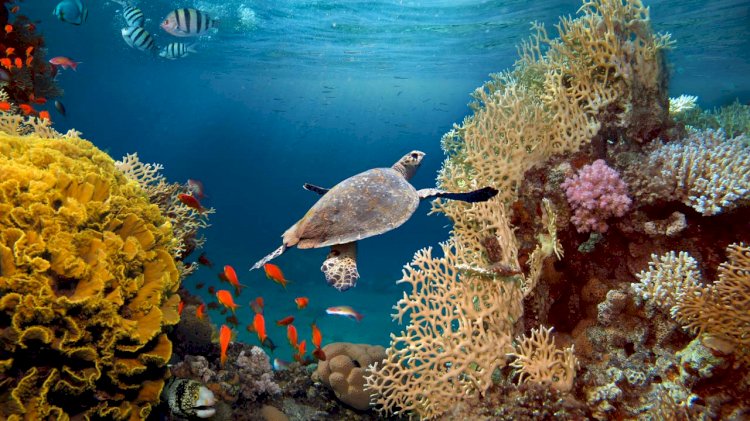
Called ReefSeed, the project is a collaboration between the Australian Institute of Marine Science (AIMS), the Maldives Marine Research Institute (MMRI) and Australia’s national science agency, CSIRO.

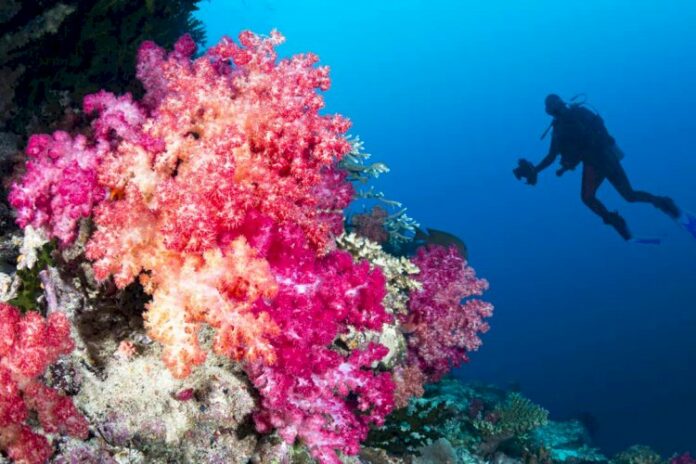
The trial of the self-sufficient system is taking place at Maniyafushi Island, in the South Male Atoll, and is taking advantage of coral spawning, a period of time when many species of corals reproduce, helping coral reefs to repair and recover.

AIMS coral reproduction and aquaculture scientist and ReefSeed co-lead, Dr Muhammad Azmi Abdul Wahab, said AIMS is proud to be playing a role in helping to support restoration efforts in the Maldives and to develop local capacity in coral restoration.

“As the climate warms, coral loss from coral bleaching is a global issue, and unfortunately the coral reefs in the Maldives have not been immune,” he said. 

AIMS hosted several MMRI biologists and technicians during the coral spawning on the Great Barrier Reef in October last year. They were trained on the ReefSeed system and learned about restoration techniques developed and refined by AIMS. 

Dr Abdul Wahab added: “It’s exciting to see our colleagues putting this training into action and sharing their knowledge and experience on Maldivian corals with us.”

Scientists and technicians from AIMS and MMRI collected corals to bring into the ReefSeed system in readiness for coral spawning, which happens in the Maldives over several months. Coral egg and sperm bundles will be fertilised and reared into coral larvae in the ReefSeed system before being settled and transferred to reefs on specially designed ceramic devices.

Khadeeja Ali, Director at MMRI, the body overseeing ReefSeed project activities in the Maldives, said: “ReefSeed has given us hope in restoring reefs that have faced tremendous stress due to bleaching and impacts of climate change. This initiative makes coral reef restoration scalable and supports restoration of coral reefs with genetically diverse corals.

“We are grateful for this initiative, which has significantly strengthened our capacity to implement and improve coral reef restoration programs. Our colleagues are now trained in advanced restoration techniques and the use of this innovative system.”

“With extensive use of ReefSeed’s technology, we are hopeful that a new era of effective and sustainable coral reef restoration can be achieved.”

Dr Christopher Doropoulos, Senior Research Scientist from CSIRO, said: “We’ve been working with MMRI in the Maldives to train local communities on coral restoration techniques using sexually produced coral larvae since 2020.

“Some of the training includes collecting information on reef processes such as coral reproduction timing, other training involves hands-on application of restoration techniques, all published in freely available standard operating procedures. Working with AIMS and MMRI to further develop portable aquaculture systems through the ReefSeed system adds another approach to the restoration toolbox.”

The ReefSeed project and collaboration was showcased at a special Open Day event in the Maldives on 16 March. It was attended by Maldives Government ministers, members of parliament, department officials, the Australian High Commissioner to the Maldives and representatives from local non-government organisations.

In his inaugural remarks, the Honourable Minister for Fisheries and Ocean Resources of the Maldives, Mr Ahmed Shiyam, acknowledged the importance of collaboration.

“As we move forward with the ReefSeed project, it is clear that the future of our coral reefs lies in our hands. The actions we take today will determine the health of our marine ecosystems tomorrow,” he said.

“By working together, we can restore what has been lost, protect what remains, and ensure that future generations of Maldivians, as well as visitors, can continue to enjoy our stunning coral reefs.”

ReefSeed was awarded US$1.5m (AUD$2.3m) over three years by the G20 Coral Research and Development Accelerator Program (CORDAP), the only international organisation fully dedicated to funding global research and development for tropical and cold water coral restoration and conservation.

ReefSeed uses science and technology developed under the Australian Government’s Reef Restoration and Adaptation Program (RRAP).

RRAP is funded by the partnership between the Australian Government’s Reef Trust and the Great Barrier Reef Foundation.

China sets record for longest wind turbine blade loading

0

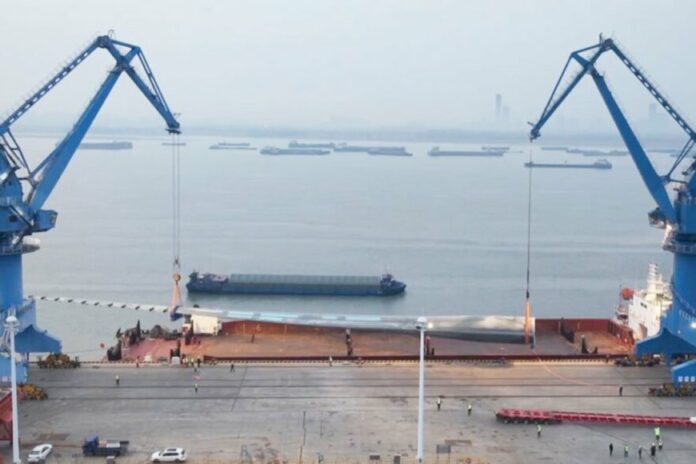
A 133-meter-long, 67-tonne wind turbine blade was successfully loaded onto a ship, breaking the record for the longest wind turbine blade lifting at ports in the Yangtze River basin. 

In the lifting operation, Yangzhou Port used the gantry crane cooperative operation system for the first time. Through sensors and image recognition technology, real-time monitoring of lifting equipment, blades and cargo ships has been realized to ensure smooth and efficient operations.

Yangzhou Port has become an important loading and unloading port for the collection and transportation of wind power equipment in the middle and lower reaches of the Yangtze River.

Germany seizes suspected Russian ‘shadow fleet’ oil tanker

0

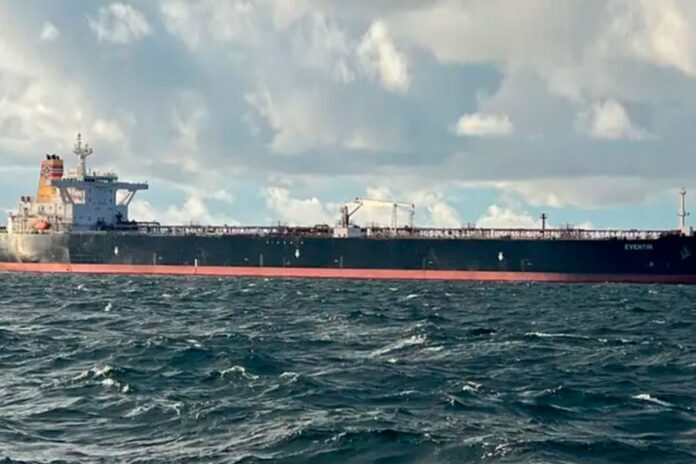
Berlin has confiscated a tanker, believed to be part of Russia’s so-called “shadow fleet,” according to a German news magazine report. The aging vessel was found floating off the country’s northern coast in January.

A confiscation order has been issued for the oil tanker Eventin and some 100,000 metric tons of oil aboard it, the German news magazine Spiegel reported on Friday.

If confirmed, the order means that the vessel and its cargo, worth some €40 million ($43.3 million), would become German property.

The ship’s presence, floating in the Baltic Sea near the island of Rügen, had sparked environmental concerns about the danger of a potential oil spill.

The vessel had been traveling from Russia to Egypt when it was held for investigation by German authorities in January.

The news magazine reported that authorities were determining how best to safely pump crude oil from the tanker, and deciding what to do with the vessel. Officials confirmed only that the ship was prohibited from continuing its journey.

“Customs measures are currently underway and, given the current security situation, we cannot comment very extensively on the matter,” a finance ministry spokesman said.

Security analysts say Russia is operating hundreds of vessels to get around the sanctions imposed on its oil exports over its 2022 invasion of Ukraine.

The German Foreign Office declined to comment in detail on the matter given the current security situation, referring to high Russian-Western tensions over the war in Ukraine. “Customs measures are currently underway,” an official said.

Kremlin spokesman Dmitry Peskov on Friday told the Reuters news agency that Moscow said it had no information about the ship and no knowledge about its owner or reasons for its seizure.

Source: DW

Shell invests in the Gato do Mato project in Brazil’s pre-salt

0

Shell Brasil Petróleo Ltda. (Shell Brasil), a subsidiary of Shell plc, has taken the Final Investment Decision (FID) for Gato do Mato, a deep-water project in the pre-salt area of the Santos Basin, offshore Brazil.

The Gato do Mato Consortium includes Shell (operator with a 50% stake), Ecopetrol (30%), TotalEnergies (20%) and Pré-Sal Petróleo S.A. (PPSA) acting as the manager of the production sharing contract (PSC). 

The development plan includes the installation of a floating production storage and offloading (FPSO) vessel and is designed to produce up to 120,000 barrels of oil per day. Current estimated recoverable resource volumes of the Gato do Mato development are approximately 370 million barrels.

“Gato do Mato is an example of our ongoing investment in increasingly efficient projects,” said Zoë Yujnovich, Shell’s Integrated Gas and Upstream Director. “The project contributes to maintaining stable liquids production from our advantaged Upstream business, and expands our leadership as the largest foreign producer in Brazil as we continue working to provide for the world’s energy needs well into the future.”

The consortium anticipates that the Gato do Mato field will commence operations in 2029.

Shell invests in the Gato do Mato project in Brazil’s pre-salt

0

Shell Brasil Petróleo Ltda. (Shell Brasil), a subsidiary of Shell plc, has taken the Final Investment Decision (FID) for Gato do Mato, a deep-water project in the pre-salt area of the Santos Basin, offshore Brazil.

The Gato do Mato Consortium includes Shell (operator with a 50% stake), Ecopetrol (30%), TotalEnergies (20%) and Pré-Sal Petróleo S.A. (PPSA) acting as the manager of the production sharing contract (PSC). 

The development plan includes the installation of a floating production storage and offloading (FPSO) vessel and is designed to produce up to 120,000 barrels of oil per day. Current estimated recoverable resource volumes of the Gato do Mato development are approximately 370 million barrels.

“Gato do Mato is an example of our ongoing investment in increasingly efficient projects,” said Zoë Yujnovich, Shell’s Integrated Gas and Upstream Director. “The project contributes to maintaining stable liquids production from our advantaged Upstream business, and expands our leadership as the largest foreign producer in Brazil as we continue working to provide for the world’s energy needs well into the future.”

The consortium anticipates that the Gato do Mato field will commence operations in 2029.