-2.9 C
New York
Home Blog Page 83

NYK takes ownership of first service operation vessel

0

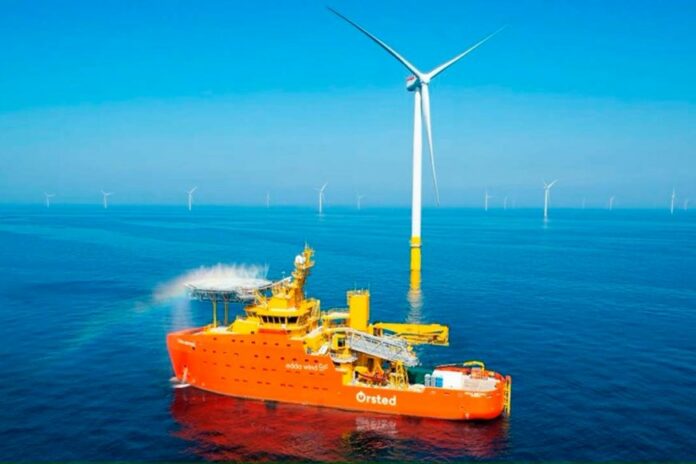
Northern Offshore Group AB (NOG), an NYK Group company that operates crew transfer vessels in the global offshore wind industry, has purchased a service operation vessel (SOV) from Edda Wind A/S, a Norwegian offshore wind power company. 

An SOV is a large ship that transports workers and materials to construct and maintain offshore wind power generation facilities. NOG owns more than 60 crew transfer vessels (CTVs) and has previously managed SOVs, but this is its first owned SOV.

SOVs feature high-end, comfortable accommodations at sea and are designed to provide safe and easy access for wind farm personnel and technicians. Adding an SOV to NOG’s fleet enhances its ability to support offshore operations and strengthens NYK’s commitment to reliable, high-performing, and efficient solutions for the offshore wind industry.

The NYK Group is contributing to the future of the offshore wind industry by promoting the growth of NOG’s business in Europe and expanding the Group’s CTV/SOV business in Japan and the Asia-Pacific region.

NOG CEO David Kristensson comments:

“We’re entering a new segment, but with our previous SOV management experience, we’re confident in our ability, which is well-positioned to support current and future operations. This vessel will significantly improve comfort and work efficiency for our crew and customers.”

Fugro Mercator safely brought to port

0

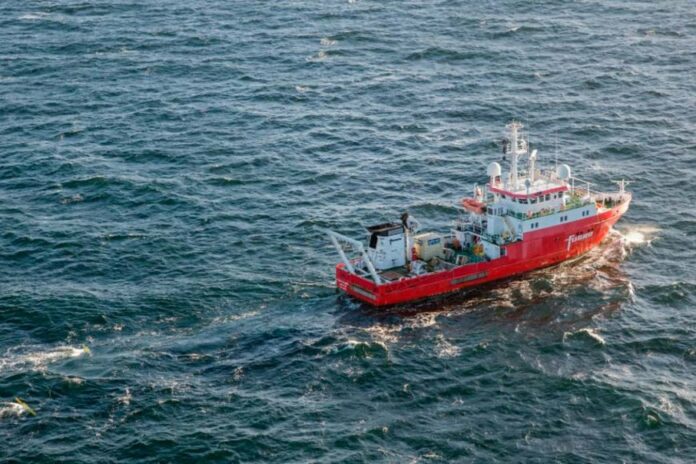
Fugro is pleased to report that the Fugro Mercator was successfully towed to a shipyard for inspection. 

With no injuries to people and no harm to the environment, Fugro is thankful that the impact of the incident has remained limited. The vessel will now be fully inspected at the shipyard. Fugro will also conduct a full review of the event to learn what caused the ship to run aground.

“We are very grateful to the Italian coastguard and our partners for their swift and effective response in evacuating our crew and salvaging the Fugro Mercator,” said Erik-Jan Bijvank, Group Director Europe & Africa. “The safety of our crew and the protection of the environment are our top priorities, and we are relieved that both were upheld during this challenging event.”

The Fugro Mercator was performing survey work for the Italian Institute for Environmental Protection and Research (ISPRA) as part of the Italian government’s Marine Ecosystem Restoration (MER) Project. Fugro is working with the client to ensure that the work is continued as quickly as possible.

The Fugro Helmert will sail to the Mediterranean shortly to pick up the Mercator’s project commitments, minimising the overall impact of the incident.

Investing NOK 7.5 billion in expansion of the groundbreaking Northern Lights CCS-project

0

The decision was made after signing a commercial agreement with Stockholm Exergi to transport and store 900.000 tonnes of biogenic CO2 annually for 15 years.

Customer commitment is a decisive part of realizing a carbon capture, transportation and storage (CCS) value chain.

“This is a major step in the further development of a large-scale carbon capture, transportation and storage value chain. The support from the Norwegian Government and European Commission has been important contributing factors to successfully completing phase 1 and advancing phase 2. That we are now able to progress the Northern Lights’ project second phase on a commercial basis, demonstrates the value of public-private partnerships to reduce risk and attract customers,” says Anders Opedal, CEO of Equinor.

The investment by the Northern Lights JV owners Equinor, Shell and TotalEnergies is 7.5 billion NOK. This includes the award of €131 million (ca 1,5 billion NOK) from the Connecting Europe Facility (CEF) funding scheme, approved by the European Commission last year.

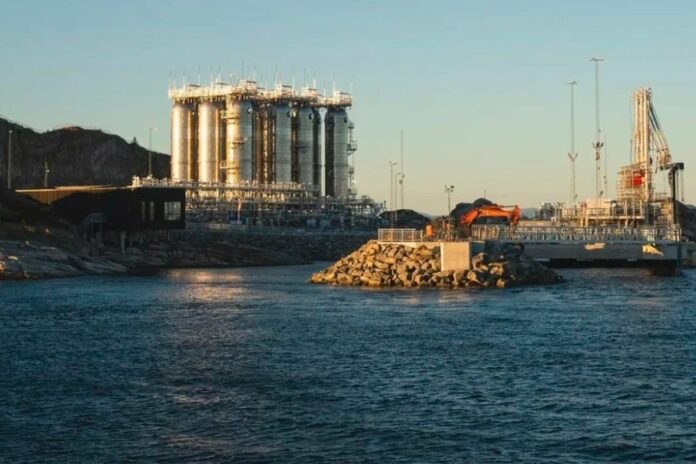
Phase two of the development will increase the total injection capacity from 1.5 million tonnes of CO2 per year (Mtpa) to at least 5 Mtpa. The expansion through phase two builds on existing onshore and offshore infrastructure and includes additional onshore storage tanks, a new jetty, and additional injection wells. This development phase is expected to be completed and ready for operation in the second half of 2028. Equinor will remain the technical service provider (TSP) for phase two, responsible for development, construction and operation on behalf of the partnership.

The first phase of the Northern Lights project aimed to demonstrate feasibility of a new business model, solutions, and operations through collaboration among authorities, customers and project partners. With strong support by the Norwegian government’s Longship initiative, phase one is fully booked. Northern Lights is prepared to receive CO2 from emitters, offering a secure and permanent storage solution for CO2.

“I am very pleased that the partners in Northern Lights have progressed to the second phase of the Northern Lights project. As the recently published European Clean Industrial Deal makes clear, large-scale carbon capture, transport and storage will be crucial in the energy transition as it offers a solution for hard-to-abate industrial emitters to decarbonize their processes, says Irene Rummelhoff, executive vice president for Marketing, Midstream and Processing in Equinor.

Phase one operations are planned for this summer, with CO2 from Heidelberg Materials’ cement factory in Brevik expected to arrive at the receiving terminal near Kollsnes on Norway’s west coast. Additionally, Northern Lights will store CO2 from the Hafslund Celsio waste-to-energy plant in Oslo, as part of the Longship project.

Equinor is already one of the largest CCS developers worldwide, with ambitions to further mature storage licenses both on the Norwegian continental shelf and globally with expected nominal equity return as previously communicated. Equinor is working on several CCS projects in Europe and the US. These projects require ongoing collaboration between governments, industry, customers and regulators to enable large-scale CCS solutions.

AiPs obtained for liquefied CO2 carrier design and floating liquefied storage facility

0

Knutsen NYK Carbon Carriers AS (“KNCC”) has obtained Approval in Principle from ClassNK for the design of liquified CO2 carriers that use the elevated pressure (EP) method to store and transport liquefied carbon dioxide (LCO2) at ambient temperature.

ClassNK has carried out a design review of this ship in accordance with the Rules for the Survey and Construction of Steel Ships, ‘Part N’, and has issued an Approval in Principle (AiP) after confirming that the ship meets the prescribed requirements.

The LCO2-EP carrier uses ‘LCO2-EP Cargo Tank’ technology developed by KNCC to transport LCO2 in a stable state. Since there is no need to cool LCO2 to cryogenic temperatures, it is easy to handle and potentially reduces energy and costs during liquefaction.

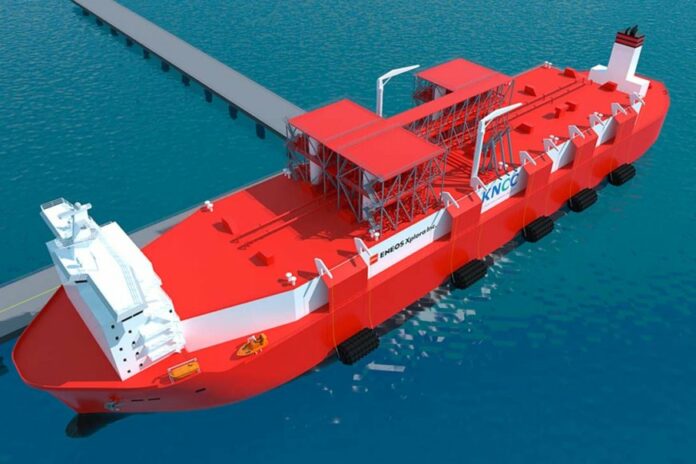
NYK, KNCC, and ENEOS Xplora Inc. (ENEOS Xplora) have developed a Floating Liquefied Storage Unit (FLSU) that combines the LCO2-EP Cargo Tank technology with the Isenthalpic Expansion Cooling & Liquefaction Process. This Process has been researched and developed in collaboration among the three companies. ClassNK has issued an AiP following a review based on the Rules for the Survey and Construction of Steel Ships, ‘Part PS’, ‘Guidelines for the Design of Floating Liquefied Natural Gas and Liquefied Petroleum Gas Production, Storage, Offloading and Regasification Units’, etc.

This FLSU is a pioneering concept that liquefies and temporarily stores CO2 that has been collected and transported as gas in an onshore facility making it ready for further transport by LCO2 carrier. By utilizing the features of the EP method, which has the potential to reduce the energy required for liquefaction, and adopting the Process, which is expected to be simpler and more compact than conventional cooling methods, it has become possible to install a liquefaction plant on a floating structure.

Carbon Capture, Utilization and Storage (CCUS) is one area that is expected to play a certain role in achieving a carbon-neutral society. However, issues need to be addressed, such as reducing overall costs and securing land for liquefaction and storage facilities. By utilizing this FLSU, the cost of CO2 liquefaction and the land area required onshore in the CCUS value chain can be reduced, expanding the possibilities for realizing CCUS.

NYK, KNCC, ENEOS Xplora, and ClassNK will continue to contribute to realizing a carbon-neutral society by examining various technologies and assessing their economic and safety aspects towards achieving a CCUS value chain.

Fincantieri: keel laying of “Seven Seas Prestige” in Marghera

0

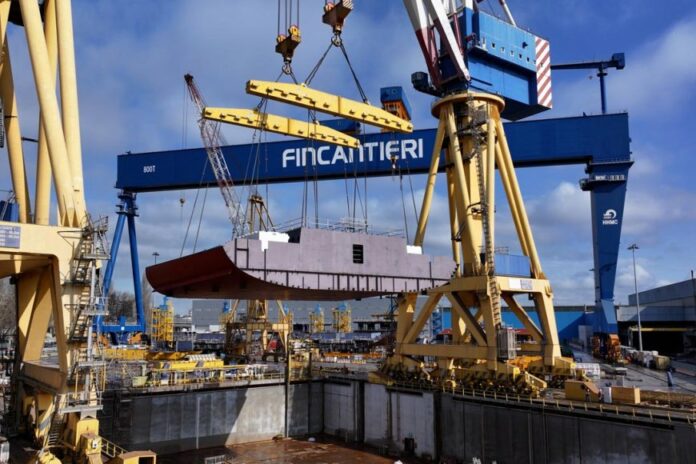
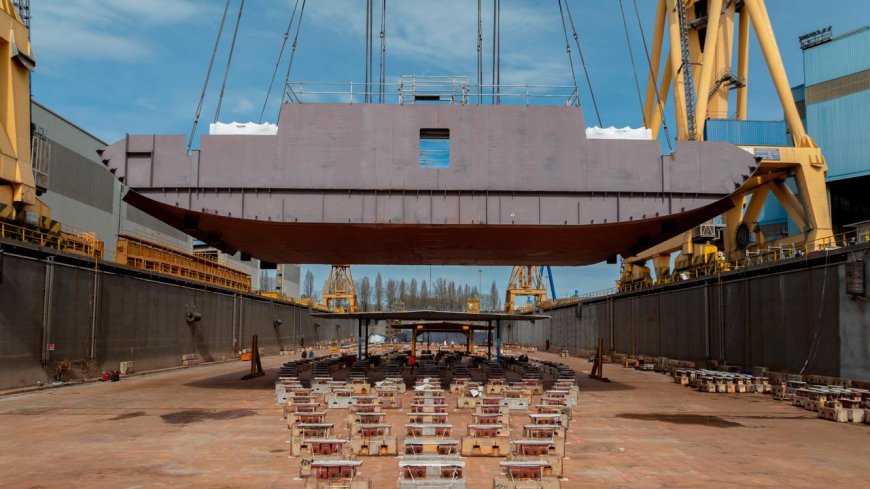
The keel laying ceremony for “Seven Seas Prestige” the ultra-luxury cruise ship which Fincantieri is building for Regent Seven Seas Cruises, took place at Fincantieri’s shipyard in Marghera (Venice). The vessel is scheduled for delivery in 2026.

The ceremony was attended, among others, by Harry Sommer, President & Chief Executive Officer of Norwegian Cruise Line Holdings Ltd, Jason Montague, Chief Luxury Officer of Regent Seven Seas Cruises, Patrik Dahlgren, Executive Vice President, Chief Vessel Operations and Newbuild Officer Norwegian Cruise Line Holdings Ltd., Daniele Fanara, Fincantieri Senior Vice President New Building and After Sales, and Marco Lunardi, Senior Vice President Marghera shipyard.

During the event, three specially chosen coins were welded onto the bottom of the ship as part of a longstanding maritime tradition and a symbol of good luck and blessing for the vessel.

With a gross tonnage of 77,000 tons and a length of 257 meters, “Seven Seas Prestige” will accommodate approximately 850 passengers in 434 spacious suites, offering one of the highest guest-to-space ratios in the industry. The ship will embody sophistication and refinement that is the epitome of timeless elegance, integrating the most advanced environmental technologies and introducing new accommodation categories, new dining and many more incredible experiences for luxury travelers.

“Seven Seas Prestige” will be the first vessel in the new Prestige Class, a generation of ships following the highly successful Explorer series, also built by Fincantieri: “Seven Seas Explorer” (2016), “Seven Seas Splendor” (2020), and “Seven Seas Grandeur” (2023), delivered respectively from the Sestri Ponente (Genoa) and Ancona shipyards.

Kongsberg Maritime invests quarter of a million in advanced simulator for maritime training

0

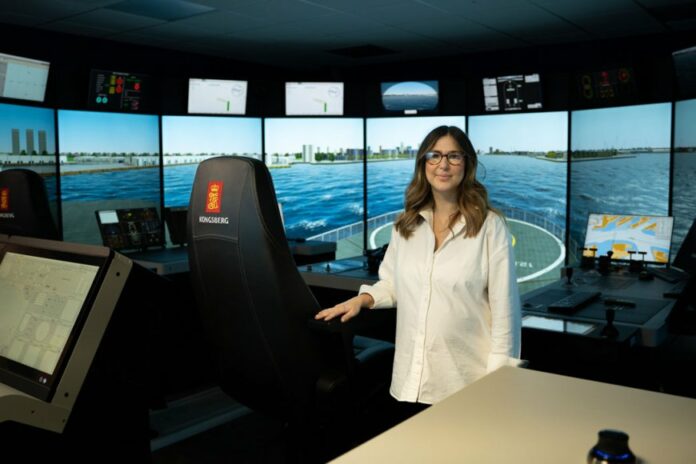
Kongsberg Maritime announces the launch of its cutting-edge K-Sim Offshore DP3 Anchor Handling Simulator, setting a new standard for training and operational excellence in the Maritime sector.

With an investment of over £250,000, this innovative training solution is designed to elevate competency standards, enhance operational efficiency, and promote sustainability across the sector. Additionally, it focuses on improving maritime safety by supporting our local customers and partners in ensuring safe operations and reducing risks in critical maritime activities.

Situated at Kongsberg Maritime’s Aberdeen office in Westhill, the simulator has been upgraded in response to the growing need for skilled Dynamic Positioning professionals, particularly in offshore oil and gas operations, including drilling, pipe-laying, heavy lift and emerging floating wind operations . The simulator will provide operators with the essential skills and expertise needed to safely and efficiently support large-scale projects in the North Sea and across Europe.

The simulator provides a highly realistic training environment, allowing course delegates to practice complex operations and emergency preparedness in a fully immersive, controlled conditions. By replicating real-world scenarios with advanced physics-based simulations, it improves competency, enhances safety, and reduces reliance on expensive on-the-job training.

To further support the simulator, Kongsberg is increasing its instructor team from two to three expert Dynamic Positioning Operators in 2025, bringing a wider range of knowledge and experience to strengthen its training programs.

Kerry Craig, Operations Manager at Kongsberg Maritime, said, “In today’s maritime industry, we face increasing operational complexity, heightened safety demands, and the urgent need to reduce environmental impact, all while managing tighter budgets and a growing skills gap. Kongsberg Maritime set out to develop a solution that would provide highly realistic, risk-free training whilst ensuring operators gain the skills and confidence needed to perform at the highest level.”

“The K-Sim Offshore DP3 Anchor Handling Simulator sets itself apart with advanced physics-based simulations and hydrodynamic modelling, allowing trainees to operate in a variety of vessel types, locations, and weather conditions. This level of realism enhances competency among operators, leading to better performance in the field.  This is about empowering people with the right tools to work smarter, safer, and more sustainably, driving a real ‘step change’ in maritime training,” said Kerry.

ClassNK issues AiP for OceanWings` Rigid Windsail Type Wind-Assisted Propulsion System

0

ClassNK has issued an approval in principle (AiP) for a Rigid Windsail Type Wind-Assisted Propulsion System (WAPS) developed by OceanWings. The certification confirms its feasibility from regulatory and safety perspectives.

The implementation of WAPS is advancing as a solution for responding to environmental regulations and reducing fuel expenses. When such systems are installed on ships, they are expected to be effective in reducing CO2 emissions through the use of wind power. However, depending on the scale and specifications, risks can arise for the ship’s structure, onboard crew, and the surrounding environment.

ClassNK reviewed the design concept of the system based on its ‘Guidelines for Wind-Assisted Propulsion Systems for Ships. Upon confirming its conformity to prescribed requirements for structural design, driving and control systems etc., ClassNK issued the AiP.
 
ClassNK will continually strive to contribute to advanced decarbonization initiatives through safety assessments and more.

LPG tanker aground on Koh Lan beach, Pattaya

0

There were no reports of a spill or leak being detected or of anyone being injured. 

Officials from Marine and Coastal Resources Administration Office 2 and other agencies have inspected the vessel. 

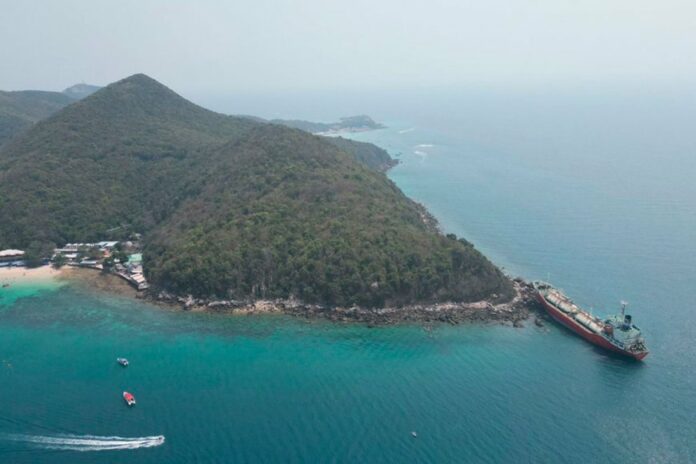
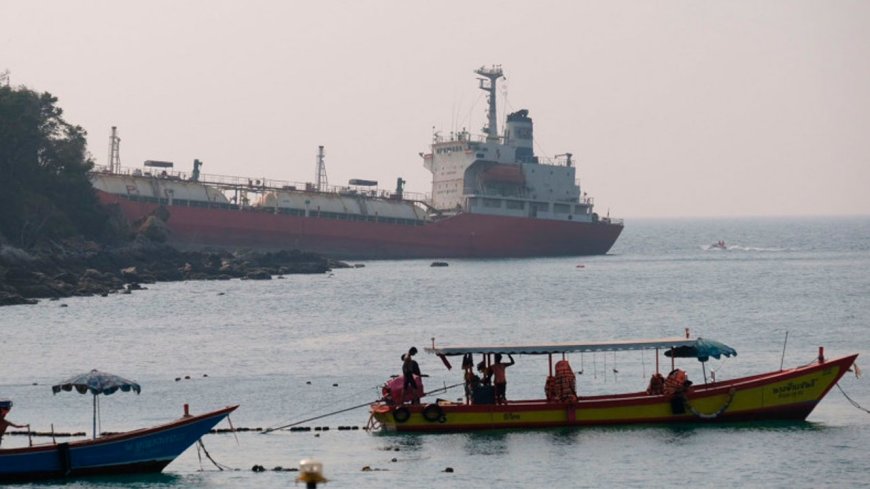
The liquid petroleum gas tanker NP Bankpakong ran onto the rocks at Sangwan beach, near the larger Ta Waen beach, on Koh Lan in tambon Na Klua of Bang Lamung district. The waters there are known for their many natural coral reefs. 

A source on the inspection team said the vessel was not carrying any cargo.

The tanker had left Bang Pakong in Chachoengsao province about 10pm on Monday, scheduled to load at Map Ta Phut port in Rayong province. 

The owner, SC Group Holding, said the ship ran aground about 2.25am on Tuesday. It issued a statement expressing its regret and saying it accepted full responsibility for the incident it acknowledged was caused by the negligence of on-duty crew members.

“We are ready to give our full cooperation to the relevant agencies to investigate the incident and will follow all legal procedures,’’ the statement said.

Inspectors from the Marine and Coastal Resource Centre, Eastern Gulf of Thailand, were surveying the affected coral reef. Legal action would be taken if damage was found, an official said.

The company said it would send a tug to move the tanker from the rocks as soon as possible and would pay compensation for any damages incurred. 

The company reiterated that no gas or chemical leak had been detected.

Source: BangkokPost

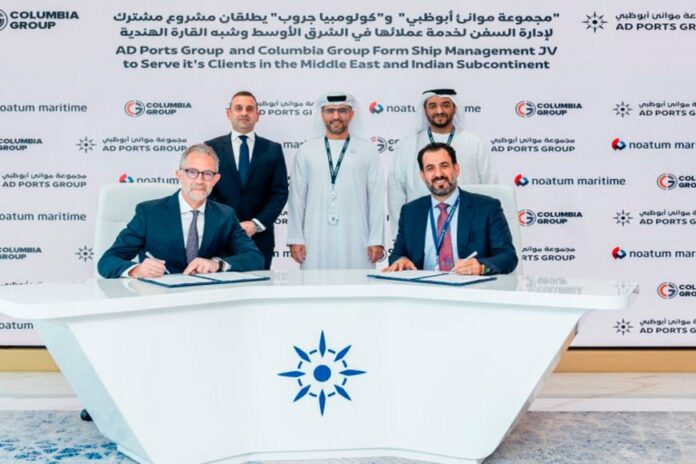
AD Ports Group and Columbia Group form ship management joint venture

0

The newly formed entity, Noatum – CSM Limited, combines Columbia Group’s expertise in advanced fleet management systems and AI-driven performance analytics, with AD Ports Group’s diverse fleet and extensive ship management experience, both globally and regionally.

 Also, by integrating ship management into AD Ports Group’s Maritime & Shipping Cluster service portfolio, this strategic alliance offers the benefits of world-class ship management system and team to third parties.

The JV will benefit from immediate access to Columbia Group’s Performance Optimisation Control Room (POCR), an advanced digital platform designed to catalyse fleet performance enhancement, predictive maintenance, and regulatory compliance. This platform provides continuous live monitoring and comprehensive decision support tools to optimise voyages, speed, bunker usage, and emissions. The system will harness data from multiple vessels to empower informed decision-making and enhance operational and commercial performance.

Captain Ammar Mubarak Al Shaiba, CEO – Maritime & Shipping Cluster, AD Ports Group, said: “This partnership symbolises a pivotal advancement in maritime asset management, merging the strengths of Columbia Group and AD Ports Group. As we expand our capabilities, we are benefitting our clients by elevating quality and efficiency. We are committed to offering a holistic suite of services with exceptional operational competency and expertise, further fortifying our position as a global maritime service provider.”  

Mark O’Neil, President and CEO – Columbia Group said: “This partnership marks a significant milestone in our shared vision to set new standards in maritime asset management. Combining Columbia’s global expertise with AD Ports Group’s strong presence in the Middle East will drive operational excellence and innovation in the region’s maritime sector. We look forward to building a sustainable and future-ready business together.”

Noatum Maritime takes delivery of first LNG powered vessel for United Global Ro-Ro

0

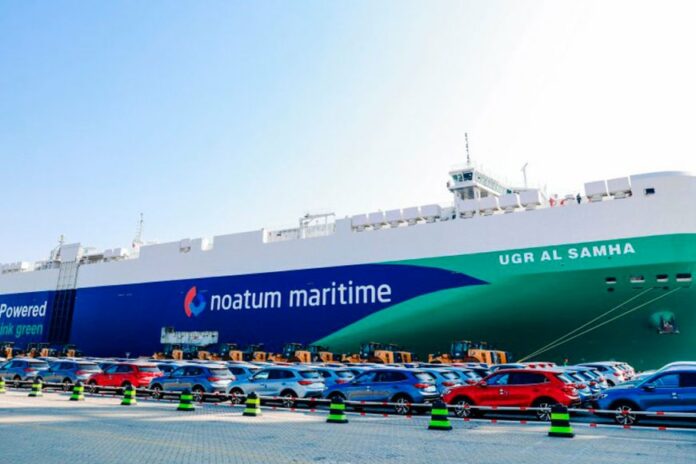
Noatum Maritime has taken delivery of its first LNG powered Pure Car and Truck Carrier (PCTC) Ro-Ro vessel which will be utilised by the recently formed JV with Erkport, “United Global Ro-Ro.”

Forming part of Noatum Maritime’s Ro-Ro expansion strategy, the newbuild vessel, named UGR Al Samha, a flagship for the Ro-Ro business, boasts 12 decks covering a total area of 59, 331 sqm with a capacity of more than 7,000 car equivalent units (CEU).

LNG powered PCTC vessels offer a range of benefits, particularly in relation to addressing environmental concerns, and improving operational efficiency, including reduced emissions compared to traditional fuel, cleaner operations due to minimal impact on air quality and cost efficiencies through fuel economy, performance and reduced maintenance costs. The use of LNG also aligns with the UAE’s long-term decarbonisation targets and plans to achieve net emissions by 2050 and is a key component of Noatum Maritime’s plans to transition its fleet to alternative fuels.

Captain Ammar Al Shaiba, CEO – Maritime & Shipping Cluster – AD Ports Group, said “The incorporation of UGR Al Samha, the LNG-powered PCTC vessel into our United Global Ro-Ro fleet marks a significant step forward in our commitment to sustainable shipping and operational excellence. By leveraging cleaner fuel technology, we are not only reducing our environmental footprint but also ensuring compliance with global regulations and enhancing value for our customers. This addition underscores our dedication to driving innovation and supporting the transition towards a greener maritime industry.”

The vessel will join the existing fleet being operated by United Global Ro-Ro and will be deployed mostly on routes within the Middle East, Asia and the Mediterranean, with the aim of connecting global hubs and enhancing vehicle logistics and high & heavy cargo transportation in a sustainable manner.