5.5 C
New York
Home Blog Page 70

Wärtsilä supplies Wärtsilä 25DF dual-fuel engines for new Ibaizabal LNG Bunkering vessel

0

The engines will feature Wärtsilä’s innovative NextDF technology, which dramatically reduces methane emissions when operating with LNG fuel. The ship is being built at the Hudong-Zhonghua Shipbuilding yard in China, and the order was booked by Wärtsilä in Q4 2024.

LNG is an important transition fuel as the marine industry strives to reduce its carbon footprint. However, the main component of LNG is methane and when burned as a fuel, a very small amount may not combust properly, leading to methane escaping into the atmosphere.

The Wärtsilä 25DF engine has already set an industry benchmark for low methane emissions, down to as low as 1.4 percent at certain load points. The NextDF feature further reduces methane emissions, achieving as low as 1.1 per cent in a wide load range. What’s more, the nitrogen oxide (NOx) emissions are lower than on the standard Wärtsilä 25DF engine which already has low emission levels below IMO Tier III.

“Our company strategy and commitment is for our vessels to be as environmentally friendly and sustainable as possible. In line with current and anticipated regulations – both at an international and regional level – we carefully evaluated the fuel consumption and emission performance together with Wärtsilä, concluding that the Wärtsilä 25DF engine with the NextDF feature would best support us with achieving our sustainability goals,” says Jose Maria Torre, Fleet Director of Ibaizabal Group.

Torre continues: “Wärtsilä’s state-of-art technology not only represents a major step forward in achieving our own decarbonisation strategy for our fleet, but for the charterer of the vessel. The decision by them to charter this vessel was down to it having the best performance and lowest emissions for that type of vessel.”

The Wärtsilä 25DF engine is the most efficient and most environmentally friendly marine engine in its power range. With its modular, upgradeable, and flexible design, the engine platform helps operators to significantly reduce fuel consumption and emissions, whilst improving the efficiency of vessels. The NextDF feature will enable operators to go even further in reaching their decarbonisation targets. In addition to lower emissions levels, the NextDF feature improves engine efficiency by up to 0.5 percentage points.

In addition to the engines, the scope of supply also includes two Wärtsilä Steerable Thrusters (WST) which will deliver superior hydrodynamic performance for maximum propulsion efficiency and dynamic positioning capability.

“The incorporation of our NextDF feature into the Wärtsilä 25DF engine provides enhanced fuel economy together with a significant cut in emissions. We share Ibaizabal’s commitment to decarbonising shipping operations and applaud them for being the first operator to take advantage of this new groundbreaking technology for the Wärtsilä 25DF engine,” comments Stefan Nysjö, Vice President of Power Supply, Wärtsilä Marine.

The equipment is scheduled for fast-track delivery to the yard, commencing in September 2025. The ship is expected to be delivered before the end of 2026.

MODEC secures operations and maintenance contract for Shell’s Gato do Mato FPSO Project

0

MODEC announces that Shell Brasil Petróleo Ltda has made its Final Investment Decision (FID) for a Floating Production Storage and Offloading (FPSO) vessel for the Gato do Mato oil field, offshore Brazil. 

Following the successful execution of the Front-End Engineering Design (FEED) contract, which was awarded in March 2024, MODEC has signed a Purchase and Sales Agreement, and a contract for the operations and maintenance of the FPSO for a period of 20 years with Shell.

When installed, FPSO Gato do Mato will be capable of producing 120,000 barrels of oil per day (BOPD), as well as associated gas and water, and will be moored at a water depth of approximately 2,000m, around 200km South of Rio de Janeiro. MODEC will be responsible for the design of the hull and all related topsides facilities for the FPSO, which will be moored by a SOFEC Spread Mooring system. The produced stabilized crude will be stored in the FPSO tanks, and the oil will be offloaded to shuttle tankers to go to market.

The FPSO will feature a new built, custom-made Next Generation Hull to meet the 25-year design life.

The FPSO Gato do Mato will be the 19th FPSO to be developed by MODEC for Brazil. It will be the second unit to be delivered directly to Shell by MODEC for operation in Brazil.

Value Maritime and MOL complete carbon capture first

0

Value Maritime (VM) has successfully installed its unique Exhaust Gas Cleaning System (EGCS) and Carbon Capture unit aboard Nexus Victoria, an LR1 product tanker owned by Mitsui O.S.K. Lines, Ltd. (MOL). 

VM’s 15MW next-generation EGCS Filtree system can filter sulphur and (ultra)fine particulate matter and can capture 10% of the vessel’s CO2 emissions with potential scalability to 30% if needed. Nexus Victoria, with a deadweight tonnage (DWT) of 75,000, is now the largest vessel to incorporate VM’s SOx scrubber with advanced carbon capture technology and the first-ever LR1 tanker to sail with this system. The installation was completed in Singapore under the supervision of VM’s specialised technical team.

“Our first commissioning in Singapore is a milestone for Value Maritime,” said Alican Kilinc, Operations Director at Value Maritime. “We appreciate MOL’s trust in our technology and are excited to support their decarbonisation efforts. Collaborating with one of the world’s leading shipowners drives us to push innovation forward and provide the industry with the most effective emission-reducing solutions.”

MOL has established the “MOL Group Environmental Vision 2.2” as a roadmap to achieve net zero greenhouse gas (GHG) emissions by 2050 and promote the sustainable development of people, society, and the Earth. MOL positions the environmental strategy as one of the main strategies in its management plan, “BLUE ACTION 2035.”

“This system represents a crucial step in decarbonising vessels that cannot yet transition to next-generation fuels,” said Hiroyoshi Kubo, Executive Officer – Tanker Unit at MOL. “Together with Value Maritime, we are committed to advancing carbon capture solutions and building a CO2 value chain that contributes to a sustainable, carbon-neutral industry.”

VM’s Filtree system is designed to filter sulphur, CO2 and  (ultra)fine particulate matter from the vessel’s exhaust stream. The system’s plug-and-play design includes onboard CO2 capture and storage capabilities, enabling captured CO2 to be offloaded onshore for reuse in greenhouse cultivation, methanol production, and even the food industry.

“End-to-end carbon capture solutions are essential to achieving industry-wide decarbonisation,” said Christiaan Nijst, Co-founder and Director of Value Group. “By integrating maritime carbon capture with onshore utilisation, we’re closing the loop on emissions and creating a more sustainable shipping ecosystem.”

Carnival Corporation coats 16th vessel in AQUATERRAS, following latest drydock

0

Nippon Paint Marine announces the latest application of AQUATERRAS to AIDAdiva, operated by AIDA Cruises. This application further represents the 16th vessel in the Carnival group to fully be applied with Nippon’s biocide-free coating.  

In 2022, based on previous experience, Carnival applied AQUATERRAS to AIDAdiva to provide the highest performance, biocide-free underwater hull protection. At the time, AIDAdiva became the third Carnival cruise vessel to be fully coated with AQUATERRAS. 

Although the ship operated in challenging itineraries in both the Caribbean and in Europe, it was seen on arrival in dock at Marseille in 2025 that AIDAdiva’s vertical bottom was completely free of any fouling, despite it not having any underwater cleaning during the ship’s three-year service period. The arrival in dock photos were taken before any high-pressure freshwater washing had been done. 

According to Carnival Maritime, the maritime service unit for AIDA Cruises, the performance provided by AQUATERRAS’s excellent protection from biofouling had reduced the vessel’s environmental impact by both lowering emissions and reducing propulsive power demands as well AQUATERRAS’s biocide-free composition lowering the ship’s impact on the marine environment.  

During the global pandemic and the worldwide suspension of cruise operations, Carnival found that the hulls of the two vessels that had been previously fully applied with AQUATERRAS remained much cleaner than other vessels in their fleet, even over the 18-20 month period before regular operation or cruising resumed. 

Johan Wilckens, Managing Director at Nippon Paint Marine (Europe), said: “Since its release, AQUATERRAS has provided outstanding fouling protection, reduced emissions and costs, whilst also lowering the impact on the marine environment. The effect of our products on vessels like those seen on AIDAdiva, showcase the industry leading capability of our R&D team, who maintain an unrelenting commitment to enhancing our coating technology to ensure our solutions align with the evolving needs of our customers.” 

A spokesperson for Carnival Corporation, said: “We were extremely pleased with the results of AQUATERRAS. Its outstanding performance eliminated the need to carry out any in-service cleaning, and as a biocide-free product, the coating supports our ambition to become as environmentally friendly as we possibly can. Furthermore, due to the hull’s excellent condition, we have been able to reduce fuel emissions in our operations without compromising on vessel performance.”  

Released in 2017, AQUATERRAS represents a world-first in the development of fouling protection. The technology’s hydrophilic and hydrophobic microdomain structures provide market leading fouling performance, whilst its biocide-free composition protects the marine environment by eliminating the discharge of any metals or biocides into our seas.  

BERG delivers the world’s first GreenForge® shafts to the maritime market

0

Three Louis Dreyfus Armateurs (LDA) ro-ro vessels due in service from 2026 to carry aircraft parts across the Atlantic are already set to take advantage of sustainable wind power, courtesy of their rotor sails, while their hybrid propulsion, power management and control technology is coming from BERG.

In addition, BERG will supply propeller shafts made from recycled scrap steel, using the GreenForge® production – a process developed by Björneborg Steel which draws on renewable electricity sources and makes pioneering use at scale of the fossil-free biogas rDME or bio-propane instead of propane. The process is audited as cutting 95% of the CO2 generated in conventional production, with other measures mitigating the remaining emissions to ensure full climate neutrality.

Björneborg Steel indicates that producing the six propeller shafts for LDA using the GreenForge® process will result in a reduction of 160 tonnes of CO2 compared to the conventional method.

Kajsa de Mello, Operations Director, BERG Propulsion said: “BERG is delighted to work with Sweden’s cutting-edge steel industry and pioneer the use of maritime GreenForge®. We are proud to be the first supplier in the world to offer customers propeller shafts using this process. It is fitting that the first sea-going application should be low emission ships.

The world’s first climate neutral propeller shaft for LDA is due delivery from Björneborg Steel to the BERG plant in Hönö, Sweden in March, with five more to arrive before the end of June 2025.

The EU’s ‘Clean Industrial Deal’ is expected to help revitalize European industries by including measures to incentivize renewable energy, remove barriers to investing in clean technologies, and offering aid and tax breaks to cut carbon. Penalties are also coming for CO2 emissions in industry that will improve the competitive position of processes such as GreenForge®. CO2 emission ‘rights’ are being withdrawn from EU steelmakers, meaning they can switch to climate neutral processes or face penalties and higher production costs. By 2030, Björneborg Steel projects emission free processes will be cheaper than their legacy counterparts.

“The sustainability case for carbon neutral steel is compelling and, while it is currently at the premium end of the market, its use will offer marine equipment buyers a route around escalating fossil-based production costs,” said de Mello. “BERG is proud to lead where others will have to follow.”

Håkan Dedorsson, CEO, Björneborg Steel, said “Like other industries, maritime has its share of sustainability leaders and stakeholders open to the innovations needed for the challenges ahead.  

“We are ramping up production based on the cutting-edge GreenForge® process, subject to the availability of biogases and we look forward to helping BERG’s customers make the green choice that will benefit generations to come.”

Based on demand, Björneborg aims to shift its full production to the GreenForge® process in 2027.

Naming ceremony for Damen electric Fast Ferry

0

Reederei Norden-Frisia has held a naming ceremony for its latest vessel, the Frisia E-I. In a boost for sustainable public transport, the vessel, a Damen Fast Ferry 3209 Electric, is the first fully electric catamaran to operate in Germany. Charged with electricity generated by onshore solar panels, the ferry offers a carbon neutral service.  

Amongst the guests attending the naming ceremony, held at Reederei Norden-Frisia’s location in Norddeich, were Department Head for Waterways and Shipping in the Federal Ministry for Digital and Transport Dr. Wibke Mellwig, Member of the Board of Reederei Norden-Frisia Carl-Ulfert Stegmann, Chairman of the Supervisory Board of Reederei Norden-Frisia Karin Pragal, and Damen Sales Manager for Germany Joschka Böddeling.  

“We are working on the sustainable transformation of shipping and investing in an emissions-free future, and this vessel will help us in this journey,” said Carl-Ulfert Stegmann, Board Member of AG Reederei Norden-Frisia. 

Joschka Böddeling added, “Having been involved with this project from the outset, it is a pleasure to be here today to witness this special event. The naming of the Frisia E-I is a milestone moment in the operation of the first fully electric catamaran ferry in German waters. With this vessel, Reederei Norden-Frisia has sent a clear message, underscoring its commitment to a greener operation. This, and the many other steps that the company has taken in this direction, serve as commendable examples for us all. They are also a signal that, if we work together towards our goals, a sustainable maritime future is achievable.” 

The ferry is the first vessel that Reederei Norden-Frisia has built outside of Germany in its long history of over 150 years. The company was attracted to Damen by its track record in the construction of electric vessels.  

Additionally, Damen provided Reederei Norden-Frisia with support for the charging infrastructure and mooring facilities required, offering an efficient way to tackle the full scope of the project.  

The route that the ferry will serve – between Norddeich and the island of Norderney on the East Frisian coast – called for the development of a unique vessel. To sail in the shallow waters of the Wadden Sea, the ferry required a draught no more than 1.2 metres.  

Additionally, the Wadden Sea is a UNESCO World Heritage site with strict criteria for maritime operations. To ensure the protection of this environmentally valuable area, the vessel is restricted to sailing at relatively low speeds. Even with these restrictions in place, however, the Fast Ferry 3209 Electric reduces the current sailing time by half, transporting up to 150 passengers in just 30 minutes. The vessel is recharged during (dis)embarkation of passengers over the course of 28 minutes.  

Reederei Norden-Frisia has committed itself to providing an environmentally friendly operation. In addition to offering a fully electric crossing, the company has established an electric car and bicycle hire service for its clients. It is also installing wind turbines and solar panels in its car parking areas so that passengers can return from a visit to the Frisian Islands to vehicles fully charged with renewable energy.  

Dajin Heavy Industry secures $135 million offshore wind power contract in Europe

0

Dajin Heavy’s subsidiary Penglai Dajin Ocean Heavy Industry will make super-large monopiles and supply them to a European developer of offshore wind projects, the Beijing-based parent company announced yesterday. The delivery is expected to be completed by the end of next year.

The order value equals nearly 23 percent of the firm’s audited operating revenue in 2023, Dajin Heavy noted, without revealing the client’s name, just mentioning that it is a global energy leader.

Dajin Heavy is one of the few global marine engineering suppliers with end-to-end delivery capabilities and a top-tier provider in the European market. Its client portfolio, project volume, and delivery regions are constantly expanding.

Dajin Heavy has secured several big orders from European offshore wind projects since 2022, including the Dogger Bank Wind Farm off the East coast of Yorkshire in the UK, the Ile D’Yeu et Noirmoutier in the Bay of Biscay France, and the Moray West Offshore Wind Farm Project in northeastern Scotland in the UK.

Source: yicaiglobal 

PANYNJ reaches landmark agreement with APM Terminals on lease extension

0

Originally set to expire in 2029, the lease extension marks a significant milestone in the company’s enduring partnership with the port, which dates back over a century. The 33-year lease extension paves the way for major infrastructure investments which will enhance capacity and transport velocity, create jobs and strengthen the US economy. The proposed deal is subject to vote by Port Authority Board of Commissioners on March 27.

“We are deeply honored and grateful for Chairman Kevin O’Toole and Executive Director Rick Cotton’s support to extend our lease at APM Terminals Elizabeth,” said Keith Svendsen, CEO, APM Terminals. “We look forward to the Board confirming the agreement and continuing our work with the Port Authority to be an engine of commerce and contribute to the prosperity of the communities we serve.”

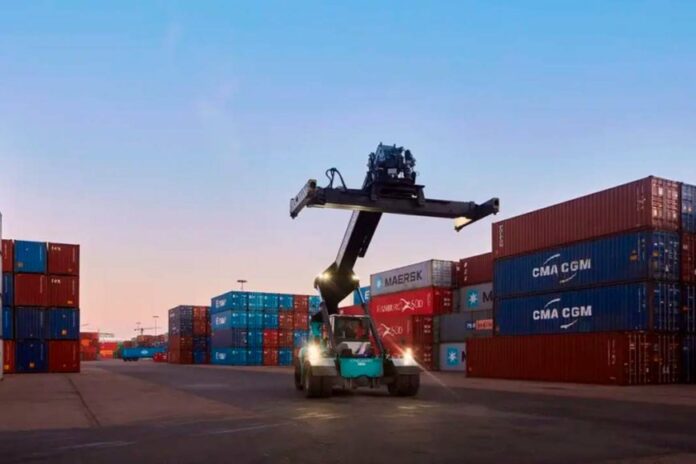
APM Terminals Elizabeth currently handles over 25% of the annual container throughput in the port complex, supported by more than 1,100 members of the International Longshoremen’s Association (ILA). Throughout the previous lease, APM Terminals has consistently invested in infrastructure and equipment, including a recent additional investment of $200 million to modernize the terminal. These investments, along with the tireless efforts of the ILA, have ensured uninterrupted operations throughout the period of the COVID-19 shutdowns, benefiting customers, truckers, and other stakeholders to keep the region’s supply chain moving.

“This lease extension will be another milestone for APM Terminals, which moved record volumes for the port in 2024,” said Henrik Kristensen, Managing Director, APM Terminals Elizabeth. “Working side-by-side with the ILA, the extension will allow us to continue our investment in the terminal to support jobs and the growth of the local economy for many years to come.”

Looking to the future, APM Terminals envisions a larger, more efficient container terminal. The company is committed to significant future investments to enhance the capacity and efficiency for its customers. Planned upgrades include the optimization of the terminal layout, electrification of container handling equipment, and future-proofing container berths. These efforts will support the export of goods to foreign markets, contributing to the local and national economy, and creating numerous job opportunities to support the growth of the local community.

“This landmark agreement with APM Terminals underscores the essential role the Port of New York and New Jersey will continue to play in powering the regional and national economy,” said Port Authority Chairman Kevin O’Toole. “APM Terminals has been a trusted partner at the port for decades, and we’re eager to build on that strong foundation as we push towards our shared goals of growing this gateway’s productivity, efficiency, and dependability for the good of the region and the nation.”

“This lease extension secures transformative infrastructure and capacity enhancements at the second-largest container terminal in the East Coast’s busiest port,” said Port Authority Executive Director Rick Cotton. “These commitments will enable the Port of New York and New Jersey to move more goods, create more jobs, and further cement its role as an essential driver of our region’s economy and our nation’s supply chain.”

Crowley and Naturgy deploy first U.S. LNG carrier to serve Puerto Rico

0

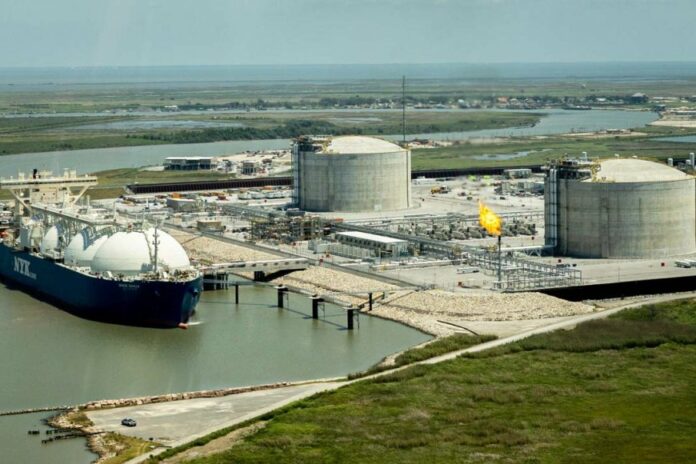
The milestone will provide Puerto Rico with increased access to the reliable supply of U.S.-produced LNG, helping address the island’s ongoing power demands.

Crowley and Naturgy have entered into a multi-year agreement that provides for the regular delivery of the U.S. mainland-sourced LNG to Naturgy’s operating facility in Penuelas, Puerto Rico.

The Crowley-owned carrier American Energy, which has capacity of 130,400 cubic meters (34.4 million gallons) per voyage, will operate in accordance with the U.S. Coast Guard Authorization Act of 1996. The vessel has a CAP 1 rating, certifying its top rating for safety and vessel condition, and its compliance with all regulatory requirements.

“The entry into service of American Energy marks a significant step for fuel supply reliability in Puerto Rico for our energy grid, which will greatly benefit our people,” said Puerto Rico Gov. Jenniffer González-Colón. “This partnership is an initiative to act using existing regulations to increase access to a U.S.-based LNG source that expands our options for the stabilization of our energy grid, as we work towards providing our residents and businesses a more consistently reliable power generation source.”

The 900-foot-long (274 meters) LNG carrier builds on Crowley’s 70-plus years commitment to Puerto Rico. The company also operates the full-service marine Isla Grande cargo terminal in San Juan for its container and roll-on/roll-off vessels, including two LNG-fueled ships, and logistics services. Crowley annually delivers more than 94 million gallons of LNG through its LNG Loading Terminal in Penuelas as well as provides ocean delivery and land transportation using ISO tank containers.

At capacity, each delivery of LNG aboard American Energy provides enough energy to power 80,000 homes for a year. LNG is also a lower-carbon fuel emitting less greenhouse gas (GHG) emissions compared to diesel and other traditional energy sources.

American Energy will be crewed by U.S. mariners and provide regular service from the U.S. Gulf Coast to Puerto Rico.

“AMO is proud to be a part of this historic partnership that benefits the people of Puerto Rico,” said American Maritime Officers National President Willie Barrere. “U.S. Merchant Mariners, many of whom were born in Puerto Rico, sailing on Jones Act vessels, have been reliably delivering goods to the Commonwealth for decades. Now we will deliver LNG fuel to power the residents and further strengthen the bond between Puerto Rico and our U.S. seafarers.”

“The SIU is tremendously excited about providing crew members for the American Energy,” said David Heindel, president of the Seafarers International Union (SIU). “Our members have a long, proud history of working aboard LNG vessels, and our affiliated school in Piney Point, Maryland, regularly conducts U.S. Coast Guard-approved curriculums that help prepare mariners for this kind of work. We congratulate Crowley, and we look forward to helping safely operate the newly reflagged ship.”

Barrow granted royal status to recognise its UK nuclear submarine-building heritage

0

According to a statement published by the British Royal Navy of the United Kingdom on March 20, 2025, the British Royal Navy has marked a major milestone in the renewal of the nation’s nuclear deterrent with the keel-laying of HMS Dreadnought, the first in a fleet of four next-generation nuclear-powered ballistic missile submarines.

The event, held at BAE Systems’ state-of-the-art submarine facility in Barrow-in-Furness, represents a significant step forward in what is the UK’s most advanced and complex naval program to date.

Keel laying itself is largely symbolic with modern methods of warship construction; first steel was cut for Dreadnought nearly a decade ago and huge sections have already been completed.

“This keel laying ceremony is considered the ‘birth’ of a vessel and I congratulate all those involved across the Alliance for reaching this important milestone in the life of HMS Dreadnought and look forward to bringing this exciting and highly capable submarine into service,” said First Sea Lord Admiral Sir Ben Key.

“Whilst the Vanguard Class of submarines continues to deliver our Continuous At-Sea Deterrent today, the Royal Navy is greatly looking forward to operating highly sophisticated and advanced Dreadnought Class submarines.”

Displacing more than 17,000 tonnes, the length of 14 buses and with a crew of around 130, HMS Dreadnought will be the most-advanced boats of their kind in service anywhere, featuring – for the first time – ‘adaptive’ lighting to simulate day and night on board.

With a lifespan of in excess of 30 years, the four boats will carry the Silent Service past the century milestone of undertaking the nation’s No.1 military mission.

Royal Navy submariners have borne the responsibility of the aptly-named Operation Relentless 24/7/365 since 1969.

Building the Dreadnought class is a national endeavour, with some 30,000 people involved in the project from design through to delivery, with the construction phase of the four submarines – HMS Valiant, Warspite and King George VI follow the first in class – expected to take 20 years.

The boats themselves are being built in 16 ‘units’ which, when ready are grouped into three ‘mega units’ and moved to the Devonshire Dock Hall for assembly; the first ‘mega block’ of Dreadnought was delivered in the autumn of 2023.

Dreadnought is due to begin her deterrent patrols next decade as the existing V-boats (the oldest, Vanguard, is already 33 years old, the youngest, Vengeance, 27) are phased out.

During his visit to Barrow, the premier met some of the crew of HMS Agamemnon, the sixth Astute-class submarine which is nearing completion.

For much of its operational life, ‘Aggie’ will form part of the multi-layered defence around the strategic deterrent, from RAF Poseidon maritime patrol aircraft to new Type 26 frigates (under construction on the Clyde), Merlin Mk2 submarine hunting helicopters, and a string of uncrewed systems and subsea sensors.