5.5 C
New York
Home Blog Page 71

New portable system to aid coral reef restoration goes remote in the Maldives

0

Called ReefSeed, the project is a collaboration between the Australian Institute of Marine Science (AIMS), the Maldives Marine Research Institute (MMRI) and Australia’s national science agency, CSIRO.

The trial of the self-sufficient system is taking place at Maniyafushi Island, in the South Male Atoll, and is taking advantage of coral spawning, a period of time when many species of corals reproduce, helping coral reefs to repair and recover.

AIMS coral reproduction and aquaculture scientist and ReefSeed co-lead, Dr Muhammad Azmi Abdul Wahab, said AIMS is proud to be playing a role in helping to support restoration efforts in the Maldives and to develop local capacity in coral restoration.

“As the climate warms, coral loss from coral bleaching is a global issue, and unfortunately the coral reefs in the Maldives have not been immune,” he said. 

AIMS hosted several MMRI biologists and technicians during the coral spawning on the Great Barrier Reef in October last year. They were trained on the ReefSeed system and learned about restoration techniques developed and refined by AIMS. 

Dr Abdul Wahab added: “It’s exciting to see our colleagues putting this training into action and sharing their knowledge and experience on Maldivian corals with us.”

Scientists and technicians from AIMS and MMRI collected corals to bring into the ReefSeed system in readiness for coral spawning, which happens in the Maldives over several months. Coral egg and sperm bundles will be fertilised and reared into coral larvae in the ReefSeed system before being settled and transferred to reefs on specially designed ceramic devices.

Khadeeja Ali, Director at MMRI, the body overseeing ReefSeed project activities in the Maldives, said: “ReefSeed has given us hope in restoring reefs that have faced tremendous stress due to bleaching and impacts of climate change. This initiative makes coral reef restoration scalable and supports restoration of coral reefs with genetically diverse corals.

“We are grateful for this initiative, which has significantly strengthened our capacity to implement and improve coral reef restoration programs. Our colleagues are now trained in advanced restoration techniques and the use of this innovative system.”

“With extensive use of ReefSeed’s technology, we are hopeful that a new era of effective and sustainable coral reef restoration can be achieved.”

Dr Christopher Doropoulos, Senior Research Scientist from CSIRO, said: “We’ve been working with MMRI in the Maldives to train local communities on coral restoration techniques using sexually produced coral larvae since 2020.

“Some of the training includes collecting information on reef processes such as coral reproduction timing, other training involves hands-on application of restoration techniques, all published in freely available standard operating procedures. Working with AIMS and MMRI to further develop portable aquaculture systems through the ReefSeed system adds another approach to the restoration toolbox.”

The ReefSeed project and collaboration was showcased at a special Open Day event in the Maldives on 16 March. It was attended by Maldives Government ministers, members of parliament, department officials, the Australian High Commissioner to the Maldives and representatives from local non-government organisations.

In his inaugural remarks, the Honourable Minister for Fisheries and Ocean Resources of the Maldives, Mr Ahmed Shiyam, acknowledged the importance of collaboration.

“As we move forward with the ReefSeed project, it is clear that the future of our coral reefs lies in our hands. The actions we take today will determine the health of our marine ecosystems tomorrow,” he said.

“By working together, we can restore what has been lost, protect what remains, and ensure that future generations of Maldivians, as well as visitors, can continue to enjoy our stunning coral reefs.”

ReefSeed was awarded US$1.5m (AUD$2.3m) over three years by the G20 Coral Research and Development Accelerator Program (CORDAP), the only international organisation fully dedicated to funding global research and development for tropical and cold water coral restoration and conservation.

ReefSeed uses science and technology developed under the Australian Government’s Reef Restoration and Adaptation Program (RRAP).

RRAP is funded by the partnership between the Australian Government’s Reef Trust and the Great Barrier Reef Foundation.

China sets record for longest wind turbine blade loading

0

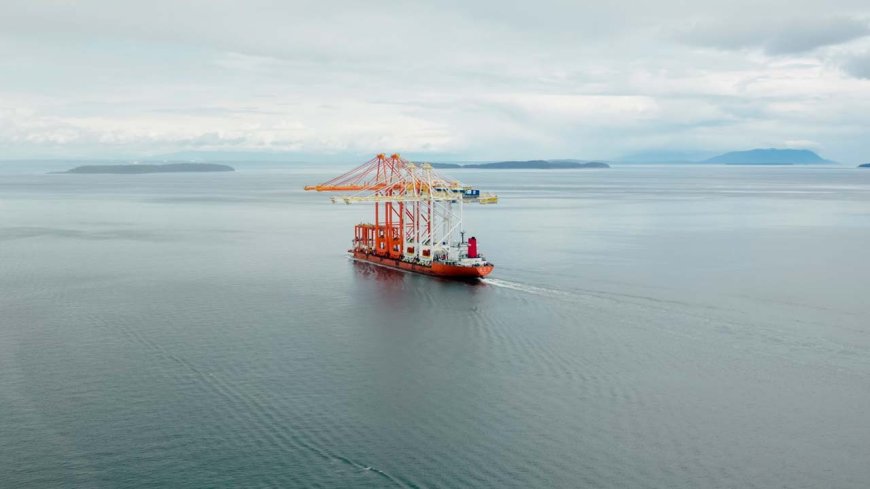
A 133-meter-long, 67-tonne wind turbine blade was successfully loaded onto a ship, breaking the record for the longest wind turbine blade lifting at ports in the Yangtze River basin. 

In the lifting operation, Yangzhou Port used the gantry crane cooperative operation system for the first time. Through sensors and image recognition technology, real-time monitoring of lifting equipment, blades and cargo ships has been realized to ensure smooth and efficient operations.

Yangzhou Port has become an important loading and unloading port for the collection and transportation of wind power equipment in the middle and lower reaches of the Yangtze River.

Germany seizes suspected Russian ‘shadow fleet’ oil tanker

0

Berlin has confiscated a tanker, believed to be part of Russia’s so-called “shadow fleet,” according to a German news magazine report. The aging vessel was found floating off the country’s northern coast in January.

A confiscation order has been issued for the oil tanker Eventin and some 100,000 metric tons of oil aboard it, the German news magazine Spiegel reported on Friday.

If confirmed, the order means that the vessel and its cargo, worth some €40 million ($43.3 million), would become German property.

The ship’s presence, floating in the Baltic Sea near the island of Rügen, had sparked environmental concerns about the danger of a potential oil spill.

The vessel had been traveling from Russia to Egypt when it was held for investigation by German authorities in January.

The news magazine reported that authorities were determining how best to safely pump crude oil from the tanker, and deciding what to do with the vessel. Officials confirmed only that the ship was prohibited from continuing its journey.

“Customs measures are currently underway and, given the current security situation, we cannot comment very extensively on the matter,” a finance ministry spokesman said.

Security analysts say Russia is operating hundreds of vessels to get around the sanctions imposed on its oil exports over its 2022 invasion of Ukraine.

The German Foreign Office declined to comment in detail on the matter given the current security situation, referring to high Russian-Western tensions over the war in Ukraine. “Customs measures are currently underway,” an official said.

Kremlin spokesman Dmitry Peskov on Friday told the Reuters news agency that Moscow said it had no information about the ship and no knowledge about its owner or reasons for its seizure.

Source: DW

Shell invests in the Gato do Mato project in Brazil’s pre-salt

0

Shell Brasil Petróleo Ltda. (Shell Brasil), a subsidiary of Shell plc, has taken the Final Investment Decision (FID) for Gato do Mato, a deep-water project in the pre-salt area of the Santos Basin, offshore Brazil.

The Gato do Mato Consortium includes Shell (operator with a 50% stake), Ecopetrol (30%), TotalEnergies (20%) and Pré-Sal Petróleo S.A. (PPSA) acting as the manager of the production sharing contract (PSC). 

The development plan includes the installation of a floating production storage and offloading (FPSO) vessel and is designed to produce up to 120,000 barrels of oil per day. Current estimated recoverable resource volumes of the Gato do Mato development are approximately 370 million barrels.

“Gato do Mato is an example of our ongoing investment in increasingly efficient projects,” said Zoë Yujnovich, Shell’s Integrated Gas and Upstream Director. “The project contributes to maintaining stable liquids production from our advantaged Upstream business, and expands our leadership as the largest foreign producer in Brazil as we continue working to provide for the world’s energy needs well into the future.”

The consortium anticipates that the Gato do Mato field will commence operations in 2029.

Shell invests in the Gato do Mato project in Brazil’s pre-salt

0

Shell Brasil Petróleo Ltda. (Shell Brasil), a subsidiary of Shell plc, has taken the Final Investment Decision (FID) for Gato do Mato, a deep-water project in the pre-salt area of the Santos Basin, offshore Brazil.

The Gato do Mato Consortium includes Shell (operator with a 50% stake), Ecopetrol (30%), TotalEnergies (20%) and Pré-Sal Petróleo S.A. (PPSA) acting as the manager of the production sharing contract (PSC). 

The development plan includes the installation of a floating production storage and offloading (FPSO) vessel and is designed to produce up to 120,000 barrels of oil per day. Current estimated recoverable resource volumes of the Gato do Mato development are approximately 370 million barrels.

“Gato do Mato is an example of our ongoing investment in increasingly efficient projects,” said Zoë Yujnovich, Shell’s Integrated Gas and Upstream Director. “The project contributes to maintaining stable liquids production from our advantaged Upstream business, and expands our leadership as the largest foreign producer in Brazil as we continue working to provide for the world’s energy needs well into the future.”

The consortium anticipates that the Gato do Mato field will commence operations in 2029.

Dan-Bunkering completes Union Bulk’s first biofuel operation in Singapore

0

Leading global bunker supplier Dan-Bunkering has completed for their client, the Danish dry cargo owner and operator Union Bulk, their first ever bunkering of biofuel for their vessel Blue Union Alpha on March 9.

In continuing the coverage of international shipping routes with in-demand fuel types, the operation was coordinated by Dan-Bunkering. The company was on short notice able to assist with the necessary expertise and biofuel sourcing capabilities, ensuring an on-time delivery at the Port of Singapore ahead of Blue Union Alpha’s EU-bound voyage.

“Dan-Bunkering’s strength, in a case like this, comes from having spent a great amount time and resources in putting the necessary framework and biofuel supply team together, to support a first-time buyer like, in this case, Union Bulk. When we were called upon by Union Bulk for this task, we could jump into action immediately, schedule the delivery, and completed the ordering process with just a day’s notice,” says Michel Dominique Thomsen, Commercial Director at Dan-Bunkering.

When selecting the most suitable biofuel option, price was just one of many factors considered. Dan-Bunkering provided expert guidance on choosing the most appropriate grade of biofuel thereby also offering solutions to mitigate the risk of losing insurance by ensuring compliance with specific OEM requirements.

Loading the 300 MT of B24 VLSFO will allow the Blue Union Alpha to complete its voyage to Europe while complying with the EU’s regulatory frameworks of ETS and FuelEU Maritime.

Michel Dominique Thomsen, Commercial Director at Dan-Bunkering, said:

“When we were called upon by Union Bulk for this task, we could jump into action immediately, schedule the delivery, and completed the ordering process with just a day’s notice.”

For vessels accustomed to faring Asian waters, making the journey to Europe adds increased regulations on emissions and new standards to adhere to. Navigating these regulations can be challenging and often requires partnering with counterparties, who have that expert skill set.

“Before setting out on the voyage from Singapore to EU, adding B24 VLSFO was vital for us to meet emissions requirements imposed by the EU. And having both fuel quality, paperwork, and delivery in place and in time for an operation with short notice, we called Dan-Bunkering,” says Thomas Nielsen, Operations Director and Partner at Union Bulk, adding:

“This being our first biofuel bunkering operation, we went above and beyond with 300 MT, easily sufficing the journey’s needs. But this was to get experience and prove the feasibility of the operation, and it was a good experience for us both commercially and operationally. Bunkering biofuel, as is turns out, isn’t much different than regular marine fuels; but being new territory for us, we are pleased to have worked with Dan-Bunkering on this operation and have them warrant that it was done in correct manner.”

One of easiest ways to go about meeting the FuelEU requirements is to use a drop-in fuel like biofuel to lower the emissions. For a ship like the Union Blue Alpha, adding 300 MT of B24 VLSFO may result in CO2 emissions savings of about 79 tons of CO2 and a reduction in GHG Intensity compared to conventional fuels.

MOL Energia secures charters for two more newbuild VLECs with SCG Chemicals

0

MOL has announced that on March 17, its group Company MOL Energia Pte. Ltd. signed long-term charter contracts with SCG Chemicals.

Of the approximately 90 dedicated liquefied ethane carriers currently in service or on order worldwide, this deal will bring the number of VLECs managed and operated by the MOL Group to 14.

Samsung Heavy Industries Co. in South Korea will build two more 100,000m3 VLECs for delivery in 2028, along with the vessels contracted in January. The vessels are equipped with ethane dual-fuel propulsion engines, which reduce emissions of greenhouse gases, sulfur oxides, and nitrogen oxides compared to vessels that run on conventional fuel oil.

With the conclusion of this contract, the MOL Group will own a total of five newly built dedicated liquefied ethane carriers serving SCGC, and the group will be responsible for transporting all of the ethane used at SCGC’s petrochemical plants in Vietnam. Through the safe operation of these VLECs, the MOL Group will help strengthen the competitiveness of Vietnam’s petrochemical industry and boost regional economic growth.

The group will continue to provide safe, reliable ocean shipping services by leveraging its advanced safe operation management system developed over decades of experience in the transport of liquefied gases, including LNG, to meet the demand for ethane transport, which is expected to keep expanding. In addition, as a global social infrastructure group, the MOL Group will leverage its overseas network to accumulate long-term stable profits as stated in its group management plan BLUE ACTION 2035 and achieve business development and expansion in line with its regional strategies.

Stena Carron becomes the second Stena Drilling drillship to be awarded DNV’s Abate (P) notation

0

This achievement reflects the company’s commitment to reducing greenhouse gas emissions through the implementation of advanced technical and operational measures.

The DNV Abate(P) notation is industry-recognised for representing best practices in emissions abatement. As oil and gas operators and drilling contractors align to reach their net-zero targets, the Abate(P) notation marks a significant step in this journey, acknowledging units that demonstrate concrete progress in emission reduction.

By achieving this prestigious notation, Stena Drilling reinforces its ambitious emissions reduction as part of its sustainability objectives. The company has implemented a range of technical and operational enhancements, including:

  • Real-time energy and emission monitoring
  • Enhanced control of large pumps to optimise power usage
  • Elimination of additional fuel burning in boilers by the installation of Reverse Osmosis freshwater production plants and electric lube oil heaters
  • Hydraulic ring line EcoBoost accumulator system
  • Energy Awareness training for all personnel, on and offshore

Stena Drilling has also adopted a certified ISO 50001 energy management system across the fleet, as part of our ongoing strategy to reduce our carbon footprint.

Andrew Calderwood, the Energy Performance Superintendent at Stena Drilling, highlights the significance of the Abate (P) notation, emphasizing that it serves as a formal recognition of the energy efficiency initiatives successfully implemented on the Stena Carron. He further acknowledges the ongoing commitment of the vessel’s crew and engineering support teams in maintaining a high level of energy awareness. Their dedication to sustainable operations and continuous improvement plays a crucial role in enhancing the vessel’s overall efficiency and reducing its environmental footprint.

Erik Rønsberg, CEO of Stena Drilling, said: “I’m delighted that we have achieved this notation for Stena Carron. We have made significant investments in equipment, training and awareness in our fleet and being awarded this Class notation aligns us well with our values of care, innovation and performance.”

Nova Scotia proposes five offshore wind areas

0

In a news release Friday, Nova Scotia’s Energy Department said it has picked five sites:

  • French Bank.
  • Middle Bank.
  • Sable Island Bank.
  • Sydney Bight.
  • Western/Emerald Bank.

All told, the areas cover more than 19,000 square kilometres of open water, mostly off the Eastern Shore. One area, Sydney Bight, is just off Cape Breton. It overlaps with both ferry routes to Newfoundland.

The areas will not be formally designated until this summer. The province is inviting feedback in the meantime.

It has dedicated a new webpage to public engagement on the topic. The deadline for submissions is April 14. 

Nova Scotia and Ottawa are proposing these five areas for offshore wind development. Specific parcels within the areas will be identified in a call for bids for offshore wind licenses later this year. (Government of Nova Scotia).

The news release from the province says that when the Canada-Nova Scotia Offshore Energy Regulator opens bids for offshore licences later this year, it will identify specific parcels within the five selected areas that will be open for development.

The provincial and federal governments are jointly in charge of offshore waters and have been working toward a regulated offshore wind industry around Nova Scotia for several years.

They’re looking to issue licences for five gigawatts of offshore wind by 2030, which is more than Nova Scotia’s total electricity-generating capacity. The province has hopes of becoming a wind-energy exporter.

Deciding where turbines can go is a critical step that could influence developers’ interest in Nova Scotia and offshore wind’s impact on local fisheries.

The five proposed areas were all recommended by a committee that was appointed by the province and Ottawa to assess Nova Scotia’s offshore wind potential. But some of the areas have been modified — three made bigger and one pared back.

French Bank and Sydney Bight were both brought closer to shore.

As proposed, they would both break into the 25-kilometre coastal buffer that was recommended. French Bank would come within about 15 kilometres of shore and Sydney Bight would come within less than 10 kilometres from shore.

French Bank and Western/Emerald Bank are proposed for floating turbines, while the other three are proposed for fixed and floating turbines.

The committee recommended a total of eight areas, but three were left out of the province’s new proposal.

The five that were selected were recommended for immediate consideration, while the three that were dropped were all recommended for further review.

According to a discussion paper released by the province on Friday, the three that were dropped could be revisited after 2030.

Source: CBC

RanMarine: innovative solutions to fight water pollution

0

Initially, RanMarine focused mainly on tackling floating plastic pollution. The company devised a device that would autonomously navigate the water’s surface and collect plastics, like a robotic vacuum cleaner cleaning a floor. 

The team quickly discovered a crucial insight about water pollution priorities: even if removing floating plastic waste remained vital for long-term environmental health, the lack of direct accountability meant that few people were willing to fund its cleanup. But ‘when we expanded our scope to tackle immediate threats like toxic algae blooms – which directly impact local businesses, drinking water, and public health – we found eager customers ready to invest in solutions,’ explains Richard Hardiman, CEO of RanMarine. 

Today, RanMarine’s main clients are a mix of marinas and ports, city offices and municipalities, and several commercial clients. This shift revealed the true potential of scaling up their technology.

As the company shifted focus to include algae removal, ‘we suddenly found that there was a lot of government focus on removal’ of harmful algae blooms, particularly in the USA and Europe. Richard says: ‘Our systems could do exactly the same thing, and the need was urgent and had available funding.’

RanMarine has developed two main platforms for their anti-pollution robots, the smaller WasteShark and the newer, larger, MegaShark platform. Both products are commercially available and are purchased depending on the clients’ needs for bigger or smaller units.

The flexibility of RanMarine’s technology became its biggest asset: their Autonomous Surface Vehicles (ASVs) are able to target several pollutants with minimal modifications. This adaptability has proven invaluable, as it has allowed the company to enter different markets and scale up without having to overhaul their entire product line. 

Moreover, their ASVs are capable of collecting detailed water quality data while cleaning. By pairing the advanced GPS systems of the ASV and water probes, they were able to measure parameters such as pH levels, temperature, and dissolved oxygen. ‘We suddenly realised that we could build up cloud maps of what is in the water while we’re cleaning it,’ Hardiman says.

After securing private investment, RanMarine is now looking at the public and listed markets as options to raise capital.