4.9 C
New York
Home Blog Page 69

Kongsberg Maritime invests quarter of a million in advanced simulator for maritime training

0

Kongsberg Maritime announces the launch of its cutting-edge K-Sim Offshore DP3 Anchor Handling Simulator, setting a new standard for training and operational excellence in the Maritime sector.

With an investment of over £250,000, this innovative training solution is designed to elevate competency standards, enhance operational efficiency, and promote sustainability across the sector. Additionally, it focuses on improving maritime safety by supporting our local customers and partners in ensuring safe operations and reducing risks in critical maritime activities.

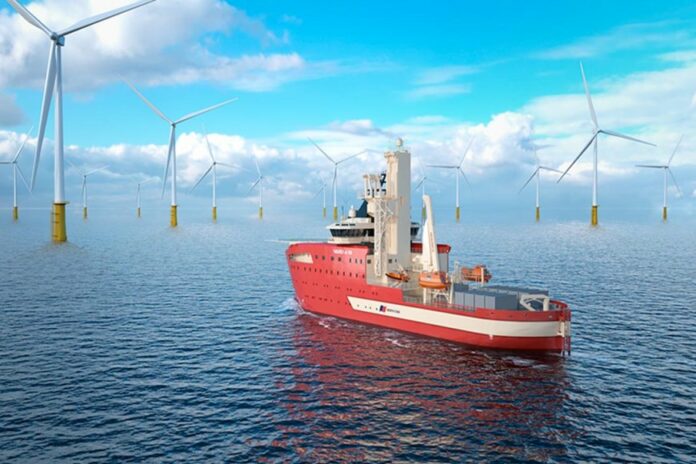
Situated at Kongsberg Maritime’s Aberdeen office in Westhill, the simulator has been upgraded in response to the growing need for skilled Dynamic Positioning professionals, particularly in offshore oil and gas operations, including drilling, pipe-laying, heavy lift and emerging floating wind operations . The simulator will provide operators with the essential skills and expertise needed to safely and efficiently support large-scale projects in the North Sea and across Europe.

The simulator provides a highly realistic training environment, allowing course delegates to practice complex operations and emergency preparedness in a fully immersive, controlled conditions. By replicating real-world scenarios with advanced physics-based simulations, it improves competency, enhances safety, and reduces reliance on expensive on-the-job training.

To further support the simulator, Kongsberg is increasing its instructor team from two to three expert Dynamic Positioning Operators in 2025, bringing a wider range of knowledge and experience to strengthen its training programs.

Kerry Craig, Operations Manager at Kongsberg Maritime, said, “In today’s maritime industry, we face increasing operational complexity, heightened safety demands, and the urgent need to reduce environmental impact, all while managing tighter budgets and a growing skills gap. Kongsberg Maritime set out to develop a solution that would provide highly realistic, risk-free training whilst ensuring operators gain the skills and confidence needed to perform at the highest level.”

“The K-Sim Offshore DP3 Anchor Handling Simulator sets itself apart with advanced physics-based simulations and hydrodynamic modelling, allowing trainees to operate in a variety of vessel types, locations, and weather conditions. This level of realism enhances competency among operators, leading to better performance in the field.  This is about empowering people with the right tools to work smarter, safer, and more sustainably, driving a real ‘step change’ in maritime training,” said Kerry.

ClassNK issues AiP for OceanWings` Rigid Windsail Type Wind-Assisted Propulsion System

0

ClassNK has issued an approval in principle (AiP) for a Rigid Windsail Type Wind-Assisted Propulsion System (WAPS) developed by OceanWings. The certification confirms its feasibility from regulatory and safety perspectives.

The implementation of WAPS is advancing as a solution for responding to environmental regulations and reducing fuel expenses. When such systems are installed on ships, they are expected to be effective in reducing CO2 emissions through the use of wind power. However, depending on the scale and specifications, risks can arise for the ship’s structure, onboard crew, and the surrounding environment.

ClassNK reviewed the design concept of the system based on its ‘Guidelines for Wind-Assisted Propulsion Systems for Ships. Upon confirming its conformity to prescribed requirements for structural design, driving and control systems etc., ClassNK issued the AiP.
 
ClassNK will continually strive to contribute to advanced decarbonization initiatives through safety assessments and more.

LPG tanker aground on Koh Lan beach, Pattaya

0

There were no reports of a spill or leak being detected or of anyone being injured. 

Officials from Marine and Coastal Resources Administration Office 2 and other agencies have inspected the vessel. 

The liquid petroleum gas tanker NP Bankpakong ran onto the rocks at Sangwan beach, near the larger Ta Waen beach, on Koh Lan in tambon Na Klua of Bang Lamung district. The waters there are known for their many natural coral reefs. 

A source on the inspection team said the vessel was not carrying any cargo.

The tanker had left Bang Pakong in Chachoengsao province about 10pm on Monday, scheduled to load at Map Ta Phut port in Rayong province. 

The owner, SC Group Holding, said the ship ran aground about 2.25am on Tuesday. It issued a statement expressing its regret and saying it accepted full responsibility for the incident it acknowledged was caused by the negligence of on-duty crew members.

“We are ready to give our full cooperation to the relevant agencies to investigate the incident and will follow all legal procedures,’’ the statement said.

Inspectors from the Marine and Coastal Resource Centre, Eastern Gulf of Thailand, were surveying the affected coral reef. Legal action would be taken if damage was found, an official said.

The company said it would send a tug to move the tanker from the rocks as soon as possible and would pay compensation for any damages incurred. 

The company reiterated that no gas or chemical leak had been detected.

Source: BangkokPost

AD Ports Group and Columbia Group form ship management joint venture

0

The newly formed entity, Noatum – CSM Limited, combines Columbia Group’s expertise in advanced fleet management systems and AI-driven performance analytics, with AD Ports Group’s diverse fleet and extensive ship management experience, both globally and regionally.

 Also, by integrating ship management into AD Ports Group’s Maritime & Shipping Cluster service portfolio, this strategic alliance offers the benefits of world-class ship management system and team to third parties.

The JV will benefit from immediate access to Columbia Group’s Performance Optimisation Control Room (POCR), an advanced digital platform designed to catalyse fleet performance enhancement, predictive maintenance, and regulatory compliance. This platform provides continuous live monitoring and comprehensive decision support tools to optimise voyages, speed, bunker usage, and emissions. The system will harness data from multiple vessels to empower informed decision-making and enhance operational and commercial performance.

Captain Ammar Mubarak Al Shaiba, CEO – Maritime & Shipping Cluster, AD Ports Group, said: “This partnership symbolises a pivotal advancement in maritime asset management, merging the strengths of Columbia Group and AD Ports Group. As we expand our capabilities, we are benefitting our clients by elevating quality and efficiency. We are committed to offering a holistic suite of services with exceptional operational competency and expertise, further fortifying our position as a global maritime service provider.”  

Mark O’Neil, President and CEO – Columbia Group said: “This partnership marks a significant milestone in our shared vision to set new standards in maritime asset management. Combining Columbia’s global expertise with AD Ports Group’s strong presence in the Middle East will drive operational excellence and innovation in the region’s maritime sector. We look forward to building a sustainable and future-ready business together.”

Noatum Maritime takes delivery of first LNG powered vessel for United Global Ro-Ro

0

Noatum Maritime has taken delivery of its first LNG powered Pure Car and Truck Carrier (PCTC) Ro-Ro vessel which will be utilised by the recently formed JV with Erkport, “United Global Ro-Ro.”

Forming part of Noatum Maritime’s Ro-Ro expansion strategy, the newbuild vessel, named UGR Al Samha, a flagship for the Ro-Ro business, boasts 12 decks covering a total area of 59, 331 sqm with a capacity of more than 7,000 car equivalent units (CEU).

LNG powered PCTC vessels offer a range of benefits, particularly in relation to addressing environmental concerns, and improving operational efficiency, including reduced emissions compared to traditional fuel, cleaner operations due to minimal impact on air quality and cost efficiencies through fuel economy, performance and reduced maintenance costs. The use of LNG also aligns with the UAE’s long-term decarbonisation targets and plans to achieve net emissions by 2050 and is a key component of Noatum Maritime’s plans to transition its fleet to alternative fuels.

Captain Ammar Al Shaiba, CEO – Maritime & Shipping Cluster – AD Ports Group, said “The incorporation of UGR Al Samha, the LNG-powered PCTC vessel into our United Global Ro-Ro fleet marks a significant step forward in our commitment to sustainable shipping and operational excellence. By leveraging cleaner fuel technology, we are not only reducing our environmental footprint but also ensuring compliance with global regulations and enhancing value for our customers. This addition underscores our dedication to driving innovation and supporting the transition towards a greener maritime industry.”

The vessel will join the existing fleet being operated by United Global Ro-Ro and will be deployed mostly on routes within the Middle East, Asia and the Mediterranean, with the aim of connecting global hubs and enhancing vehicle logistics and high & heavy cargo transportation in a sustainable manner.

OMV and its partners drill a dry well on the “Horatio” prospect in the North Sea

0

The well – which is the first to be drilled in this production licence – was drilled using the Transocean Norge rig.

The primary exploration target for the well was to prove petroleum in Lower Cretaceous reservoir rocks in the Agat Formation. The secondary exploration target was to prove petroleum in Lower Cretaceous reservoir rocks in the Åsgard Formation.

The well encountered the Agat Formation with a total thickness of about 176 metres, where a total of 79 metres was sandstone layers with poor to moderate reservoir quality. Around 137 metres were registered in the secondary exploration target, a total of 75 metres of which were sandstone layers with poor to moderate quality. The well is classified as dry.

Well 35/6-6 was drilled to a vertical depth of 3840 metres below sea level, and it was terminated in the Åsgard Formation in the Lower Cretaceous. Water depth at the site is 353 metres. The well has been permanently plugged and abandoned.

Konecranes gets order from Saguenay Port Authority in Quebec

0

Situated on North America’s only navigable fjord, Port Saguenay provides cargo ships with year-round access to north-central Quebec. The natural deepwater port can accommodate vessels of up to 100,000 tonnes. Capitalizing on this strategic location, the port authority is now expanding its facilities to handle more cargo traffic.

The order was booked in Q1 2025, with handover scheduled for Q3 2025.

This deal marks the start of a new partnership with the Saguenay Port Authority, which chose Konecranes for the flexibility, eco-efficiency and strong performance of its electric drives. The mobile harbor crane will run mainly on an external power supply, significantly reducing emissions compared to diesel-powered alternatives.

The ESP.6B comes equipped with an electric cable reel at the boom top to operate an electric hook rotator and spreaders. With these special features and its 125-tonne maximum lifting capacity, the crane can handle bulk materials – like de-icing salt and iron ore – as well as containers and general cargo.

“By enabling the use of electricity, the Konecranes equipment will be instrumental in helping us to reduce our carbon footprint. With the extra handling features we’ve chosen, the crane is a true asset for the planned growth of the port and the world-class industrial port zone, one of the largest In North America,” says Carl Laberge, Chief Executive Officer at Saguenay Port Authority.

“Konecranes’ industry-leading electric drive concept played a decisive role in securing this agreement. We are very happy to have the Saguenay Port Authority on board as we help more and more customers to reduce emissions while maintaining high operational performance,” says Andreas Moeller, Senior Sales Manager, Konecranes Port Solutions.

CMA CGM and ABB collaborate on parametric roll algorithm to enhance ship safety

0

ABB and the CMA CGM Group are collaborating on a new parametric roll algorithm to improve ship safety. The solution integrates a theoretical framework developed by CMA CGM into the ABB Ability™ OCTOPUS Marine Advisory system.

Parametric rolling has been a challenge to ship safety for decades. Particularly affecting container ships, ro-pax vessels, and car carriers, it means that a vessel experiences large rolling motions as it moves in waves. The phenomenon is hard to predict and poses a threat to vessel, cargo, and crew safety.

By detecting and helping to prevent extreme parametric rolling, the new algorithm will help enhance operational safety by reducing the risk of accidents, vessel damage, and cargo loss at sea. By reducing the risk of cargo loss incidents at sea that can lead to oceanic pollution, it will help protect the marine environment. Preventing parametric roll incidents can also help avoiding potential costs associated with repairs and cargo damage. Furthermore, through its integration into ABB’s OCTOPUS system, the solution will allow real-time monitoring and response, improving voyage efficiency and reducing downtime caused by adverse weather conditions.

As part of its commitment to the safety of its crew members, vessels and customers’ cargo, CMA CGM will deploy the solution across its global fleet and offer comprehensive training services for the users. These trainings will also be available for the wider shipping industry. ABB’s scope of supply covers the installation of the OCTOPUS onboard system as well as complete engineering, project management, and commissioning services.

“We are excited to collaborate with ABB on this parametric roll algorithm, a groundbreaking integration of the CMA CGM theoretical framework with the ABB Ability™ OCTOPUS Marine Advisory system. This solution not only enhances safety and operational efficiency but also helps to minimize risks for cargo damage and loss at sea. This collaboration represents a major leap forward for the industry, enabling more efficient operations and safer voyages,” said Emmanuel Delran, Vice President Group Operations, CMA CGM Group.

“Recent development in the maritime sector has focused increasingly on safety and sustainability,” said Tomas Arhippainen, Head of Marine Service and Digital, ABB Marine & Ports. “Our partnership with CMA CGM on the parametric roll algorithm underscores our commitment to improving vessel safety and operational efficiency as well as contributing to environmental protection. By providing a tool that helps to mitigate the risks associated with parametric roll, we are taking a meaningful step forward in the global shipping industry.”

ABB and CMA CGM have a longstanding relationship, with around 200 vessels equipped with ABB’s OCTOPUS system. Building on that, this new collaboration sets a benchmark for safety and technological advancement, encouraging also other companies to develop and adopt new innovations.

Damen Naval hands over new CSS Den Helder to the Command Materiel and IT Organisation

0

Naval shipbuilder Damen Naval has handed over the new Combat Support Ship (CSS) Den Helder to the Command Materiel and IT organisation (COMMIT).

During a ceremony in Den Helder, the home port of the supply and support vessel, Damen Naval Managing Director Roland Briene and COMMIT Commander Vice Admiral Jan Willem Hartman made the handover official. The CSS marks the first phase in the large-scale fleet renewal programme for the Royal Netherlands Navy.

The Combat Support Ship is of vital importance to the Royal Netherlands Navy’s permanent support and supply capacity, as well as that of its NATO partners. This innovative vessel is deployable worldwide and can provide ships at sea with fuel, food, water, ammunition, and other goods.

With a sense of pride, Damen Naval’s Managing Director Roland Briene said: “It is a special moment to hand over this complex and robust ship to COMMIT. From Vlissingen, the Den Helder has now arrived in its home port of Den Helder. The CSS is the first in a series of ships that will strengthen and modernise our fleet. With this, the Netherlands once again plays an important role in European naval shipbuilding. Cooperation in the production of defence materiel is becoming increasingly important, and Zeeland demonstrates it is playing at the highest level.”

Damen Naval Project Director Arjan Risseeuw adds: “After an intensive outfitting period in Vlissingen, we carried out a number of final tests during the transit of the ship to Den Helder. We have now largely addressed the points for attention from the earlier sea trials. Following the handover, we will assist with the integration of the weapon systems with the platform systems and finalise the remaining outstanding tasks. It has been a wonderful period of shipbuilding in Vlissingen, which certainly leaves us wanting more.”

Cooperation between Damen Naval and the Ministry of Defence is now running at full speed. As a strategic partner, Damen Naval is working closely with the Ministry on current and future projects, strengthening the naval construction sector.

“It feels good that the CSS is now in the port of Den Helder and that I have the honour of receiving the ship on behalf of COMMIT from Damen,” said COMMIT Commander Vice Admiral Jan Willem Hartman. “During the sea trials, the CSS performed as the robust supply vessel the Royal Netherlands Navy needs. Along with a new ship being handed over, we are also receiving all the ILS data required to ensure the ship’s continued operation. This means a significant part of the maintenance and support for the future is already being provided, ensuring the ship’s long-term readiness. As strategic partners, I have every confidence that we will continue to work together in close cooperation.”

CSS Den Helder was built at the Damen Naval yard in Galați, Romania, and departed from there in November 2024 for its first sea trial and the voyage to the Netherlands. The ship arrived on 13 December 2024 in Vlissingen-Oost, where Damen Naval carried out further work. On 22 February this year, the vessel was christened by Her Royal Highness the Princess of Orange.

On Friday 14 March, the CSS departed the Vlissingen yard to continue the sea trials. Various Sea Acceptance Tests (SATs) were conducted, including a replenishment at sea (RAS) with HNLMS Johan de Witt. Now that the ship has been handed over to COMMIT, work will continue under the responsibility of the Directorate of Materiel Sustainment (DMI) and the Joint IV Command (JIVC). They will begin commissioning the Sensor, Weapon, and Command System, and will manage the hardware-software integration within the Combat Management System. Later this year, the ship will be formally transferred to the Royal Netherlands Navy and, upon entering service, will receive the royal designation: HNLMS Den Helder.

Vattenfall builds Germany’s largest offshore wind farm

0

Construction of the Nordlicht 1 and 2 wind farms is planned to begin in 2026, and Nordlicht 1 is set to become Germany’s largest offshore wind project. The wind farms are expected to be operational in 2028. 

“The Nordlicht offshore wind cluster makes a significant milestone in the path to enabling fossil freedom. By accelerating Germany’s energy transition and supporting industrial decarbonisation, it will provide clean, reliable energy while driving innovation and sustainability in the sector. We look forward to realising this important project in close collaboration with our supply chain partners,” says Helene Biström, Head of Business Area Wind at Vattenfall.

Vattenfall will repurchase the shares in the Nordlicht cluster that BASF acquired in 2024. At the same time, BASF secured access to long-term supply of renewable electricity, continuing the collaboration. This agreement will secure renewable power for BASF’s chemical production in Europe at a time when such additional supply will be needed.

The Nordlicht wind cluster will have a net capacity of more than 1.6 GW, with Nordlicht 1 becoming the largest offshore wind farm project in Germany. As part of Vattenfall’s sustainability efforts, both wind farms will feature wind turbines towers partially made with low-emission steel, reducing their overall carbon footprint by 16 percent.   

The final investment decision for Nordlicht 2 has been made on a conditional basis, pending the receipt of the necessary permit.