-7.9 C
New York
Home Blog Page 654

Suez Canal: Ever Given is fully afloat and under way

0

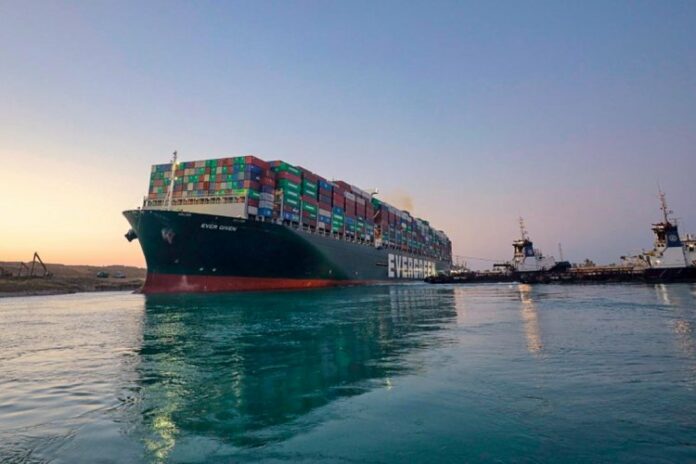
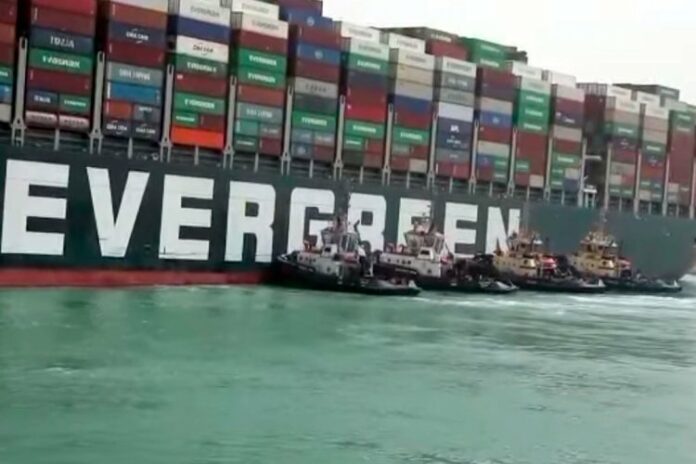
Evergreen Line has confirmed that EVER GIVEN has been successfully refloated within the Suez Canal at approximately 15:04 March 29 local time (21:04 Taipei time). 

In order for the Canal to resume normal operation, the vessel is leaving the grounding site with assistance of tugboats. 
The chartered vessel will be repositioned to the Great Bitter Lake in the Canal for an inspection of its seaworthiness. The outcome of that inspection will determine whether the ship can resume its scheduled service. Once the inspection is finalized, decisions will be made regarding arrangements for cargo currently on board. 

Evergreen will coordinate with the shipowner to deal with subsequent matters after the shipowner and other concerned parties complete investigation reports into the incident. 

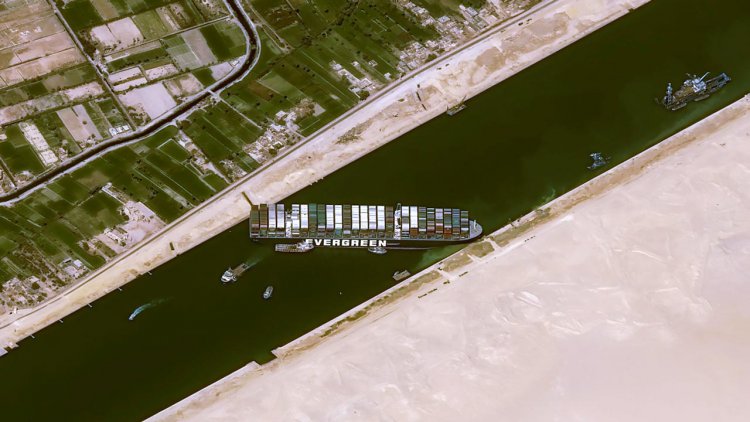
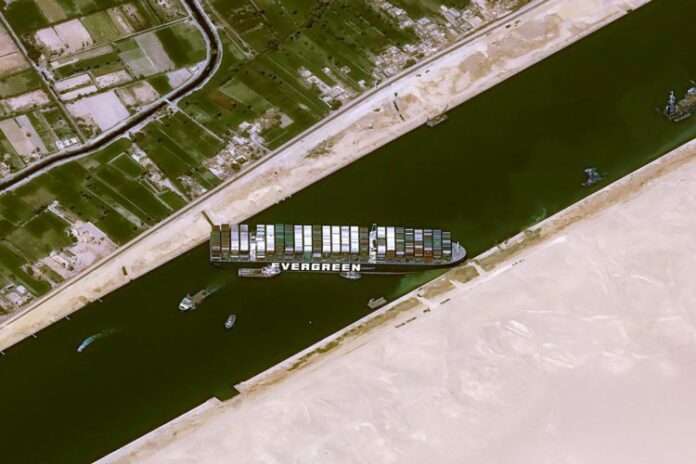
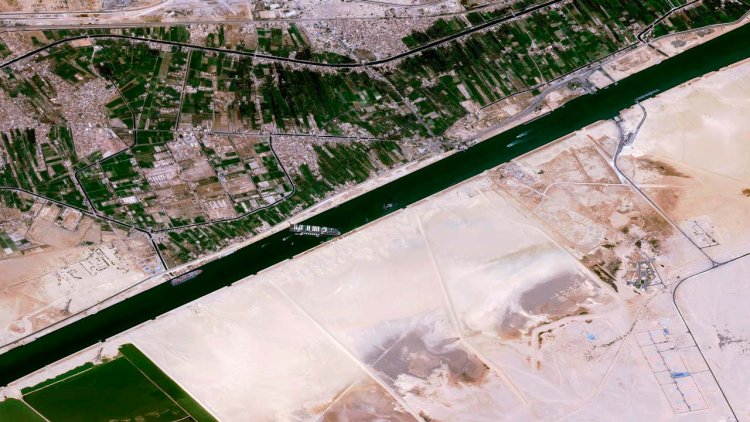
Photo: Suez canal blockage seen from space. Airbus-built Pléiades high-resolution satellite image showing a container ship stuck in the canal. Copyright: CNES/AirbusDS

Earlier on Monday, Egyptian President Abdel-Fattah el-Sisi hailed the “success” of an operation to unwedge the giant Ever Given container ship, stuck in the Suez Canal for nearly a week. 

Sisi wrote on Twitter:

“Today, Egyptians have been successful in putting to an end the crisis of the stranded ship in the Suez Canal, despite the enormous complexity surrounding the process.”

EVER GIVEN is a 20,000 TEU-class container ship, currently leased by Evergreen Marine Corp. under a time charter agreement. The ship is deployed on a Far East-Europe service route.

€1M project to showcase Economic Value of Ocean Energy in Europe

0

EVOLVE will examine the overall market value of the inclusion of ocean energy in European energy systems. The project aims to produce quantifiable outputs to illustrate the benefits associated with integrating ocean energy in low carbon energy systems across the regions of north west Europe.

Ocean energy is an increasingly valuable resource within renewable energy development. As Europe looks to renewable technology as part of a green post-COVID recovery and achieving carbon neutrality by 2050, the ability to demonstrate the value of ocean energy becomes more crucial.  The outcome of EVOLVE has the potential to boost not just the ocean energy industry, but also associated industries within the Blue Economy. 

  • The team of partners from across Europe include:
    Aquatera functions as the Project Manager, bringing more than 20 years of experience within renewable energy to EVOLVE. The consultancy has worked on over 300 marine energy studies and will be applying their unique RADMAPP model to the project;
  • WavEC provides professional engineering services, and research, development, and innovation support in the marine renewable energy sector;
  • RISE and the University of Edinburgh have world class research experience in energy systems modelling; and
  • Orbital Marine Power and CorPower Ocean bring tidal and wave technology demonstration experience respectively. 

Continued engagement throughout the project will ensure that the results produced are relevant and useful to a wide range of stakeholders including technology and project developers, regulators, policy makers, electricity system operators and project investors.
 
Gareth Davies, Managing Director at Aquatera said:

“We are delighted to be participating in this project which will for the first time link the distribution of ocean energy resources and energy markets on a place, time and value basis. The team we have put together includes some of the most experienced participants in the ocean energy sector and has the capacity to deliver a ground-breaking analysis framework that will clearly signal the best pathways and locations for ocean energy in the future.”

Head of low carbon transition at Scottish Enterprise Andy McDonald said:

“Scotland has an ambitious target to be a net zero nation by 2045 and by capitalising on our manufacturing strengths and natural tidal assets as well as economic opportunities around climate change we will build a sustainable blue and green economy that encourages international investment. I look forward to seeing the EVOLVE project take shape and delve deeper into the economic growth potential of ocean energy and its integration into energy systems to build on previous Oceanera-net initiatives. Aquatera’s research expertise, alongside academic knowhow from Edinburgh University and Orbital Marine’s tidal technology knowledge will really come together on this project providing an opportunity for Scotland to lead from the front with EU partners and showcase energy transition in action.”

 Matthijs Soede (European Commision) said:

“The final aim of each developer is to supply clean electricity to the energy system, but it will be important to show decision makers in Europe the added value of ocean energy. I am very happy to see that EVOLVE will do research on this, and I am sure that the research will profit from the collaboration between the different European partners and that results will find more easy a way to the right decision makers in Europe.”

The project is expected to have a significant impact on the integration of ocean energy in European energy systems and through this, support Europe’s green transition while strengthening European cooperation and the Blue Economy.

Subsea 7 joins forces with Simply Blue in Salamander Floating Windfarm Project

0

Subsea 7, a global leader in the delivery of offshore projects and services for the evolving energy industry and Irish blue economy developer Simply Blue Energy have joined forces to develop the Salamander floating wind project, off the North East Coast of Scotland (UK).

The companies have formed a joint venture partnership, where Subsea 7 has a minority interest, to develop a pre-commercial project. Subsea 7 will bring its proven track record in delivering offshore energy projects, together with the company’s expertise and detailed knowledge of the Scottish supply chain. Simply Blue Energy will bring its floating wind development experience from their projects in the Celtic Sea.

Energy consultants, Xodus Group, an autonomous subsidiary of Subsea 7, has been supporting the project from the inception stage and will continue to work with the project to develop the concept in readiness for acquiring a lease, in due course from the Crown Estate Scotland (under the innovation and oil and gas decarbonisation leasing activities referenced in the Offshore Wind Sectoral Marine Plan).

This early engagement provides an opportunity to develop a sustainable Scottish supply chain which can deliver a responsible energy future and bring economic benefits associated with offshore floating wind.

Up to 200 MW, Salamander will be another stepping stone project delivered by Simply Blue Energy, following on from four other such projects it is developing with major energy operators in the Celtic Sea.

John Evans, CEO of Subsea 7 said:

“Subsea 7 has a long track record of successfully delivering offshore energy projects which positions us well to support Simply Blue Energy at this early stage of the Salamander project. We believe that floating wind has an important role to play in the wider energy transition and a low carbon future.

“We are pleased with our early support to this project through Xodus Group, and that we are able to continue our engagement through the formation of this joint venture. We look forward to working with Simply Blue Energy with the aim of bringing the project to a point where a strategic investor can come onboard.”

Sam Roch-Perks, CEO of Simply Blue Energy added:

“Scotland is one of the best locations on the planet for the development of floating wind projects. As a leading floating wind developer we want to contribute to the development of this market. Despite best intentions, previous projects have not achieved the hoped-for regional supply chain benefits but we believe that for the supply chain to capitalise on the opportunities from ScotWind, a stepping stone project like Salamander is needed.” 

Coldplay adopts Interceptor to join the Ocean Cleanup Mission

0

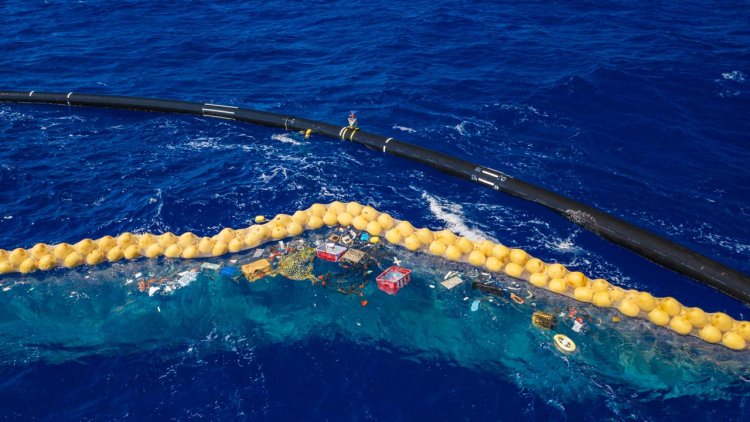
The Ocean Cleanup, the Dutch non-profit developing advanced technologies to rid the world’s oceans of plastic, announced its collaboration with musicians and philanthropists Coldplay. 

The band will directly support the non-profit’s mission by sponsoring an Interceptor™, The Ocean Cleanup’s solution to extract plastic from rivers before entering the ocean. This collaboration helps to take another significant step in tackling the world’s 1000 most polluting rivers

Boyan Slat, Founder and CEO of The Ocean Cleanup, said:

“I’ve long admired the work of Coldplay. They are doing great things to promote a better environment, and they are world-renowned for these efforts (as well as their music), and the reach of their voice is immense. So, when we began exploring how to work together, the potential of the partnership was exciting. Now that we have found the right collaboration path and can share it with our supporters, I’m looking forward to what we can achieve.”

Since 2019, The Ocean Cleanup has announced Interceptor solutions for heavily polluting waterways in countries worldwide, including Indonesia, Malaysia, Dominican Republic, Vietnam, the United States, Jamaica, and Thailand. These initial deployments lay the groundwork for The Ocean Cleanup to prepare for scaling up to 1000 rivers, allowing them to fine-tune their business model and technology. Once they have achieved several successful deployments in these first rivers, they will accelerate Interceptor installments into more countries and even more rivers over the coming years.

Coldplay has agreed to fund Interceptor 005, currently being manufactured by The Ocean Cleanup’s manufacturing partner, Konecranes, in their MHE-Demag facility in Malaysia. This Interceptor is expected to be completed in late spring 2021 and deployed within Malaysia; thanks to the established partnerships in the region, we can commence operations as soon as possible. Working together with local partners, The Ocean Cleanup will ensure Interceptor 005 is installed in an optimal location for removing large amounts of waste from rivers.

Coldplay on the sponsorship of Interceptor 005:

“Without action, there could be more plastic than fish in the oceans by 2050, which is why The Ocean Cleanup’s work is so vital. We’re proud to sponsor Interceptor 005 – aka Neon Moon 1 – which will catch thousands of tons of waste before it reaches the ocean.”

As The Ocean Cleanup begins scaling up to deploy more solutions in rivers worldwide, this partnership exemplifies how philanthropists, individuals, and corporations can take part in solving this global problem. In the coming months, The Ocean Cleanup will provide updates on the completion of Interceptor 005, Neon Moon 1, and its installment and invites all to continue following the story as it unfolds.

GAC onboard with Spark’s LNG freight platform

0

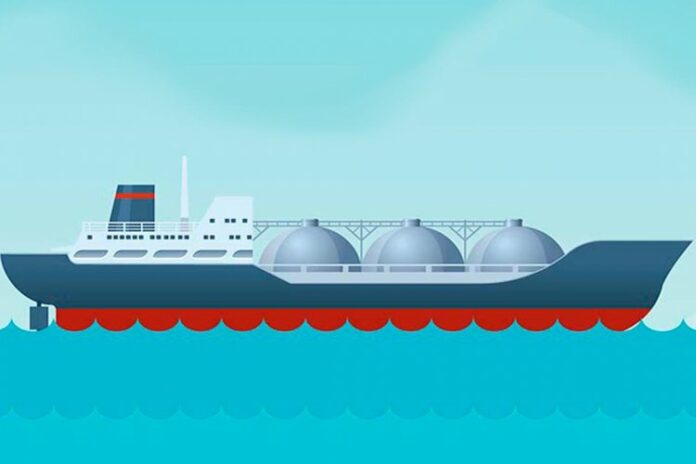
GAC has partnered with Spark Commodities Pte Ltd (“Spark”) to support them by providing data to a platform that brings greater price transparency to the LNG market. With many years of experience providing specialist support to LNG calls around the world, GAC will contribute LNG-shipping related information and data.

Spark’s technology-based solutions help to promote liquidity in the LNG market. The Spark LNG freight platform provides a freight index and associated tools that allow the market to better understand a critical part of the LNG value chain.

Henrik Althén, Managing Director of GAC Singapore, says:

“LNG is an important part of the global energy supply chain today, and we are excited to be a part of Spark’s robust platform that provides a wealth of useful information and data that will benefit the LNG shipping community.”

“We hope to make it more convenient for operators and charterers of LNG carriers and FSRUs on the Spark platform to enjoy a full-service solution from GAC, supporting their shipping and logistics needs with a single click.”

Tim Mendelssohn, Managing Director of Spark, says:

“High quality data is critical to our customers. By partnering with GAC, we ensure that we can provide timely and accurate port costs and associated data via our platform, leveraging GAC’s global expertise and reach in the LNG industry. It enables our calculations to be more granular and also gives us the opportunity to develop additional tools that can add value to both Spark and GAC customers.”

Wave power can play greater role in UK’s Net Zero energy drive

0

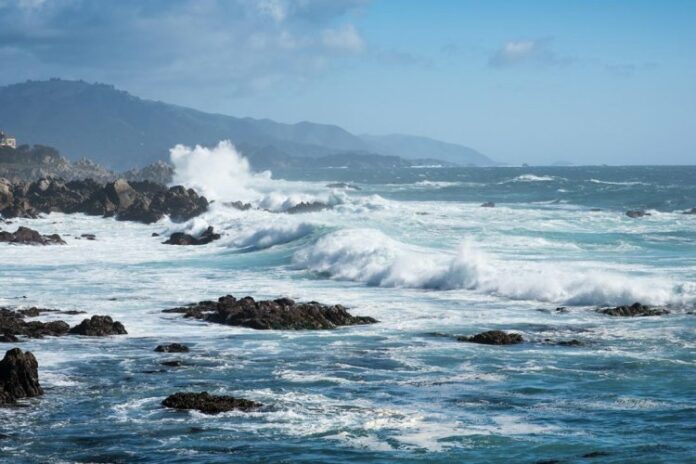
Wave energy has the potential to provide at least 15% of the UK’s annual electricity and help the country meet its Net Zero greenhouse gas emissions target by 2050.

But for that potential to become a reality, it will require an extensive programme of collaboration, investment and innovation involving governments, science, industry, and landowners.

Those are the key findings of a new study examining the current state of the UK’s wave energy sector and how its fortunes have fluctuated over the past five decades.

Published in Renewable and Sustainable Energy Reviews, and led by academics from the University of Plymouth, it positions the UK at the forefront of offshore renewable energy innovation and development worldwide.

In 2017, almost 30% of the UK’s energy was generated through renewable technologies such as wind and solar power, dramatically reducing the country’s reliance on fossil fuels and helping it pursue commitments made in the Kyoto Agreement.

That expertise has also been translated into significant progress in offshore renewable energy (ORE), but within that – compared to wind and even tidal technology – the wave energy sector is currently lagging behind.

This, the study’s authors say, is to some degree due to a small number of high-profile complications and commercial challenges which have harmed general confidence in the sector and led to a focus on niche applications rather than larger-scale projects.

However, the wave conditions right around the UK coastline – particularly in the Shetlands, Pentland Firth and Orkney, Hebrides, Pembrokeshire, South West England, and North Sea – remain more than capable of supporting wave energy developments.

Despite this, at the time of writing, the authors highlighted that there are currently just nine Crown Estate leased sites where wave energy devices are or had been operational in the UK. One more was in construction and one in development, however, a further ten sites previously identified as potential hotspots for the technology are either on hold or have been cancelled.

Professor Deborah Greaves OBE, Head of the School of Engineering, Computing and Mathematics at the University of Plymouth, is the study’s senior author. She said:

“The UK has been spearheading wave energy research and innovation since the early 1970s and its wave resources are among the best anywhere in the world. But despite steady progress, there hasn’t been the widescale adoption of wave energy technology that we have seen elsewhere in the renewables sector. This is in part due to the many and varied challenges of developing efficient devices and bringing them to the commercial market. However, we remain among the global pioneers in developing the technology, and have test facilities that attract and support developers from all around the world. With the right government and industry support, there is no reason why the UK’s wave energy sector cannot play a significant part in the national drive for Net Zero innovation.”

Maersk Drilling secures nine-month contract to reactivate Maersk Reacher in Norway

0

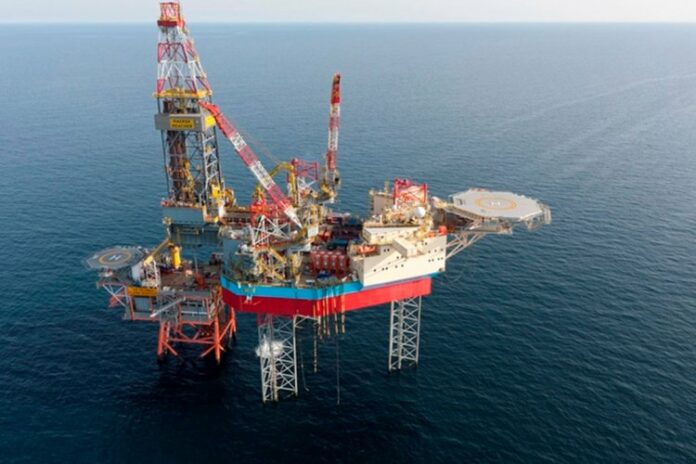
Maersk Drilling has been awarded a contract with Aker BP for the ultra-harsh environment jack-up rig Maersk Reacher to assist with well intervention, stimulation and accommodation at the Valhall field offshore Norway. The contract is expected to commence in July 2021 and has a firm duration of 270 days.

The firm contract value is approximately USD 33.4m. The contract contains options to add up to 90 days of additional intervention work at the Valhall field.

Maersk Reacher is contracted under the terms of the frame agreement that Maersk Drilling and Aker BP entered into in 2017. Maersk Reacher will be reactivated with reduced drilling equipment and a specific focus on delivering the most efficient well intervention and stimulation set-up including a reduced crew level compared to standard drilling mode.

COO Morten Kelstrup of Maersk Drilling says:

“We’re delighted to get this contract which will see Maersk Reacher return to Valhall where it was last in service as an accommodation rig. This new contract to assist with well intervention, stimulation and accommodation will not utilise the full drilling capabilities of the rig, but we’re confident that we can build on our experience with the Aker BP Jack-up Alliance and work to deliver increased efficiency also in this context.”

Tommy Sigmundstad, SVP Drilling & Wells in Aker BP, says:

“This is a strong example of how our supplier ecosystem enables cross-alliances collaboration. We will play to the strengths of the Intervention & Stimulation Alliance and the Jack-up Alliance to jointly bring well interventions’ efficiency to the next level.”

Maersk Reacher is a 350ft, Gusto-engineered MSC CJ50 high-efficiency jack-up rig which was delivered in 2009. It is currently warm-stacked in Frederikshavn, Denmark after ending its previous contract offshore Norway in April 2020.

VIDEO: Ever Given ship successfully refloated in Suez Canal

0

Lieutenant General Osama Rabie, Chairman of the Suez Canal Authority, has announced that the EVER GIVEN Panamanian container ship was successfully floated after the ship has responded to the tension and towing manoeuvres, as the ship’s course was significantly modified by 80% and the stern of the ship was away from the shore by a distance of 102 meters instead of 4 meters.

The manoeuvres are scheduled to resume again as the water level rises to its maximum height in the period from 11:30 a.m. to reach 2 meters, allowing the ship’s course to be completely modified to the midway.

Lieutenant General Rabie sent a message of reassurance to the international maritime community to resume navigation in the canal once the vessel is fully floated soon and directed to wait in the Lakes region for its technical examination.

Click on the timeline to see how the container ship was moved: 

Update to Vessel blockage in the Suez Canal

0

Statement from Evergreen

Having removed more than 20,000 tons of sand and mud, the dredging operation underway has succeeded in loosening the EVER GIVEN’s bow within the bank of the Suez Canal and the ship’s stern has been cleared from the sand bank. 

The rudder and propeller of the vessel are fully functional and expected to provide additional support to tugboats assigned to move the container ship from the accident site so that normal transit may again resume within the canal.

The rescue team is continuing the dredging efforts and will resume attempts to refloat the vessel.

Statement from Maersk

Whilst efforts continue to dislodge the container ship, numbers show that over 300 ships are now waiting at anchorage to pass through the canal. 

Currently Maersk and partners have three vessels stuck in the canal and 27 vessels waiting to enter the canal. Maersk has until now redirected 15 vessels around the Cape of Good Hope at the southern tip of Africa. 

Statement from The International Chamber of Shipping (ICS)

Guy Platten, secretary general of the ICS, said:

“This kind of incident is rare, and it is a relief to see that no crew were injured and there has been no pollution. The world relies on the shipping sector to keep all of us supplied and the incident in the Suez Canal has shone a spotlight on the delicate nature of these global supply chains.
The literal ‘pinch point’ of Suez is a prime example of how an unexpected incident can disrupt the finely balanced system that we all rely on.
The majority of trade between Asia and Europe still relies on the Suez Canal, and given that vital goods including vital medical equipment and PPE, are moving via these ships we call on the Egyptian authorities do all they can to reopen the canal as soon as possible.”

An estimated 12% of global trade passes through the Suez Canal, comprising more than one billion tonnes of goods each year.

Guy Platten continued:

“Not only will the goods aboard the Ever Given be severely delayed on their journey, but the hundreds of other ships are also affected. The damage done to the global supply chain will be significant.”

“This also speaks to a deeper problem. The governments and markets are sitting up and paying attention to this issue as we can clearly see an economic fallout from the delay to goods the blockage will cause. But shipping’s ongoing crew change crisis has been largely still invisible to wider public. Crew are still working hard around the globe to keep global trade moving, despite 200,000 seafarers being impacted by overly harsh restrictions which stop them boarding or disembarking ships.”

“We hope this incident will remind governments of the vital role that seafarers and shipping plays in keeping the world supplied. Seafarers must not be forgotten as soon as this incident is over.”

DSCT launches SA Navy’s first Multi-Mission Inshore Patrol Vessel

0

The vessels will augment South Africa’s maritime security by enhancing the country’s capability to respond effectively, rapidly and cost-effectively to threats such as illegal trafficking and fishing.

DSCT Project Manager, Ian Stewart says the launch is an important milestone for the shipyard:

“This is the culmination of three years of hard work by a dedicated team of people. Ultimately, more than one million man-hours of work will be invested in the construction of the three MMIPVs.”

The more than 600-ton vessel was transported from the DSCT shipyard on the evening of 23 March 2021 to the Transnet National Ports Authority (TNPA) synchrolift at the Victoria & Alfred (V&A) Waterfront Basin. The move was conducted by Mammoet South Africa, using 48 axle lines of Self Propelled Mobile Transporters (SPMTs) to provide precision movement. 

Mammoet Project Manager, Uzayr Karimulla, says while moving the vessel at night meant less impact on traffic, the reduction in light came with its own challenges:

“Through careful planning, close collaboration, and the teamwork between DSCT and Mammoet South Africa, our team made this move a success. We are very happy to have been part of the project, contributing to the advancement of safer waters in Southern Africa.”

Once the vessel was raised onto the synchrolift, the team waited for high tide to come in before moving it out of the V&A Basin via TNPA tugs towards the Elliot Bason. The testing of the ship systems will now commence before the vessel will officially be delivered to ARMSCOR/SAN, before the end of the year.

The MMIPVs are built according to the patented Damen Axe Bow design, which ensures low resistance, high sustained speed in waves and superior sea keeping characteristics in the toughest conditions.

As vertical accelerations are reduced significantly and bow slamming almost eliminated, the safety of the vessel and crew increases considerably, reducing operational risks. The multi mission deck is used for supporting diving, search and rescue and anti-piracy operations.

DSCT HR & Transformation Manager, Eva Moloi, says DSCT is particularly proud of the many years it has invested in local South African skills transfer, training, and entrepreneurship development and collaboration, which have resulted in a strong South African pool of scarce trade skills and supplier partnerships.

Eva Moloi says:

“Our local skills transfer and Enterprise and Supplier Development (ESD) initiatives mean that we are not only contributing to the South African economy but ensuring that our local South African maritime market is less reliant on imports from international suppliers. DSCT fully supports the transfer of technology, inclusion of local companies in the execution projects, and stimulation of export transactions under the Defence Industrial Participation (DIP) programme, which particularly focuses on benefiting SMMEs, Military Veteran (MV) Owned Entities and Broad-Based Black Economic Empowerment (BBBEE) Compliant Entities. The partnerships formed during this project have led to the successful launch of the MMIPV. One can truly state that the MMIPVs have been built in South Africa, by South Africans for South Africa.”

The engineering of the vessel commenced in 2018 and the keel was laid in February 2019.