-7.9 C
New York
Home Blog Page 653

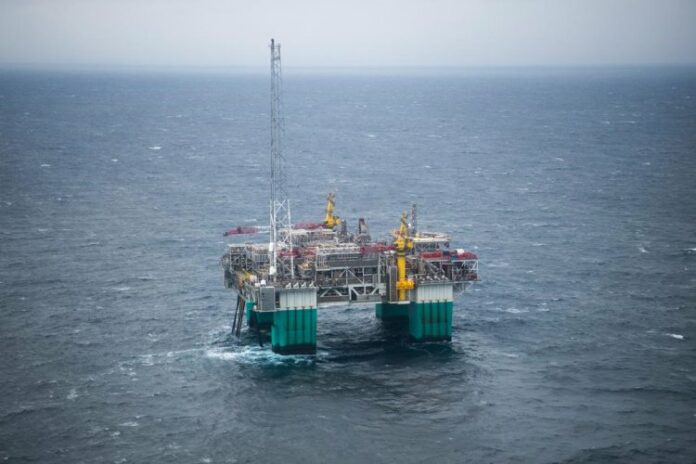
Worley and Morrison join forces to support decommissioning projects in the Gulf of Mexico

0

Under the agreement, Worley will be responsible for the engineering services scope of Morrison’s decommissioning projects.

Both companies have decades of experience supporting facilities in the Gulf of Mexico. The partnership will deliver specialized decommissioning and asset management services and a ‘one-stop-shop’ for operators of offshore hydrocarbon facilities reaching end of life.

The combined offering decreases operating, planning and management costs, while ensuring safe, environmentally-responsible project execution.

John Cox, Global Decommissioning Lead at Worley, said:

“We are very pleased to have entered into an agreement with Morrison. While decommissioning offshore installations is a complex process, we have the specialized engineering and project management expertise to support any type of decommissioning project. We look forward to strengthening our long-term relationship with Morrison and bringing Worley’s global decommissioning experience to Gulf of Mexico projects.”

Jon Minshall, Chief Operating Officer at Morrison, said:

“Morrison is one of the few regional contractors to have the experience in providing the full decommissioning management package. By providing services for all phases of total field decommissioning, we can relieve operators of the inevitable, sizeable workload and financial burden of these facilities. Our partnership with Worley further complements our ability to continue to successfully accomplish this for our clients.”

MOL, Kyushu sign agreement for LNG fuel supply for Japan’s first LNG-fueled ferries

0

Mitsui O.S.K. Lines, Ltd. (MOL) and Kyushu Electric Power Co., Inc. (Kyuden) have announced that the companies have concluded a basic agreement for the supply of liquefied natural gas (LNG) to two LNG-fueled ferries operated by MOL Group company Ferry Sunflower Limited (Ferry Sunflower) – the Sunflower Kurenai and the Sunflower Murasaki.

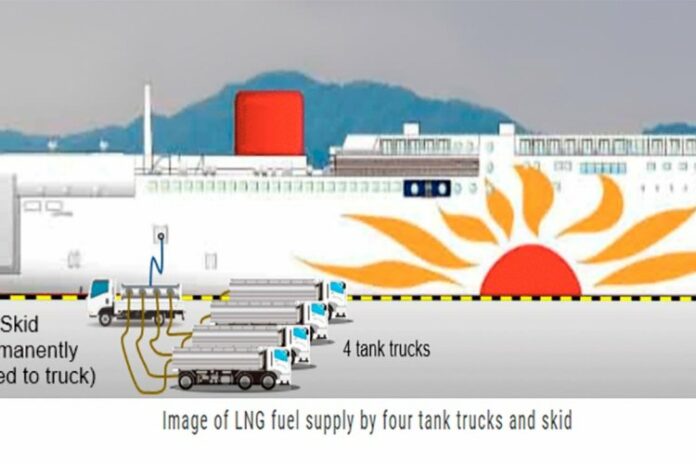
LNG fuel supply is slated to begin around the end of 2022 upon the delivery of the ferries, which are now under construction. Around 50 tons of LNG fuel per day will be supplied via truck-to-ship to these ferries berthed in Beppu Port (the northside wharf at the third pier) in Oita Prefecture. To speed up the fuel supply process, pipes called “skid” will be connected to four tank trucks, allowing them to fuel the vessels simultaneously.

LNG fuel will be supplied to the tank trucks at the loading station of Kyuden Group company Oita Liquefied Natural Gas Company, Inc. (Oita LNG). Niyac Corporation (Niyac) will transport and supply LNG to the ferries and Oita Gas Co., Ltd. (Oita Gas) will oversee safety during LNG bunkering. Meanwhile, Kyuden will sell LNG fuel to Ferry Sunflower through MOL Group company MOL Techno-Trade, Ltd.. This system will link a series of well-prepared measures from loading to transport and supply and achieve a safe and reliable supply of LNG fuel.

MOL, Ferry Sunflower, and Kyuden view this project as an effective means of reducing the carbon emission of vessel operation as global environmental regulations have become stricter. They will take a proactive stance in promoting the introduction of eco-friendly LNG to help realize a low-carbon society.

Petronas: New oil and gas discovery at offshore Block SK405B

0

Petronas has announced a new oil and gas discovery in the Sirung-1 wildcat exploration well of Block SK405B Production Sharing Contract (PSC), located in the shallow waters of Balingian Province, about 237 kilometres off the coast of Miri, Sarawak, Malaysia.

The Sirung-1 exploration well was successfully drilled to a total depth of 2,538 metres in February 2021. The discovery of significant oil and gas column – exceeding 100 metres within the Oligocene to Middle Miocene sandstone reservoirs – further validates the potential of Balingian Province, with remaining prospects yet to be explored.

PTTEP Sarawak Oil Limited as the operator holds 59.5 per cent, MOECO Oil (Sarawak) Sdn Bhd holds 25.5 per cent and Petronas Carigali Sdn Bhd, a subsidiary of Petronas, holds the remaining 15 per cent participating interest in Block SK405B. The PSC was signed in November 2017 as a result of the Malaysia Bid Round (MBR) 2015.

Petronas Vice President of Exploration, Upstream, Emeliana Rice-Oxley said:

“The Sirung-1 discovery further proves the presence of oil, especially in the under-explored deeper play within the Balingian Province. This came after similar success in an infill well at D18 Field. We are well-positioned to pursue a similar play in the other two neighbouring blocks in the same province, namely Blocks SK411 and SK306. As such, developing this block and other surrounding areas remains an integral part of Petronas and our partners’ long-term growth plans.

We are very encouraged by the continued success with our partners on the consecutive discoveries this year in Malaysia and remain optimistic in our exploration activities for 2021.”
 

GE Consortium awarded contract to build state-of-the-art HVDC System for Sofia

0

A specially formed consortium of GE Renewable Energy’s Grid Solutions and Sembcorp Marine announced they have been awarded the full contract to supply a state-of-the-art high voltage direct current (HVDC) transmission system for Sofia, one of the world’s largest offshore wind farm projects. Once operational, Sofia, located in the North Sea 195 kilometers off the coast of the North East of England, will be able to generate enough wind energy to meet the electricity needs of almost 1.2 million average UK homes.

The HVDC transmission system represents Sofia’s second largest contract and will include the design, manufacture, installation, commissioning and maintenance of the offshore converter platform and the onshore converter station, including all ancillary equipment. Construction of the wind farm is set to begin onshore at its Teesside converter station site this year, with offshore construction expected to get underway in 2023. Teesside, an ideal location to serve the vast offshore wind potential of the North Sea, will also be the future home of GE Renewable Energy’s new blade manufacturing plant.

GE’s Grid Solutions will be leading the consortium for the engineering, procurement, construction and installation of the system’s two HVDC converter stations capable of transmitting 1,320 megawatts (MW) of power at 320 kilovolts (kV). The offshore converter station will be the most powerful ever built and will be installed 220 kilometers from shore, which will also make it the most remote.

The selection of the consortium is positive news for the UK as a significant percentage of all the primary HVDC equipment will be manufactured at GE’s Grid Solutions’ Stafford facilities in the West Midlands, which employ more than 1,000 workers.

Sven Utermöhlen, Chief Operating Officer Wind Offshore Global of RWE Renewables said:

“Signing this contract with the consortium of GE’s Grid Solutions and Sembcorp Marine for the supply of Sofia’s HVDC electrical system reflects RWE’s strong commitment to innovation and to pushing the boundaries of what is capable within the sector. The 1.4GW Sofia project is our first to use the HVDC technology, which was selected to maximize the wind farm’s export capacity from a location so far from shore. We are delighted to be working with such a strong pairing on the delivery of this flagship project located on the remote Dogger Bank, in the middle of the North Sea.”

The project will be based on GE Grid’s latest HVDC technology, which utilizes its second-generation voltage source convertor valve, and will also feature the first application of its state-of-the-art eLumina™ HVDC Control System. eLumina is the industry’s first HVDC solution to use a digital measurement system fully based on International Electrotechnical Commission (IEC) 61850, an important international standard defining communication protocols for intelligent electronic devices at electrical substations.

Raj Iyer, Grid Integration Leader at GE’s Grid Solutions, said:

“As the HVDC consortium leader for the Sofia Offshore Wind Farm, we are excited to move ahead with this project. The award of Sofia and operational success of DolWin3 offshore wind HVDC last year are evidence that GE’s Voltage Source Converter technology is now well established, and that GE has the ability to commercially deliver on this latest and most advanced HVDC technology.”

Construction of the offshore converter platform will start this year and will be designed, built, installed and commissioned by Sembcorp Marine. Located at the heart of the wind farm, it will comprise a 17,000-ton topside and a jacket foundation structure piled into the seabed. The onshore converter station will convert the electricity generated by the wind farm to 400 kV alternating current (AC), before it enters the UK national grid.

Samuel Wong, Head of Sembcorp Marine Offshore Platforms said:

“Sembcorp Marine is excited to work on this mega-project with GE Renewable Energy’s Grid Solutions to support RWE Renewables’ Sofia Offshore Wind Farm project to augment its supply of wind energy in the UK. We are grateful to RWE for its vote of confidence in Sembcorp Marine’s capabilities and outstanding track record of delivering offshore platforms to major field developments in Europe and Asia.”

Thales and MHI combine forces to develop sonar technology to clear the seas from mines

0

Within the framework of the French-Japanese bilateral Defence agreement, France and Japan have signed a Project Arrangement for the second phase of the cooperation project consisting of the development by Thales and MHI of a dual frequency sonar demonstrator for mine countermeasures aboard an Autonomous Underwater Vehicle (AUV). 

While mines or even the possibility of mines potentially threaten everyone at sea, dealing with them effectively is vital in keeping key trade corridors open and guaranteeing maritime access and force projection—this is especially important for countries with highly valuable assets or ports that have a high volume of commercial traffic. In response to the growing threat posed by bottom laid, semi or fully buried mines in coastal areas, DGA and ATLA have decided to cooperate in order to study the performances of innovative dual frequency sonar technology.

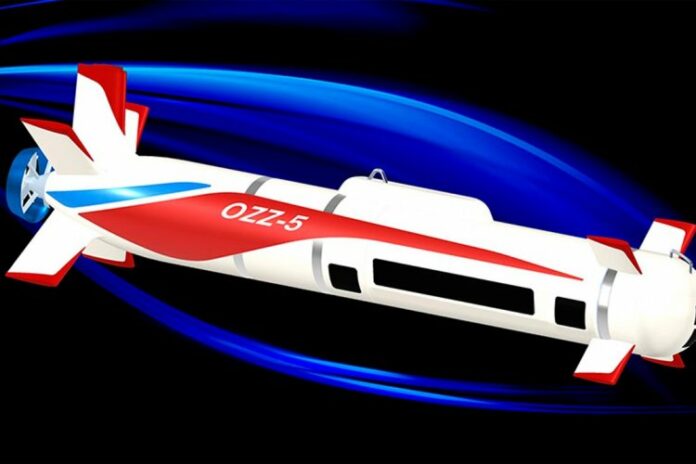
To achieve this, both countries have chosen to trust MHI and Thales, who share technological excellence and complement each other, strengthening through this agreement their continuous and successful collaboration. As a world leader in mine countermeasures with over 300 mine-hunting systems in service worldwide, Thales will provide its recognised expertise in sonar processing as well as its latest generation High Frequency synthetic aperture sonar, SAMDIS, with multi-aspect capability. MHI on its side will provide its Low Frequency synthetic aperture sonar and the OZZ-5 AUV. 

The smart integration of the High Frequency & Low Frequency sonars, coupled with a combined automatic detection and classification function, will not only provide capability and performance enhancement into a single solution but will also mutually benefit each sonar’s processing and imaging.    This will result in a unique autonomous mine countermeasure system capable of detecting, classifying and localising all types of mines from fully buried mines to ground mines.

This agreement kicks off a 5-year project for design, development and integration of the dual frequency synthetic aperture sonar processing, and at sea experiments (in Japan & in France). This is the materialisation of years of long cooperative efforts between the DGA, ATLA, Thales and MHI to jointly build a project that satisfies both French Navy and Japanese Maritime Self-Defence Force requirements and allows France and Japan to stay at the forefront of innovation on unmanned mine countermeasure systems.

Alexis Morel, Vice-President Underwater Systems, Thales, said:

“Thales is very proud to be part, together with our partner MHI, of the very first Franco-Japanese Defence Cooperation project. We are really enthusiastic to bring our field proven expertise with our SAMDIS High Frequency sonar for the benefit of France and Japan national and foreign Defense forces through this successful unique cooperation for safer seas.” 

Cyrille Dupont, President and CEO, Thales Japan, said:

“In Japan, Thales is focused on building long-term sustainable partnerships with our key stakeholders. This extended partnership with MHI affirms our commitment to the country and to deepening bilateral ties between France and Japan. I am confident that our technologies and close collaboration can deliver unique and innovative solutions that will strengthen the capabilities of the Japanese Maritime Self-Defence Force as they build local expertise for the future,” 

ABB to provide comprehensive vessel services to Canadian Coast Guard fleet

0

ABB has been awarded a National Individual Standing Offer (NISO) to provide full-scope services for equipment installed on board Canadian Coast Guard (CCG) vessels, reducing maintenance costs and increasing uptime

The NISO covers the full range of remote diagnostics and global technical support, cyber security, condition monitoring, spare parts, operational reviews, preventive maintenance and drydocking services.

Full visibility on through-life service is expected to reduce overall maintenance costs, while the advance planning will maximize vessel uptime and timeliness for drydocking.

Jyri Jusslin, Head of Service, ABB Marine & Ports, said:

“With far more coastline to patrol than any other coast guard, often in the harshest of conditions, the CCG is exactly the type of customer which can benefit most from including selection of services in a comprehensive package. We are honored to have been chosen to support the smooth-running of vessels operated by one of the leading coastguard organizations in the world.”

Through the ABB approach, ABB is committed to be a trusted service provider – to support customer asset management and maintenance planning with continuous diagnostics, as well as annual inspections and fine-tuning services. The NISO also covers customized technical studies, onboard surveys and engineering support. The proactive approach extends to crew training, where ABB guidance can further minimize the occurrence of failures and downtime duration.

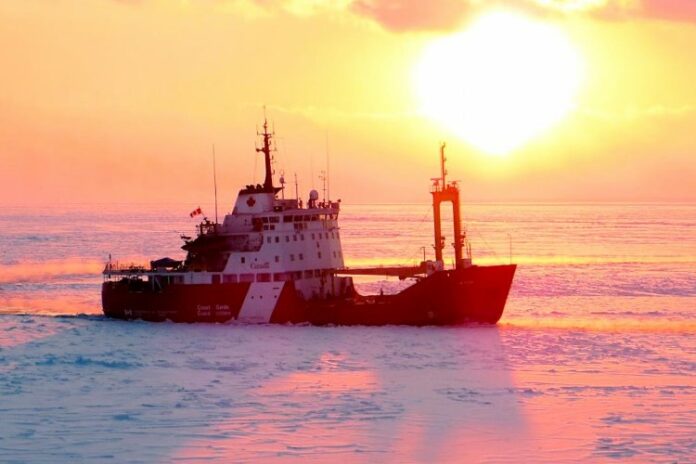
ABB’s services will cover ABB technology installed on board CCG’s icebreakers, search & rescue vessels, fishery science, ocean science and specialty ships. Among these ships are four medium icebreakers and six light icebreakers and buoy tenders.

ABB services included in the NISO were tailored to the specific needs of CCS’s vessels. ABB service agreements are applicable across a range of segments with fully customizable packages based on the critical aspects of a customers’ operations. Having all services under one agreement gives shipowners and operators the benefits of cost predictability, better planning and risk management. Regardless of vessel type or operating profile, comprehensive service agreements can increase ship uptime and lifespan, as well as improving safety, security and sustainability by optimizing operations.

Nexans and Bureau Veritas announce offshore wind project & risk management partnership

0

Bureau Veritas (BV), a world leader in testing, inspection, and certification, and Nexans, a global player in electrification, have signed a partnership agreement to reduce risk and promote best practices for turnkey deliveries of high voltage power cables used for connecting offshore wind farms (OWF) to onshore grids.

The offshore wind sector is developing rapidly, and substantial growth is expected for decades to come. At the same time, insurers’ studies confirm that high voltage power cables are among the most critical elements of offshore wind farms.

Reliability of high voltage power cables end-to-end solutions, including installation, becomes an essential enabler for the current and the next generation of cables required to capture energy in deeper water. Bureau Veritas and Nexans will partner to address this challenge and build trust for all stakeholders.

Nexans provides high voltage cables to transfer the energy generated by offshore wind farms. Nexans is at the forefront of best practice in the industry with end-to-end solutions and has an extensive track record of projects delivered to the offshore wind industry – including the first commercial floating wind farm.

As offshore wind farm installations are further away from shores and in deeper waters, the risk of failures could increase making reliability on quality of cables and their installation key. Nexans and Bureau Veritas partnership builds on Bureau Veritas’s maritime expertise and extensive experience in risk management to help the offshore wind sector reduce operational risk.

With thorough risk management and compliance with industry best practices, Bureau Veritas can offer its assurance on Nexans end-to-end Engineering, Procurement, Construction and Installation (EPCI) operational model. Effectively managing risk provides operational assurance and reliability with less downtime, reduced repair and replacement costs, and increased trust. Thanks to this partnership, both Nexans’ customers and the offshore wind industry will continue to reduce risks within the sector.

Christopher Guerin, CEO Nexans, said:

“I’m happy to announce that we have entered into a long-term partnership with Bureau Veritas. Together, we will certify the Nexans “Way” of managing EPCI projects and risks, develop new standards for the offshore wind farm and interconnection industry, reduce the risk profile of such projects and develop improved standards.”

Matthieu de Tugny, Executive Vice President Marine & Offshore at Bureau Veritas, said:

“At Bureau Veritas, we help shape a world of trust. By creating standards and verifying all criteria are met, we can help Nexans build further trust. Our marine expertise and experience in risk management and subsea to surface connections combined with state-of-the-art software tools will make this collaboration a success.”

Neptune Energy: appraisal well confirms significant discovery at Dugong

0

The adjusted resource range is based on results from the recent successfully completed appraisal well (34/4-16 S). The main objective of the well was achieved by establishing the oil water contact.

Neptune’s revised estimate of the indicative recoverable resources is 40-108 million barrels of oil equivalent (mmboe), which will be subject to further detailed analysis and review. A drill stem test on the well is planned at a later stage.

The discovery will be linked to nearby infrastructure or developed as a stand-alone development. Dugong is located 158 kilometres west of Florø, Norway, at a water depth of 330 metres, and is close to the existing production facilities of the Snorre and Statfjord fields. The reservoir lies at a depth of 3,250-3,500 metres. The primary appraisal target for the well 34/4-16 S was to delineate the discovery made in the Rannoch formation in well 34/4-15 S and 34/4-15 A.

The Dugong licence partners are Neptune Energy (operator and 45%), Petrolia NOCO (20%),  Idemitsu Petroleum Norge (20%) and Concedo (15%).

Ørsted and NOAA sign industry first data sharing agreement

0

Ørsted has announced that it has signed a Memorandum of Agreement (MOA) with NOAA to share physical and biological information and data in Ørsted-leased waters subject to U.S. jurisdiction. The agreement is the first of its kind between an offshore wind developer and NOAA.

NOAA, a division of the U.S. Department of Commerce, provides the country with weather, water, and climate data, as well as forecasts and warnings for the protection of life and property, the sustainable management of the nation’s marine fisheries and conservation of protected resources, and enhancement of the national economy. Ørsted relies on collected data from the waters it leases to be used in the analysis, development, construction, and operation of the company’s offshore projects. The data Ørsted collects and shares will contribute to NOAA’s data analysis efforts, which will translate into lifesaving information supporting America’s coastal resilience.

David Hardy, CEO Ørsted Offshore North America, said:

“Ørsted believes in making a concerted effort to work with all stakeholders to grow key learnings and work from a complete data set to better protect our planet. Climate change is a reality, and we are proud to work with NOAA to provide crucial information and to demonstrate how our industry can be stewards of our oceans while providing American individuals and businesses with clean, renewable energy.” 

The data Ørsted collects, and will share under this MOA, is used for environmental site characterization to inform project development. Ørsted’s contributions are meant to support NOAA’s mission to understand and predict changes in climate, weather, oceans, living marine resources, and coasts.

Ben Friedman, NOAA’s acting administrator, said:

“This partnership with industry is delivering data Americans use for business, science, and education, while at the same time mitigating effects of climate change. Our ocean, coastal, and Great Lakes resources are critical to national security and well-being, and NOAA is pleased to work with willing partners to understand and maximize the potential of these national assets.”

The physical and biological information data falls under the following themes:

  • Air quality, water quality, and emissions;
  • Biological communities;
  • Meteorology;
  • Coastal and ocean currents, circulation, and waves;
  • Hydrographic services and mapping; and,
  • Physical oceanography.

Offshore wind energy is poised to provide significant environmental and economic benefits for the United States. The nation’s needs for secure and sustainable energy require quality data and science to better understand and predict the ecological, economic, and societal consequences of particular energy choices, as well as the effectiveness of strategies for minimizing environmental impacts and maximizing energy efficiency, particularly in waters subject to U.S. jurisdiction.

As part of the agreement, NOAA will share its publicly available data with Ørsted. Together, these data and information resources will be used to plan and ensure the effective deployment, sustainable operation and maintenance,  and the efficient use of weather-dependent and oceanic renewable energy technologies and infrastructure.

In addition to direct data share, Ørsted will identify further opportunities with NOAA’s Technology Partnership Office to foster preeminent science and technological innovation that can support NOAA and the Department of Commerce’s goals to stimulate sustainable growth in the U.S. blue economy. The MOA will run through Sep. 30, 2025. 

SMD delivers £multi-million SeaRex upgrade for Prysmian

0

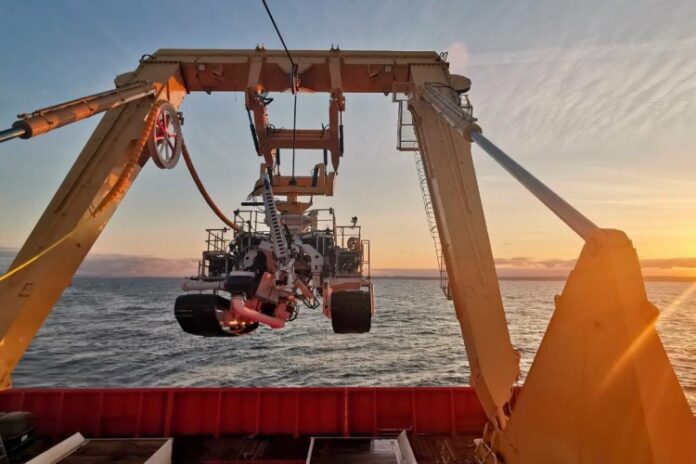
The project has seen the delivery of two new state-of-the-art cassettes for the upgraded BT2100 SeaRex tracked vehicle, including a wheel cutter and a chain cutter, enabling the trenching of power and telecommunication cables in ground ranging from dense sand, stiff clay and rock, in both shallow and deep water. The BT2100 SeaRex vehicle was first commissioned by NSW (now part of Prysmian Group) from SMD in 2012.

The new chain cutter cassette, capable of cutting a trench 700mm wide and 2.5m deep, was delivered in August 2020 and has already been deployed on an interconnector power cable between the Greek island of Crete and mainland Greece. The wheel cutter is capable of cutting a trench 450mm wide and 1.5m deep. Both cassettes will handle and trench power cables up to 350mm diameter with a unique loading mechanism that minimises the lifting height and therefore contact stresses on the power cable. This design has been developed in partnership with Prysmian to handle both light and heavy weight cables for high voltage power transmission. Safe handling of the product is at the heart of any successful vehicle design.

Both wheel and chain cassettes are interchangeable with existing pre-lay tools and these additions have re-launched SeaRex into the trenching market as a very capable and versatile multi-functional tool. The upgrades to SeaRex draw on SMDs 50 years of experience in designing and manufacturing heavy duty trenching vehicles to provide a reliable solution for protecting power cables in hard ground. Its cassette tooling and innovative design allows customers to invest in core vehicles in the knowledge that they can be repurposed in the future.

Commenting on the project, Robert Eddon, Key Account Manager from SMD, said:

“The SeaRex was first commissioned by NSW in 2012 and the upgrade represents another milestone in our longstanding relationship. Over the years we have designed and manufactured ploughs, trenching ROVs, LARS and a range of multi-functional tools and attachments for Prysmian. The reliability and quality of our equipment is key to maintaining the confidence of our clients.”

A spokesperson for Prysmian said:

“The conversion of our SeaRex to enable post-trenching mode represents one of the most advanced post-lay burial vehicles in the market. Its capabilities in protecting cables within a hard seabed adds new features to Prysmian’s portfolio of assets, providing customers with a quality service.

SeaRex’s unique cable loading and unloading design, soil cutting power management, and trench cleaning system has been designed in close collaboration between Prysmian and SMD. The project merges the subsea technology design leader with the knowledge of the world-leader in cable manufacturing and installation, providing a unique solution to safely protect high-value cables in complex environments.”