-6.4 C
New York
Home Blog Page 567

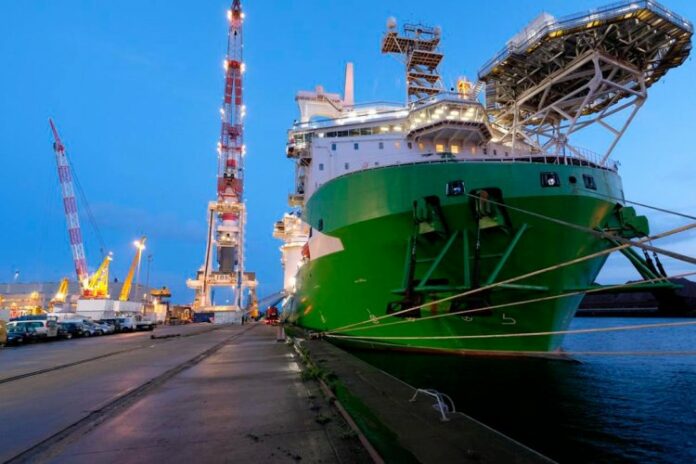
BC Ferries fourth hybrid electric island class ferry arrives at Ogden Point

0

Under its own power, Island 4 departed Damen Shipyards Galati in Romania in early June. 

The Island Class are battery-equipped ships designed for future full electric operation. The ships are fitted with hybrid technology that bridges the gap until shore charging infrastructure and funding becomes available in B.C. From the exterior details to the engines, the design of the new vessels reduces underwater radiated noise, lowers emissions and improves customer service.

Upon arrival at Point Hope Maritime BC Ferries will take ownership of the vessel. With two identical Island Class vessels already in service, BC Ferries is beginning to realize the benefits of standardization. Dock fits and crew familiarization for Island 4 is well underway, reducing logistical, operational, training and maintenance costs, contributing to a more efficient ferry system overall. Island 3 began its voyage under its own power on May 19 and arrived in Victoria, British Columbia on July 22.

The arrival of these new vessels will allow Quadra Island and Gabriola Island to each be serviced by two Island Class vessels. BC Ferries looks forward to officially naming the vessels later this summer and celebrating with the communities, when the time is right.

Russian investigators probe big Black Sea oil spill

0

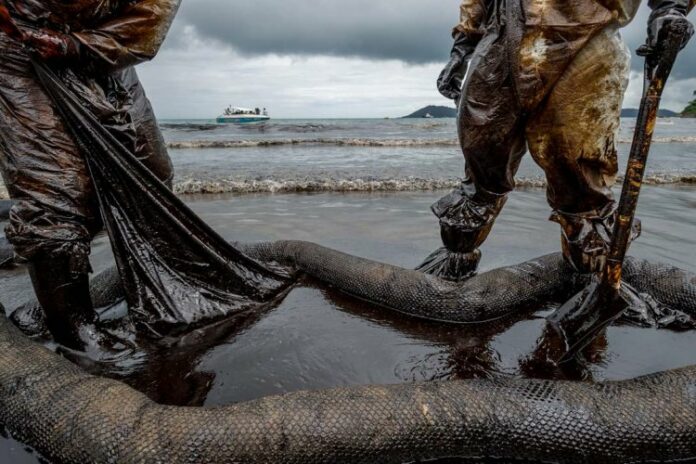
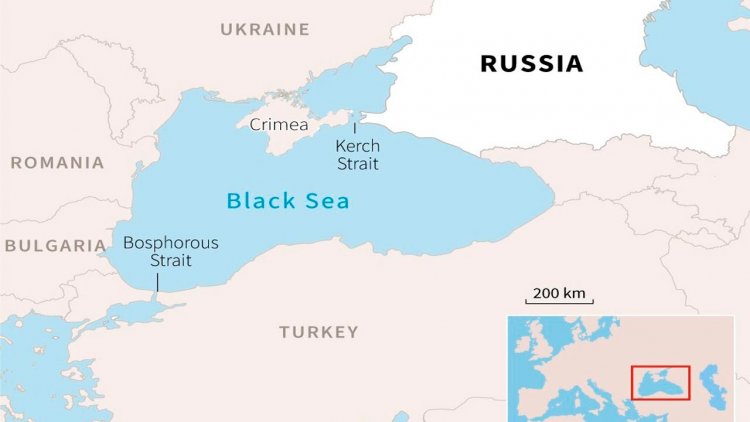
Russia’s top criminal investigation agency on Thursday probed an oil spill off the country’s Black Sea coast that appeared hugely bigger than initially reported.

The spill occurred over the weekend at the oil terminal in Yuzhnaya Ozereyevka near the port of Novorossiysk that belongs to the Caspian Pipeline Consortium, which pumps crude from Kazakhstan. The oil spilled while being pumped into the Minerva Symphony tanker, which sails under the Greek flag.

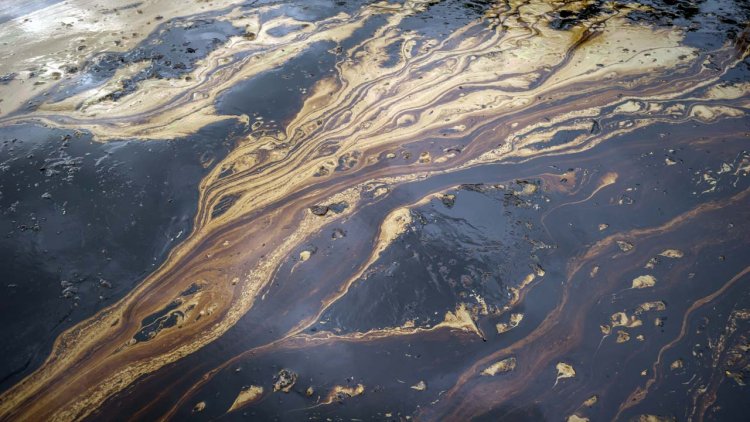
Authorities initially estimated that the spill covered only about 200 square meters (2,153 square feet), but Russian scientists said Wednesday after studying satellite images that it actually covered nearly 80 square kilometers (nearly 31 square miles).

WWF Russia has estimated that about 100 metric tons of oil have spilled into the sea.

“Despite the prompt involvement of rescue teams, the oil spread over a colossal area,” the WWF said on Facebook, adding that marine wildlife could be affected.

Aleksei Knizhnikov, head of the responsible industry programme at WWF Russia, said the slick was drifting north, having already reached Abrau-Dyurso—famed for its wine-making industry—and might later reach the Utrish Nature Reserve.

“We can say that there is no objective information about the scale of the spill on the part of regulatory authorities,” he told AFP.

The Investigative Committee, the country’s top criminal investigation agency, said Thursday it was conducting a probe on charges of inflicting significant damage to marine biological resources. The committee said it performed searches at the Caspian Pipeline Consortium and inspected the area for damage.

Russian media said traces of oil were spotted along the scenic Black Sea coast, including Abrau-Dyurso and a dolphin aquarium in Bolshoy Utrish, 25 kilometers (15 miles) to the west, where workers urgently put up barriers to protect the mammals. The spill’s oily film was also spotted in the resort city of Anapa, further west down the coast.

Veniamin Kondratyev, the governor of the Krasnodar region, sought to downplay the impact of the spill, saying that he and other officials flew over the area in a helicopter and saw no trace of it at sea. 

“Quick measures were taken to eliminate the consequences,” Kondratyev said, according to the Interfax news agency.

The governor later met with the head of the Caspian Pipeline Consortium, who assured him that the sea has remained clean thanks to quick efforts to contain the spill.

by Vladimir Isachenkov, Anna Smolchenko

Port of Corpus Christi announces carbon-neutral hydrogen production facility

0

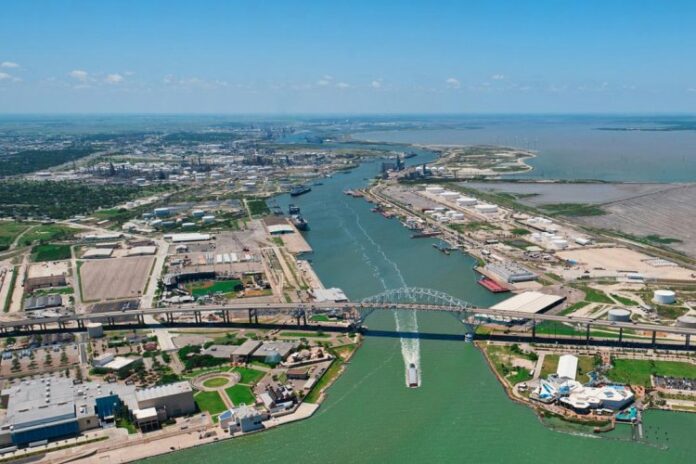
The Port of Corpus Christi Authority (Port of Corpus Christi) and Howard Midstream Energy Partners, LLC  (Howard/HEP) have executed a Memorandum of Understanding (MOU) stating their intention to convert Howard’s Javelina refinery services facility into the region’s first carbon-neutral hydrogen production facility.

Howard’s Javelina facility is strategically positioned in the Port of Corpus Christi with pipeline connectivity to all six of the local refineries. Javelina controls approximately sixty million cubic feet per day (MMcf/d) of hydrogen production through a combination of hydrogen entrained in the refineries’ waste gas that the facility processes, and hydrogen produced through a steam methane reformer process. This hydrogen is currently sold back to refineries and other industries where it is used to remove impurities like sulfur during the refining process. The Port of Corpus Christi and Howard ultimately hope to scale hydrogen production for exports to overseas demand centers.

Mike Howard, HEP Chairman and Chief Executive Officer, said:

“With this exciting project and progressive partnership with the Port of Corpus Christi, we are demonstrating yet again our commitment to delivering clean, reliable energy that powers communities and business around the world.”

Hydrogen is a flexible energy carrier with high energy density. It has many of the same applications as traditional fossil fuels yet produces no carbon emissions. It can be combusted directly or used in fuel cells and offers the most viable path to reducing emissions in the steel, cement and shipping industries. Hydrogen atoms can be separated from water (H2O) or from natural gas (CH4), the latter of which is in abundance at the Port of Corpus Christi due to direct connections to the Permian Basin and Eagle Ford Shale production fields.

According to the MOU, Howard intends to capture its carbon emissions at Javelina, avoiding atmospheric release which contributes to global warming. The Parties will collaborate to identify uses for the residual CO2 as well as capture and storage options. Captured CO2 can be directed to industries that require it for production, such as steel, or that assimilate it, like cement.

The Port of Corpus Christi is uniquely suited to become the nation’s premier carbon capture and sequestration management hub based on the high density of industrial CO2 emitters, a robust network of existing pipeline infrastructure, and the Port Authority’s ownership of lands leading to state waters in the Gulf of Mexico. Academics from the University of Texas at Austin have mapped the geology of the Texas Gulf Coast and have determined this region is uniquely suited for injection and storage of pressurized CO2. The Port of Corpus Christi has committed to developing much needed infrastructure to collect and pressurize CO2 for injection in permanent geological storage formations offshore in the Gulf of Mexico.

Jeff Pollack, Chief Strategy and Sustainability Officer for the Port of Corpus Christi, said:

“To the extent that our identity as the leading export gateway for U.S. produced hydrocarbons has been solidified, we see an elegant symmetry in the prospect of becoming the nation’s premier hub for carbon management.”

On August 7, the Intergovernmental Panel on Climate Change (IPCC) released its Sixth Assessment Report which calls for immediate, unified and aggressive action if the nations of the world are to avoid the most dire impacts of climate change, such as devastating drought and more frequent and intense storms. The report defines the imperative for elimination of all CO2 emissions by 2050 and for the development of infrastructure to capture and permanently store carbon.

In the wake of the IPCC report, the Port of Corpus Christi has redoubled its commitment to lead atmospheric decarbonization of the energy sector and to embrace the energy transition.

Sean Strawbridge, Chief Executive Officer for the Port of Corpus Christi, said:

“The mandate in the latest IPCC report is clear, and while the energy sector certainly can’t shoulder this responsibility on its own, we must lead by example. Our future as the ‘Energy Port of the Americas’ starts with building a scalable carbon capture and storage solution to serve the needs of our existing customers and convert more Texas gas into carbon neutral hydrogen for the global markets.”

 

DP World Australia secures international shipping service with T.S. Lines

0

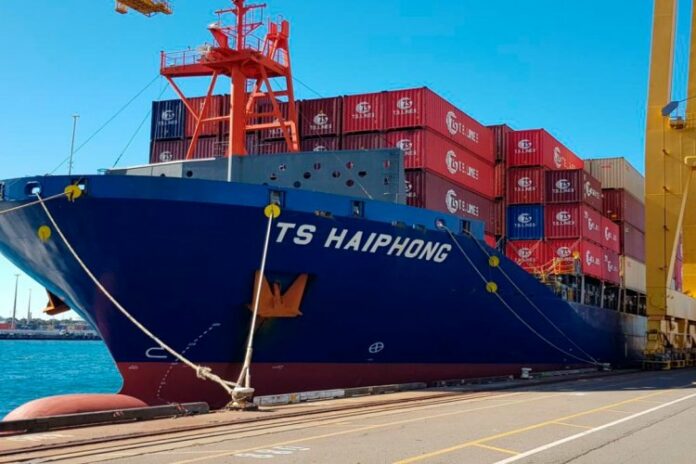
DP World Australia has secured a new contract with international carrier, T.S. Lines, to welcome a new international shipping service into Australia. 

The new commercial freight service commenced with the arrival of the T.S Haipong at the DP World Sydney Terminal, with future shipments secured to call on our Sydney, Melbourne and Brisbane Terminals, due their strategic proximity to the consumer market.

With direct weekly sailings from China to Australia, this major international shipping service has a 42-day rotation to provide additional capacity to support an increase in the demand of imported goods.

The 6 vessels will connect Australia’s leading terminals to China’s Qingdao, Shanghai and Ningbo ports and strengthen our existing partnership with T.S. Lines further and their confidence in the Australian market.

Andrew Adam, CEO of DP World Australia said:

“In a highly competitive market, locally and globally, securing this new shipping service with T.S. Lines reinforces our service performance levels, which continue to see minimal delays at our ports.

With enterprise agreements finalised at DP World, this further reinforces our position within the industry as leaders in delivering superior market service levels for our customers and look forward to a long-term partnership with T.S Lines”

Alan Sims, Director of Seaway, agents for TS Lines in Australia said:

“We are pleased to introduce TS Lines’ new CA2 service into Australia, further building on our capacity and service to our customers. We are confident the CA2 will be well received given the growing demand in our trade-lane. We look forward to continuing our strong relationship with DP World Australia and their clear focus on service delivery”

Magseis Fairfield awarded a large, five-month OBN survey in Asia

0

Magseis Fairfield has been awarded a large Ocean Bottom Node survey in Asia for an undisclosed customer. The survey will be performed using the Z700 node technology.

CEO Carel Hooijkaas says:

“With this significant contract award, we have expanded our presence beyond our core areas of the North Sea and the Gulf of Mexico into Asia, where we expect to see more OBN surveys in the years to come.

This award is a testimony to our people, knowledge, and superior technology, and represents a material addition to our backlog. The revenue generation from this project will reflect that it requires our full Z700 inventory and two node handling vessels and will therefore be equivalent to ten single node handling vessel acquisition months.

As the project will be executed during the winter months in the fourth quarter 2021 and the first quarter 2022, we maintain our Z700 crew availability for the 2022 North Sea season.”

MWS Award for Germany’s Baltic Eagle OWF

0

AqualisBraemar LOC (ABL) has recently been awarded a contract by Baltic Eagle GmbH, a project company of Spanish multinational Iberdrola group, to provide Marine Warranty Survey (“MWS”) services for the Baltic Eagle Offshore Wind Farm (“OWF”) project.

As part of the MWS services, ABL’s scope of work will include providing expert technical review and approval of documents, operations and vessels relating to both transportation and installation of Wind Turbine Generators (WTG), Foundations (FOU), Inter Array Cables (IAC) and Offshore Substation (OSS) packages.  

The Baltic Eagle will be a major offshore wind farm in Germany, located 30 km from the shore of the island of Rügen. Consisting of 50 turbines, the OWF will have a combined capacity of 476 MW, sufficient to power 475,000 homes.

ABL along with its group company OWC (The Offshore Wind Consultants), is actively involved in the German offshore wind market, with a project track-record of over 20 offshore wind farms and a combined capacity of over 9GW to date.

The work will be managed by ABL’s German operations, based in Hamburg.

Emek Ersin Takmaz, General Manager at ABL Germany, said:

“To have such a significant appointment on a major offshore wind project just 2 years after the operning of ABL Germany is an important milestone for us. ABL Group has a strong history of supporting offshore wind farm construction providing engineering, advisory and MWS services across different stages of the project life cycle. We are happy to have the full trust of our client Iberdrola and we are looking forward to supporting the project with a world class services.”

Iris Stempfle, Country Manager for Iberdrola in Germany, said:

“Iberdrola is one of the leading developers contributing to the energy transition by investing in offshore wind projects around the globe – in Germany, our Baltic Hub will have an installed capacity of 826 MW by the end of 2024. Tapping into the expertise of AqualisBraemar LOC (ABL) makes us confident that Baltic Eagle offshore windfarm will be delivered as planned.”

“Norwegian Prima” floated out in Marghera

0

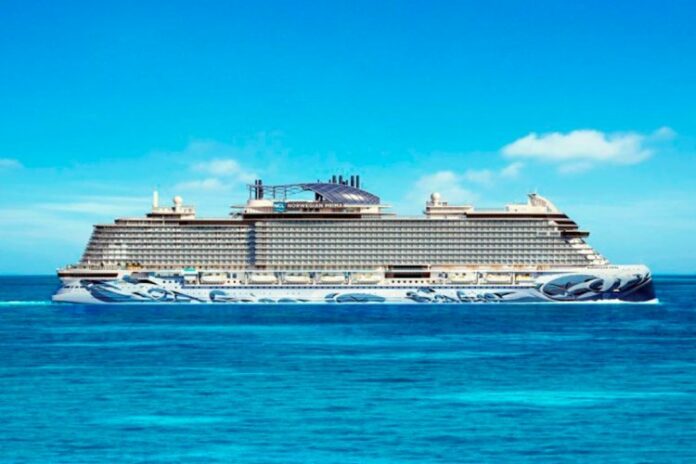
“Norwegian Prima”, the first of six vessels of Norwegian Cruise Line’s (NCL) new Prima Class of ships was floated outat the shipyard in Marghera (Venice).

NCL is part of Norwegian Cruise Line Holdings Ltd. The US-based company is one of the world’s leading cruise lines.

Along with her sister-ships, “Norwegian Prima” will form the backbone of the future NCL fleet, being more than 142,500-tons, almost 300 meters long, and accommodating 3,215 guests. Deliveries are scheduled between 2022 and 2027.

The class is based on a prototype project developed by Fincantieri, which enhances the consolidated features of NCL’s signature offering of freedom and flexibility, qualified by an innovative configuration for an enhanced passenger experience. In addition, focus was set on energy efficiency, with the twofold aim of optimizing consumption at sea and reducing environmental impact, compliant with all the most recent regulations on this matter.

Besides NCL, Norwegian Cruise Line Holdings Ltd. operates the Regent Seven Seas Cruises brand, to which Fincantieri has delivered in Sestri Ponente (Genoa) the ultra-luxury ships “Seven Seas Explorer” in 2016 and “Seven Seas Splendor” in 2020 in Ancona, as well as Oceania Cruises, for which the Group has in its orderbook two new generation cruise ships, worth over 1 billion euros, which will start the “Allura-class”.

Huisman to deliver installation tools for DEME’s offshore installation vessel Orion

0

Huisman has announced the signing of a contract with DEME for the delivery of a 2,300mt Lifting Spreader and a set of adaptive Damping Tugger Winches. These tools will be installed onboard DEME’s Offshore Installation Vessel Orion.

Huisman and DEME have worked together on the optimisation of the spreader’s design in order to increase safety and efficiency of monopile installation. The unique design enables hands-free sling handling of monopiles, controlled remotely, and powered by an exchangeable battery pack. The Lifting Spreader is designed for the installation of next generation monopiles and can be extended in order to handle 120m long monopiles with a diameter of up to 12m.  

In order to ensure maximum control of the monopiles during installation, Huisman will additionally deliver a set of remote operated, adaptive Damping Tugger Winches. Thanks to the in-house developed damping algorithm, these winches actively supress sway motion of the monopile during lifting operations, increasing workability and safety.

The Lifting Spreader is one of the installation tools of Huisman that can be connected to the Universal Quick Connector, by using a standardised pin interface, contributing to the operational effectiveness of a crane. 

David Roodenburg, CEO of Huisman:

“We thank DEME for their ongoing confidence in Huisman to support them in safe and efficient execution of their offshore wind projects, now and in the future. This order is another step in our ambition to drive down the development costs and speed up the delivery of offshore wind farms. To ensure a timely and cost-competitive delivery of these tools, we will deploy our engineering and production capacity in the Netherlands and Czech Republic.” 

Marine bacteria in Canadian Arctic capable of biodegrading diesel and oil

0

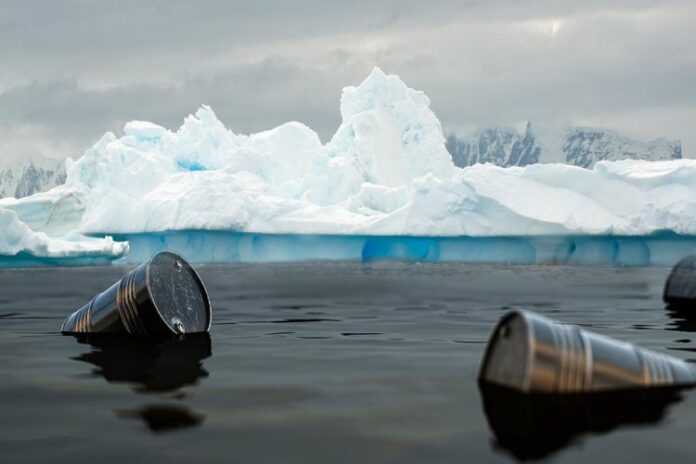
Marine bacteria in the frigid waters of the Canadian Arctic are capable of biodegrading oil and diesel fuel, according to a new study published in Applied and Environmental Microbiology, a journal of the American Society for Microbiology.

Genomic sequencing revealed unexpected potential for hydrocarbon bioremediation in lineages of bacteria including Paraperlucidibaca, Cycloclasticus, and Zhongshania, said coauthor Casey Hubert, Ph.D., Associate Professor of Geomicrobiology, University of Calgary. These “may represent key players in the response to Arctic marine oil spills.”

Dr. Hubert said:

“The study also confirmed that providing nutrients can enhance hydrocarbon biodegradation under these low temperature conditions.”

The impetus for this work: these permanently cold waters are seeing increasing industrial activity related to maritime shipping and offshore oil and gas sector activities.

Sean Murphy, Dr. Hubert’s student, who grew up in the region, instigated the project. Mr. Murphy, Aquatic Scientist, ERM Canada, had noted both the benefit offshore oil had brought to the people of Newfoundland and Labrador, but had been deeply troubled by the Deepwater Horizon oil spill, and had focused his masters research on the Labrador Sea to “help inform future oil spill mitigation strategies… at cold temperatures in the region.”

The Labrador coast—where the study took place—is important for Indigenous peoples who rely on the ocean for food, and unlike at lower latitudes, there’s been a dearth of research on bioremediation this far north, Dr. Hubert noted.

Dr. Hubert said:

“As climate change extends ice-free periods and increasing industrial activity takes place in the Arctic, it is important to understand the ways in which the Arctic marine microbiome will respond if there is an oil or fuel spill. Th is region remains vast and remote such that oil spill emergency response would be complicated and slow.”

In the study, the investigators simulated oil spill remediation inside bottles, by combining mud from the top few centimeters of seabed with artificial seawater, and with either diesel or crude oil, along with different nutrient amendments at different concentrations.

The experiments were performed at 4°C, to approximate the temperature in the Labrador Sea, and took place over several weeks. 

Dr. Hubert said:

“Our simulations demonstrated that naturally occurring oil-degrading bacteria in the ocean represent nature’s first responders to an oil spill.”

Port of Sines invests in pilot training for new megacarriers

0

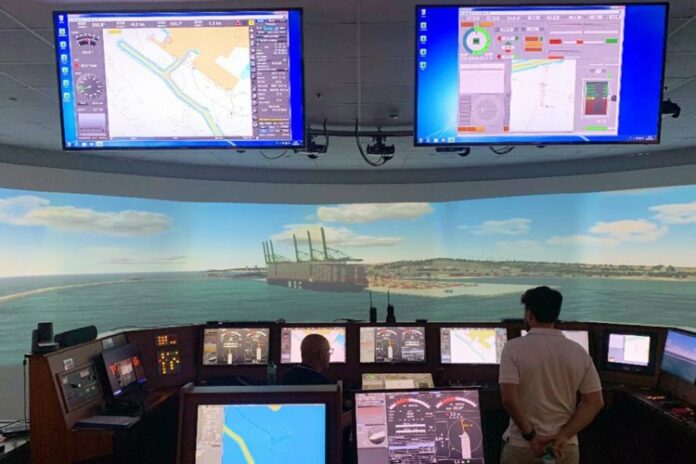
The pilotage staff of the Port of Sines is participating in a training simulator that aims to evaluate risk and resources to perform maneuvers of container ships with a capacity of up to 23,000 TEU (20-foot containers) and lengths between 366 and 399 meters.

The training takes place in Sorrento, Italy, at the MSC – Mediterranean Shipping Company Training Center, one of the main operators at the port, and is divided into three groups spread over August, September, and October.

The parameterised scenarios simulate the geophysical characteristics of the Port of Sines, creating situations in various operating contexts, from extreme weather conditions to the possibility of emergency due to technical failure and testing of new ship models, ensuring increased efficiency and optimisation of maneuvers.

Part of the Port of Sines Strategic Plan and the planned and ongoing investments, such as the third phase of expansion of Terminal XXI, the expansion of the East Breakwater and the new Vasco da Gama Terminal, this action translates into the improvement of skills and the progressive qualification and advanced training of all staff, strengthening the ability to receive the world’s largest ships, which already call Sines today.