-7.6 C
New York
Home Blog Page 531

South Africa wants to explore Antarctica using Ukrainian icebreaker

0

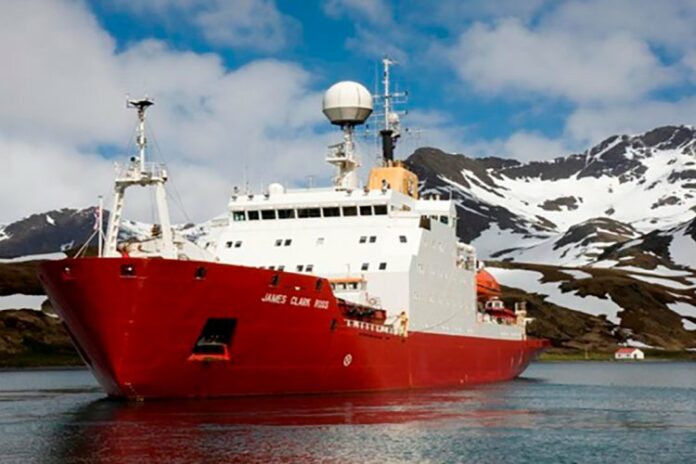
Scientists from South Africa are interested in conducting joint research of Antarctica and the Southern Ocean together with Ukrainian scientists, in particular, using the capabilities of the new research icebreaker.

This was discussed during the meeting of the First Deputy Minister of Education and Science of Ukraine Andriy Vitrenko with the Ambassador Extraordinary and Plenipotentiary of South Africa Mr. Andre Johannes Groenewald.

Previously, Ukraine and South Africa did not cooperate in the field of polar research, although the Republic of South Africa is one of the first signatory countries to the Antarctic Treaty 1959 and so far, the only African state that has a developed national research program in Antarctica.

For example, the South African scientific station SANAE IV, located in East Antarctica, on Queen Maud Land, is designed for the simultaneous work of up to 80 scientists during the summer season and is an important laboratory for observing natural phenomena occurring in space, atmosphere and the Earth’s electromagnetic field, as well as in the Earth’s crust. The icebreaker S.A. Agulhas II built in 2012 and equipped with special deep-sea probes, an underwater observatory and a meteorological laboratory is used for the needs of the South African Antarctic expeditions.

Ukraine has one base in Antarctica, the Antarctic Akademik Vernadsky station. It is located on Galindez Island, near the west coast of the Antarctic Peninsula. For almost 74 years in a row, the research base has been conducting continuous environmental research. The chain of climate observations has not been interrupted here since 1947. This is a remarkable scientific study that no other station can boast of.

Thus, the combination of the scientific and infrastructural potential of Ukraine and South Africa will provide new opportunities for the development of Antarctic research both at the level of the two countries and at the level of the world community.
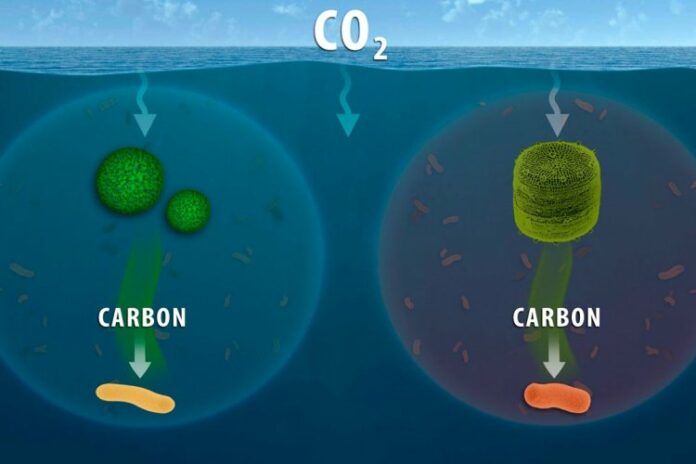

Microbiology researchers further understanding of ocean’s role in carbon cycling

0

Ryan Mueller, associate professor in OSU’s Department of Microbiology and the leader of the study, said:

“The research is an important step toward forecasting how much carbon will leave the ocean for the atmosphere as greenhouse gas carbon dioxide and how much will end up entombed in marine sediments.”

Findings were published in the Proceedings of the National Academy of Sciences.

Brandon Kieft, the first author, a recent Oregon State Ph.D. graduate who is now a postdoctoral researcher at the University of British Columbia, said:

“Our research shows that different species of microbes in the ocean are very particular yet predictable in the food sources they prefer to eat. As global climate change continues to alter oceanic environments at a rapid pace, the availability of food sources for microbes will also change, ultimately favoring certain types over others.”

Phytoplankton are microscopic organisms at the base of the ocean’s food chain and a key component of a critical biological carbon pump. Most float in the upper part of the ocean, where sunlight can easily reach them.

The tiny autotrophic plants—they make their own food—have a big effect on the levels of carbon dioxide in the atmosphere by sucking it up during photosynthesis. It’s a natural sink and one of the primary ways that CO2, the most abundant greenhouse gas, is scrubbed from the atmosphere; atmospheric carbon dioxide has increased 40% since the dawn of the industrial age, contributing heavily to a warming planet.

Mueller said:

“We’re studying the consumers—the heterotrophic microbes—of the organic material made by the primary producers, the microbial phytoplankton. Both groups are microbes, the former primarily consumes organic carbon as a food source, while the latter ‘fix’ their own organic carbon. Microbes form the basis of the food web and biological carbon pump, and our work is primarily focused on exploring what the consumers are doing in this system.”

The surface ocean stores nearly as much carbon as exists in the atmosphere. As the ocean pulls in atmospheric carbon dioxide, phytoplankton use the CO2 and sunlight for photosynthesis: They convert them into sugars and other compounds the cells can use for energy, producing oxygen in the process.

This so-called fixed carbon makes up the diet of heterotrophic microbes and higher organisms of the marine food web such as fish and mammals, which ultimately convert the carbon back to atmospheric CO2 through respiration or contribute to the carbon stock at the bottom of the ocean when they die and sink.

The collective respiratory activity of the heterotrophic microbial consumers is the main way that fixed dissolved organic carbon from phytoplankton is returned to the atmosphere as CO2.

Mueller, Kieft and collaborators at the Oak Ridge and Lawrence Livermore national laboratories and the universities of Tennessee, Washington and Oklahoma used stable isotope labeling to track carbon as it made its way into the organic matter produced by the phytoplankton and, ultimately, the heterotrophic microbes that consume it.

The scientists used those isotopes to tell which organisms were eating diatoms and which were consuming cyanobacteria, two species of phytoplankton that combine to produce a majority of the ocean’s fixed carbon. The researchers could also tell when the consumption was happening—for example, at times the phytoplankton cells were producing substances known as lysates during their death phase or exudates during their growth phase.

Kieft said:

“Our findings have important implications for understanding how marine microbes and photosynthetic algae function together to impact global carbon cycling and how this oceanic food web may respond to continued environmental change. This will help us predict how much carbon will go back into the atmosphere and how much will be buried in marine sediments for centuries.”

MPA launches Notation for Singapore Registry of Ships

0

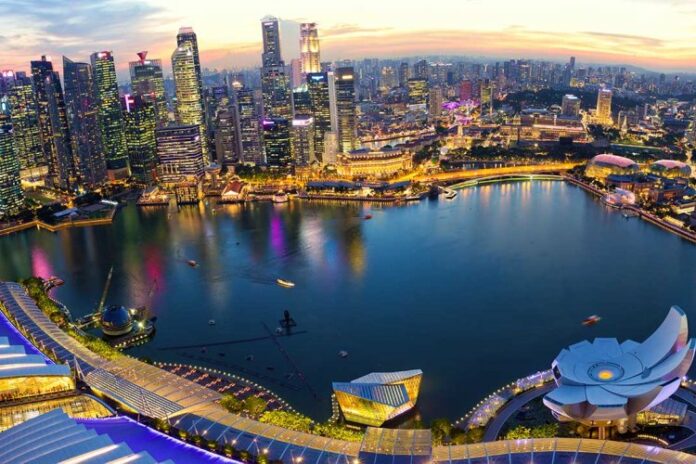
The Maritime and Port Authority of Singapore (MPA) will roll out the SRS Notation initiative to recognise ship owners and operators who voluntarily incorporate solutions to drive digital transformation, strengthen cyber security, enhance well-being of seafarers and pursue sustainable shipping. 

This was announced by Mr Chee Hong Tat, Senior Minister of State for Transport, at the 2021 SRS Forum today. Mr Chee noted that the SRS has come a long way from its humble beginnings in 1966, and had since grown into one of the largest, youngest, and highest-quality fleets in the world. 

To be rolled out on 1 November 2021, the SRS Notation covers four categories and is available to ship owners at no additional cost. Singapore-flagged vessels that fulfil the requirements for each of the categories will be issued a certificate of recognition and their details will be published on the MPA website to enhance their commercial attractiveness. The notation categories are:

  • “Smart” notation – awarded to vessels that adopt digital solutions to improve the safety and efficiency of shipboard operations, such as automation, advanced monitoring, and remote inspection.
  • “Cyber” notation – awarded to vessels that have adopted advanced cyber security measures to protect their key shipboard operational technology systems from cyber attacks. The four key systems are communication systems, propulsion, machinery and power control systems, navigation systems and cargo management systems.
  • “Welfare” notation – awarded to vessels equipped with good infrastructure and welfare amenities to enhance the quality of life for their crew.
  • “Green” notation – awarded to vessels that have implemented solutions to reduce their carbon emissions, such as usage of low- or zero-carbon fuels. Qualifying vessels will receive additional benefits what would be introduced from 2022, such as a reduction in initial registration fees and rebates on annual tonnage taxes during the qualifying duration.

MSC cooperates with Chinese Research Institute to promote decarbonisation

0

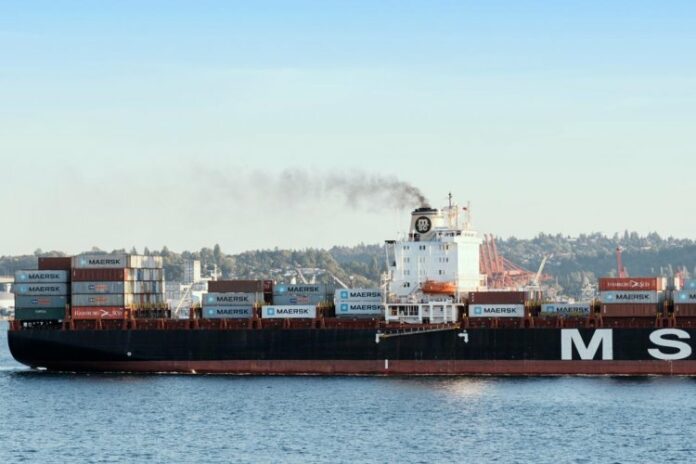
On 28 September, MSC and the China Waterborne Transport Research Institute, an agency under China’s Ministry of Transport, signed a Memorandum of Understanding (MoU) agreement to jointly promote decarbonisation and sustainable development of the shipping industry.

This is the first time MSC is partnering with a major institution in China to explore the technical pathway for decarbonisation.

The three-year agreement will leverage on the strengths of both parties to explore innovative ways to jointly cooperate on relevant research and activities,  and discuss progress to find the range of solutions that will make maritime transportation even more efficient while continuing to serve as the backbone of global trade.

Mr Bud Darr, Executive Vice President Maritime Policy and Government Affairs, MSC Group and Mr Fei Wei Jun, President of China Waterborne Transport Research Institute, signed the agreement in an online ceremony on behalf of both organisations. 

Darr said:

“The path to decarbonisation will require strong partnerships with key stakeholders across various business sectors and government. We are very excited to announce our partnership with the China Waterborne Transport Research Institute on this hugely important global priority. Sustainability and focus on climate issues have been fast-rising up the agenda in China, and we are looking forward to closely collaborating with the China Waterborne Transport Research Institute to accelerate innovation and R&D we urgently need to reach a net-zero carbon future for shipping.”

Under the MoU framework, both organisations will establish a collaborative process dedicated to R&D, knowledge sharing and business collaboration. A designated chairperson from each organisation will jointly lead the steering committee, with a working committee in charge of implementing the activities. Industrial experts will also be invited to conduct assessments on the results of the research studies.

A number of specific studies and projects are already lined up for the near future, including studies on the technical pathway and relevant policies for low-carbon development of the Chinese shipping industry, strategy and roadmap for the energy structure of shipping.

BV delivers AiP to the first LNG Bunkering Vessel concept developed in Malaysia

0

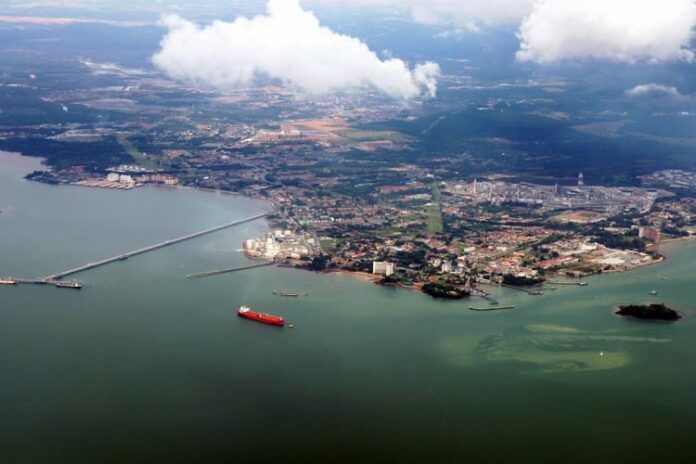
The development of LNG-fuelled ships is one of the key steps taken by the shipping industry to reduce its emissions and make the transition to a lower-carbon future. Meanwhile, the increased size of this new breed of LNG-fuelled ships is driving bunkering needs well beyond the capacity of LNG trucks previously used for smaller bunkering operations at terminals. This has led to the development of LNG Bunkering Vessels (LNG BVs).

The vessel design will reflect industry best practice, as well as the latest features for LNG bunkering operations to cater for all types and sizes of LNG-fuelled ships.

BV reviewed the design and confirmed that it meets the technical and regulatory requirements and safety standards. The vessel will integrate the most recent notations in terms of cyber management (CYBER MANAGED notation) and environment protection (CLEANSHIP, GREEN PASSPORT notations). The vessel will also have provision to incorporate a battery-hybrid for reducing its GHG emissions in future operations.

Datuk Capt Ahmad Sufian Abdul Rashid, LNG Marine Sdn Bhd Chairman, said:

“The demand for LNG as fuel in the South East Asia Region is set to increase, in line with IMO’s sustainability agenda and the industry’s wider push towards net zero carbon. Malaysia is a significant LNG bunkering hub, with over 100,000 vessels passing through the Malacca Strait each year. Moreover, the availability of two regasification terminals and one FSU along the shores of Malaysia will provide steady supply. The decision by LNG MARINE to get its conceptual design approved in principle is further reinforced by the fact that local shipping companies are keen to be part of the LNG bunkering cycle.”

David Barrow, Vice President for South Asia at Bureau Veritas Marine & Offshore, commented:

“Bureau Veritas has been working closely with the industry to understand and address the challenges of LNG bunkering. Our unique position across the whole LNG value chain has allowed us to actively participate in and support the latest developments of LNG BVs. It is an honour to support LNG MARINE in the first new-build LNG BV concept in Malaysia.”

ABS chosen by Allseas for their deep sea mineral collection project

0

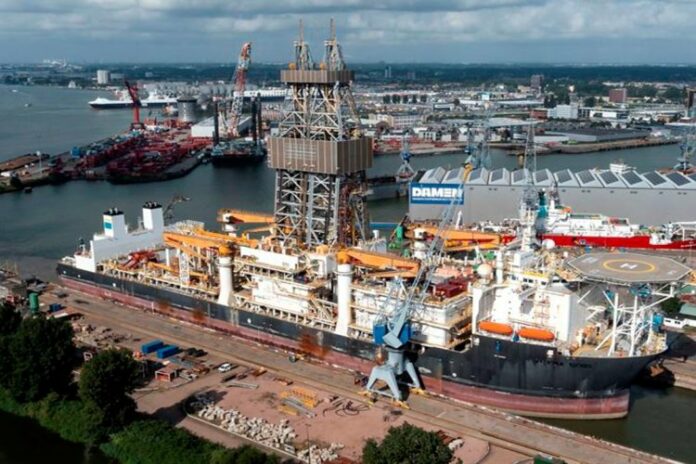
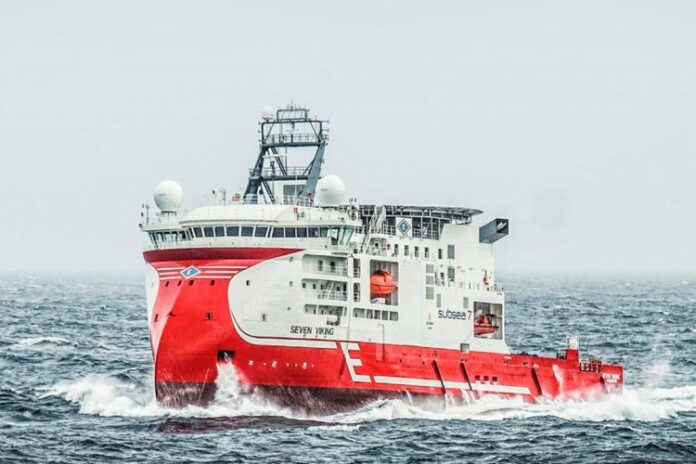
Allseas’ 228-meter Hidden Gem is being equipped with a deep-sea mineral collection system to recover polymetallic nodules from the ocean floor and transfer them to the surface for transportation to shore. The nodules contain high grades of nickel, manganese, copper and cobalt—key metals required for building electric vehicle batteries and renewable energy technologies. 

In partnership with The Metals Company, Allseas is developing the pioneering project entirely to their own, unique specifications, including a wholly self-designed subsea vertical transport system, a subsea collection vehicle, and a surface nodule handling and storage system.  The vessel will become the first to be classed as a subsea mining vessel by ABS.

Matt Tremblay, ABS Vice President, Global Offshore, said:

“This is a groundbreaking project that is advancing the frontiers of this emerging industry, which has such a vital role to play in supporting how the global market sources and manufactures sustainable technologies. The seabed is among the richest known sources for these vital metals, and we are proud to be able to support this approach to safely recovering them.”

Wärtsilä and Eidesvik to cooperate in world’s first ammonia conversion project

0

The technology group Wärtsilä and Norwegian ship owner Eidesvik Offshore ASA have signed a landmark cooperation agreement aimed at converting an offshore supply vessel (OSV) to operate with an ammonia-fuelled combustion engine with required fuel supply and safety system. 

The OSV considered for a retrofit currently has Wärtsilä dual-fuel engines operating primarily with LNG fuel. The conversion will allow the vessel to operate with a 70 percent ammonia blend. Wärtsilä has already successfully laboratory tested an engine fuelled with a 70 percent ammonia blend. The ultimate goal is to achieve operation with 100 percent ammonia and with a minimum ignition fuel requirement.

As a fuel, ammonia has the potential to drastically reduce emissions of CO2. Both Wärtsilä and Eidesvik have stated their commitment to supporting the industry’s efforts to decarbonise its operations.

Eidesvik CEO & President, Jan Fredrik Meling, said:

“Using ammonia as a fuel is seen as a key future contributor to shipping’s energy transition, and we’re excited to be the first offshore ship owner taking this step. This project is yet another confirmation of our strong reputation as a pioneer in implementing new environmental technologies in both newbuilds and the existing fleet.” 

Hans Petter Nesse, Managing Director of Wärtsilä Norway, said:

“Collaborating with Eidesvik on this groundbreaking project is an exciting and important step towards carbon-free shipping. Naturally we are also working with classification societies on measures to ensure safe and environmentally sustainable use. We are already well advanced in the development of ammonia as a viable marine fuel, and are actively working on other future carbon-free fuels as well. Our strong in-house competences are very much being utilised to support our commitment to decarbonising shipping.” 

Wärtsilä and Eidesvik are also partners in the EU-funded ShipFC project to equip a platform supply vessel, the ‘Viking Energy’ with a 2MW fuel cell running on green ammonia. The installation is scheduled to take place in late 2023.

This ammonia conversion project also ties in with one of the ongoing work streams of the Wärtsilä-led Zero Emissions Energy Distribution at Sea (ZEEDS) project, aimed at developing ammonia-powered newbuilds and converting suitable existing vessels.

Finnlines: Construction of the second new Superstar ro-pax began

0

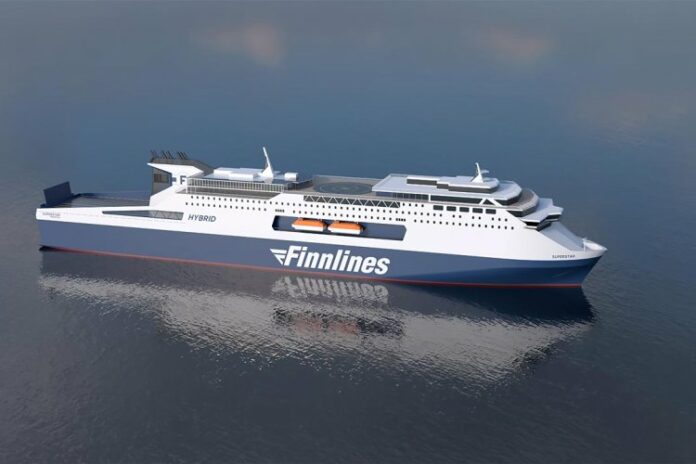
Finncanopus is the second vessel in the Superstar ro-pax series, the construction of which has now started. Construction of the first vessel, Finnsirius, started earlier this year. A total of two Superstars have been ordered.

The newbuilding programme proceeds and so-called mock-ups have been built  of cabins, as well as public spaces, to check and test the quality and fine-tune details. One of the shipbuilding traditions, keel-laying of Finnsirius, will be the next milestone in April 2022.

Freight is Finnlines’ core business. Drivers, who are frequent travellers on the Finland–Sweden line, will appreciate their own lounge, sauna and laundry.

Finnlines has combined the carriage of freight and passengers. When the new Superstar vessels enter traffic, the number of passengers will double. The interior has been designed to meet the needs of diverse customer segments and there will be more cabin categories than on Finnlines’ other ro-pax vessels. Passengers will have access to several restaurants, lounges, cafés, a spa and a gym. The spacious duty-free shop of around 400 m2 will have an extensive selection of goods.

Commercial travellers have been the major customer group until now, but the Superstar vessels will welcome a new customer segment, foot passengers. The purpose is not only to move from one place to another, but to also enjoy the sea voyage. A wide range of services will be available and the large panorama windows and a covered observation lounge will give an opportunity to enjoy the archipelago and sea views.

Finnlines is in the process of implementing its EUR 500-million eco-efficient newbuilding programme, which consists of three hybrid ro-ro vessels and two ro-pax vessels. The first ro-ro vessel is scheduled to be delivered this autumn and the following two in early 2022, whereas the deliveries of the ro-pax vessels are planned to take place in 2023.

Steel cutting is a tradition dating back to the days when traditional woods were used for shipbuilding, but traditions stand the test of time in shipping. The second milestone is the keel laying ceremony when large sections of the bottom of the vessel are placed on blocks and raised from the dock. The next step is to launch the ship in the water for the first time, which also marks that the construction of the interior begins. Finally, the ship is named, the most festive event where a champagne bottle is broken over the bow of the ship.

Ship particulars, Finncanopus

  • Type of vessel                       Ro-ro passenger
  • Delivery                                2023
  • Ice class                              1 A Super
  • Length, overall                      235.0 m
  • Gross tonnage                      68,460
  • Deadweight                          11,500
  • Lane metres                          5,200
  • Passengers                          1,100
  • Passenger cabins                 323
  • Route                                   Finland–Sweden (Naantali–Långnäs–Kapellskär)

Emission reduction solutions

  • Shore power connection
  • Exhaust gas abatement
  • Waste heat recovery
  • Battery pack
  • Air lubrication
  • Auto-mooring
  • Ballast water treatment system

New heavy-lift vessel Katori enters Nanao Port for first time

0

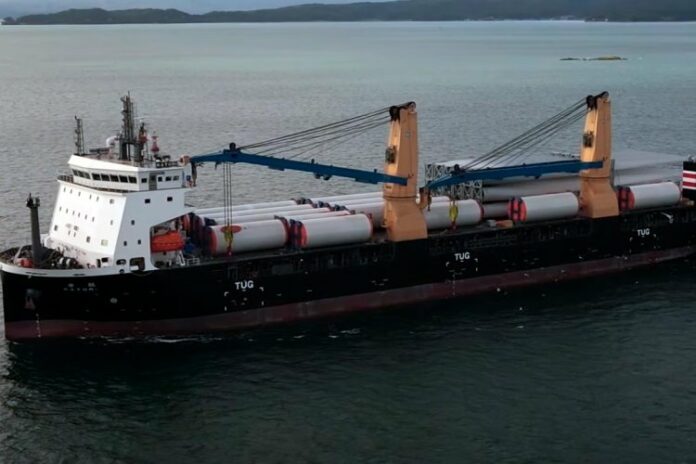
Katori is a next-generation energy-saving ship ordered by NYK Bulk & Projects Carriers Ltd., an NYK Group company, from Jinling Shipyard. The vessel was delivered on September 8.

In the future, Katori will be engaged in the transportation of various types of cargo, including LNG (liquefied natural gas), power plant cargo, and wind power generation equipment.

This ship will be equipped with two 400-ton cranes and be able to lift up to 800 tons of heavy cargo. The hold will be about 95 meters in length at its maximum without any bulkheads. The ships will be hatch coverless, which will allow for navigation with the hatch cover open, and the bridge will be placed at the ship front, enabling the loading of tall and large cargo without worry of any disruption to forward visibility during navigation.

As an environmental benefit, a significant reduction in fuel consumption has been achieved compared to existing ships of the same type with the cooperation of Japanese marine equipment manufacturers. 

In addition, the vessels can reduce greenhouse gas emissions and meet in advance EEDI (Energy Efficiency Design Index) Phase 3 requirements that will become effective in 2025. These energy-saving heavy-lift vessels give maximum consideration to the environment.

Codling Wind Park contracts DNV to certify Ireland’s flagship offshore wind farm

0

DNV has been contracted to carry out Project Certification for the Codling Wind Park project, which is one of the largest offshore wind farms planned in Ireland, with the potential to supply up to 70% of all Irish households with renewable electricity. The wind farm will make a significant contribution to meet the Government’s ambitions to double the renewable energy from 35% in 2020 to 70% in 2030. 

Kim Sandgaard-Mørk, Executive Vice President for Renewables Certification at DNV, says:

“Excellent wind speeds in the Irish Sea and favourable foreshore conditions provide an ideal environment for generating electricity from offshore wind. Using this resource with safe and reliable offshore wind projects can make Ireland a global leader in renewable electricity generation. Having been involved in over 80% of the offshore wind farm certification projects worldwide, we are happy to support Codling Wind Park and Ireland to realize the ambitious targets.“ 

Fabio Pollicino, Director for Project Certification at DNV, adds:

“The offshore wind industry in Ireland is set to see significant growth in the coming years bringing opportunities and challenges. Project Certification offers a proven, structured and trusted way to minimize and manage the risks of rolling out a technology in an emerging offshore wind market.” 

Rob Sheldon, Engineering Manager at Codling Wind Park, says:

“The development of the project is a significant endeavour, supported by many parties. We are delighted to have DNV as part of our team. DNV’s global experience and expertise will help us navigate our path to certification with confidence. Codling Wind Park will be developed to the highest standards, and we look forward to delivering a project of which Ireland can be justifiably proud, bringing locally produced renewable electricity to up to 1.2 million Irish homes.” 

Codling Wind Park is a proposed offshore wind farm in the Irish Sea, set in an area called Codling Bank, approximately 13-22 kilometres off the County Wicklow coast, between Greystones and Wicklow Town.