-9.1 C
New York
Home Blog Page 532

Unifeeder supplied with GoodFuels’ biofuel to boost decarbonization

0

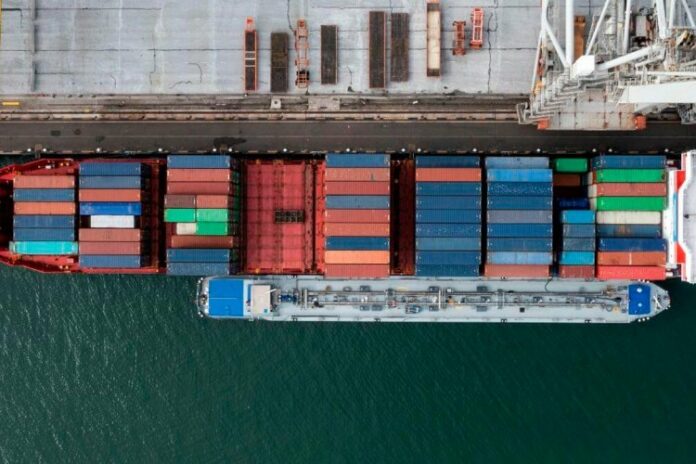
GoodFuels and Unifeeder have together succeeded in completing their first bunkering of sustainable marine biofuel in the Port of Rotterdam.

Under this new partnership, the shortsea container ship Elbsummer was bunkered with a blend of 100% sustainable marine biofuel and Marine Gasoil (MGO) before starting its journey towards Helsinki, Finland.

This is the first bio-bunkering between GoodFuels and Unifeeder, and aligns with both companies’ ambition to significantly reduce the carbon footprint of European transportation and improve the environmental impact of the shipping industry.

As a market leader and pioneer in the sustainable fuels field, GoodFuels supplies sustainable biofuels to the global shipping industry that ‘drop in’ existing engines without requiring any modifications to the engine components or fuel infrastructure and enable instant decarbonisation impact.

GoodFuels’ sustainable marine biofuels reduce CO2 emissions by up to 90% well-to-exhaust, and eliminate SOx emissions almost entirely. Its entire portfolio of biofuels is 100% sustainable because they are produced from various certified feedstocks labeled as waste or residue.

Similar to GoodFuels, Unifeeder – which is owned by global end-to-end logistics firm DP World -is also positioning itself as a frontrunner for sustainability in shipping, and is fully dedicated to reducing Greenhouse Gas emissions with its own target of decarbonizing its fleet by 50% by 2040. Partnering with GoodFuels is an impactful and immediate way of Unifeeder achieving these goals by using a solution that is market-ready and available today.

Isabel Welten, Chief Commercial Officer at GoodFuels, commented on the partnership:

“We are delighted to see Unifeeder join the ranks of our maritime pioneer partners committed to sustainability. This partnership demonstrates once again that solutions do already exist today to reduce emissions from shipping. Our marine biofuels respect the environment on all fronts, as they are sourced from feedstocks that are sustainable and do not compete with food production or cause deforestation.”
Kongsberg to supply propulsion and steering gear for two new ferries in Tasmania

0

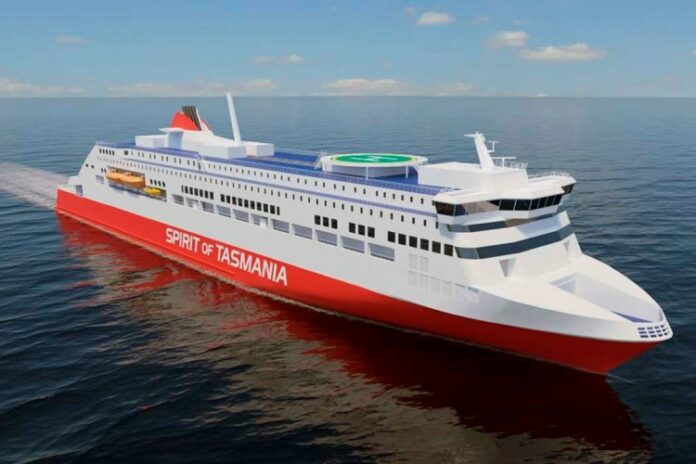
Kongsberg Maritime (KM) has announced a contract with Finnish shipyard Rauma Marine Constructions (RMC) to deliver propulsion and steering equipment for two new car and passenger ferries. 

Each vessel will be fitted with two of KM’s Promas combined propulsion and steering systems, which integrate the rudder and controllable pitch propeller to provide highly efficient thrust and manoeuvrability. KONGSBERG prides itself on its hydrodynamic technology, and prior to the contract signing undertook advanced computational fluid dynamic (CFD) analyses of the Promas units to establish cavitation properties and ensure optimal performance at the vessels’ 26-knot cruising speed. Manoeuvrability when docking is further aided by four TTC tunnel thrusters, the latest design from KM.

Jyrki Heinimaa, President & CEO, Rauma Marine Constructions, said:

“We’re delighted to sign this contract with Kongsberg Maritime. The deciding factor was the long and successful relationship between RMC and KM. They have delivered propulsion equipment to many of our vessels in the past, and we know that they are a reliable partner who will provide excellent support, both now and during the vessels’ lifetime.”

With an approximate gross tonnage of 48,000 tons, each new ferry will accommodate 1,800 passengers. They will replace Spirit of Tasmania I and II, which have been reliably driven by KONGSBERG Kamewa propellers and tunnel thrusters since their construction in Finland in 1998.

Göran Grunditz, Manager Hydrodynamics, Propulsion & Engines, Kongsberg Maritime, said:

“Choosing KM equipment for this project is a gratifying vote of confidence from both RMC and TT-Line. Since we equipped the previous vessels more than 20 years ago, we have worked hard developing increasingly efficient and manoeuvrable propulsion solutions as part of our ongoing work at our Hydrodynamic Research Centre in Sweden. We are confident that the Promas system fitted to these vessels will not only deliver the same reliability, but also significantly improve performance, efficiency and manoeuvrability.”

The first vessel is scheduled to be delivered to TT-Line in late 2023, with the second following a year later.

UTEC operates new iXblue subsea tech on ultra-deep water construction project

0

iXblue sparse LBL solution, brings together Canopus intelligent transponders, Ramses transceivers, Inertial Navigation Systems, and Delph Subsea Positioning Software, to provide more informative positioning and spool piece metrology at multiple drill centers throughout the project execution.

UTEC was the first company to operate iXblue new sparse range-aided INS subsea positioning technology on a commercial project in the Energy industry.

iXblue solution offers significant installation vessel time savings compared to conventional subsea positioning methods. Combined with a new innovative and cost-effective ROV Simultaneous Localisation And Mapping (SLAM) box-in method, it drastically reduced the time spent on calibration and maintenance during the operations.

iXblue new subsea positioning technology has already been selected for many other sparse LBL operations in both Africa and other regions.

Silverstream’s Air lubrication tech will be trialled onboard Maersk vessel

0

The technology group Wärtsilä, in cooperation with Silverstream Technologies, will install Silverstream’s proprietary Air Lubrication System, the Silverstream® System, on a trial basis on a large container vessel owned by A.P. Moller – Maersk, the world’s largest container vessel operator. The trial will examine possible improvements to the ship’s overall efficiency, focusing on the reduction of fuel consumption and associated emission levels.

The programme will have a special emphasis on the potential application of the System for methanol-fuelled Maersk vessels. The ultimate aim of all three companies is to support efforts to decarbonise shipping operations. The order was placed by Maersk in May 2021.

Silverstream’s Air Lubrication System creates a carpet of microbubbles that coat the entire flat bottom of the vessel. This carpet effectively reduces frictional resistance between the hull and the water. The technology works in all maritime conditions, is not weather dependent, and does not constrain or negatively impact the normal operational profile of the vessel.

Noah Silberschmidt, Founder & CEO, Silverstream Technologies, says:

“We are delighted that A.P. Moller – Maersk is backing our market leading technology, which is proven to significantly improve operational efficiency and reduce associated greenhouse gas emissions. We also wish to thank Wärtsilä for their collaboration in the delivery of this integrated solution.”

Bernd Bertram, Vice President, Propulsion, Wärtsilä Marine Power, says:

“Everything that we do today inevitably sets the future for coming generations, so we need to act in a positive way to ensure that decarbonising vessel propulsion is an effective priority for the industry. This is a view that is shared by Maersk, a company with whom we have worked closely for many years. Silverstream’s Air Lubrication System is an important stepping stone along this path.”

The Wärtsilä / Silverstream equipment will be delivered during the second quarter of 2022.


TECO 2030 to cooperate with OTD on maritime cleantech

0

As part of the agreement, OTD will be able to offer TECO 2030’s cleantech products, such as hydrogen fuel cells, carbon capture and storage (CCS) solutions and exhaust gas cleaning systems, to its clients within the maritime sector.

TECO 2030 will provide technical support and services, and training to OTD personnel, and will cooperate with and support OTD in all handling of its solutions. 

OTD is Keppel Offshore & Marine’s technology arm specialising in modern offshore platforms and critical equipment which support the oil and gas, marine, and offshore wind industries.

Tore Enger, CEO of TECO 2030 ASA, says:

“We are delighted that OTD has chosen to work with our cleantech products in their efforts to help their clients within the maritime industry to reduce their environmental and climate impacts.”

Hydrogen fuel cells convert hydrogen into electricity while emitting nothing but water vapour and warm air.

The TECO 2030 Marine Fuel Cell is the first fuel cell system in the world that is specifically designed for use onboard ships and on other heavy-duty applications. It is being developed by TECO 2030 in cooperation with the Austrian powertrain technology company AVL.

By exchanging one or more of their engines with a TECO 2030 Marine Fuel Cell, ships can switch from fossil fuels to hydrogen and reduce their emissions to zero. They can then sail emissions-free either on the whole journey or on shorter distances, such as when sailing into and out of ports.

Hydrogen fuel cells can also be used during port-stay, loading and discharging, enabling zero-emission operation at berth, without having to connect the ship to an onshore power supply.

TECO 2030 has received an “Approval in Principle” (AiP) by DNV, one of the world’s leading classification and certification bodies, for its Marine Fuel Cell System and its Fuel Cell Module FCM400, confirming that these are safe to use onboard ships.

COSLPromoter to drill for Statfjord subsea fields

0

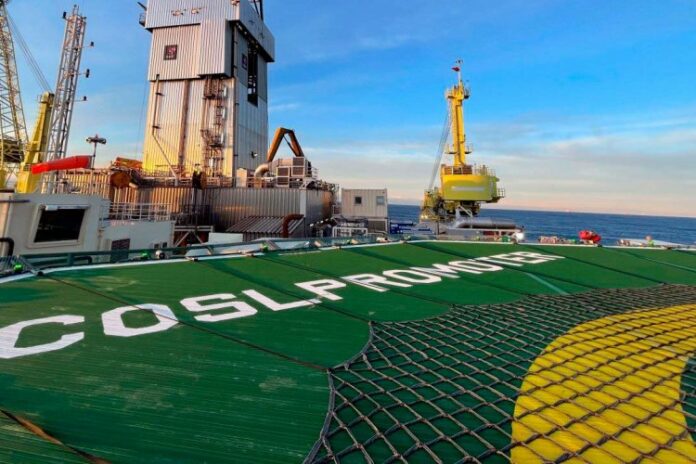
In addition, the rig has options for drilling five wells for Statfjord satellites afterwards.

The contract value is calculated at around USD 56 million for the fixed part of the contract, which has an estimated duration of 220 days.

The value includes drilling and completion services, fuel, treatment of wastewater, handling of cuttings and upgrading of the rig by installing an automatic drilling control system. Additional services include running of casing, remote-operated vehicle (ROV), mobilisation and demobilisation, calculated at around USD 4 million.

After the preliminarily planned work programme has been completed, the intention is to extend the cooperation by continuing options. Prior to the planned work programme, options for any other tasks have been agreed. After drilling for Equinor on the Troll field from April 2013 to April 2021, the COSLPromoter rig is currently in hot lay-up at the CCB base outside Bergen.

Mette Ottøy, chief procurement officer (CPO), says:

“With this contract Equinor shows continued demand for smaller rigs on the Norwegian Continental Shelf as long as they are competitive and fit for the required drilling operations. The rig will be anchored at Statfjord Øst, helping maintain a low carbon emission level. We are pleased that COSL assumes responsibility for the fuel consumption, and they are working on several technologies and measures to reduce their emissions. This work will be important to us going forward.”

The rig will have a key role in Equinor’s commitment to extending the life of late-life fields (FLX), where safety, efficiency, new ways of working and low emissions are central to maintaining profitable operation.

He says:

“We are pleased to continue the good cooperation with this rig, which has provided safe and efficient deliveries to us for eight years on the Troll field. We are also looking forward to continuing our effort on late-life fields together with an experienced player, and we have high expectations to COSL helping us reach our FLX ambitions,” says Erik G. Kirkemo, senior vice president of drilling & well operations.

“We will focus on simple and standardised well solutions and successful improvements, in addition to proving that mature fields can also offer profitable production for many more years and hence contribute to production to 2040 from the Statfjord area.”

Partners of the Statfjord Øst licence are: Equinor Energy AS (31.6875% – operator), Petoro AS (30%), Vår Energi AS (20.55%), Spirit Energy Norway AS (11.5625%), Idemitsu Petroleum Norge AS (4.8%), Wintershall Dea Norge AS (1.4%).

Damen’s Fast Crew Supplier 7011 completes sea trials

0

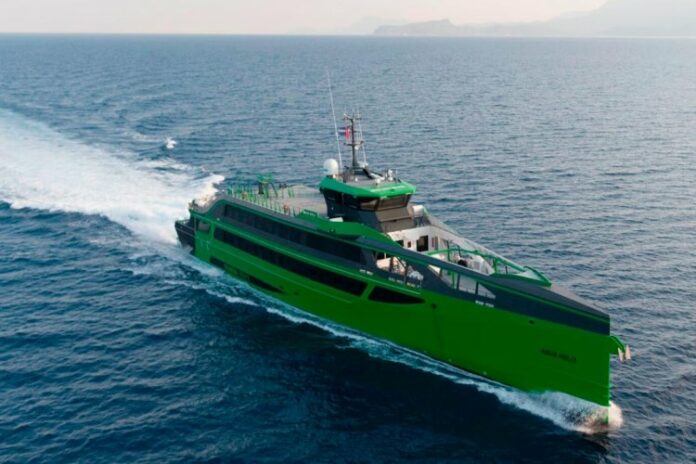
The first of Damen’s ground-breaking Fast Crew Supplier (FCS) 7011 class has completed its sea trials off the Turkish coast and is set to begin the passage to the Netherlands. 

The offshore energy market will soon be able to experience the capabilities of the 74-metre, 40 knot, 122-passenger, crew change vessel.

The design incorporates the Damen Sea Axe bow, the positioning of the accommodation just aft of amidships, and interceptors fitted within the vessel’s stern, all to minimise sensations of motion as it moves through the sea. The FCS 7011 also features a range of motion-compensating technologies to optimise the safety of crew transfers. These include a Kongsberg DP system, a tailor-made Ampelmann gangway and a VEEM gyrostabiliser, operating alongside the MTU main engines, Hamilton waterjets, Danfoss shaft generators, Reintjes gearboxes and Veth bow thrusters. 

On arrival in the Netherlands, the Ampelmann gangway system will be installed, making the FCS 7011 ready for trials in the North Sea. 

Port of Vigo set to be home to new green hydrogen project

0

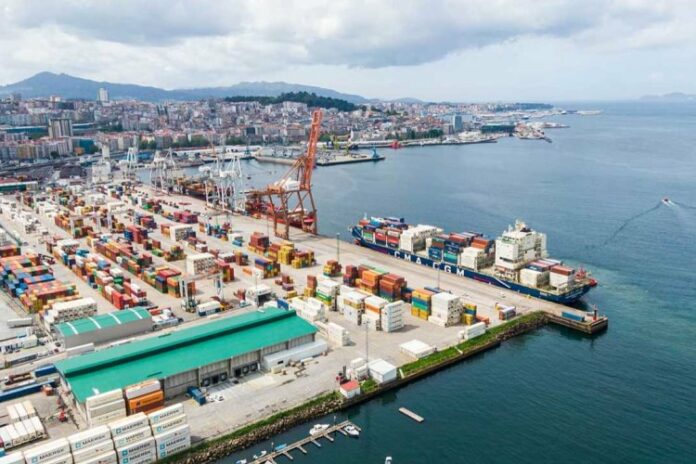
The project, dubbed ‘Julio Verne’ will see Spanish-Japanese company Univergy Solar look to produce renewable hydrogen for domestic applications in logistical operations within the port.

This will be used in both land and maritime mobility applications as well as port operations and industrial processes.

To this end, two electrolysers will be installed into the port that can also be scaled up in the future.

Univergy will also use this model in other countries where it has business developments, such as Chile or Uruguay, and where it has already initiated local contacts for its implementation.

Julio Hidalgo, Director of the Hydrogen Division of Univergy Solar, said:

“The importance and responsibility associated with the coordination of the Julio Verne hydrogen project in the Port of Vigo.

“This is because it will be a model to be followed by the extensive network of maritime ports in Spain, not only for providing clean energy to them, but also for the advances it represents in technology and job creation.”

GE’s Haliade-X prototype in Rotterdam starts operating at 14 MW

0

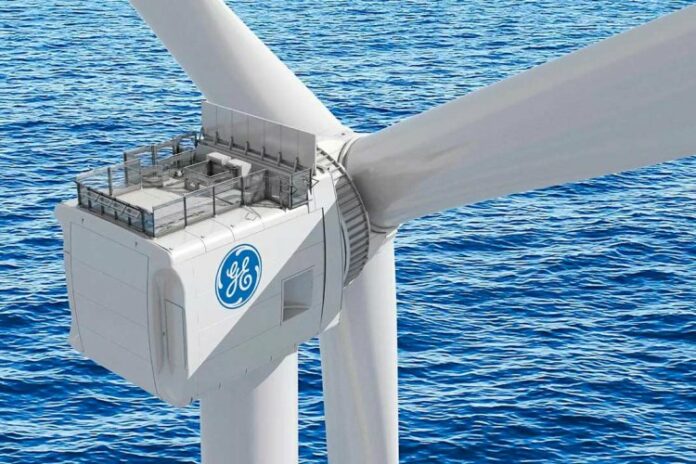
GE Renewable Energy has announced that its Haliade-X prototype in Rotterdam, a port city in the Netherlands, has started operating at 14 MW. 

The Haliade-X 14 MW is an uprated version of the Haliade-X 13 MW, which received its type certification in January 2021. The GE Renewable Energy team has now officially started certification measurements on the Haliade-X 14 MW. One turbine can generate up to 74 GWh of gross annual energy production, saving up to 52,000 metric tons of C02, which is the equivalent of the emissions generated by 11,000 vehicles in one year.

Vincent Schellings, Chief Technology Officer, GE Renewable Energy Offshore Wind, said:

“We’re pleased to announce that the Haliade-X prototype is the first turbine in the industry to successfully run at 14 MW. When we first commissioned our Haliade-X prototype in November 2019 at 12 MW, we made a big leap forward in the industry. Over the past two years we have learned a lot about operating and optimizing the performance of our Haliade-X platform, enabling us to uprate the Haliade-X platform to 14 MW today.”

The ability to produce more power from a single turbine means fewer turbines need to be installed at each wind farm. In addition to less capital expenditure, this also simplifies operations and maintenance, improving the affordability and accessibility of renewable energy for customers and consumers around the world.

The Haliade-X 14 MW will make its commercial debut at the Dogger Bank C offshore wind farm, which is located over 130 km off the north-east coast of England and, together with Dogger Bank A and Dogger Bank B, is due to become the largest offshore wind farm in the world upon completion. GE Renewable Energy will provide 87 units of the Haliade-X 14 MW for Dogger Bank C.

GE Renewable Energy is committed to enable the energy transition. As part of that responsibility, the business is focused on supplying and maintaining a global fleet of renewable energy assets, helping reduce the cost of renewable energy, ensuring grid resiliency, efficiency, and reliability, and making renewable energy function in a more dispatchable fashion. GE Renewable Energy also supports the energy transition by pursuing a strategy that reflects a commitment to sustainable, circular design.

Research: Impact of biofouling grows as waters warm and ships idle for longer

0

A new white paper released by Swedish technology company I-Tech highlights the increasing problems for ship operators caused by biofouling occurring during growing idling periods, showing how ship idling has increased over the last 12 years.

The white paper, based on research from I-Tech and Marine Benchmark, draws upon the former’s experience in developing the antifouling agent Selektope® – a component of an increasing number of antifouling products, and takes a deep dive into why idle ships are at risk of biofouling, and the impact of barnacle fouling on vessel performance.

Based on in-depth analysis of the global fleet patterns, the paper reveals the substantial increase in the numbers of idling vessels over the past decade. I-Tech found that ‘Fouling Idling’, as defined in the study, has increased constantly since 2009, with a starting point of 25.4% to a peak of 35.0% in May 2020. Given the growth of the fleet, this means that the absolute number of vessels idling in the global fleet has doubled between 2009-2020.

Significantly, it also finds that vessels are increasingly idling in so-called biofouling ´hotspots´, with water temperatures above 25°C. Vessels spending the majority of their time sailing in these regions are at acute risk of excessive hard fouling accumulation.

This level of fouling was exacerbated by idling patterns seen in 2020, which provided ideal conditions for fouling to grow. For instance, at the peak of idling last year, almost half of all container vessels at fouling idling had long idling periods of more than 30 days, exposing the vessels´ hulls to an extreme risk of hard fouling.

To make matters worse, these fouling windows could intensify as ports become more congested. Furthermore, with global ocean temperatures rising, biofouling hotspots could become more widespread, meaning that more ships could find themselves in one of the regions and facing a new, higher risk of barnacle fouling colonization. 

An earlier study by I-Tech and the Safinah Group shows over 40% of vessels surveyed in 2019 had a barnacle fouling coverage on the hull of over 10%. This level of biofouling, before taking into account idling in 2020, could be responsible for at least 110 million tonnes of excess carbon emissions annually.

As the study demonstrates, although shipping is beginning to play its part in combatting global warming, as evidenced by the IMO GHG Roadmap and regulations such as EEDI, EEXI, and CII, as well as efforts by individual owners to switch to low emission fuels, unpredictable events can still disrupt these decarbonisation efforts, as the study finds. The great financial crisis in 2008, and the oil price crash of 2015, caused similar levels of idling.

Commenting on the outcome of their findings, Philip Chaabane CEO I-Tech, said:

“External factors such as the economic collapse of 2008, the offshore crisis in 2015 and most recently the COVID pandemic and consequent port congestion will always have some disruptive effect on operations and make predictions difficult.

“Ship operators must, however, take action to minimise their impact. Most importantly, they must ensure that, after any idling, the vessel is in good condition to perform optimally. Familiarisation with the individual vessel’s risks of biofouling based on its operating footprint is a good starting point.”

Chaabane pointed out that when looking at the future trading potential, ship operators need to ensure that their ship is protected, whether it is in constant active service, idle for long periods of time, or at risk of fluctuating between the two.

He continued:

“This future-proofing approach to antifouling coating selection, without any certainty of future trade, is exerting great pressure on the coating suppliers, fostering innovation and new approaches towards fouling prevention technology using the active substance Selektope. This is supported by increasing demand from ship owners and operators for antifouling coatings that contain the anti-barnacle active agent.”