-0.9 C
New York
Home Blog Page 517

Wärtsilä and Simon Møkster study feasibility of ammonia and LNG dual-fuel operations

0

The technology group Wärtsilä and Norway based Simon Møkster Shipping have signed a collaboration agreement to carry out a feasibility study on utilising ammonia as the main fuel in dual-fuel engines where LNG is the alternative fuel. 

The aim is to demonstrate the feasibility of converting vessels for dual ammonia – LNG operation, and that it can be carried out safely and efficiently. The agreement was signed in October 2021.

Anne Jorunn Møkster, Owner and CEO Simon Møkster, says:

“We are excited to join Wärtsilä in this project. We see this as a step towards meeting our targets for reducing greenhouse gas emissions, and our ambition is to cut our fleet’s CO2 emissions by 40 percent by 2030. By 2050 we expect to reach net-zero carbon emissions.”

Cato Esperø, Head of Sales Norway, Wärtsilä, says:

“Decarbonisation is central to the future of shipping, and Wärtsilä is totally committed to helping our customers achieve this goal. This collaboration agreement represents further evidence of this commitment. We are leading the way towards the adoption of alternative cleaner future marine fuels through extensive testing and research, and we see ammonia as an extremely promising option.”

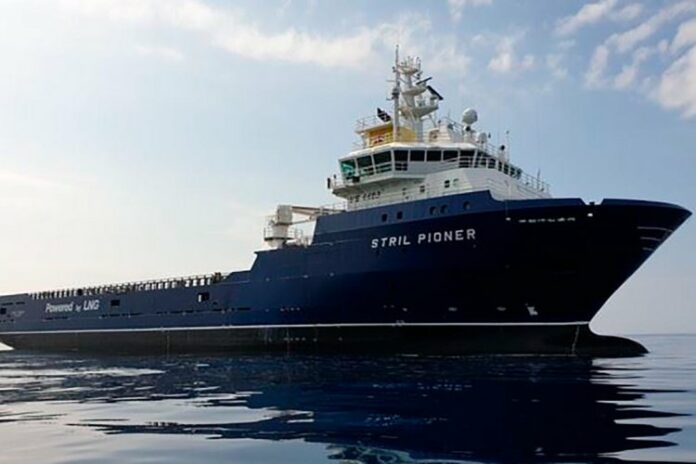
The testing will be carried out on the ‘Stril Pioneer’, an offshore supply vessel (OSV) currently operating with Wärtsilä 32DF dual-fuel engines using LNG as the primary fuel. Simon Møkster has been one of the pioneers in the use of LNG as a marine fuel, adding the ‘Stril Pioneer’ to its fleet in 2003. By using a blend of ammonia and LNG, emissions of CO2 from the combustion process will be considerably reduced.
Sanmar deal will see first Tier III tugs in Italian ports

0

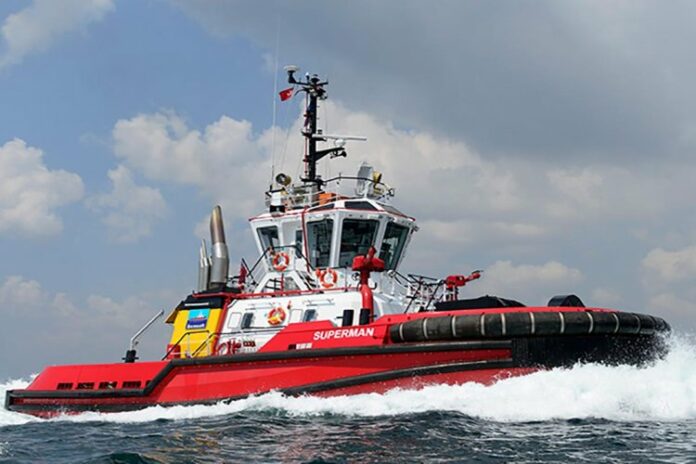
BOGACAY LII and BOGACY LIV have been refurbished and their propulsion systems upgraded using the latest technology to make them IMO Tier III emissions compliant. They will be delivered to Augusta Port in Sicily towards the end of 2022.

The 24.4m x 12m x 5.45m sister tugs will be powered by two Caterpillar CAT 3512E C rating main engines, each achieving 1901kW at 1.800 revs/min and driving US205 FP 2.5m propellers in an IMO Tier III emissions compliant installation.

Sanmar has delivered more than 45 tugs in the Bogacay series and these latest versions are also based on the exclusive-to-Sanmar RAmparts 2400SX design from Canadian naval architects Robert Allan Ltd, which has been revised and adapted to meet new demands and developing technology.

The vessels can achieve an impressive 60 tonnes of bollard pull and have a top speed of 12.5 knots. The fire-fighting pump is driven through clutched flexible coupling in front of the port side main engine and has a capacity of 2.700 m3/hour. Tank capacities include 77.900ltrs of fuel oil and 11.500ltrs of freshwater.

The accommodation meets MLC 2006 standards and is for up to six crew, with the master’s cabin above deck along with a mess/lounge and galley and WC with shower. Below deck, there are the chief engineer’s cabin and two double cabins, a WC with shower, and laundry. All accommodation space is heated, vented and air-conditioned.

Rimorchiatori Augusta Srl is part of the Rimorchiatori Riuniti group which operates towage services at ports throughout Italy. Sanmar has previously delivered to Rimorchiatori Riuniti the tugs – TURCHIA in 2014, CITTA DI SALERNO in 2017, ARECHI in 2019 and ITALIA in 2020.

Ali Gurun, Vice President of Sanmar, said:

“This is not only a significant contract for us, but it is also a significant advance in the ongoing development of the extremely popular RAmparts 2400SX class of tugs. Improving the environmental credentials of our tugs through technological advances and state-of-the-art design is extremely important for all of us at Sanmar. We are delighted that Rimorchiatori Augusta Srl has again chosen Sanmar to provide the powerful, cost-effective and environmentally-conscious tugs they need to meet their specific operational demands.”

Alberto Dellepiane CEO Italy for Rimorchiatori Mediterranei said:

“We are pleased to further strengthen our relationship with Sanmar Shipyards of which we appreciate the reliability and excellence in tug-building. With those two new vessels, we not only improve the quality of our fleet operating in Sicily but also contribute to reducing our environmental footprint using proven technology in an ever-increasing drive towards greenification.”

KHI and K Line conclude AI-based machinery operation development

0

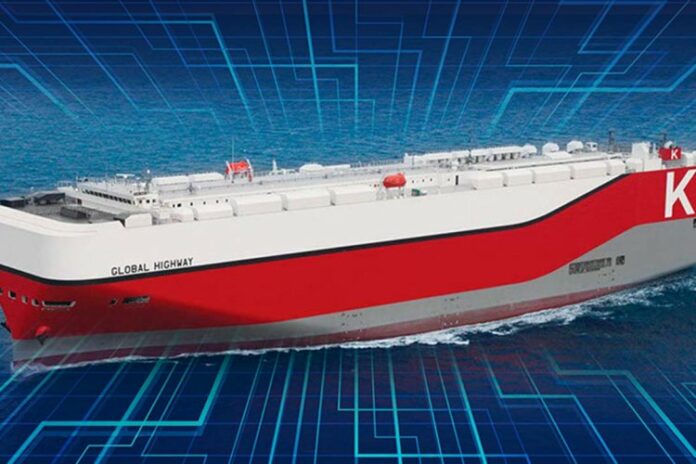
Kawasaki Heavy Industries, Ltd (KHI) and Kawasaki Kisen Kaisha, Ltd. (“K” Line) announced today that they have concluded a co-development contract for “AI (Artificial Intelligence)-based Marine Machinery Operation Support System” (hereinafter referred to as “the System”) that is expected to be part of the core technology to achieve autonomous vessel operation in the future. 

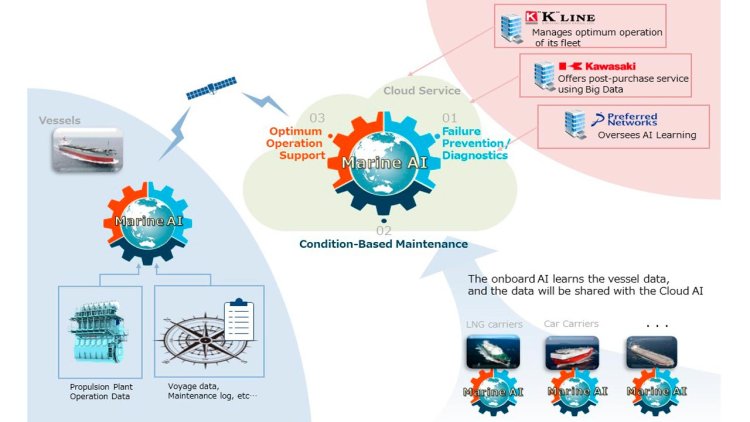
The System will have such functions as failure prediction/ diagnostics, CBM (Condition-Based Maintenance), and optimum operation support, based on the data analytics of marine machinery operation data using AI.

In view of safer operations at sea, improvement of working environment for seafarers, and higher pressure for industrial competitiveness, the expectations for autonomous operations for ships is increasingly growing these days. Through this co-development project, they aim to complete the System by combining “K” Line’s extensive data on vessel operation and marine machinery operation collected from Kawasaki-Integrated Marine Solutions and its years of experiences in operation and maintenance of onboard machinery, and KHI’s technology and expertise in building ships and propulsion plants, and by having AI learn these data and knowledge.

The System manages not only a specific piece of equipment but marine machinery onboard as a whole, including main engine and power generator. In developing the System, they will first target those vessels with diesel propulsion plants, and then those with various types of propulsion systems such as steam turbines and electronic propulsion systems in the next phase.

The System will be beneficial for crew onboard as well as ship management personnel on land, providing useful information on failure predictions and failure diagnostics. This not only enables users to prevent major engine troubles from occurring but also assists planning effective maintenance schedule and advises optimum engine operation based on the condition of plants, ultimately to improve fuel consumption and to contribute to the greenhouse gas reduction.

Preferred Networks, Inc., known for their cutting-edge technologies on deep-learning and machine-learning, is joining the two companies in developing the “Marine AI,” the core of the System that executes failure prediction and operation condition diagnostics.

The Marine AI will be implemented both onboard and in the cloud system. The one onboard learns the vessel’s operation data and uses them to diagnose on a real-time basis. The one in the cloud system periodically collects the data accumulated on each vessel, and centrally uses them for further learning, allowing itself to become smarter and offer failure prediction and diagnostics as well as optimum operation support for any type of vessels. A proof-of-concept has been established for the core technology of the Marine AI for failure prediction and diagnostics. 

IAPH and SGMF team up to enable zero-carbon fuels at ports

0

A Memorandum of Understanding (MoU) has been signed by The Society for Gas as a Marine Fuel and IAPH with its Clean Marine Fuels Working group to work together to increase understanding about the safe, effective and sustainable use of all gases as marine fuel. In particular, the potential use of Ammonia will be investigated from source to ship with all related safety, operational and sustainability considerations.

The agreement effectively brings together the principal technical stakeholders needed to accelerate the adoption of alternative liquified gas fuels at ports: SGMF with its energy majors, gas suppliers, equipment manufacturers, technology providers, classification societies, shipyards, ship owners and operators with the world’s principal port authorities and terminal operators from IAPH.

Mark Bell, General Manager and COO of SGMF commented:

“The Society for Gas as a Marine Fuel (SGMF) was formed in 2013 with the primary objective of advocating the safe and sustainable use of low flashpoint fuels for ships. Safety is the prevalent factor and as the industry transitions towards an inevitable low carbon future, at SGMF we are looking forward to working with IAPH’s experts from ports, many of whom are either already operational or who are in the process of implementing infrastructure that provides alternative fuels to vessels.”

IAPH Technical Director Antonis Michail commented:

“As with the recent commenting paper submitted by IAPH to the IMO on the case for MBM revenue allocation to land-based infrastructure, it is our belief that ports may serve as the key link between the land-based fuel producers and the sea-based fuel consumers, as well as the link between fuel production and other non-shipping fuel consumers. Ports have the potential to act as energy hubs as a cheaper and safer alternative than storing it elsewhere. SGMF members with their technical competences have the potential to help us make that happen.”

Capitalising on over a decade of knowhow on bunker checklists, audit tools to evaluate terminal operator concessions and terminal readiness guidance with tried and tested procedures to ensure rigorous operational safety when handling LNG will now also be applied to new alternative fuels such as ammonia, hydrogen and methanol.

This has become a major focus of the IAPH Clean Marine Fuels (CMF) Working Group. Policy advisor to the Port of Amsterdam and Chair of the CMF Peter Alkema comments:

“Our Working Group is busy developing a generic audit tool as well as truck-to-ship and ship-to-ship bunker checklists for liquified gases, so being able to tap into the pool of experts from the SGMF will be extremely useful. As an example, a recent study by the Port of Amsterdam and DNV concluded that spacial safety considerations are especially important when considering the deployment of bunkering infrastructure for ammonia at ports. How to handle these issues will be for all stakeholders, not just the ports.”

SGMF has proposed to include some of the IAPH CMF tools in an updated version of its own LNG Bunkering Safety Guidelines (ISBN 978-1-9996669-7-2), which will be published towards the end of the year in early December.
 

Finnlines will introduce larger vessel on Kapellskär – Naantali route

0

This means that greater volumes can be transported by sea to and from Sweden’s largest consumer area.

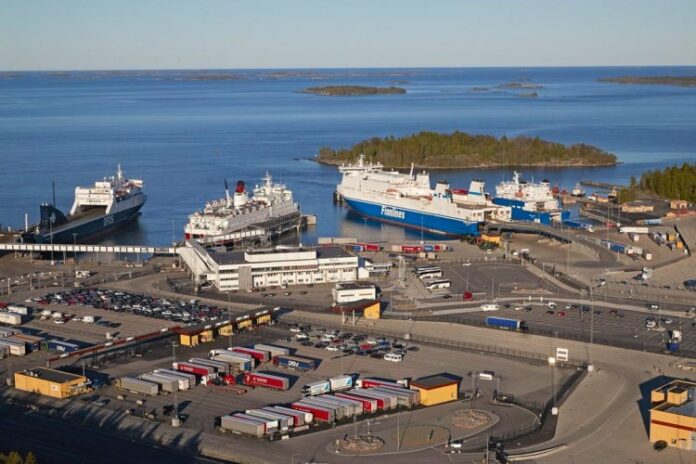
Shipping company Finnlines will introduce a larger vessel on the Kapellskär – Långnäs – Naantali route on 27th January 2022, increasing cargo footage capacity by an additional 1,200 metres. The larger RoPax ferry MS Europalink will replace the current MS Finnfellow on the route. MS Europalink is 219 metres in length, can carry 500 passengers and has a total cargo footage capacity of 4,200 metres. The MS Europalink will operate on the route together with the vessel MS Finnswan, making 14 calls a week at Port of Kapellskär.

Peter Lundman, Technical Operations Manager at Port of Kapellskär, says:

“It is very positive that our RoRo customer is continuing to expand and develop at Port of Kapellskär. We have a long-standing and good collaboration with Finnlines, which means we are able to develop side-by-side.”

Port of Kapellskär is one of Sweden’s largest and most important freight transport ports and has grown steadily for a long time. A total footage of 3.5 million metres of goods are transported via the port each year.

Nicklas Ebersson, Marketing Manager Cargo at Ports of Stockholm, explains:

“Shipping is an energy efficient mode of transport. The possibility to transport greater volumes of goods by sea to and from the Stockholm region, where half of Sweden’s consumption takes place, is a great benefit.”

Ports of Stockholm is Sweden’s third-largest freight transport port. The Port of Kapellskär currently handles 50 percent of Ports of Stockholm’s ferry freight to and from Finland and Estonia.

VIKING’s firefighting system secured first major order from Asian shipowner

0

HydroPenTM, the unique VIKING Life-Saving Equipment container firefighting system, has secured a first major order from an Asian shipowner, in a deal that also demonstrates that the technique is highly adaptable for all sizes of container vessels.

Singapore-based PIL, the largest container carrier in Southeast Asia, is committing its entire container ship fleet of around 100 vessels to carrying HydroPen™ systems.

Conventional container firefighting equipment dowses the box exterior and has been increasingly ineffective in an industry experiencing nine major container ship fires in 2019, and 10 incidents in 2020*. The TT Club estimates that a container fire occurs on average once every 60 days. While the International Union of Marine Insurance has called for design and firefighting equipment improvements for Ultra Large Container Vessels, 2021 incidents off Malaysia and Sri Lanka have highlighted that container fires can also devastate smaller ships.

Attached to a ship’s hose and raised on a telescopic arm by a single crew member, HydroPen’s  ‘drill and spray’ nozzle is powered by water pressure alone to drill through the container door, then switches to spray mode to extinguish a fire with water, foam or C02. The system can be deployed to fight container fires in the hold, as well as above deck.

Goh Chung Hun, General Manager, Fleet Division, PIL, said:

“With focus on our people, PIL is committed to seeking out new technologies and solutions which enhance the safety and security of our seafarers and our vessels. HydroPen has provided a breakthrough in fire safety for large containerships; its user-friendliness in testing convinced us that it is a powerful safety tool for our fleet of container ships of varying sizes. As the HydroPen™ system is able to meet our stringent safety standards, we are delighted to introduce HydroPen fleetwide.”

Deliveries are underway for the phase-in, with crews provided with VIKING training materials and a dummy nylon-tipped drill attachment to test procedures. Lasse Boesen, Senior Product Manager, VIKING, says:

“We have supported HydroPen™ since its inception, introducing it to market as exclusive distributor in 2019 before purchasing the technology outright earlier this year. We were always convinced we had a hit on our hands and ULCV orders confirmed that. PIL’s commitment sees the solution establishing itself as the new standard for container firefighting, with equipment supplied the same for all ship capacities.”
 

Second generation hydrogen drones to be utilised in the North Sea

0

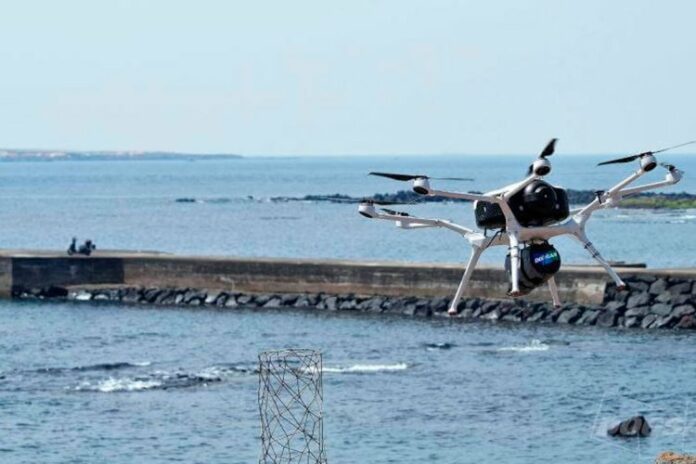
Hydrogen-powered drones could become a vital part of accelerating the energy transition in the North Sea with Doosan Mobility Innovation (DMI) releasing its new second generation drone and exploring pilots for its application.

Revealed on October 29, the second-generation hydrogen drone, the DS30W, had been demonstrated at the Maritime Emerging and Enabling Technologies Innovation Park (METIP) with DroneQ Robotics showcasing its capabilities.

DMI additionally signed a cooperation agreement with DroneQ and METIP that will see the joint investigation in using the hydrogen drone in maritime and offshore industry to enhance the energy transition to cleaner solutions.

The agreement with METIP will facilitate the use of pilot projects in which the drones can be used helping to assess the new hydrogen drone in real world scenarios.

Hydrogen has been recognised as a key fuel source for powering unmanned drones mainly due to the longer distance at which these can fly proving vital for use in offshore industries.

DMI said that these could be used to work across a wide variety of different applications such as inspecting pipelines over long distances and transporting urgent goods to offshore installations at sea.

John Troch, co-founder of DroneQ, said:

“The second-generation hydrogen drone from Doosan Mobility International has a flight time of two hours and is resistant to adverse weather conditions, making it ideal for complex maritime applications such as inspecting offshore installations or performing search and rescue missions.”

John Spee, Project Manager at METIP, said:

“Innovative, safe, sustainable and efficient solutions using emerging & enabling technologies make a relevant contribution to a successful energy transition in the North Sea and its acceleration.”

Source: h2-view.com

New oil discovery in the Norwegian Sea

0

Preliminary estimates show that between 3 and 10 million standard cubic meters of recoverable oil equivalents have been proven in the well, corresponding to 19-62 million barrels.

Kristin Westvik who is area director for Exploration and Production North, says:

“Our ambition is to transform the shelf from an oil and gas province to a broad energy province that will ensure value creation from the shelf in the decades to come. In this ambition, our exploration activities are central.”

She adds that future value creation will largely come from increased recovery from existing fields, and connection of new discoveries close to existing infrastructure. It is therefore uplifting once again to be able to demonstrate resources that can strengthen the service life of producing fields in the Norwegian Sea. Such near-field discoveries are profitable, robust against fluctuations in oil / gas prices, they have a short payback period and low emissions.

The discovery is the sixth Equinor has made on the Norwegian shelf so far this year.

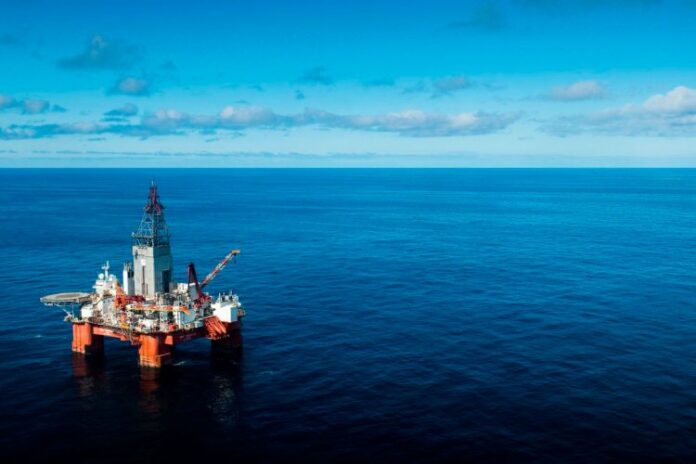
The well was drilled about 10 kilometers north of the Tyrihans field and 23 kilometers east of the Kristin field in the Norwegian Sea. The aim of the well was to detect hydrocarbons in sandstone reservoirs of the late Cretaceous age in the Lange Formation.

Well 6407 / 1-9 was drilled vertically to a measured depth of 3883 meters below sea level and encountered an estimated 36 meters of oil column in sandstone in the Lange Formation, of which 13 meters are sandstones with poor to moderate reservoir quality. Oil down to 3719.5 meters below sea level was detected in the well. The oil-water contact was not encountered. Water depth at the site is 301 meters.

Extensive data collection and sampling has been performed. The preliminary analysis of the MDT samples indicates a light oil.

This is the first exploration well in production license 939. The license was awarded in APA 2017.

The discovery will be evaluated for further appraisal and assessed for tie back to existing fields in the area.

The well will be permanently plugged and abandoned.

Well 6407 / 1-9 was drilled by the drilling facility West Hercules, which will now drill exploration well 35 / 10-7 S Toppand in production license 630 in the North Sea, where Equinor is the operator.

DEME Offshore installs final foundation at Hornsea Two offshore wind farm

0

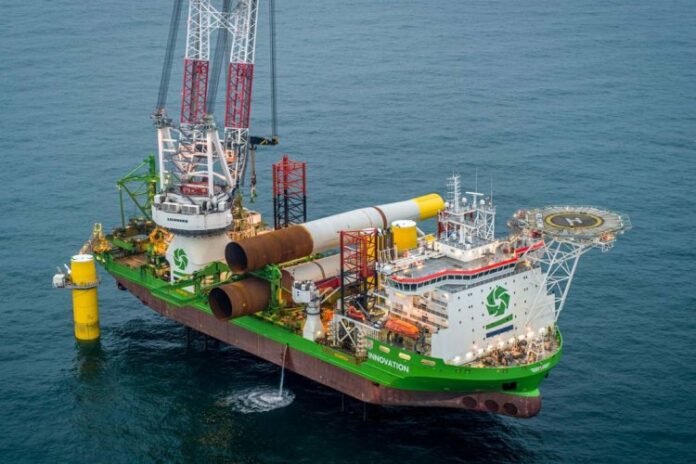
DEME Offshore has successfully installed the final and 165th monopile foundation at Ørsted’s Hornsea Two wind farm, which is currently the largest offshore wind farm in the world.

The timely completion of this installation project is all the more remarkable given that it has largely taken place during the pandemic. Bart De Poorter, General Manager DEME Offshore Renewables, comments:

“Last week’s milestone is the result of the seamless cooperation between all parties involved and the strong partnership with our client Ørsted. Our teams made sure that the highest safety and quality standards were established at each stage of this exceptionally complex project, and that we maximised production and supply chain efficiency. 165 foundations have been transported and installed in just one year.”

“DEME’s logistics and engineering teams have put in an extraordinary performance. They had to ensure a continual flow of components which were transported from three different fabrication ports to the base port in Eemshaven in the Netherlands. The heaviest piles weighed around 1,250 tonnes and had a diameter of 9.5 m, therefore DEME Offshore’s engineers designed specialist equipment to make the installation process as efficient as possible.” 

Patrick Harnett, Ørsted’s Programme Director for the Hornsea Two project, adds:

“We are delighted to have achieved this major project milestone safely and on schedule, despite some incredible challenges along the way. This has only been possible through close collaboration and a genuine ‘one team’ approach with DEME Offshore. We look forward to the equally successful conclusion of our wind turbine generator installation scope in the coming months.”

Currently, DEME Offshore’s sister vessels ‘Sea Installer’ and ‘Sea Challenger’ are installing the 165 8 MW Siemens Gamesa turbines. With over 100 turbines now installed, the wind farm’s generation assets are well on the way to completion.

As well as the Transport & Installation scope for the turbines and foundations, two of DEME ’s fallpipe vessels carried out the scour protection at 89 locations.

Located approximately 89 km off the Yorkshire coast, Hornsea Two will generate up to 1.4GW of clean energy for UK households when fully operational in 2022.

Portsmouth secures over £11m in Levelling Up Funding to transform port

0

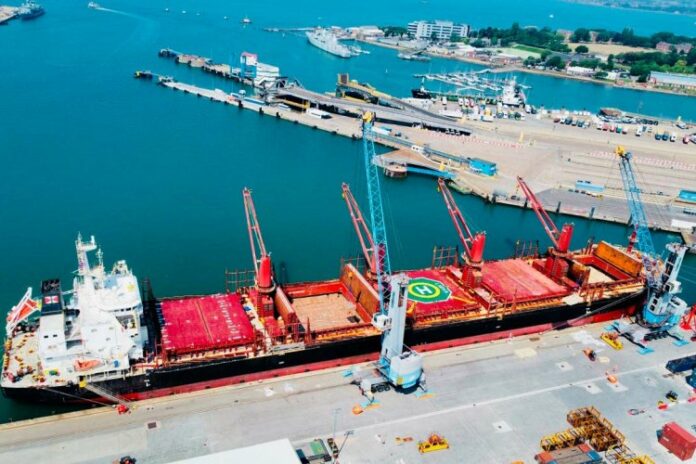
Portsmouth International Port’s crucial terminal transformation will officially get underway after an announcement by the Department for Levelling Up, Housing and Communities that the scheme has been awarded £11.25m Levelling Up Funding.

The port was part of a successful £20m bid called Transforming the Visitor Economy, which also includes funding for Hilsea Lido and the creation of the UK’s longest urban park ‘Linear Park’ in the north of the city. 

The port development, known as The International Terminal Transformation, is necessary to manage the anticipated increase in passengers through the port, which looks to exceed over 200 calls across the next three years.

The port’s ability to manage an additional 250,000 passengers a year, above its current two million, relies on creating additional capacity.

Cllr Gerald Vernon-Jackson Leader of Portsmouth City Council said: 

“The success of the port will be transformational for the city, providing employment opportunities and complementing the offer as the UK’s leading marine and maritime region. This successful Levelling Up Fund announcement means we can get work underway to deliver a spectacular new terminal extension ready by spring 2023. The port’s location, neighbouring Gosport, creates significant partnerships for travel and also maximises the city’s and town’s heritage assets for visitors.”

Mike Sellers Portsmouth International Port’s director said:

“We’re delighted the government has recognised our  extension plans are necessary for the port to handle an increase in trade, and provide a significant financial return for local area. This year, for example, with the arrival of Virgin Voyages we were required to provide temporary additional facilities to  ensure secure passenger segregation as part of Covid protections. But we need a permanent base. Our rise in passengers is a result of responding to growth in the cruise and ferry industry, which the port is ideally positioned to deliver thanks to its enviable waterfront location. Following our recently completed berth extension, we are now in advanced discussions with companies new to the UK market, to agree a partnership with the port and our expansion plans are critical to meet market demand.”

Portsmouth appeals to the small and mid size, luxury, boutique, expedition cruise sector who are looking for a port that sets them apart from the conventional mass market. The port is competing with European destinations and has an opportunity to secure additional revenue for UK GDP, with each cruise call is anticipated to generate up to £1.5 million to the region’s economy.

The transformation will be cutting-edge in environmental development, complementing the current sustainable built terminal building.

Plans are at an advanced stage organised to deliver a shovel ready project.