-1.1 C
New York
Home Blog Page 516

WinGD and HHI-EMD collaboration sets sights on sustainable engine technology

0

Marine engine designer and power system integrator WinGD and engine builder Hyundai Heavy Industries’ Engine Machinery Division (HHI-EMD) are to strengthen their collaboration by partnering to develop environmentally sustainable two-stroke engine technology.

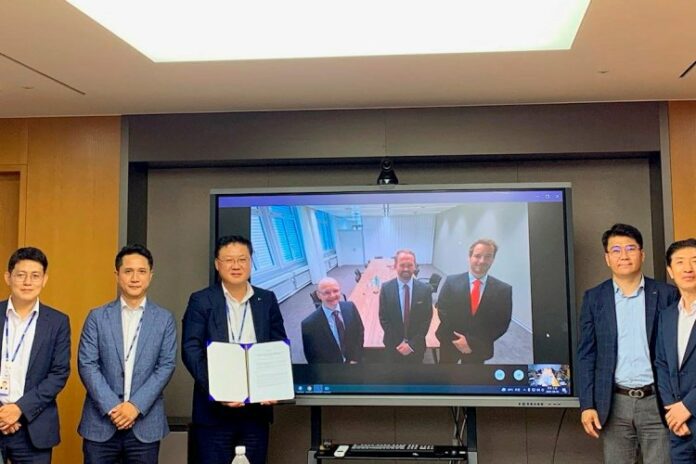
Under a joint development agreement signed at the Kormarine 2021 exhibition in Busan last month, the two companies will together develop engine solutions that further reduce greenhouse gas emissions from methane while improving both the engine’s efficiency and footprint for reduced costs. The signing ceremony was hosted by HHI-EMD President & Chief Operating Officer Kwang-hean An and joined by WinGD’s Vice President R&D, Dominik Schneiter and Global Director Sales, Volkmar Galke who travelled from their headquarters in Switzerland.

Dominik Schneiter said:

“This development reinforces our long-standing relationship with HHI-EMD and illustrates the expertise and commitment both companies share to help customers build and operate the most efficient and environmentally sustainable vessels.”

Kwang-hean An added:

“HHI-EMD has a commitment to an environmental, social, and governance focused strategy. Through these collaborations, our customers can be confident that we are providing the technology solutions they need for the future.”  

The cooperation will aim to further enhance WinGD’s dual-fuel, low-pressure X-DF engines. Key goals are to further reduce greenhouse gas emissions and toxic air pollutants such as NOx, cut fuel consumption and minimise the engine footprint through an integrated design optimized for both newbuilds and retrofits.

As a first step, HHI-EMD and WinGD will perform prototype testing of a compact, on-engine energy saving & emission reduction technology in 2022.

MOL and Vale announce joint study on wind propulsion

0

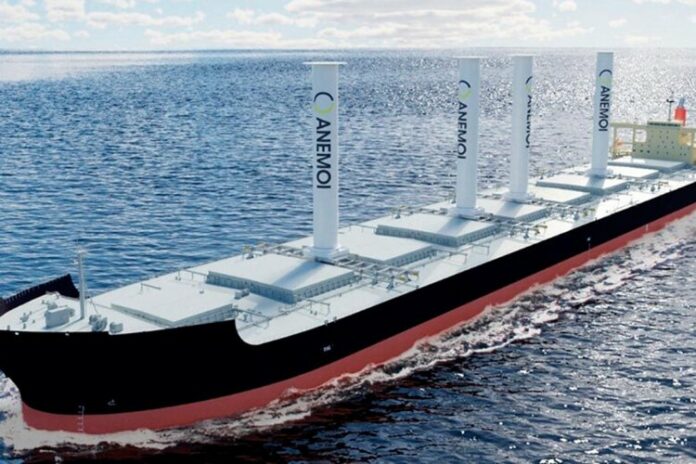
Mitsui O.S.K. Lines has announced an agreement with Vale International SA to conduct a joint study on installation of a wind propulsion system called “Rotor Sail” on a 200,000-ton class in-service bulk carrier, which mainly transports iron ore for steel production.

The Rotor Sail produces propulsive force as the wind generates differential pressure around the slewing rotor while the vessel is underway. It offers high efficiency because the natural energy of the wind directly propels the vessel rather than being converted in to electricity, for example.

The joint study team will examine and verify the number of Rotor Sails to be installed and the effect of GHG reduction, working closely with Anemoi Marine Technologies Ltd (Anemoi), the manufacturer of the Rotor Sail. Anemoi, based in the U.K., installed world’s first Rotor Sail on a newbuilding Ultramax bulk carrier in 2018.

The MOL Group is implementing five initiatives to realize the mid-to-long-term targets set out in the “MOL Group Environmental Vision 2.1”. Including this opportunity, we will pursue one of the initiatives “Enhancement of Energy-Saving Technologies” and continually strives to reduce GHG emissions in cooperation with leading companies in various industries, with the goals of “Achieving net zero GHG emissions by 2050.”

Second GEV hydrogen carrier design to receive ABS AIP this year

0

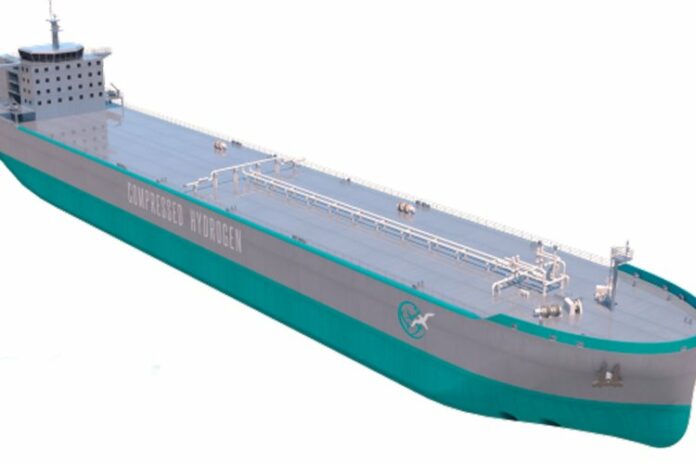
AIP for the Handymax design, which GEV intends to be the first commercial-scale vessel available for the marine transport of hydrogen, follows an ABS AIP which GEV received in July this year for a compressed hydrogen vessel with a 2,000-tonne capacity.

Georgios Plevrakis, ABS Director, Global Sustainability, said:

“Hydrogen has a significant role to play in global decarbonization initiatives both within shipping and the wider economy. Safe and efficient transport of hydrogen at sea will be critical to the development of the infrastructure required for its wider adoption and we are proud to be able to support GEV with its innovative designs.” 

Martin Carolan, Managing Director and CEO said:

“GEV is pleased to secure AIP from ABS, which is a leading classification society for gas carriers. GEV is looking forward to working with them to ensure that our compressed hydrogen ships continue to meet the highest safety standards. Marine storage and transport solutions are required for hydrogen to contribute to global decarbonization ambitions.”

GEV’s Handymax design is able to enter most ports and is equipped with a dual-fuel engine powering generators coupled to two electric drive fixed pitch propellers or a dynamic positioning system.

ABS’ AIP was granted following a review of GEV’s design in accordance with the ABS Guidance Notes on Review and Approval of Novel Concepts incorporating relevant principles from the ABS Guide for Vessels Intended to Carry Compressed Natural Gases in Bulk and the IMO IGF Code. ABS Rules and Guides can be downloaded here.
 

Cydome signs up as new Inmarsat Fleet Connect application provider

0

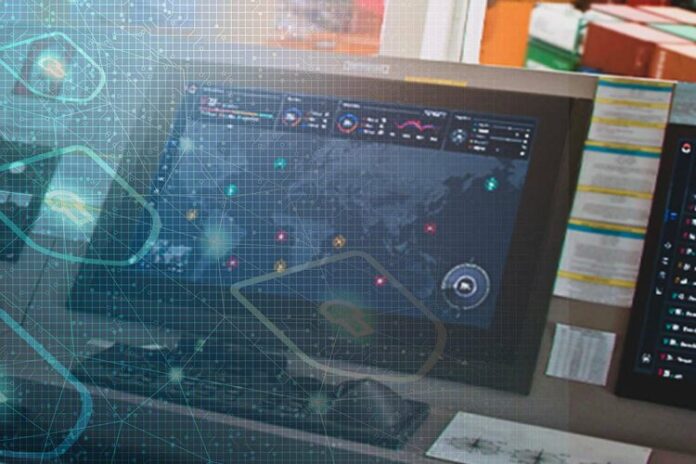
Cydome, the ship-wide cybersecurity solution provider, and Inmarsat, the world leader in global, mobile satellite communications, have signed an agreement for Cydome to join the fast-growing group of over 40 Certified Application Providers, to offer a dedicated application for Inmarsat’s Fleet Connect service.

Fleet Connect is a dedicated bandwidth service that provides connectivity independent of the ship owner’s primary bandwidth, allowing Application Providers to have an always-on, or on-demand, two-way communication channel to the vessel.

Cydome will use Fleet Connect to offer its cybersecurity solution to ship owners and managers, enhancing cyber resilience in the maritime industry and extending vessel cyber coverage for critical IT and operating systems onboard.

Nir Ayalon, Cydome CEO, said:

“Utilising Inmarsat’s dedicated bandwidth and global network extends Cydome’s reach with shipowners and ship managers, enabling advanced fleet protection against cyber piracy. This also allows fleets to better prepare for the maritime cyber regulatory inspections and auditing.”

Marco Cristoforo Camporeale, Head of Digital Solutions, Inmarsat Maritime, said:

“We are delighted to be working with an innovative start-up such as Cydome. The Cydome application gives our customers an easy way to monitor their cybersecurity onboard, protect their vessels from current and evolving threats and comply with regulations.”

METIS launches next generation data-acquisition system

0

Through a robust, flexible and unified data-transmission framework, the upgraded system enables the processing and visualisation of real-time and historical data both on board and ashore.

Such is the efficiency of the data-transmission process that readings are transferred from vessel equipment to the METIS cloud platform in a second or less, making them immediately available for analysis.

Serafeim Katsikas, CTO, METIS Cyberspace Technology, says:

“With the latest generation of Ship Connect, we have set the standard for the interoperability which will shape shipping’s digital future. The system is lightweight, efficient and compatible with all data sources, requiring minimal resources and optimising network bandwidth. It is not only extremely fast but secure and dependable, offering shipowners a solid foundation on which to base key operational decisions for enhanced vessel performance, sustainability and safety.”

Backed by MQTT, the new standard messaging protocol for the IoT, and Google’s Protocol Buffers (Protobuf) language- and platform-neutral mechanism for serialising structured data, the system’s new framework is also scalable to accommodate the installation of millions of IoT devices.

Katsikas explains:

“Ship Connect is built on widely supported, open-source architecture as opposed to the closed, proprietary kind that we see in many other systems currently available on the market. It therefore supports our objectives by allowing cross-platform integration and seamless interconnection with third-party systems.” In addition, the framework’s real-time event-handling capabilities support distributed event-driven processing, he continues. “This brings computation and data storage closer to the data source, facilitating the development and mass implementation of advanced shipping applications right up to the level of autonomous vessels.”

The new architecture includes mechanisms to safeguard quality of service, while leading-edge message-encryption and user-authentication protocols ensure security. Bidirectional communication between device and cloud streamlines support troubleshooting and updates.

With the METIS cloud platform already measuring 6.3 billion performance data points per month on almost 270 ships, the next generation of Ship Connect cements the company’s position as a leading provider of data-acquisition and analytics services for future-proof shipping operations.

Three new fully-electric Damen Patrol Vessels for Amsterdam

0

Three new Damen Patrol Vessels 1304 Electric have been christened at a recent ceremony at the Scheepvaart Museum in the maritime heart of Amsterdam. Two of the vessels, named Waterpieper and Waterhoen, were ordered by Gemeente Amsterdam (the City of Amsterdam) and the third (P55) is for Politie Eenheid Amsterdam (the Amsterdam Police).

Each is 13.5 metres in length and fitted with a single 130kW electric motor powered by an EST-Floattech 273kWh (Waterpieper and Waterhoen) / 136kWh (P55) battery package. Top speed is 16 kph and at an average speed they are able to operate for a full day before requiring a recharge. The P55 is also fitted with a diesel generator for extra range when needed. The accommodation is comprised of a wheelhouse with a dinette with all-round visibility, and each has a sanitary space and galley down below. The hulls for the vessels were built at Damen Shipyards Kozle in Poland and then shipped to Damen Shipyards Hardinxveld for outfitting and delivery.

Mike Moerman, Inspecteur Vaarwegen, Team Nautisch Toezicht, THOR, said:

“These new zero-emission vessels are a welcome addition to our fleet and we experienced the cooperation with Damen to be pleasant and constructive. Because of the recent award of two additional patrol vessels, we are able to continue this cooperation.”

Jeroen van Woerkum, Commercial Manager at Damen Shipyards Hardinxveld, added:

“We are very pleased to be supplying more of the proven DPV 1304 patrol boats to the City of Amsterdam and its police force. They are ideal for operations in restricted inland waterways and with their full electric propulsion they will undertake their duties in a clean and quiet manner and thereby contribute to a sustainable environment.”

Damen has supplied the City of Amsterdam with patrol boats in the past. In 2004 it delivered a DPV 1304 with conventional diesel propulsion and another in 2013 with its first electric hybrid propulsion system. An additional two Damen Patrol Vessels 1304 Electric are on order for delivery in 2023.

Svitzer strengthens service in Northern England with acquisition of new tug

0

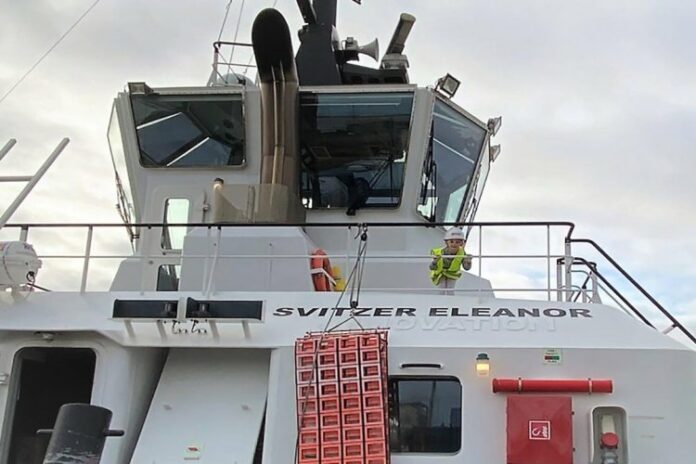
After the acquisition, the three-year-old vessel was renamed to Svitzer Eleanor and its ownership officially passed to Svitzer. Svitzer Eleanor will follow the naming theme of fellow tugs in service in Immingham, including Svitzer Josephine, Svitzer Kathleen and Svitzer Laura. 

The name Svitzer Eleanor was picked by and named after Eleanor Wright, the daughter of Training Master Sam Wright, who has worked on board the tug since Svitzer first chartered the vessel from Damen. After the paperwork was completed, six-year-old Eleanor Wright and her family were invited on a vessel visit which included inspection of the bridge and the engine room, along with treats at the at the Captain’s table.

The 75.3-ton bollard pull Damen RSD Tug 2513 is a solid, compact tug with high manoeuvrability; qualities that make the vessel ideal for servicing customers on the large tidal estuary waters of the Humber. With a length of almost 25m and a beam of over 13m, Svitzer Eleanor’s propulsion system includes two MTU 16V 4000 M63L main engines which can power the vessels to speeds of up to 13kt. 

The vessel, which is completely insulated and accommodates four people, carries a sound absorbing ceiling in the wheelhouse and includes floating floors. The superstructure is mounted to reduce noise levels, with the aim to improve working conditions on board and increase crew welfare and comfort.

Commenting on the announcement, Ita Dickson, Cluster Managing Director UK North, Svitzer Europe, said:

“Svitzer Eleanor will play a crucial role in further enhancing our operational capability in Northern England and will help us to solidify our position as the leading towage services provider in the Humber for the long term.”

Equinor farms down in Dogger Bank C and expands partnership with Eni

0

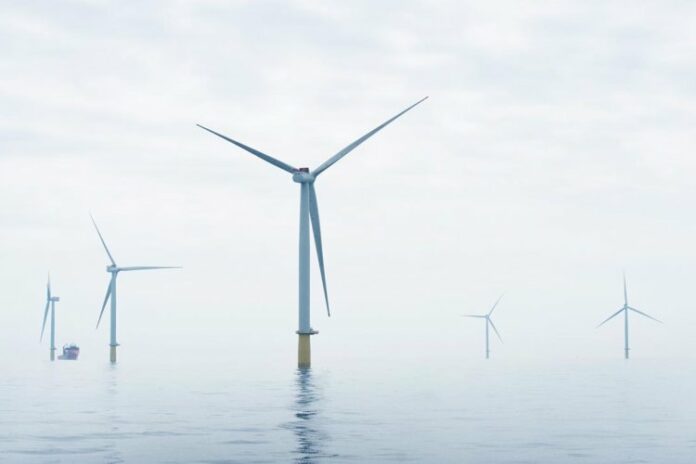
Equinor continues to capture value from the world class offshore wind asset obtaining an equity consideration of around GBP 70 million.

Eni has also entered into an agreement to purchase a 10% interest in Dogger Bank C from project partner SSE Renewables on the same terms. Once the transaction is complete, the new overall shareholding in Dogger Bank C will be SSE Renewables (40%), Equinor (40%) and Eni (20%).

Eni will enter the asset effective from financial close of project financing which is expected before end of 2021. The farm down transaction is expected to close in 1Q 2022, subject to regulatory and lenders approvals and customary purchase price adjustments.

Pål Eitrheim, executive vice president in Renewables in Equinor, says:

“With this offshore wind transaction, we continue to demonstrate value creation from Equinor’s renewables business. As with Dogger Bank A and B, the divestment in the Dogger Bank C project is in line with our strategy of accessing selective markets early and at scale, leveraging our offshore capabilities to mature and de-risk projects.”

Equinor and SSE Renewables secured 3.6 GW of offshore wind contracts for Dogger Bank’s in the UK Government’s 2019 Contract for Difference auctions. The first two phases, Dogger Bank A and Dogger Bank B reached financial close at competitive terms in 2020, underlining the attractiveness of the UK offshore wind assets and the confidence in the joint venture.

Once completed Dogger Bank will be the world’s largest offshore wind farm. In total it will generate around 18 TWh annually, enough renewable electricity to supply 5% of the UK’s demand, equivalent to powering six million UK homes.

Extended partner alignment will enable further synergies across, both in the construction and operations phase of the Dogger Bank wind farm. SSE Renewables will continue to lead on the development and construction, and Equinor will operate the asset on completion.

Eitrheim says:

“Dogger Bank is the largest wind farm in the world under construction. Together with SSE Renewables we are pleased to continue with Eni as an industrial partner for all three phases of the windfarm. Together we will deliver value to the UK for years to come and help drive towards a net zero emissions future for the UK.”

Equinor aims to become a global offshore wind major and expects to increase its current installed renewables capacity to 12-16 GW by 2030.

ABB and HGS team up to offer an engine part-load optimization service

0

Hyundai Global Service (HGS), the aftercare division of shipbuilder and engine maker Hyundai Heavy Industries, has teamed up with ABB Turbocharging to offer an engine part-load optimization (EPLO) service for shipowners seeking to cut emissions in line with the International Maritime Organization’s (IMO) requirements.

EPLO can help shipowners find the optimum power range for their engine power limitation, optimize combustion within the reduced load range and reduce fuel consumption, emissions and maintenance costs.

HGS Managing Director of Green Engineering Sales, Sung Ki Ahn said:

“This strategic technical alliance in response to IMO’s new regulations will offer excellent value to our shipowner customers as they aim to reduce emissions and improve efficiency. We are delighted to be able to draw on ABB’s wide experience and understanding of turbocharger and engine tuning.”

ABB Turbocharging Head of Global Service Sales, Dirk Balthasar said:

“We see part-load optimization as an important part of maximizing the benefit of engine power limitations and ensuring that the engine system operates optimally at its new loading. With HGS’ engine technical service capabilities and experience of project management, and ABB’s turbocharging know-how, upgrade capabilities and unique software solutions, this partnership offers a holistic solution that will be hard to find elsewhere.”

HGS and ABB will provide a full, turnkey package covering engines, turbocharger retrofit solution and NOx certification (liaising with classification societies), supported by digital solutions to monitor the in-service performance of engines and turbochargers. The companies can offer several forms of optimization targeting specific customer needs and vessel operating profile. This ranges from installing wastegates to engine derating or turbocharger cut-out. In each case ABB and HGS can fully manage the project autonomously.

The service also enables shipowners to optimize operations on an ongoing basis with the inclusion of ABB Ability™ Tekomar XPERT, an engine diagnosis solution. The tool offers personalized advisory based on real-time, in-service data that helps shipowners to further reduce fuel costs and CO2 emission.

Neptune Energy and EDF complete first-of-its-kind methane study in UK

0

Neptune Energy today announced the completion of a first-of-its-kind collaboration with Environmental Defense Fund (EDF) to measure methane emissions on a working UK offshore platform using advanced drone technologies. Methane is the primary component of natural gas and is a potent greenhouse gas. 

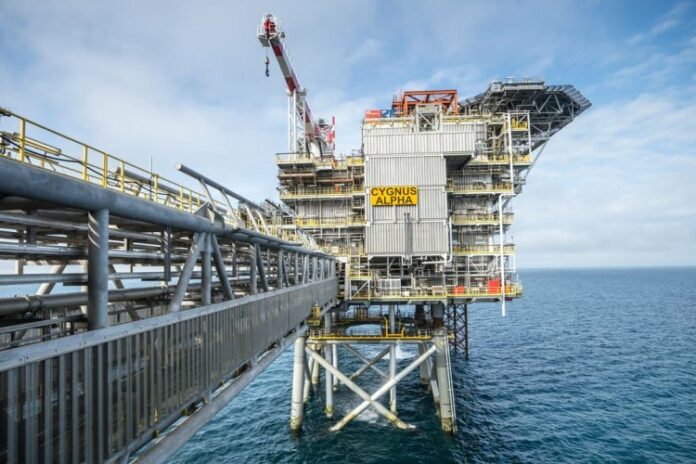
Fixed wing and rotary drones equipped with methane-sensing equipment were deployed for the study on the Neptune-operated Cygnus gas production facility in the UK Southern North Sea, to assess advanced methods for identifying and quantifying facility-level offshore methane emissions, and actions to reduce them. The results of the study will be published in a scientific peer-reviewed paper in 2022.

A key objective was to establish an accurate, scientific benchmark for measuring total methane emissions within an offshore environment to help develop best-practice approaches for the wider upstream industry. 

Neptune Energy’s VP Operations Europe, Pete Jones, said:

“The abatement of methane emissions will be crucial in meeting the Paris Agreement goals and, given the short lifespan of methane emissions, we know that taking meaningful action today can bring positive results in as little as nine years. Neptune already has one of the lowest methane intensities in the sector, at 0.01%, compared with the industry average of 0.23%, and has set a target of net zero methane emissions by 2030.

“Proactive action by the UK offshore industry including the reduction of flaring and venting contributed towards a 11% fall in upstream GHG emissions between 2018 and 2020. By using advanced, existing technologies and novel approaches such as those employed in this latest study, the UK sector can continue to lead the way in driving down methane emissions from oil and gas operations.”

EDF scientists coordinated the five-day study which involved a team from UK-based drone platform provider, Texo DSI, operating a rotary drone provided by Scientific Aviation. Equipped with sensing technology, the drone measured emissions at multiple locations around the platform.

In parallel, an unmanned fixed-wing drone carrying methane measuring and analytics technology provided by SeekOps was flown from Weybourne Airfield in Norfolk to the Cygnus platform. Operated by Flylogix, the aircraft circled the facility, starting at a point above the platform and reducing incrementally to just above sea-level, recording the total volume of emissions. Covering a total of more than 313 miles, the operation was believed to be one of the longest of its kind to be carried out in the UK North Sea.

Flylogix’s Executive Chairman, Charles Tavner, said:

“The study demonstrates how the best of new technology can be harnessed and deployed to tackle the challenge of reducing methane emissions. Using a long-range, fixed wing unmanned system mobilised from the shore provides accurate measurement and quantification and reduces the cost, risks and environmental impacts associated with taking people offshore.”

Neptune was the first independent E&P to sign the Climate and Clean Air Coalition’s Oil and Gas Methane Partnership (OGMP), which is led by the UN Environment Programme in partnership with the European Commission, UK Government, EDF and over 70 oil and gas companies.

Mark Brownstein, EDF’s Senior Vice President for Energy, said:

“Data transparency is paramount. Oil and gas companies have made commitments to tackle emissions, but you can’t just assert strong environmental performance. You must show it. Having credible data is the first step and we recognise Neptune Energy for valuing emissions reporting that is based on rigorous science.”