-1.5 C
New York
Home Blog Page 518

Equinor plans to launch GW-size floating wind concept in Scotland

0

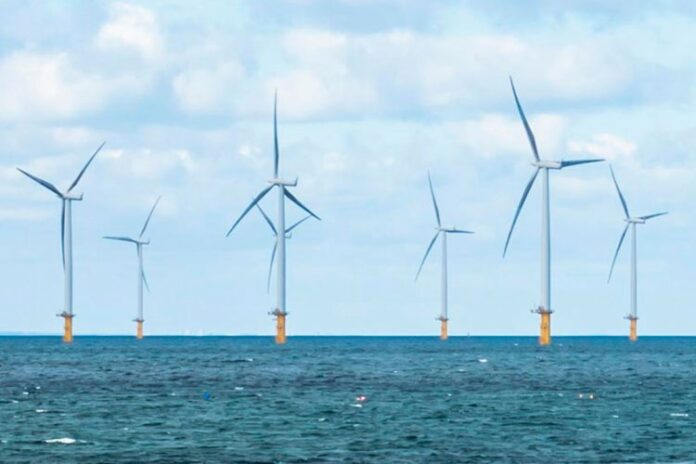
Having reaffirmed its commitment to Scotland earlier this year, the offshore energy company has now revealed its preferred floating wind foundation design for full-scale gigawatt (GW) commercial floating offshore wind, if successful in ScotWind. The Wind Semi, a semisubmersible wind turbine foundation, has been designed with flexibility, specifically to allow for fabrication and assembly based on local supply chain capabilities.

Sonja C. Indrebø, Equinor’s vice president of Floating Offshore Wind, says:

“We are ready to develop the next generation, large-scale commercial floating offshore wind in Scotland. By leveraging our twenty years of floating offshore wind experience and innovations, we plan to develop GW-size floating projects in one single phase. Implementing large scale projects will accelerate Scotland’s energy transition to net zero. At 1GW, this project would be over 30 times bigger than Hywind Scotland, the UK’s and Equinor’s first floating project and have the potential to not only position Scotland as a leader in deep water technology, but also create opportunities for both existing suppliers and new entrants to the offshore wind sector.”

To ensure that the technology can be deployed cost effectively whilst maximising local benefits, Equinor has developed a set of design principles and solutions that are applicable across floating concepts.

Equinor installed the first ever floating offshore wind turbine in 2009, and operates Hywind Scotland (30 MW), the world’s first floating wind farm. Since it began production in 2017, Hywind Scotland has consistently achieved a higher capacity factor than other UK wind farms, demonstrating the true potential of floating offshore wind.

Indrebø says:

“Hywind Scotland proved that the floating concept works, and as we move to the next generation floating offshore wind projects, we need to demonstrate that floating offshore wind is deployable at scale, in different geographies cost effectively whilst bringing local benefits. We have seen the journey of fixed bottom offshore wind, and combined with our long experience in floating, we can take learnings into account as we design and innovate the concepts for full-scale GW floating wind farms.”
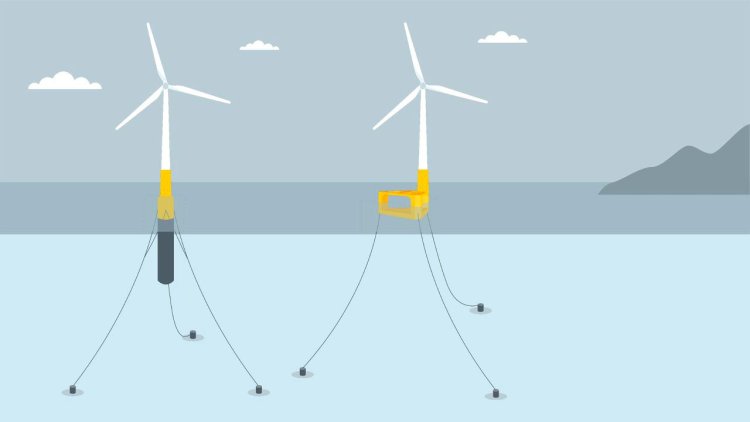
The Wind Semi has several features making it particularly suited for harsh waters, and solutions that can maximise the opportunities for the Scottish supply chain:

  • Increased dependability: By introducing a passive ballast system, the Wind Semi has a simple substructure design, reducing the risk of system failure and the amount of maintenance needed
  • Simpler, more robust design: A flat plate design that is free from bracings, heave plates and complicated nodes that are prone to fatigue cracking
  • Flexibility towards the supply chain: With a harbour draught of less than 10 m, the Wind Semi’s turbine integration can be assembled at most industrialised ports. The Wind Semi’s simpler flat plate design enables the substructure to be built in blocks that can either be fabricated locally and/or shipped from other locations. 

Indrebø says:

“Scotland can be in the forefront of this exciting technology. We asked ourselves how we can achieve industrial standardisation and maximise local content opportunities to create additional and sustainable long-term value from floating offshore wind projects. With a design-based approach we’ve used our experience and gone right back to basics to incorporate this focus in the initial concept design.”

Equinor is technology agnostic and will select the best suited floating wind concept for its projects. Water depths, conditions around shipyards and ports, and the specialisations and capacity of the local supply chain are primary drivers for selecting a given design.

Selecting the most cost-efficient concept design and achieving optimal fabrication efficiency is key to competitive full-scale floating wind parks. In Scotland, Equinor will actively work to develop a broader and more competitive supply chain that can efficiently and effectively deliver a ScotWind floating projects safely, on time, and on budget. In particular, Equinor will work closely with the domestic supply chains in Scotland and rest of the UK to maximise the opportunities for local suppliers and local communities.
Port of Salalah launches new end-to-end logistics service to Yemen

0

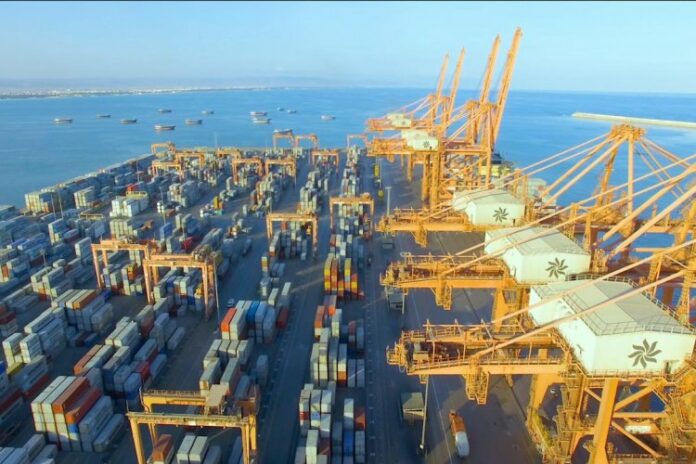
In partnership with Maersk, it has launched a new multimodal transport solution to Al-Mazyunah free zone as part of its regional strategy. It aims to support the growth of SMEs in Oman and Yemen and attract new investors.

Designed to facilitate inland services, the new offering extends beyond the Port and includes securing customs clearances and bonded trucking services to Salalah and Al-Mazyunah free zones hubs under carrier haulage. The new service reduces lead time and allows access to multiple markets.

Mark Hardiman, CEO of Port of Salalah, said:

“We’re excited to be expanding our inland service capabilities to help support customers beyond the Port with as part of our commercial efforts focused on our regional strategy which includes Yemen.”

Port of Salalah, acts as a facilitator in anchoring Salalah as gateway to Yemen and the current initiative, in partnership with Maersk, ensures seamless cargo movement where the customer gets single window service till final delivery location.

This will not only ensure increased efficiency to the customer but also has the potential to eliminate unexpected costs, including for example line demurrage and port storage. A dedicated team of experienced customer service personnel are always on call to ensure cargo is delivered safely and on schedule. In addition, the partnership offers multiple transport options allowing customers to access Mukalla, Aden and other inland destinations in Yemen.

Christopher Cook, Managing Director at Maersk UAE, Oman and Qatar commented:

“Our ambition is to serve our customers with end-to-end, integrated solutions which will simplify their supply chains. Our joint efforts with Port of Salalah aim to achieve this and we look forward to unlocking new value for our customers across the Middle East and North Africa region.”

As one of the world’s most efficient transshipment ports, the new offering is well positioned to offer a range of customers a consolidated, digital, streamlined service. Salalah delivers world-class terminal capabilities including containers, liquid and dry bulk handling.

The Port of Salalah currently serves large volumes of multiple commodities through Al-Mazyunah free zone.

First offshore vessel on the Norwegian shelf running on biofuel

0

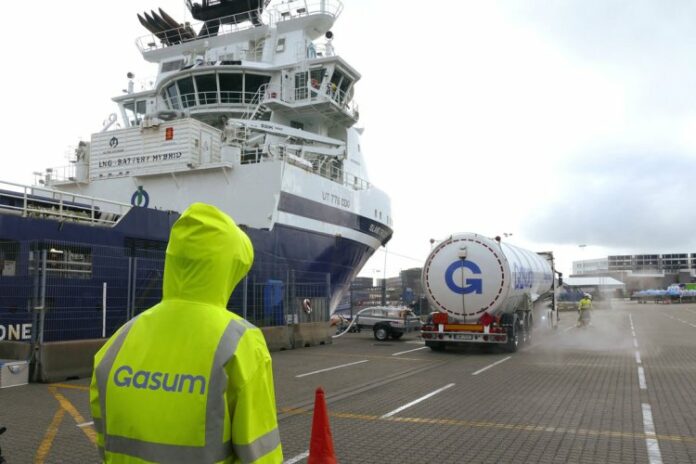
Island Crusader is the first offshore vessel on the Norwegian shelf running on biofuel, resulting in immediate and significant reductions in CO2 emissions.

The engine manufacturer Bergen Engines has previously run tests on land and concluded that switch to biofuel can be used without making any modifications to the vessel. 

Johan Mohr, head of procurement and logistics in Lundin, says:

“There is a significant potential in the oil and gas industry, but also in all other areas where LNG vessels are in use. With this project we can help open up a new market segment for biogas producers.”

The biogas used on Island Crusader is produced from cow manure and waste from fish and wood processing. It consists mainly of methane, however upon combustion, CO2 and water are formed. Since the raw material comes from biological material, the combustion is calculated as CO2-neutral as it enters the natural CO2 cycle. There is no net increase in the CO2 level in the atmosphere. .
 
Last year, the total consumption of LNG for Island Crusader was 1.502 tonnes, with associated CO2 emissions of 4.206 tonnes. By using biogas, the CO2 emissions will be eliminated. 

Tommy Walaunet, Managing Director of Island Offshore Management AS, says:

“We are proud to be a partner and supplier to a forward-looking player such as Lundin. They show that they will take the lead and use the solutions that are available to significantly reduce CO2 emissions. We believe in a step-by-step approach to zero emissions, and this requires close and good cooperation between the actors in the value chain and with the authorities. We are confident that this will also make our vessels more attractive in the market.”

Currently the supply of biogas is insufficient for all LNG vessels to replace their fuel, however plans exist to build several production facilities in Norway. This will enable the industry to utilize recourses which currently is going to waste. In addition, new workplaces might be created.

An LNG-fuelled PSV is in principle among the vessels with lowest emission of greenhouse gases. A switch to biogas can eliminate practically this entire emission given the carbon neutral nature of the fuel. 

Harald Solberg, CEO of The Norwegian Shipowner’s Association, said:

“It’s extremely positive that the oil and gas industry is stepping up and paving the way for use of biogas in vessels. This demonstration also illustrates the potential for emissions reduction within all parts of the shipping industry where LNG vessels are used. A united international shipping industry has the ambition of becoming climate neutral by 2050. If we are to achieve this goal, we need new zero-emission technologies that won’t be accessible for a few years. The opportunities we now see with biogas will help bridge the gap until then.”  

TenneT presents 6-gigawatt hub to accelerate offshore expansion targets

0

With the wind power booster, six gigawatts of offshore capacity can be realised three years earlier. For comparison: six gigawatts of capacity correspond to six large power plants.

The concept was presented in Germany together with the Energy Ministers of Lower Saxony, Olaf Lies, and Schleswig-Holstein, Jan Philipp Albrecht, as well as Bremen’s State Councillor Kai Stührenberg – representing Bremen’s Senator for Economic Affairs Kristina Vogt.

The wind power booster is a first concrete step towards a long-term meshed high voltage direct current grid at sea and on land. A meshed direct current grid (HVDC overlay grid) on land and at sea ensures long-term security of supply and reduces the economic costs of integrating renewable energies to achieve the climate targets.

TenneT COO Tim Meyerjürgens said:

“Building on our extensive experience in the construction and operation of offshore grid connections, our conceptual and technological innovation for a six-gigawatt hub demonstrates a way to significantly accelerate the achievement of ambitious climate protection targets. 

We see this as an offer also for the German government coalition negotiations currently underway, which, as we know, are seeking a boost for the expansion of renewable energies in Germany. At the same time, we are laying the foundation for a sustainable interconnection of the direct current grid.”

Olaf Lies, Lower Saxony’s Minister of Energy and the Environment, said:

“The key role of offshore wind energy for the energy and climate goals becomes even clearer when we look at the cross-sectoral implementation of the energy transition – i.e. also the energy needs to be met by renewables outside the electricity sector. This will not be possible without green hydrogen and the green electricity it requires. In addition to the role in energy and climate policy, there is also the importance in terms of industrial and employment policy – for northern Germany, but also far beyond.

Together with our neighbouring federal states, Lower Saxony has the chance to become the gateway for offshore energy for the whole of Germany. In order to be able to decisively use the opportunities of hydrogen technology in the sense of a sustainable energy supply for the local industry and business location, we must already create the technical prerequisites today and therefore also initiate a significant step in grid planning in the direction of a future-oriented, cost-efficient and internationally connected direct current grid. In view of the recent stagnation in the expansion of offshore wind energy, we also need approaches like this that allow us to pick up the pace again.Because time is otherwise running out. Preparing for the future multi-terminal deployment would also have direct benefits in Wilhelmshaven by requiring less space for the planned projects on site.”

Schleswig-Holstein’s Minister of Energy Jan Philipp Albrecht said:

“The concept presented to accelerate the expansion of offshore wind energy use while saving power lines is a building block in the right direction. We need to come up with a viable target concept as soon as possible on how we want to expand our infrastructure by 2045. And we have to start planning for this today. We want a European energy transition and this includes a European system interconnection that includes not only electricity but also the production and transport of green hydrogen. We will take an integrative, interconnected approach and build strong future-proof energy infrastructures in the centre of Europe.”

Connecting Europe’s largest sailing sand production plant on shore power

0

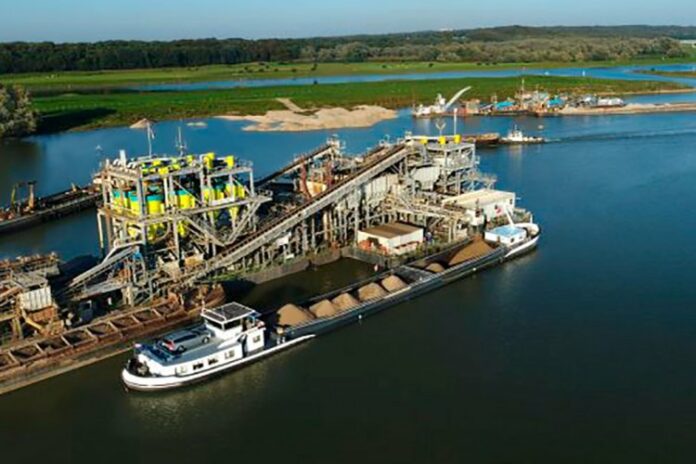
Bakker Sliedrecht has provided one of Europe’s largest floating sand plants of Dekker Group with a sustainable shore power connection. The system integrator has carried out the delivery and installation of the high-voltage facilities at the sand plant in cooperation with Dekker Grondstoffen and Verhoef EMC.

By connecting to shore power, the immense production plant can now run on sustainable electricity. This can save over 3 million liters of diesel per year and reduces CO2 emissions with 80% per tonne of sand and gravel that is being extracted.

The sailing sand production plant consists of a suction dredger that sucks up the sand, the Rotterdam 58, and a floating sand classification installation, the Rotterdam 55, that sorts the sand and soil and prepares it for supply to the concrete and asphalt industry. The ship has already been electrified earlier with the help of Bakker Sliedrecht. 

Bakker Sliedrecht installed the high-voltage cables connecting the installation with the onshore grid operator’s power station. On board, Bakker Sliedrecht was responsible for the delivery and commissioning of the 24kv high-voltage installation, the transformers that convert 10kv to 420 volts and all high-voltage cables. The transformer on board, as well as the high voltage cables, are prepared for the increase of the grid voltage from 10kv to 20kv. This will increase capacity on the congested high-voltage grid.

The construction of electrical infrastructure on vessels and land installations is a specialty of Bakker Sliedrecht, whether it concerns high, medium or low voltage. The company has also connected dozens of solar and wind parks to the high-voltage grid. Bakker Sliedrecht previously electrified the crane vessels Thialf and Sleipnir of Heerema Marine Contractors, allowing them to operate on sustainable shore power when they are moored at the quay of the Caland Canal in Rotterdam. This significantly reduces noise and emissions of CO2, nitrogen, sulfur dioxide and particulate matter. 

Nico IJzerman, an account manager, Bakker Sliedrecht, says:

“These kinds of projects fit into Bakker Sliedrecht’s strategy to electrify ships and make them more sustainable. For the project at the sand factory of Dekker Group, our expertise and experience in the field of high voltage technology and the connection to shore power was particularly important.”

BAE Systems’ naval gun selected for U.S. Navy’s new constellation-class frigates

0

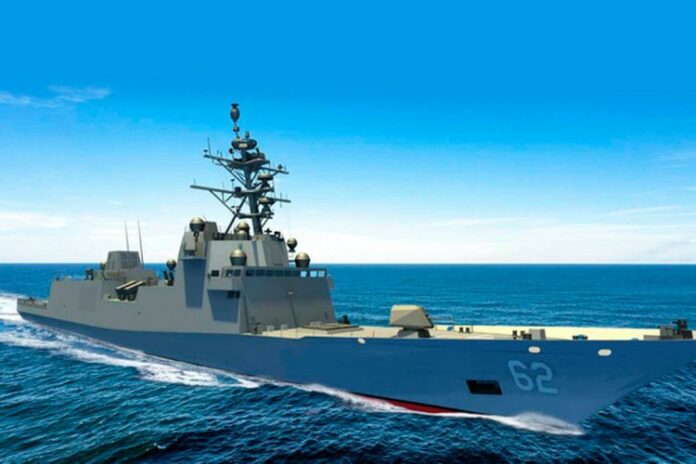
The new Constellation class of multi-mission guided-missile frigates is designed to operate in blue water and in the littorals, for an increased forward naval presence.

The Mk 110 gun system, known internationally as the Bofors 57 Mk 3, is the deck gun of choice for the Constellation class. It is a multi-mission, medium-caliber shipboard weapon, effective against air, surface, or ground threats without requiring multiple round types. The system is capable of firing up to 220 rounds per minute at an effective range of more than nine nautical miles using BAE Systems’ six-mode programmable, pre-fragmented, and proximity-fused (3P) ammunition.

Brent Butcher, vice president of the weapon systems product line at BAE Systems, said:

“The selection of the Mk 110 for the U.S. Navy’s Constellation class frigates signifies confidence in the gun system and its ability to meet current and future needs in shipboard defense. The Mk 110 gun system provides this next-generation frigate with the continued performance that our surface fleet has come to expect from its intermediate caliber guns.”

This contract also includes providing a Mk 110 system to the U.S. Coast Guard’s third Argus Class Offshore Patrol Cutter, USCGC Ingham. Deliveries are expected to begin in 2023 under the contract with Naval Sea Systems Command Integrated Warfare Systems 3C (NAVSEA IWS). 

The 57mm Mk 110 is currently in service on the Navy’s Littoral Combat Ship and the U.S. Coast Guard’s National Security Cutter. To date, BAE Systems is providing 39 Mk 110 guns to the Navy and 15 to the Coast Guard. Worldwide, 103 Mk 110/57 Mk 3 naval gun systems are under contract with nine nations.

MacGregor secures order from RMC for two RoPax vessels

0

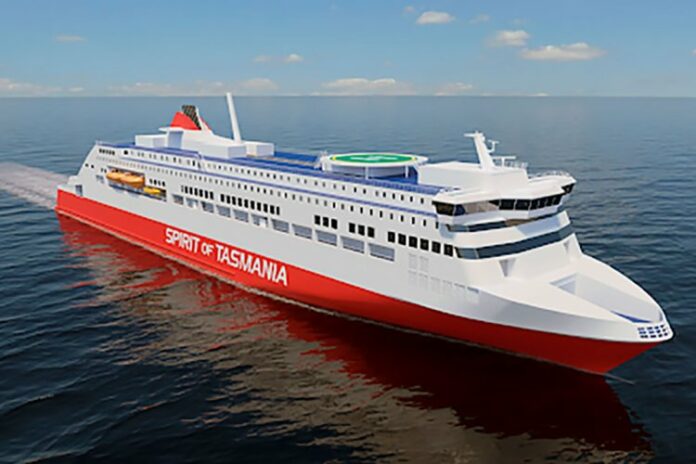
The order was booked into Cargotec’s second quarter 2021 order intake, with deliveries planned to commence during the third quarter of 2022 and completed during the first quarter of 2023. 

The contract is a result of the long-standing relationship between MacGregor, RMC Finland and TT-Line, with scope of supply encompassing bow and stern access equipment, internal ramps, car decks, provision trailer lift and cover, shell doors and dedicated hydraulic/electric systems. 

Bernard Dwyer, Chief Executive Office, Spirit of Tasmania, says:

“We regard MacGregor as a professional, reliable and innovative solution provider that fully supports us throughout the lifecycle of our ships, including the design and build phase, annual inspections and service support.”

Jyrki Heinimaa, CEO, RMC Finland, says:

“Through our previous collaboration and knowledge of MacGregor’s extensive installed base and expertise, we are confident in the supply of high-quality RoPax vessel equipment that will fully meet both our and our customer’s needs.”

Magnus Sjöberg, Senior Vice President, Merchant Solutions Division, MacGregor, says:

”We are delighted to further strengthen our long-standing relationship with RMC and TT-Line through supply of comprehensive cargo access equipment to the new RoPax vessels.”

Oldendorff: New series of Kamsarmaxes ordered at Hantong Shipyard

0

The orders are for 5 firm vessels and 7 options. The options are likely to be declared during Q1 of 2022, which would mean that Oldendorff will have built a total of 31 vessels at Hantong between 2016 and 2023, comprised of 7 Newcastlemaxes and 24 Kamsarmaxes.

The latest orders are for the new Sdari-82 (2020) design, which features an improved hull form for an even lower consumption and a better light running margin (LRM) for the propeller. At a speed of 14.0 knots, the consumption of the MAN-B&W 6S60ME-C 10.5 engine on design load draft will be 23.18 tons (basis ISO conditions and a LCV of 42,700 kj/kg).

The firm and optional vessels will deliver between July 2022 and September 2023. Some of them have been resold to another owner.

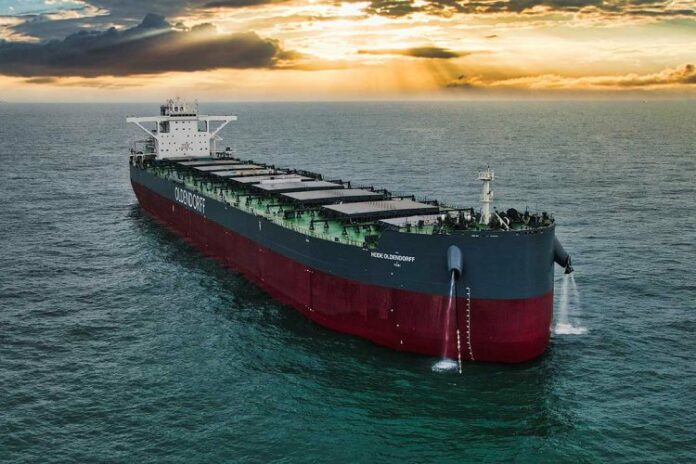
Next month, Hantong will also deliver the last two 209,000 tdw Newcastlemax newbuildings (MV “Heide Oldendorff” and MV “Hauke Oldendorff”), which will service a 10 year Contract of Affreightment from 2023 onwards.

So far this year, OLDENDORFF CARRIERS has acquired 16 vessels and holds 7 options:

  • 2 x 182,000 tdw – NBs ex-yard Namura Nov-22 and Feb-23
  • 1 x 119,000 tdw – built 2013 at Sanoyas
  • 1 x 111,000 tdw – built 2012 at Mitsui
  • 1 x 99,000 tdw – built 2013 at Tsuneishi Zhoushan
  • 2 x 96,000 tdw – built 2011 and 2013 at Imabari
  • 2 x 93,000 tdw – built 2012 at Cosco Zhoushan
  • 5 x 82,000 tdw – NBs ex-yard Hantong Jul-22 onwards (+ 7 options)
  • 2 x 61,000 tdw – NBs ex-yard DACKS Jul-22

ABS NS partners with Siemens to accelerate path to sustainable shipping

0

ABS Nautical Systems (ABS NS) and Siemens Energy Marine (Siemens), a global provider of energy technology, have joined forces to automate data capture and enhance compliance, including decarbonization targets, for ship owners and operators. ABS NS’ powerful digital solution, NS eLogs, is integrating with Siemens’ data application, SISHIP EcoMAIN, to automatically capture, consolidate, manage and visualize essential emissions data.

NS eLogs replaces traditional paper logbooks with an easy-to-use electronic logbook that reduces crew workload, eliminates error and improves access to data for compliance and operational insights. NS eLogs can be connected to equipment from suppliers and receive data directly from the source, eliminating the need for multiple devices to collect and decipher valuable data.

Evan Gooch, President of ABS Nautical Systems, says:

“By integrating our data-application tools, ABS Nautical Systems and Siemens Energy can now provide clients a more comprehensive and automated way to monitor and manage highly regulated sustainability goals. Our expertise of providing marine operations with advanced digital solutions will continue to expand as we further employ the SISHIP EcoMAIN platform with additional NS software modules to deliver even deeper insights into ship operations and performance.”

Patrick Mueller, Digitalization Business Owner of Siemens Energy Marine, says:

“SISHIP EcoMAIN Suite, similar to NS eLogs, currently lays the foundation for efficient fleet-wide management. By implementing NS eLogs as an embedded function, our clients will now be able to visualize data like never before, unlocking the competitive need to meet today’s compliance challenges with ease. Logbook data will now be augmented digitally, decreasing administrative work and improving workforce productivity for optimized green shipping operations.”

NS eLogs not only improves the quality and security of data but allows for easy replication to shore through remote access. Accepted by over 34 flag states, NS eLogs seamlessly captures emissions data and streamlines requirements for CII, EEXI, MRV and IMO-DCS. ABS NS has continuously improved as a leading environmental compliance solution for the maritime industry with hundreds of enhancements made every year to the NS Enterprise Suite.

SISHIP EcoMAIN Suite continues to enable optimized fleet management by collecting and processing the operational data of all the relevant onboard systems and equipment. Applications identify potential areas for optimization in terms of efficiency increases or the implementation of best practices and give ship operators and crew targeted assistance when it comes to decision making.

Oil companies to unlock new opportunities via SURF Commercial Agreement

0

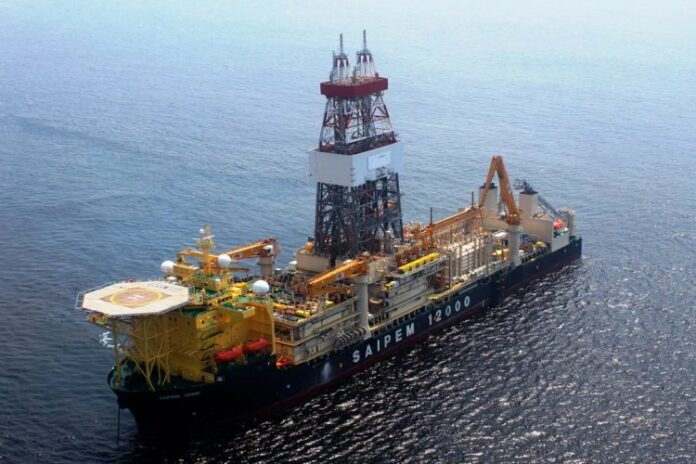
Saipem and TechnipFMC have announced the two companies have entered into a global commercial agreement that will allow them to identify projects worldwide that could be jointly executed for the benefit of clients.

The commercial agreement will pursue specific Subsea Umbilicals, Risers and Flowlines (SURF) projects where the combination of the companies’ complementary world-class assets, technologies, products and competencies improves project economics and de-risks the overall project development for the benefit of all stakeholders.

The collaboration will have access to a broad range of SURF products and installation methods, providing greater operational flexibility and optimized execution strategies under EPCI (Engineering, Procurement, Construction and Installation) and iEPCITM  (integrated Engineering, Procurement, Construction and Installation) project execution models.

Stefano Porcari, Chief Operating Officer of the E&C Offshore Division, at Saipem commented:

“The SURF commercial agreement with TechnipFMC represents an important milestone to offer a more competitive and reliable value proposition to our clients. The agreement will provide a pool of complementary enabling vessels and facilities and a consolidated Reel laying and J-laying technology base. Together we will be able to provide a full service for those challenging developments requiring a ample range of technologies and capabilities. We are very excited with this commercial agreement and with the opportunities that will be released to the benefit of our stakeholders”.

Jonathan Landes, President, Subsea, at TechnipFMC commented:

“We are very pleased to partner with Saipem for the creation of this alliance. Working together with Saipem, we will be well-positioned to efficiently utilize complementary assets and capabilities to create differentiated technical solutions that further optimize project execution. Importantly, the strengthened offering will also expand the potential market for iEPCI™ opportunities when combined with TechnipFMC`s innovative Subsea 2.0™ production systems”.