1 C
New York
Home Blog Page 502

Partners to develop offshore wind farms in New Zealand

0

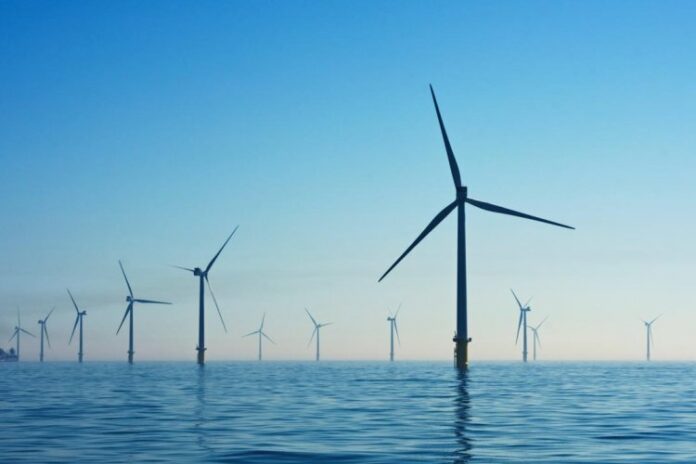
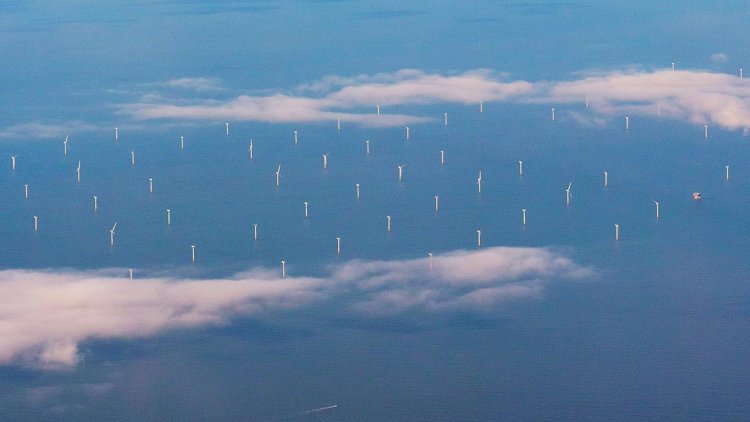
Partners have launched “Haumoana – New Zealand Offshore Wind Capacity Building”, a report which highlights New Zealand’s untapped potential for offshore wind development and the opportunities to establish local supply chain as well as create enduring employment in the sector.

The parentship brings together BlueFloat Energy, a leading offshore wind developer with a global pipeline of projects, with Energy Estate, a developer of renewable energy and green hydrogen projects in Australia and New Zealand, and Elemental Group, one of the pioneers in the offshore wind sector in New Zealand.

Carlos Martin, CEO of BlueFloat Energy said:

“Offshore wind is emerging as one of the key solutions to climate change crisis as it can decarbonise global economies quickly and at scale. Additionally, it can prove pivotal in revitalising coastal communities and placing energy generation close to consumption centres.”

New Zealand has world class offshore wind resources and is well placed to benefit from the falling cost of offshore wind. This new competitive source of electricity complements perfectly the existing hydro, geothermal and onshore wind assets.   Offshore wind can accelerate New Zealand’s progress towards achieving its net zero target and contribute towards the decarbonisation of other sectors, such as transport and agriculture.  

Simon Currie, co-founder of Energy Estate commented:

“I witnessed first-hand the rapid development of the offshore wind industry in Europe.  Our goal is to bring the lessons learned from around the world to a New Zealand setting and develop an industry which creates enduring benefits for the iwi and all stakeholders.   A good example of our approach is exploring the opportunities to foster a green hydrogen and e-fuels industry that harnesses the fantastic winds across New Zealand to decarbonise domestic demand and export green fuels to the world.”

This report is the first in a series of capacity building and enabling activities including sponsoring the NZ offshore future energy forum being held this week in New Plymouth. 

The report centres on the ways in which New Zealand can build its domestic capabilities across the offshore wind value chain – from supply chain to ongoing employment to decommissioning. It draws on precedents from global case studies and seeks to highlight the ecosystem that can be built around the offshore wind industry.
The key messages from the report include:

1) Fostering regional and national economic development

  • Offshore wind will provide long-term employment opportunities to thousands of local workers and can provide employees in the offshore oil and gas and other marine industries the opportunity to redeploy their technical expertise and skills
  • The offshore wind industry will establish a broad ecosystem of regional economic development by supporting local supply chain, including manufacturing and services
  • The offshore wind industry in New Zealand could facilitate trans-Tasman collaboration in manufacturing and set up world-class skills and training programmes

2) Delivering broader benefits for Aotearoa and our communities

  • Given offshore wind is a new industry in New Zealand, there is an opportunity to design the regulatory framework and development standards in a way that delivers wider benefits to iwi and local communities. This could include mandates for local employment and apprenticeships, contiguous business opportunities (like seaweed farming) and re-skilling programmes for workers
  • Offshore wind can be built close to demand centres in parts of New Zealand where other technologies are impossible to deploy at large scale, decreasing transmission costs for energy users and reducing the dependency on South Island generation.
  • Offshore wind can accelerate New Zealand’s progress towards achieving its net zero target
  • Existing infrastructure, such as offshore oil and gas infrastructure and ports, can be repurposed

3) Supporting innovation

  • New Zealand has some of the best offshore wind resources globally. There is a real opportunity to create cost-competitive green hydrogen and e-fuels which can meet domestic demand and establish a new export industry
  • Offshore wind can help corporate energy users meet their increasing demand for renewable energy, for instance through buying groups
  • Local businesses can partner with experienced international offshore wind players and learn from their experiences to build an offshore wind supply chain and skill base that not only services the domestic market but all over the world.

Simon Corbell, CEO of the Clean Energy Investor Group and Chief Advisor to Energy Estate shares that:

“Offshore wind development will be a key new clean energy resource development sector for New Zealand and Australia.  Skilled trades are already transferrable between the jurisdictions and opportunities exist for creating first-of-a-kind training for offshore wind operations. Existing capabilities and experience in the marine and offshore oil and gas sectors should also be explored, and new partnerships created that enable existing workforces to pivot into a new offshore wind sector as it develops. The stretch goal is to create a Trans-Tasman centre of excellence which can serve the domestic industries and support the wider Asia-Pacific markets as the offshore wind industries expands across the wider region. “

Nick Jackson, Director of Elemental Group, commented:

“BlueFloat, Elemental and Energy Estate have a shared vision for Aotearoa New Zealand. We all understand and are deeply committed to achieving net zero as soon as possible. Beyond that, we are also dedicated to ensuring that oil and gas workers, the supply chain and coastal communities can recognise the benefits from an orderly transition. Our goal is to develop an offshore wind industry which puts iwi front and centre and ensures that all stakeholders get to participate rather than sit on the side-lines.”
Ports of Stockholm tests unique solar-powered smart buoy

0

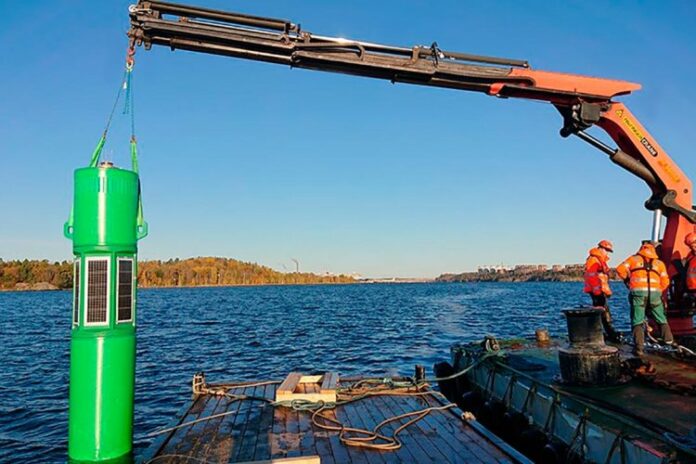
As part of the Intelligent Sea EU project, Ports of Stockholm is testing smart navigational markers, among other things for improved efficiency of service and maintenance. The navigational markers will be more sustainable and also withstand severe icy weather conditions.

During the autumn a new solar-powered smart buoy was introduced into the Stockholm fairway. This is the fifth smart navigational marker in a series, and the last to be tested by Ports of Stockholm as part of the Intelligent Sea EU project. Finnish company Arctia-Meritaito is running the project together with Ports of Stockholm and the Port of Naantali as project partners.

Arctia-Meritaito has developed the fairway buoy, and similar buoys have previously been installed at Stockholm Norvik Port. The difference is that the buoy in the Stockholm fairway has been equipped with solar cells for charging the buoy’s batteries.

Fredrik Lindstål, Chair of the Board at Ports of Stockholm, says:

“We hope that the solar cells, in combination with the fact that the buoy is remotely controlled using 4G, will make service and maintenance more efficient. We are also hoping for a cold, hard winter to test the buoy in severe weather conditions.”

Together with its twin at the Port of Naantali, the buoy is currently unique. Its construction and technology are designed to withstand severe weather conditions. The solar cells are integrated into the buoy and the batteries are specially constructed to be resilient to icy winters. The rechargeable batteries are more sustainable, with an operational lifetime of between 7-10 years, in comparison to the current normal one-year lifetime. The batteries therefore need to be replaced much less frequently. The buoy is equipped for remote monitoring of its batteries, solar panel, light signal and position. This makes both service and maintenance more efficient, as the number of times a service vessel needs to be sent out are fewer, which also reduces emissions.

The buoy is 10 metres tall, with 3.5 metres visible above the water surface. It measures 80 centimetres in diameter and is equipped with an LED lamp. A ten metre-long cable chain and seven tonne concrete attachment ensures that the buoy is securely anchored on the sea bed.

The EU Intelligent Sea Project runs from 2018 until 2022. The project is funded by an EU grant from the Connecting Europe Facility (CEF) programme.

Port of Kiel describes path to climate neutrality by 2030

0

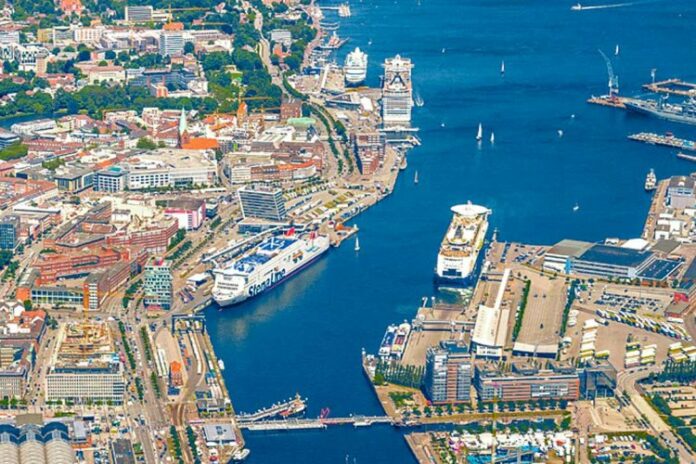
The path to climate neutrality is described in a three-step plan that puts the port’s BLUE PORT concept into concrete terms and was unveiled on 24th November with the first presentation of the environmental report. 

Dr Dirk Claus, Managing Director PORT OF KIEL:

“We support the climate protection goals of the State Capital City of Kiel and are taking a pioneering role in terms of CO2 reduction. The port will be climate-neutral by the end of this decade.” 

The port’s three-step plan envisages covering 60 per cent of the energy requirements of ships calling at Kiel with green electricity as early as next year. By 2025, this figure is expected to reach 80 to 90 percent, before climate neutrality is achieved for all activities of the PORT OF KIEL in 2030 through the interaction of a wide range of measures. Emissions of nitrogen oxides and particles will also be further reduced by the measures introduced. However, these are already being dissipated in the background pollution today and are well below the applicable limit values.  

According to the environmental report, the PORT OF KIEL already avoided more than 6,200 tonnes of CO2 in 2020, while almost 18,800 tonnes were still emitted. 

Dirk Scheelje, chairman of the PORT OF KIEL supervisory board and member of the Bündnis 90/Die Grünen council faction:

“With the presentation of the environmental report, emissions are quantified and thus transparent for the first time. It shows that the BLUE PORT strategy initiated in 2018 is having an effect. We will also assess further progress on this basis.” 

Measures to supply all port facilities with 100 per cent climate-neutral green electricity have already been implemented. In addition, the energy demand at the terminals has been sustainably reduced by switching to economical LED technology and increasing energy efficiency, while at the same time photovoltaic systems provide around 290,000 kilowatt hours of solar energy every year. The PORT OF KIEL offsets the footprint of its business trips and is gradually converting its own vehicle fleet to electric drive. Incentives are provided to customers to promote the decarbonisation process.

On-shore power is a key element in reducing emissions in Kiel. After a first system for shore-side power supply was connected to the grid at Norwegenkai in May 2019, a second, larger system was commissioned at Ostseekai in June this year. 

From there, Stena Line ferries are regularly supplied with green electricity and, for the first time, two cruise ships, the “AIDAsol” and the “AIDAprima”, could also be connected. 

Dirk Claus:

“We have created the infrastructural basis so that ferries and cruise ships can berth in the city port without emissions. In the coming year, we want to handle 60 to 80 cruise calls at the Ostseekai in a climate-neutral manner and are starting with the construction of an on-shore power plant for the Ostuferhafen as well.” 

In order to make the processes at the freight terminals even more efficient at the same time, the Federal Ministry of Transport and Digital Infrastructure (BMVI) is funding the establishment of a digital test field in the port. Operational processes will be optimised and made more sustainable on the basis of a 5G campus network. In this way, climate-neutral growth in port handling is to be supported by innovative IT technology.

MPA and partners maintain cybersecurity readiness through inaugural exercise

0

The Maritime and Port Authority of Singapore (MPA) held an inaugural sector-wide maritime cybersecurity exercise today, codenamed ‘Exercise CyberMaritime 2021’, to put the sector’s coordination on cybersecurity incident management, emergency response plans, and crisis communications to the test.

The three-day table-top exercise on 26, 29 and 30 November, will be conducted in a hybrid format involving some 90 participants from MPA, port terminal operators PSA Corporation Ltd (PSA) and Jurong Port Pte Ltd (JP), as well as shipping company, Pacific International Lines (PIL).

The exercise focuses on the cyber-physical implications of potential cyber-attacks and the increased risks in data theft and loss. The scenarios will cover data leak, ransomware, web defacement, distributed denial of service (DDoS), supply chain attacks, and compromise of critical maritime and port infrastructure and systems. In the lead-up to the three-day exercise, participants undertook a series of scenario-planning sessions and workshops and updated their incident management and mitigation plans.

Mr Niam Chiang Meng, Chairman of MPA, will observe the exercise on 30 November, together with Ms Quah Ley Hoon, Chief Executive of MPA, Mr Ong Kim Pong, Regional Chief Executive Officer Southeast Asia of PSA International, Mr Ooi Boon Hoe, Chief Executive Officer of JP, and Mr Gan Chee Yen, Co-President and Executive Director of PIL. They will witness the operational responses to the attack scenarios and be updated on the exercise outcomes.

Mr Niam said:

“The maritime industry is undergoing rapid digitalisation. It is imperative to better prepare against the threat of cyber-attacks which have become more sophisticated. As the world’s busiest transhipment hub and a key node in the global supply chain, the maritime sector in Singapore will be more vulnerable if it is not prepared to deal with such cybersecurity threats. I am glad that the exercise has brought together our partners to test not only our readiness, but also enable better coordination in crisis response amongst all stakeholders in the maritime sector should an incident occur.”

Mr Ong said:

“At PSA, we have committed to updating and adjusting our cybersecurity posture to deal with the increased complexity and proliferation of connected systems in the maritime industry. The exercise is timely with the current industry-wide digital transformation and worldwide disruptions to supply chains. No global supply chain is independent of the port and maritime industry, in fact, they are wholly dependent. PSA, being one of the world’s premier hub ports, will work closely with our maritime partners to share cyber threat intelligence, establish a robust process and stress test our cyber defences to ensure resilience and sustainability in our systems.”

Mr Ooi said:

“As Jurong Port accelerates its digitalisation plans to improve waterfront work efficiency and develop port-centric ecosystems, it is important to step up our cybersecurity vigilance. We are happy to join MPA, PSA and PIL in this tabletop exercise to put our cyber incident management and emergency response plans to the test. This exercise also allows our team to build rapport with MPA and industry partners to strengthen our capabilities to deal with cybersecurity threats as a community.”

Mr Gan said:

“PIL is pleased to participate in Exercise CyberMaritime 2021. As a key member of Singapore’s maritime sector, PIL is committed to enhancing cybersecurity to protect our vessels, customers and crew, as we move ahead to drive digitalisation efforts to improve business and operational efficiencies.  Our participation in this table-top exercise will support us in ensuring the resilience of our cybersecurity systems and processes. We also hope to draw practical insights into ways we can further strengthen our preparedness in responding to such threats.”

Keppel awarded FSRU conversion and FPSO integration work

0

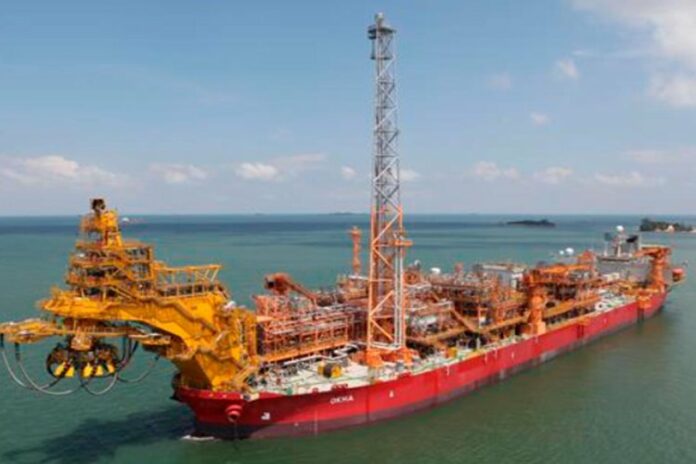
Keppel Offshore & Marine Ltd (Keppel O&M), through its wholly-owned subsidiary Keppel Shipyard Ltd (Keppel Shipyard), has been awarded work for the conversion of a Floating Storage and Regasification Unit (FSRU) and the integration of a Floating Production Storage and Offloading vessel (FPSO). 

For the first project, Keppel Shipyard has inked a Limited Notice to Proceed (LNTP) with a global provider of LNG shipping services to commence early works for the conversion of a Liquefied Natural Gas (LNG) Carrier into an FSRU. 

The scope of the LNTP includes engineering work commencing in 4Q 2021, with the Full Notice to Proceed (FNTP) for the remainder of the work expected within 1Q 2022 when the project reaches final investment decision. 

For the second project, Keppel Shipyard has received a Letter of Award (LoA) from BW Offshore, a fully-owned subsidiary of the BW Group, to undertake the integration work on a newbuild FPSO. The formal contract signing is expected by early 2022.

Keppel Shipyard will be responsible for the integration of about 35,000 tons of topside modules and a turret. Additional options are available for the fabrication of structures such as a flare tower. 

The total value of the two projects is expected to be around S$200 million, including the FNTP. Further announcements will be made when the FNTP on the FSRU project has been received, and when a definitive contract has been entered into between Keppel Shipyard and BW Offshore on the FPSO integration. 

The above developments are not expected to have any material impact on the net tangible assets and earnings per share of Keppel Corporation Limited for the current financial year.

Bladt Industries sign significant offshore wind contract with Vattenfall

0

The Danish renewable energy company Bladt Industries has announced winning the contract to deliver Transition Pieces (TP) for the two Danish offshore wind farms, Vesterhav Syd and Vesterhav Nord.

Vattenfall awarded Bladt Industries a contract for the fabrication of 41 transition pieces (TP) for the Vesterhav project, 21 units for Vesterhav Nord and 20 units for Vesterhav Syd.

The fabrication is planned to start in the spring of 2022, with delivery planned for early 2023. Each TP will have a height of 22,5 meters and a weight of approximately 260 tons.

The fabrication of the TP’s will take place at Bladt Industries’ facilities in Aalborg, Denmark.

The Vesterhav Syd and Nord offshore wind farms will consist of 41 wind turbine generators with a total capacity of 350 MW (180 MW on Nord and 170 MW on Syd). The offshore wind farms will both be located 10 km off the West coast of Jutland near Thyborøn (Nord) and Søndervig (Syd) in water depths of approximately 20 meters. The wind farms will produce enough electricity to supply 350,000 Danish homes in total.

Anders Søe-Jensen, CEO, Bladt Industries, says:

“We are excited to be supplying TP’s for a Danish windfarm and super proud to, again be working with one of Europe’s largest energy companies and experienced offshore developers.”

“Vattenfall is just like Bladt interested in taking a social responsibility and this project will ensure an education platform for a number of our apprentices that will participate in the manufacturing of the transition pieces.”


Investing NOK 10 billion in further developing the Oseberg field

0

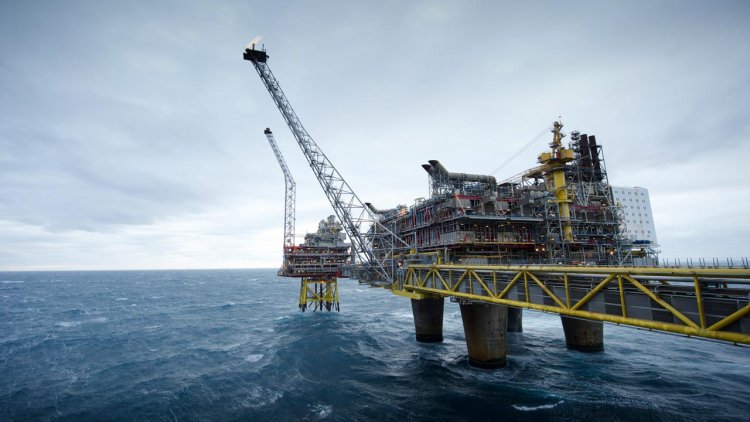
The Oseberg Area Unit partners will reduce CO2 emissions from the Oseberg Field Centre and the Oseberg South platform while increasing Oseberg gas production. An amended plan for development and operation (PDO) has been submitted to the minister of petroleum and energy Marte Mjøs Persen.

Two new compressors will be installed to boost recoverable gas volumes and the Oseberg Field Centre and Oseberg South platform will be partially electrified.

Geir Tungesvik, Equinor’s senior vice president for project development, says:

“It is important to Equinor and the Oseberg partners to produce oil and gas with the lowest possible emission level. This investment decision allows us to increase production of Oseberg gas considerably in the future, while reducing CO2 emissions by an estimated 320,000 tonnes per year. During the project planning we have received good support from and cooperated closely with our partners. We are now entering the execution phase together with highly qualified suppliers.”

Plans call for start-up of the new facility in 2026.

The work to be carried out on the platforms is extensive as three big modules totalling 3400 tonnes will be installed. Rebuilding of the Oseberg Field Centre will take four years and give work to 70 people. On Oseberg South, 40 people will be occupied for one year. This will be done while the plants are in full operation and will require close and good cooperation between all the different players.

Oseberg is the third largest oil producer ever on the NCS. When Oseberg came on stream, it was expected to produce around one billion barrels of oil. Today partners expect the field to produce a total of around 3.2 billion barrels of oil. Oil production is in the tail phase, but 60 per cent of the gas resources are still in the ground. When it comes to gas, Oseberg is also one of the major fields, only Troll and Snøhvit have more remaining gas resources on the NCS.

Geir Sørtveit, Equinor’s senior vice president for exploration and production west, says:

“With this investment we open a new chapter of the story of Oseberg, which is about to become one of the main Norwegian gas producers. We expect Oseberg to produce more than 100 billion sm3 of gas towards 2040. In terms of energy, the annual gas export from Oseberg will equal a quarter off all Norwegian hydropower.”

For the year 2020, Oseberg emissions totaled around one million tonnes of CO2. Since 2010, emissions at Oseberg have been reduced by around 15 percent, and there is an ambition of further reducing emissions by 50-70 per cent by 2030. The new compressors and electrification from shore is vital to reach this ambition.

Sørtveit continues:

“If the world is to reach its net zero emission goal, we must remove emission sources, also on the NCS. Electrification is an effective climate action as it involves large and swift emission cuts. The solution adopted gives a cut in emissions of about 50 per cent from the Oseberg Field Centre and the Oseberg South platform, representing an important move to continue the long-term value creation from the Oseberg area.”

In March 2021, Equinor obtained a licence from the Ministry of Petroleum and Energy (MPE) to construct, own and operate necessary electrical facilities to provide the Oseberg Field Centre and the Oseberg South platform with power from shore. Oseberg will have a total power demand of up to 105 MW. The project will also prepare for any full electrification of the installations in the future.

It is estimated that more than 70 per cent of investments in the Oseberg upgrades will go to suppliers in Norway.

Aibel AS has been awarded the contract for engineering, procurement, construction, and installation (EPCI) for partial electrification of the Oseberg Field Centre and Oseberg South, as well as upgrading of the gas processing capacity on the Oseberg Field Centre.

The scope of work includes electrical installations in a new substation at Kollsnes. The contract is valued at more than NOK four billion and Aibel estimates the work to require around 1300 person-years. Three modules will be constructed at Aibel’s yard in Haugesund, and most of the engineering and management will be carried out at Aibel’s office in Bergen, supported by their offices in Stavanger and Oslo.

Nexans has been awarded a framework contract by Equinor for delivering subsea power cables and their first assignment will be to deliver a 132 km cable for Oseberg. The cables will be fabricated in Halden and are scheduled to be installed by Nexan’s new «Nexans Aurora» vessel in 2023. The contract value is calculated at more than NOK 800 million.

Heerema Marine Contractors has been awarded a contract for transport and installation at an estimated value of NOK 60 million. In the summer of 2024, the «Sleipnir» vessel is scheduled for lifting in place the three big modules currently under construction at Aibel’s yard in Haugesund.

Skanska Norge AS has been awarded a contract for construction of a substation, cable trenches and landfall at Kollsnes. This contract is a cooperation with the Troll West electrification project.

The contracts are subject to government approval of the plan for development and operation.

Licence owners: Equinor Energy AS (operator) 49.3%, Petoro AS 33.6%, TotalEnergies EP Norge AS 14.7%, ConocoPhillips Skandinavia AS 2.4%.

Wärtsilä launches power limitation solutions for EEXI compliance

0

The technology group Wärtsilä has launched a new series of power limitation solutions that enable compliance with the IMO’s Energy Efficiency Existing Ship Index (EEXI) regulation. 

The EEXI regulation comes into effect in 2023 and stipulates the minimum energy efficiency level for existing ships already in service. Wärtsilä’s new power limitation systems allow owners to meet this requirement, despite the tight implementation schedule. Wärtsilä’s environmental offering also includes various energy efficiency solutions that enable compliance with the IMO’s Carbon Intensity Indicator (CII) requirements, which form part of the IMO’s strategy for reducing greenhouse gas emissions from shipping.

For meeting the EEXI requirements, three macro areas are relevant, namely Power Limitation, Energy Efficiency technologies, and Fuel upgrades. With the introduction of these latest power limitation solutions, Wärtsilä covers all three areas with proven solutions, and can thus recommend the optimal choice for meeting the specific needs of owners and operators.

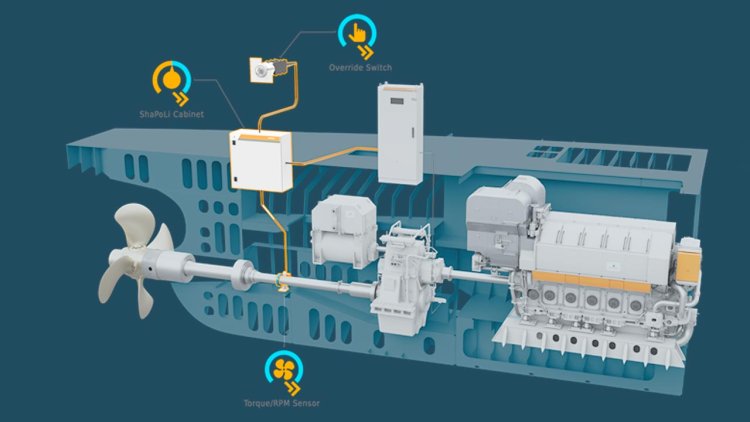
The power limitation upgrades being launched by Wärtsilä are verified and approved systems. They comprise Engine Power Limitation for 4-stroke engines, Engine Power Limitation for 2-stroke engines, Shaft Power Limitation for vessels with a controllable pitch propeller (CPP) and a Wärtsilä Propulsion Control System, and Power Limitation specifically dedicated to diesel-electric installations.

The upgrades effectively limit the engine or shaft power during normal operation, regardless of the power train combination and control system arrangements. The set limits of the solutions can all be overridden from the bridge. This is a mandatory feature stipulated by the IMO / MEPC guidelines, as are the monitoring and recording functions. The system data is stored in accordance with the regulations for inspection purposes.

Van Oord to install scour protection at Seagreen offshore wind farm

0

Seaway 7, the main Seagreen contractor, have contracted Van Oord to install scour protection around the 114 wind turbine foundations at the Seagreen offshore wind farm. This wind farm is located 27 kilometres off the coast of Angus in Scotland.

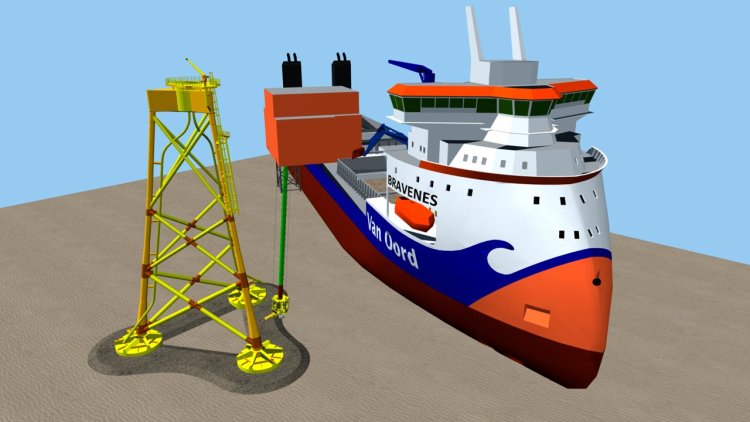
The wind turbines for this 1.1 GW offshore wind farm will be installed on three-legged jacket foundations. After the installation of these jackets, scour protection is required to avoid the effects of erosion. This is achieved by high precision rock installation around the jackets.

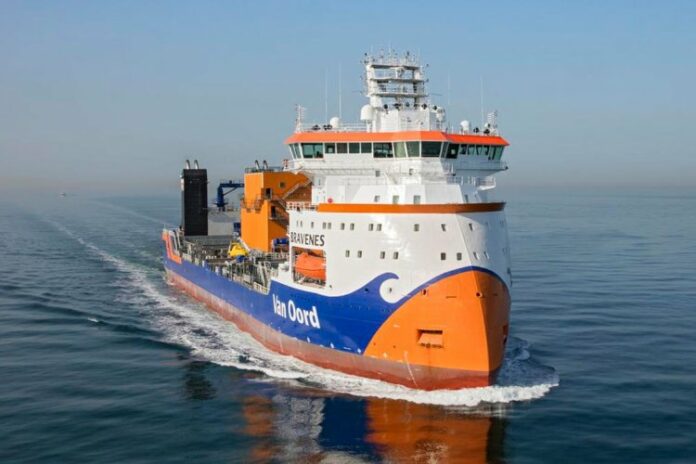
For this specific project, which started at the end of October 2021, Van Oord is deploying high dynamic flexible fallpipe vessel Bravenes. This vessel has a unique method for subsea rock installation thanks to the automated fallpipe system that can be skidded over the side of the vessel. This results in highly accurate and efficient rock installation in close vicinity to the jacket foundations using a powerful Remote Operating Vehicle (ROV).

In addition, flexible fallpipe vessel Nordnes will be deployed to install scour protection on several cable crossings. All subsea activities will take place in water depths of up to 50 metres.

When completed, the Seagreen Offshore Wind Farm will be Scotland’s largest, and the world’s deepest, fixed bottom offshore wind farm. It will provide a significant contribution to Scotland’s net-zero ambition and enough clean, renewable energy to power 1.6 million homes. 

Wagenborg Offshore signs contract for fourth Walk to Work vessel

0

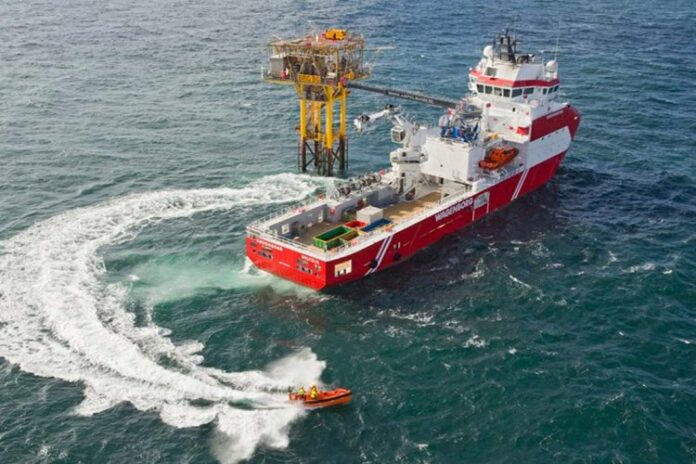
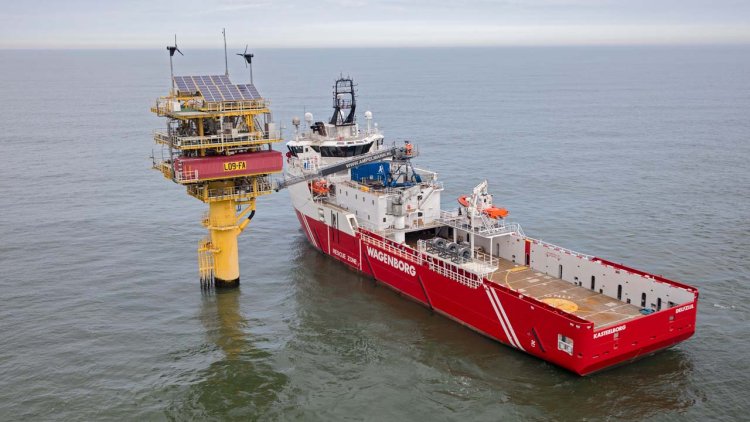
This fourth Walk to Work vessel in the Wagenborg fleet will be operated by Wagenborg Offshore as a standby and support vessel for inspection and maintenance of unmanned platforms in the Southern North Sea.

An existing PX121 platform supply ship – currently named ‘Hermit Viking’ – will be converted into the walk to work vessel within 20 weeks at shipyard Royal Niestern Sander in Delfzijl. In this period, approximately 80 employees will work on the innovative conversion of the ship, which will give an impulse to regional employment. The Hermit Viking will be equipped with an additional accommodation module for 40 people. Also, a motion-compensated gangway will be installed to comply with all requirements.

Early Q2 2022, the ship will be christened and the name will be revealed, after which it will be set to work in the Southern North Sea.