0.8 C
New York
Home Blog Page 503

Next submarine was commissioned within Indian Navy

0

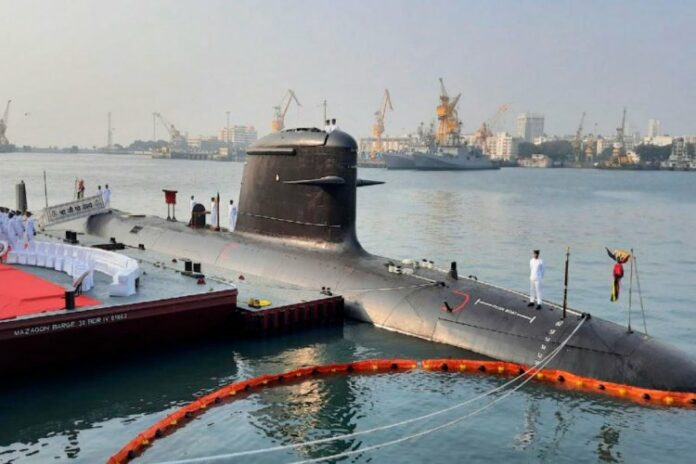
On 25 November 2021, INS Vela, the fourth P75 Kalvari-class submarines, was commissioned within Indian Navy.

INS Vela is built by Indian shipyard MDL based on the Naval Group Scorpene® design and is the second Kalvari-class submarine to be commissioned in 2021.

Launched on 6 May 2019, INS Vela successfully completed all major sea trials including weapon and sensor trials, despite Covid restrictions, and was delivered to the Indian Navy on 9 November 2021. She joins INS Kalvari, Khanderi and Karanj which were commissioned respectively in December 2017, September 2019 and March 2021.

This submarine has been completely built by Mazagon Dock Shipbuilders Limited (MDL) taking advantage of the successful technology transfer from Naval Group during the construction and trials of the first three boats. Six submarines of the P75 program have been fitted with a number of equipment, built in India by qualified and highly trained industrial Micro, Small & Medium Enterprises (MSMEs) which form the sound base of submarine building ecosystem of India.

Alain Guillou, EVP International Development at Naval Group, said:

“I would like to congratulate our partner MDL and the teams of Naval Group for the successful delivery of the fourth Scorpene® submarine to the Indian Navy. Naval Group is very proud to be part of the P75 Kalvari program which is a major component of the long-lasting Indo-French partnership. We are committed to significantly enhance the level of indigenisation in future projects of the Indian Navy by building upon and nurturing the know-how and skills in India.”

The Scorpene® is a 2000 tons conventional-propulsion submarine designed and developed by Naval Group for all types of mission, such as surface vessel warfare, anti-submarine warfare, long-range strikes, special operations or intelligence gathering. Extremely stealthy and fast, it has a level of operating automation that allows a limited number of crew, which reduces its operating costs significantly. Its combat edge is highlighted by the fact that it has 6 weapon launching tubes, 18 weapons (torpedoes, missiles, mines).

Alfa Laval and Orcan Energy sign a cooperation agreement for the marine market

0

Decarbonizing the marine industry by 2050 will demand not only new fuels, but also new technologies and a new approach to meeting energy needs on board. Besides pursuing related development initiatives, Alfa Laval is establishing partnerships that will speed the industry towards its decarbonization and energy efficiency goals. The latest partnership is a collaboration with Orcan Energy.

Founded in 2008, the leading clean technology company Orcan Energy develops and manufactures ORC solutions for the direct conversion of waste heat energy into electricity. The company’s products can be found in a variety of industries and are the most widely used solution for low-temperature waste heat recovery. Under the new cooperation agreement, the company’s technology will be marketed and sold by Alfa Laval to the marine market.

Alfa Laval, whose innovative plate heat exchangers are an integral component of Orcan Energy’s products, will further develop and market the renamed ORC solutions as part of its comprehensive portfolio of marine equipment.

Dr Andreas Sichert, CEO of Orcan Energy, says:

“Strategic cooperation is an important building block in our commercialization strategy. Alfa Laval, as a trusted global supplier with more than 100 years of marine experience, is a strong partner and the right choice for implementing ORC technology in the marine sector. The partnership is having a major impact, supporting ship operators’ growing need for solutions to decarbonize their vessels.”

Lars Skytte Jørgensen, Vice President Technology Development, Energy Systems, Alfa Laval Marine Division, says:

“As the marine industry pursues decarbonization and transitions to new fuels, a wide range of technologies will be needed to boost energy efficiency and maintain the energy balance on board. The solutions must become available rapidly, which demands that we work together across the industry. Orcan Energy shares our determination to provide complete, reliable energy solutions to marine customers.”

Damen achieves official EU Stage V certification for its Emission Reduction system

0

With many Damen vessels operating in harbours and waterways that are close to or within urban areas, the group recognised that it had an obligation to develop an emission reduction system to address the health issues present by the particulate matter emitted by diesel engines as well as the environmental impacts resulting from excess nitrogen oxides.

The Damen Emission Reduction System (ERS) is a one-system-solution that combines soot filters with a selective catalytic reduction system to remove particulate matter (measured by both mass and the number of particles, the latter to ensure that the fine particles are reduced as well) and nitrogen oxides (NOx) as they leave the engine and before they enter the atmosphere. It also delivers substantial noise reduction that averages 45 dB(A). With this achievement, Damen can now offer its clients a proven emission reduction system that meet the requirements of the IMO Tier III, ULEV and EU stage V regulations.

The Damen ERS is a standard, proven product that is robust and reliable. It is designed for both primary and auxiliary engines generating between 300 and 700 kW of output. Sea-going vessels equipped with the proven product are eligible for obtaining the Ultra Low Emission Vessel classification notation. The development of the EU Stage V system began in 2017, following Damen achieving certification for its NOx reduction system to comply with IMO Tier III emissions regulations.

Raymond Watson, Technology Specialist Aftertreatment Systems at Damen, says:

“It has taken six years to reach this point, but our ERS goes beyond the parameters set by the regulators to ensure that they are robust and flexible. For example, they are designed to work with all standard fuels to ensure worldwide operability, and their modular design means that they can be installed on all types of vessel, matched to the specific operating profile of each.”

To achieve certification, Damen partnered with Bureau Veritas. The two organisations have been partners for many years and share the ambition of making the maritime industry more sustainable. 

Rik de Petter, Marine & Offshore Chief Executive Belgium & Luxembourg at Bureau Veritas, said:

“We were very pleased to be working with Damen on this challenging project. We went through a challenging learning curve ­ and the result is a milestone in certification as there are very few certified Stage V compliant systems at present. It places both organisations at the forefront of maritime emissions reduction.”

Damen is currently working on the certification of the ERS for multiple propulsion trains with outputs up to more than 4000 kW, and all will be available soon as IMO Tier III, ULEV and EU stage V certified systems for both new build and retrofit vessels.

Neptune Energy completes Seagull manifold installation

0

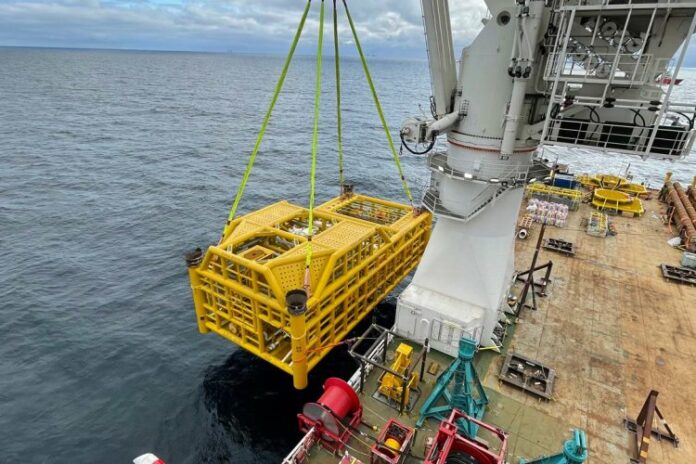
TechnipFMC, working under the Neptune Energy Alliance Agreement, undertook the construction activities on the development from the CSV Deep Star vessel. The activities included the installation of the 350te Seagull manifold, the pull-in and installation of the 17 kilometres control umbilical between the bp-operated ETAP platform and manifold, and the installation of a Wye Structure and associated operations.

Neptune Energy’s UK Managing Director, Alexandra Thomas, said:

“The Seagull project is a fundamentally important part of Neptune’s strategic growth plans and will support UK domestic production. The safe and successful completion of this work is a key achievement and prepares the subsea infrastructure for the future tie-in of the Seagull production system.”

Sarah Cridland, Vice President Subsea Projects & Commercial – UK, Mediterranean & Caspian, TechnipFMC, said:

“By utilising our integrated project model, iEPCI we were able to safely and efficiently deliver improved project economics. We look forward to continuing our partnership with Neptune Energy, which is built on close collaboration and trust.”

Seagull is a high pressure, high temperature (HPHT) development, on UK licence P1622, Block 22/29C, from a new four-slot manifold, 17km south of the ETAP Central Processing Facility (CPF). Proved plus probable gross reserves are estimated at 50 million boe (gross).

The development will be tied back to the ETAP CPF, partially using existing subsea infrastructure. New infrastructure requirements have been minimised by reuse of the Egret manifold tie-in point on the Heron cluster pipeline system and wash water line.

Licence partners: Neptune Energy (operator and 35%), bp (50%) and JAPEX (15%).


Rolls-Royce and Zhenjiang Shipyard to promote tugs with mtu engines in China

0

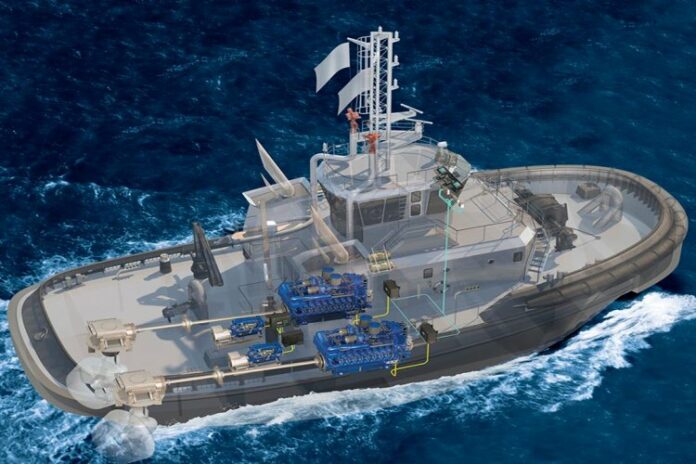
Rolls-Royce and Zhenjiang Shipyard have signed a strategic cooperation agreement to jointly expand their commercial marine business in tug and workboats powered by high-speed engines for the domestic Chinese and export market and to provide customers with optimized marine solutions. 

Rolls-Royce Power Systems and Zhenjiang Shipyard agreed to jointly explore business opportunities, bringing together the high-speed marine engine products and services of Rolls-Royce business unit Power Systems and the strong shipbuilding capacities of Zhenjiang Shipyard, integrating the technical strength and business insight of both parties, and enhancing their competitiveness in the commercial marine market. The agreement’s initial focus is on jointly promoting the development of tugboats with mtu high-speed engines in China. Zhenjiang Shipyard is the leading ship manufacturer in China in the field of special workboats.

Yan Guo, President of Zhenjiang Shipyard, said:

“Zhenjiang Shipyard is a leading manufacturer of special vessels, especially of full-rotary tugboats, marine workboats and public vessels and has strong R&D capabilities. With the signing of the strategic cooperation agreement, we will promote the application of mtu high-speed engines in full-rotary tugboats and marine workboats.”

Eugenia Valente, President of Rolls-Royce Solutions Greater China, said:

“During our first visit to Zhenjiang Shipyard, my team and I were very impressed by the scale of the yard, but most and foremost by the passion the management and staff showed. We need strong and trusted partners such as Zhenjiang Shipyard to succeed in China, one of the most important markets for us at Rolls-Royce Power Systems.”

Both parties see great potential in the market for high-speed marine engines in mainland China and globally. For the application in tugs, high-speed engines – i. e. engines with a speed of more than 1000 rpm – bring several advantages: The vessels can be built in a more compact way and are thus more maneuverable, making them especially suitable for narrow and sheltered waters such as natural deep-water harbors. High-speed engines also help operators save fuel and thus reduce operating costs while at the same time minimizing CO2 emissions. So far, Rolls-Royce has sold more than 480 mtu engines for tugs and workboats which successfully serve with customers worldwide.

Scalable and sustainable proposal with hydrogen as fuel to meet IMO2050 targets

0

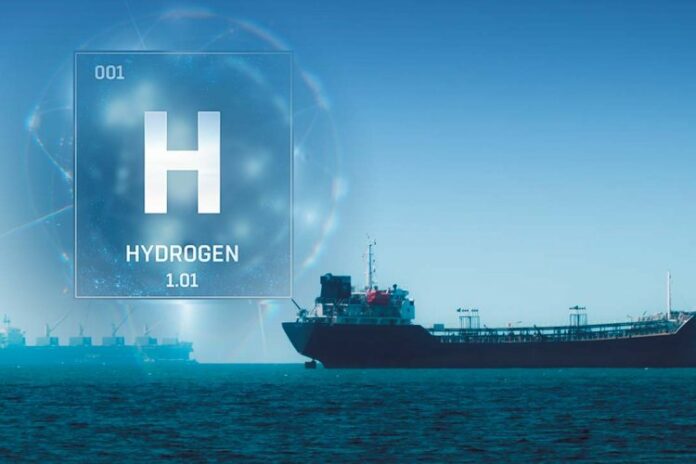
The technology group Wärtsilä, together with class society RINA, ABB, Helbio – a subsidiary of Metacon AB, the Liberian Registry, and an energy major have joined forces in an effort to deliver a solution with hydrogen as fuel. 

The aim is to have a scalable and sustainable solution that will exceed the IMO 2050 target for a 70 percent reduction in carbon intensity without the need for an extensive infrastructure investment. This offers the shipping industry a pathway to low-carbon operations within a reasonable time frame.

Current difficulties and cost considerations regarding the production, distribution, and onboard storage of hydrogen have so far limited the sector’s interest in its direct use as a marine fuel. However, by producing hydrogen onboard, and using readily available LNG, the solution becomes far more viable and in a much faster time than would otherwise be possible.

Lars Anderson, Director, Product Management & Sales Support, Wärtsilä Marine Power, says:

“Our gas engines are already able to use mixtures of hydrogen and LNG, and our future efforts will be to reach 100% hydrogen fuel. We are totally committed to supporting in every way possible the decarbonisation of shipping operations. This project is one more example of this commitment, and we are very pleased to be partnering with other stakeholders to make the IMO 2050 target achievable. This project will give owners a real chance to stay ahead of the competition in terms of efficiency and sustainability.”

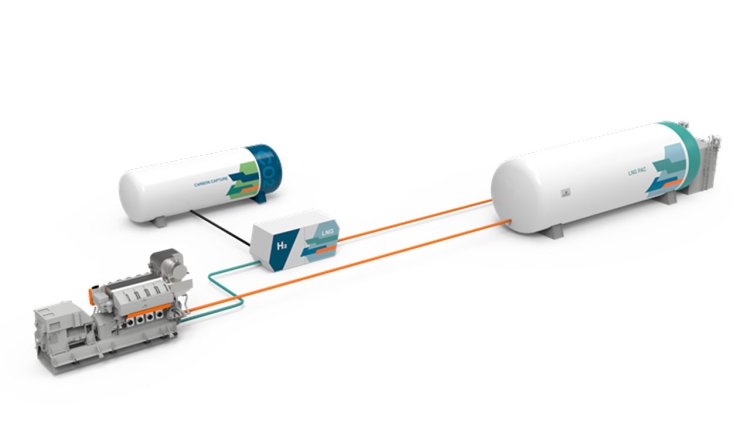
The concept is based on combining LNG with steam to produce hydrogen and CO2. The hydrogen produced will be used directly in a mix with natural gas in internal combustion engines or in fuel cells, thus eliminating the need for hydrogen to be stored onboard. The CO2 will be liquefied using the cryogenic stream of LNG that would be used as fuel anyway, and later disposed ashore for carbon storage. Tankers can use the stored CO2 as inert gas during discharge.

The necessary equipment can easily be fitted on the deck of a commercial vessel. This innovative concept will support the marine sector’s gradual transition from LNG to hydrogen, without any major adjustments to a vessel’s onboard technologies.

Only LNG bunkering will be required and, by progressively increasing the production of hydrogen, the consumption of fossil methane and associated methane slip will be reduced at the same rate.

Wärtsilä and ABB will support the application of hydrogen in powering internal combustion engines and fuel cells respectively, while Helbio will provide the technology and manufacturing of gas reformers. RINA and the Liberian Registry will provide advice and guidance on the application of rules and regulations for novel concept alternative designs, based on Hazid/Hazop analyses, as well as specific rules for this kind of arrangement.

ClassNK signs MoU on cybersecurity with Panama Maritime Authority

0

Leading Classification Society ClassNK has signed a Memorandum of Understanding (MOU) on cybersecurity with the Panama Maritime Authority (PMA).

Panama, the world’s largest flag state, is making various efforts to improve the safety of its own vessels. On 17 November, PMA announced the establishment of a “Cyber Incident Voluntary Reporting Scheme” to better understand the cyber threats that vessels are actually exposed to and to seek more pragmatic and effective measures to control the cyber risks. The scheme encourages all Panama-flagged vessels to report detected cyber incidents to PMA.

Under the MOU, ClassNK will provide its knowledge and experience cultivated so far to PMA for their efforts to ensure cyber security. As part of these efforts, the society will analyze the information collected from the cyber incident voluntary reporting scheme of PMA.

Speaking on the occasion, PMA’s Eng. Rafael Cigarruista, General Director of Merchant Marine said:

“As a world largest flag sate, it is our duty to take action against cyber risk and contribute to the safety of maritime transport. In this occasion, we are very happy to conclude a MOU with ClassNK, a leading classification society putting effort into maritime cyber security. By integrating the knowledge and expertise from both flag state and classification society, we are confident in developing measures against cyber risks that are appropriate for the industry to deploy.”

Speaking on the occasion, ClassNK’s Mr. Hirofumi Takano, Executive Vice President, Director of Innovation Development Division said:

“Sharing a common objective to build onboard cyber resilience by cross-industry approach, I am glad to embark the new partnership with PMA and contribute to maritime cyber security with our expertise. ClassNK has strived to develop rules and standards and conduct certification services based on outcomes gained through collaboration with front runners. We will continue to promote initiatives based on diverse partnerships and work to propose best practices related to ensuring cyber security suitable for shipping.”

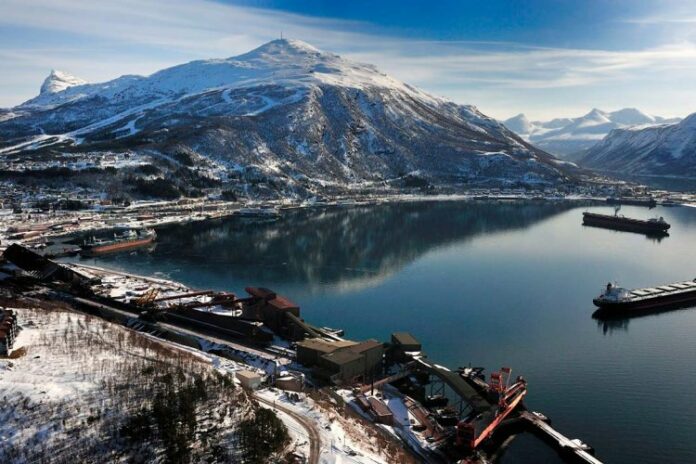
Project group will build a hydrogen-powered vessel for the Port of Narvik

0

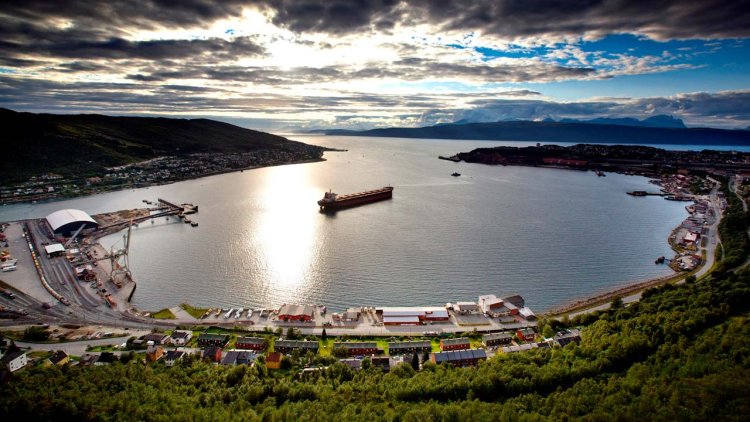
The boat will be equipped with hydrogen fuel cells from TECO 2030 and will be built by the shipyard Grovfjord Mekaniske Verksted (GMV), which is located near Narvik.

When completed, the boat will replace one of the port’s diesel vessels. As a result, the Port of Narvik will be able to reduce both its diesel consumption and its CO2 emissions significantly.

Børge Edvardsen Klingan, Port Director at the Port of Narvik, says:

“A new hydrogen-powered workboat will put the Port of Narvik in a unique position, where we will reduce our own emissions and use pioneering technology that will become important for both national and international shipping in the years to come.” 

Klingan says:

“This project will contribute to economic growth and development in Narvik and its surrounding regions and will also be an important contribution to the green transition in the maritime industry. We are very happy that we are able to take the lead in reducing emissions from ships.” 

The boat is planned to be completed in 2023. The Port of Narvik will mainly use it for keeping an overview of the port and the activities there, for emergency preparedness, and for teaching and training of crews.

The Port of Narvik aims to get the boat classified as a long-range, high-speed passenger vessel, and the plan is that it should be able to keep a pace of 23 knots.

The fuel cells that will ensure the boat’s propulsion will be produced at the TECO 2030 Innovation Center in Narvik and will enable it to operate emissions-free. The boat will be one of the first vessels that will get fuel cells from TECO 2030 installed.
Tore Enger, CEO of TECO 2030 ASA, says:

“Now we only need to get support for this project by the Norwegian state enterprise Enova. Everything else has already been prepared, and we are ready to get to work. Hydrogen will be key to reducing greenhouse gas emissions from the maritime industry, but the development of hydrogen technology for ships and other hydrogen infrastructure requires large resources.”

TECO 2030 has signed an agreement with UiT The Arctic University of Norway – which has a campus in Narvik – to cooperate on enhancing research and education in Norway on hydrogen and fuel cells.

UiT Narvik will therefore participate in the project as a research partner, with the aim of gaining expertise in maritime hydrogen systems. This will ensure that they can provide education that will enable their students to become valuable potential, future employees of the partners in the project.

The maritime engineering company BLOM Maritime, the hydrogen supplier Everfuel, the consultancies Proactima and KUPA, and the company Norinnova Narvik, which specialises in commercialising research results, are also partners in the project.

BLOM Maritime and Proactima will contribute to the development of the boat. BLOM Maritime will provide technical assistance to Grovfjord Mekaniske Verksted during the building of the boat, and Proactima will be responsible for risk assessments and analyses to ensure that it will be safe to use.

Knowledge dissemination will be an important part of the project, and KUPA will focus on disseminating the knowledge about hydrogen boats that will be developed during the boat’s building and testing phase. KUPA is leading a maritime technology cluster in Norway and will pass on lessons learned in the project to its members.

The hydrogen boat will become Narvik’s first hydrogen consumer and will need to be refuelled on a regular basis. The project therefore also involves the establishment of a hydrogen filling station.

Everfuel will seek to develop this filling station. The company is currently working to establish hydrogen filling stations for trucks, buses and other heavy-duty transport all across Norway.
Other users of the port will also be able to use the planned filling station in Narvik. About 500 trucks drive through the city every day, and the filling station will therefore not solely be intended to cater for sea traffic.

The goal is that it will become the world’s first hydrogen filling station that can serve both ships and road traffic, and that its establishment will make it possible for more companies and people in the region to switch to climate-friendly hydrogen.

Everfuel will now, together with UiT and Norinnova Narvik, work to find possible new hydrogen users within the municipality and county municipality, such as buses, waste collection vehicles and taxis.    

TECO 2030 is developing hydrogen fuel cells together with the Austrian powertrain technology company AVL. Hydrogen fuel cells are the engines of tomorrow and convert hydrogen into electricity while emitting nothing but water vapour and warm air.

By installing fuel cells, ships and other heavy-duty applications that are powered by diesel engines or generators can switch from fossil fuels to hydrogen and reduce their greenhouse gas emissions to zero.

Hydrogen fuel cells can also be used during port-stay, loading and discharging, enabling zero-emission operation at berth, without having to connect the ship to an onshore power supply.

Norway aims to reduce emissions from domestic shipping by at least 50% by 2030, compared with 1990. This target should be reached through a stronger focus on the development of low- and zero-emission solutions, and by setting emission requirements for ships operating on Norwegian fjords.  

Norway plans to introduce requirements for low- and zero-emission solutions in public tenders to speed up the green transition in the maritime industry. Such requirements will be introduced in 2023 in new public tenders for ferry connections, and in 2025 for high-speed vessels.   

Moreover, from 2026 only zero-emission cruise ships and ferries will be allowed entry into the Norwegian world heritage fjords.  

Ships operating in Norwegian waters will therefore have to reduce their emissions and become more climate-friendly.

RINA approves a new-concept offshore fish-farming vessel

0

Ship classification society, RINA has announced the Approval in Principle (AiP) of a new-concept offshore fish-farming vessel.

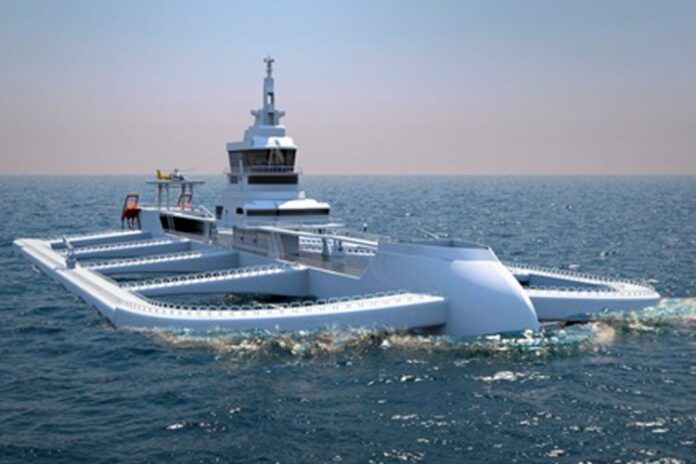
The fish-farming Ocean Ark vessel is developed by Ocean Arks Tech of Chile (OATECH) in accordance with RINA Rules and Marpol, Solas and IMO regulations. The Ocean Ark vessel delivers a new approach to fish farming and is set to revolutionise the industry by dramatically improving fish health, crew comfort and the industry’s image.

The ocean may offer the only opportunity for fish-farming to meet the nutritional needs of a growing world population. Deploying the Ocean Ark away from marine heatwaves, algae blooms and storms – aquaculture’s three Achilles’ heels – would produce higher quality protein and increase world fish production without increasing pressures on fish stocks and coastal habitats.

RINA Marine Principal Engineer for North West Europe, Patrizio Di Francesco said:

“Sustainability is a core strategic pillar at RINA, but this is not just about reducing carbon emissions. A sustainable food production chain is also needed to supply an increasing global demand for nutrition. We believe aquaculture in the open sea is one solution that will help for the future.”

The fish-farming vessel is a self-propelled, AI-assisted, low emissions trimaran 170 m long and 64 m wide. Artificial intelligence and self-cleaning fish cages of copper help secure fish health and welfare. While finance is secured for several units, MOU’s to build the Ocean Arks are signed with a range of world-leading shipyards that include China Merchants Industry holdings, Tersan and CIMC Raffles.

With its capacity of 4,000 tons of biomass, this disruptive technology allows for the low-density production of healthier, higher-quality fish at lower costs than the offshore, land-based and coastal aquaculture systems now available. The Ocean Ark can operate near Asian, US and EU consumer markets for a major drop in transport emissions.

Di Francesco concluded:

“This is an unusual vessel. Its AiP presents a milestone for both the fish farming industry and for the classification of ships with an unconventional design. It is an innovative approach to the sustainable harvesting of fish to help ensure food security and sovereignty and one which may revolutionise fish farming for the future.”

Arctic Ocean started getting warmer decades earlier than we thought, study finds

0

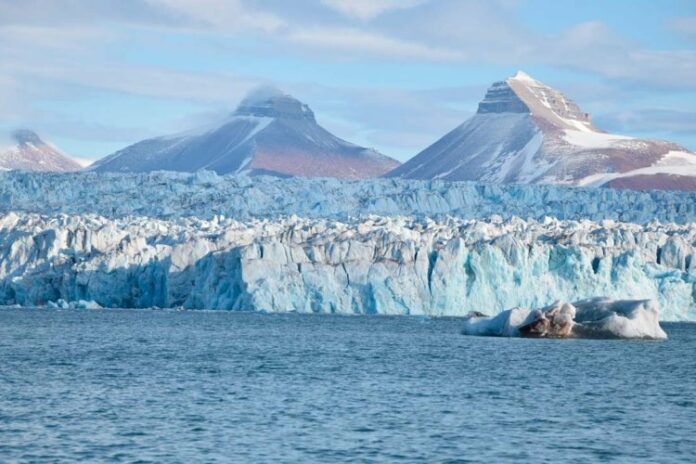
An international group of researchers reconstructed the recent history of ocean warming at the gateway to the Arctic Ocean in a region called the Fram Strait, between Greenland and Svalbard.

Using the chemical signatures found in marine microorganisms, the researchers found that the Arctic Ocean began warming rapidly at the beginning of the last century as warmer and saltier waters flowed in from the Atlantic—a phenomenon called Atlantification—and that this change likely preceeded the warming documented by modern instrumental measurements. Since 1900, the ocean temperature has risen by approximately 2 degrees Celsius, while sea ice has retreated and salinity has increased.

The results, reported in the journal Science Advances, provide the first historical perspective on Atlantification of the Arctic Ocean and reveal a connection with the North Atlantic that is much stronger than previously thought. The connection is capable of shaping Arctic climate variability, which could have important implications for sea-ice retreat and global sea level rise as the polar ice sheets continue to melt.

All of the world’s oceans are warming due to climate change, but the Arctic Ocean, the smallest and shallowest of the world’s oceans, is warming fastest of all.

Dr. Francesco Muschitiello, from Cambridge’s Department of Geography, co-lead author, said:

“The rate of warming in the Arctic is more than double the global average, due to feedback mechanisms. Based on satellite measurements, we know that the Arctic Ocean has been steadily warming, in particular over the past 20 years, but we wanted to place the recent warming into a longer context.”

Atlantification is one of the causes of warming in the Arctic, however instrumental records capable of monitoring this process, such as satellites, only go back about 40 years.

As the Arctic Ocean gets warmer, it causes the ice in the polar region to melt, which in turn affects global sea levels. As the ice melts, it exposes more of the ocean’s surface to the sun, releasing heat and raising air temperatures. As the Arctic continues to warm, it will melt the permafrost, which stores huge amounts of methane, a far more damaging greenhouse gas than carbon dioxide.

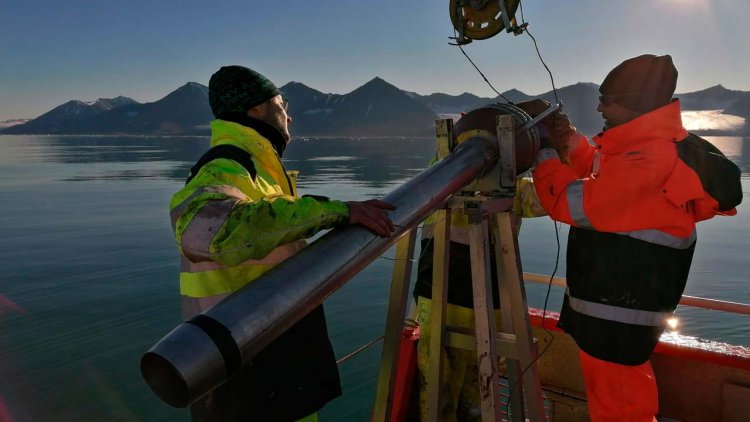
The researchers used geochemical and ecological data from ocean sediments to reconstruct the change in water column properties over the past 800 years. They precisely dated sediments using a combination of methods and looked for diagnostic signs of Atlantification, like change in temperature and salinity.

Dr. Tesi Tommaso from the Institute of Polar Sciences of the National Research Council in Bologna, co-lead author, said:

“When we looked at the whole 800-year timescale, our temperature and salinity records look pretty constant. But all of a sudden at the start of the 20th century, you get this marked change in temperature and salinity—it really sticks out.”

Muschitiello said:

“The reason for this rapid Atlantification of at the gate of the Arctic Ocean is intriguing. We compared our results with the ocean circulation at lower latitudes and found there is a strong correlation with the slowdown of dense water formation in the Labrador Sea. In a future warming scenario, the deep circulation in this subpolar region is expected to further decrease because of the thawing of the Greenland ice sheet. Our results imply that we might expect further Arctic Atlantification in the future because of climate change.”

The researchers say that their results also expose a possible flaw in climate models, because they do not reproduce this early Atlantification at the beginning of the last century.

Tommaso said:

“Climate simulations generally do not reproduce this kind of warming in the Arctic Ocean, meaning there’s an incomplete understanding of the mechanisms driving Atlantification. We rely on these simulations to project future climate change, but the lack of any signs of an early warming in the Arctic Ocean is a missing piece of the puzzle.”