1 C
New York
Home Blog Page 501

Høglund to supply solutions to boost efficiency for two Tipco asphalt carriers

0

Høglund has announced that it has been commissioned to supply advanced, fully integrated hybrid, automation, and digital solutions to two asphalt carriers to be built in Wuhu shipyard, China. 

The owner, Continental Bitumen, is an integrated procurement, logistics and distribution company supplying bitumen in Europe, Africa and Middle East. The technical manager and operator of the vessels is Tipco Asphalt.

The central part of this delivery is the hybrid electric system, which will be integrated into, monitored, and controlled by Høglund’s IAS (Integrated Automation System) and PMS (Power Management System). Responsible for fuel consumption and emissions monitoring and overall vessel performance is Høglund Ship Performance Monitor.

The design, one of the first of its kind, aims to deliver greater energy efficiency over a wide range of speeds and operational parameters with the installation of a hybrid drive, energy storage battery system and Variable Speed Shaft Generator (VSSG).

The VSSG gives the crew more control over the power supplied to the propeller, with additional generators supplying power to the propeller at different speeds when necessary. The hybrid drive allows excess energy from the propeller shaft to be recovered and re-used for additional power when needed, reducing overall power consumption.
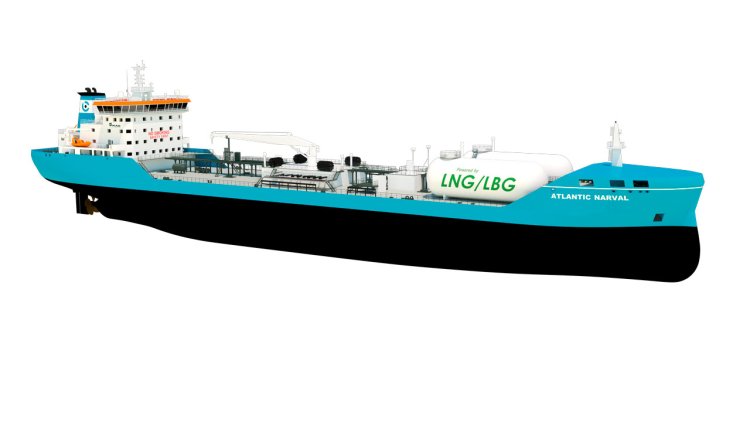
The overall effect of these innovations is that the vessel will be able to operate at greater efficiency over a wider range of speeds and propeller pitches, with a smaller main engine. It also allows the cargo pumps to operate at different speeds, giving additional flexibility in loading and unloading locations.

David Gunaseelan, VP Sales from Høglund, commented:

“The growing demand for green infrastructure that we are seeing globally is increasing pressure on the world’s aging fleet of bitumen and asphalt carriers. Innovations in this space not only save fuel but also enable vessels to load and unload at more ports around the world, unlocking operational and commercial flexibility as well as better performance.

“Green legislation such as EEXI and CII is accelerating, but there is still a lot of uncertainty and confusion about the eventual fuel mix that will help shipping meet existing and new environmental criteria. These hybrid and VSSG systems are applicable across all kinds of vessel types and can deliver improved performance and efficiency no matter the type of propulsion.”

Oscar Olav Palacios, Fleet Manager from Tipco, added:

“Investing in this new generation of carriers is a critical step for us that highlights our commitment to future-proof our fleet and improve the environmental and efficiency credentials of our vessels.”
Hong Kong earmarks HK$350m to subsidise ferry operators

0

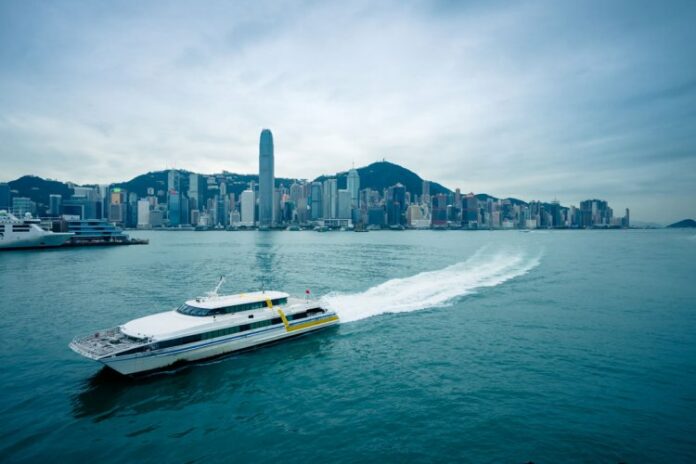
The Environmental Protection Department signed a subsidy agreement for the Pilot Scheme for Electric Ferries with local operators, the Sun Ferry Services Company Limited and the Fortune Ferry Company Limited on November 29.

A spokesman for the EPD said that the Pilot Scheme aims to test the technical and commercial viability of using electric ferries in Hong Kong. The Government has earmarked HK$350m to subsidise the participating ferry operators for the construction of electric ferries and the associated charging facilities, as well as the operational, maintenance and repair expenditures incurred by the operation of the electric ferries during a 24-month trial period. 

The four in-harbour ferry routes participating in the Pilot Scheme are the ferry route plying North Point and Hung Hom by the Sun Ferry; the ferry route plying Sai Wan Ho and Kwun Tong by the Coral Sea Ferry Service Company Limited; the ferry route plying Central and Tsim Sha Tsui by the “Star” Ferry Company Limited; and the water taxi plying Kai Tak, Hung Hom, Tsim Sha Tsui, Central and West Kowloon by the Fortune Ferry.

To implement the Pilot Scheme, the Government has established an inter-departmental working group to work out the details of the Pilot Scheme, oversee its progress and evaluate the performance of the electric ferries. The EPD has also engaged a consultant to help design the electric ferries and the associated charging facilities, and assist the ferry operators to prepare tenders for the construction of electric ferries. Meanwhile, an expert panel comprising a local naval architect, academics and the IWG members has been set up to assess the design proposals of the electric ferries.

Additionally, the EPD has engaged an engineering consultant to work with the power companies and relevant government departments to prepare the engineering design of the charging facilities for the electric ferries. The Government will invite tenders for the construction of charging facilities at the ferry piers. The trial of electric ferries is tentatively scheduled for commencement in 2023.

The spokesman added:

“The subsidy agreement will specify the Government’s subsidy and set out the ferry operators’ responsibilities for the relevant liabilities in respect of operation, management, repair and insurance. After signing the subsidy agreements, the ferry operators will invite tenders for the construction of electric ferries. The Government and the two remaining in-harbour ferry operators are finalising the details of the agreement with a view to signing the subsidy agreement as soon as possible.”  

The Government announced the Clean Air Plan for Hong Kong 2035 and the Hong Kong’s Climate Action Plan 2050 in June and October this year respectively, outlining the strategies and targets for enhancing air quality, combating climate change and achieving carbon neutrality for Hong Kong. One of the key measures is to promote the use of new energy ferries.

Port of Antwerp rolls out VTS behind the locks on the right bank

0

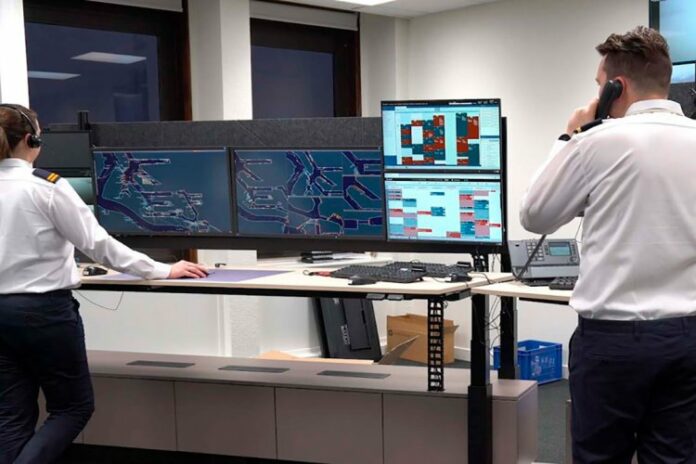
As of 22 November, Port of Antwerp is rolling out Vessel Traffic Services (VTS) behind the locks on the right bank. Vessel guidance already started on the left bank at the beginning of this year.

Both on the Scheldt and in the Antwerp docks, traffic is increasing. The VTS service ensures more efficient guidance of this traffic by providing advice and information on vessel navigation, weather conditions, calamities and other possible risks. In addition, VTS also guarantees an increase in safety and the protection of the environment in the port. VTS has been operational on the left bank 24 hours a day since April this year. Based on these best practices, services on the right bank are now being added.

The implementation of the VTS service on the right bank will take place in two phases. In the first phase, starting on 22 November, Sector Polder will become active on VHF channel 2. Sector Polder covers the northern part of the docks. The VTS service in the southern part will be launched in the spring of 2022. Together with the start of Sector Polder, the functions of some VHF channels will change. For example, the Lillobrug bridge operator will be reachable via VHF channel 2, so that shipping will no longer need to switch to VHF channel 62. 

DNV introduces industry’s first competence standard for vessel RCCO

0

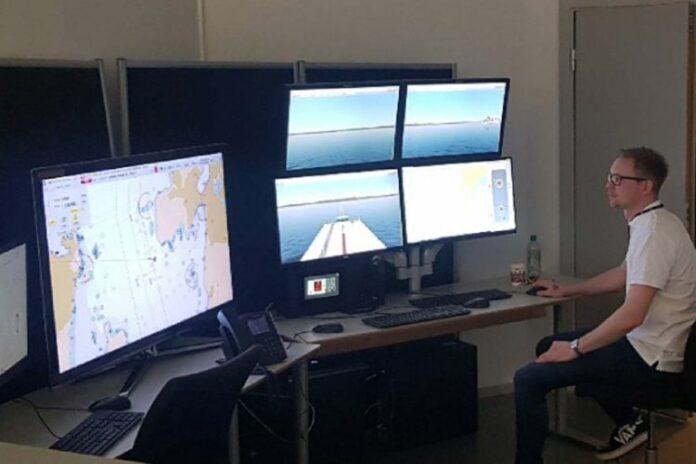
Classification society DNV has introduced the shipping industry’s first competence standard for vessel remote control centre operators (RCCO). The standard is supported by a new recommended practice that offers a certification scheme for RCCOs. Together, they provide a framework for training, assessing, and certifying personnel working in remote-control centres that support or manage operations at sea.

Intelligent software systems and enhanced ship-to-shore-connectivity have laid the groundwork for the growth of remote solutions and autonomy in shipping. Unmanned vessels are already expected to begin operations in the near future.

Ensuring that these vessels operate at an equivalent level of safety is essential to building confidence and realizing the potential of these technologies. However, despite the technical solutions being in place, competence requirements for those monitoring, supporting and/or controlling these ships have not been defined.

The new DNV competence standard for remote control centre operators (DNV-ST-0324) and the supporting recommended practice (DNV-RP-0323) change this. They were developed in collaboration with Kongsberg Maritime, Wilhelmsen, as well as the University of South-Eastern Norway, and the Norwegian Maritime Authority.

Torsten Schröder, SeaSkill™ Service Manager, Competence & Learning at DNV Maritime, said:

“Making sure that shore-based staff are prepared for autonomous, remote-controlled or remotely supported operations at sea is a big challenge. Because when it comes the wider application of these technologies, trust in the systems, and the people managing these operations is paramount. This is why we are so pleased to have developed the RP with expert partners from across the industry. Having a wide range of expertise was essential to devising a uniform and controlled approach to the training, assessment and certification of RCCOs.”

The recommended practice, DNV-RP-0323, gives guidance to centres conducting examinations of remote-control centre operators and issuing personnel certificates as a certification body. It also covers the competence building process for candidates before undertaking an RCCO examination, for example learning programmes and practice sessions in the centres themselves.

The DNV SeaSkill™ standard ST-0324 provides a foundation for the entire process. It lists the required competencies for the operation of autonomous or remotely controlled and/or supported ships.

It also covers competency in:

  • Emergency handling and resource management within a remote control centre (RCC)
  • Communication with 3rd parties on behalf of the ship under remote-control
  • Man-machine interaction

RCCO certificates can be registered in an existing DNV online database, making it possible for interested parties to verify qualifications and validity of an RCCO certificate.

Lhyfe, DORIS team up on landmark wind-to-hydrogen initiative

0

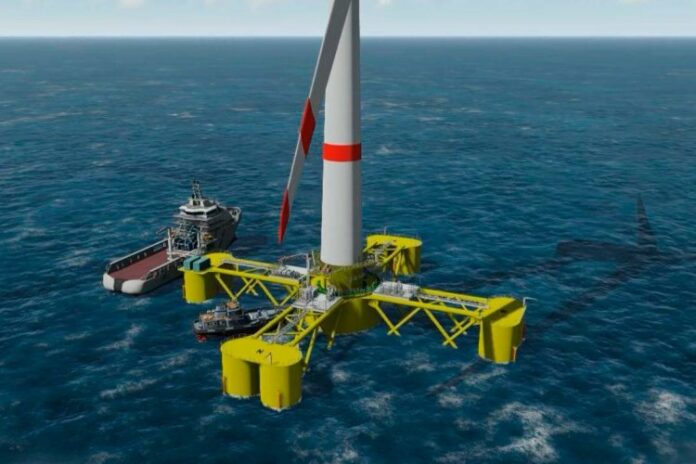
Lhyfe and DORIS want to develop what they say will be the first floating wind turbine for integration with a hydrogen production system, as they look to develop viable offshore green hydrogen production solutions to support a clean energy transition.

The duo today inked a Memorandum of Understanding (MoU) to become official partners for the effort which hopes to also identify larger-scale opportunities for offshore hydrogen production.

To do this, the partnership will utilise Lhyfe’s Nerehyd™ solution which incorporates a hydrogen production facility into the floater of a wind turbine. Already, this solution is producing hydrogen at the company’s Bouin production site in Vendée, France.

Matthieu Guesné, CEO and founder of Lhyfe, added:

“We are delighted to be moving forward on our projects with DORIS. At Lhyfe, the reason we located our first production site near the ocean was to start producing in offshore conditions, because from day one we have been certain of one thing: offshore is the key to the massive development of renewable hydrogen.

“We are starting to see more and more offshore wind farms and traditional players are keen to find ways to scale-up their infrastructures and solutions. We are therefore very optimistic about the development of this sector and are working to offer a range of solutions to adapt to each situation.”

It is believed the entire budget for the Lhyfe and DORIS project, including research and development (R&D) and the production of the first prototype, will be approximately €60m. The first prototype is expected to be complete in 2025.

Xavier Grandiaud, Executive Deputy Managing Director of DORIS Engineering, said:

“While we have no doubts that producing green hydrogen on land will be the first step in large-scale global development, we deeply believe in the need to move more rapidly offshore to meet the strong demand ahead, which will require a massive amount of electricity.

“With Lhyfe, we believe that offshore production will be the best way to successfully produce large amounts of green hydrogen without impacting terrestrial landscapes or relying on an existing grid connection. Our Nerehyd™ solution is the perfect tool for large-scale, sustainable and economically viable green hydrogen production.”

Supply chain alliance supports Buzzard Phase II achieve first oil

0

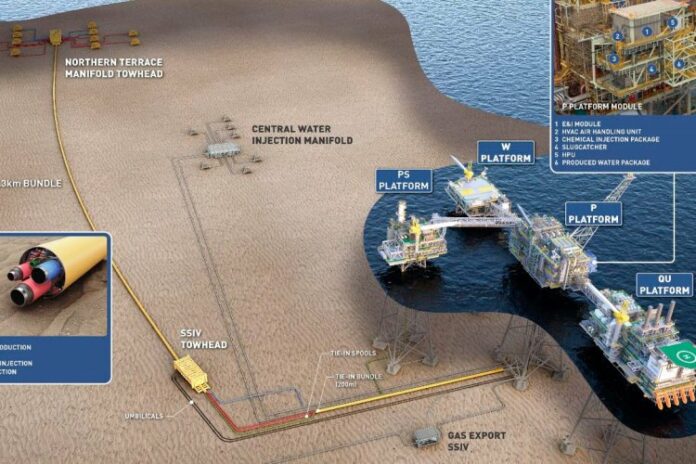
Subsea 7 has been working collaboratively with AGR Well Management, Baker Hughes, COSL Drilling Europe AS and Worley, as part of a supply chain alliance, to deliver CNOOC Petroleum Europe Limited’s (CPEL) Buzzard Phase II (BPII) development, which commenced production on Monday 22 November.

The alliance was formed to offer an integrated and outcome-focused approach for the development. The alliance and CPEL have worked collaboratively to safely achieve first oil within the sanctioned budget and ahead of the revised schedule, which was significantly impacted by COVID-19.

This achievement is the result of a collective effort over a four-year period by the BPII project alliance companies, as well as a long list of key suppliers and sub-contractors.

The work was carried out across a range of onshore and offshore worksites including the Buzzard asset, Rosenberg Worley’s fabrication yard in Stavanger, Subsea 7’s bundle fabrication site near Wick, various Subsea 7 construction vessels and COSL Drilling Europe’s 6th generation semi-submersible drilling rig, COSL Pioneer.

More than 2.6 million hours were expended by an integrated team working under an innovative alliance contracting model which provided greater flexibility to quickly adapt to changes, including the global pandemic, and allowed teams to combine strengths.

Steve Wisely, Senior Vice President, Subsea 7 UK & Global IRM, said:

“Subsea 7 is proud to have played a key role in the BPII alliance and the successful delivery of this project. Congratulations and thank you to CPEL and our BPII alliance supply chain partners who we have worked closely with over the past four years. This again demonstrates how effective collaborative contracting models can be in delivering superior outcomes for every type of project.”

BPII is a subsea development in the Northern Area of the Buzzard field located approximately 100 kilometres northeast of Aberdeen, with average water depth of approximately 96 meters It currently consists of two producer wells and two water injections wells and includes a subsea production and water injection manifold located at a new drill centre, tied back to the existing Buzzard facility.

Wärtsilä partners with CCS and Tianjin Port Group to develop intelligent tugs

0

The intelligent marine technology company, Wärtsilä Voyage, has signed an MoU with the China Classification Society (CCS) and Tianjin Port to advance China’s intelligent vessel technology and deploy next-generation tugboat technology at one of the busiest ports in the world. 

The project’s scope includes delivering advanced situational awareness technology, and providing highly advanced digital simulators, which will significantly enhance and expedite vessel concept testing, including intelligent and autonomous algorithm testing, training, and safety. The next-generation intelligent tugboat is expected to begin operation in the fourth quarter of 2023.

The larger aim of the partnership is to enhance safety, productivity, and efficiency in China’s busy ports with intelligent vessels and smart sensor technology. Wärtsilä Voyage will, thus, also contribute to and support CCS in developing the first-of-its-kind intelligent vessels standards and guidelines for domestic vessels.

Wärtsilä Voyage will conduct systematic and human-centric user research to help optimise workflow and improve overall work performance and safety. Developing these intelligent ship standards will also involve establishing international collaboration and knowledge exchange on safety standards and best practices of such smart vessels.

Sean Fernback, President, Wärtsilä Voyage and Executive Vice President, Wärtsilä, said:

“The signing of this MoU is incredibly significant as it elevates our relationship with CCS and Tianjin Port Group from a traditional supplier-customer relationship and towards a deeper and long-term strategic partnership. Considering the Port of Tianjin is one of the top ten busiest ports in the world, as well as its strategic importance in China’s shipping scape, this is an excellent pilot case which opens many other opportunities for collaborations in the region.”

China and Finland jointly endorse the project under the China-Finland Science and Technology Innovation Cooperation MoU, and the China-Finland Flagship Project on Science and Technology Innovation Cooperation Strategy, 2019-2023. The MoU was virtually signed on 25 November 2021 in the presence of the dignitaries from the Ambassador of Finland to China and the Ministry of Transportation, People’s Republic of China.

UK Government invests in tidal power

0

As part of the fourth allocation round of the Contracts for Difference Scheme due to open next month, the UK Government will ensure that £20 million per year will be ringfenced for tidal stream energy projects, giving the marine energy sector a chance to develop their technology and lower their costs in a similar way to the offshore wind industry. This will bring the total funding for this allocation round to £285 million per year UK wide.

Scotland has long been a pioneer for tidal technology having been home to the European Marine Energy Centre (EMEC) in Orkney since 2003 where tidal energy technologies are demonstrated at sea. The UK has the largest tidal stream deployment in the world, with almost 50% of the world’s installed tidal stream capacity in Scottish waters. Furthermore, this year Simec Atlantis Energy Ltd, a homegrown company used their expertise to export and install a tidal turbine – designed and built in Scotland – for piloting in Japan.

Over time marine energy technologies have the potential to significantly contribute to the UK’s decarbonisation commitments and will support hundreds of green jobs across the country, with projects currently in development in North-West Scotland, North Wales and the Southern coast of England.

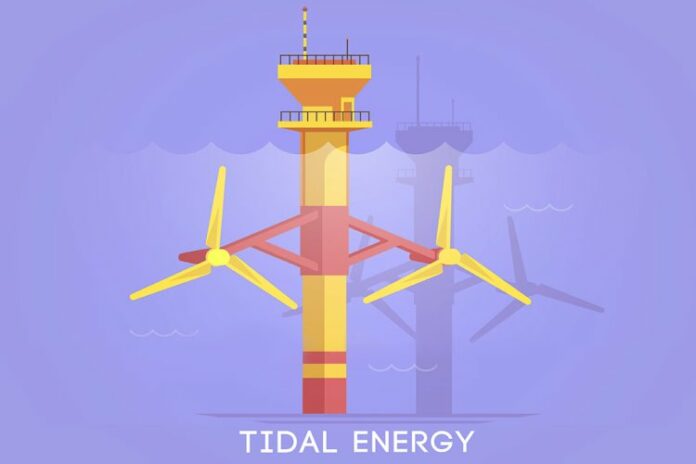
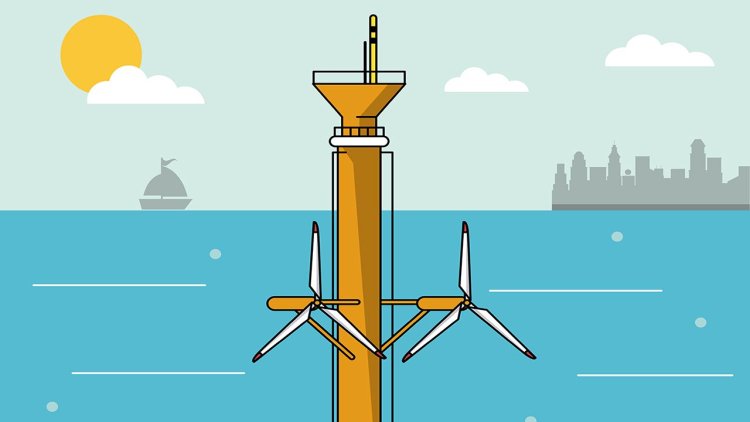
Tidal energy has the potential to be a very reliable source of generation, given the clockwork predictability of the tides. Including this in the UK’s low-carbon energy mix will make it easier to match supply with demand, building on the UK Government’s commitment to build a strong, home-grown renewable energy sector to reduce the reliance on fossil fuels and exposure to volatile global gas prices.

Business and Energy Secretary Kwasi Kwarteng said:

“As an island nation we are perfectly placed to capitalise on clean marine energy, building on our booming offshore wind sector which is now a British industrial success story.

“We hope to see marine energy follow in the successful footprints of other renewable technologies, where we’ve seen costs fall dramatically in recent years thanks to UK government support.”

Scottish Secretary Alister Jack said:

“This UK Government allocation of funding for the tidal industry in Scotland, and across the UK, is tremendous news. Harnessing the powers of our seas is a vital step in our transition to the use of greener, cleaner energy and underlines the UK Government’s commitment to create and protect highly-skilled jobs while on our journey to Net Zero by 2050.”

Full details of all Contracts for Difference scheme announcements was released on Thursday 25 November where the UK Government outlined plans to launch the biggest ever Contracts for Difference (CfD) allocation round, with this new ringfencing for tidal stream expected to bring the total budget for the fourth allocation to £285 million per year.

The CfD scheme is the Government’s primary method of encouraging investment in low-carbon electricity. The scheme has helped to deliver substantial new investment and reductions in the costs of capital for some renewable technologies, such as helping to reduce the price of offshore wind by 65%.

This fourth round of the Contracts for Difference Scheme will open on 13 December 2021. The UK Government will launch this auction process with the ambition of supporting up to 12 GW low-carbon electricity capacity – more than the last three rounds combined.

The costs continue to fall as green technology advances, with solar and wind now cheaper than existing coal and gas power plants in most of the world. This is thanks to clear government signals and investment made ahead and during the COP26 climate change summit, along with targeted support that boosts private sector investment, creates high-quality jobs and builds industries and technology as the UK builds back greener from the pandemic.

Energy Minister Greg Hands, said:

“The development of Scotland’s renewables industry is a major UK success story, with our renewable energy auction scheme playing a vital role in the UK becoming a world leader in clean electricity generation and helping to bring down prices for consumers”.

Damen delivers three, specialist bespoke vessels to Germany

0

Netherlands-based Damen Shipyards has been busy in Germany in recent weeks, delivering three, specialist bespoke vessels and establishing a full-time office to provide support to vessel operators in the region. 

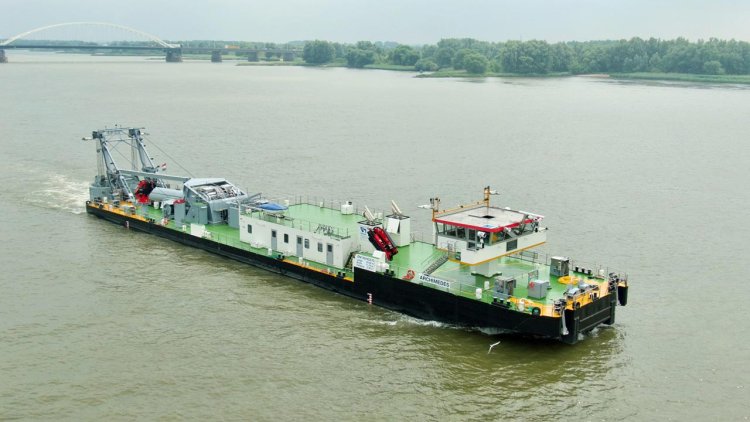
The replacement diving bell vessel Archimedes, built for owner German government agency FMSW Koblenz to replace a previous vessel, is not only the most unusual of the three, but also one of the most remarkable vessels that Damen has ever built. Her purpose is the inspection and maintenance of infrastructure on riverbeds, primarily those of the rivers Rhine and Mosel, and the recovery of lost cargo and wreckage. To achieve this, the 70 by 11.7 metres vessel mounts a four-metre by six-metre diving bell in which personnel can work at depths of up to ten metres, manoeuvred by a bespoke foldable hoisting frame. Diesel-electric, she has an array of additional specialist systems including a ballast system to ensure longitudinal equalisation during operations and passages under low bridges, and a pressure equalisation chamber.

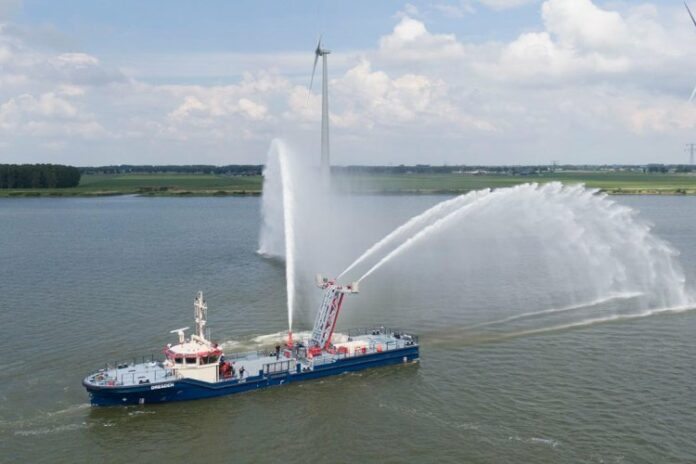
The Archimedes was engineered and built by Damen Shipyards Hardinxveld, as were the twin Fire-Fighting vessels delivered to Flotte Hamburg, the subsidiary of the Hamburg Port Authority (HPA) tasked with implementing low-emission shipping. 35-metres in length, their custom designs optimise them for operations in the city as well as the port of Hamburg and they carry an impressive array of fire suppression systems. The Prag is being operated by Hamburg’s fire service while the Dresden supports the HPA, the fire service and other third parties. Both are state-of-the-art, plug-in hybrid vessels with 315kWh of battery capacity, and when not fighting fires they will be undertaking other activities including water supply, rescue and recovery, technical assistance and environmental protection.

Supporting these and many other vessels is the new Hamburg Service Hub. The fifteenth in Damen’s worldwide network of support stations, like the others it is being staffed by local personnel with experience of ship building and maintenance in their region. Able to respond quickly to enquiries, it combines direct access to all of Damen’s resources with a network of local suppliers to ensure that products and services are sourced locally wherever possible. The Hamburg hub will serve customers in Poland and Denmark as well as Germany, and welcomes enquiries from operators of non-Damen as well as Damen vessels. 

Carsten Wiese, Service Hub Manager, Hamburg, says:

“We are delighted to be confirming our commitment to some of our closest neighbours and dedicating additional resources to ensure that they receive services tailored to their exact needs. We look forward to many more years of close cooperation on innovative solutions to meet the demands of our rapidly evolving industry.”

Equinor sells its non-operated position in the Corrib gas project in Ireland

0

The transaction is organised through a share sale of Equinor Energy Ireland Limited, a company 100% owned by Equinor ASA. Equinor owns 36.5% of the Corrib project, alongside Vermilion (the operator with 20%) and Nephin Energy (43.5%).

The Corrib field started production in 2015 and is located 83 kilometres off Ireland’s northwest coast in water depths of almost 350 meters. The equity gas volumes to Equinor for 2021 are estimated at ~58 MMScf/d.

Equinor and the buyer have agreed a consideration of USD 434 million, before closing adjustment, with an effective date set at 1 January 2022. As part of the transaction, Equinor and Vermilion have agreed to hedge approximately 70% of the production for 2022 and 2023, and have also agreed a contingent payment that will be paid on a portion of the revenue if European gas prices exceed a given floor level.

Arne Gürtner, senior vice president responsible for the United Kingdom & Ireland, says:

“The Corrib field has been an important non-operated project for Equinor for several years. We have taken the decision to sell the asset to focus our portfolio, in line with our strategy, to capture value from the current strong market and to free up capital that we can re-invest elsewhere.”

The deal is subject to approval by partners, government and regulatory bodies.

The sale of Corrib means that Equinor will no longer have active business presence in Ireland, after also deciding to withdraw from an early phase offshore wind project in the country.