2.6 C
New York
Home Blog Page 488

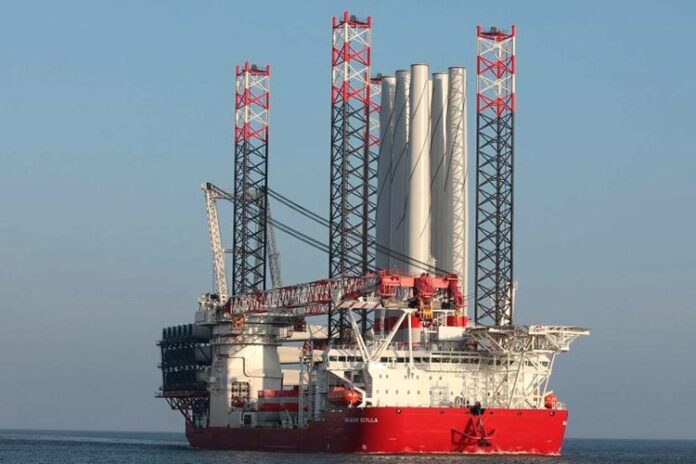
Seajacks signs contract with Van Oord supporting European Offshore Wind

0

Eneti Inc. has announced that Seajacks UK Limited, a wholly-owned subsidiary of the Company and a leading provider of installation and maintenance vessels to the offshore wind sector, has signed a contract with Dutch marine contractor, Van Oord.

Van Oord has selected the Seajacks Scylla, the largest and most capable vessel in the Seajacks fleet. Currently employed through 2022 in Taiwan, the vessel will move to Europe upon completion of its existing turbine installation contract with Ørsted on the Greater Changhua Offshore Wind Farm.

The firm charter duration of the Van Oord contract will generate approximately $60 million of revenue in 2023.

Emanuele Lauro, CEO of Eneti, says:

“Securing this charter will bring the Scylla back from the Asia Pacific to the European market by the end of 2022. For a large and highly capable installation vessel like Scylla, we are seeing numerous opportunities in the UK and Europe in 2024 and 2025 as wind turbines increase in size and weight and are located further offshore.”

Arnoud Kuis, Managing Director, Van Oord Offshore Wind, says:

“We are delighted with this constructive cooperation with Seajacks. This cooperation gives us the ability to realise our growth ambitions in the offshore wind market both in, and outside, Europe.”

Blair Ainslie, CEO of Seajacks, says:

“All of us here at Seajacks UK are once again thrilled to be working alongside Van Oord. The Scylla was previously chartered by Van Oord in 2019 to install monopile and transition pieces at the Deutsche Bucht Offshore Wind Farm in Germany. We had a positive experience there, and we look forward to another safe and efficient installation project.”

To date, Seajacks have installed over 500 offshore wind turbines in Europe and most recently in Taiwan. Seajacks UK own and operate a fleet of 5 GustoMSC designed vessels, all capable of installing and maintaining offshore wind farms in harsh conditions – Seajacks Kraken, Seajacks Leviathan, Seajacks Hydra, Seajacks Zaratan and the above-mentioned Seajacks Scylla.

NYK signs deal with GAIL Limited for charter of LNG carrier

0

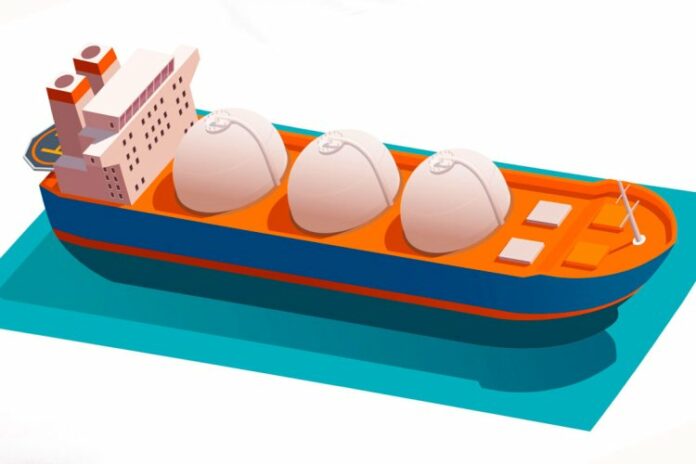
NYK signed a multi-year time-charter contract with GAIL (India) Limited, India’s largest natural gas company, for a liquefied natural gas (LNG) carrier. NYK and GAIL held an online ceremony on December 20.

Grace Emilia, the vessel that will be chartered, is equipped with a WinGD-made dual-fuel slow-speed diesel engine (i.e., X-DF diesel engine) that has superior fuel-consumption efficiency and can operate on marine gas oil or boil off gas stored in the cargo tank. The vessel also features a re-liquefaction system that can use re-liquefied excess boil-off gas and return it to the cargo tank.

The cargo tank is a 174,000 cubic meter capacity membrane-type tank that makes use of advanced insulating materials to suppress the boil-off rate (percentage of gas volume that vaporizes during navigation) in the cargo tank and realize superior efficiency and economical LNG transportation.

GAIL is India’s state-owned Natural gas major under the jurisdiction of Ministry of Petroleum & Natural Gas and is a major reseller and pipeline operator in the country. It is the market leader in gas marketing segment accounting for more than 50% of the total gas consumption by end-users in the country.
NYK had been in discussions with GAIL for time-charter contract and other LNG-related businesses and considers GAIL as a key player in India, where gas demand is expected to continue to increase due to remarkable economic growth. Looking to the NYK’s LNG transportation record and sincere engagement, an agreement on this contract was achieved.

Following the recent COP26 agreement by countries to gradually reduce coal-fired power generation, it is expected that demand for LNG, which has a lower environmental load than other fossil fuels, will increase in the future, especially in Asia.

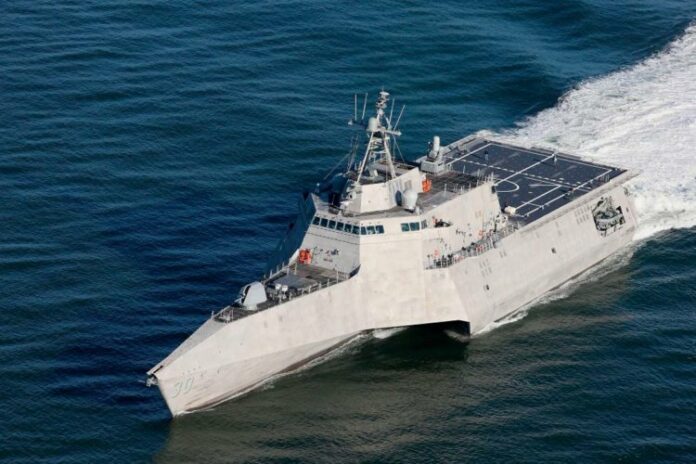
Austal USA delivers the future USS Canberra to the United States Navy

0

Austal Limited Chief Executive Officer Paddy Gregg said the latest LCS delivery was of great interest and significance as the vessel was named after Australia’s national capital, Canberra and was sponsored by Australia’s Foreign Minister, Senator the Honourable Marise Payne.

Mr Gregg said:

“We were honoured to have Senator Marise Payne lay the keel for the future USS Canberra in March 2020, and now we’re very pleased to be delivering the completed vessel to the Navy, on time and on budget.”

“Canberra is the 15th Independence-class Littoral Combat Ship that Austal USA has delivered to the US Navy, since 2010; an outstanding track record for a multi-billion-dollar program, comprising 19 ships in total.

“Add on the twelve Spearhead-class Expeditionary Fast Transport (EPF) vessels that Austal USA has also delivered, during roughly the same timeframe, and you get a clear picture that our Mobile, Alabama shipyard is an incredibly efficient, value-adding asset within the United States’ defence industrial base.”

Four more LCS are currently under construction at Austal USA, including the recently launched future USS Santa Barbara (LCS 32) and future USS Augusta (LCS 34). Modules are under construction on the future USS Kingsville (LCS 36) and the future USS Pierre (LCS 38). Two Expeditionary Fast Transport vessels (EPF’s 13 and 14) are also under construction at the shipyard. 

In October 2021, Austal USA was awarded a contract for the detailed design and construction of two US Navy Towing, Salvage, and Rescue (T-ATS) ships, the first contract for Austal’s new steel construction facility. Austal has recently been awarded several post-delivery service-related contracts for the LCS program including Sustainment Execution Contracts (SEC) for both classes of LCS, on the east and west coasts of the United States, and a further contract to support LCS deployed to the Western Pacific and Indian Ocean.

Further, Austal USA recently announced the company had completed the purchase of a lease on waterfront property to establish a permanent ship repair facility in the Port of San Diego – a 6-hectare site enabling ship repairs and maintenance on US Navy, US Coast Guard and Military Sealift Command ships. The facilities will include a new dry dock, designed specifically to service small surface combatants and other small to medium size ships.

Mitsubishi receives first order for FGSS for high-pressure marine engines

0

Mitsubishi Shipbuilding Co., Ltd., a part of Mitsubishi Heavy Industries (MHI) Group, has taken its first order for LNG (Liquefied Natural Gas) fuel supply systems (FGSS)(Note) for high-pressure dual-fuel marine engines. The company will deliver FGSS to be installed on six (6) LNG-fueled car carriers to be built by a group company of Imabari Shipbuilding Co., Ltd.

The core components of the newly ordered FGSS are LNG fuel tanks, LNG fuel gas supply units and a control unit. The equipment module design considering space-saving and excellent maintainability contributes to the optimum design of the cargo space and helps the shipyard to shorten the installation period, as well as supports safe operation by customizing the control system and other aspects of the FGSS to meet the operational needs of the customer.

The conversion of marine fuels to LNG is one of solutions responding to today’s emissions regulations targeting reduction of greenhouse gases (GHG). Mitsubishi Shipbuilding’s FGSS have been developed for marine engines after delivery records of systems for onshore engine test facilities. They were developed by utilizing the company’s LNG and vaporized gas handling technologies accumulated through its extensive experience with construction of LNG carriers. The company has already received orders for and delivered FGSS for marine low-pressure engines, and this latest order for FGSS for marine high-pressure engines means that the company has acquired orders for both low-pressure and high-pressure types.

Through providing FGSS to an expanding number of customers involved in the construction of LNG-fueled ships, Mitsubishi Shipbuilding fulfills part of MHI Group’s strategic initiatives promoting energy transition while also enhancing the added value and competitiveness of marine vessels. 

As a marine system integrator, the company will promote decarbonization in the maritime industry and strive to achieve carbon neutrality by helping to reduce GHG emissions through the popularization of LNG-fueled vessels for reducing environmental impact on a global scale.

Argeo signs contract with undisclosed customer for ultra-deep water AUV survey work

0

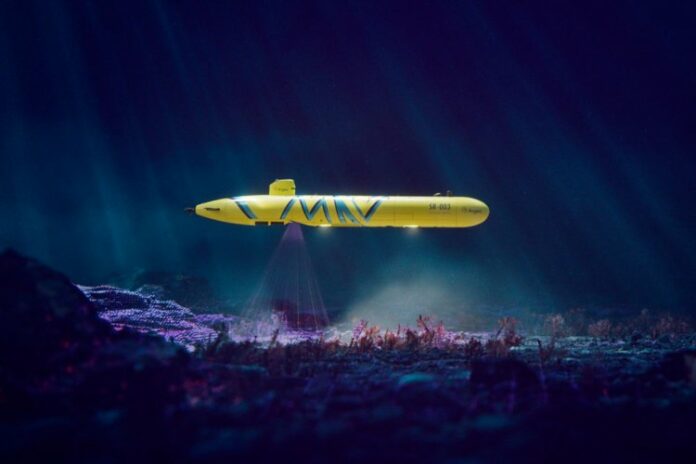
The first SeaRaptor “Alpha”, is scheduled to commence work directly after completing Sea Acceptance Test and delivery to Argeo. The project will commence in March 2022 with an estimated completion in April.

Argeo CEO, Trond Crantz, says:

“We are pleased to announce this project as it requires the highest-quality and detail and the requirement of Ultra Deep-Water vehicles to get the job done.

The project will prove the SeaRaptor product near the very limits of its build specification and make use of all the high-quality sensors integrated into the vehicle We are very excited that our first SeaRaptor is continuing with commercial operations having completed a rigorous test program beforehand.”

Argeo currently has three high specification AUV’s. The AUV is modular and very mobile with supporting systems which can be strategically placed in Argeo’s main Geomarkets for rapid deployment serving our global customers with state-of-the-art technology and data. All data collected is processed onboard the AUV using onboard-postprocessing and mosaicking software to allow quick turnaround during missions and improved decision making for the customer.

The AUV enable deep-sea surveys to the benefit of marine industries including Installations & Infrastructure, Offshore Wind, Oil & Gas and Deep-Sea Minerals.

Australia’s new icebreaker RSV Nuyina heads south

0

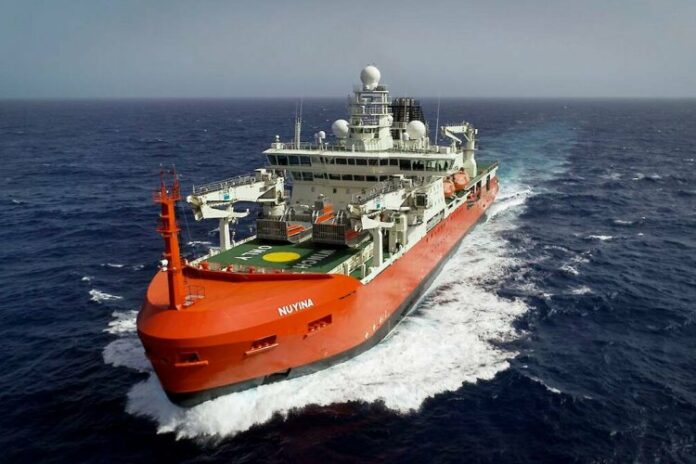
There are 67 expeditioners and crew onboard for the five week voyage to refuel Casey research station and transport helicopters to Davis station.

They will also undertake marine science commissioning including tests of the acoustic instruments mounted on the hull and drop keels, and deploying the CTD (conductivity, temperature, depth) sampler.

The CTD is the workhorse of oceanography research, measuring different water properties at various depths of the Southern Ocean.

The ship’s ‘wet well’, a unique system to collect krill and fragile marine organisms from water piped directly into the ship from inlets in hull, will also be tested.

RSV Nuyina was due to leave earlier in the week, but an issue with the ship’s alarm and monitoring system software delayed its departure.

The ship’s operator Serco has now rectified the electronic system to allow the ship’s safe operation.

The vessel will spend the next few days in Storm Bay, south of Hobart, testing refuelling systems before sailing to Casey research station.

This summer RSV Nuyina is supported by two other chartered vessels in Antarctica to ensure all the commissioning work required can be undertaken.

Aiviq (Alaskan Inuit for ‘walrus’), currently in Hobart, is a 110-metre US icebreaking tug and supply vessel to provide additional icebreaking capability and undertake station refuelling.

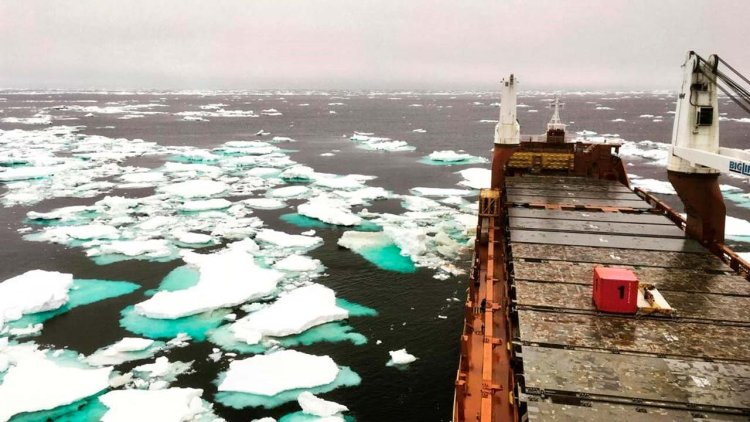
Happy Dragon is a 157-metre Dutch-flagged ice-strengthened heavy cargo vessel that will help resupply Casey and Davis research stations this summer.

Happy Dragon is currently nearing Casey with around 1200 tonnes of supplies and equipment for resupply, and to deliver the new mobile inland station for the Million Year Ice Core project.

This mission will be one of the biggest annual station resupplies ever undertaken by the Australian Antarctic Program.

Royal Navy looks to drones to deliver lightweight supplies at sea

0

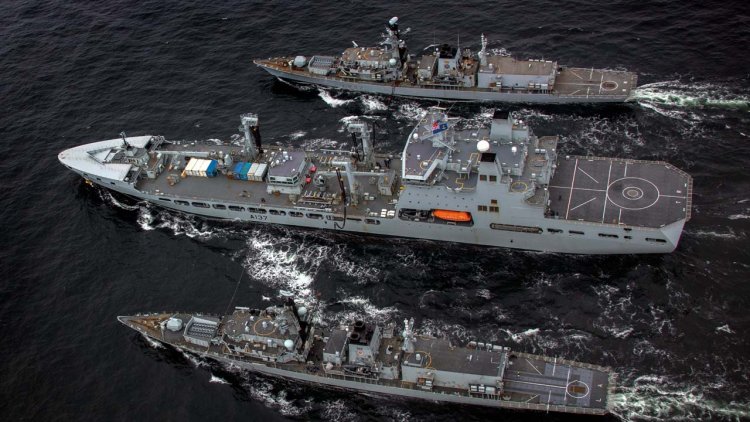
The Royal Fleet Auxiliary (RFA) – whose ships and sailors have supported Royal Navy operations since 1905 with fuel, food, spare parts, ammunition and other supplies – is looking into the possibility of crewless aircraft performing some of the more routine, lighter duties.

The classic image of the Royal Fleet Auxiliary is of a tanker sailing parallel with a warship and either pumping fuel into its tanks via a hose, or transferring supplies in crates and on pallets on a jackstay line slung between the two vessels. But helicopters are also used extensively to move loads around the fleet, typically in large nets carried beneath the aircraft.

During the recent Carrier Strike Group deployment supporting HMS Queen Elizabeth’s mission to the Pacific and back, supply ship RFA Fort Victoria shipped nearly 900 loads to the carrier and other ships in the task group, encompassing food and drink, general stores, spare parts, medical supplies, mail and parts for F-35 stealth fighters and Merlin and Wildcat helicopters – over 354 tonnes of supplies in all – while tanker RFA Tidespring carried out 67 ‘vertical replenishments’ as they are known.

While some loads are too heavy for current small-scale drones to transport, seven out of ten resupply missions involve the transfer of loads up to 100lbs/45kg, so the head of the RFA, Commodore David Eagles, wants to see if the work is ‘dronable’.

Using drones would save time, money and sailors, and free up helicopters for other duties.

The US Navy’s Naval Air Systems Command is experimenting with unmanned aircraft moving relatively lightweight supplies – up to 25lbs/11kg – between ships, but over distances which could be greater than 200 miles.

Trials over the summer successfully proved this concept by delivering a small cargo for repairs between a warship and an auxiliary of the Military Sealift Command – the US Navy’s equivalent of the RFA.

Royal Marines have tested re-supply by drone both on the battlefield and on the beachhead, using autonomous systems, from Malloy Aeronautics Ltd, to ferry up to 150lbs/68kg supplies; including ammunition, blood and Bergen backpacks to troops in the line from either ships off shore or bases to the rear.

Commodore Eagles said:

“The RFA is looking very closely at the Military Sealift Command and the opportunities around using drones to make deliveries at sea.” 

The RFA Commodore regularly confers with his counterpart in the MSC, Rear Admiral Michael Wettlaufer, which conducted the summer trials; and he has asked his liaison team to follow their progress and share some lessons of the Royal Navy’s own trials with similar systems.

The RFA ends 2021 on something of a high after rising to all the challenges made of it this year – notably sustaining the carrier group half-way around the world in the middle of a pandemic which impacted moving supplies and personnel.

Its ships delivered more than 65 million litres of fuel to vessels from six nations, as well as 16 million litres of aviation fuel, thousands of litres of fresh water and other goods.

Tanker RFA Wave Knight delivered aid to volcano hit St Vincent, supported US-led relief efforts off Haiti in the wake of the summer’s devastating earthquake and, in conjunction with the US Coast Guard, has seized 2½ tonnes of cocaine in five busts spread across the autumn.

Amphibious ship RFA Mounts Bay is assigned to the Royal Marines’ new Arctic-focused Littoral Response Group (North) and will also serve as the testbed for ongoing autonomous trials by the commandos.

ClassNK releases mobile app for improving ship management system

0

Leading Classification Society ClassNK has released “PrimeShip-PSC Intelligence”, a mobile app to assist the improvement of ship management system and PSC performance, provided free of charge. The application is the mobile version of PSC Intelligence PC version for ship management companies released in 2018.

The application, which has been developed for seafarers, enables them not only to manually input the reports by PSC into data on their smartphones, but also to convert the PSC reports shot with a camera into data using AI-OCR. Furthermore, it is possible to report these PSC data and malfunctions of equipment to land staff of the ship management company in a chat format, and manage the rectification.

PSC Intelligence analyzes accumulated PSC data by respective ship management companies and ClassNK using AI technology and creates appropriate and pinpoint checklists with the PC version based on typical deficiencies investigation and actual results. The checklist function on the mobile app will be released soon.

Fincantieri: Ninth cruise ship in 2021 “Viking Octantis”

0

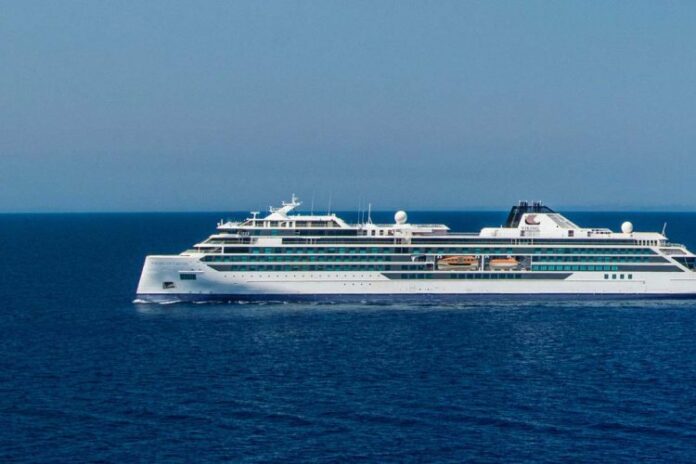
“Viking Octantis”, as well as her sister ship “Viking Polaris”, to be delivered next year, can host 378 guests in 189 staterooms. 

The ships have the “Polar Class 6” certification for expeditions in the polar regions, and they have the size to navigate remote areas and the St. Lawrence River and provide superior handling and stability in rough seas. Straight bows, longer hulls and state-of-the-art fin stabilizers will allow the ships to glide over the waves for the calmest possible journey, ice-strengthened hulls will provide the safest way to explore and u-tank stabilizers will significantly decrease rolling by up to 50% when the ships are stationary.

Designed by the same experienced nautical architects and engineers that designed Viking’s ocean ships, these new vessels feature modern Scandinavian design, intimate spaces and attention to detail, as well as public spaces that are favorites on Viking’s ocean ships and new spaces created specifically for expeditions.

Giuseppe Bono, CEO of Fincantieri, commented:

“This result reaffirms our ability to perform very well all over the world even in a situation as complex as the current one. Suffice it to say that “Viking Octantis” is the ninth cruise unit completed in 2021 in our domestic and foreign sites, without forgetting the deliveries for the US Navy, 2 this year, in the American shipyards. Fincantieri is a Group with a global vocation, which consolidates the leadership positions it has acquired and imposes its own successful production model on four continents”.

Fincantieri started its partnership with Viking in 2012, trusting the shipowner who was entering the ocean cruise market as a start-up. Today, the cooperation which first began with an order for two ships, has reached a total of 20 units, including “Viking Octantis” and “Viking Polaris” and the options. This is an all-time record, the largest number of units ordered to a shipbuilder by one sole shipowner.

Other 9 units, options included, will take to the sea from the Group’s Italian yards in the next years.

Solstad Offshore to invest more than 300 MNOK in green technology

0

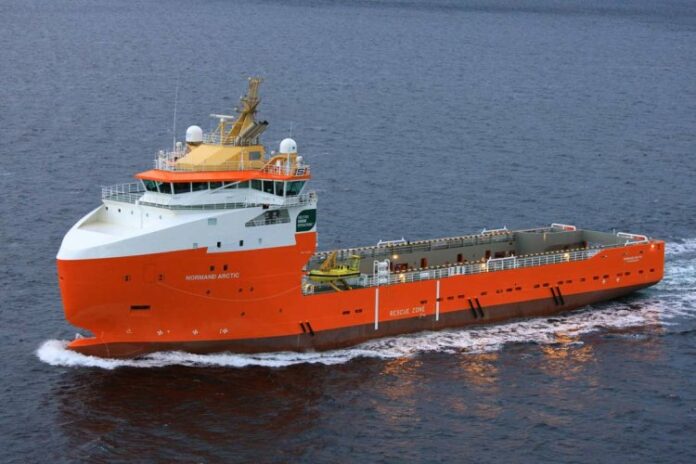
Solstad Offshore ASA targets a 50% global fleet emission reduction by 2030. Over the next 3 years the Company will be investing more than 300 million NOK in battery hybrid conversion projects linked to a grant award of 87 MNOK from Innovation Norway.

A total of 11 vessels are planned to be upgraded over the next three years. The vessels will undergo battery hybrid conversions and will be able to connect to shore power in ports and harbors. After completion of this program Solstad will have a total of 21 battery hybrid vessels in its fleet.

The planned upgrades will lead to an annual reduction of 12.000 tons CO2 emissions and is an important measure to reach the Company’s target of 50 % emission reductions by 2030 and ultimately zero emission by latest 2050.

In 2021, Innovation Norway introduced a condemnation scheme to support removing older vessels from the market and at the same time fund upgrades of existing vessels with green technology. The scheme will contribute to increased investments in the Norwegian fleet and reduce the emissions in line with the action plan set by the Norwegian Government.

Solstad announced recycling seven vessels in October 2021, and this will be performed at specialized yards in Norway in accordance with the strictest national and international regulations.

Tor Inge Dale, Chief Sustainability Officer, Solstad Offshore, said:

“This major grant from Innovation Norway allows us to step-up up our green technology investment program. The list of vessels includes some of our largest construction vessels that will after conversion contribute to considerable CO2 emission reductions.”

Sigbjørn John Huun, Special Advisor, Innovation Norway, said:

“Innovation Norway is pleased to see that this funding arrangement can assist on speeding up both the needed work to recycle older offshore vessels as well as provide considerable contributions to fund important decarbonization projects in this segment.”