2.6 C
New York
Home Blog Page 489

Rolls-Royce invests in methanol technology for climate-friendly shipping

0

The new high-speed four-stroke engines, which are based on proven mtu technologies, are planned to be available to customers as soon as possible for use in commercial ships and yachts.

Denise Kurtulus, Vice President Global Marine at Rolls-Royce Power Systems, said:

“With the new development of mtu methanol engines, we want to lead the way as pioneers in the marine industry. We are clearly committed to methanol as a power source for green shipping and want to set standards and create planning security for our customers. We urgently need to create concrete solutions together to achieve the climate targets.”

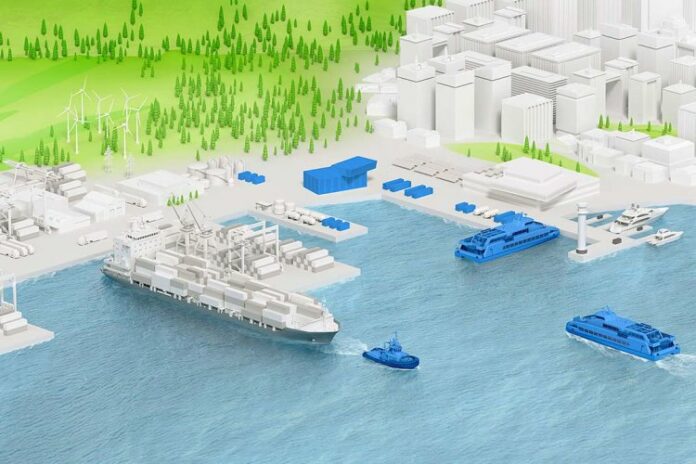
Methanol offers a number of advantages for Rolls-Royce’s efforts to make shipping more climate-friendly and ultimately climate-neutral: The fuel can be produced in a CO2-neutral manner in the so-called power-to-X process, in which CO2 is captured from the air. The energy density of methanol is high compared to other sustainable fuels and, thanks to its liquid state, it can be easily stored and refuelled at ambient temperatures. Existing infrastructure can continue to be used in many cases. Unlike ammonia, methanol is not highly toxic and is environmentally safe. The combustion of methanol in a pure methanol engine can be climate-neutral with significantly reduced nitrogen oxide emissions, thus eliminating the need for complex SCR exhaust gas aftertreatment. Methanol tanks can be flexibly arranged in the ship and require significantly lower safety measures compared to hydrogen or ammonia. Besides the safety aspects and the lower complexity, the lower investment costs for users are a further upside of the methanol tank system.

Another advantage of methanol is that it is not only suitable for use in combustion engines (both Diesel and Otto), but also in combination with emission-free fuel cells: With the help of a reformer, hydrogen can be produced from methanol, which can then be used in fuel cells to generate electricity. This is particularly attractive for ships that do not have sufficient space for hydrogen tanks.

Rolls-Royce is pioneering marine applications with sustainable solutions from the bridge to the propeller. The company will release the new generation of its mtu Series 2000 and 4000 engine ranges for use with sustainable fuels such as synthetic diesel (second generation biofuels or e-diesel) from 2023, enabling climate-neutral operation in almost all applications. In addition to the use of sustainable fuels, the company is also building on new technologies such as CO2-free fuel cell systems. Smart-ship solutions that enable the semi- and fully autonomous operation of ships are also expected to help reduce CO2 emissions.

The methanol initiative and the other developments mentioned are part of Rolls-Royce Power Systems’ sustainability programme “Net Zero at Power Systems”, with which the company is taking concrete steps towards climate-neutral solutions for all its applications. In doing so, the company is relying on several technological approaches. Daniel Chatterjee, Director Technology Management & Regulatory Affairs at Rolls-Royce Power Systems, explains:

“On the road to climate neutrality, there will not be one technology and one fuel that is the best solution for all applications. Rather, there will be a coexistence of different propulsion technologies and fuels. Hydrogen, for example, which is converted into energy in a fuel cell or even in a combustion engine, will be as much an issue for us and our customers as e-methanol, e-methane, e-diesel or e-ammonia.”
Discovery Princess marks successful sea trials milestone

0

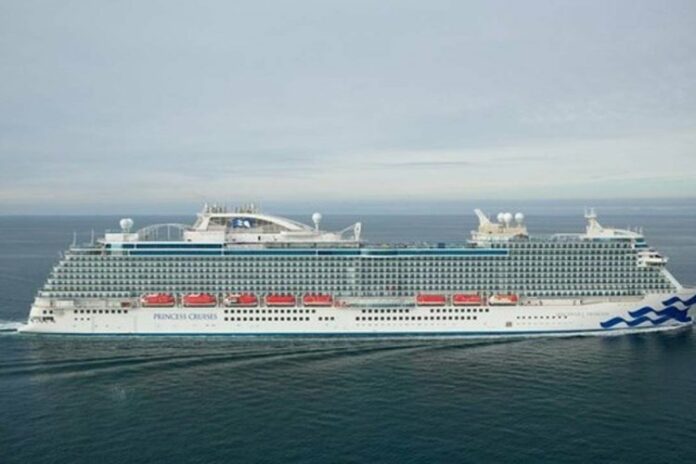
Princess Cruises achieved a major milestone in preparation for the debut of its newest ship – Discovery Princess – with the completion of sea trials.

Discovery Princess set out to sea from the construction dock at Fincantieri Shipyard in Monfalcone, Italy, and was put through a series of paces to test the steering, navigation equipment and propulsion. After a successful five days of trials, Discovery Princess is now back in the shipyard for further exterior and interior finishing to prepare for her maiden, seven-day Mexican Riviera cruise sailing roundtrip from the Port of Los Angeles on March 27, 2022.

The 3,660-guest Discovery Princess is the sixth and final Royal-Class newbuild and shares all of the spectacular style and luxury of her sister ships – Enchanted Princess℠, Sky Princess®, Majestic Princess℠, Regal Princess℠ and Royal Princess℠. 

Discovery Princess will sail on a series of Mexican Riviera and California Coast voyages from March 27 – April 24, 2022, before heading up the Pacific coast to begin a season of seven-day Alaska cruises from Seattle.

Port of Long Beach receives $52.3 million grant for rail project

0

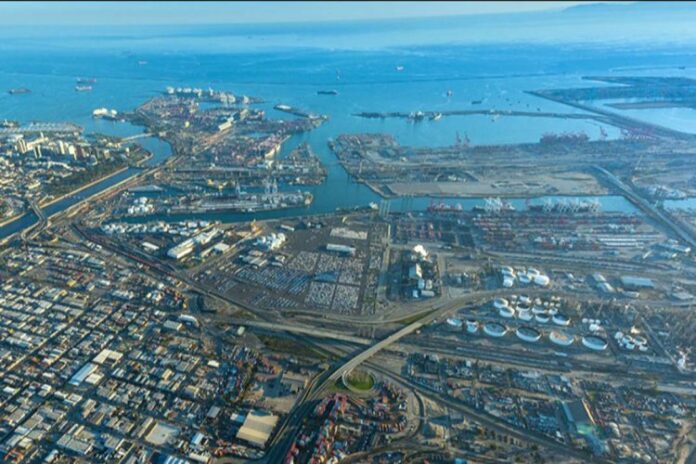
The Port of Long Beach has been awarded a $52.3 million grant from the U.S. Department of Transportation’s Maritime Administration to help fund development of the “Pier B On-Dock Rail Support Facility,” which will enable the nation’s second-largest seaport to move more cargo by train, improving efficiency and lessening environmental impacts.

The planned project is the centerpiece of the Port of Long Beach’s approximately $1 billion rail capital improvement program. Moving cargo by on-dock rail – directly transferring containers to and from marine terminals by train – is cleaner and more efficient, as it reduces truck traffic. No cargo trucks will visit the facility. Instead, smaller train segments will be brought to the facility and joined together into a full-sized train.

Port of Long Beach Executive Director Mario Cordero said:

“This is great news to hear at the end of what will be our busiest year ever. We appreciate the U.S. Department of Transportation’s support for this important project. It will help to move cargo more efficiently through the Port, getting needed products and goods to homes and businesses across America faster.”

MARAD’s Port Infrastructure Development Program is providing the grant. The funding from the program is specifically designed for capital improvement projects at U.S. seaports. 

Harbor Commission President Steven Neal said:

“Our federal partners have recognized the need to modernize the Port and support our push toward 24/7 operations. These investments have benefits from coast to coast since cargo from the Port of Long Beach reaches every congressional district.”

Pier B On-Dock Rail Support Facility construction is set to begin in 2023. The first arrival, departure and storage tracks are expected to be completed in 2025, with additional tracks coming online in 2030, followed by project completion in 2032. View the project fact sheet and more information at the project page.

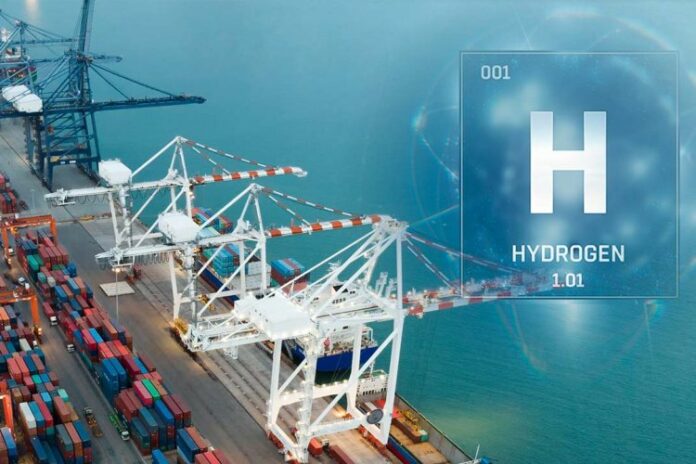
IAPH launches Global Ports Hydrogen Coalition portal on its WPSP website

0

First hydrogen-related port projects have their own portal on sustainableworldports.org

IAPH’s Technical Director Antonis Michail commented:

“As part of IAPH’s contribution to the CEM Global Ports Hydrogen Coalition, we have created a special platform for hydrogen projects at ports. The scope of projects will cover current and planned port implementations related to ammonia, methanol and hydrogen not just as marine fuels, but also looking to the contribution of ports as energy hubs.”

For ports earmarking such projects or for those that are in development, IAPH and the Global Ports Hydrogen Coalition are encouraging them to submit their information to ensure they are eligible for the 2022 IAPH Sustainability Awards in the category “Climate and Energy.”

Timur Gül, Head of IEA Energy Technology Policy Division, commented:

“To have access to information about ongoing hydrogen projects in ports is not only useful for us at the IEA in our efforts to track and project the production and use of hydrogen globally. It will also help ports to identify what other ports are doing on hydrogen, which will open up opportunities for exchange, peer learning and co-operation.”

UK North Sea operators eye near-record profits in 2022

0

Neivan Boroujerdi, principal analyst, North Sea upstream said:

“Steady production growth, high prices and capital discipline will deliver near-record cash margins in 2022.

“While investment is set to stay near 20-year lows – and there are question marks over government and E&P appetite for new developments – there could be some smaller project sanctions. We also believe deal flow will pick up, even if regulatory uncertainty in the UK will put downward pressure on valuations.” 

The Glasgow Accord, agreed at COP26, placed further emphasis on the phase-out and decarbonisation of fossil fuels. A drive to decarbonise offshore operations combined with extensive renewable resources and sustained growth in the low carbon sector is seeing the emergence of the North Sea as a global leader.

Boroujerdi said:

“Fiscal changes could become a hot topic. There is high tension between the government’s aspirations to be a net zero leader while still encouraging investment in upstream oil and gas.”

Wood Mackenzie expects UK production will grow slightly to 1.6 million barrels of oil equivalent per day in 2022, driven by recent/upcoming start-ups at Harbour Energy’s Tolmount, NEO Energy’s Finlaggan and Shell’s Arran and Pierce Depressurisation projects. Production will also be boosted by the completion of last year’s maintenance on the Forties Pipeline System.

Boroujerdi said:

“Amid the uncertainty, we expect companies to book near-record profits next year.”

“With high prices, operators will try to extend field lives where possible. The savage cost cuts carried out during previous downturns will combine with strong prices to generate cash flow generation levels last seen before the 2008 financial crash. The government could be tempted to boost its revenues.”

“The UK’s track record has been to vary tax rates with prices. Another windfall tax cannot be ruled out. There would be strong resistance from producers, who would typically stop investment in response. But if the government is already considering winding down the sector, this threat may not be as persuasive as it has been in the past.”

Up to 10 projects could be sanctioned in the UK next year with operators seeing it as “now or never”. Economists will be satisfied with an average breakeven price below US$40/bbl, but any investment decision will go beyond economics.

Uncertainty is the enemy of investment and there is high tension between the government’s ambitions to be a net zero leader aspirations while still encouraging investment in upstream oil and gas. With environmental opposition putting Cambo on ice, and the approval rejection at Jackdaw, investors will be scrutinising projects on their carbon credentials and PR impact.

The situation is in direct contrast to Norway where it is full steam ahead. Up to 25 projects across the NCS could get the green light, equating to over US$30 billion of future investment. Norway’s temporary terms – which expire in 12 months – are driving the activity.

Boroujerdi said UK exploration activity could double in 2022. Up to 10 prospects are set to be drilled, with Shell operating its highest number of UK wells since 2006.

Planned wells will target up to 1 billion barrels of oil equivalent, with gas accounting for 80% of prospective resources. Shell’s HP/HT Edinburgh (388 million boe) well in the Central Graben is one of the most exciting wells to be drilled in UK waters in decades. Drilling will return to the UK’s West of Shetland after a 2021 hiatus: Total’s 500 billion cubic feet Benriach prospect is close to the Greater Laggan Area.

Boroujerdi added:

“But scrutiny will persist on exploration’s role in the energy transition. The UK Oil and Gas Authority suspended new licensing in 2021. A permanent suspension remains a – albeit unlikely – possibility.”

While deal activity in 2021 rebounded slightly from a historic low in 2020, the bid-ask spread remained wide as rising commodity prices were set against a backdrop of investor uncertainty. But with US$10 billion worth of UK assets up for sale – the pipeline of future deals is strong.

Boroujerdi said:

“There will be lots of opportunities in the UK. Regulatory uncertainty will put more downward pressure on valuations, which have already traded at discounts in recent years. A thinning list of buyers could see boutique acquirers such as trading houses or new privately-backed management teams plug the gap. Consolidation is likely to be a driver as investors see value in increased scale and operating efficiencies.”

“With several E&Ps having mooted equity sales, we could also see the first oil and gas IPO in Europe since 2019.

“Scale, growth, financial strength and a compelling decarbonisation story will be needed to meet increasingly stringent investment criteria. With long-term commodity price and demand uncertainty, the window of opportunity is narrow and first mover advantage could be key. Those unable to access public markets will have to rely on finding buyers. Neptune Energy’s rumoured merger with Harbour Energy could hint at larger regional tie-ups to come.”

Next year will also see an increase in investment in decarbonisation solutions as traditional oil and gas projects face greater scrutiny. Carbon resilience will remain a priority as companies aim to future-proof operations and progress carbon reduction targets.

The UK government aims to finalise commercial frameworks for CCS next year, while the operators of the UK’s Track-1 projects will work towards gaining storage permits. It is a big year for blue hydrogen too where developments such as Equinor’s H2H Saltend and Kellas Midstream’s H2NorthEast, will progress alongside CCS.

Wärtsilä installs hybrid power system on Paolo Topic

0

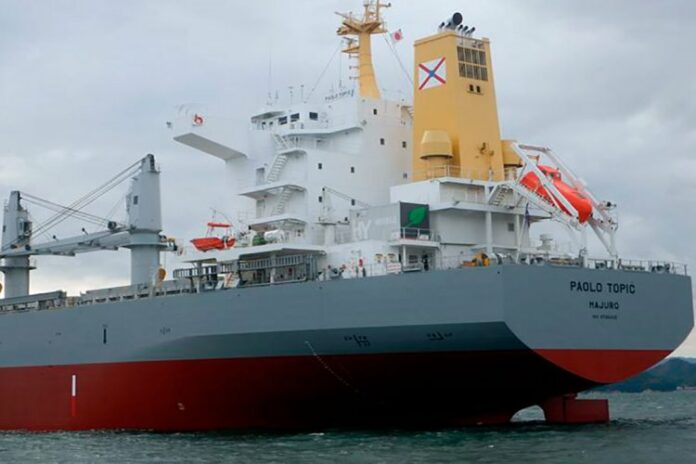
The technology group Wärtsilä has completed the installation and commissioning of a unique hybrid power system combined with a PV solar energy system in collaboration with Marfin Management and Solbian, onboard a bulk carrier vessel, making it one of the most technologically advanced vessel of its type in the global fleet.

The installation was carried out on the M/V Paolo Topic, a bulk carrier built in 2016 at the Onomichi Dockyard in Japan and managed by Marfin Management S.A.M.

The innovative, fully integrated Wärtsilä HY Module solution includes, an energy management system and batteries that delivers auxiliary power to the grid. When coupled with other sources of energy such as PV panels the benefits are enhanced. It will address the marine sector’s major challenges to lower operating costs while simultaneously reducing environmental impact. The solution achieves this through significant reductions in fuel consumption and maintenance needs, while offering cleaner, safer, and more efficient operations. It also contributes to placing the vessel in a positive position regarding the industry’s Energy Efficiency Existing Ship (EEXI) and Carbon Intensity Indicator (CII) indexes.

Alex Albertini, CEO Marfin Management, says:

“This is an extremely exciting development that will lead the way to a more sustainable future. We will be able to provide our customers and partners with the most advanced vessel performance and environmental quality, and it is without compromising operational effectiveness or flexibility.  We would like to thank all our partners who worked on the project for this highly innovative and effective solution.”

Giulio Tirelli, Director, Business Development, Wärtsilä Marine Power, says:

“This installation represents a truly significant breakthrough in enabling the bulker fleet to increase both its economic competitiveness and environmental performance. The decarbonisation of shipping is a major priority for stakeholders throughout the maritime sector, and this unique solution helps us take a long step towards reaching this goal.”

The Wärtsilä HY Module for Bulkers is a compact containerised solution that cuts a vessel’s emissions by optimising the onboard power production, consumption, and management. The HY module gives the possibility to combine and integrate an energy storage system and additional energy sources, such as solar power, with Wärtsilä’s highly sophisticated Energy Management System (EMS) to deliver auxiliary power. The EMS has overall control of the engines, batteries, power distribution, and with the installation of solar panels on the weather deck it’s a maritime industry first.

The containerised solution has been placed on the ship’s deck to save space and has been installed without the need for dry-docking.

Neptune Energy awards contract extension to Petrofac for UK services

0

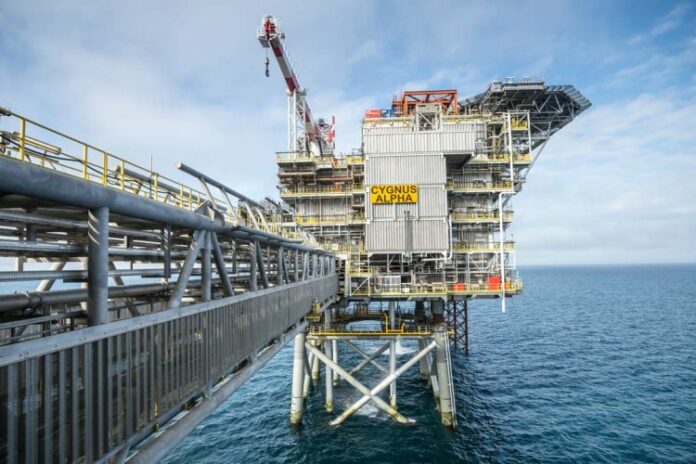
Neptune Energy today announced the award of a two-year contract extension to Petrofac for engineering services for the Neptune-operated Cygnus Alpha and Bravo platforms in the UK Southern North Sea.

Petrofac will provide a range of brownfield engineering, procurement, construction and commissioning services for the Cygnus field. It follows the award of a separate, three-year contract extension to the company earlier this year, for operations and maintenance support in the UK.

Earlier this year, Petrofac celebrated its 10th anniversary of supporting the Cygnus field, having begun working on the pre-operational phase of Cygnus in 2011.

Neptune Energy’s UK Managing Director, Alexandra Thomas, said:

“Petrofac is an important partner for Neptune Energy in the UK with a strong and well-established understanding of the Cygnus assets.

“The offshore team’s detailed knowledge supports the safe and optimal operation of the facility, and reduces time and costs associated with planning engineering activities. This is crucial given Cygnus is a key component of the UK North Sea’s energy infrastructure, capable of producing 6% of UK domestic gas demand.” 

Petrofac’s Chief Operating Officer Nick Shorten said:

“Our operations experience on Cygnus gives our engineering team unique insight into how to manage key brownfield integrity scopes and EPC modifications with ultra-efficient results; reducing impact on operations and minimising downtime in order that Neptune can continue to meet critical energy demand.

“We are delighted to have the opportunity to build on that approach, and further strengthen our long-term partnership with Neptune Energy.”

Damen Shoalbuster 3815 SD delivered to Caspian Offshore Construction

0

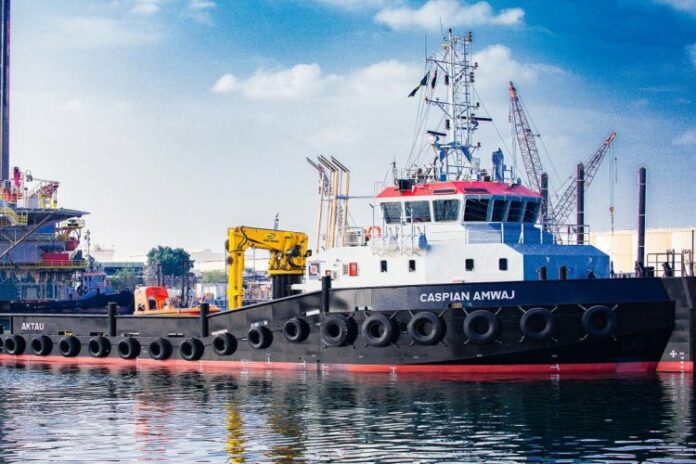
The Shoalbuster 3815 SD is one of the newest and largest vessels in the Shoalbuster range and stands out for its ability to operate in waters of no more than 120 centimetres in depth. Named the Caspian Amwaj, this new addition to COC’s fleet will initially be deployed on a project in the Arabian Gulf, the company’s first in the region.

The Shoalbuster 3815 SD is a highly versatile workboat capable of taking on a wide variety of assignments. Handling anchors, buoys and hoses, as well as towing and other general support tasks for the offshore oil & gas industry, all fall within its operational profile. Suitably equipped it can also undertake dredging and support activities in waters that few other vessels can access.

Installed power of 1,540 bhp directed through four 1,000 mm aft propellers delivers 18.6 tonnes of bollard pull, and twin bow thrusters bring added manoeuvrability. 185 m2 of working deck space enables it to carry substantial cargos. The standard accommodation in the 38-metre, 250 dwt vessel allows for comfortable living space for 11 persons in accordance with MLC regulations.

The Caspian Amwaj was built for stock at Albwardy Damen and the sale contract with COC was signed in mid-October 2021 with the handover taking place just four weeks later. This rapid delivery was possible due to the excellent cooperation between COC and Damen.

Established in 2003, Caspian Offshore Construction is based in Kazakhstan and is a leading supplier of offshore marine services in the Caspian Sea, which is well known for its shallow waters. A valued customer of the Damen Group, its fleet includes a Damen Stan Tug 1606 ICE, a Multi Cat 1908, two Fast Crew Suppliers 3307 and a Fast Crew Boat 1605.

Timur Sharapiev, COC Managing Director, says:

“We are indeed very excited to have taken delivery of this unique unit from our established partner Damen Shipyard with whom we have been successfully cooperating over last 15 years. Word Amwaj in Arabic language means Wave, therefore selected name Caspian Amwaj is quite symbolic to this occasion in a sense that COC is now “sailing” into Middle East market on the back of our strong track record of operating in Caspian waters. I would like to wish Caspian Amwaj and her crew safe journey and best of luck”.  

Marc Tijssen, Sales Manager Damen Shipyards Group East & South-East Europe, says:

“The ultra-shallow draught Shoalbuster 3815 SD was developed in close consultation with owners and operators of vessels operating in shallow waters. The vessel is ideal not only for work in the shallow waters of the Arabian Gulf but also for COC’s primary area of operations, the Caspian Sea. We look forward to seeing Caspian Amwaj excelling in her role.”

Maersk Drilling launches Horizon56 to drive digitalisation of the industry

0

For the past two years, Maersk Drilling has spearheaded an innovative effort to develop a first-of-a-kind product to support digitalisation of offshore drilling processes.

The solution, known as RigFlow, has now been segregated into the digitally focused company named Horizon56 A/S to drive further development and commercialisation. Horizon56 has been founded as a fully-owned Maersk Drilling subsidiary, with the ambition over time to attract strategic investors to further develop the company and its products and services.

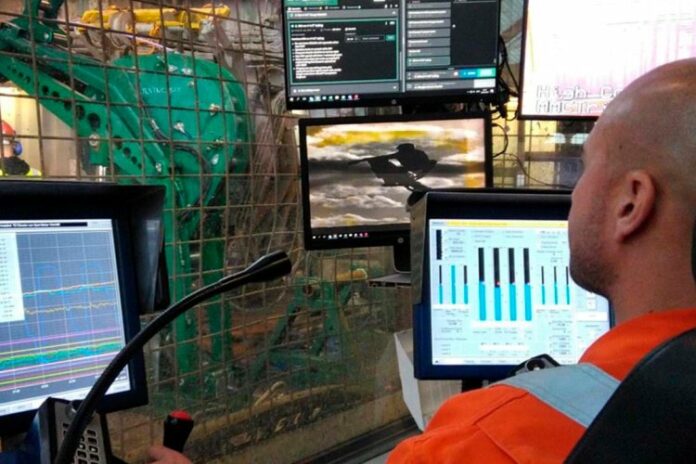
he RigFlow solution standardises and digitalises the core workflows involved in the well construction process within offshore drilling operations, including real-time exchange of information between energy companies’ onshore planning units, the offshore drilling operations teams operating the rig, and the service companies supporting the operations. Other benefits of RigFlow include a convenient and user-friendly solution for providing digitalised drilling instructions, as well as automated reporting of data and insights to support quicker and deeper analysis of drilling operations.

Esben Thorup, the Managing Director of Horizon56 who previously led the development of RigFlow within Maersk Drilling, says:

“From our dialogues with global oil and gas operators we see that the timing for the RigFlow offering fits well with market trends, and we expect global demand to build over the years to come. We’re thrilled to be part of driving industry digitalisation forward, and our product roadmap includes additional exciting solutions that will increase the value creation for operators and contractors even further.“

Originally called Drilling Process Platform (DPP), RigFlow has been scoped and developed by Maersk Drilling’s Innovation team from early ideation and validation in 2019. Following extensive operational and market research, the solution has been designed, tested, and now deployed across several Maersk Drilling rigs. Scoping and development have been performed in collaboration with digital leaders in the oil and gas sector, including Aker BP and Equinor.

Marika Reis, Chief Innovation Officer, Maersk Drilling, says:

“This is a natural step for the RigFlow solution and team. Horizon56 will become the first digital company that solely focuses on creating an industry-leading solution for offshore, and by doing so we ensure that it has the necessary agility to operate and quickly adapt to market trends, as well as enabling the team to independently engage with the market in the pursuit of customers, partnerships, and investors. I’m proud to be able to present this result of our continuous innovation efforts and Smarter Drilling for Better Value strategy, and I look forward to the journey ahead.”

Morten Kelstrup, Chief Operating Officer, Maersk Drilling, says:

“The RigFlow solution is a testament to our desire to push the boundaries of the offshore drilling industry. The positive operational impact from RigFlow that we have seen so far is great, supporting more competitive energy production with an overall lower carbon footprint. This remains critical for us and our customers and I’m sure that we’re still only scratching the surface of what can be achieved through digital solutions. I look forward to the continued digitalisation of our operations and of the industry at large, and RigFlow will be an important part of that journey.”

AIDA Cruises takes delivery of new cruise ship AIDAcosma

0

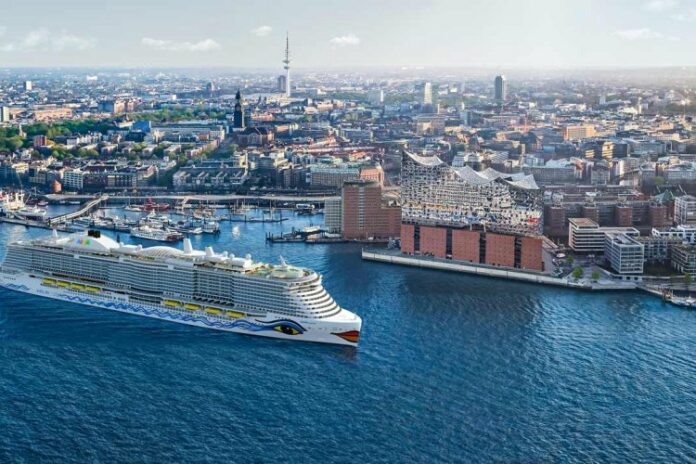
On December 21, 2021, AIDA Cruises took delivery of its newest cruise ship AIDAcosma in Bremerhaven from the Meyer shipyard in Papenburg, Germany. It is the company’s second newbuilding powered by liquefied natural gas (LNG) – currently the maritime sector’s most advanced technology for reducing emissions.

Felix Eichhorn, President of AIDA Cruises, said at the ceremony:

“Today marks an important milestone on our journey to emission-neutral cruising. With AIDAcosma and her sister ship AIDAnova, two of the most innovative cruise ships in the world belong to our fleet in terms of sustainable cruising as well as the very special guest experience and product diversity.”

From the end of February, Hamburg will be the first “home port” for AIDAcosma. There the first of altogether six metropolis voyages starts on February 26, 2022. The 7-day cruises can be booked now.

On April 9, 2022, the champion athlete Kristina Vogel will ceremoniously christen the new ship in Hamburg. Guests of the subsequently starting christening voyage to the Mediterranean can experience this special event on board. The two-week christening voyage, including the ceremonial christening, can also be booked from now on, taking passengers to either Mallorca (until April 23, 2022) or Barcelona (until April 22, 2022).