-5.4 C
New York
Home Blog Page 37

Exail secures sale of DriX H-9 long-range Uncrewed Surface Vessel

0

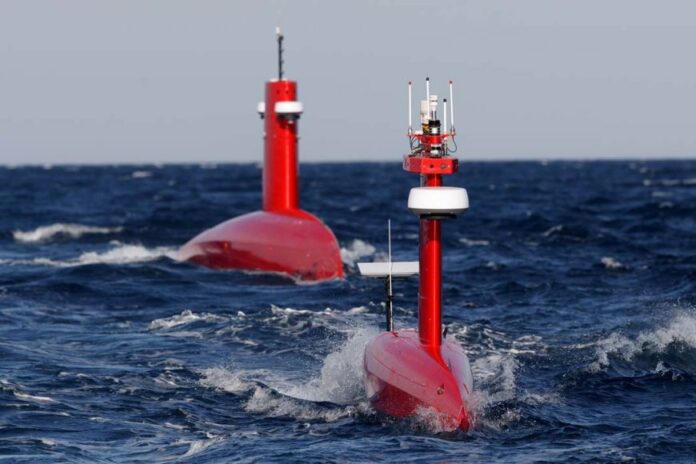
Exail has secured the sale of its new long-range Uncrewed Surface Vehicle (USV), the DriX H-9, to a leading global hydrographic authority.

The new H-9 model delivers up to 20 days of autonomous endurance, increased payload capacity and enhanced flexibility to support a wide range of maritime missions. The DriX H-9 minimizes offshore logistics while extending operational reach, key requirements in sectors such as offshore energy and subsea infrastructure and naval surveillance.

The H-9 can carry multiple geophysical sensors simultaneously, such as side-scan sonar, magnetometer, multi-beam echo sounder and sub-bottom profilers. Its aft launch and recovery system enables deployment of towed sensors and inspection class remotely operated vehicles (ROVs), supporting tasks such as seabed mapping and infrastructure inspection. An adaptable mast allows integration of additional sensors such as optical systems and advanced communications equipment, for maritime domain awareness missions.

Like the DriX H-8, the H-9 features a gondola architecture optimized for hydroacoustic sensors, ensuring high-quality, stable data collection. A common architecture framework across the DriX Series further simplifies fleet integration, enabling shared spares and streamlined maintenance.

“With this sale of the H-9, alongside the recent success of the DriX O-16, the DriX series is becoming a true reality at sea — enabling operations from shallow to deep waters, with expanding endurance, the ability to embark a wide range of sensors, and the capability to launch and recover various assets,” said Sébastien Grall, Head of Maritime Autonomy activity. “With its maturity, reliability, and widespread adoption by both civilian and military customers worldwide, the DriX Series continues to set the standard for high-performance USV operations and strengthens Exail’s leadership in the rapidly evolving autonomous maritime systems market.”

The DriX H-9 is scheduled to be delivered in 2026. 

Damen launches latest Island Class for BC Ferries

0

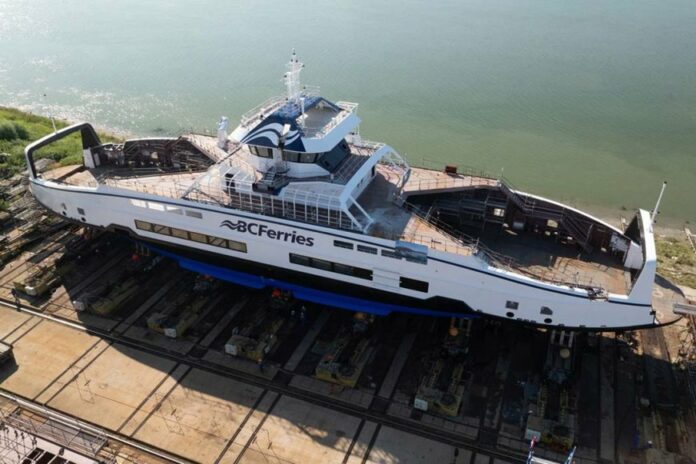
The vessel is the second of four Island Class vessels currently under construction at Damen Shipyards Galati in Romania. Once operational, the ferries will provide low emission services connecting coastal communities along the coast of British Columbia.

When delivered, the ferry will be the eighth Island Class vessel that Damen has built for BC Ferries. The Island Class is based on the design of the Damen 8117 Electric Ferry (E3).

The Galati shipyard has seen a lot of activity on all four Island Class vessels under construction over the past few weeks. In early July, the yard also marked the grand block assembly of the ninth vessel, and the keel laying of the tenth, on the same day. 

These ferries will transport passengers between Nanaimo and Gabriola Island, and Campbell River and Quadra Island. Damen is outfitting the vessels with diesel-electric hybrid propulsion. In the future, once the relevant electrical infrastructure is in place, BC Ferries intends to operate the ferries on 100% electric power. 

Damen Executive Director Global Sales Leo Postma said, “There’s been a lot of movement on the various Island Class vessels over the past few months and it’s very exciting for our team to see progress unfolding at such a rate. We continue to enjoy an excellent cooperation with BC Ferries. We are very grateful for the quality of this relationship, which is undoubtedly a significant factor in the ongoing success of the project.”

Damen is also supplying BC Ferries with onshore charging equipment and will, via its BC-based Service Hub, continue to provide its client with support during the vessels’ operational phase.

In a further step forward for sustainable public transport operations, the four Island Class vessels currently undergoing construction are being modified to reduce underwater radiated noise. 

Together, Damen and BC Ferries undertook a series of underwater noise measurements on the Island Class vessels already in operation. Damen, working with its suppliers, has put the findings from these measurements into reducing underwater radiated noise in this next generation of Island Class vessels. 

This is in line with BC Ferries’ Long Term Underwater Management Plan. The company has developed this Management Plan minimise impacts on marine life in the areas in which it operates, most notably the endangered Southern Resident Killer Whale. 

Measures taken include hull drag reduction via towing tank testing after a number of computational fluid dynamics (CFD) simulations. Additionally, the adaptations were made to the vessels’ propulsion system including a new quieter and more efficient propeller blade design. 

Auramarine delivers methanol fuel supply system for two Terntank hybrid tankers

0

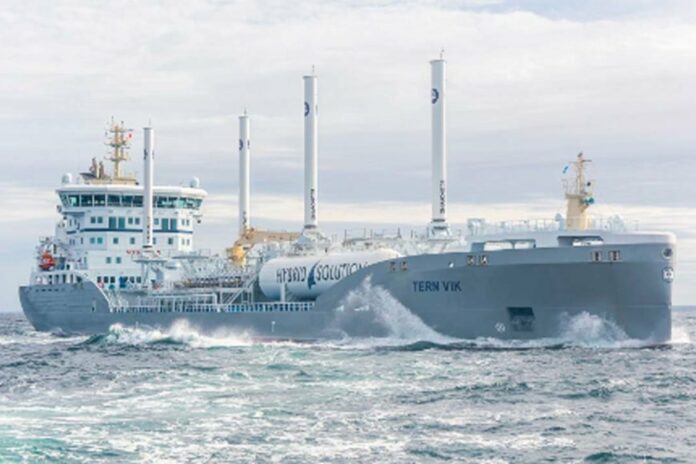
Auramarine has signed an agreement to provide its methanol fuel supply system to two vessels within Terntank’s fleet of next generation oil and chemical tankers. 

The vessels operate with wind-assisted propulsion and dual-fuel engines capable of running on MGO, biofuels, and methanol. The delivery of Auramarine’s methanol fuel supply system is scheduled for April 2026 and September 2026 and the tankers will be delivered in January and June 2027 from China Merchant’s Jinling shipyard, Yangzhou.

Commenting on the agreement, John Bergman, CEO, Auramarine, said: “We are delighted to announce that Terntank has once again selected Auramarine as their preferred methanol fuel supply system provider for the second time. 

“As well as price and availability, a key element driving the widespread uptake of future fuels is having the right bunkering and onboard operational infrastructure in place. Today’s agreement confirms that we are on the right path. At Auramarine, we are committed to supporting the shipping industry’s decarbonization and will continue to innovate to bring new solutions to market which will effectively support the green energy transition.”    

Claes Möller, CEO, Tärntank Ship Management, added: “The new vessels demonstrate Terntank’s commitment to delivering sustainable shipping practices and supporting the industry as it looks to meet its decarbonisation targets. The hybrid tankers project, which is among the first of its kind, has required close collaboration with a number of partners. Given our recent positive experience with Auramarine, they were the natural choice to provide the methanol supply system for these new vessels.”

Wärtsilä to install world’s largest marine battery hybrid system on Wasaline ferry

0

The project will increase the ship’s battery capacity by 10.4 MWh, from 2.2 MWh to 12.6 MWh, making it the world’s largest marine battery hybrid system in operation. The order with Wärtsilä was booked in Q3 2025.

In the transition to more sustainable ferry transportation, hybrid propulsion systems have emerged as a compelling solution, offering a multitude of pathways to reduce greenhouse gas (GHG) emissions. These systems, which combine energy storage capabilities with conventional engines, can significantly cut fuel consumption and, consequently, emissions.

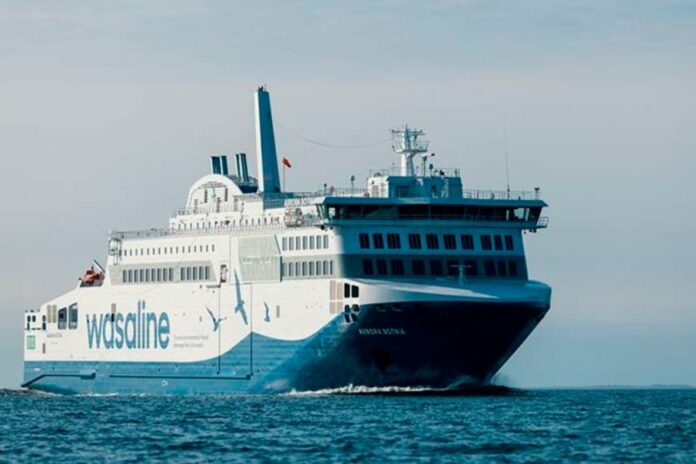
The Aurora Botnia ferry, which is operated by Wasaline, is equipped with dual-fuel engines and batteries and is using biogas and batteries for the propulsion. Expanding its battery capacity is a major step in making the ship even more sustainable.  Wärtsilä will lead the integration project and as a result, the battery capacity of the ferry will be extended by 10.4MWh. Wärtsilä will also deliver the Energy Management System, as well as upgrade the power drives and the control system integration. The system is scheduled to be commissioned in early 2026.

“Wasaline’s commitment to decarbonised shipping operations is central to everything we do,” says Peter Ståhlberg, Managing Director – Wasaline. “In this, our close cooperation with Wärtsilä is an essential element that benefits not only both our companies, and we can see that our cooperation sets standards for the whole marine sector. Through our continued collaboration, the ‘Aurora Botnia’ has become a working example of what is possible when it comes to delivering environmentally friendly transportation within shipping.”

This latest project will strengthen the existing collaboration agreement between Wärtsilä and Wasaline, with the Aurora Botnia acting as a floating testlab linked to Wärtsilä’s Sustainable Technology Hub. It allows further development of hybrid technologies to optimise fuel efficiency and minimise exhaust emissions. As a result, the vessel is one of the most environmentally sustainable ferries in the world, operating carbon neutrally already today.

“Wasaline once again demonstrates its strong commitment to decarbonisation by extending the electrification capacity of this ferry. Our latest contribution will optimise the ship’s operations even further, creating fuel savings and a significant reduction in emissions,” comments Roger Holm, President of Wärtsilä Marine & Executive Vice President at Wärtsilä Corporation.

The Aurora Botnia, which entered into service in 2021, operates with a range of integrated Wärtsilä solutions, including four highly efficient Wärtsilä 31DF engines. The ultra-low emissions version of the engine has helped the ferry to significantly reduce methane emissions. The ferry operates between Vaasa in Finland and Umeå, Sweden.

Corvus Energy battery system powers Latin America’s first electric tugboat

0

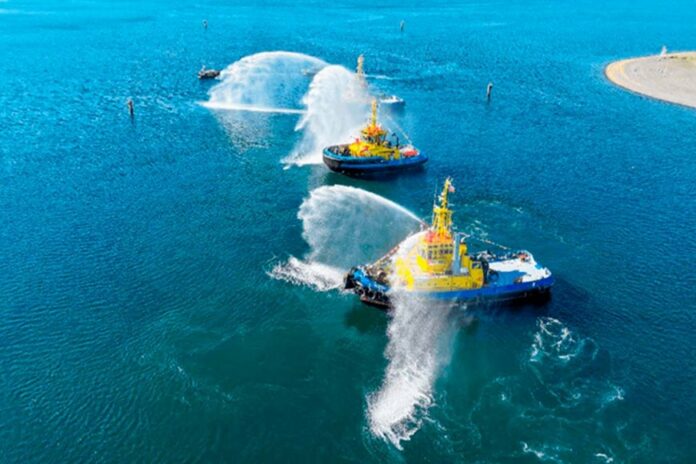
The first electric tugboat in Latin America, the result of a collaboration between the largest towage services operator in the Americas, SAAM, and Chilean national oil company, Enap, is powered by a lithium-ion marine battery system from Corvus Energy.

Based on an exclusive design from naval architects Robert Allan Ltd (RAL) and built by SANMAR Shipyards for SAAM, the battery-electric tug supports ship berthing and deberthing maneuvers in one of the southernmost terminals in the world—Puerto Chacabuco in the Aysén Region of Chile in South America.

The battery-powered vessel, named “Trapananda” in honor of the Chilean Patagonia region where the tug operates, measures 25 meters in length, 13 meters in beam and boasts 70 tons of bollard pull capacity, enabling it to assist large vessels under challenging harbor conditions.

SAAM, including its division SAAM Towage, operates more than 200 tugboats around the Americas. Notably, the Trapananda is the third battery-electric tug to join the SAAM fleet. In May 2024, SAAM launched two electric tugboats in the Port of Vancouver in Canada, making SAAM among the first zero-emission tug operators in North America. All three tugs are RAL-designed, SANMAR Shipyards-built and equipped with a Corvus Energy battery system.

According to SAAM, battery-powered tugboats are an important part of the Company’s 2030 Sustainability Strategy, which includes a goal to neutralize 65% of greenhouse gas emissions from the operation of their fleet through reduction and offsetting initiatives. (Source).

Fully battery-powered operations produce zero emissions and are almost completely silent. This results in significant environmental benefits, including reduced carbon footprint and less noise pollution, both in port and underwater, protecting coastal communities and marine life alike. Compared to diesel-powered tugs, electric tugboats also offer operational advantages including reduced fuel and maintenance costs.

After its first year operating electric tugs in Canada, SAAM reported its “carbon intensity index had fallen 72% compared to diesel-powered units with similar features, and a further 90% reduction was projected for the second year of operation. In addition, the electric tugs’ operating costs were reported to be 70% lower than its diesel-powered peers.” (Source).

The Trapananda is equipped with a Corvus Orca ESS, the most installed marine energy storage system, used onboard over 700 maritime vessels worldwide. Like the SAAM electric-powered tugs operating in Vancouver, the Trapananda is outfitted with a 3,616-kWh capacity battery system.

“We are proud to support SAAM, RAL and SANMAR by supplying the battery system for the first electric tugboat to operate in Latin America, as well as for the Vancouver-based tugs,” said Tor-Gunnar Hovig, Head of Region Americas at Corvus Energy. He adds, “SAAM is leading the way towards more sustainable port operations in the Americas and beyond with these RAL-designed, SANMAR-built tugs.”

“The arrival of the Trapananda is a turning point for our industry. It signals our decisive move toward cleaner, more efficient, and environmentally friendly operations. This project represents our vision for the future: we’re developing solutions that not only assist and tow ships but also help mobilize a shift toward a truly sustainable logistics chain. We consider Corvus a strategic partner in this journey,” said Pablo Cáceres, Sustainability and Development Director of SAAM Towage.

New pilot project marks step towards large-scale restoration of oyster reefs in the North Sea

0

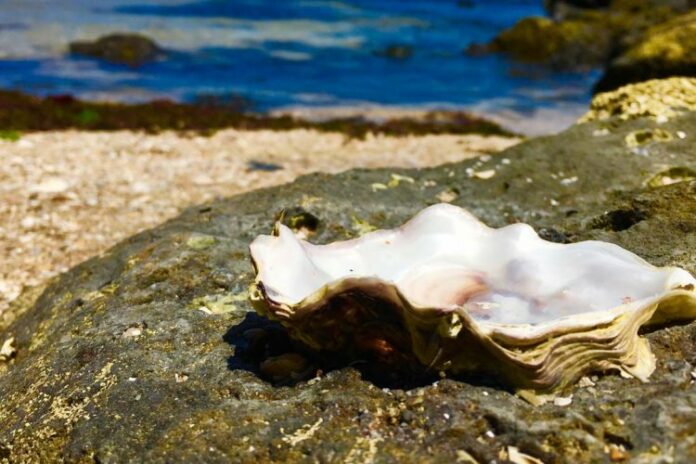
It is the trial run of an innovative method combining nature restoration and the installation of marine infrastructure, such as wind turbines, breakwaters and subsea cables. Before being installed at sea, the foundations of this infrastructure are covered with juvenile oysters. This pilot is part of a unique partnership between Van Oord and companies, research institutions, and nature organisations, working together to restore oyster reefs in the North Sea on a large scale.

The new method, known as the remote setting method, involves cultivating millions of oyster larvae in a dedicated hatchery before transferring them to a harbour or other location close to the sea. There, they are placed in shipping containers filled with seawater and rocks. In just a few days, the larvae attach themselves to the rocks and then grow into juveniles. The consortium is also investigating the influence of reef sounds. Do flat oysters use these sounds to find a suitable habitat for themselves? If so, then the sounds can be used to improve their chance of settling.

After a few weeks, the shipping containers are loaded onto vessels. The rocks bearing the juvenile oysters are released into the sea, where they seek their new habitat. If successful, this modular, flexible design will provide a cost-efficient method for reef restoration that can be applied anywhere and on any scale. By incorporating the oyster-bearing rocks directly into the engineering, construction and maintenance of wind farms, subsea cabling, breakwaters, platforms and other marine structures, the consortium members are combining marine infrastructure and large-scale nature restoration. Researchers will spend the next few months monitoring the survival and growth rates of the oysters. Next year, the consortium members plan to test the remote setting method again, at a TenneT cable crossing in open sea. 

Nienke Oostenbrink – Pilot Lead & Business Developer for Van Oord Ocean Health, said:

‘Thanks to close collaboration, our consortium has been able to deliver and implement a major innovation. I’m extremely proud of that. It holds promise for scaling up nature restoration in the North Sea and may have a significant positive impact in years to come.’ 

The push to develop this new method comes from an awareness that marine life in the North Sea is under pressure. Oysters form large-scale subsea reef structures by clustering together over the course of their lifespan. The reefs create a solid bedding full of nooks and crannies that are ideal habitats for numerous types of plants and animals. The oysters also filter the water, release nutrients and absorb waste products. All this makes them a vital factor in sustaining life in the North Sea. The North Sea’s oyster reefs have disappeared almost entirely, however, due to overfishing, pollution and disease. The remote setting method can make a significant contribution to regrowing the reefs. 

Vera Bánki, De Rijke Noordzee Programme Director, said:

‘Oysters are the silent engineers of a healthy aquatic ecosystem. Restoring the reefs is no luxury, it’s a necessity. I am hopeful that we can restore the reefs using this innovation.’ 

The project draws on the expertise of the nine consortium partners: Wageningen Marine Research, Wageningen University & Research, ARK Rewilding Nederland, Stichting Zeeschelp, Waardenburg Ecology, Van Oord Ocean Health, TenneT, Port of Rotterdam Authority and De Rijke Noordzee (a joint venture between Dutch nature conservation organisations Stichting de Noordzee and Natuur & Milieu). The companies, public knowledge institutions and nature conservation organisations that make up the consortium have spent the past 3 years working together to refine the remote setting method.   

Incat Crowther to design new electric tour vessel for Port Houston

0

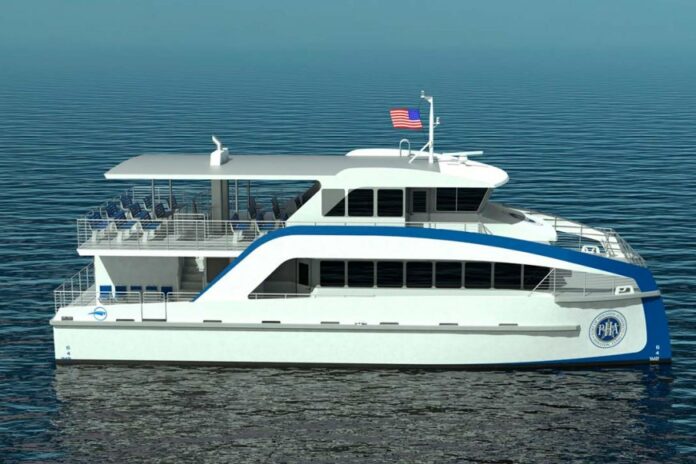
Incat Crowther has been selected by Port Houston in the USA to design a new, state-of-the-art hybrid electric tour vessel for the port’s popular Houston Ship Channel tours. Incat Crowther will partner with Louisiana-based shipbuilder Breaux Brothers on the project, meaning the new vessel will be both designed and constructed in the USA.

Ushering in a new era for Port Houston, the new 22-metre vessel will replace the near 70-year old M/V Sam Houston,which has been servicing the tourism route since the port began offering tours in 1958. The vessel will be capable of operating in an all-electric, battery-powered mode during regular two-hour  educational tours, and will be charged via a bespoke shoreside connection using AC/DC converters. Operational flexibility has been enhanced through the inclusion of back-up generators that can extend the range of the vessel if needed.

Offering comfortable seating for 150 passengers across two decks, the new vessel’s electric propulsion system will provide guests a whisper-quiet experience touring the iconic Houston Ship Channel. The vessel’s main deck will feature spacious seating for 68 passengers, including two dedicated wheelchair spaces, in an air-conditioned cabin that also boasts a kiosk, an information counter and four bathrooms.

The vessel’s expansive upper deck accommodates 81 passengers, with approximately 90 percent of seating positioned under cover. The upper deck has been designed to optimise passenger flow and accessibility, enabling guests to safely enjoy panoramic views while seated or in motion. The vessel’s large wheelhouse is also located on the upper deck, offering 360-degree views for the captain and crew.

Charlie Jenkins, CEO of Port Houston said, “More than two million people have taken our boat tour to see Houston’s vast maritime activity first-hand. It’s a unique experience that we are proud to provide. We are excited to partner with Incat Crowther and Breaux Brothers on a new, low-emission vessel that will reduce the carbon footprint of our tour while offering guests a truly memorable experience.”

Managing Director of Incat Crowther North America, Grant Pecoraro, said: “This vessel demonstrates that modern electric propulsion technology can provide both increased operational efficiency and flexibility, while offering an elevated customer experience. We’re pleased to be partnering with Breaux Brothers to deliver a cutting-edge solution tailored to Port Houston’s operational needs.”

Construction on the new vessel is set to begin in the second half of 2025, with the vessel expected to enter service by late 2026.

Saipem completes conversion of Scarabeo 5 from drilling unit

0

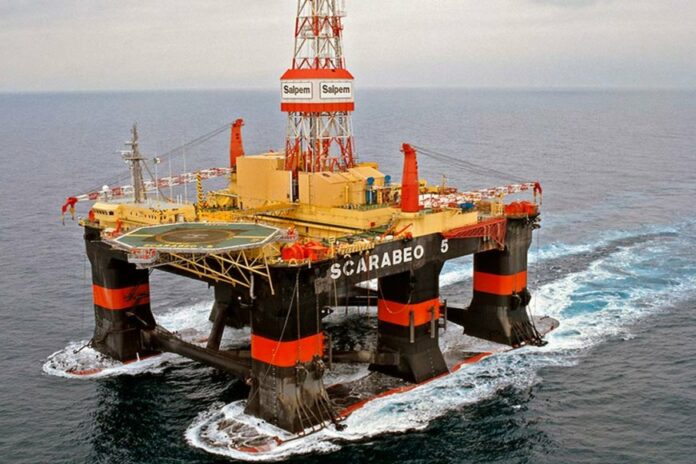
Saipem has completed the conversion of the Scarabeo 5 semi-submersible drilling unit into a floating plant for the separation and boosting of hydrocarbons (Floating Production Unit – FPU).

The conversion of the Scarabeo 5 into an FPU is a key milestone of the contract awarded to Saipem by Eni Congo in August 2023 as part of Eni’s Congo LNG Project, the country’s first natural gas liquefaction project. Saipem’s activities entailed the engineering, procurement, construction, transportation and commissioning of the FPU to be installed offshore the coast of the Republic of Congo, northwest of the Djeno Terminal, at a depth of approximately 35 metres.

The Scarabeo 5, built in Italy in the early 1990s, is one of the best units of its generation, hence it was chosen as an asset for conversion into a floating gas treatment facility. Once installed, it will serve as a control hub for the entire offshore development field of Eni’s Congo LNG Project.

Official launch of Windcat Rotterdam

0

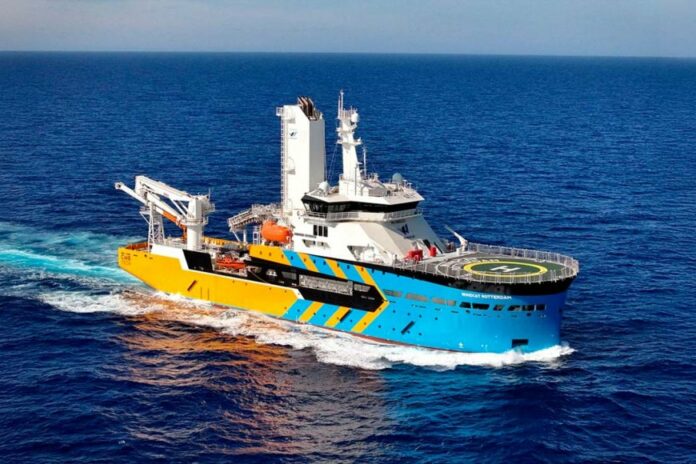
The vessel can accommodate up to 120 people and sets new standards in comfort, performance and decarbonisation. This vessel delivery marks a major milestone in the expansion of Windcat’s offshore service capabilities.

Windcat Rotterdam is a CSOV (Commissioning Service Operation Vessel), a vessel that supports construction, commissioning and maintenance activities at offshore energy projects. It serves as a floating base for personnel and equipment, enabling safe and efficient access to offshore assets.

Comfort on board is a key feature, with spacious single and double cabins for up to 120 people, a fully equipped gym, entertainment areas and high-quality catering and housekeeping services. The interior is developed in collaboration with experts to ensure a “home away from home” experience for offshore personnel. 

Willem van der Wel, Managing Director at Windcat says: “We are very proud and happy to have taken delivery of our first CSOV, Windcat Rotterdam. It has been great to see this groundbreaking design come to life. Now that Windcat Rotterdam has been added to our fleet, we are able to offer not only best-in-class CTV services but also best-in-class CSOV services. We see a bright future for our vessels in the offshore energy industry supporting clients globally to safely and comfortably accommodate and transfer personnel to their projects offshore. Thanks to the excellent cooperation with Damen Shipyards and all key suppliers we can deliver such an innovative vessel and we look forward to the delivery of the remaining five CSOVs in the coming years.”

Joost van der Weiden, Sales Manager at Damen says, “On behalf of Damen, I am very pleased to witness this major milestone in the development of the Elevation Series. The vessels are a clear demonstration of what can be achieved for maritime sustainability when we combine our strengths with likeminded partners and work towards a common goal. I’m looking forward to continuing our collaboration during the construction of the remaining vessels in the series.”

Windcat Rotterdam is equipped with the latest available technologies in terms of fuel efficiency and emission control such as closed bus switchboard configuration and a hybrid battery-electric propulsion system. Four azimuth thrusters enable precise manoeuvrability and efficient operations. Collectively, these techniques are expected to ensure that the vessel will already reduce CO2 emissions by 30%.

In line with the sustainability ambitions of both Windcat and Damen, the vessel is designed to operate with a significantly reduced CO2 footprint. Windcat builds on the operational experience it has with its hydrogen-powered CTVs (Crew Transfer Vessel). CMB.TECH’s hydrogen technology will also be implemented in the Elevation Series CSOVs. A dual fuel hydrogen engine will enable the auxiliary genset to run on hydrogen. The hydrogen genset, storage and fuel supply system are ready for integration on the vessel once final approvals are in place. This approach supports future regulations for hydrogen use in medium-sized vessels. 

Designed for offshore deployment of up to 30 days, the vessel offers high operability and safety. The 3D motion-compensated gangway sets new industry standards with a high vertical range and the world’s first 10-ton 3D motion-compensated crane enables heavier platform lifts in rough sea conditions in a safe and easy manner, reducing standby time due to weather changes. 

The Elevation Series CSOVs enable Windcat to offer a broader and more flexible service to clients in the offshore energy industry. Windcat Rotterdam was delivered on 24 July by Damen at Ha Long Shipyard in Vietnam.

UAL launches Caribbean Shuttle connecting Guyana, Trinidad & Tobago, and Surinam

0

UAL has introduced the UAL Caribbean Shuttle, a fixed 9-day loop service linking Point Lisas (Trinidad & Tobago), Georgetown (Guyana), and Paramaribo (Suriname). The new service responds to increasing demand for reliable, multipurpose shipping options in the Southern Caribbean.

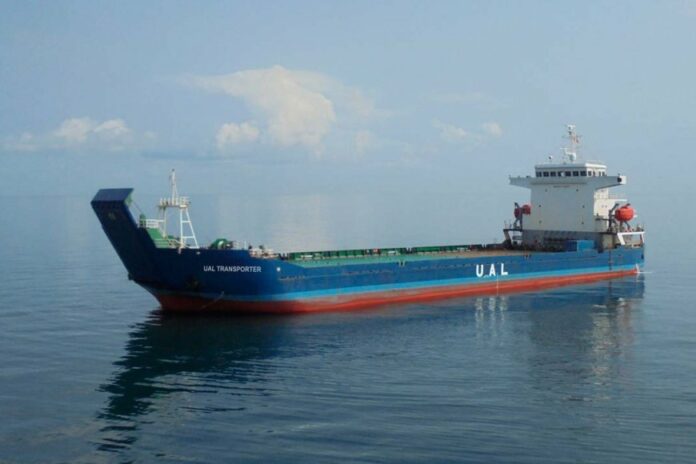
The shuttle will be operated by the newly delivered mv UAL Transporter, a landing craft vessel with a shallow 5-meter draft (at max loading capacity) and a capacity of 387 TEU. Purpose-built for regional conditions, the vessel allows access not only to major terminals but also to river ports at Georgetown and Paramaribo, where draft limitations often restrict larger tonnage.

The UAL Caribbean Shuttle is designed to handle a broad mix of cargoes:

•    Containers: FCL imports such as food, machinery and consumer goods.
•    RoRo cargo: vehicles, trucks, construction and mining equipment.
•    Breakbulk: steel, pipes, fertilizers, construction materials and project cargo.

“Traders and forwarders in these markets have long asked for a fixed, reliable short-sea option,” said Martijn Hordijk, Project Manager of UAL. “With a scheduled 9-day rotation and the ability to load all cargo types, the UAL Caribbean Shuttle provides the consistency exporters and importers need. The service will be managed locally by UAL Trinidad, supported by the head office in The Netherlands.”

Trinidad & Tobago serves as a hub for industrial goods, petrochemicals and consumer cargo. Guyana’s rapidly growing economy is driven by oil development, infrastructure projects and agriculture. Suriname contributes additional trade in rice, bananas, timber and fisheries products. According to the Guyana Rice Development Board, rice exports to Trinidad & Tobago exceeded 30,000 metric tons in 2023, underlining the scale of trade on this corridor. By linking these markets on a single, reliable loop, UAL aims to strengthen regional connectivity and support long-term trade growth.