-4.6 C
New York
Home Blog Page 36

Sixth LNG tanker loads cargo from Russia’s Arctic LNG 2, data shows

0

This comes after China received an LNG cargo from the Arctic LNG 2 project, which is sanctioned over Russia’s conflict with Ukraine. This is the first time that cargo from the project has been received by an end-user since starting up last year.

Six tankers have picked up cargoes from Arctic LNG 2 so far this year, with the latest being La Perouse, which arrived at the plant on August 27, loaded LNG and departed on August 30-31, according to Kpler and Vortexa data.

La Perouse was one of five LNG tankers sanctioned by the United Kingdom last September due to engagement with projects which are important to Russia’s future energy production.

According to shipping database Equasis, the tanker’s registered owner is Enson Shipping Inc with an address in Dubai, United Arab Emirates. Its ship or commercial manager is Dreamer Shipmanagement LLC-FZ with the same address as Enson Shipping.

Reuters could not find contact information for Dreamer Shipmanagement and Enson Shipping.

Meanwhile, Kpler and Vortexa data also showed that another sanctioned tanker, Arctic Vostok, is currently anchored next to the Koryak floating storage unit (FSU) in Russia’s Kamchatka Peninsula that indicates LNG transfer could be taking place.

The Koryak FSU is being used to store LNG from Arctic LNG 2, according to Kpler data. The Arctic LNG 2 cargo that China received last week had been loaded from the Koryak FSU.

The registered owner for Arctic Vostok, Lule One Services Inc, and its ship or commercial manager, Ocean Speedstar Solutions, both have registered addresses in Mumbai, India, according to Equasis.

Last year, the U.S. had imposed sanctions on the registered owners and managers of several LNG vessels, including Arctic Vostok, as part of a broader goal to curb Russia’s oil and gas revenues.

Source: Reuters 

Reporting by Emily Chow, additional reporting by Lucas Liew; Editing by Sonia Cheema
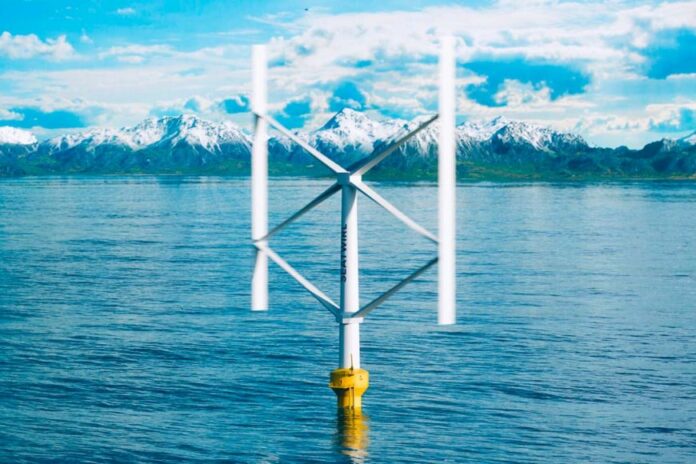
SeaTwirl AB’s Verti-Go consortium secures €15M from Horizon Europe

0

The 15 million Euro funding call by Horizon Europe is now secured by SeaTwirl AB and the consortium behind the project application “Verti-Go”. 

The design phase is estimated to conclude around the end of 2026, followed by the construction and operations phase that is planned to last until end of 2029.

On May 22nd it was announced that SeaTwirl’s project Verti-Go has been selected as the successful applicant for funding under the EU program “Demonstrations of innovative floating wind concepts” and was thereby invited by Horizon Europe into the grant preparation stage of the funding call of 15 million Euro. The grant preparation phase was successfully finalised with the signing of the grant and consortium agreements, and the project will start as planned on October 1st, 2025.

The Verti-Go project is led by Technical Coordinator SeaTwirl and the Project Coordinator University College Cork. The project consortium includes: EDP – Cnet Centre for New Energy Technologies SA, Greenov, Next Fabrication, Sub Connected AB, Sowento, RSTER, PNO, Bureau Veritas, and Zorlu Enerji. The project advisory board includes DNV.

“After months of preparations we can finally say that the 15 million Euro Horizon Europe funding call has been secured by the Verti-Go consortium. With the legal framework in place, we can now kick-off the project and begin the exciting journey to install and demonstrate a full scale SeaTwirl turbine. We are very proud of this achievement, and what the Verti-Go team has accomplished pulling this together. This is an extraordinary milestone for SeaTwirl, and I am truly excited about working with our partners, some of whom have been pioneers in this industry and have world leading floating wind experience”, says Johan Sandberg, CEO of SeaTwirl AB.

ABS issues full class for Saildrone Surveyor deep-water, ocean-going USV

0

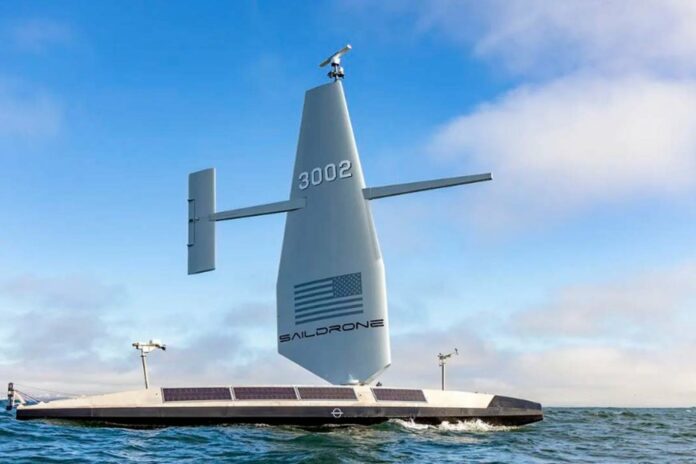
While other platforms have received certificates or interim approvals under evolving unmanned vessel frameworks, no other USV or UUV has yet received full classification status from any classification society. ABS is the first to grant full class to an unmanned platform, marking a key milestone for the industry.

The classification notation assigned is ✠A1, DV Naval Craft, AUTONOMOUS (NAV, MNV, PRP, AUX, RO3), which follows the “Rules for Building and Classing Light Warships, Patrol, and High-Speed Naval Vessels (2023).”

“The ABS class certification is more than a certificate—it’s a signal to governments and the maritime industry that Saildrone USVs are mature, safe, tested, and ready for scale,” said Richard Jenkins, Saildrone founder and CEO. “It’s been a very large investment and a multi-year process to achieve ABS Class Certification, but we are proud to be the first company in the world to do so and proud that our systems have reached the highest standards as required by the ABS Class certificate.”

ABS class is an internationally recognized standard for safety, design integrity, and operational reliability. The classification process is a rigorous review and validation of a vessel’s design, construction, and autonomous control systems. For unmanned platforms like the Saildrone Surveyor and Saildrone Voyager, this process includes autonomous control systems, cybersecure communications, structural integrity, and fail-safe redundancies, ensuring the vehicle can safely operate without crew, even in complex, unpredictable ocean conditions.

The 20-meter Surveyor is capable of long-endurance missions in the open ocean, collecting deep-ocean bathymetry and performing a wide range of maritime domain awareness tasks—from anti-submarine warfare (ASW) to trans-ocean cable route surveys. The 10-meter Voyager is designed for persistent surveillance in coastal and near-shore environments, complementing the Surveyor’s blue-water capabilities. Both platforms are capable of fully autonomous operations with no humans on board and are remotely monitored 24/7 by Saildrone’s global Mission Management team.

“ABS and Saildrone are pioneering new frontiers, setting the pace for innovation. This step forward is a result of our investments in ABS’ technical capability and helping to ensure our Rules are able to support innovation with an unwavering focus on safety,” said Patrick Ryan, ABS Senior Vice President and Chief Technology Officer.

“This is just the latest in a series of confidence-building actions from ABS for autonomous technologies in maritime, including the issuance of interim class for the 10-meter Saildrone Voyager. We’re proud to collaborate with trailblazing companies like Saildrone to advance safe, innovative solutions for autonomous and remotely operated ocean missions,” said Christopher J. Wiernicki, ABS Chairman and CEO.

Africa’s first offshore salmon farming project announced

0

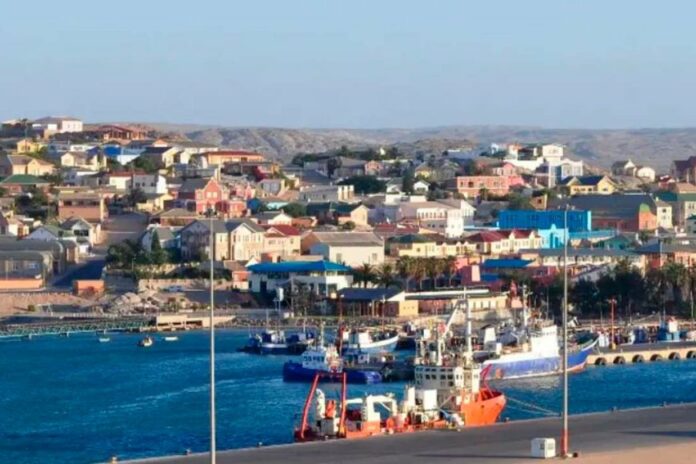
The site is planned outside Lüderitz in Namibia, an area with stable currents and optimal temperatures for salmon production of 10–16 degrees Celsius all year round.

African Aquaculture has been awarded a production licence for 51,000 tonnes of salmon, making the project one of the largest aquaculture ventures in the southern hemisphere.

“For us it has been crucial to align with a solid partner who can contribute with experience, technology and understanding of international deliveries. AKVA group shares our vision of building a robust industry in Namibia, and this collaboration agreement is an important first step,” says CEO Helge Krøgenes of African Aquaculture.

The project builds on more than two years of joint development work, where AKVA group and African Aquaculture have adapted the concept and technology to local conditions. The plan is to start with five floating pens including mooring, feeding systems, cameras and digital solutions.

“We have worked closely together to find solutions suited both to the environment and to local challenges. The collaboration agreement marks the beginning of a development process that can pave the way for future deliveries and a new industry in Africa,” says Export Director Kjell Egil Riska at AKVA group.

The first smolt is scheduled to be stocked in 2026, with harvest planned in 2027. Final investment decisions and delivery agreements will follow in the next phase.
 
Namibia is highlighted as one of Africa’s most stable democracies, with predictable framework conditions and a strong focus on the environment. The project has received recognition from Namibian authorities for its high standards, and is expected to generate jobs, expertise and export revenues.

“This is not only about producing salmon. It is about introducing a new industry to a new continent in a responsible way – with environmental care, local value creation and strong partners by our side,” says Krøgenes.

Reach Subsea’s USV Reach Remote 2 sets sail for Australia

0

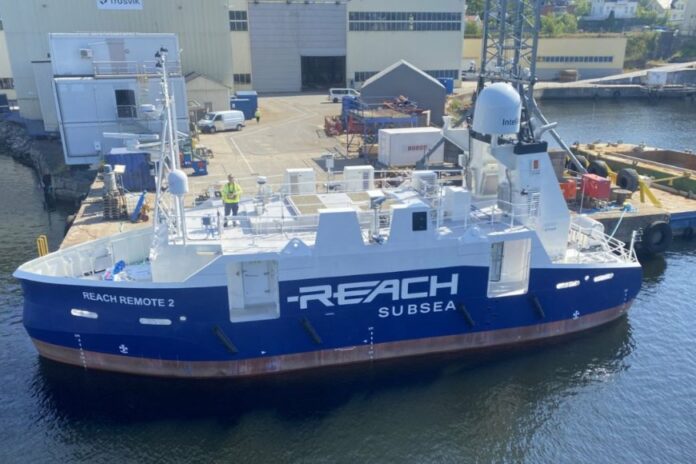
Reach Subsea’s pioneering Uncrewed Surface Vessel (USV) Reach Remote 2 is in route to Australia to deliver services for leading Australian energy company, Woodside Energy. 

The Reach Remote 2 USV will perform reservoir monitoring on the Scarborough gas field, utilising Reach Subsea’s proprietary gWatch technology. This operation demonstrates the USV’s ability to reduce offshore personnel operational risks, cut costs, and reduce environmental impact compared to traditional crewed vessels.

gWatch is a reservoir monitoring technology widely used across Norwegian gas fields. It measures time-lapse gravity and seafloor deformation to detect small changes in reservoir mass and pressure. These high-precision measurements significantly reduce uncertainty in gas reserves (GIIP) and aquifer influx, enhancing history-matching workflows and supporting more accurate production forecasts and infill well planning. 

Reach Subsea’s CEO Jostein Alendal expressed his pride in this international deployment:

“Seeing the Reach Remote 2 vessel sail ‘down under’ to deliver world-class services to a company like Woodside Energy is a proud moment for all of us at Reach Subsea. This project clearly demonstrates that the transition to a robotic future is not a vision — it’s happening now. We are reducing HSE risks by removing personnel from hazardous environments, reducing operational costs, and cutting the carbon footprint of offshore activities by up to 90%. It’s a major leap forward for the industry and a testament to what innovative technology can achieve.”

This deployment also marks the start of Reach Subsea’s Inspection, Maintenance, and Repair (IMR) operations in Australia, supporting clients with high-quality, cost-efficient services across the energy sector.

Northern Offshore Services orders record number of CTVs

0

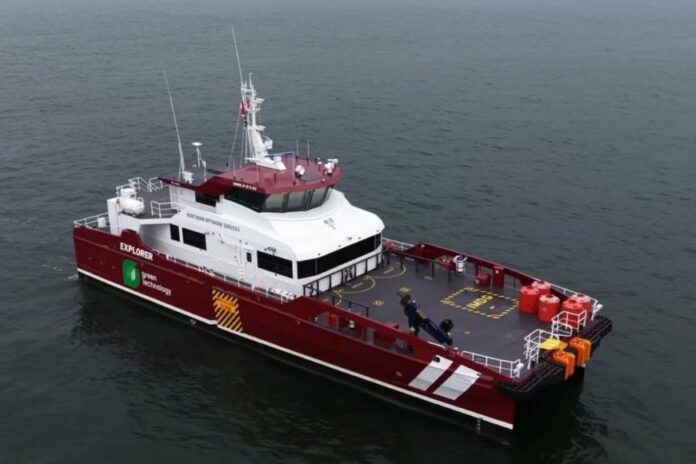
With four vessels already on the way and eight on order, the in-house designed E-Class series is now set to reach 12 innovative vessels that will redefine what the offshore wind industry can expect from safe, efficient, and future-proof crew transfer operations. The first of these, M/V Explorer, will arrive in Europe as soon as next week.

“This is not just a fleet expansion, this is a statement,” says David Kristensson, Group CEO of Northern Offshore Services. “We believe in this market, we believe in our design, and above all, we believe in our ability to lead innovation, sustainably, competitively and at scale.”

The new 36-meter E-Class vessels are designed to meet the evolving needs of the offshore wind industry:

  • Improved crew and technician comfort
  • Large cargo capacity tailored to future offshore wind demands
  • Future-proof platform supporting the transition to electric and alternative fuels
  • Improved hull design and advanced automation system to optimise energy efficiency

The vessels will be built with N-O-S’s long-term shipyard partner, extending a proven and trusted relationship. This order secures Northern Offshore Services’ position at the forefront of the offshore wind industry, delivering unmatched capability, comfort, and efficiency to clients across both established and emerging markets.

“The market is evolving fast, but we are faster, and we always try to be one step ahead. With this investment, we ensure a diverse and capable fleet profile, setting a new benchmark in our segment,” says David Kristensson.

ABB and Wallenius Marine establish OVERSEA™ joint venture

0

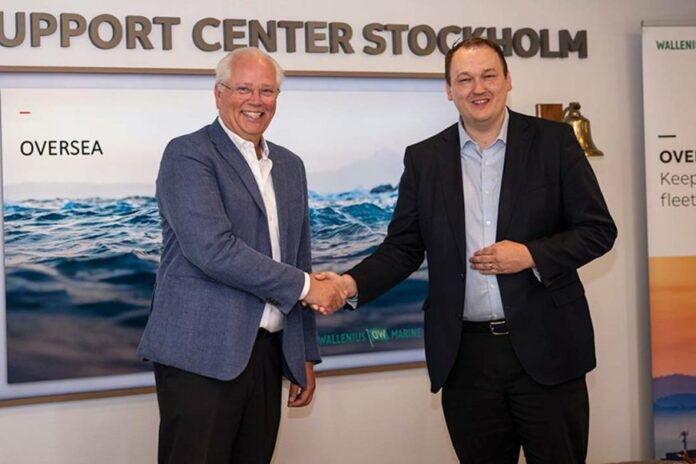
ABB and shipping company Wallenius Marine have formally established a new joint venture based in Stockholm, Sweden, to expand their OVERSEA™ collaboration and ensure customers will fully benefit from future-proof vessel performance management capabilities. 

Launched in September 2022 as a collaboration between ABB and Wallenius Marine, OVERSEA™ is a combined digital solution and ‘fleet-support-center-as-a-service’ offering designed to help ship owners, operators, and managers enhance the efficiency and sustainability of maritime operations. OVERSEA™ leverages ABB’s significant expertise in ship technologies and the extensive fleet management knowledge from Wallenius Marine to enable measurable performance improvements. The solution leverages ABB Genix™ Industrial IoT and AI Suite, which integrates the power of industrial analytics and artificial intelligence into an enterprise-grade digital suite.

The solution collects and analyzes data on board of several vessels worldwide, with shore-based experts providing advanced decision-making support and tailored recommendations from the OVERSEA™ Fleet Support Center in Stockholm. As a result, operators are able to propose operational changes that can reduce fuel consumption and emissions while optimizing safety and reliability across their fleets.

“Our long-standing tradition of innovation and pioneering spirit is built on many years of experience in ship operations and advanced technical expertise. This makes us well equipped to quickly identify and respond to industry needs. Through our partnership and close collaboration with ABB, we can now bring our innovative fleet support service to a global market, and we look forward to continuing to drive maritime development together,” says Johan Mattsson, CEO of Wallenius Marine.

“The establishment of the OVERSEA™ joint venture marks a significant milestone for us, solidifying the successful collaboration between ABB and Wallenius Marine over the past few years,” said Tomas Arhippainen, Business Line Manager, Marine Service & Digital, ABB Marine & Ports. “With OVERSEA™, customers can transform data into actionable insights, enabling them to not only improve their performance but also sustain it over time. Consequently, both vessels and customer offices can adopt sustainable improvements, enhancing energy efficiency, safety, and reliability.”

Gibdock becomes major focus for offshore support vessel work

0

In a significant and growing market for Gibdock, the Gibraltar-based ship repair yard has established itself as a trusted strategic partner to several major offshore players by consistently executing projects on time, within budget, and to the highest safety and quality standards.

As part of an ongoing relationship with Boskalis, Gibdock has completed works on the trailing hopper suction dredger Gateway, the construction support vessel BOKA Southern Ocean, and the multipurpose construction vessel BOKA Fulmar in recent months. Other significant OSV projects this year include the repair of Subsea 7’s construction/flex-lay vessel Seven Pacific and the repair and renewal of Technip’s specialised rigid pipelay vessel Deep Blue.

With Solstad’s anchor-handling tug supply vessel Normand Pacific currently in the yard for renewal, and many more projects in the pipeline for the year ahead, Gibdock’s outlook in the offshore support segment is strong.

“Offshore majors trust Gibdock because of our track record in delivering safe, high-quality, and on-time services at good value,” commented John Barnard, Commercial Director, Gibdock. “We work closely with these companies to provide bespoke projects and conversions within a timeline that suits them. Due to the strong and growing demand for our OSV services, we encourage proactive engagement: interested parties should approach us early, even when projects are planned for two or three years out, so we can ensure availability and provide tailored input.

Oil and gas condensate discovery in the Norwegian Sea

0

The well tested the “Smørbukk Midt” prospect, located between Smørbukk and Smørbukk Sør about 250 kilometres southwest of Brønnøysund.

Preliminary calculations indicate the size of the discovery is between 1 – 3 million standard cubic metres of recoverable oil equivalent. This corresponds to between 6.3 and 18.9 million barrels of recoverable oil equivalent.

The licensees aim to connect the discovery to Smørbukk Sør, which is part of the Åsgard field.

This is the 15th exploration well in production licence 094, which was awarded on 9 March 1984 (8th licensing round on the Norwegian continental shelf (NCS)). Well 6506/12-PB-3 H was drilled by the Transocean Encourage drilling rig, which will now continue the drilling of production well 6506/12-PB-3 AH in the Garn Formation at the same location.

The well’s primary exploration target was to prove petroleum in Middle Jurassic reservoir rocks in the Ile and Garn formations (the Fangst Group).

The secondary target was to collect data in reservoir rocks from the Late Cretaceous (the Lysing Formation).

Well 6406/12-PB-3-H encountered an approx. 54-metre condensate/light oil column in the Garn Formation in sandstone with moderate to good reservoir properties. The reservoir was about 94 metres thick, and the petroleum/water contact was not encountered.

66 metres of gas/condensate was also proven in the Ile Formation in a sandstone reservoir with moderate to good reservoir properties. The reservoir was about 75 metres thick, and the petroleum/water contact was not encountered.

The well was not formation-tested.

The well was drilled to respective measured and vertical depths of 4991 and 4218 metres below sea level, and was terminated in the Ror Formation in the Middle Jurassic.

Van Oord completes ballasting operations and scour protection for the West White Rose project

0

Van Oord has successfully completed high-precision ballasting operations for the West White Rose project in Canada. Van Oord deployed its flexible fallpipe vessels Nordnes and Stornes to carry out the work.

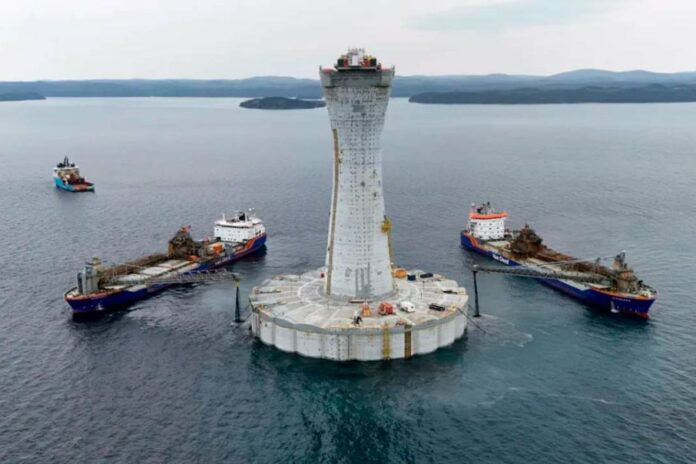
Located in the Jeanne d’Arc Basin, approximately 350 kilometres off the east coast of Newfoundland, Canada, the West White Rose project is an expansion of the White Rose field. It consists of a fixed drilling platform situated on a custom-designed Concrete Gravity Structure (CGS). The CGS has a base diameter of 122 metres, is 145 metres tall, and supports an integrated drilling and production topside. Van Oord’s scope of work is divided into four phases: seabed preparation, solid ballasting activities, scour protection, and flowline protection.

During the first phase, completed in September 2024, Van Oord installed a seabed preparation layer that serves as the foundation for the CGS. The installation required strict adherence to client specifications and involved extensive planning, material testing, rigorous quality control of quarried rock, full-scale trials, and the expertise of a highly qualified and committed project team, along with the vessel crew of Stornes, which was deployed for the task.

In the second phase of the project, Van Oord carried out solid ballasting of the CGS to ensure sufficient weight for seabed stability once positioned. The unique design of the structure required a high degree of accuracy. Van Oord’s flexible fallpipe vessels Nordnes and Stornes approached the CGS simultaneously using dynamic positioning (DP), with one vessel on each side. Using boom belt-conveyors, they inserted MagnaDense (iron ore) into the CGS’s outer ring compartments. The vessels were constantly positioned 180 degrees from each other while moving around the CGS to fill all 24 compartments evenly. The ballasting operations were meant to prepare the CGS before its tow-out. The CGS has now been positioned on top of the seabed preparation layer previously installed by Van Oord.

Hans Smit, Project Manager at Van Oord, said:

’Van Oord has proven that it can execute a project of this complexity according to the highest standards. It has been successful thanks to excellent collaboration with both our client and across the entire team, as well as our skilled people and our fantastic equipment and automation.’

In the third phase of the project, Van Oord deployed its flexible fallpipe vessel Nordnes to install a protective scour edge around the CGS. The final phase, scheduled for Q4, will involve stabilising the pipelines from the drilling platform on the seabed. Once completed, the client will be able to bring the platform into operation.