-5.3 C
New York
Home Blog Page 38

Surveying marine growth on offshore wind turbine foundations in the North Sea

0

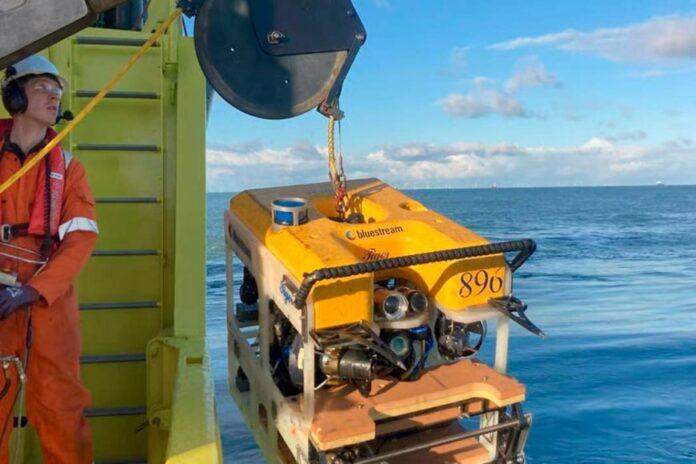
There is no doubt that building offshore wind turbines affects marine life. But what exactly are the effects and what can we learn from them? To provide insight, a new remote-controlled tool has been designed to sample the biological growth on offshore wind turbine foundations. 

To survey marine growth safely and efficiently on offshore wind turbine foundations in the North Sea, Bluestream collaborated with Wageningen Marine Research (WMR) to develop the remotely controlled Marine Growth Sampling Tool. In early stages, the foundation substrates are covered by algae and various sea creatures. Over time, the number of small sea creatures attaching to the substrate and the algae increases. Previously, this type of research was carried out by SCUBA divers, a method that has become increasingly difficult due to strict laws and regulations, health and safety rules, and the high costs associated with it. 

Vattenfall was able to make one of the Hollandse Kust Zuid wind farm foundations available for the study due to the fact that in January 2022, during a storm, the Julietta D vessel collided with the wind turbine foundation that was under construction, rendering it unusable. The turbine was removed, but the foundation was left behind.

Joop Coolen, researcher at WMR, explains why such research on marine life is necessary: “We investigate the composition of marine species on hard substrates, not only wrecks and stones lying on the bottom of the North Sea, but also gas platform and wind turbine foundations. Various species settle on hard surfaces rather than in sandy environments, leading to different biological processes. We strive to understand how these processes evolve over time and what their role is in the ecosystem, where living organisms interact with their non-living environment.”

“We did the first tests of the tool in our pool, but naturally, the main question was whether the tool would work offshore,” says Jan-Jelle Huizinga, R&D manager at Bluestream. With a vessel provided by Rijkswaterstaat, part of the Dutch Ministry of Infrastructure and Water Management, the real test could begin. “Out at sea, this allowed us to test the stability and positioning of the tool. It went better than expected,” he continued. “We still need to improve the net where the samples are collected as it’s not yet functioning ideally.” 

For WMR, it is crucial that the tool consistently scrapes the same surface area in order to quantify the total marine growth on the foundation. For Vattenfall, it was crucial to ensure that the tool would not damage the foundation coating. Ultimately, the coating protects the steel of the foundation. “We agreed to test different scraping materials and examine the samples for coating residues,” Huizinga further says of the study. The tool was tested using different plastic scrapers (made of polyurethane to be precise) and a metal scraper. “The plastic scraper worked much better than expected and had a much lower risk of damaging the coating.” 

WMR measured the number, length, and width of the coating particles found; however, as the lab was unable to measure the thickness of the small coating particles present in the samples, they are currently being subjected to further investigation. That said, very little coating residue was found, the size of which was less than 1/20,000th of the sampled area. 
Trafigura signs long-term LNG supply agreement with KOGAS

0

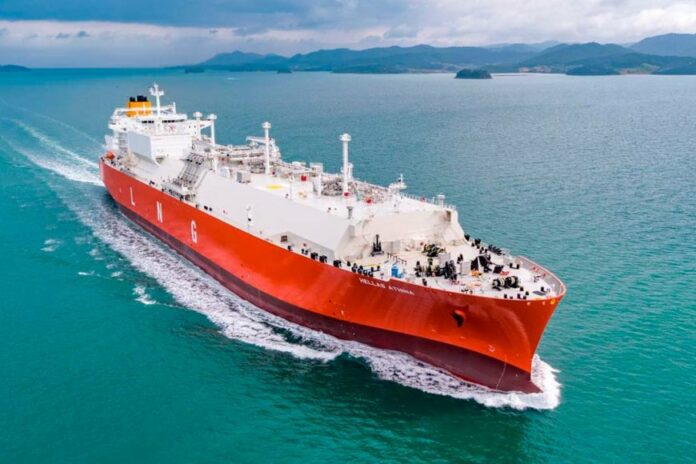
Trafigura has signed a long-term agreement to supply liquefied natural gas (LNG) to Korea Gas Corporation (KOGAS), the Republic of Korea’s national gas company and one of the world’s largest importers of LNG.

This agreement expects substantial volumes of LNG to be delivered to KOGAS over the next decade. The pricing index will be Henry Hub, the US natural gas benchmark.

Trafigura will meet this commitment through its offtake agreements with LNG producers, including Cheniere Energy, North America’s largest LNG exporter, and Trafigura’s global LNG portfolio. 

The deal with KOGAS strengthens Trafigura’s position in the global LNG market. This continues to build on Trafigura Group’s significant US operations, with current turnover totalling more than USD40 billion annually across natural gas, crude oil, petroleum products, and metals.

Richard Holtum, CEO, Trafigura, commented:

“We are delighted to sign this long-term LNG supply agreement with KOGAS. The Republic of Korea is a highly valued partner for Trafigura across all our core trading divisions. This deal demonstrates our ability to connect major producers with key consumers in an increasingly complex energy landscape. By leveraging our offtakes from US LNG companies and our global portfolio, we can provide KOGAS with the reliable energy supply that South Korea’s economy demands.”

Yeonhye Choi, CEO, KOGAS commented: 

“The signing of this agreement marks a significant step toward establishing a reliable partnership amid rising uncertainty in the global market. This agreement is expected to diversify import channels while contributing to the stability of energy supply to Korea. Both parties are committed to building a long-term relationship founded on mutual trust and collaboration. KOGAS will continue its commitment to supply stable and economic energy to Korea with its important partner, Trafigura.”

Port of Auckland gets green light for major wharf developments

0

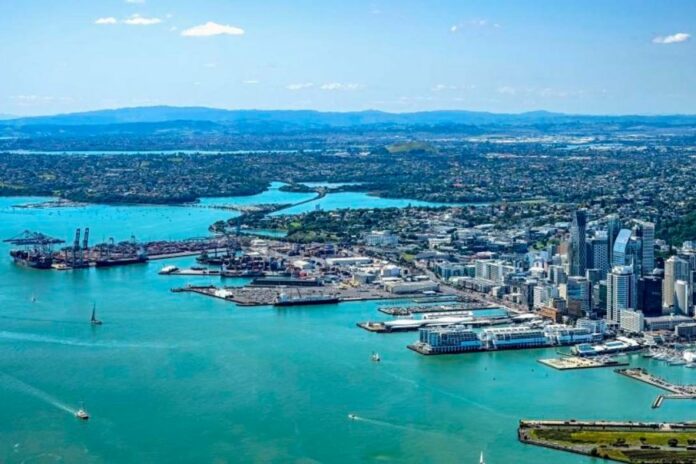
Port of Auckland announces that full consent has been granted for the Bledisloe North and Fergusson North wharf developments – a defining milestone in the delivery of once-in-a-generation infrastructure to support Auckland’s growth for the next 40 years.

This approval marks the completion of the fast-track consent process and clears the way for construction to begin.

Port of Auckland has started site preparation works and will look to commence pre-construction works for Bledisloe North wharf in September, with Fergusson North wharf to follow. HEB Construction has been appointed as the delivery partner for the Bledisloe North wharf.

“Fast track isn’t a shortcut, but a streamlined process – and we’re thrilled to be the first to have reached this milestone with full consent granted. This enables us to move forward with confidence and begin construction on critical infrastructure that will support Auckland’s growth for decades to come,” says Andrew Clark, CFO of Port of Auckland.

These upgrades will make the port big ship capable, enabling it to handler larger container and cruise vessels, improve efficiency and reinforce Auckland’s role as a key international gateway.

Port of Auckland has engaged extensively with iwi, stakeholders and local communities to shape plans that reflect the region’s needs for now and for the future.

“We are grateful for the thoughtful input and feedback we received, which played a crucial role in shaping the final plans.

“These developments go beyond operational capacity and future-proofing the port. They’re about driving long-term economic growth for Auckland and the upper North Island,” says Clark.

Balearia agrees deal to acquire parts of Armas Trasmediterranea

0

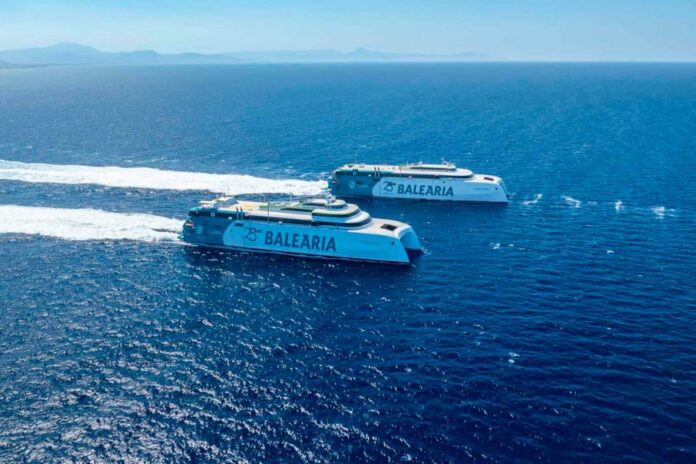
Baleària has reached an agreement with the owners of the Armas Trasmediterránea shipping company to acquire its business in the Canary Islands and Alboran Sea, as well as part of the Strait of Gibraltar, the majority of which has been acquired by the Danish shipping group DFDS. 

The deal, which is still pending approval from the Spanish National Markets and Competition Commission (CNMC), includes the management of 15 ships and the operation of a number of maritime routes, as well as the integration of 1,500 shore and fleet employees.

For Baleària’s president, Adolfo Utor, this strategic agreement allows Baleària to achieve the size and capacity necessary to compete in a market marked by the presence of large transnational groups with significant financial strength, as well as to guarantee the stability of maritime services and employment: “If this deal goes ahead, it will help a local Spanish shipping company to continue competing efficiently with the large groups that have recently arrived and are already operating in our waters.” 

Furthermore, if the CNMC gives its approval, Utor has stated that “Baleària will take up the baton from the historic Trasmediterránea and the Armas shipping company, both deeply rooted and highly regarded in the Canary Islands, and will use the synergies generated to consolidate the presence of a competitive local shipping company.”

Additionally, the president of Baleària emphasises that the approval of this deal will guarantee stability and territorial cohesion in a strategic sector, as a Spanish shipping company will be able to manage the set of public interest routes. “Spain’s national structure cannot be understood without stable, high-quality, modern, and regular maritime connections; a role we have been fulfilling for more than 25 years. This was particularly clear during the COVID pandemic, and we are committed to continuing to offer this service in its entirety.”

Adolfo Utor also explained that Baleària is aware of the huge challenge this process represents: “We are well prepared and fully convinced that we will be able to turn this project into a reality. We know we can count on the enthusiasm and commitment of all our stakeholders to make this happen, and we will be bringing the synergies and strengths of our new teams to the table.”

Yinson GreenTech marinEV and Blue Ctrl AS enter strategic partnership on vessel automation

0

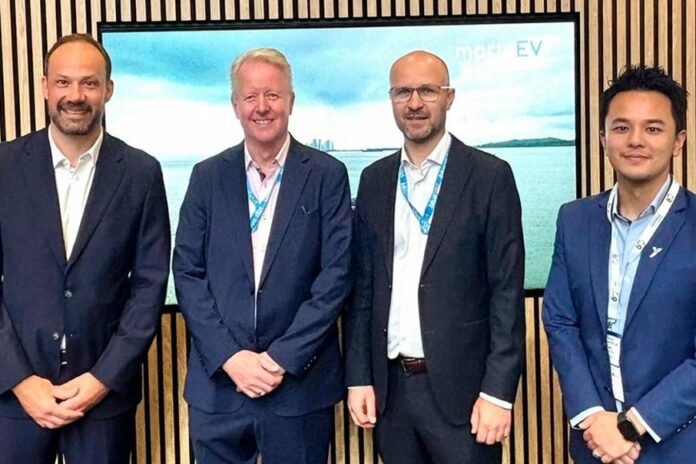
Yinson GreenTech’s business unit marinEV, which delivers maritime electrification solutions in Singapore, has entered into a partnership with Blue Ctrl AS, a Norwegian software provider specialising in maritime systems. The collaboration will introduce Blue Ctrl’s X-CONNECT platform to the maritime market in Singapore.

X-CONNECT is a comprehensive system for automation and energy management, developed specifically for the maritime sector. The platform provides real-time data and insights that enable reduced energy consumption, optimised operations, and improved vessel performance.

The partnership marks a significant milestone for Blue Ctrl AS in Asia, while also strengthening Yinson GreenTech marinEV’s commitment to digitalisation and green maritime technology.

“As we scale up the operation of electric vessels, it is crucial to integrate advanced digital tools. Blue Ctrl’s platform offers functionalities that help optimise performance and realise our vision of a safe, smart, and efficient maritime future,” says Jan-Viggo Johansen, Managing Director of marinEV, Yinson GreenTech.

“We are very pleased to collaborate with Yinson GreenTech marinEV and, through this, strengthen our presence in the shipbuilding market in Singapore. Together, we can deliver solutions that offer greater efficiency, lower costs, and improved performance for our customers,” says Arne Dybvik, Managing Director of Blue Ctrl AS.

The X-CONNECT® maritime automation platform can be summarised with the following key features:  

  • Hardware-independent software with standardised configurable functionality
  • Standard marine-approved industrial hardware
  • Efficient event-based and seamless data distribution based on a standard Ethernet network
  • High definition monitors with a rich, intuitive, user-friendly graphical user interface
  • Data log for data analysis and trending 
  • Tooling for efficient product configuration and deployment
  • Local or remote service 

Oil discovery in the Yggdrasil area

0

The campaign covers wellbores 25/1-14, 25/1-14 A, B, C, D, E, F and G.  Yggdrasil is located about 180 kilometres from Bergen.

Discoveries were made in a total of four wellbores. The overall discovery volume is estimated at between 15.3 and 21.3 million standard cubic metres (Sm3) of oil equivalent (o.e.). This corresponds to between 96 and 134 million barrels of oil equivalent.

The licensees will assess the discoveries as part of their development of the Yggdrasil area.

The wellbores were drilled near the formerly producing fields Frigg and Øst Frigg. The objective of the wellbores was to prove and delineate remaining petroleum deposits in five prospects in the Frigg Formation.

The prospects (“Omega”, “Alfa”, “Alfa Sør”, “Sigma NE” and “Pi”) were drilled horizontally in order to map the thickness and extent of oil that has re-migrated from Frigg and Øst Frigg.

The investigation of re-migrated oil in the Yggdrasil area started in production licence 873 (awarded in APA 2016) with the drilling of 25/2-23 A & S in 2021/2022.

Further investigations in the licence took place through 25/2-24 S, A, B and C in 2023. 25/1-14, 25/1-14 A, B, C, D, E, F and G are the first wellbores in production licence 873 B (awarded in APA 2023) and production licence 1249 (awarded in APA 2024).

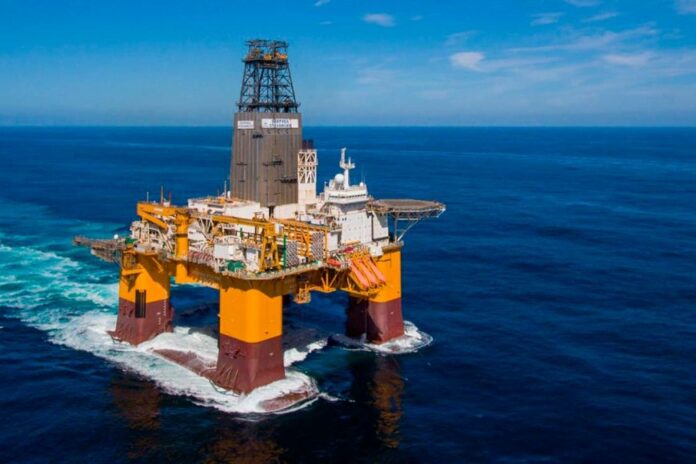
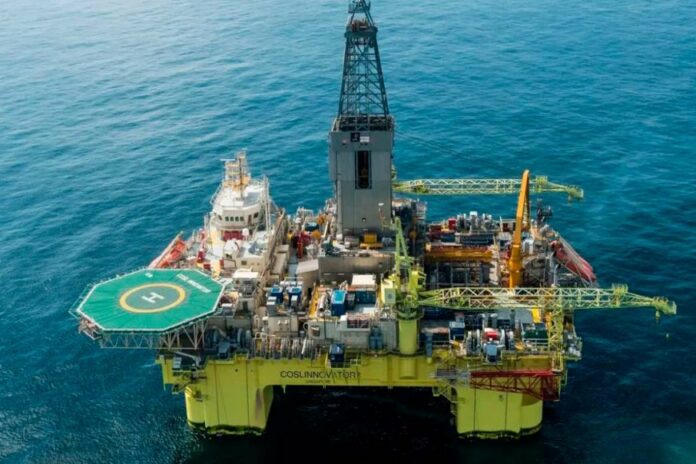
The wellbores were drilled by the Deepsea Stavanger rig. The rig is now headed for the Munin field, which is operated by Aker BP.

The wellbores were drilled from production licence 873 B, and the horizontal wellbores extended into production licences 873 and 1249. 25/1-14, 25/1-14 A, B and C were classified as wildcat wellbores and 25/1-14 D, E, F and G were classified as appraisal wellbores. A total of four discoveries were made in five deposits. They were made in “Omega”, “Alfa”, “Sigma NE”, “Pi”, and “Sigma” was also proven in 25/1-14 G. “Alfa Sør” was dry.

Aquaculture Industry: New AI-powered technology by DNV set to transform compliance

0

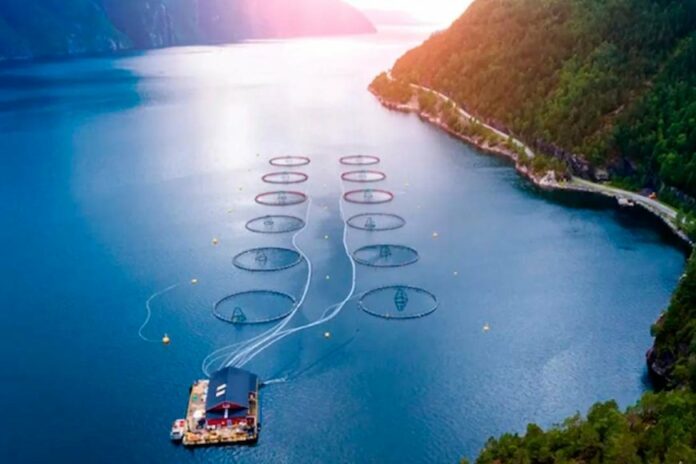
The new solution Smarter Compliance has been developed to improve automation and benchmarking in the aquaculture sector worldwide, ensuring fish farmers have full control and visibility of their compliance status at any time.

Instead of relying on manual monitoring, the technology enables automated and continuous compliance checks, directly from the fish farm to a fully automated overview for operators. This streamlines documentation, enhances control, and simplifies data sharing with both internal teams and external stakeholders, including regulators. The solution will seamlessly integrate with current production and compliance systems, mapping in all variables, from maintenance and operations to laws and regulations that need to be met.

Where typically complex compliance checks are conducted every five years to meet requirements for farm certificates in accordance with Norway’s technical requirements for fish farming installations NYTEK, Smarter Compliance enables fish farmers to monitor their compliance on a weekly basis. The automated checks greatly reduce maintenance efforts, cost and the chances of non-compliance. This is particularly important for larger offshore fish farms operating in more remote and harsh conditions where regular checks and repairs are more complex to conduct.

The new technology has already been piloted by several Norwegian fish farms, including GIFAS. Its Production Manager Arve Storholm said: “The new solution will allow us to move from a complete check every five years to checking continuously, which gives us increased control and peace of mind. It will also provide a single source of truth as everyone has access to the same information, both internally and externally. Additionally, I believe it will give us a large reduction in document handling. I look forward to implementing the solution.”  

DNV’s new compliance solution also meets the need outlined by the Norwegian government’s aquaculture report ‘Havbruksmeldingen’ which calls for a fully digitalised, autonomous reporting for compliance and regulatory data: “The implementation of automated reporting solutions will reduce the workload imposed on the industry by increased reporting requirements. The government’s goal of ensuring a unified system for collecting information from the aquaculture industry and sharing it with strong data security will influence the design and implementation of the scheme.” Meld. St. 24 (2024-2025) Fremtidens havbruk.

“Stricter regulations and rising stakeholder expectations, both locally and globally, are reshaping aquaculture. Fish farmers now face a growing need for reliable and efficient compliance management for their stakeholders. Our new digital service is built to meet this challenge, making it easier to handle complex requirements with clarity, control, and confidence. By ensuring continuous insights across the whole industry, the solution enables a more sustainable and financially stable industry for Norway,” said Mads Arild Eidem, Director of Norway Aquaculture Operations at DNV. “Smarter Compliance supports our ambition to reduce fish escapes, and in the future enhance animal welfare, lower mortality rates, and drive progress in the aquaculture industry toward producing healthier, more resilient fish.”

New oil and gas discovery near the Troll field

0

One exploration well has encountered petroleum in two reservoirs. One of the discoveries consists of both oil and gas, while the other one is just gas. In total, the resources are estimated at between 0.1 and 1.1 million standard cubic metres.

The reservoir properties are assessed as moderate to very good. The preliminary name of the discovery is F-South.

“These are discoveries in an interesting area with a well-developed infrastructure. In recent years, we have made several discoveries in the neighbourhood, and we plan to further explore the area. We believe that we may encounter more, both oil and gas,” says Geir Sørtveit, Equinor’s senior vice president for Exploration & Production West on the Norwegian continental shelf.

The licensees will consider tying F-South back to existing or future infrastructure.

ACUA Ocean’s hydrogen-powered autonomous vessel completes 24-hour sea trial

0

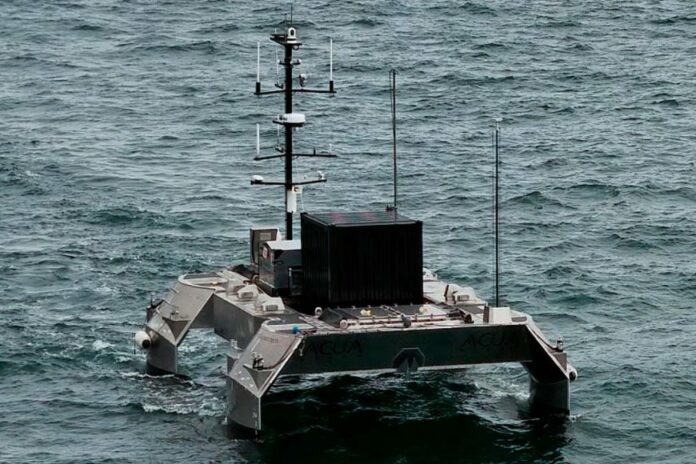
ACUA Ocean’s hydrogen-powered unmanned surface vessel (USV) Pioneer has successfully completed what the company said is the world’s first continuous, remote 24-hour offshore operation on zero emissions.

ACUA Ocean said the sea trials demonstrate the commercial potential of hydrogen power for maritime operations.

During the trial, Pioneer sailed to the Eddystone Lighthouse, 12 nautical miles from her home berth at Turnchapel Wharf, Plymouth, and performed continued operations at sea for a full 24 hours under hydrogen-electric power, with Cattewater Harbour’s Amy Jane on station as her support vessel.

The USV’s autonomous systems, stability and hydrogen performance were monitored continuously, generating data now being shared with research partners including the University of Southampton and MarRI-UK.

The trials followed the USV’s recent certification under the UK Maritime and Coastguard Agency’s Workboat Code Edition 3 Annex 2, the first such approval for a remotely operated, hydrogen-powered vessel.

The 14.2-metre, 25GT Pioneer is the first vessel in a new series of USVs built by Isle of Wight-based Aluminium Marine Consultants to a design developed by naval architect John Kecsmar of Ad Hoc Marine Design.

ACUA Ocean said the craft’s platform stability, payload versatility, portability and scalability meet the need of end users for high-quality data and operational availability and reliability in open ocean conditions but delivered at a fraction of the cost of larger crewed or autonomous platforms.

DNV to support Kolon on 400MW offshore wind milestone in South Korea

0

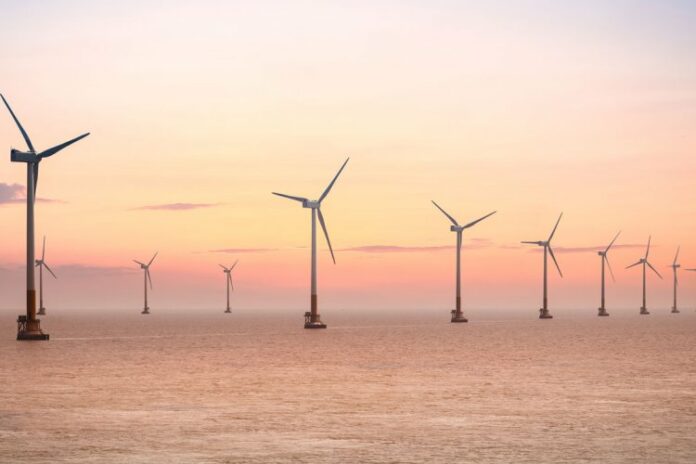
The Wando Jangbogo project stands among the largest offshore wind initiatives in South Korea to date.

The project is being jointly developed by Korea Western Power Corporation and Jeonnam Development Corporation, both public sector developers, in partnership with Kolon Global, a private EPC firm. Kolon Global plays a leading role, bringing decades of experience from the onshore wind and EPC sectors into the offshore domain. It also plans to introduce a community-participation model designed to foster local acceptance and promote long-term co-prosperity with residents of Wando.

DNV’s scope as Owner’s Engineer includes technical advisory services focused on turbine selection—one of the most critical early-phase decisions in offshore wind. This includes project management support, tender preparation, bid evaluation, and contract negotiation. DNV’s role is expected to enhance the project’s technical integrity and reduce risks, while supporting Korean developers in building robust risk management capabilities.

“This project is a landmark for Korea’s offshore wind ambitions—not just in scale, but in the way it brings public and private actors together with active community participation,” said Young Hee Moon, Korea Manager for Renewables, Energy Systems at DNV. “By supporting technical advisory services, we’re helping to embed robust risk management practices from the outset, particularly in turbine selection, where early decisions can define long-term project success.” The partnership also reflects a step-change in scale and ambition: from earlier onshore wind collaborations to a complex, large-scale offshore development, underscoring DNV’s ability to support projects of all sizes, across all segments of the wind industry.

Brice Le Gallo, Vice President and Director for Asia Pacific , Energy Systems at DNV, added: “This collaboration reflects DNV’s continued commitment to advancing Korea’s offshore wind sector with deep local insight and global engineering expertise. Our involvement in Wando Jangbogo shows how strategic technical advisory can unlock project value early. By guiding turbine selection, managing tenders, and supporting negotiations, we’re helping developers align technical decisions with long-term commercial performance.”

Sang-man Lee, Vice President of Wind Power, Infrastructure Division, Kolon Global, added: “Partnering with DNV on the Wando Jangbogo Offshore Wind Farm reinforces our commitment to delivering technically sound, future-ready renewable energy projects. As we expand into offshore wind, it’s essential to work with an advisor who understands both international best practices and Korea’s regulatory and market dynamics. DNV brings that dual perspective, and together we’re building a foundation for resilient project execution and sustainable growth in Korea’s offshore wind sector.”

The project is being developed by Kolon Global, Korea Western Power (KOWEPO), and Jeonnam Development Corporation. Kolon Global plays a leading role, bringing decades of experience from the onshore wind and EPC sectors into the offshore domain.