2.8 C
New York
Home Blog Page 1243

Turkey Warns Exxon Not to Drill in Cypriot Waters

0

On Sunday, Turkey's government warned ExxonMobil that its ongoing exploration activity in Cyprus' EEZ could affect regional stability, and it asserted that Turkey will soon begin its own drilling campaign in waters claimed by Turkish Cyprus. 

We have warned the Greek Cypriot administration to stop the unilateral exploration for hydrocarbons in the Eastern Mediterranean," Ankara warned in a statement. “We reiterate our warning to the companies involved in these unilateral exploration and drilling. We remind them that sharing the natural resources of the island of Cyprus relates to the core of the Cyprus issue.”

Turkey cautioned Exxon that drilling in a Cypriot-administered lease block "does not contribute to the stability of the country . . . and may change specific and delicate balances in relation to resolving the Cyprus issue."

Cyprus is divided in two, with the southern half (the Republic of Cyprus) aligned with Greece and the northern half (the Turkish Republic of Northern Cyprus) aligned with Turkey. Both nations are NATO allies, but the administration of Cyprus has been a source of tension between them since the 1970s, when they fought a war over its control. The two Cypriot governments have overlapping EEZ claims, and Turkey asserts that the Turkish Republic of Northern Cyprus has a right to share in the rewards of offshore exploration. 

The stakes involved in the ownership of Cyprus' offshore reserves are significant. In February, Eni found a new gas deposit off Cyprus which may hold as much as the giant Zohr field, a 30 trillion cubic foot formation located in Egypt's EEZ. 

In a recent interview, Exxon SVP Neil Chapman said that the sovereignty dispute is solely a question for the nations involved. “We are a commercial entity and our business is about producing and developing natural resources on behalf of governments. Any government issues, that’s for governments to discuss and resolve,” he said. 

Turkey has shown determination to assert its regional claims. In February, Turkish warships obstructed the navigation of the Italian drillship Saipem 12000 in order to prevent her from exploring a lease block licensed by the Republic of Cyprus. Later that month, charterer and leaseholder Eni abandoned its work at the block.

Source:maritime-executive

Watch: Celebrity Edge Arrives in Port Everglades

0

Celebrity Edge has officially arrived at Port Everglades' Terminal 25 (T25) in Hollywood, Florida, following the ship's first transatlantic crossing.

Celebrity Edge embarked on the 15-day, 4,000-mile transatlantic voyage from the Chantiers de l'Atlantique shipyard in Saint-Nazaire, France, on November 4, 2018, with more than 1,400 crew members on board. Along the way, the new ship visited ports in both Azores, Portugal, and Freeport, Bahamas.

Chairman and CEO of Royal Caribbean Cruises, Richard D. Fain, and President and CEO of Celebrity Cruises, Lisa Lutoff-Perlo, arrived on the ship and then hosted an opening ceremony for T25 which has been designed exclusively for the Celebrity brand.

Celebrity Edge begins her inaugural season sailing alternating seven-night eastern and western Caribbean cruise itineraries, with her Maiden Western Caribbean voyage departing on December 9, 2018, and her Maiden Eastern Caribbean voyage departing on December 16, 2018. 

The 2,900-passenger vessel is the first of four vessels from Celebrity Cruises’ Edge Class. 

Celebrity Edge marks a turning point in Celebrity’s approach to ship design. From the first sketches, every step was done in 3-D, making Celebrity Edge the first ship to be completely designed in 3-D. One of the biggest influences on her design was the desire to make the destination experience more immersive, and the vessel has a unique, outward-facing design that breaks from traditional ship design. The aim is to enable guests to feel more connected with the sea and their destinations.

Celebrity Edge will be joined by her sister ship, Celebrity Apex, in 2020, and two additional ships in the Edge Series will follow in 2021 and 2022.

Ship Specifications

Double Occupancy: 2,918
Crew: 1,320
Guest Decks: 14
Staterooms: 1,467
Tonnage: 129,500
Length: 1,004 feet
Beam: 128 feet
Drauft: 27 feet
Cruising Speed: 22 knots

Source:maritime-executive

Nexans confirms Hornsea 2 nearshore wire job

0

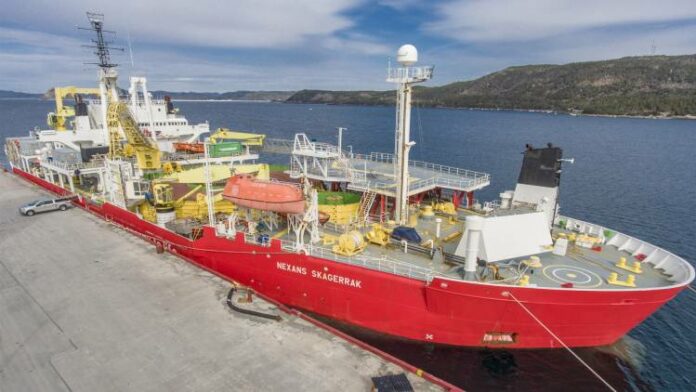
Nexans is to supply cabling for the nearshore section of the export cable for Orsted's 1400MW Hornsea 2 offshore wind farm off the east coast of England.

The over €150m deal, first reported in the subscriber-only newsletter reNEWS, covers the delivery of over 200km of 245kV cross-linked polyethylene insulated high voltage wires.

The cables, which will be manufactured at Nexans' Halden facility in Norway, will be part of the export circuits linking the wind farm's reactive substation to the onshore substation.

Links will comprise three nearshore wires making landfall at Horseshoe Point in Lincolnshire from where onshore cables will connect with the onshore substation at North Killingholme.

Nexans senior executive vice president of the subsea and land systems business group Vincent Dessale said: “For the last decades, Nexans has been a key actor in the offshore wind market, known for its technical leadership in providing turnkey cabling solutions for new generations of offshore wind farms.

Building on our expertise and long-standing partnership with Orsted, we are delighted to contribute to the construction of the world's largest offshore wind farm.

Source:renews

UK Launches Code of Practice for Autonomous Ships

0

UK has issued  version 2 of the Maritime Autonomous Surface Ships (MASS) UK Code of Practice, giving greater guidance on skills, training and vessel registration.
 

The UK Maritime Autonomous Systems Regulatory Working Group (MASRWG) published the first code of practice to global industry-wide acclaim in November 2017.

Whilst not a legal text, the Code has been used by manufacturers, service providers, and others as part of their day-to-day work. Many manufacturers have reported clients requiring compliance with the Code as a basis for contractual negotiations.

The Code of Practice provides guidance for the design, construction, and operation of autonomous maritime systems.

Whilst the first version was majorly focused on the design and manufacture of vessels, the updated version adds new guidance on the operation of autonomous vessels, with a particular focus on skills, training and vessel registration. The world of maritime autonomy is developing fast and the Code of Practice has informed and been used by a wide range of companies and organisations around the world.

The UK Industry Code of Practice has been prepared by the UK Maritime Autonomous Systems Working Group. James Fanshawe, the group’s Chairman said: “The whole industry is moving at a very fast speed and it's really important that there are guidelines available to underpin that development in a safe, efficient and sustainable way. I thank the working group for its tremendous efforts in delivering critical updated guidance so soon after the first version, ensuring we’re keeping pace with global developments.”

Harry Theochari, Chairman-elect of Maritime UK said: “The UK is a real leader in maritime autonomy, and that position owes much to the leading role we play in the debate around regulation. We will work with government to strengthen that position through the Maritime Sector Deal and look forward to the publication of its long-term strategy for the sector, Maritime 2050."

Source:marinelink

DP World delivering smarter trade solutions for a better world

0

DP World is a leading enabler of global trade and an integral part of the supply chain. We operate multiple yet related businesses – from marine and inland terminals, maritime services, logistics and ancillary services to technology-driven trade solutions.

We have a portfolio of 78 operating marine and inland terminals supported by over 50 related businesses in over 40 countries across six continents with a significant presence in both high-growth and mature markets. We aim to be essential to the bright future of global trade, ensuring everything we do has a long-lasting positive impact on economies and society. 

Our dedicated team of over 36,000 employees from 103 countries cultivates long-standing relationships with governments, shipping lines, importers and exporters, communities, and many other important constituents of the global supply chain, to add value and provide quality services today and tomorrow. Container handling is the company’s core business and generates more than three quarters of its revenue. 

In 2017, DP World handled 70.1 million TEU (twenty-foot equivalent units) across our portfolio. With its committed pipeline of developments and expansions, the current gross capacity of 88.2 million TEU is expected to rise to more than 100 million TEU by 2020, in line with market demand. By thinking ahead, foreseeing change and innovating we aim to create the most productive, efficient and safe trade solutions globally. 

Source:seatrade-maritime

UK’s Ineos to Buy ConocoPhillips North Sea Assets

0

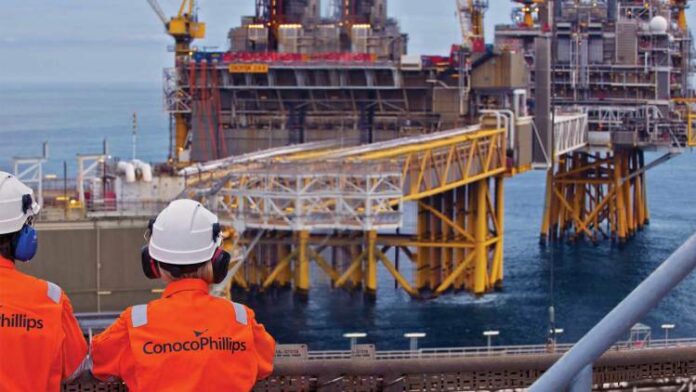
Britain's richest man Jim Ratcliffe's oil and gas company Ineos Group Holdings is in exclusive talks with ConocoPhillips to buy North Sea oil and gas fields worth $3 billion from the U.S. energy company.

Various news paper reports say that British petrochemicals company has confirmed it is negotiating to buy several North Sea oil fields from US energy giant.

The Sunday Times, which first reported the story, said that the period is said to be set to three months after the entity registered in Switzerland agreed to pay a "substantial" deposit.

Accoding to the Financial Times, the potential deal, which has a price tag of more than $3bn according to industry sources, could transform Sir Jim Ratcliffe’s company into a major operator in North Sea oil and gas production, building on other acquisitions and its ownership of infrastructure, refineries and chemical plants fed by the basin.

The fossil fuel heavyweight owns 7.5% after it agreed to an asset swap where 16.5% went to BP. The Financial Times learned from insiders that Neptune Energy and Chrysaor were also interested in the assets now on sale.

Conoco said last week it will market the North Sea assets including its holding in the Clair Field, west of the Shetland Islands, which produces about 21,000 barrels of oil a day.

The U.S. explorer plans to invite bids by the end of the year for the assets, which would include what’s left of its holding in the Clair Field, Bloomberg News first reported last week. The oil major on Sunday said the negotiations with Ineos won’t include its Teesside or London assets, and declined to comment any further.

BP recently bought a 16.5% stake in the Clair field from ConocoPhillips, giving the UK oil giant a total holding of 45.1%.

Source:marinelink

Work‘bots’: Autonomous Vessels Arrive

0

The near-shore and inland workboat fleet is at the leading edge for autonomous vessel development

While the advent of autonomous workboats are not exactly mainstream, you better believe that in the not-too-distant future they will be a reality on waterways in and around the U.S.  Today there remain more questions than answers, particularly on the legal, logistics and insurance side of the coin. But the technology is evolving at record pace, providing many in the industry with mixed emotions. Excitement. Controversy. Curiosity. Skepticism. These are just a few of thoughts, and emotions that arise to any mention of the topic of autonomous vessels.

It’s happening now. Out ahead of the rulemaking process, autonomous technology providers already churn out not just prototypes and designs, but also countless workboats, many already in service. In the last 12 months, these firms have been collectively busy.

Vancouver-based naval architects Robert Allan Ltd., and Kongsberg Maritime are collaborating on the development of a remotely-operated fireboat that will allow first responders to attack fires more aggressively and safer than ever before. Separately, in Korsør, Denmark, Boston-based Sea Machines demonstrated the capabilities of its SM300 product aboard an autonomous-command, remote-controlled, TUCO Marine built fireboat. Marine firefighting is an autonomous application that appears to have legs.

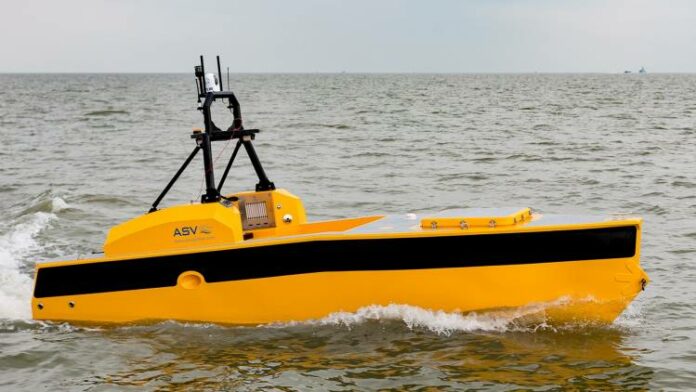
Sea-Machines also partnered with Marine Spill Response Corporation (MSRC) to autonomously control a Munson boat to deploy and tow a spill collection boom working in tandem with a 210-foot MSRC spill response vessel. In direct competition with Sea-Machines, ASV Global is working on autonomous projects with a similar focus. ASV recently partnered with UK’s Peel Ports Group to develop autonomous vessel technology for shallow survey operations. Spill response is also a big part of ASV’s product development efforts.

Another stakeholder, Florida-based SeaRobotics Corporation recently delivered two 2.5 meter autonomous unmanned surface vehicles (USVs) to the Canadian Hydrographic Service, a part of Fisheries and Oceans Canada, bringing the fleet to four systems.

More recently, towboat operator KOTUG demonstrated a remote-controlled tugboat over a long distance, from Marseille, France to Rotterdam. A KOTUG captain took control of the tug via remote secured internet line and camera images, all based in Marseille.

In July, a major development saw shipbuilder Metal Shark join forces with ASV Global to introduce “Sharktech” Autonomous Vessels. Metal Shark is now offering Sharktech autonomous technology on its entire portfolio of aluminum vessels.

Metal Sharks’ Josh Stickles explained, “A number of years ago we turned our focus to autonomous vessel technology as an area of future growth and since that time have been closely following the progress of leading autonomous technology developers. ASV Global (which was recently acquired by L3),  who we felt was fairly well ahead of others in terms of the maturity and overall market-readiness of their technology, happens to be located right in our backyard (Broussard, LA). Their engineers and our engineers were a natural fit for each other, and our proximity has allowed for a very collaborative approach.

Design & Regulate
Not so fast. The devil is always in the details. For example, classification society ClassNK recently released its Guidelines for Concept Design of Automated Operation/Autonomous Operation of ships. ClassNK isn’t the only IACS member to address the advent of autonomous vessels. Outgoing IACS Chairman & DNV GL Maritime CEO Knut Ørbeck-Nilssen believes that IACS rules must “… allow for such new technologies to be used, in the interest of safety and in the interest of the working environment for those people.”

As these rules evolve, flag states and registries will also have input. Tellingly, the U.S. Coast Guard led a delegation to the 99th session of the International Maritime Organization’s Maritime Safety Committee. This meeting advanced discussions on vessel autonomy. Last year, the IMO agreed to assess how existing international conventions would address advances in autonomy.

ASV Global CEO Thomas Chance shrugs off potential regulatory pitfalls, saying, “The regulators are being careful to provide a balance of guidance without killing the industry. ASV Global operates in a very transparent manner which likely helps our situation. Finally, all of our clients have been very rational about where and when they operate.

But, naval architects and designers have many things to consider. If ‘Dull, Dirty and Dangerous’ is the catch-phrase that describes the best reasons to employ autonomous technology, there are also other reasons to explore this emerging, disruptive product. One main driver is lower capital and OpEx. An unmanned vessel does not need staterooms, heads, galleys, a wheelhouse, and other spaces found on conventional vessels. That vessel is much simpler, less expensive to build and maintain. With fewer (or no) crew, daily costs also shrink.

There are trade-offs. The end-user might pay a premium for the control system, but also achieve savings in other areas. Vince den Hertog, RAL Vice President, Engineering, agrees. “There are capital cost savings from dispensing with the deckhouse, wheelhouse, domestic systems or lifesaving equipment, but these are offset by a premium for electronics, communications, sensing and operator console equipment to operate remotely. In the end, the cost difference will not be prohibitive since the capital cost of the vessel remains driven mainly by hull structure and major equipment/machinery.”

Metal Shark’s Stickles takes a similar tack. “Take a look at the 38-ft. Defiant Sharktech autonomous vessel, for example. As configured, it’s got expensive Pillarless Glass, expensive shock-mitigating seats, special flooring for sound deadening and vibration mitigation, climate control, an enclosed head, full galley, and the list goes on. We could offset a significant portion of the cost of technology today by eliminating crew amenities. A true unmanned vessel can be ‘leaner and meaner.’ So, efficiency is a key consideration.

Already on the Water
It sounds like a science fiction novel. Nevertheless, scores of these hulls are already in service, filling myriad roles. One firm has been putting autonomous solutions on the water for many years. ASV Global’s chance said in August, “We have delivered more than 100 new build USVs; about 10x that of our nearest competitor in the diesel-powered category. We have also converted 15 manned vessels to optionally unmanned and integrated more than different 40 payload types.”

Even with that success, ASV isn’t sitting on its hands. Their recent collaboration with Metal Shark is a perfect example. Chance explained, “Metal Shark is a leader in the small to mid-sized security vessel industry, headquartered just 30 minutes down the road from ASV Global’s US headquarters. The combination of ASV Global’s autonomous control technology and Metal Shark’s line of patrol craft make for a powerful solution.”

To date, 60 percent of ASV Global’s unmanned sales are defense-oriented, with the balance in the commercial arena. Already deeply immersed in Europe’s most advanced mine countermeasure program, Chance also admits, “It is a bit of a challenge to predict where the next big thing will likely hit as there are many areas, both military and commercial, that are poised to capitalize on our game changing technology.”

Conventional wisdom says that the arrival of autonomous vessels in the workboat sectors will be far easier to digest than that which might be planned for the 1,000 foot boxship. DNV GL's Ørbeck-Nilssen is measured in his approach to what might come next. “I think we should first of all start by clarifying that there is a big difference between autonomous shipping, autonomous vessels, and unmanned vessels. Autonomy and high degrees of autonomy make a lot of sense because you will have more information coming to you from sensors placed on various sorts of equipment … And having that information, you will be able to a certain degree to reduce, for instance, the number of officers attending the engine room. Maybe for a tanker, we have four officers, you could possibly reduce that to three or two officers. That is not unmanned, but that is a high degree of automation which makes sense.”

Ørbeck-Nilssen continued, adding, “Unmanned vessels – that’s a completely different story and I would say that it’s not likely to happen because you have equipment on board that needs maintenance, you’ll still need for emergency situations to have people there to be able to respond, so that will be maybe for the very niche applications. We will see some, say, highly autonomous maybe even unmanned vessels, but again, this is more for niche applications.

The Changing Workforce
Once just a vision, the autonomous vessel is here. What that means for labor is another thing altogether. ASV’s Chance discounts the ultimate impact, saying, “The dirty little secret of the unmanned boat business is that it is not completely unmanned. We have talked about reduced manning, bridge aids on manned vessels, and about manning unmanned ships as they come in and out of port. There is also the maintenance of the vessels once in port. My guess is that the natural attrition of mariners due to retirement will more than offset the jobs lost due to automation.

Another firm at the heart of this rapidly developing business is Rolls Royce. Oskar Levander, Rolls Royce Vice President of Innovation, Engineering and Technology, asked recently, “Given that the technology is in place, is now the time to move some operations ashore? Is it better to have a crew of 20 sailing in a gale in the North Sea, or say five in a control room on shore?” But, while some firms focus on technologies, Lloyds Register (LR) tackles manning issues, and emphasizes changing seafarer skill sets.

In a report published in 2015, IACS member LR in conjunction with UK-based QinetiQ , and the University of Southampton, all say, “There are over 104,000 ocean-going merchant ships. The shortage of highly-qualified sea-going staff is an increasing concern, especially as ships become more complex due to environmental requirements.”

As most radio officers are now considered archaic, job qualifications continue to evolve. The report also offers, “While new technology will create the demand for new skills, the smart ship efficiencies achieved may render some maritime professions obsolete, as with other technological evolutions. Only time will tell if the net effect will be positive or negative.” Earlier this year, outgoing IACS Chairman & DNV GL Maritime CEO Knut Ørbeck-Nilssen also shared his outlook on autonomous vessels. As stakeholders leverage technology, one inevitable outcome is that fewer mariners will be needed. Reduced manning has always been a sore spot with North American labor unions. Leaving the labor aspect aside, the question of shipboard maintenance is of paramount concern. Not necessarily so for Ørbeck-Nilssen.  “You will always have people on boats because of required maintenance. If you project five to ten years into the future, the systems will become gradually more complex because we are combining software and physical systems, so these cyber physical systems will be more and more demanding for seafarers to cope with.” This, says Ørbeck-Nilssen, will require a much closer connection with shore operations. If so, tomorrow’s mariner will be a much different person. 

Naturally, seafarers will have to also change some of the competencies that they have, and be able to deal with shore organizations, and some of these more complex systems.

Metal Shark’s Josh Stickles provides a different perspective. “You can sum it up well with ‘dull, dirty, and dangerous.’ However, a fully-autonomous solution isn’t required in all cases. Crew reduction is a key capability of our technology as it exists today. Autonomous capability also allows for operations to become less weather-dependent. The result is reduced operating cost, loss of human life, and also a significant reduction in the long term health issues associated with extended time at sea.”

With many stakeholders hesitant to couch autonomy in terms of mariner head count, its impact on marine business going forward cannot be denied. That said; autonomy creates other jobs that will displace more traditional seafaring roles. Stickles continues, We agree and we haven’t been shy about saying so. The largest and most immediate potential impact of this technology is crew reduction and in some cases elimination. 

How much safer and more effective could we as an industry be if we could reduce the risk and loss of human life while performing our missions more efficiently? Imagine, for example, if a fleet of quickly-deployable, autonomous firefighting vessels existed during the Deepwater Horizon disaster. Such vessels could be sacrificial if necessary, to get in closer than humanly possible to deliver maximum firefighting force. Then, imagine fleets of inexpensive and quickly deployable oil skimmers and boom boats, working around the clock.

Tech-based developments don’t provide the panacea for all problems. Indeed, one promising application for autonomous workboats is for spill response missions. For example, two emerging issues have spill response managers concerned. First, experienced personnel are leaving the field and recruitment is difficult. Secondly, spill prevention presents a downside: businesses can’t stay in a field if there’s no work.

The Spill Control Association of America (SCAA) keeps a close eye on these developments. Devon Grennan, SCAA’s president and CEO and President of Seattle-based Global Diving & Salvage had this to say: “We have tenured professionals exiting the industry faster than the next generation can gain experience.” Because of that, SCAA has a Future Environmental Leaders committee focusing on recruitment. Autonomous vessel providers, of course, might just have another equally appealing solution.

Looking Ahead
Just as advances in waterborne shipping – for more than 50 years – could only be measured in the size of the tonnage being produced, so too will the ship of the future be measured by the number and quality of bells and whistles that make it float. Vince den Hertog, RAL’s Vice President of Engineering, takes a measured approach. “Philosophically, we are also on the same page as far as setting realistic expectations for our clients and ourselves. We see autonomy being an incremental process and are both focused on practical solutions using best available technology, not autonomy for its own sake within a more futuristic vision.”

Sea-Machines CEO Michael Johnson has his own vision. “I want stakeholders to know that autonomous is not synonymous with unmanned. While companies like Rolls Royce are projecting about the unmanned ships of the future, we see it somewhat differently and foresee a world where autonomous control increases the capability, safety, and productivity of manned ships.”

Whatever your take on autonomous vessels, it isn’t too late to get on board. But, you might have to wait until the next port call to do so. That’s because, without a doubt, that ship has already sailed.

Source:marinelink

First offshore cyber security-ready notation awarded

0

ABS awarded a CS-Ready Notation to a Sembcorp Marine jack-up drilling rig built to its Pacific Class 400 design. The CS-Ready Notation combines new features as it is the first-of-its-kind issued to an offshore facility. It requires that functions and connections are specifically characterized so the owner can control access to connections and systems.

ABS's FCI Cyber Risk model quantifies cyber risk, setting out three characteristics such as functions concerning the critical systems like navigation and propulsion, connections which means digital networks connecting functions and identities meaning people or devices accessing connections.

Howard Fireman, ABS Chief Digital Officer, stated that the combination of ABS FCI Cyber Risk model and the CS-Ready Notation results to valuable offshore features, that could improve protection on delivery.

ABS investigated the cyber-readiness of the critical control systems onboard the Pacific Class 400 jack-up rig, including drilling control systems, electrical power generating and distribution system, vessel management systems, and safety critical systems such as fire detection.

Mr. Simon Kuik, Sembcorp Marine Vice President and Head of Research and Development, pointed out that Sembcorp Marine is very proud to be the first company to achieve the ABS CS-Ready Notation on an offshore asset.

Source:safety4sea

Maersk, IBM face problems with blockchain project

0

Maersk and IBM are reportedly struggling with their blockchain platform, TradeLens, as besides them, only one other carrier has joined in, Pacific International Lines (PIL). This comes at a time when, Maersk's competitors such as CMA CGM, Cosco, Evergreen, OOCL and Yang Ming have also established a similar platform.

Maersk and IBM announced the blockchain platform in the beginning of the year, aiming to address issues such as inconsistent data; complex peer-to-peer messaging; and inefficient clearance processes.

In order to solve these problems, Tradelens says that it will be able to offer the following:

  • Improved efficiency which equals lower costs;
  • Improved effectiveness as the on-time cargo will be increased;
  • Improved data security, limiting risks;
  • Increased market opportunity.

However since its announcement, only one carrier, Pacific International Lines have joined the project. According to sources, the reason for this is the fact that Maersk’s rivals are not to keen about entering the platform on unequal terms.

In order for this system to work, the shipping giant's competitors would act as 'trust anchors', running blockchain nodes. In addition, shippers of goods are using a number of carriers and freight-forwarders, while the platform suggests the handling of cargo across all of them.

This means that Tradelens needs more carriers. This is the opinion of Marvin Erdly, head of TradeLens at IBM Blockchain, who said that the system needs more carriers, as otherwise there will be no product.

Nevertheless, speaking to ShippingWatch, Maersk's CEO, Søren Skou, noted that he is optimistic about the future of the project. He also added that currently, Tradelens is more advanced than its competitor platform.

Specifically, on November 6, at the first China International Import Expo, nine leading ocean carriers and terminal operators signed a Memorandum of Understanding (MoU) to form a consortium to develop the Global Shipping Business Network (GSBN), an open digital platform based on distributed ledger technology. The participants include ocean carriers CMA CGM, COSCO SHIPPING Lines, Evergreen Marine, OOCL, and Yang Ming.

Alongside with the ocean carriers, leading terminal operators DP World, Hutchison Ports, PSA International Pte Ltd, and Shanghai International Port participated in the project.

Based on blockchain technology, the GSBN platform will offer the following benefits:

  • Open and Extensible: A cooperative network enables members to develop applications and connect to other consortium networks to increase the speed of data integration and improve business performance.
  • Transparency and Instant Validation: Peer-to-peer networking allows data owners to share immutable records to other shipment stakeholders, enabling them to take quick action regarding critical milestones and to keep cargo moving throughout the supply chain.
  • Digital Baseline for Standards: An industry-wide common, trusted, and expansive digital model provides a foundation for highly collaborative initiatives and market intelligence

Source:safety4sea

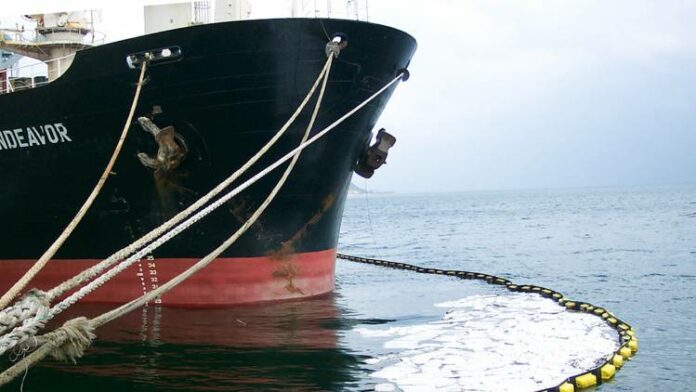
OpenRisk launches guideline for risk management at sea to improve response to accidental spills

0

The HELCOM-led OpenRisk project recently published its "OpenRisk Guideline for Regional Risk Management to Improve European Pollution Preparedness and Response at Sea", providing guidelines and methods for maritime risk management, HELCOM says in a press release.

Primarily aimed at national and regional authorities handling response to maritime incidents, the report intends to increase the risk management component in pollution preparedness processes, based on the ISO 31000:2018 International Standard on Risk Management.

The report contains a toolbox of several risk assessment methods, outlining their aims and use, implementation basis, required inputs and obtained outputs, and how they work in practice. All of the described tools are open-access.

"We don't want another Erika or Prestige. For an effective response to maritime incidents, we also need to include risk management," said Valtteri Laine, the OpenRisk project leader, adding that a better understanding of risk helps to mitigate uncertainties and lead to better preparedness. 

"The OpenRisk guideline toolbox should make it easier to select the most adequate method and tool for assessing specific risks," he said.

The OpenRisk project – a two year EU-funded project on methods for maritime risk assessments – aims at strengthening regional preparedness to accidental spills. 

Through promoting open-source standards, it seeks to address the high costs of implementing regional risk assessments, and to improve comparability of risk assessments across countries and regions. 

OpenRisk is led by HELCOM, partnering with the World Maritime University(WMU), the Netherlands-based non-profit maritime research institution Marin, and the Finnish Environmental Institute(SYKE).

The project is also supported by the Bonn Agreement (North Sea), the Copenhagen Agreement (Nordic seas), REMPEC (Mediterranean), as well as the Norwegian Coastal Administration.

Source:portnews