5.1 C
New York
Home Blog Page 1239

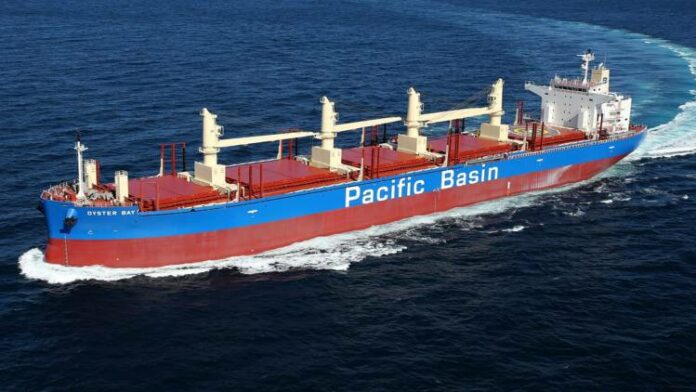
Pacific Basin seals $40m loan facility with Danish Ship Finance

0

Dry bulk shipowner Pacific Basin has closed a $40m seven-year term loan facility with Danish Ship Finance.

The facility is an extension of Pacific Basin’s existing term loan with Danish Ship Finance and is secured by the same 19 vessels currently secured under the original financing.

We are very pleased with the terms of this additional new tranche to our existing term loan facility which further consolidates our funding flexibility with access to long term committed funding for the next seven years at an attractive cost which contributes to our competitive vessel P&L breakeven levels,” said Peter Schulz, cfo of Pacific Basin.

Borrowings under the new facility will carry interest cost of Libor plus 1.5%, extend the company’s overall amortisation profile and enhance its financial flexibility, Pacific Basin stated.

In June, Pacific Basin announced it closed a $325m facility supported by a syndicate of eight international banks secured over 50 vessels.

Source:seatrade-maritime

Chevron Announces First Oil From GoM Big Foot Project

0

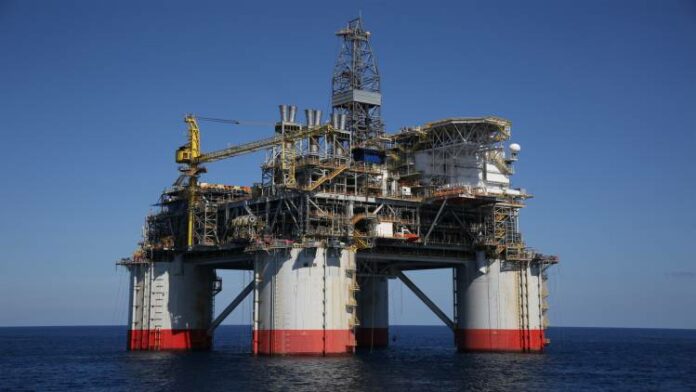
Chevron Corp. said Nov. 21 the Big Foot deepwater project, located in the U.S. Gulf of Mexico, has started crude oil and natural gas production. The field is located approximately 225 miles (360 km) south of New Orleans, La., in a water depth of approximately 5,200 ft (1,584 m.).

The Big Foot field was discovered in 2006, is estimated to contain total recoverable resources of more than 200 million oil-equivalent barrels and has a projected production life of 35 years. The project uses a 15-slot drilling and production tension-leg platform, the deepest of its kind in the world, and is designed for a capacity of 75,000 barrels of oil and 25 million cubic feet of natural gas per day.

The Big Foot project strengthens Chevron’s deepwater portfolio and further demonstrates that the Gulf of Mexico is an integral part of our diverse global portfolio and long-term strategy,” said Jeff Shellebarger, president of Chevron North America exploration and production, in a statement. “The project advances our interest in safely providing reliable, affordable energy to meet a growing global demand.”

Chevron’s subsidiary, Chevron USA. Inc., is the operator of Big Foot with a 60% working interest. Co-owners are Equinor Gulf of Mexico LLC (27.5%) and Marubeni Oil & Gas (USA) LLC (12.5%).

Source:epmag

NYK Looks to FinTech to Realize Cashless Ships

0

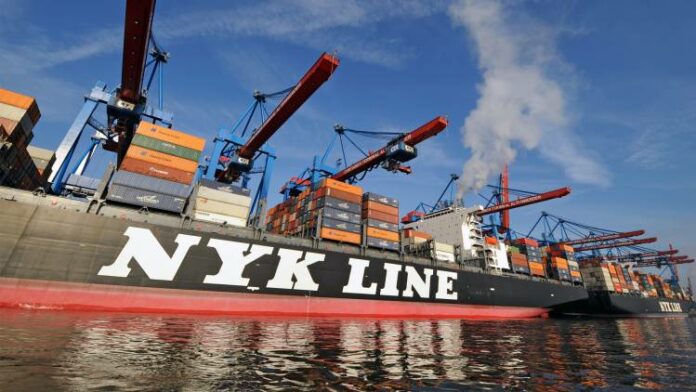
As a part of the NYK Group’s medium-term management plan “Staying Ahead 2022 with Digitalization and Green,” NYK is currently considering the establishment of a new network that will enable onboard financial settlements through the remittance of electronic money (e-money). Onboard tests have been conducted to examine the potential to reduce administrative work and the risk of cash loss, and thus foster an employee-friendly workplace where crews can work comfortably and concentrate on ship operations.

1. Background

Today, onboard payments are made in cash. Crew members are given a part of their salaries in cash, and daily goods are paid for in cash. The captain must allocate time to oversee payment, inventory, and orders, and crew members must handle cash on board and pay overseas remittance charges to send funds to family members in home countries. NYK estimates that total cash on company ships around the world amounts to about $800 million a year, and costs related to handling are very high.

Therefore, as part of the company’s Creative Solutions Startup Support System, NYK has begun to examine the use of FinTech to realize cashless ships.

2. Cashless Ships

Payments by land offices, onboard purchases, and remittances (between crew members and to family members on land) can all be done on board with e-money in a stable communication environment. In addition, cost, time, and risk can be reduced through electronic transactions instead of cash.

3. Testing

From August to the end of September, NYK teamed with Japan Card Network Co. Ltd. (JCN) to conduct several tests. The team examined the feasibility and effectiveness of the introduction of e-money that can be exchanged for cash, the establishment of an environment that allows the crew to use e-money on board, and an application (patent pending) that enables e-money to be easily managed.

3. Future

Many issues remain to be addressed before a cashless ship can be realized, but NYK is forging ahead to construct a viable system by cooperating with various sources and improving operational issues for commercialization.

Based on the NYK Group’s mission of “Bringing value to life,” NYK will look to develop this e-money network for the benefit of seafarers who work around the world and their local communities.

Source:hellenicshippingnews

ICE, CME basis-Houston WTI contracts see steady trading in opening weeks

0

CME Group and Intercontinental Exchange are several weeks into the debuts of their basis-Houston West Texas Intermediate futures contracts, but the latter this week became the first to face the test of an expiry day and contract roll to a new front-month trading cycle.

The December 2018 contract for ICE Permian WTI Futures expired Monday, and the front month became January on Tuesday, which is in line with the typical US Gulf Coast pipeline trading schedule. The contract itself launched October 22.

CME launched November 5 its WTI Houston Crude Oil Futures contract, with January as the front-month. For now, there has been a disconnect between front-month CME WTI Houston (January) and front-month CME WTI Crude Oil Futures, which is WTI at Cushing, Oklahoma, (December); however, from Tuesday, both will be aligned.

Both companies see an opportunity to capture a new Gulf Coast light crude benchmark amid the shifting landscape borne out of ever-increasing US crude production and exports. S&P Global Platts competes with both companies in providing pricing benchmarks to commodities markets.
In the week ended November 16, ICE Permian WTI Futures had average daily volume of 305 lots. Open interest totaled 1,037 out to March 2019 at the Friday close, according to ICE data.

Comparatively, CME WTI Houston Crude Oil Futures had 563 average daily volume, and 108 lots of OI out to April 2019. Each lot represents 1,000 barrels.

CME VS ICE, ENTERPRISE VS MAGELLAN
The exchanges have sided with two major regional midstream outfits, each with its own strengths: ICE with Magellan and CME with Enterprise. The ICE contract reflects physical WTI deliveries at Magellan East Houston. CME reflects WTI into Enterprise terminals ECHO, Genoa Junction, and Houston Ship Channel.

Magellan East Houston currently has 8.5 million barrels of crude capacity with a total of 9.2 million barrels expected before the end of 2019. By comparison, Enterprise HSC and ECHO have 34 million barrels of storage combined.

Magellan representatives said in a Friday interview with Platts that MEH and nearby terminals’ storage capacity can be built out as liquidity increases in the ICE contract.

While Enterprise may have the edge on storage tied to contracts, WTI MEH is far and away the most actively traded regional barrel so far. However, brokers and traders on occasion report bids, offers and trades for WTI at other Houston-area terminals.

UNDERLYING PHYSICAL MARKET BUBBLES TO SURFACE WITH BUILD-OUT
More US crudes will be bound for export as Permian production of light, sweet crude increases. Export activity on the Gulf Coast is picking up and S&P Global Platts has received bids, offers and trade data linked to export activity at docks linked to both the CME and ICE contracts.

A 600,000-barrel cargo of WTI crude for December loading in Seabrook, Texas, was heard offered late last week at the equivalent of a $7.05/b premium to cash WTI at Cushing, or about a 20-cents/b premium to WTI MEH at the time.

Seabrook is home to Seabrook Logistics, a crude oil and condensate storage facility linked by a 24-inch pipeline to the Magellan East Houston terminal. The facility is a 50/50 joint venture between Magellan Midstream and LBC Tank Terminals. Seabrook currently has one dock with a 45-foot draft and the ability to load up to 700,000 barrels onto Aframax-sized vessels. A second dock, which will have the ability to fill partially loaded Suezmax vessels is under construction and is expected to be operational by late 2019, Magellan said.

Source:hellenicshippingnews

Valenciaport exceeds 5 million containers

0

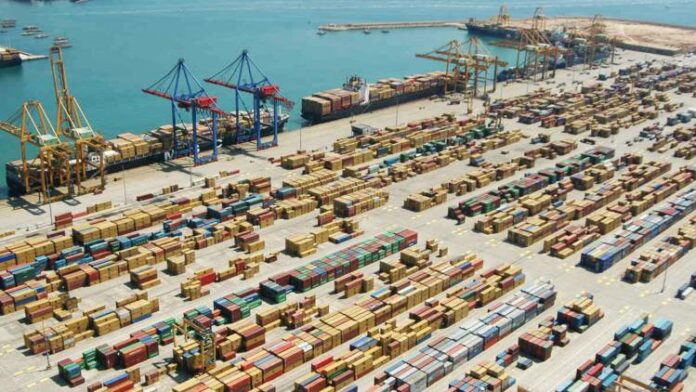
Valenciaport has managed in the last twelve months (between last October and November of the previous year) 5,044,270 TEUs -a unit equivalent to boxes of 6.1 meters-, a figure that is 4.78% higher than the obtained in the same period of 2017. With this data, Valenciaport reaches a historic milestone in the Spanish port system and Mediterranean traffic.

Specifically, in interannual terms, full containers advanced 2.94% to 3,867,734 TEUs, mainly due to good records of imports, which grew by 10.54%, and transit, which registered an increase 2.48%. On the contrary, the export of full containers maintains the downward trend and decreases by 1.41% in the last twelve months.

To obtain the milestone of the 5 million containers, traffic performance during the month of October was fundamental. Specifically, only in this month, the container terminals of the Port Authority of Valencia (PAV) moved in import / export and transit operations 472,403 TEUs. This amount is 11.15% higher than that recorded in the same month of the previous year.

With the 5,044,270 containers managed in the last twelve months, Valenciaport reinforces its centrality and its reference in the Mediterranean basin as a bridge port for traffic between Asia, Europe and America.

January-October 2018 data

As for the accumulated data up to the close of the tenth month of the year, the evolution of container traffic is positive with an increase of 5.23% to 4,268,363 TEUs. In this period, full containers are up 3.11% due to good records of imports that grow 10.26% and transit that advances 3%. For its part, exports of full containers maintained the negative trend with a decline of 1.90% while the traffic of empty containers increased 12.83%.

Source:hellenicshippingnews

Watch: World’s largest cruise ship christening in Miami

0

The world’s largest cruise ship, Symphony of the Seas, was officially named at the new Terminal A in Miami, on November 15. Symphony of the Seas will sail in the Caribbean, while it will also visit the Bahamas.

'Symphony of the Seas' is the fourth in the company's Oasis-class series and its 25th ship in general. As of 9 June 2017, she is the largest passenger ship ever to be constructed by gross tonnage, at 228,021 GRT, surpassing her sister 'Harmony of the Seas'.

The ship measures 1,188 feet (362 m) in length and she will be able to accommodate 5,518 passengers at double occupancy up to a maximum capacity of 6,680 passengers, as well as a 2,200-person crew.

Back in October 2015, the keel was laid and from 15-18 February 2018, she had been conducting sea trials.

New bill exempts US fishing vessels from ballast water rules

0

The US Senate has passed the Coast Guard Reauthorization bill 94-6, that provides several regulatory updates for the US fishing sector. Namely, the bill permanently exempts fishing vessels from EPA water discharge requirements.

On 14 November, the US Senate passed the Vessel Incidental Discharge Act (VIDA) as part of the USCG Reauthorization Act with a vote of 94 to 6, paving the way for the harmonization of state and federal regulations for vessel ballast water discharges in the United States.

The VIDA Bill includes legislative language that amends the USCG regulations to allow for the use of reproductive methods by explicitly expanding the definition of 'living' to ensure that organisms that cannot reproduce (nonviable) are not considered to be living. This means that organisms which cannot reproduce are as good as dead for the purposes of the regulation.

In a new development, USCG's new bill now removes all vessels below 79 feet from the EPA incidental discharge regulations about ballast water and deck washing. In addition, it permanently exempts all fishing vessels from the EPA discharge requirements.

The EPA regards ballast water and deck water discharge, and was applied in 2008, but fishing vessels had a temporary exemption. This exemption ended this year, and vessel owners were worried because without a solution, activities such as washing a deck after gutting fish could led to an EPA fine.

Moreover, the bill increased the size of new vessels that must be maintained to class standards, and included regional and fishery specific alternative safety compliance programs.

Commenting on the bill, Chris Brown, President of the Seafood Harvesters of America, stated:"We now have regulatory certainty for our businesses instead of operating under stopgap exemptions to these regulations"

Source:safety4sea

How the oil market is responding to the 2020 sulphur cap

0

As the 2020 sulphur cap is nearing, oil markets are preparing to adapt to the new situation. Currently, oil markets are dealing with strong demand for diesel and jet fuel in comparison to gasoline, along with the introduction of new bunker fuel regulations in 2020.

As John Kemp, a Reuters market analyst reports, increasing diesel and jet fuel prices are causing changes that could limit the chance of a severe shortage at the end of next year. In fact, the diesel premium has doubled since September, while it is also trading at the highest level since 2011 and before that 2008.

What is more, refiners seem to be keen on maximising the production of diesel and jet fuel, while reducing the output of gasoline. In the meantime, refiners produced less than 45 barrels of gasoline per 100 barrels of crud.

This caused the ratio of distillate to gasoline production to be the highest level since the 2008, when oil prices were increasing prior to the global economic crisis.

Sulphur cap and fuel oils

IMO’s new regulations on bunker fuels could boost the transition to distillate fuel oil and away from heavy fuel oil. Namely, from 2020 ship owners will need to start using lower-sulphur fuel, or use scrubbers.

However, Mr. Kemp notes that some analysts are worried that the sulphur cap could cause a shortage of middle distillates, leading to an increase in diesel and jet fuel prices, as well as crude oil prices. Nevertheless, there is probably enough flexibility in the system to meet the rise in middle distillate demand over the next 12-15 months.

How the market responds

Currently, the majority of refiners are planning to increase their production of middle distillates for about a decade, responding to projections of rising diesel demand.

In fact, mega-refineries such as those in the Middle East and Asia, are considering to increase the production of middle distillates for the transport market, ahead of projections the 2020 rules will increase freight demand.

As far as consumption is concerned, John Kemp mentions that price changes will harmonize the adjustment to IMO rules, with higher diesel prices causing more fuel efficiency in the freight transportation sector.

Additionally, the rise in diesel prices could accelerate the shift away from diesel among European motorists, making more fuel available to the shipping industry.

Finally, by encouraging maximum refinery production and restricted consumption over the next six to nine months, the increase in diesel prices should assist in creating stocks and reduce the risk of a price spike in late 2019 and 2020.

Source:safety4sea

DEME, Quadran Energies Marines and Shell present wind farm partnership Moulins de Flandre

0

As part of its application for the competitive dialogue (No. 1/2016) concerning offshore wind turbines off the coast at Dunkirk, DEME, an expert in the design, construction and maintenance of offshore wind farms, preselected by the French Energy Regulatory Commission (CRE) for this project, is announcing the creation of an industrial partnership with French marine renewable technology specialist Quadran Energies Marines and the global energy company Shell.

Called “Moulins de Flandre”, the aim of this application is to construct – as a partnership with all of the participants across the local area – a competitive and ambitious industrial project to benefit an emerging energy sector.

The partners’ strengths lie in their complementary expertise and successes in more than 50 offshore wind farm projects across Europe. The three industrial companies are uniting for a joint application, Moulins de Flandre, to propose a reliable, competitive and effective industrial project, which is notably distinguished by:

Anchoring in the region for the short, medium and long term: the Moulins de Flandre teams have spent the last few months meeting with members of the industrial networks in Dunkirk and the Hauts de France region, in their offices at the port of Dunkirk. The aim is to bring together all participants in the project to create sustainable relationships. These include research centres, universities, industrial sub-contractor SMEs, sea users (fishermen, recreational boaters, divers, etc.), dock workers, residents’ associations, tourism bodies, etc.

Control of the whole of the value chain: Moulins de Flandre combines the industrial know-how of DEME (large maritime and offshore wind projects), the expertise of Quadran Energies Marines (renewable energy) and Shell’s experience (various energy applications). This control of the whole of the value chain, which will be present from the very start of the project, constitutes an unprecedented approach to an offshore wind farm project.

About Quadran Énergies Marines

Quadran Énergies Marines is an active participant which is embedded within all the moments of a renewable energy project life cycle: from site identification to finance development, construction, operation and maintenance, all the way up to dismantling. Quadran Énergies Marines was created with the ambition of becoming the top French independent producer of offshore renewable energy and to therefore actively participate in the energy futures of different local areas. To do this, they draw on local partners to co-construct integrated projects with them. These are effectively adapted to the requirements and constraints of the areas, with the aim of supporting the creation of regional skill centres.

The company is already at the forefront of offshore wind development in France as the Owner of the EolMed, a floating offshore wind farm off the coast of Gruissan (in the Aude department) and as the company responsible for the operation and maintenance of FloatGen, which is the first offshore wind turbine installed in France, located off the coast of Croisic (in the Loire-Atlantique department).

About Shell

Royal Dutch Shell plc is a registered company in England and Wales, headquartered in The Hague in the Netherlands and listed on the London, Amsterdam and New York stock exchanges. Shell companies are active in more than 80 countries, both upstream and downstream from the energy value chain.

Shell created a “New Energy” division in 2016 and plans to invest an average of 1 to 2 billion dollars in this per year until 2020. This entity is mainly concentrated on two segments: the development of new mobility solutions such as those related to next-generation biofuels and hydrogen, and energy production such as low carbon energy, which includes not only wind and solar but also natural gas.

Shell made its debut with onshore wind technologies in 2001 in the United States and currently has an interest in five onshore wind farms in North America and one offshore wind farm in Europe. In total, our share of the energy capacity in these projects is more than 400 megawatts. Shell also holds a 20% share in the Blauwwind consortium which will construct and operate the Borssele 3&4 wind farms off the coast of the Netherlands. These farms will have a total capacity of 731.5 MW which is equivalent to the power consumption of 825,000 Dutch homes.

The Shell group has been present in France since 1919. Société des Pétroles Shell (“Shell France”), which is a subsidiary of Royal Dutch Shell and currently based in Colombes, markets oil products and services: motor and aviation fuels and biofuels, lubricants, bitumen, and fuel cards. It has around 90 service stations on motorways and expressways, and one lubricant factory in Nanterre. Shell France has also had a “New Energy” division dedicated to the development of renewable energy projects since 2017.

About DEME Group

The Belgian dredging, environmental and marine engineering group DEME is an international market leader for complex marine engineering works.

Building on more than 140 years of experience and know-how, DEME has organically moved into several related sectors, such as the financing of marine engineering and environmental projects, executing complex EPCI related marine engineering projects including civil engineering works, the development and construction of renewable energy projects, providing services for the oil, gas and energy sector, the decontaminating and recycling of polluted soils and silts, the harvesting of marine resources, etc.

Thanks to an integrated company structure, DEME strongly emerges as a 'global solutions provider' which offers its clients overall solutions. DEME has the most modern, high-tech and versatile fleet.

DEME Group has 5,100 employees worldwide and achieved a turnover of 2.37 billion euros in 2017.

Source:portnews

Hapag-Lloyd: Size is Not the Name of the Game Anymore

0

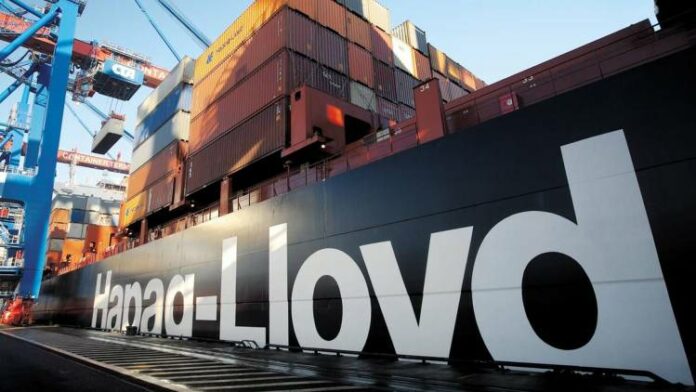
Hapag-Lloyd has disclosed details of its new mid-term Strategy 2023, saying the liner industry has come to a turning point following a period of consolidation.

Hapag-Lloyd is more than two times larger than it was in 2014 in terms of transport capacity. Further consolidation among the largest players in the industry is now less attractive due to decreasing incremental scale benefits. Instead, the company will focus on significantly improving quality for its customers, selective global growth and becoming profitable throughout the cycle. 

“Size is not the name of the game anymore, but customer orientation,” said Rolf Habben Jansen, CEO of Hapag-Lloyd. “It is obvious that customers expect more reliable supply chains, so our industry needs to change and invest more. At the same time, we know that people are prepared to pay for value. Going forward, delivering value to get the most attractive cargo on board is at the heart of our new Strategy 2023. To be number one for quality is the ultimate promise to our customers and a strong differentiator from our competitors.” 

He says Hapag-Lloyd’s Strategy 2023 is based on network optimization, terminal partnering and further improvements in procurement and container steering. 

At the same time, additional improvements aim to turn Hapag-Lloyd into a more agile, dynamic and analytically driven organization. More investments in digitalization and automation will be made and the company aims to increase the share of the online business to 15 percent of its overall volume by 2023.

Financial targets by 2023 will focus on generating economic value by delivering a Return on Invested Capital which is higher than the Weighted Average Cost of Capital. This implies an EBITDA margin of approximately 12 percent. A cost management program with a savings run-rate target of $350 to $400 million has been launched. The net debt-to-EBITDA ratio is targeted to be less than 3.0x with an equity ratio of more than 45 percent. A liquidity reserve of around $1.1 billion will be maintained.

Cooperation

Last month, Hapag-Lloyd and Ocean Network Express (ONE) entered into a strategic feeder network agreement. The cooperation covers specific Intra-Europe (BAX, NBS, NPX, REX, SDX, ADX, LEX) and Intra-Asia (BHX, HAS, PID) feeder trade lanes and will be further expanded in the future.

Hapag-Lloyd and ONE also operate together within THE Alliance and cooperate on their Latin America, Africa and Indian Subcontinent trades.

In September, Hapag-Lloyd, ONE and Yang Ming announced a new cooperation with CMA-CGM, COSCO and OOCL to enhance their Mediterranean – U.S. East Coast service AL6 (Atlantic 6). 

Reorganization

Hapag-Lloyd reorganized its Executive Board in March, and in May extended Jansen's contract for a further five years until March 31, 2024. Jansen was appointed member of the Hapag-Lloyd Executive Board in April 2014 and has been CEO since July 2014.

The reorganization came about following the mergers with CSAV (2014) and UASC (2017). As a result, the company's transport capacity and number of containers transported more than doubled. Revenue rose by the around 50 percent in the same period, and the number of employees increased by around 70 percent. 

Hapag-Lloyd has a fleet of 222 modern container ships and a total transport capacity of 1.6 million TEU. It has a container capacity of approximately 2.6 million TEU, and around 12,000 employees and 394 offices in 127 countries. 120 liner services connect to over 600 ports around the world. 

Source:maritime-executive