5.1 C
New York
Home Blog Page 1235

Lamprell and Boskalis chosen for Saudi Aramco contractor programme

0

Royal Boskalis Westminster N.V. (Boskalis) with its partners has been selected as a contractor on Saudi Aramco's Long Term Agreement for Offshore Facilities (LTA) program.

The LTA is part of an ambitious offshore investment program and covers engineering, procurement, construction, transportation and installation (EPCI) contracts to support Saudi Aramco's Offshore Maintain Potential Program, Oil & Gas Program, and other offshore expansions. Within the scope of the LTA, investments could exceed USD 3 billion per annum with a program duration of 6 years, with options by Saudi Aramco to extend for a further 3 plus 3 years. Selected contractors like Boskalis have the right to bid for tenders put out by Saudi Aramco without further technical prequalification, considerably shortening the lead time through to award.

Boskalis acquired the agreement in consortium with the United Arab Emirates-based company Lamprell. Lamprell will focus on the engineering, procurement and construction of offshore structures, such as topsides and jackets. Boskalis will be responsible for the transport and installation of these structures, in addition to dredging activities and specialist subsea activities, including survey as well as pipeline and cable installation.

This agreement is an important milestone for Boskalis and supports the strategic vision of selective growth towards becoming a full-scope transport & installation contractor at the high-end of the offshore energy market.

Peter Berdowski, CEO Boskalis: "This agreement with Saudi Aramco marks an important milestone for Boskalis. As spearhead of our strategy we have over the last number of years invested in vessels and people to broaden our offshore transport & installation capabilities. The choice for Boskalis as LTA partner supports and confirms our strategic vision. We are proud of the confidence shown by Saudi Aramco and look forward to working in partnership. In the coming year, we will focus on tendering and building up our local organization in preparation of the execution of projects for the period thereafter. It is expected that the agreement will generate multiple hundreds of millions of euros revenue for Boskalis."


Seoul to order 140 LNG ships to make work for shipyards

0

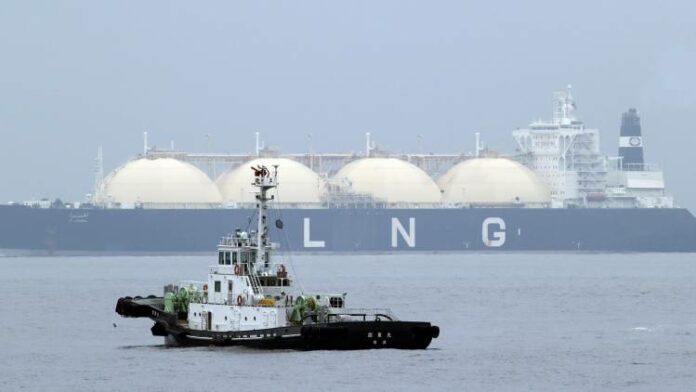
The South Korean government will order 140 liquefied natural gas (LNG) vessels by 2025 and provide 1.7 trillion won ($1.5 billion) in financial aid to prop up the country’s ailing shipbuilding industry.

The shipbuilding assistance package was announced Thursday after a government meeting chaired by Prime Minister Lee Nak-yeon.

While measures in April were aimed to help large shipbuilders, the latest scheme is geared more toward small and midsized builders, the government said. There are 78 such companies in Korea, whose combined revenue stood at 601.2 billion won last year.

The government plans to order a total of 140 LNG vessels by 2025, a deal estimated to be worth about 1 trillion won. To start, it will replace two large emissions-emitting tug boats with cleaner LNG-fueled ships next year. It is also reviewing a mandate to direct all state-owned ships to shift to LNG from 2020.

Seoul’s push for LNG coincides with the global movement toward tighter emissions regulations. LNG is rapidly being adopted as a marine fuel with the expansion of emission control areas, sea areas where sulfur emissions are more strictly regulated than at open sea. Ships operating in these areas must use ultra-low sulfur diesel or advanced scrubbers, prompting the transition to cleaner fuel alternatives like LNG.

To aid financially-strapped shipbuilders and equipment makers, the government will also put aside a 700 billion won fund and extend maturing loans worth about 1 trillion won.

Source:hellenicshippingnews

Greece opens new LNG tank to boost energy hub ambitions

0

Greece inaugurated a new liquefied natural gas (LNG) tank to boost its storage capacity and bolster its ambitions to become a regional energy hub.

Greece, which relies on Russian gas for its energy needs, has said it expects 4 billion euros in investments by 2030 in gas pipelines, networks and storage facilities.

The third tank on the LNG terminal on Revithoussa, an islet near Athens, will increase its total storage capacity by 73 percent to 225,000 cubic metres and boost the gasification rate by 40 percent, allowing Greece to receive larger LNG cargoes.

“Revithoussa is now an advantageous hub in the southeastern Mediterranean region for natural gas,” Energy Minister George Stathakis said.

Besides Russia, Greece imports LNG from Algeria, which it temporarily stores at Revithoussa before gasifying it to supply its transmission system.

Revithoussa, run by gas grid operator DESFA, is Greece’s only LNG terminal. A consortium led by Italy’s Snam is to buy a majority stake in DESFA by the end of the year.

Greece is developing a second LNG terminal off the northern city of Alexandroupolis that aims to supply gas to southeastern Europe via a pipeline link with Bulgaria, the Interconnector Greece-Bulgaria (IGB).

The IGB and the LNG terminal would then connect with the Trans-Adriatic Pipeline (TAP), which has been under construction to transport Caspian gas to European markets.

Greece wants to boost the use of natural gas in electricity production, transportation and households, to cut costs and reduce its carbon footprint until it replaces most of its coal and oil-fired power plants with renewable ones by 2030.

Source:hellenicshippingnews

How Technology Is Making Shipping Ports Smarter

0

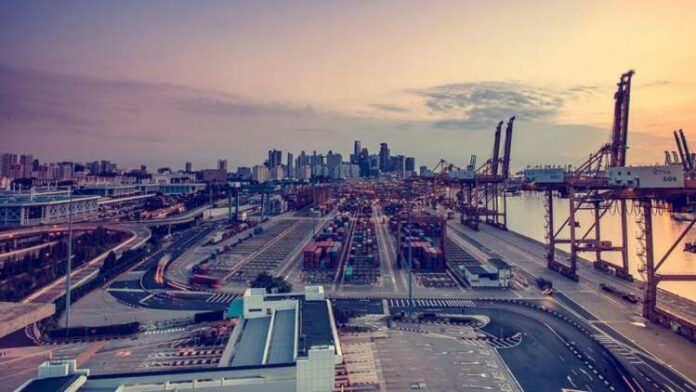
If shipping is the life blood of global trade, ports are its heart, which continue to work day in and out to handle the ever-increasing volumes of cargo and container sizes. However, the pace of development on and off-shore has varied with ports remaining anchored to conventional methods of functioning in many ways. But not anymore. Here’s how connected technologies are making ports future ready while boosting productivity and trimming costs.

Waterways are crucial for the global trade and economy. The international shipping industry carries around 90% of world trade by tonnage as per the International Chamber of Shipping. The global marine port and service market is expected to reach an estimated $87.8 billion by 2023.

One of the major projects of turning a port into a ‘smart’ port has been initiated at Rotterdam in collaboration with IBM (IBM). In January 2018, the multi-year digitization process was initiated to transform the port’s operational environment using advanced technologies such as Internet of Things (IoT), Augmented Intelligence (AI) and cloud. Axians and Cisco (CSCO) are partners in the project. While the collaboration is aimed at preparing the port to host connected ships by 2025, the initial part of the initiative involves enabli  ng a safer and more efficient traffic management at the port.

Rotterdam will be using a centralized dashboard application which leverages IoT-enabled sensors and AI—to collect, process and analyze real-time data to check availability of berths and measure other vital statistics.

Rotterdam is Europe’s largest port and processes more than 140,000 ships each year, making berthing a complex and time-consuming process. The analysis of multiple variables, different operations (and parties) at the same time via the digital dashboard would allow better communication, decision-making and increased efficiency. It is estimated that, “shipping companies and the port stand to save up to one hour in berthing time, which amounts to about $80,000 US dollars in savings for ship operators and enables the port to dock more ships each day.”

The multiple sensors can provide vital information about air temperature, relative humidity, wind speed, salinity of water plus water flow and levels—which can enable accurate analysis about things such as visibility. Visibility is used for calculating clearance heights for ships; “Increasing the capacity of ships based on clearance heights can dramatically increase the revenue generated by each ship entering the port” according to Cisco.

Further, this information can help plan a smoother and safer arrival of ships, which would in turn lower fuel consumption. IBM’s Weather Company’s IoT and machine learning driven platform is instrumental in providing accurate predictions of the future weather. “Weather is the most significant external swing factor in business performance”, in the U.S. alone, each year, weather and climate disasters cause billions of dollars in economic impact according to National Oceanic and Atmospheric Administration (NOAA).

Other than Rotterdam, there are some interesting projects around ‘smart’ ports using advanced technologies. Back in 2015, Cisco has played a pivotal role in providing a uniform infrastructure for managing traffic, collaborating, videoconferencing and IT at the Port of Hamburg with lowering of operational costs and need of constant management.

In October 2017, DP World unveiled plans to develop Saudi Arabia’s Jeddah port, in support of the Saudi Vision 2030. The plan involves, “transforming the port to an important gateway to markets serving 500 million people which will make the Kingdom’s ports and logistics services a necessity and not a choice for global trade markets, particularly the Red Sea” said DP World Group Chairman and CEO Sultan Ahmed Bin Sulayem.

Last year, the Maritime and Port Authority of Singapore (MPA) launched the Smart Port Challenge 2017 to promote digital transformation in the maritime industry using IoT, blockchain, automation, analytics and AI. In April 2018, MPA and the Wärtsilä group partnered to promote maritime innovation and research and development across four different streams: digital acceleration, cyber-physical security, intelligent vessel and port operations.

Meanwhile, the Port of Antwerp is working on a number of projects for technological advancement of the port. In November 2017, Antwerp Port Authority and Federal Participation and Investment Company jointly acquired a stake in NxtPort, the digital data platform for the port community. NxtPort is considered a crucial partner the data-driven innovation at the port. While, a start-up is exploring blockchain technology as a solution for container collection at the Port of Antwerp.

The port of Kalmar in Sweden is working on a 2060 Vision project by combining “AI and human experience and knowledge to create a fully-automated port in time.” Meanwhile, the British Ports Association launched the port futures program to study the emerging trends on the port and shipping landscape.

In the years ahead, Smart Ports will not just be bringing in more operational efficiency and cost saving, but would be ready to welcome autonomous ships, if and when they set sail.

Source:nasdaq

Solstad Offshore subsidiary sells PSV Far Supplier

0

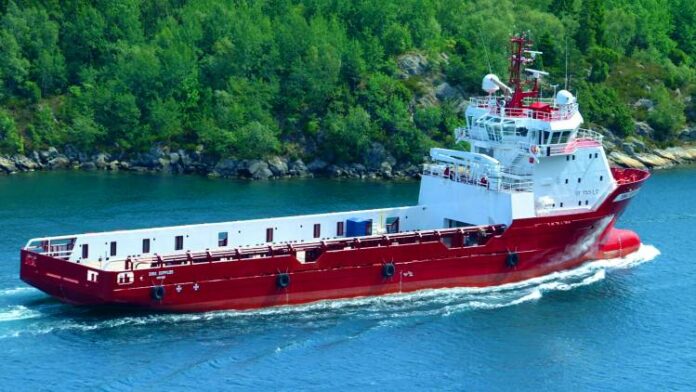
Solstad Offshore’s subsidiary Farstad Marine has sold PSV Far Supplier to an undisclosed buyer.

Far Supplier was delivered to its new owner on 21 November. The vessel’s sale will result in a minor positive accounting effect for Q4 2018.

The PSV was built in 1999 by Kvaerner Govan in Glasgow. It measures 83 m in breadth by 19 m in length and has a maximum draft of 6.33 m. Its dwt is 4,709.

Norwegian OSV operator Solstad Offshore was previously known as Solstad Farstad, formed from the merger of the original Solstad Offshore, Farstad Shipping and Deep Sea Supply in June 2017.

In October, the company announced it planned to speak with lenders with a view to improving the company’s liquidity in anticipation of what it described in a statement as a “challenging” North Sea winter season.

Source:osjonline

Watch: Bolivian river port provides new route to sea

0

Bolivia granted an international classification to Central Aguirre, Gravetal and Jennefer, on 30 October. These three river ports are on the Paraguay-Paraná waterway that connects Bolivia with Argentina, Brazil, Paraguay, Uruguay and the Atlantic Ocean in general.

The port reclassifications come after the International Court of Justice decided that Chile did not undertake a legal obligation to negotiate sovereign access to the Pacific Ocean for the Plurinational State of Bolivia.

Speaking about this development, the managers of the ports mention that they offer an alternative route to the sea. Specifically, Bismark Rosales, manager of Port Jennefer, stated that:"The hope, the opportunities that the Paraguay-Paraná waterway offers business owners and Bolivia’s economy are considerable"

According to Mr. Rosales more businesses can reduce time and money floating goods up and down the waterway, instead of transferring them across the Andean Mountains. Namely, he added that regarding freight costs, the reduction would be about 18-20%, while the time would be less by up to 30%,

Currently, the transit costs for the Chilean-Bolivian part of the journey are many times the most expensive part of the voyage, Bismark Rosales noted. This is one of the reasons why Bolivia has struggled to appear competitive in the international market.

Source:safety4sea

MSC partnership introduces smart containers

0

MSC is partnering with TRAXENS introducing smart container solutions, overcoming everyday barriers concerning non-visibility of cargo and presenting efficiency, safety and predictability.

Mediterranean Shipping Company (MSC) is collaborating with TRAXENS using its IoT solutions. This partnership pursues to improve supply chain management for shippers by making the cargo flow visible. In that way, door-to-door cargo flow will be able to track adding efficiency, safety and predictability.

However, lack of real-time and end-to-end visibility is a crucial problem in today’s global supply chains. Until now, importers or exporters highlighted the inefficiency of the non-visibility over the whole trip.

The pros of smart containers resulting from this partnership, is that the two companies will make containers:

  • Smart, connected objects;
  • Easy-to-collect and communicate real data concerning their state and movement throughout the journey;
  • Secure cargo including temperature, humidity level, shocks and vibrations, door opening and closing;
  • Easy to manage concerning delays in their transportation.

MSC aims to equip 50.000 dry cargo containers in the near future in order to agree with the demands from shippers for TRAXENS solutions. The use of smart containers will bring plenty of gains in efficiency, service, security and safety along the entire supply chain.

Diego Aponte, President and CEO of MSC Group "MSC believes that the real-time tracking of containers is the future of the shipping industry. While shipping lines should of course compete on service, we will achieve better results for our customers by working in a more harmonised way on technology and innovation. Smart containers are a perfect example of where we can cooperate according to industry standards to make our services truly comprehensive and TRAXENS is the top innovator in this area."

Source:safety4sea

BLOC wins MIT Solve’s Coastal Communities Challenge

0

Blockchain Labs for Open Collaboration won MIT Solve’s Coastal Communities Challenge, for its work in developing shipping Emissions Monitoring Reporting solutions.

BLOC was chosen amongst 33 teams that took part in the Solve Challenge Finals, which embodied a live pitch event in the UN General Assembly week in NY. The Solve’s Challenge Leadership Group judges opted the Solver teams as the ideal set of solutions showing potentials into tackling large-scale global challenges.

BLOC’s Shipping Emissions Monitoring Verification and Reporting solution concentrates on building digital infrastructure to:

  • Improve coastal community health and safety by tracing shipping emissions. 

Moreover, BLOC's patent ensures the chain of custody concerning marine fuel data by

  • Using blockchain in real-world; in that way, BLOC will make a support system for complying with environmental regulations, such as IMO 2020 Suplhur Cap.

To this result, the Emissions MRV application is based on the Marine Fuel Assurance prototype which is funded by Lloyd’s Register Foundation as part of BLOC’s Maritime Blockchain Labs initiative.

Deanna MacDonald, CEO of BLOC, commented that the company is proud of participating in MIT Solve competition in the Coastal Communities Challenge. The competition is a platform of raising awareness on the matter of fuel challenges and joining partners to find solutions.

Source:safety4sea

Second maritime navigation support centre opens in Izmir

0

A new maritime traffic and navigation support centre was launched in Izmir, Turkey, aiming to allow local authorities to monitor maritime traffic in the area and therefore boost safety, security, and protection of the marine environment, in over 7000 kilometres of coastline around the Mediterranean basin​.

The centre, developed by Leonardo, was inaugurated in a ceremony held on 22 November, with attendees including the speaker of Grand National Assembly of Turkey, Mr. Binali Yildirim, and the Minister of Transport and Infrastructure, Mr. M. Cahit Turhan.

The solution is composed of two subsystems. The first is the Regional Vessel Traffic Services System (RVTSS), which monitors the extremely busy shipping and transport corridors of the Gulfs of Izmit, Izmir and Mersin. The other subsystem is the Vessel Traffic Management Centre (VTMC) installed in Ankara, which will provide an integrated and comprehensive picture of sea traffic.  Izmit was the first site of the system to be officially opened in November 2016.

Vessel Traffic Management System (VTMS) is a technologically advanced solution, securing coastal areas and maritime boundaries over wide geographical areas, able also to provide maritime environmental monitoring and support search and rescue operations at sea.

Source:safety4sea

CMA CGM posts Q3 2018 results

0

In the third quarter, volumes shipped by CMA CGM recorded a growth of +5.5% compared to the 3rd quarter of 2017. Over the period, CMA CGM exceeded 5 million containers shipped. This increase is attributable to the strength of most of the trades, particularly the Transpacific, India/Oceania and Africa lines.

Revenue per container in the third quarter of 2018 increased slightly compared to the third quarter of 2017 (0.8%), as well as compared to the second quarter of 2018 (+4.9%).

Consequently, revenue in the third quarter of 2018 rose by +6.3% to USD 6.06 billion.

Unit costs rose by +7.7% (+USD 77 per TEU), mainly due to the market price of fuel, resulting in an increase of USD 55 per TEU compared to the third quarter of 2017. This was only partially offset by the introduction of an Emergency Bunker Surcharge.

CMA CGM posted third-quarter 2018 operating income of USD 241 million, representing a core EBIT margin of 4.0%, as compared to 1.2% in the previous quarter. This confirms the performance improvement announced last September for the second half of the year.

This performance is the result of the Group's ability to leverage its size and global network to maximize its revenues, despite the rise in fuel price.

The Group’s share of consolidated net income amounts to USD 103.1 million in the third quarter, up from USD 22.7 million in the previous quarter.

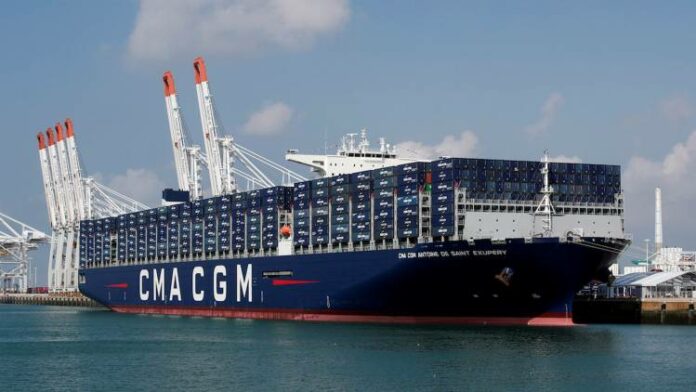
On 6 September, CMA CGM's flagship, the CMA CGM ANTOINE DE SAINT EXUPERY, was inaugurated in Le Havre by Bruno Le Maire, Minister of Economy and Finance, and Rodolphe Saadé, Chairman and CEO of the CMA CGM Group. With a capacity of 20,600 TEUs (twenty-foot equivalent units), this ship is a symbol of the drive, development and competitive strength of the CMA CGM Group.

Through this acquisition finalised on 31 October, CMA CGM pursues its development strategy aimed at densifying the Group's regional coverage. The Containerships network will effectively complement the CMA CGM offering, and more particularly that of its subsidiary MacAndrews, which already operates on intra-European lines. The Finnish company, specializing in the intra-European short sea market, will take delivery of four vessels powered by liquefied natural gas (LNG) in the coming months.

CMA CGM’s start-up incubator ZeBox, initiated by Rodolphe Saadé, was launched in Marseilles on 27 September in the presence of Elizabeth Borne, French Minister of Transport. The objective of this incubator is to support start-ups in their development through a strong network of partners, thereby enabling large companies to benefit from their innovations.

The Group has signed an agreement with SHONE. This US based start-up is working on embedding artificial intelligence onboard ships. This partnership should facilitate the crew’s tasks in terms of decision-making support, steering and maritime safety.

CMA CGM has rolled out its offer of connected containers, using Traxens technology. This technology allows real-time monitoring of the container's position, the intensity of impacts sustained, changes in temperature and humidity, and the detection of doors being opened.

CMA CGM and its subsidiaries have signed a number of agreements to develop Blockchain technology in the shipping industry. More particularly, CMA CGM is developing a project for blockchain-secured electronic “bill of lading” with the start-up BuyCo, in which the Group has recently invested.

Source:portnews