6.2 C
New York
Home Blog Page 1234

ISO issues first set of global standards for drones

0

As part of the increased use of drones worldwide, the International Organization for Standardization (ISO) has published a draft version of the first ever set of standards for drone operations to apply globally, in a bid to make drone operations safer and more efficient. The rules are expected to be adopted worldwide in 2019 and to this end, ISO has invited professionals, academics and businesses to submit comments by 21 January.

The voluntary standards, which resulted from a three-year work, include operational requirements for drones, on safety and security, flying "etiquette" around no-fly zones, geo-fencing technology that can impede flights in restricted areas, flight logging requirements, as well as training and maintenance standards.

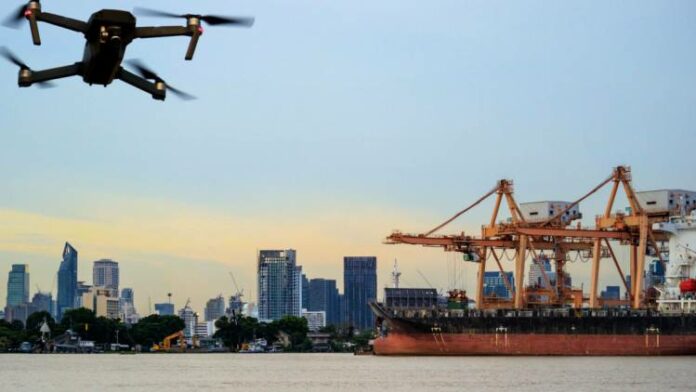
Drones are gaining more and more ground to the maritime and offshore industry, as they are able in spotting and avoiding hazards at sea, while they are also popular in maritime surveillance. Drones can conduct inspections of cargo tanks and holds, which is dangerous for crew. In addition, dangerous gases cause many fatalities at sea, as enclosed cargo holds may contain noxious gases. Drones can also carry out inspections at height, assess the structural integrity of a vessel or to monitor the loading of cargo.

Moreover, operators are also using drones to assess the condition of assets, such as oil rigs, pipelines and offshore turbines, thus also reducing the need for risky human inspections.

The EU Transport Commissioner Violeta Bulc initiated in October the European network for drone demonstration projects. The network aims to share knowledge on how to keep drone operations safe, secure and green. It focuses on the U-space: a system that connects all drones flying in the air and that makes all drones visible for authorities and citizens.

Meanwhile, the UK government is reportedly working on a UK Drone Bill, expected early in 2019, aiming to create its own regulatory framework on drones.

Source:safety4sea

IMO joins world leaders and maritime experts at Sustainable Blue Economy Conference

0

How do we harness the potential of our oceans and seas to improve the lives of all, while conserving them for future generations?

This is the question being addressed at the first Sustainable Blue Economy Conference, where IMO is joining world leaders and maritime experts from around the globe.

IMO says the Conference in Kenya (26-28 November) will see governments, international agencies and other stakeholders discuss topics such as ocean governance, marine environment protection and maritime security and development. 

IMO is holding side events on i) how States can leverage the #BlueEconomy into their national policies, ii) promoting women in the maritime sector, and iii) improvements in ship energy-efficiency and uptake of low-carbon technologies. 

Speaking on the opening day of the conference, IMO Secretary-General said, “the importance of the world’s oceans for our collective future is undeniable”. He emphasised that “realising the full potential of our oceans, and the growing ocean economy, will require responsible and sustainable approaches to its economic development and a strong collaboration and cooperation among all stakeholders.” Secretary-General Lim said that he was “confident that the exchange of ideas taking place this week will make a positive contribution towards the objective we all share – to contribute to sustainable development and a thriving blue economy”.

IMO is committed to the UN’s 2030 Agenda for Sustainable Development and its associated 17 Sustainable Development Goals (SDGs).

Source:portnews

Fincantieri Cuts Steel for New MSC Cruises Ship

0

MSC Cruises has named the first of two new Seaside EVO cruise ships at a steel cutting ceremony at Fincantieri's shipyard in Italy.

The 5,632-passenger 169,400-ton MSC Seahorse is due to enter service in spring 2021 and will feature an enhanced MSC Yacht Club covering three forward decks; specialty restaurants for al fresco dining, a larger number of whirlpools, 200 additional cabins and more generous public spaces.

The Seaside EVO ships will be equipped with a selective catalytic reduction system, exhaust gas cleaning technology, state-of-the-art waste management and recycling systems, advanced water treatment systems and an advanced energy and heat recovery system.

MSC Seashore will be joined by a second Seaside EVO ship in autumn 2022. She is part of the company's 10-year plan for 17 additional new mega ships, with four new vessels currently under construction at the same time. MSC Seashore is the seventh ship to be built under the plan and will become the 19th ship MSC Cruises has built since its inception in 2003.

Fincantieri delivered the 4,132-passenger MSC Seaview to MSC Cruises in June. With a gross tonnage of 153,000 tons and a length of 323 meters (1,060 feet), MSC Seaview was the largest and most technologically advanced ship ever to be designed and built in Italy. Sister ship MSC Seaside was delivered last November. MSC Seaview is the third ship to be built under MSC Cruises’ $12.4 billion investment plan which also includes MSC Meraviglia, delivered in May 2017. The company’s next ship, MSC Bellissima, is expected to be delivered next year.

Earlier this year, MSC Cruises and Miami-Dade County signed an agreement for extended preferential berthing rights and a Memorandum of Understanding for the construction of a new Cruise Terminal AAA at PortMiami – MSC Cruises' exclusive home-port in the U.S. The new agreement extends MSC Cruises' existing Saturday preferential berthing rights also to Sundays. Additionally, the new terminal — which is projected to be completed by October 2022 — will be able to accommodate MSC Cruises' next-generation cruise ships carrying up to 7,000 guests.

MSC Seahorse

Length: 339 meters (1,112 feet)
beam: 41 meters (135 feet)
height: 74 meters (246 feet)
Gross tonnage: 169,400 GT
Guests: 5,632
Crew: 1,648
Guest cabins: 2,270
Maximum speed: 21.8 knots

Source:maritime-executive

American Cruise Ship Captain Fined Over Fuel Sulfur Content

0

On Monday, a court in Marseille fined cruise ship master Capt. Evans Hoyt $110,000 for using fuel with a sulfur content measuring 0.18 percentage points above a disputed limit. It is the first ruling of its kind in France, and it is contrary to the French government's previous stance on sulfur content rules for cruise ships.  

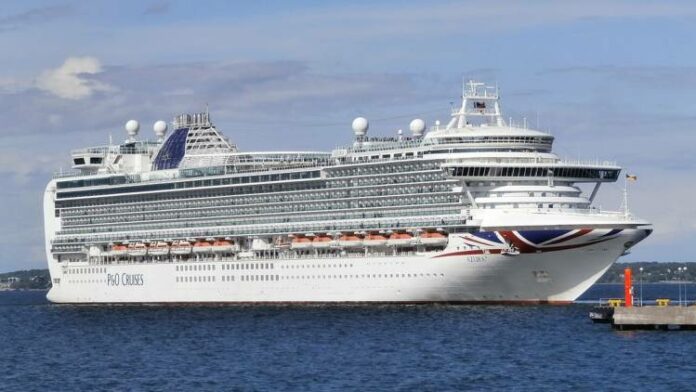
On the morning of March 28, 2018, while under the command of Capt. Hoyt, the P&O cruise ship Azura called at Marseille. Inspectors boarded, sampled her tanks and determined that she was using fuel with a sulfur content of 1.68 percent. This amount is slightly higher than the EU's 1.5 percent limit for "passenger ships providing regular services to destinations or from ports of the European Union." This definition does not cover all passenger vessels, and it is interpreted differently in different EU nations. The governments of France and Spain have previously determined that it does not apply to cruise ships.

In the case of the Azura, however, French prosecutors contended that the EU's passenger ship sulfur cap applies to vessels fitting her description. They further alleged that operator P&O had used slightly higher-sulfur fuel illegally in order to save money. The judge ruled that P&O parent company Carnival Corporation should pay $90,000 of Capt. Hoyt's $110,000 fine. 

Carnival has appealed the decision, and in a statement it noted that France's government has given clear indication that it will not apply the EU's passenger ship sulfur cap to cruise ships.

“We were . . . very disappointed to be prosecuted for this offense, which was based on a European law the French environment ministry had explicitly informed the cruise industry would not be applied to cruise ships and which, in any event, has still not been properly implemented," Carnival wrote in a statement. "The captain was using the fuel in good faith, as directed by us, based on our understanding of the law. We have lodged an appeal and will consider the full decision of the court once it is available.”

The EU's 1.5 percent sulfur content limit for passenger vessels will be largely superseded after January 1, 2020, when the IMO limit of 0.5 percent enters into effect for all vessel classes worldwide. 

Capt. Evans Hoyt (USMMA '82) joined the P&O Cruises vessel Azura as master in 2016. According to his online resume, he previously sailed for ten years with Norwegian Cruise Lines, where he served as the captain of the Norwegian Escape, Norwegian Breakaway, Norwegian Spirit, Norwegian Sky, the Pride of America and the Pride of Hawaii. 

Source:maritime-executive

EU Joins Complaint Over S. Korean Shipbuilding Subsidies

0

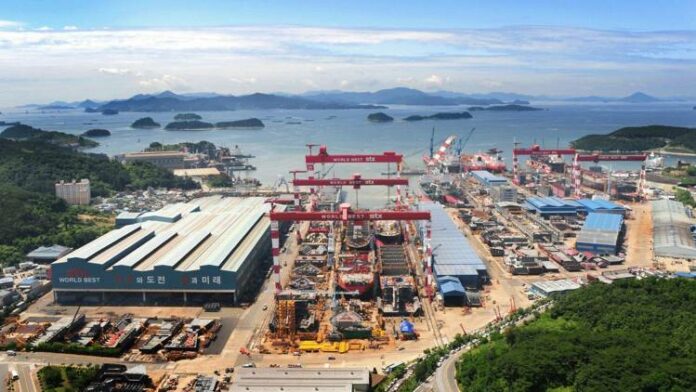
The EU has signaled that it will join Japan in a formal World Trade Organization complaint against South Korean shipbuilding subsidies, citing the impact on European shipyards and maritime equipment manufacturers. 

"[Japan's] request for consultations relates to a number of alleged export and local content subsidies provided by Korea directly, or through public or private institutions, to Korean shipbuilders or their customers," the EU wrote in a letter to the WTO last week. "The measures referred to . . . may have a substantial impact on the price of ships, including ship engines and other maritime equipment, and affect trade flows in these products."

On November 6, Japan initiated a WTO dispute complaint against the government of South Korea over subsidies for the Korean shipbuilding industry. Japan claims that Korean policy measures – including funds, loans, guarantees, insurance and other financing for the "Big Three" South Korean shipbuilders – violate the WTO's Agreement on Subsidies and Countervailing Measures and the General Agreement on Tariffs and Trade (GATT) 1994.

Japan's government alleges that these measures amount to "producer support" – direct financing that keeps companies in business and allows them to offer below-market prices – and "sales support," designed to promote sales for Korean shipbuilders during periods of low demand. Japan also noted the significant involvement of Korean government-owned policy banks in bailing out Korean shipbuilders during the 2015-17 industry downturn. 

Under the WTO's dispute resolution process, the parties will have 60 days of "consultations" to discuss the complaint. The EU will participate as a formal third party to the discussions. At the end of the 60-day period, a dispute panel will be established to adjudicate the matter and issue a binding ruling. If the losing party does not implement corrections, the WTO can authorize retaliatory trade measures. 

Source:maritime-executive

Predicting Port Costs

0

There are inherent difficulties in accurately predicting the port costs, which forms a significant part of the voyage costs. The accuracy of these calculations gives the chartering team the ability to more precisely calculate the potential profit of the voyage. In some cases, large savings can be made by understanding what really affects the basis of calculations from the tariff.

Firstly, it is increasingly apparent that these costs need to be analyzed at a terminal or berth level. There can be significant variances in costs between different terminals within a port. However, as this information is often not available when fixing a cargo, the port-level data usually has to suffice.  

Our studies into the tariff structures reveals that there are generally four methods of calculation on the most significant costs that influence the overall cost.

Characteristically ports have a linear cost profile, wherein the longer the vessel stays, the cost increases proportional to the time alongside.
However, many tariffs show a significant increase after a set period of time alongside (i.e. 72 hours) This is an important one to monitor if the opportunity to sail within the 72 hours exists.The third example is the “stepped” cost – where costs increase in slabs. When plotted on a graph the lines appear like steps rising from left to right. These are also interesting in terms of potential savings as departing prior to the next slab jump could make a compelling saving – or help decide if any overtime should be paid.
The last, and least common, are fixed cost tariffs where only minor increases occur if the stay far exceeds the expectation. A good insight if you know the cost remains roughly the same regardless of time spent – it could be an ideal place for making repairs.

Knowing how costs behave is important for decision making. You will want to know how costs will increase or how costs could decrease at variable times. There's still a huge amount of variables within these tariff structures, with dependencies on vessel type, size, last or next port, frequency of calls, flag and environmental rating, amongst many others. It's a constantly evolving list of rules – to which we add daily.

Source:maritime-executive

HMS Dragon conducts operations with F-35 in Middle East

0

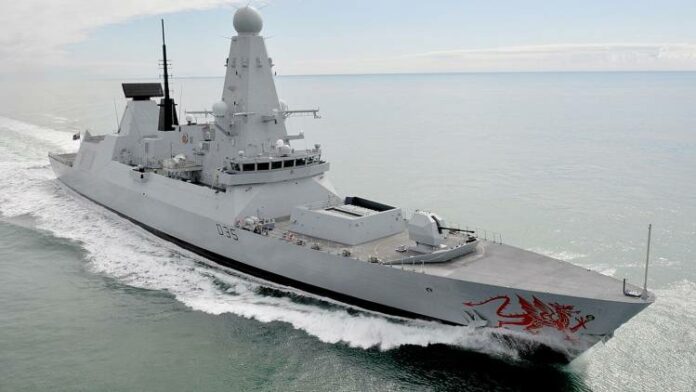
The Royal Navy’s Type 45 Daring-class destroyer HMS Dragon has become the first warship in the UK to conduct operations with F-35 Lightning II fighter jets in the Middle East.

The destroyer is working for the US Commander Task Force (CTF) 51/5 to provide air defence to the US Navy’s Wasp-class amphibious assault ship USS Essex.

This joint project enabled the crew members of the Type 45-class vessel to gain knowledge and understanding of the tactics, techniques and procedures to work with the F-35 fighters.

The knowledge will be used by the crew in support of the UK’s future carrier strike group operations.

HMS Dragon commanding officer commander Michael Carter-Quinn said: “Having trained as a fighter controller, and controlled harrier jump jets while serving on board HMS Invincible, it has been a great honour to command HMS Dragon to provide air defence duties to our US Navy colleagues.“

The step change in performance and range of roles the F-35s can provide is impressive, and to be able to work with these aircraft now in preparation for supporting the integration of the Queen Elizabeth-class, Type 45s and F-35s into the carrier strike group is exciting.

The CTF 51/5 has been serving as a part of the UK and Royal Navy’s commitment to supporting operations in the Middle East, in addition to ensuring the safety and security of the Gulf and the wider Middle East region.

Source:naval-technology

Fisher reels in London Array deals

0

James Fisher has secured a number of inspection and maintenance contracts at the 630MW London Array wind farm off south-east England.

The company will provide inspection of the substation and all 175 Siemens Gamesa 3.6MW turbines.

Sister company EDS will meanwhile provide support services for the project’s HV network on a 24/7 basis, including on the OFTO-owned assets.

James Fisher is already working on topside balance of plant services at the wind farm, which is owned by a consortium that includes Eon and Orsted.

London Array general manager Jonathan Duffy said: “We have been impressed with the comprehensive range of solutions and flexibility of services and (James Fisher’s) commitment to helping us maximise the wind farm’s uptime.“

Furthermore, its high voltage support services on both generation and transmission assets are a critical part of our maintenance and risk management strategy.                                                                                               

James Fisher executive director Fergus Graham added: “The complete maintenance package we are providing brings together our extensive capability across JFMS for the topside and subsea element, as well as EDS HV for HV support services.“

This demonstrates our capability to manage every phase of a wind farm’s life cycle, from construction support through to decommissioning.

Source:renews

Invergordon set for £30m offshore wind facelift

0

The Port of Cromarty Firth has committed to a £30m expansion project at Invergordon in Scotland to build a new quayside that will serve as a construction hub for offshore wind farms.

Over 140 jobs in the area will be created by the project, which will add 218 metres of new water frontage and 9 acres of lay-down area, which will also be used in the oil and gas and cruise ship industries.

Work is expected to wrap up in 2020 in time for the site to serve as turbine pre-assembly headquarters for EDPR’s 950MW Moray East wind farm, which is due online in 2021.

The new quayside will be funded jointly by the port and £7.75 grant funding from Highlands & Islands Enterprise, which includes £2.3m from the European Regional Development Fund. RBS is the commercial lender.

Port of Cromarty Firth chief executive Bob Buskie said the commitment marks a “significant investment” by the board.

As a Trust Port, all of our profits are reinvested in the port’s future development. We believe this investment will be help bring new work to the area for decades to come. This is already starting, with last week’s announcement of the Moray East Offshore Windfarm contract.

He added: “The team at the Port have been working for two years on this project and we could not have done it without the help of the Scottish Government, Highlands & Islands Enterprise, Royal Bank of Scotland and, of course, our new partners Moray East.”

MSP for Inverness and Nairn Fergus Ewing said: “I am delighted they have won this crucial contract and this will provide a real boost to the port and the wider Highland economy.”

Moray East project manager Oscar Diaz: “There is no automatic reason why a wind farm needs to be built from a local port, indeed there are examples of wind farms which have been built from beyond the UK altogether.

The efforts of Port of Cromarty Firth cannot be understated in securing this contract for Scotland and the Highlands. They won this contract against stiff competition including well established ports already undertaking this work.

Source:renews

First Wärtsilä 31 Retrofit for Norwegian Fishing Vessel

0

Norwegian fishing vessel Gardar is about to become the first fishing vessel to be retrofitted with a Wärtsilä 31 main engine, with significant improvements promised in both emissions and fuel consumption.

"Wärtsilä will deliver its first ever Wärtsilä 31 engine retrofit to Gardar, a fishing vessel owned by Norwegian Gardar AS, built originally in 1998. After the retrofit is completed, Gardar’s fuel consumption will be reduced by 200,000 litres and NOx emissions by over 88 tonnes annually," said a press release.

The decision to retrofit Gardar’s engine will have a huge impact on the vessel’s environmental footprint. Lower fuel costs and NOx fees, combined with the longer service interval of the Wärtsilä 31 engine, will result in significantly lower operating costs.  

The existing 18-cylinder Wärtsilä 32 engine in V-configuration will be replaced with the 10-cylinder Wärtsilä 31 engine in V-configuration. Wärtsilä 31 engine holds the Guinness World Record as the most effective medium-speed diesel engine in the world. In addition, the vessel will be installed with Wärtsilä NOx Reducer emission after-treatment system with a compact silencer. The propulsion control system will also be upgraded.  

Norwegian NOx Fund has committed a substantial amount of support for this project, resulting in a very satisfactory repayment period.

We are extremely happy to be able to make Gardar more ecologically sound. The investment in retrofitting the vessel will quickly pay itself back in terms of reduced fuel costs and NOx fees. We have been very satisfied with Wärtsilä’s engines and propulsions and consider installing the NOx reducers to two more of our vessels,” says Christian Halstensen, owner and manager of Gardar AS.  

We could not be prouder of this agreement, as it shows responsibility from the customer and gives us the opportunity to contribute to more environmentally sound shipping. At Wärtsilä, we understand that a project like this is an investment financially, but it is also an investment in our future. We warmly support every action that goes beyond just meeting the environmental regulations,” says Cato Esperø, Sales Director, Wärtsilä Services.

Source:marinelink