6.2 C
New York
Home Blog Page 1233

WTO Analyses Potential Impact of Blockchain on International Trade

0

The World Trade Organization (WTO) has published an analysis of the potential impact of blockchain technology on international trade: Blockchain and International Trade: Opportunities, Challenges, and Implications for International Trade Cooperation.

Blockchain technology is a tamper-proof, decentralized record of transactions that allows participants to collaborate and build trust with each other. The technology first emerged during the 2008 financial crisis, at a time when people's trust in institutions, in particular financial institutions, was very low. And it came to prominence as the technology underpinning Bitcoin – the famous and highly controversial cryptocurrency.

A recent study has estimated that the gains from blockchain technology could deliver $3 trillion dollars of value worldwide by 2030. It is anticipated to help ease the administration of intellectual property rights and enhance government procurement processes. Other potential benefits identified by the publication include cross-cutting opportunities to reduce trade costs, enhance supply chain transparency and open up new trading opportunities for micro, small and medium-sized enterprises.

International trade transactions often involve dozens of actors along the supply chain and remain highly paper intensive,” said WTO Director-General Roberto Azevêdo. “Blockchain could enhance the transparency and traceability of supply chains, accelerate the digitalization of trade transactions and automate processes. It could give rise to a new generation of services, particularly in areas like transportation and logistics, financial services and insurance.”

However, there are challenges that must be addressed before the technology can be used on a wide scale and have a significant impact on international trade. These include issues such as whether the technology can be scaled up for large or complex applications, how immune it is to security threats, to what extent various Blockchain platforms can be used in an integrated manner and which legal issues need to be ironed out to increase mainstream use of the technology. 

“Blockchain could accelerate the digitalization of trade transactions, but only do so if the legislative framework allows for transactions to be carried out through digital means, and if laws recognize the validity of e-transactions and e-signatures,” said Azevêdo. 

The publication calls for a multi-stakeholder dialogue to assess the practical and legal implications of the technology and to develop collective solutions. “While this technology opens interesting opportunities, clearly it also raises legal, regulatory and policy issues that deserve our attention,” said Azevêdo. “We need to consider how to spread the opportunities and overcome the challenges. We can only do this if we are in full possession of the facts. We need to fully understand the technology – what it can do and what it can't do.” 

The report cites Maersk and IBM's Blockchain-based global trade platform, TradeLens. The platform was officially launched in August 2018 after having been piloted for several months. The trade document module, called ClearWay, enables importers, exporters, customs brokers and trusted third parties, such as customs and other government agencies, to collaborate and allows for the automation of various business processes such as import and export clearance via smart contracts. 

“The success of the platform will ultimately depend on whether the various actors involved in international trade are willing to sign up,” says report author Emmanuelle Ganne. “At the time of its launch, more than 20 port and terminal operators across the globe, accounting for more than 230 marine gateways, as well as two other ocean carriers (Pacific International Lines and Hamburg Süd), several freight forwarders and customs brokers, and customs authorities in Australia, the Netherlands, Peru, Saudi Arabia and Singapore, were already participating, or had announced that they would participate, in the platform.

Ganne, says that if projects such as these succeed, blockchain could well become the future of trade infrastructure and the biggest disruptor to the shipping industry and to international trade since the invention of the container. 

Source:maritime-executive
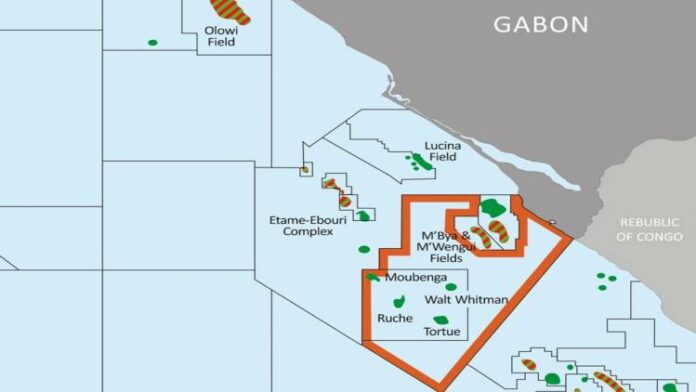
Four subsea wells planned for Tortue Phase 2 offshore Gabon

0

BW Offshore has taken an investment decision for the Tortue Phase 2 project offshore Gabon following successful appraisal drilling on the western flank of the Tortue field.

Phase 2 will feature four additional horizontal development wells. The company has placed orders for long-lead equipment including subsea trees, wellheads, drilling casing and completion equipment, and has also signed a letter of intent for the drilling rig.

BW estimates 2P reserves for Tortue field Phase 1 and Phase 2 (six wells in total) at 30-40 MMboe.

In addition, the company has approved two further appraisal wells in the greater Ruche area as part of the Phase 2 drilling program to assess high-grade prospects.

Negotiations continue over a 10% farm-in by Gabon Oil Co. to the surrounding Dussafu license.

Source:offshore-mag

Fred. Olsen Windcarrier Installs 400th Wind Turbine

0

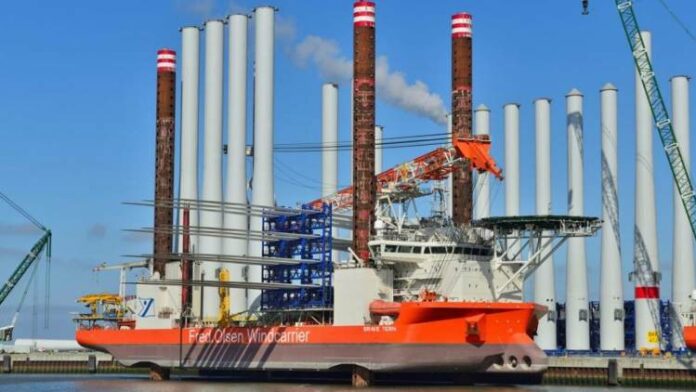
Denmark-based offshore wind farms service provider Fred. Olsen Windcarrier has marked a milestone in offshore wind turbine installation as it installed the 400th unit.

The turbine has been installed at Vattenfall’s Horns Rev 3 offshore wind farm in Denmark using the jack-up vessel Brave Tern.

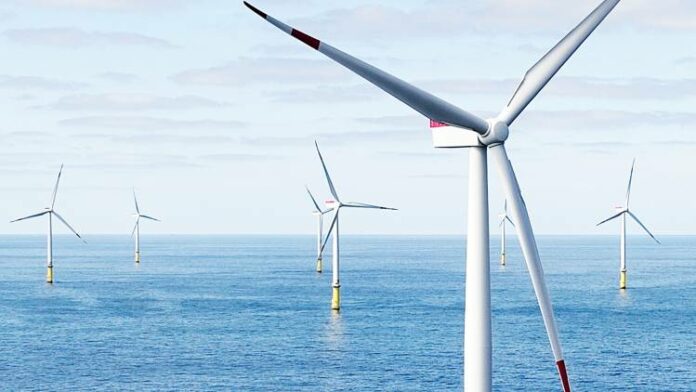
Horns Rev 3 will consist of a total of 49 V164-8.3 MW turbines from MHI Vestas Offshore Wind and will supply power to 425.000 Danish households once finished.

Recently Bold Tern finished the installation of 56 V164-8.3 MW turbines for Ørsted at Borkum Riffgrund 2 in Germany.

The two vessels have a wrap-around-the-leg offshore-rated cranes with 800t maximum lift at 26m. A typical payload for the vessel is 7,600t consisting of transition pieces and foundations or turbines, blades and tower sections.

Horns Rev 3 is scheduled to be fully operational early next year.

Building on almost 170 years of offshore and marine experience, Fred. Olsen Windcarrier was established in 2008 to service the growing offshore wind sector. The company currently owns and operates two class leading jack-up vessels and have installed more than 300 wind turbines in harsh offshore conditions.

Source:marinelink.

Financiers lend Hornsea 1 support

0

Aviva and Legal & General have completed financing to support Global Infrastructure Partners 50% investment in Orsted's 1218MW Hornsea 1 offshore wind farm off the east coast of England.

Aviva Investors provided £400m in fixed-rate and inflation-linked bonds for the deal, while LGIM Real Assets provided, on behalf of its clients including Legal & General Retirement Institutional, about £370m.

LGIM Real Assets senior investment manager for infrastructure debt Charles-Henry Lecointe said: “This deal represents our second offshore wind investment for LGIM clients, and our largest single investment into the renewable sector to date.”

We recognise the importance of the offshore wind industry and the vital role it plays in providing clean energy and stimulating job growth in the UK. Legal & General’s investment in the world’s largest offshore wind farm is testament to our continued focus in the renewables sector.

Aviva Investors head of infrastructure Darryl Murphy said: “We are delighted to have participated in the Hornsea 1 financing, which is a transformational deal for the European renewables market.”

We continue to have strong appetite for future investments within this sector, seeking opportunities that meet our clients' investment needs.

Source:renews

EDP Renewables Opens Wind Farm in Spain

0

Portuguese renewables company EDP Renewables (EDPR) has inaugurated the Muxía Wind Farm in the homonymous municipality, in the Autonomous Spanish Region of Galicia.

A press release from the wind energy producer said that its CEO Jõao Manso Neto and the Managing Director of EDPR Spain were joined at the grand opening by Galician Regional Premier Alberto Núñez Feijóo and the Mayor of Muxía Félix Porto, as well as representatives from the local and regional authorities.

The Muxía facility is equipped with thirty-four 2 MW wind turbines, offering a total installed capacity of 68 MW.

Including this new wind farm, EDP Renewables now has a total installed capacity in the region of 281 MW, accounting for over 10% of the company’s total installed capacity in Spain, which is now 2,312 MW.

The commissioning of these new facilities will represent a clear benefit in terms of the supply of clean energy through the Vimianzo substation. Once Muxía is fully operational the facility will have prevented the emission of close to 4 million tonnes of CO2 into the atmosphere over its 30-year lifespan.

João Manso Neto, EDP Renewables CEO, said: “On behalf of everyone at EDPR, I’d like to thank the regional and local authorities for their support on this project. The goodwill and hard work of everyone involved have made this project possible, which will undoubtedly have a major impact on the socio-economic development of the area”.

Source:marinelink

FMG & its Quest to Build USCG Icebreakers

0

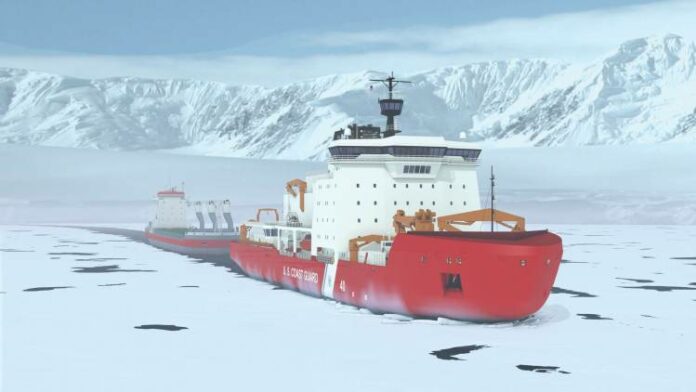
As the U.S. Coast Guard moves to rebuild its icebreaker fleet we spoke with RADM Bruce Baffer (Ret.), head of Fincantieri’s effort to win the contract to build the Polar Security Cutters.

The case for the U.S. to build a new class of icebreakers is strong. While news of global climate change and the shrinking ice caps at both poles is daily headline fodder, maritime navigation in and around the Arctic and Antarctic remains one of the most difficult and dangerous operating arenas on the high seas. There is increasing commercial ship traffic in the North, from tankers to cruise vessels, as well as a vast yet still fully undefined quantity of natural resources to potentially be discovered and recovered. But make no mistake, the driver for the U.S. to build its first heavy icebreakers in more than 40 years is a matter of political interests and defense. It is no secret that Russia holds a commanding lead operating in the region, with a fleet of icebreakers approaching 50. In the last decade, China too has increased its activities in the region. At the same time, U.S. presence in the region has dwindled .

“All you have to do is Google “Polar Star and Deep Freeze” and every year you get those answers” of why the U.S. needs to rebuild its fleet of polar icebreakers starting now, said Baffer, head of Fincantieri Marine Group’s efforts to win the Polar Security Cutter contract. Even the term ‘rebuild’ the icebreaker fleet is somewhat of a misnomer, as there’s not much to the ‘fleet’ today, as Baffer knows all too well. “My last job was to keep Polar Star running, and we spent all summer putting it back together,” following its annual trek to Antarctica to resupply McMurdo.  “When (Polar Star) is down to McMurdo, every night would be a whole new adventure in damage control, and they spend all night putting it back together. They get it done because that’s what Coasties do. But it’s just a matter of time. It’s not ‘if’ it is going to break down in the ice, it’s a matter of ‘when.’ And we don’t have a second icebreaker ready to go get it.”

A Matter of National Security

While Polar Star’s primary mission is the resupply of the McMurdo Station in Antarctica, the need for a new fleet of ice capable ships transcends this mission and is a matter of national security, according to Baffer.

Driving the program right now is national sovereignty and competition for resources – economic resources – in the Arctic,” said Baffer. That is part of the reason the icebreaker program was re-branded as the Polar Security Cutter.

With both Russia and China increasing their presence in the region, to put it simply there is a need for ‘presence’ lest the U.S. cede its interest in a northern border, ironic at a time when political focus is keenly trained on border control.

There is economic and political interests in the Arctic’s natural resources, as well as a burgeoning eco tourism industry that is blossoming, including the world’s first icebreaking cruise ship on order for France’s Ponant.

A Matter of Experience

Since the U.S. last built an icebreaker more than 40 years ago, finding the right team – designer, builder, outfitters – is central to ensuring success. Baffer, who notes Fincantieri’s global reach and long history building icebreakers, does not underplay the significance of this contract and is naturally biased for his team’s approach.

“This is going to be the heavy icebreaker of the Western world; this will be the flagship, and Fincantieri has built a lot of icebreakers,” said Baffer.

There is obvious interest among the Coast Guard, ship design, ship building and ship outfitting communities to get the Polar Security Cutter project in motion, and as U.S. Coast Guard Commandant Admiral Karl Schultz notes in his interview starting on page 46, the numbers attached to the program are 6-3-1 … six ships altogether, three ‘heavy’ icebreakers and perhaps most importantly, one now given the condition of the Polar Star.

The technical proposals have been submitted, the cost proposals were being submitted at press time, and according to Baffer the Coast Guard is looking to get this awarded and started just as soon as possible.

“Certainly the schedule is aggressive and it’s driving a lot of the program decisions,” said Baffer, who added that he believes a GAO report on the project unfairly criticiaes the Coast Guard and the Navy over the schedule.

The schedule is aggressive, but it’s something that the government has been right up front with from the beginning with industry.” The FMG team includes Vard and Aker Artic, offering a cumulative base of shipbuilding, ice breaker design and construction and government contract experience that is enviable.

Starting at the top, Baffer counts Fincantieri, a European-based multi-national company with ample icebreaker and government shipbuilding work as a primary strength of his team’s effort.

So much of the technology around icebreakers is foreign-based right now. We haven’t built a heavy icebreaker in the U.S. since the mid-70s.” “We designed our whole team to be responsive to that schedule need, both in production and also design,” said Baffer. “One of the things about icebreaking is there’s not that many design experts in the world that are real experts. Now we’ve got Vard and our other design partner is Aker Arctic, and between those two, that’s pretty much the (icebreaker) brain trust worldwide.”

Source:marinelink

Tekmar covers Borssele 3&4 wires

0

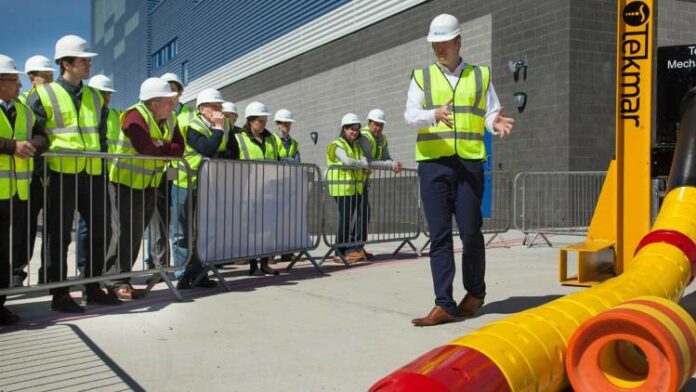
Tekmar Energy has been contracted by Van Oord to provide cable protection systems for the over 731MW Borssele 3&4 offshore wind farm off the Dutch coast.

The deal will include the supply of the TekLink Generation 8 cable protection system (CPS) to the project.

The CPS will be produced at Tekmar’s manufacturing facility in north-east England, the company said.

Tekmar Energy director Jack Simpson said:“We continue to innovate to help clients reduce cost and risk for the next generation of offshore wind farm developments.“

Clients choose Tekmar due to our track record, commitment to HSQE and overall cost savings via lifetime product reliability and product performance during installation and operation.

Cable protection systems are a vital product for protecting the electrical infrastructure of the wind farm projects.

“To coin the phrase, the chain is only as strong as the weakest link. Tekmar are trusted on over 21GW of electrical infrastructure and remain the global leader in this area.”

Source:renews

Shenzhen Maritime Bureau inks order for electric vessel at Huangpu Wenchong Shipyard

0

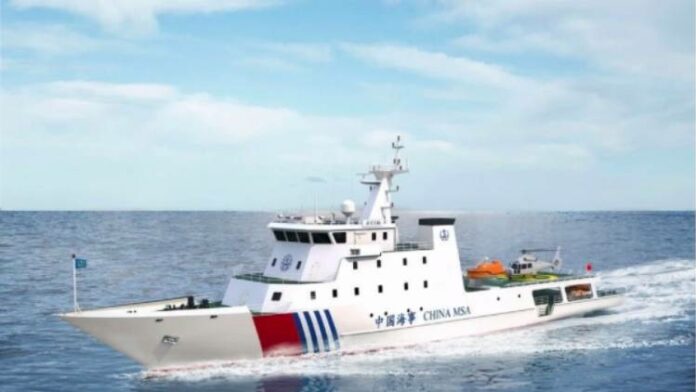
CSSC Huangpu Wenchong Shipyard has signed shipbuilding contract with Shenzhen Maritime Bureau to build an all-electric battery-powered service ship.

The vessel is for deployment by the maritime bureau in LNG area of Shenzhen port.

The ship, designed by CSSC 708 Research Institute, is 78 m in length, 12.8 m beam and 5.5 meters in depth. It is designed to have a top speed is 18 knots above with a range of 1,000 miles.

It will be equipped with two sets of 650 kilowatt hour high performance battery packs to fully supply the vessel with electric power. The service vessel will monitoring of other ships, dangerous cargo handling operations and maritime safety, and accident emergency command at Dapengwan LNG hub port area.

By 2020, LNG volumes at Dapengwan in Shenzhen port will reach 20m tons annually. To secure and safe port operations, Shenzhen Maritime Bureau decided to build a battery-powered service and emergency command ship.

Huangpu Wenchong Shipyard, affiliated to China State Shipbuilding Corporation (CSSC), is focused on the construction of naval vessels, specialist vessel types and offshore engineering.

Source:seatrade-maritime

Video: DP World delivering smarter trade solutions for a better world

0

DP World enables smart trade solutions to unlock greater performance and efficiency for our customers, DP World provides innovative trade facilitation systems, develops unique port-centric logistics for import or export supply chains, and implements state-of-the-art technologies across our portfolio.

We aim to give our customers a competitive supply chain advantage. We pride ourselves on being renowned for our customer commitment. We achieve that through operational excellence that provides industry-leading processes and systems so that our customers remain completely satisfied with our global portfolio and solutions.

Source:seatrade-maritime

Augmented reality brings safety training to life

0

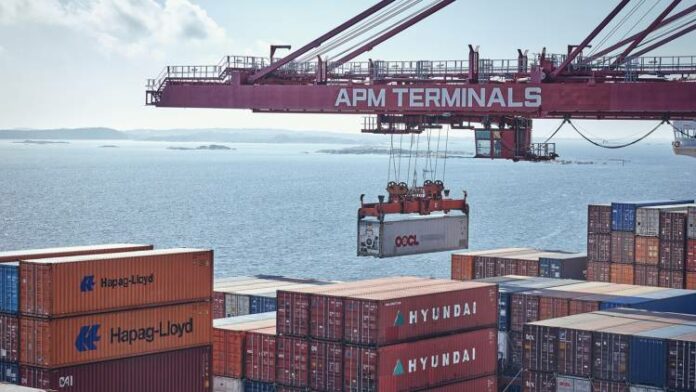
Using augmented reality to train workers may seem like a science fiction, but for employees at APM Terminals Brazil, it’s a reality.

For Global Safety Day this year, employees and contractors took part in an experiment to see if the new and developing technology could be used to teach safety measures across the operation in a campaign titled “Stronger & Safer Together”.

The HSE (Health, Safety, and Environment) team at APM Terminals Brazil developed an augmented reality (AR) app for employees, contractors and visitors to download on their phones which provided video and 3D information about risks and safety operations in the terminal and office buildings.

Smartphone App
Augmented reality After opening the app, users pointed their phone at stickers placed on a piece of equipment or on the floor or wall of an office building. Then safety information about the location or equipment – such as a reach stacker used to move containers around the terminal – was displayed on the screen, said Gabriel Fiorda Guarnieri, HSE Coordinator for APM Terminals Brazil.

In the case of the reach stacker, the app provided details of the safe distance to stand away from the machine while it was in operation. An animation showed the range of motion the machine was capable of and how much space it need to carry and stack containers in the yard. Another digital marker on the ground — much like a poster — showed potentially unsafe areas at the entrance to the terminal area. Previously, the operational layout of some areas of the terminal were only available on paper. Now they can be accessed at any time via the AR app.

Working with a local contractor, the health and safety team developed marketing campaign materials that were accessed via posters and stickers with a graphic design that triggered access to the 3D information and safety training videos. The markers and stickers functioned like QR codes, prompting the phone app to display the requested materials. The AR information was used during the Global Safety Day discussion sessions, meetings, interventions and pre-shift talks. Users could access the animations and videos through their cell phones all day and the system is still in place.

AR Takes Over Training
APM has joined organisations such as Boeing, DHL, and the U.S. Marine Corps in adding augmented reality to employee training to improve effectiveness. Market researchers estimate that overall demand for augmented reality will drive market growth from $11.4 billion in 2018 to $60.55 billion by 2023.

While AR – the practice of combining digital information with real-world interaction – has been in use for some years, it came to large-scale public awareness with the Pokemon Go game that depicts fictional cartoon characters in the environment using a smartphone and tasks players with walking around collecting them as they appear.

In addition to APM Terminals Brazil, other APM Terminals’ companies have experimented with augmented and virtual reality. At the 2018 Trans-Pacific Maritime Conference, visitors could take a virtual tour of Pier 400 at the Port of Los Angeles. Also, the Maersk Resolute drilling rig was the subject of a virtual tour for customers.

Using AR for training builds on the gaming habits of younger workers, and engages older workers in a new environment, writes Jay Samit, vice chairman of Deloitte’s Digital Reality practice in Forbes.com. Millions of people of all ages use their smartphones for communications and games, so using the same tools for company training will engage workers in a familiar way.

Researchers at Accenture have found that using AR for training helps employees perform tasks with a higher degree of accuracy and quality. For APM Terminals, that means users can access the information at any time while they’re working in the terminal, allowing them to double check safety procedures on the spot using their phones and the AR safety information. They don’t have rely on their memory or return to the office to refer to manuals.

Users Love AR Training
On Global Safety Day in APM Terminals Brazil, the app was downloaded more than 1,200 times and it is still being accessed to train port workers, contractors and visitors (anyone who goes to the terminal has to get some level of safety training).

Guarnieri said users were already familiar with using similar technology, such as Pokémon GO or other games on their own phones, so little training was needed to get employees started. The 3D animation and videos helped users understand and retain the safety procedures that are a part of everyday operations at busy terminals.

“It was really well accepted because they see they were able to see the movement of the reach stacker and details of specific equipment and the operational layout,” he said.

The AR content was meant to be only part of the activities for Global Safety Day, but it turned out to be the most popular way of receiving safety training.

It was planned to be just one way to share a message, and in the end, it was the main activity for the day,” Guarnieri said.

Wider adoption of AR technology
After the successful test for Global Safety Day, APM Terminals Brazil plans to adopt AR technology for future campaigns.

“We plan to use it for all safety and environmental training and the platform for internal communication to eliminate printed materials,” Guarnieri said. “We’re working together with the marketing and internal communication departments to see how far we go with this initiative.”

Having enjoyed the AR content at Global Safety Day, workers in Brazil are now eager to see new content. “Now people are asking us what will be the next step,” Guarnieri said.

In the coming years, APM Terminals plans to take AR to the next level in its training programs and give workers the latest, most accurate information and skills available, when and where they need it most, without putting them at risk.

Source:hellenicshippingnews