4.8 C
New York
Home Blog Page 1231

ASEAN: Port industry needs to address technology disruption

0

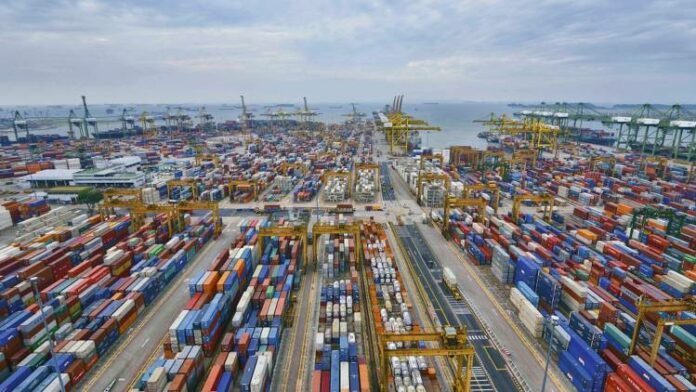
Technology is disrupting and transforming the way the port industry operates, while it is expected that more port operations will be automated in the longer term, noted Mr. Niam Chiang Meng, Chairman of the Maritime and Port Authority of Singapore at the opening ceremony of the 44th ASEAN ports association meeting on 27 November, Singapore.

The restructuring of mega-alliances has increased competition amongst ports; technology is disrupting and transforming the way the port industry operates – we will see more port operations being automated and in the longer term, autonomous surface vessels; changes in the global operating environment with new regulatory requirements will also play a key role in determining our effectiveness. We must address these and other challenges if we want to be relevant and compete with the rest of the world.

According to Mr. Chiang Meng, technology today has reached a critical turning point, with an extremely fast take up in technology use in many industries and ports cannot stay behind. The industry needs to collaborate and share knowledge and information. Much of these will be driven by lower technological cost and exponential growth in technological developments whether it be battery technology, autonomous vessel technology, nanotechnology or Artificial Intelligence (AI).

We need to strengthen our level of collaboration and cooperation. We cannot go it alone anymore. Not only will that be difficult to do because of insufficient resources but it will also not be wise as we need to be plugged into the global grid so that we are aware of what is happening quickly and can help solve problems or seize opportunities.

Source:safety4sea
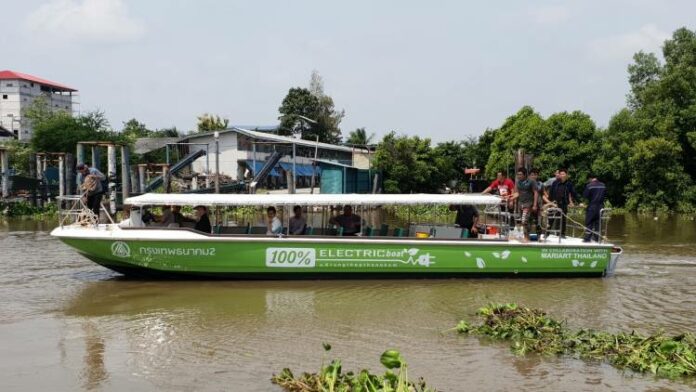
Thailand’s first all-electric passenger ferry is powered by Torqeedo

0

Thailand’s first all-electric commuter ferry was recently placed into service by the Bangkok Metropolitan Authority (BMA), powered by Torqeedo. According to Torqeedo, Prime Minister Prayut Chan-o-cha celebrated the launch, giving his symbolic approval to the city’s efforts to ease congestion and improve air quality through investments in green transportation. The Prime Minister commuted by skytrain, subway and foot through Bangkok’s crowded streets, before ending his mixed-mode commute with a trip aboard the emission-free passenger ferry.

The 47.5-ft fiberglass vessel was repowered by MariArt Shipyard, replacing the existing 205hp diesel engine with twin Torqeedo Cruise 10 kW electric outboards, each with six lithium battery banks and two fast chargers. The 40-passenger vessel is part of a fleet of ferries operated by BMA’s Enterprise Krungthep Thanakom Company (KT BMA) and operates on a five-kilometer route daily between Hua Lampjong and Thewes Pier.

This is an important achievement for the city of Bangkok and a key part of our Thailand 4.0 Smart City vision for an integrated clean, green public transportation system including bus, rail and waterways,” said Dr. Ekarin Vasanasong, deputy managing director of KT BMA. “Based on the success of the first Torqeedo-powered electric ferry, we expect to repower more vessels in the fleet with battery-electric drives in the coming months.

Switching from diesel to electric power eliminates fuel costs, reduces air and water pollution and creates greater passenger satisfaction with a smooth quiet ride and no diesel fumes on deck,” said David Hunter, managing director of Torqeedo Asia Pacific Ltd. “Many thanks to the splendid engineering team at MariArt Shipyard, who carried out the repower project quickly, efficiently and professionally.

Torqeedo is the market leader for electric mobility on the water. Founded in 2005 in Starnberg, the company develops and manufactures electric and hybrid drives from 0.5 to 100 kW for commercial applications and recreational use. Torqeedo products are characterized by an uncompromising high-tech focus, maximum efficiency and complete system integration. Torqeedo is part of the DEUTZ Group, one of the world's leading independent suppliers of diesel and natural gas engines.

Source:portnews

EU Avoids Mention of Sanctions Over Kerch Strait Incident

0

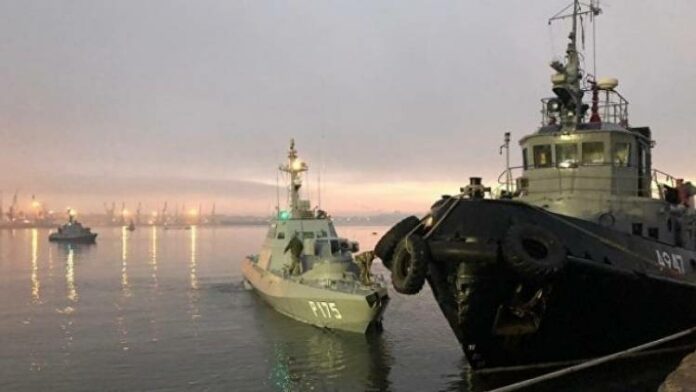
The European Union's member nations have elected not to threaten Russia with new sanctions over the seizure of three Ukrainian Navy vessels near Kerch Strait last weekend. In a statement, top EU diplomat Federica Mogherini said only that the European Union was "dismayed" by Russia's use of force to seize Ukrainian milmaritime-executiveitary vessels, and described it as "unacceptable." The statement indicated that the EU will "act appropriately, in close coordination with its international partners" in formulating its response. 

Mogherini also petitioned Russia to respect international law regarding the freedom of navigation. Russia asserts that a sovereign "state border" lies between the Strait and the waters of the Black Sea – a demarcation that was also claimed by the Soviet Union, which considered the Sea of Azov to be part of its internal waters. Over the past several years, Russian border forces have instituted inspections and temporary closures for merchant shipping through the waterway, prompting Ukraine to file arbitral claims. 

24 Ukrainian sailors were detained in the altercation, including three who were hospitalized with "soft tissue injuries." Mogherini called for their release.

Russia accuses Ukraine of "provocation"

In remarks released Wednesday, Russian President Vladimir Putin contended that Kiev orchestrated a "provocation" by ordering its naval forces to transit through Kerch Strait, an exercise  which is protected by a 15-year-old bilateral treaty between Moscow and Kiev.

Putin also defended Russia's use of force to seize the Ukrainian vessels. "What were [Russia's forces] supposed to do?" Putin said. "They were fulfilling their military duty."

Separately Russian foreign minister Sergei Lavrov accused the Trump administration of "inciting" Ukrainian actions. "I think it reflects Washington's tendency to indulge any and all action taken by the Kiev regime, even inciting them to provocative actions," he told media Wednesday. 

Source:maritime-executive

Diamond S Shipping in $1.65 Billion Merger Deal

0

Diamond S Shipping and Capital Product Partners have announced a $1.65 billion merger of their product and crude tanker fleets.

The new company Diamond S Shipping Inc. will have a fleet containing 68 vessels, made up of 43 tankers from Diamond S Shipping and 25 from Capital Product Partners (CPLP). The fleet, with an average age of 7.8 years, including 52 product tankers and 16 crude tankers. 

Diamond S Shipping Inc. is expected to be the third largest publicly traded product tanker operator and the fifth largest public tanker company worldwide. The company will own the second biggest Handy tanker fleet, owning a combined 52 vessels. The only larger Handysize fleet in the world is owned by Danish shipowner Torm. 

Capital Product Partners will retain control of one Capesize bulker and 10 Post Panamax container ships.

The new company is expected to be listed on the New York Stock Exchange and will be headquartered in Greenwich, Connecticut. The transaction reflects Diamond S Shipping's desire to access public markets and to increase in scale at a cyclically opportune time. 

Craig Stevenson, Jr., CEO of Diamond S Shipping, will serve as the CEO of Diamond S Shipping Inc. Stevenson has over 40 years of experience in the shipping industry and previously served as the Chairman and the Chief Executive Officer of the tanker company OMI.
“This merger will be most significant in the MR2 tanker market,” says Court Smith, Senior Analyst for VesselsValue. The trading areas of the two fleets is varied, Capital Product Partners appears to bring commercial relationships with operators well entrenched in the Latin American market, particularly Brazil. Diamond S MRs see more activity in the U.S. Gulf, Singapore and the far east. 
Regardless of who is ultimately fixing these ships on a day to day basis, the merger now creates an owner with a global footprint in the clean tanker markets,” he says. “We appear to be at the bottom of a market cycle for MR tankers, leaving plenty of upside for the asset value of the underlying vessels.”
Source:maritime-executive

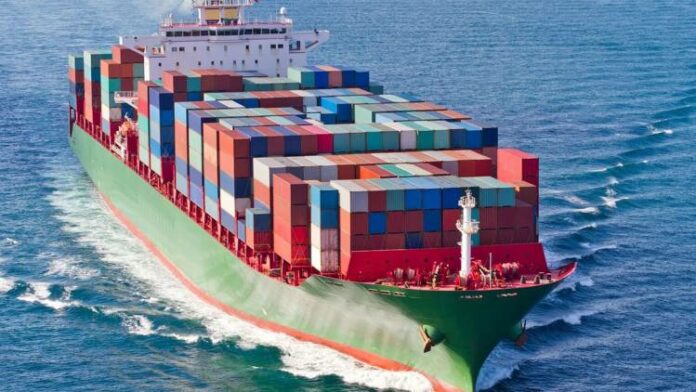
Russian Freighter Stuck Without Fuel Due to U.S. Sanctions

0

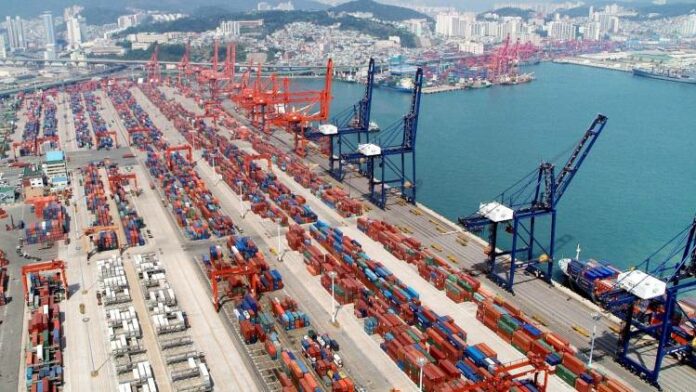
The Sevastopol, a freighter that has been blacklisted by the United States because of her owner's alleged sanctions violations, is stuck at the port of Busan because no one will sell her fuel. 

"Korean companies are refusing to supply fuel to us," said a spokesperson for owner Gudzon Shipping, speaking to Radio Free Asia. "It's a huge problem . . . The big [South] Korean oil companies like GS Caltex and Hyundai Oil won’t deal with us because of the U.S. sanctions on all our vessels."

Vladivostok-based Gudzon is listed on the U.S. Treasury Office of Foreign Asset Control's blacklist of firms suspected of violating sanctions on North Korea – specifically, the UN Security Council ban on ship-to-ship petroleum transfers to North Korean tankers. The Treasury alleges that the tanker Patriot – which has connections to Gudzon – conducted two ship-to-ship transfers of petroleum products with the North Korean vessels Chon Ma San and Chong Rim 2 earlier this year. The ultimate buyer of the cargoes was Taesong Bank, an entity connected with Pyongyang's Office 39, which engages in illicit economic activity for the North Korean leadership.   

Six vessels connected to Gudzon Shipping – the Bella, Bogatyr, Neptun, Partizan, Patriot and Sevastopol – have also been added to the list. 

The Sevastopol reportedly entered the port of Busan in August, and was detained in late September as authorities looked into whether Gudzon violated UN sanctions on North Korea. The vessel was cleared of any involvement herself, and she was allowed to depart in early October. However, Gudzon has been unable to buy bunker fuel to provide for her onward journey. 

According to Chosun Ilbo, another Gudzon-owned, blacklisted vessel – the Partizan – entered Busan and refueled on September 12, despite her sanctions status. The firm that provided her with bunkers could face penalties if it was aware of the U.S. ban on doing business with the Partizan, but a port official in Busan said that the port had not been informed of the sanctions at the time. 

Source:maritime-executive

Shell Taps McDermott For Subsea Work At GoM’s Great White Frio

0

Royal Dutch Shell subsidiary Shell Exploration and Production Co. has selected McDermott International Inc. for new subsea umbilical and flowline installation at the Great White Frio development in the U.S. Gulf of Mexico's Alaminos Canyon Block 857, according to a news release.

The contract is valued at between US$1 million and $50 million.

McDermott said its scope of work includes project management and engineering; installation of a flexible flowline from the well to a pipeline end termination; installation of one 2,000-foot-long steel flying lead; and installation of two electrical flying leads in a water depth of 8,000 ft. Project management and engineering are scheduled to be performed in Houston with offshore installation by McDermott targeted for completion in mid-2019.

The Shell Offshore-operated Great White development was described in the release by McDermott as a “pioneer deepwater oil and gas project that has unlocked a new frontier of energy development in the Gulf of Mexico’s Lower Tertiary Paleogene.” The Perdido regional host production hub processes oil and gas from Great White along with the Silvertip and Tobago fields.

McDermott said the contract award will be reflected in its fourth-quarter 2018 backlog.

Highland blessing for Moray West

0

Highland Council has given its blessing to EDPR plans for an 85-turbine wind farm in the Moray Firth off northern Scotland.

Members of the north planning committee ignored a recommendation from officials to object to the 750MW Moray West project on the grounds of visual impacts.

Councillors determined that potential economic benefits outweighed other concerns, particularly given weather conditions often obscures views from shore.

Scottish ministers have the final say on the Round 3 project.

EDPR is preparing to build on its proposed 950MW Moray East project in the same zone.

Construction of the Contracts for Difference winner is due to kick off as soon as next year.

SSE and partners are already building the 588MW Beatrice (pictured) in the Moray Firth, which included a significant component of UK content.

Source:renews

Peel to breathe new life into Hunterston

0

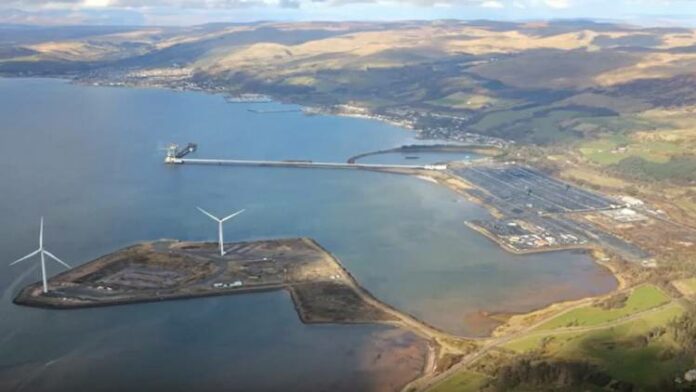
Peel Ports is preparing a £30m redevelopment of the Hunterston yard in Scotland with an eye on sectors including offshore wind.

The company has secured approval for £10m in funding from Scottish Enterprise ahead of a board decision due in January.

The site will support next-generation renewables as well as oil and gas decommissioning. Hundreds of jobs could be created.

Scottish Enterprise funding for the North Ayrshire site will be joined by private-sector support, it is anticipated.

Plans build on Hunterston's long history as a port and energy centre. It most recently hosted a pair of demonstration offshore wind turbines (pictured) which are now being decommissioned.

Source:renews

Swedegas Renewable Gas Bunkering at Gothenburg Port

0

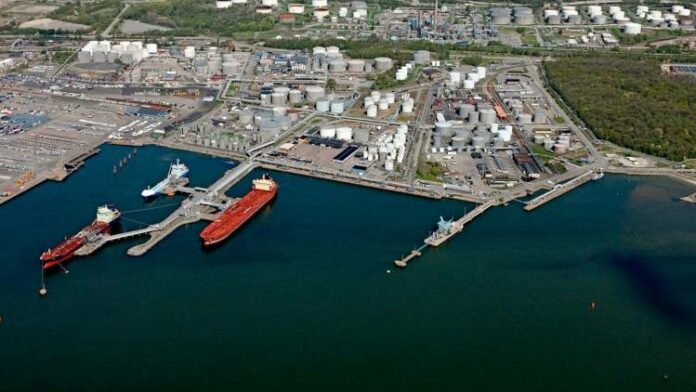
Swedegas, the owner of the gas grid in Sweden, conducted the first liquefied natural gas (LNG) bunkering operation at its new facility at the Port of Gothenburg.

Gothenburg-based shipping company Terntank was the very first operator to take on  LNG at a new bunkering facility, said the Swedish owner and operator of the high-pressure gas grid.

Not only liquefied natural gas, LNG, but also liquefied biogas, LBG, it added.

“Being able to offer this unique opportunity represents a major breakthrough, not only in facilitating the transition to LNG, but also in gradually increasing the proportion of renewable gas,” said Johan Zettergren, Chief Executive of Swedegas, which owns and runs the facility.

The facility is the only one of its kind in Sweden, it claimed.  Designed from the very outset to handle both LNG and LBG, which in terms of chemical composition are largely identical, makes the new facility flexible to meet the transition of the shipping sector.

“LNG is the first step. The ambition to increase the volume of biogas has taken a new turn, as this technology and related infrastructure work equally well for both gases,” said Tryggve Möller, CEO of Terntank Ship Management, which has invested in LNG-powered vessels chartered by NEOT. “We are delighted to be working with companies that are driving the industry forward and with a firm focus on promoting clean shipping."

The LNG and LBG that was bunkered at the facility was supplied by the Norwegian company Barents NaturGass, which has long, solid experience of gas distribution.

“We are looking forward to being part of this unique concept where we can offer customers both LNG and LBG,” said Gudrun Rollefsen, CEO at Barents NaturGass.

The LBG was produced by FordonsGas at its facility in Lidköping north of Gothenburg.

A green energy wave is gathering momentum in the marine sector, and we are looking forward to being part of this pioneering venture and continuing our close and fruitful collaboration,” said Emil Glimåker, FordonsGas Chief Executive.

The facility is the first in Sweden that allows tankers to bunker from a fixed pipeline as they load and discharge, reducing the turnaround time considerably.

Source:marinelink

Subsea7 Upgrades BWTS at Optimarin

0

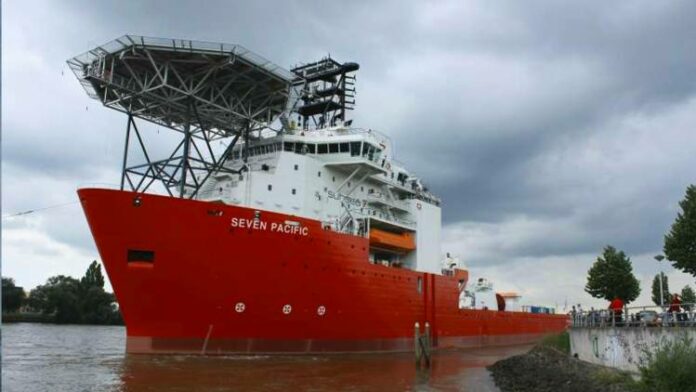
An Optimarin Ballast System (OBS) installed on Seven Pacific, a Subsea7 vessel, in 2015 has been upgraded to meet the ballast water treatment system (BWTS) requirements of the United States Coast Guard (USCG).

The Norway-based BWTS provider said in a press release that it originally installed its UV-based technology onboard the advanced offshore construction and pipe-laying vessel in 2015. Since that point the 667-m3 market proven system has, according to Seven Pacific Chief Engineer Oddgeir Refvik, been running smoothly, with minimal maintenance and easy operation.

Refvik described the upgrade as “very straightforward”. He said: “It only took a couple of hours to perform – basically being a software modification. The service engineer brought an updated manual and information plate onboard, upgraded the software and then took us through the changes. That was it. We can now easily change the operation mode of our Optimarin BWT system between IMO or USCG mode.

Optimarin, the first manufacturer to achieve USCG approval in December 2016,  has been exclusively focused on BWT technology since the company’s formation in 1994, installing the world’s first commercial system in 2000.

"This expertise has allowed the team to create and refine a solution that is simple, flexible and reliable, based on powerful 35kw UV lamps and filtration to eliminate all potentially invasive organisms carried in ballast water," the company said in the release.

 Optimarin CEO Tore Andersen said: “In a niche technology sector that is still in its infancy the value of having tried, tested and market established systems can’t be overstated. Shipowners need reliable, effective and globally compliant solutions so they can get on with doing what matters most – focusing on core business and serving their customers."

Optimarin has now sold close to 700 OBS units, with more than 500 installed and operational, of which approximately 250 are retrofits. The Norwegian-headquartered firm has performed around 50 of the simple USCG upgrades to existing systems so far.

Source:marinelink