4.8 C
New York
Home Blog Page 1230

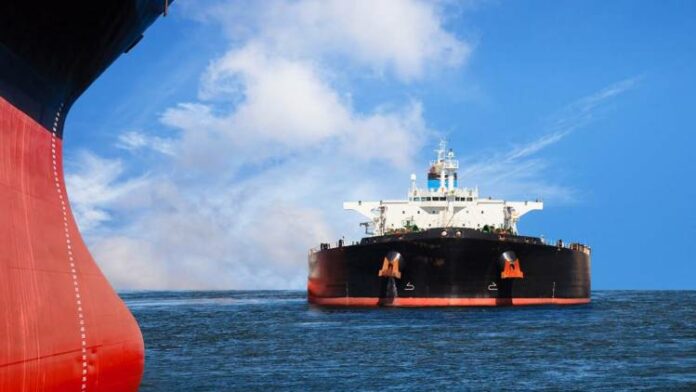
Readying the Port of Singapore for IMO 2020

0

The Maritime and Port Authority of Singapore (MPA) continues to prepare the Port of Singapore and Singapore-registered ships for the International Maritime Organization’s (IMO) 0.5 per cent fuel global limit for sulphur in fuel oil used on board ships, which will take effect from 1 January 2020. In his opening address at the Singapore Registry of Ships (SRS) Forum, Chief Executive of MPA, Mr Andrew Tan, also announced initiatives by MPA to improve the delivery of its services. 
 
Themed "Riding the Next Wave", this year's SRS Forum focused on how companies can prepare for the upcoming environmental challenges. Distinguished speakers from organisations such as Wavelink Maritime Institute and China Classification Society overseas technology centre also spoke on the changing needs of seafarers and autonomous ship technologies. About 400 participants from the industry and institutes of higher learning attended the forum.

Mr Andrew Tan said, “The SRS Forum is an important platform for us to engage the industry on new developments, such as the growing use of technology to enhance business processes and tightened environmental regulations. We will continue to engage the industry to address any concerns they may have.”

The forum also saw two companies being honoured for their contributions that led to the SRS tonnage crossing the 91 million gross tonnage (GT) milestone. Another 17 companies were recognised for their efforts in developing a Singaporean core in maritime manpower. 

To prepare for the IMO 2020 0.5 per cent global emission limit for sulphur, MPA and the Singapore Shipping Association released two technical guidance booklets for Singapore-registered ships and ships calling at the Port of Singapore. The booklets outline the options available for ship operators to comply with the new regulations which include the use of approved abatement technology such as scrubbers, alternative fuels and compliant fuel oil. Both booklets will be made available on the MPA website.

The SRS is internationally recognised as a quality flag with high standards of safety of operations and marine pollution prevention. This is achieved through regular engagement with the industry and stringent Flag State Control (FSC). To ensure Singapore-registered ships continue to operate at a high standard of safety worldwide, MPA has started conducting overseas inspections on selected SRS ships, as part of a five-year SRS Quality Flag Assessment Programme.

To enhance services available to Singapore-registered ships, MPA rolled out two new online services on Marinet. The Singapore Seaman Discharge Book1 and the Maritime Labour Convention financial security certificates can now be applied through Marinet. In addition, Receipts of Acknowledgement will now be automatically issued upon the application of MPA’s Certificate of Endorsement (COE), which will minimise delays in crew signing for Singapore-registered ships. To complement MPA, selected recognised organisations (RO)2 have started issuing statutory electronic certificates on MPA’s behalf.

To harness new technologies for increased productivity, MPA has also started trials involving the use of blockchain for ship registration and use of robotic process automation for the issuance of crew and ship certificates.

Since October 2018, MPA has accepted the use of remote inspection techniques for surveys of Singapore-registered ships. These techniques include the usage of unmanned robotic arm, remote operated vehicles and unmanned aircraft systems (commonly known as “Drones”).

Source:portnews
Cash delight for Moray East

0

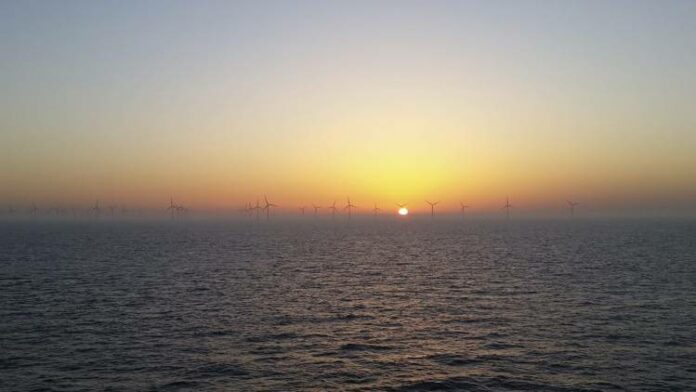
EDP Renovaveis, Diamond Generating Europe and Engie have secured finance to build the 950MW Moray East offshore wind farm off the coast of Scotland.

Project financing agreements have been signed with a syndicate of 16 commercial banks as well as with EKF, Denmark’s export credit agency, and the Japan Bank for International Cooperation.

The financing includes a £2.1bn debt facility and £0.5bn of ancillary facilities. Financial close is expected by the end of the year.

EDPR chief executive Joao Manso Neto said: “This is a massive step forward for this project, in which the consortium has placed all its trust.“

Given its size and characteristics, a deal of this magnitude marks a milestone for the financing of renewable energy on a global scale. We are delighted that our project is the star player.

Diamond Generating Europe chief executive Keiichi Suzuki said: “DGE is extremely happy to have achieved this milestone in collaboration with EDPR and Engie.“

Moray East is our first offshore wind investment in the UK and our largest offshore wind project to date, and, as a UK-based company, we are proud to be part of this project.

DGE, the power business platform of Mitsubishi Corporation across Europe, the Middle East and Africa, continues to pursue its mission of promoting a low-carbon society and providing affordable energy for everyone.

Engie UK & Ireland chief executive Wilfrid Petrie said: “We are pleased to announce, together with our partners EDPR and DGE, the signing of the project financing agreements for this important renewable project.“

We look forward to proceeding to financial close and progressing with the construction of the wind farm. Engie is committed to investing in Scottish energy infrastructure and using its expertise to deliver low carbon generation around the world.

EDPR owns 43.3% of Moray East, with DGE holding a 33.4% share and Engie the remaining 23.3%.

Santander Corporate & Investment Banking acted as financial advisor to the developers.

Moray was awarded a 15-year Contract for Difference in September 2017 and is scheduled to be operational in 2022.

MHI Vestas has signed a conditional agreement for the supply of turbines to the project.

Source:renews

Brazil Ship Collision Reveals Offshore Regulatory Gaps

0

Brazil has more than doubled the number of risky ship-to-ship oil transfers this year, but its monitoring of such offshore maneuvers is lax, to a point where a July 2017 collision between two tankers was not reported, according to a Reuters review of government and shipping records.

Transfers are projected to keep rising as the country's deep-water discoveries have lured major companies including Exxon Mobil Corp and Royal Dutch Shell Plc to recent offshore auctions. During these maneuvers, ships pull alongside one another and oil is transferred to a vessel via high-pressure hoses. The practice has only been allowed since 2013 in Brazilian waters.

However, weak monitoring makes it difficult to track the most basic statistic: how many transfers have taken place.

The Brazilian Navy said it has logged 59 ship-to-ship deliveries by oil producers through Oct. 30, up from 28 last year, but Shell and a Repsol Sinopec joint venture have already done 65 transfers through October. A Navy spokesman was unable to immediately account for its lower figure.

Companies are expected to tell authorities of ship-to-ship (STS) transfers, especially if there is damage or oil spilled in the ocean, but not all do, according to Reuters' review of government and shipping records and interviews with 16 representatives of maritime agencies, lawmakers, regulators and service providers.

Most oil-producing countries allow the practice, but with greater oversight. In Uruguay, for instance, at least two Navy police officials must be present during the offshore operations.

Brazil's oil regulator and Navy both said they were never informed of the 2017 collision of two vessels during a STS oil transfer. STS operator Knutsen NYK Offshore Tankers estimated one of the vessels involved suffered $1 million in damages from the collision.

Critics say the lapse points to lax oversight by officials.

"Current legislation is too flexible, allowing companies to do what they want," said Congressman Nilto Tatto. "We must improve rules so that the government assumes its responsibility and we must make companies comply."

Collision at Sea
Brazil's oil regulator ANP and the nation's Navy each said they were never informed of the collision while an internal Knutsen's document reviewed by Reuters noted authorities were told, without specifying which agency.

John Einar Dalsvag, a Knutsen vice president, in an email said there was no need for any official report to authorities because there was no environmental impact and damages were "minor."

The collision occurred during a seaborne transfer of oil conducted by U.K.-based STS provider Fendercare Marine, the Knutsen record showed.

Fendercare referred questions on the incident to Royal Dutch Shell, which produced the crude transferred. A Shell spokesman said there was a "minor collision," adding it complies with all laws where it operates.

The number of STS transfers in Brazil could reach 300 by 2022, according to Erik Cunha, sales chief at OceanPact Servicos Maritimos SA, a firm that handles marine oil spills. Brazil's offshore production is expected to reach 2.9 million bpd next year, and 4 million bpd by 2027, according to consultancy Wood Mackenzie.

Self-reporting Rules
STS providers and their customers say the practice is safe. Customer data compiled by maritime consultancy Dynamarine show less than 1 percent of worldwide STS operations result in collisions. Oil spills that enter the ocean during transfers are extremely rare, it said.

Brazil relies on tanker operators and STS providers to self-report to the Navy and ANP any collisions and accidents that result in "material damage."

"There is no way of monitoring operations 24 hours a day," said Brazilian Navy official Pericles Arraes, who said no report on the 2017 collision was needed since oil was not spilled and workers were not harmed. He commended the Navy's monitoring, adding: "it is a constant improvement process."

But David Zee, a professor of oceanography at the Federal University of Rio de Janeiro, called Brazil's self-reporting "a procedural failure."

"Would I let my student grade his own test?" Zee said.

Ibama, the nation's environmental regulator, uses radar to check for offshore spills, scanning each stretch of the ocean every six days, said Fernanda Pirillo, emergencies coordinator for Ibama. It has found none from STS operations since transfers began in 2013.

Source:marinelink

Two Singapore companies to jointly develop small-scale LNG bunkering

0

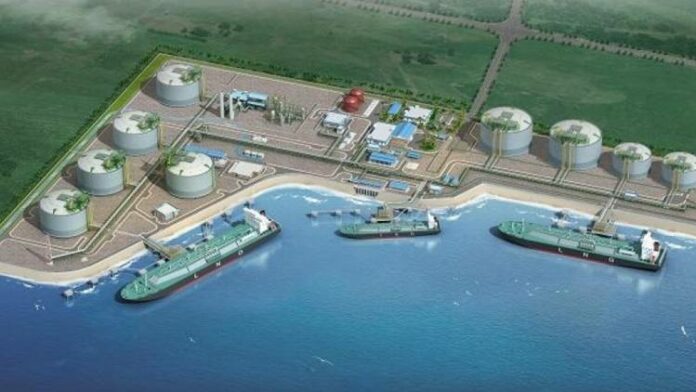
Two Singapore-based turnkey service providers and engineering, procurement and construction (EPC) companies have penned a $50m agreement to develop small-scale LNG bunkering in Southeast Asia.

SSB Cryogenic Services and Global Petro Storage (GPS) Singapore signed the collaborative deal at oil and gas industry event OSEA2018.

The two companies said they aim to promote transportation, distribution and storage of LNG in small-scale aspect, to locations with limited access of energy sources due to inadequate distribution infrastructure and poor interconnectivity of gas pipelines.

Small-scale supply solutions, via small-scale LNG membrane vessels, satellite hubs and ISO tanks, make them suited to locations where the demand for energy sources is not adequately serviced.

The companies also recognised that the global push for cleaner energy source and the 2020 global cap on fuel sulphur content mean there are opportunities in LNG bunkering, intermediate storage and breakbulking activities, as well as an increasing need for LNG supply chain solutions.

“From LNG liquefaction, bunkering, intermediate storage and break-bulking solutions, to project financing support and investment of LNG-related opportunities as well as the execution in the LNG last mile solutions will provide a platform to enhance our capabilities and value propositions,” said Peh Lam Hoh, managing director of SSB Cryogenic Services.

Eric Arnold, ceo of GPS Singapore, commented: “GPS believes that gas is the fuel of the future and thus is focused on developing optimal onshore and/or offshore infrastructure needed to allow suppliers to access the respective demand centres.

Source:seatrade-maritime

BOURBON completed the first installation at Cobra Wind’s Kincardine

0

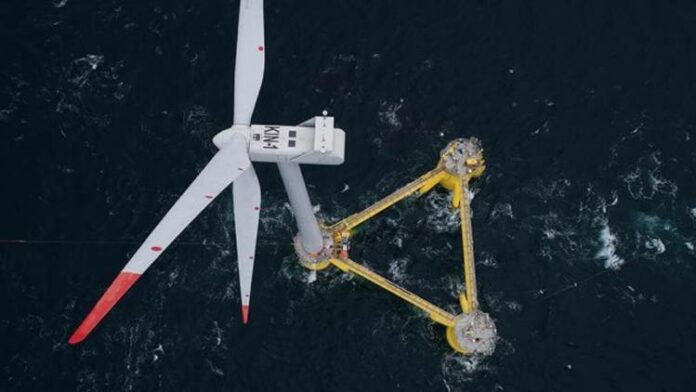
Contracted by the Spanish construction group Cobra, BOURBON completed the installation of the first wind turbine at Cobra Wind's Kincardine site, Scotland, off the coast of Aberdeen this summer.

Bourbon Subsea Services' experience in floating wind turbine installation enabled them to swiftly and efficiently execute the engineering phase of this turnkey project, initiated in May 2018. The delivery of the operational scopes, including towing the floater to Dundee, pre-laying the 4-leg mooring system and installing the fully assembled wind turbine on site, was optimized by taking advantage of the local supply chain.

BOURBON project management team worked in a close collaboration with the main contractor, Cobra Wind, the designer of the semi-submersible floating foundations, Principle Power, as well as the mooring system provider, Vryhof.

Delivered on time, this safe and efficient installation strengthens BOURBON’s track record which dates back to 2011. It confirms our leadership position in the floating offshore wind farm installation market. We are delighted to have been selected for this pioneering project and to have deployed our experienced team to support Cobra Wind in reaching a key milestone of the 50 MW Kincardine Offshore Wind farm development” said Patrick Belenfant, CEO Bourbon Subsea Services.

Video: Inauguration of DesignPro’s 25kW device at SEENEOH

0

Irish start-up DesignPro Renewables has released a video of an official inauguration event which marked the successful deployment of its first 25kW device at the SEENEOH test site in Bordeaux, France.

The official launch, held on November 9, 2018, welcomed all the key partners involved in the project from both France and Ireland.

Speakers on the day included Marc Lafosse who spoke on behalf of SEENEOH, and Anne-Laure Bedufrom the Region Nouvelle-Aquitaine.

This ongoing project has received funding from the European Union’s Horizon 2020 research and innovation program to develop and commercialize small-scale hydrokinetic turbines for river and estuary applications.

DesignPro Renewables’ technology comprises two vertical axis turbines placed on each side of a teardrop shaped vessel. The vessel, coupled with the blade pitch control system, speeds up the water into the turbines to produce significant energy in low flows of water, according to DesignPro.

At SEENEOH, the device will undergo extensive operational and environmental testing and power curves will be verified by the internationally recognized Bureau Veritas standard.

Wärtsilä broadens its Smart Marine portfolio with addition of high-speed, compact engine

0

The technology group Wärtsilä strengthens its position as a global leader in the maritime markets by introducing the first Wärtsilä-branded high-speed engine.

The International Workboat Show in New Orleans, USA, was the venue of the official unveiling of the Wärtsilä 14: a high-speed, compact engine designed to fit requirements for limited space and weight, lower capital expense, to meet current and future global emissions regulations, and to provide customers with improved efficiency, safety, and environmental sustainability.

The new Wärtsilä 14 high-speed engine is expected to set a benchmark standard based on its compact design, and financial, operational, and environmental benefits.

This new engine fosters Wärtsilä’s Smart Marine vision as the brand continues to offer customers increasingly wider options for meeting specific operational needs.

Highly versatile and engineered to support a wide range of applications within marine and offshore markets, the Wärtsilä 14 serves both as main propulsion and auxiliary genset and is ideal for hybrid installations. This small but mighty high-speed engine is available in 12- and 16-cylinder configurations, delivering a power output of 755-1340 KW in mechanical propulsion, and 675-1155 KWe in auxiliary and diesel-electric configurations.

Wärtsilä’s latest genset offering is ideal for vessels, owners and operators, where power to weight ratio, fuel-type, efficiency, safety and environmental compliance are key considerations. Examples of such operating profiles include tugs, fishing vessels, offshore service vessels, small ferries, the merchant auxiliary market, to name but a few.

Developed in close cooperation with Liebherr, one of the largest construction machine manufacturers in the world and a leading technology provider for a number of other industry verticals, first deliveries of the Wärtsilä 14 are planned for the latter part of 2019. Liebherr will be responsible for product development, classification and manufacturing of the engines. The new engine type will be backed by Wärtsilä’s unequalled global lifecycle support and services network.

“We are very proud of this small but mighty high-speed engine,” states Stefan Wiik, Vice President, Marine Power Solutions, Wärtsilä, “because it heralds entry into a new, strategically important market for our brand, it reinforces our global position as leader of fully integrated technologies and hybrid solutions and bears testimony to the tangible benefits of our close cooperation with Liebherr”.
 

New tug design fit for Wärtsilä 14

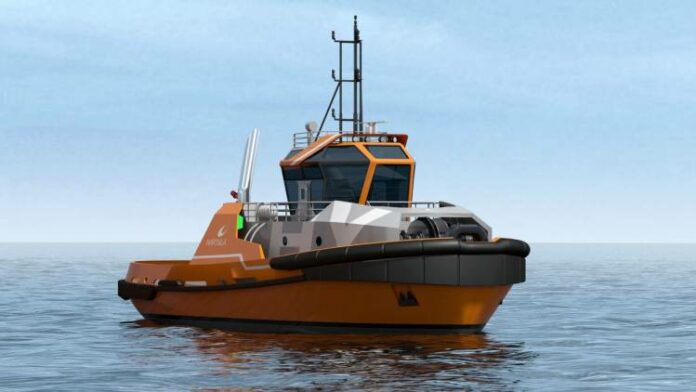
Wärtsilä announced the genset and completes its offering with the introduction of its HYTug 40 design and concept. A smaller version of the HYTug launched in 2017 and designed for shallow draft operation, this evolution features two Wärtsilä 14 engines along with a hybrid propulsion solution which deliver various flexible operating settings, including a zero-emissions mode. Indeed, the HYTug 40 is characterised by low maintenance and operating costs, in full compliance with global environmental regulations. When fitted with a Wärtsilä NOx reduction system (NOR), she also comfortably meets IMO Tier III requirements.

Wärtsilä is confident that the Wärtsilä 14 will set a new technological benchmark for both main and auxiliary propulsion solutions in the market, as the bar is set to deliver tangible financial, operational, and environmental benefits – enhancements that are key to achieving and maintaining profitable operations for ship owners and operators around the world.

Source: Wärtsilä

Carnival to appeal Captain’s fine for breaching European air pollution limits

0

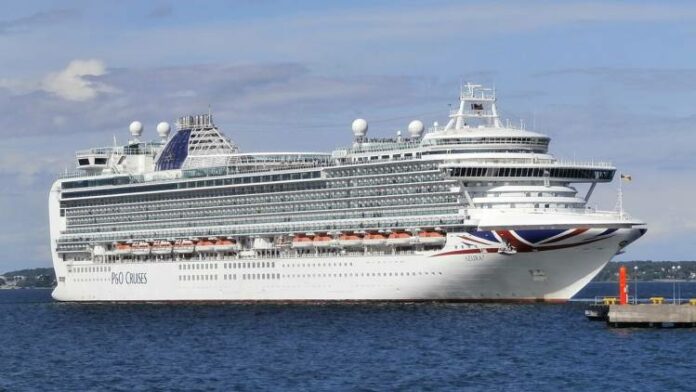
After the Captain of the P&O Cruises-operated ship 'Azura' was fined for 'deliberately breaching the European air pollution limits', there are reports that Carnival is planning to appeal the court's ruling.

A Marseille court has  imposed a fine of  €100,000 (USD 114,000) to the American Captain of the P&O Cruises-operated ship 'Azura' for 'deliberately breaching the European air pollution limits', in a first of its kind ruling, on Monday. However, the court specified that the €80,000 of this sum must be paid by the P&O Cruises' parent company, Carnival.

The court sued the Captain of the 'Azura', Captain Evans Hoyt, 58, over using heavy fuel oil (HFO) containing 1.68% of sulphur, which exceeds the maximum allowed limit of 1.5%, during the ship’s stopover in Marseilles, on 29 March.

According to prosecutors in the trial, the Captain was aware that that the fuel was illegal and 'the company was using it to save money'.

However, Carnival stated that it is disappointed by this decision, as it noted that it was based on a law which France had informed that would not apply to cruise ships.

It also added that it takes serious consideration into protecting the environment and that the Captain was using the fuel in good faith, as the company had directed.

For this reason, Carnival will appeal the court's ruling.

International sources underline that the court's decision seeks to signal a new seriousness in tackling pollution from cruise ships, as cruise ship traffic sees rising development in Mediterranean ports and specifically the port of Marseilles is a highly popular destination for cruise ships which add significantly to the local economy. However, this has greatly contributed to the increased levels of smog in the city over the last years.

Source:safety4sea

Two Iranians behind Port of San Diego cyber attack

0

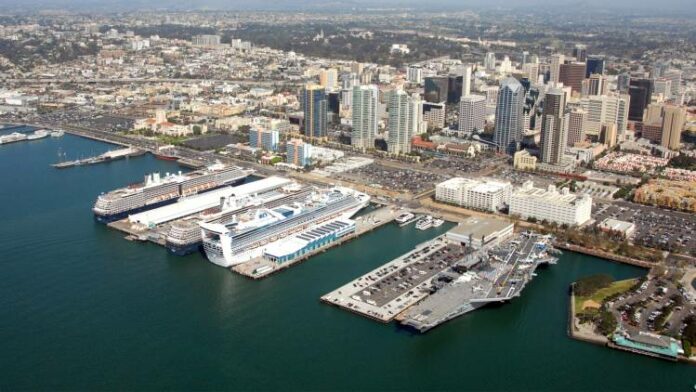
The US Justice Department announced that two Iranian hackers were behind an international computer hacking and extortion scheme. This scheme had also affected the Port of San Diego during September, disrupting its information technology systems.

On September 25, 2018 the Port of San Diego announced its cyber attack, that caused the port to work with limited functionality, something that affected the Port's service in the areas of park permits, public records requests, and business services.

Following, the US Department of Justice published a press release on that matter, giving details on two Iranian men behind an international computer hacking, that have collected over $6 million USD in ransom payments to date, indicted for deploying ransomware to export hospitals, municipalities and public institutions that caused more than $30 million in losses.

A federal grand jury charged the two Iranian hackers, Faramarz Shahi Savandi aged 34, and Mohammad Mehdi Shah Mansouri aged 27, on a 34-month-long international computer hacking and extortion scheme involving the deployment of sophisticated ransomware, called 'SamSam Ransomware'.

More specifically, it was found out that the two hackers, acting from inside Iran, deployed the 'SamSam Ransomware', which encrypts data on the victims' computers. Savandi and Mansouri created the first version of the 'SamSam Ransomware' in 2015 and enhanced it during 2017. The defendants also used overseas computer infrastructures to commit the attacks. They also used high-tech online reconnaissance techniques, such as scanning for computer network vulnerabilities, and researched online in order to opt for and target potential victims. The defendants would also disguise their attacks to appear like legitimate network activity.

Moving on, the Justice Department supports that the hackers employed the use of Tor, a computer network designed to facilitate anonymous communication over the internet. The defendants maximized the damage by attacking outside regular business hours, when a victim would find it more difficult to mitigate the attack, and by encrypting backups of the victims’ computers.

The two hackers after the attack, would demand a ransom paid in the virtual currency Bitcoin in exchange for decryption keys for the encrypted data, collecting ransom payments from victim entities that paid the ransom, and exchanging the Bitcoin proceeds into Iranian rial using Iran-based Bitcoin exchangers.

Savandi and Mansouri are charged with one count of conspiracy to commit wire fraud, one count of conspiracy to commit fraud and related activity in relation with computers, two substantive counts of intentional damage to a protected computer and two substantive counts of transmitting a demand in relation to damaging a protected computer.

The victims include the City of Atlanta, Georgia; the City of Newark, New Jersey; the Port of San Diego, California; the Colorado Department of Transportation; the University of Calgary in Calgary, Alberta, Canada  and six health care-related entities.

Source:safety4sea

Petrobras Sells Oil Field Rights For Over $800 Million

0

Brazil’s state-controlled oil company, Petroleo Brasileiro SA , said on Nov. 28 it had sold rights to more than 30 oil fields for more than $800 million as part of a longstanding divestment plan to reduce the company’s debt.

The company, known as Petrobras, said it had reached a $370 million deal with Anglo-French oil and gas company Perenco to sell three oil fields in the so-called Polo Nordeste, in the coast of Rio de Janeiro. The three oil fields produce a combined 9,000 barrels a day (bbl/d) of oil, the company said.

It also said it had sold the rights to 34 dispersed oil fields in the state of Rio Grande do Norteto to Brazilian company 3R Petroleum for $453 million.

The oil fields, in operation for more than 40 years, produce about 6,000 bbl/d of oil.

Source:epmag