4.8 C
New York
Home Blog Page 1229

Subsea Innovation Bags Two Contracts with Royal IHC

0

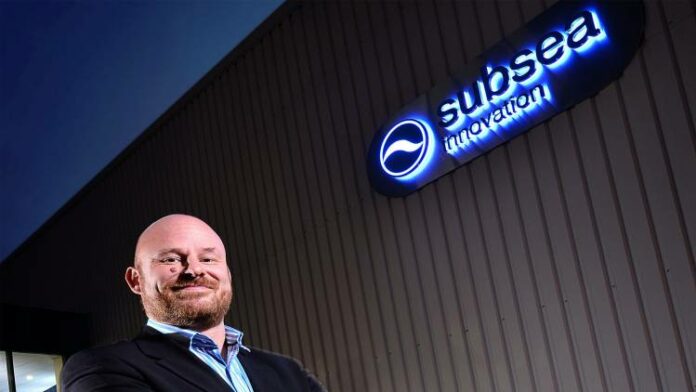
Subsea Innovation, the supplier engineered equipment and technology used in the installation of subsea equipment for the offshore oil and gas, has announced two high profile contract wins with Royal IHC, as part of a collaborative framework agreement.

A press release from the  offshore energy engineering compmany said that  will be supporting their client Royal IHC Limited on the design, development, manufacture and supply of back deck equipment on two projects to be completed throughout 2018 and 2019.

For both projects, which include a reel lay project and a J lay project, Subsea Innovation will be producing a range of back deck equipment including Pipeline End Termination (PLET) manipulators, skids and workstations from concept through to delivery, the Tekmar Group company said.

Dave Thompson, Managing Director at Subsea Innovation, said: “We have an excellent relationship with Royal IHC and our teams work extremely closely together. Taking a concept from a blank sheet of paper through to full fabrication, test and delivery is hugely exciting.”

Both projects will be designed from Subsea Innovation’s head office in Darlington; working in collaboration with Royal IHC Limited teams based in the UK and Netherlands.

In August 2018 Subsea Innovation was acquired by Tekmar Group plc.

James Ritchie, CEO at Tekmar Group plc, said: “When we added Subsea Innovation into the Tekmar Group we knew this brought new capabilities, markets and strong cross selling opportunities to the Tekmar Group; but we also knew their engineering team are very highly regarded and these two contracts really demonstrate this.”

Subsea Innovation Limited is one of Tekmar Group plc’s three primary operating companies; in addition to Tekmar Energy Limited and AgileTek Engineering Limited.

Tekmar Group’s vision is to become the partner of choice for the supply and installation support of subsea protection equipment to the global offshore energy markets.

Source:marinelink
Transocean shareholders approve Ocean Rig acquisition

0

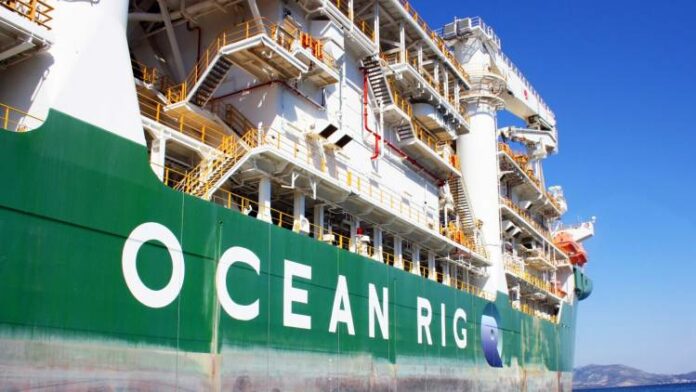
Transocean Ltd. has reported that its shareholders have approved the acquisition of Ocean Rig UDW Inc. 

President and CEO Jeremy Thigpen said: “We are extremely pleased that our shareholders have overwhelmingly approved our acquisition of Ocean Rig. Through this combination, Transocean further enhances our industry-leading fleet of high specification floaters, thus improving our competitive position.”

We are excited to begin actively marketing these assets into the growing list of opportunities we continue to see emerging across our global customer base. We look forward to closing the transaction in the coming days and welcoming Ocean Rig’s experienced crews into the company.

Source:offshore-mag

PowerChina wins $3bn construction project for Saudi mega-yard

0

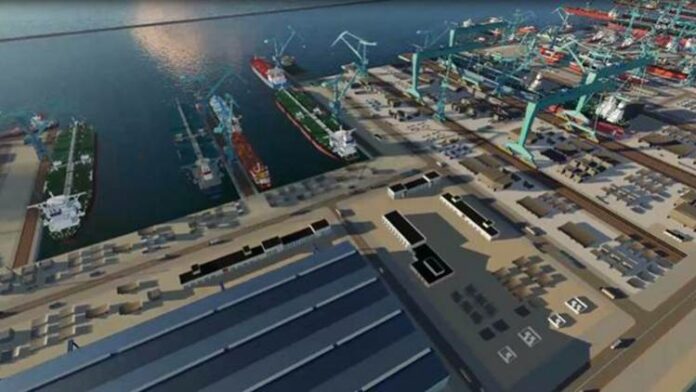
State-owned Power Construction Corporation of China (PowerChina) hs announced its has won the bid for the costruction of marine facilities for the mega-shipyard King Salman International Complex.

The total contract value is over $3bn, which is the largest cash settlement project PowerChina has received. The overall marine project will see Saudi Arabia to become a top shipbuilder globally with the International Maritime Industries (IMI) joint venture owned by Saudi Aramco (50.1%) and its most important tonnage provider Bahri (19.9%), the remainder belonging to UAE-based rig builder Lamprell (20%) and shipbuilder Hyundai Heavy Industries (HHI) (10%) of Korea.

The King Salman International Complex for Maritime Industries and Services is part of Saudi Arabian’s National Industrial Strategy to focus on economic diversification. The complex locates at the Arabian Gulf costal area of East Saudi Arabian, covering an area of 4.5km by 2.5km. The facility will be capable of building four offshore drilling platforms and 40 plus vessels annually, including three VLCCs.

The construction contracts signed with Power China include shipbuilding/ship repair yards and offshore oil platform. The project will be able to provide engineering, manufacture and repair services to drilling platform, commercial vessels and offshore engineering upon the completion. SEPCO Electric Power Construction Corporation (SEPCO), a wholly-owned subsidiary of PowerChina, will be the general contractor for the project.

PowerChina is an integrated construction group that provides investment and financing, planning design, engineering construction, equipment manufacturing and operation management for hydraulic and hydropower projects and infrastructure. The company has aparticipated in drafting and revising over 500 items of China’s national and industrial standards.

Source:seatrade-maritime

BHGE Launches New Subsea Technologies, Approach

0

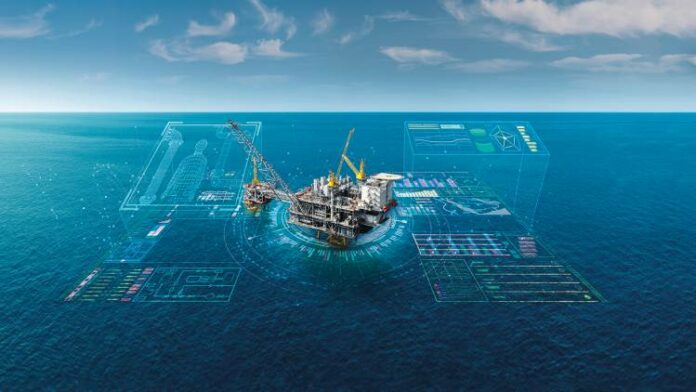
Baker Hughes, a GE company has released a suite of lightweight, modular technologies as part of a new subsea development approach it believes has potential to improve the economics of offshore projects and unlock more oil reserves.

Subsea Connect combines planning and risk management, new modular deepwater technology, innovative partnerships and digital tools into a single offering, the company said in a news release Nov. 28.

“In recent years, our industry has made good progress in lowering the cost of subsea projects to the point where they have become more competitive with onshore developments,” Neil Saunders, president & CEO of BHGE’s oilfield equipment business, said in the release. “While the gap has narrowed, we are taking that to the next level with Subsea Connect, making long-lasting, sustainable change and driving value from concept to commissioning and over the full life of field.”

The company said Subsea Connect—which includes the Aptara TOTEX-lite subsea system of lightweight, modular technologies designed for the full life of field—could reduce the economic development point of subsea projects by an average of 30% and unlock an additional 16 billion barrels of reserves globally.

Source:epmag

Oil majors begin crude oil trading on blockchain platform

0

In line with the rising interest on blockchain technology for trade industry in recent years, oil and gas companies will be able for the first time to finalising crude oil deals on a live blockchain-based platform. Blockchain has been viewed by many as a solution to transactions inefficiencies, as well as a way to improve transparency and reduce the risk of fraud.

London-based Vakt, launched by energy majors BP, Equinor, Shell, Gunvor and Mercuria, announced that it has launched its blockchain platform in oil and has, to be the world’s first fully operational, enterprise-grade blockchain platform to enter the market. The companies have launched privately as VAKT’s first users, running in parallel with their internal systems, but the platform will be open to the wider market from January.

Vakt digital platform manages physical energy transactions from trade entry to final settlement, eliminating reconciliation and paper-based processes.

Although the initial launch is limited to trade specifically in BFOET crude oil contracts, VAKT’s ambition is to extend the platform to all physically traded energy commodities. The use of Vakt will at first be limited to contracts for the five North Sea crude grades that are used to set dated Brent, a benchmark used to price most of the world’s crude oil. 'The company is building its roadmap in response to industry need', Vakt explained, but has US crude oil pipelines and Northern Europe refined product barges slated for launch in early 2019.

Additionally, in September, a Geneva-based joint venture among global banks and trading firms called komgo SA, launched the first blockchain-based platform for financing the trading of commodities from oil to wheat.The komgo, which is due to go live before the year end, is backed by a consortium including 10 global banks and most of the Vakt shareholders, according to Reuters.

The komgo founders include ABN AMRO, BNP Paribas, Citi, Crédit Agricole Group, Gunvor, ING, Koch Supply & Trading, Macquarie, Mercuria, MUFG Bank, Natixis, Rabobank, Shell, SGS and Societe Generale.

"Digitalisation is changing how the energy value chain works. It’s an exciting time…Ultimately the aim is improved speed and security, which benefits everyone along the supply chain from market participants to customers,"… said Andrew Smith, EVP Trading & Supply, Shell International Trading and Shipping Company Limited.

Earlier in 2018, Houston-based Diamond Offshore Drilling announced the launch of a Blockchain Drilling service, what it claimed to be the first application of blockchain technology in the offshore drilling industry, to reduce costs for oil and gas operators.

Source:safety4sea

World’s first iVLOC delivered

0

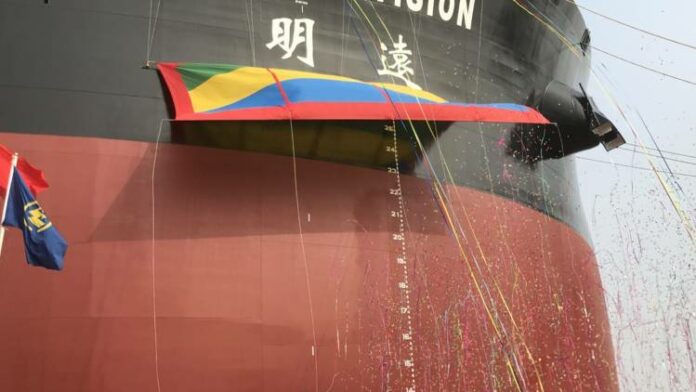
Shanghai Waigaoqiao Shipyard delivered the world’s first intelligent very large ore carrier (iVLOC) to China Merchants Energy Shipping Company. 'Pacific Vision' features an integration platform, a smart navigation decision support system, a ship energy efficiency management and optimization system, and smart-vessel operation and maintenance system.

The DNV GL classed vessel includes operational enhancement, performance enhancement, and condition monitoring enhancement. DNV GL partnered with SDARI, Shanghai Waigaoqiao and the manufacturers to put into effect the design, the site verification and component/system certification.

The vessel is to voyage between Brazil and Asia, travelling through China, Japan, Malaysia and Oman. Also, it will most probably be deployed by Brazil and European trade, such as Rotterdam and Italy.

According to DNV GL Class Guidelines for SmartShips, a SmartShip notation could be applied to vessels that have specific technological features that could be considered as smart technologies in marine applications.

Finally,  Norbert Kray, DNV GL’s Regional Manager Greater China, stated that the SmartShip notation aspires to give the customers a platform to understand the innovative technologies they were using and as a result to optimize the performance, enhance safety, and minimize their environmental impact. This technology supports those who are developing smart ships based on future-standard vessels.

Source:safety4sea

Port of Seattle Approves $350M Waterfront Plan

0

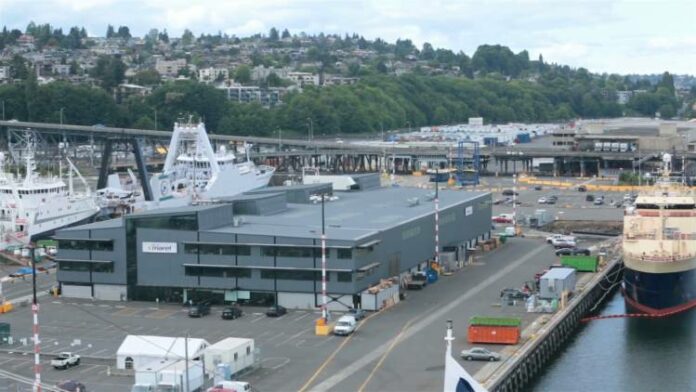
As part of a new five-year budget blueprint, the Port of Seattle's commission has approved a $350 million plan for upgrades to the city's waterfront. It includes a new cruise ship terminal for Seattle's booming cruise industry, new light industrial facilities in Interbay, and upgrades for Fishermen's Terminal near Ballard, among other maritime and economic development projects. The plan is accompanied by a small property tax increase for King County. 

Specific highlights of projects in the five-year budget blueprint include:

– $100 million for a new Elliott Bay cruise terminal, with a 50 percent tenant cost share
– $39 million for development of uplands at Terminal 91, the multipurpose/cruise/fishing pier at Smith Cove
– $35 million for berth replacement at Terminal 91
– $30 million for bringing electrical power to the waterfront, which will improve air quality and reduce greenhouse gas emissions from cruise vessels at berth
– $23 million for the Fishermen’s Terminal Gateway Building, a new marine sales and services/warehouse building for the Alaska fishing fleet
– $17 million for habitat restoration at Terminal 117, a cleanup area within the Lower Duwamish Superfund Site
– and installation of solar power systems at the port's Pier 69 building.

The new cruise terminal's final location on the Seattle waterfront has not yet been announced, but regardless of site selection, it will help accommodate rapid growth in Seattle's cruise business. The port is ahead of all other cruise homeports on the West Coast for passenger volume, including Vancouver, B.C., which trails Seattle with about 900,000 passengers per year. Cruising generates about $500 million in revenue for local businesses, according to the port. 

The budget blueprint is intended to facilitate long-term planning, and individual projects will still receive public discussion and a port commission authorization vote prior to construction.

Separately, through the Northwest Seaport Alliance comprising Seattle and Tacoma, the Port of Seattle will invest $340 million for the redevelopment of Terminal 5 to handle ultra-large container vessels. The Terminal 5 project involves berth deepening, dock strengthening and electrical utility upgrades to handle the industry's new supersized ships. 

Source:maritime-executive

Virgin Voyages to Build New Terminal at PortMiami

0

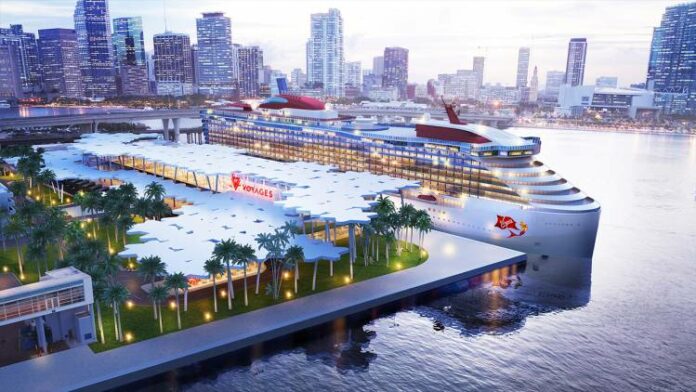
Sir Richard Branson's new cruise venture, Virgin Voyages, unveiled its plans for a new terminal at PortMiami on Wednesday. 

The passenger terminal's design is inspired by the form of the royal palm tree, and it was created by Miami-based architecture firm Arquitectonica – the local design house behind the American Airlines Arena in downtown Miami and the Miami City Ballet in South Beach. Virgin says that they selected the company because "they understand what it means to create something truly, unequivocally and wholeheartedly, 'Miami.'"

The two-story terminal’s rooftop is designed to resemble a palm tree grove, with pockets that allow natural light to flow into the building by day. It will have spotlight beams to light up the Virgin Voyages logo and the Miami sky at night. Arquitectonica's co-founder, Bernardo Fort Brescia, told the Miami Herald that “it’s more like a stage set than a cruise terminal," designed for a serene vacation experience from the moment of arrival. 

Completion of the $150 million project is scheduled for 2021, subject to permitting approvals. Miami-Dade County's commision is expected to give its permission by early next week. 

Virgin also announced that it has placed an order for a fourth new cruise ship, and it will also invest in Florida's Brightline passenger rail service – now under the new moniker "Virgin Trains." According to Branson, Miami may also see a new Virgin Hotel in the near future. 

Ticket sales for Virgin's inaugural voyage on its first ship, the Fincantieri-built Scarlet Lady, go on sale on Valentine's Day, February 14. 

Source:maritime-executive

ABS and GE collaborate on digital twin deployment for equipment health monitoring and prediction

0

ABS awarded GE Service Provider recognition for GE’s Marine Solutions’ SeaStream Insight—a data analytics-informed solution that provides health and performance monitoring of rig equipment via a digital twin—enabling condition-based maintenance on ABS classed rigs, within an ABS Preventative Maintenance Program. ABS worked with GE to verify and validate its capabilities on several equipment types, ABS said in a press release.

The GE recognition is in line with the ABS Guidance Notes on Smart Function Implementation, which outline data infrastructure requirements for marine and offshore assets to facilitate machinery health and performance monitoring. GE’s digital twin models and data analytics afford comprehensive trending of operational data to monitor health-state towards predicting anomalies or degradation of marine and drilling equipment installed on vessels.

Working with ABS, we are proactively improving uptime in drilling operations and reducing maintenance costs for drilling contractors,” said Krishna Uppuluri, VP Products, GE’s Marine Solutions. “Currently deployed on some offshore vessels, the solution targets a 20 percent reduction in maintenance operating expenditures.”

GE’s SeaStream Insight solution is the first recognized by ABS for a third-party service provider. Leveraging results from analytics models for rig-specific condition information, ABS aims to provide targeted and optimized class surveys.

“ABS is building on our maritime industry leadership—merging our deep knowledge of offshore assets with new capabilities in data science and advanced analytics to help our clients achieve operational efficiencies—while improving their class experience,” said ABS Chairman, President and CEO Christopher J. Wiernicki.

ABS recognizes GE as a Service Provider in accordance with ABS Preventive Maintenance Program requirements and its Smart Guidance to facilitate using GE’s solutions on ABS classed rigs. The initial program covers six equipment types; Thruster Electrical and Mechanical Drive Train; Rig Jacking System; Power Generation Engines and Generator Sets; Topdrives; Mud Pumps; and Drawworks.

GE’s SeaStream Insight solution was developed to connect data across the vessel, providing a holistic view of operations intelligence. By comparing real-time data with its digital twin, it can predict the level and rate of equipment degradation and avoid potential equipment failure, giving early warnings and suggested corrective actions.

ABS’s recognition of GE’s SeaStream Insight solution for equipment and systems health trending is a key milestone in ensuring the smooth and successful digital transition of the marine industry,” said Azeez Mohammed, president and CEO, GE’s Power Conversion business. “Already out at sea and driving outcomes for customers, the solution will continue to serve the best interests of those who desire to be part of the digital marine revolution.”

ABS introduced comprehensive guidance providing the marine and offshore industries a goal-based framework to enable data-driven decision-making based on smart technology. The ABS Guidance Notes on Smart Function Implementation support data infrastructure development, enabling health and performance monitoring and augmenting vessel operations leading to more informed decisions. The guidance, the first in a series of planned publications on Smart Technology, sets an actionable framework for owners, operators and equipment manufacturers to take smart steps today in preparation for an efficient and environmentally sustainable future.

First Steel Arrives for Port Canaveral Cruise Terminal 3

0

Waterside construction at Port Canaveral’s new Cruise Terminal 3 is underway with the arrival of the steel for the bulkhead wall of the new 1,309-foot-long berth. 

Intermarine LLC’s Ocean Globe, a 545-foot multi-purpose U.S.-flagged vessel, arrived at the Port this week to discharge 261 steel pipes ranging in length from 110.5 feet to 126 feet. The 36-inch diameter pipe piles will be part of an A-frame structure under construction at the berth that will anchor to the waterfront bulkhead wall.

Contractor for the project is RUSH Marine. Waterside construction of the new berth got underway in September, beginning with the demolition of existing pier structures at the site and installation of protective barriers to prevent erosion resulting from wake and wave action generated by vessels transiting the Port’s main channel.

In a first for the Port, a lightweight aggregate will be used in construction as backfill to reduce long-term settlement of the berth. As a result, it reduces load on the bulkhead wall, allowing a reduction in the size of the steel and substantially decreasing construction costs. The aggregate material is manufactured from various clays produced by a rotary kiln process.

The marine works is expected to be completed by end of November 2019. Two passenger boarding bridges for the terminal are currently in the design/build process. Terminal and parking garage construction is expected to start in January 2019 and be completed in April 2020.

The completed CT-3 terminal, related landside structures, and roadway improvements will be the Port’s largest single capital project in its 65-year history. The $150 million project will be completed in time for the June 2020 arrival of Carnival’s as-yet-unnamed 180,000-ton XL-Class vessel.

Carnival Cruise Line’s newest and largest vessel will have capacity for up to 6,500 cruise guests and a crew of about 2,000. The vessel will be the first North America-based cruise ship powered by LNG. The vessel’s scheduled arrival at Port Canaveral in mid-to-late 2020 will mark the 30-year anniversary of Carnival offering cruises from the Port.  

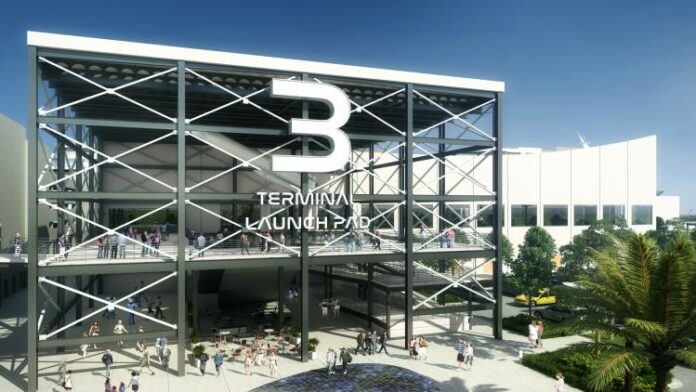
The new terminal is being built on the site of the old Cruise Terminal 3, which was demolished earlier this year. The terminal will feature a futuristic design inspired by nearby Kennedy Space Center. Its planned technological features include modernized systems to facilitate U.S. Customs and Border Protection screenings of arriving passengers and integrated mobile passenger check-in to expedite the boarding process. The facility will support an estimated 4,000 permanent jobs in combination with the Port’s overall modernization and improvement plans.

Port Canaveral hosts more than 4.5 million revenue cruise passengers through its terminals and more than six million of tons of cargo annually, including bulk, break-bulk, project and containerized. 

Source:maritime-executive