4.8 C
New York
Home Blog Page 1228

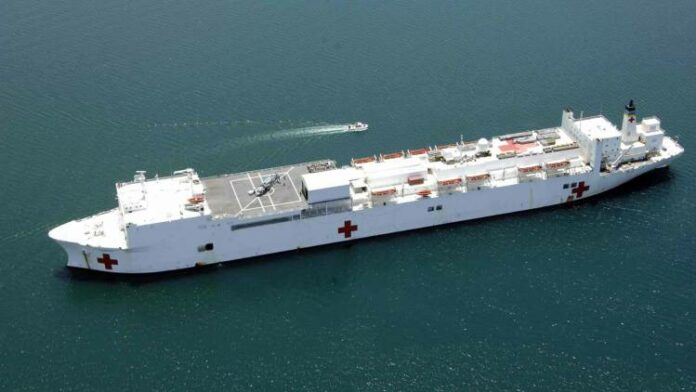
US Navy hospital ship to help people in need in Colombia

0

Doctors and dentists from the US Navy hospital ship 'USNS Comfort' will provide treatment to thousands in Colombia. Among them are Venezuela migrants who have fled their country due to the severe economic crisis.

The US Navy staff last week treated approximately 5.400 patients including 131 who had surgery, over the period of five days in Turbo, a city near the jungle border with Panama, according to Reuters.

Moreover, it is estimated that 2.500 patients will be seen and treated by the US Navy in Riohacha through Friday, a city placed 91 kilometres from the border with Venezuela.

The majority of the patients that were pre-screened by local authorities, are to be treated in a two clinic set-up in schools. In addition, those in need of a surgery will be taken to the ship itself, which is anchored far offshore, by a helicopter. However, a big number of surgeries need an often follow-up that can not be performed on the ship. That's why, the patients will be referred back to local authorities.

A majority of Venezuelans have abandoned their country due to economic crisis. As Reuters stated, Colombians, including the indigenous Wayuu, are asking for health care since in Colombia the health care system is overcrowded and causes major delays in patients' treatment. The Venezuelans have pressured the already troubled Colombian healthcare system, especially in border cities. To this result, patients may wait for a proper health care for a month.

Colombia has already received approximately one million Venezuelan migrants. Yet, it is believed that it will host about four million migrants by 2021, as stated by the government. Many are those that cross the country's land border without documentation, headed to other Latin American countries like Ecuador and Peru.

Moreover, the United Nations pledged $9.2 million to help Venezuela, where there is a crucial shortage concerning food and medicine. As a result, these two factors cause an unprecedented increase on hunger and preventable diseases.

Doctors and dentists from the US Navy amongst the rest of the patients, treated a five-year-old, named Kamila, who was born 30 weeks prior, weighing 900 grams. She was born with kidney problems and cerebral atrophy.

Source:safety4sea

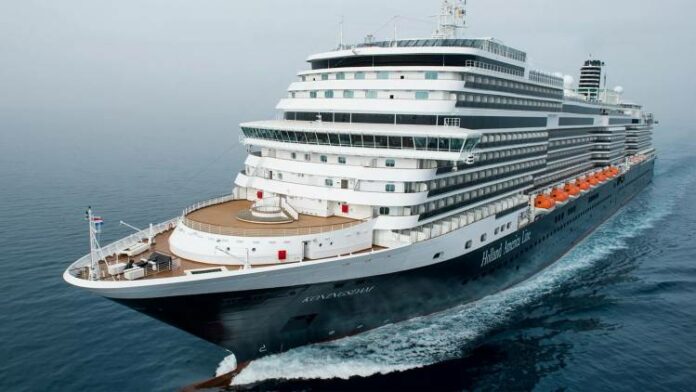
Fincantieri announces delivery of the “Nieuw Statendam”

0

Fincantieri announces that the contractual delivery of the “Nieuw  Statendam”, presented at the Marghera shipyard, has taken place. 

Fincantieri  is one of the world’s largest shipbuilding groups and number one for diversification and innovation. It is  leader in cruise ship design and construction and a reference player in all high-tech shipbuilding industry sectors, from  naval to offshore vessels, from high-complexity special vessels and ferries to mega yachts, as well as in ship repairs and  conversions, production of systems and mechanical and electrical component equipment and after-sales services. 

With over 230 years of history and more than 7,000 vessels built, Fincantieri has always kept its management offices, as  well as all the engineering and production skills, in Italy. With over 8,400 employees in Italy and a supplier network that employs nearly 50,000 people, Fincantieri has enhanced a fragmented production capacity over several shipyards into a  strength, acquiring the widest portfolio of clients and products in the cruise segment.

To hold its own in relation to  competition and assert itself at global level, Fincantieri has broadened its product portfolio becoming world leader in the  sectors in which it operates.  With globalization, the Group has around 20 shipyards in 4 continents, over 19,000 employees and is the leading  Western shipbuilder. It has among its clients the world’s major cruise operators, the Italian and the US Navy, in addition  to several foreign navies, and it is partner of some of the main European defense companies within supranational  programs.  Fincantieri's business is widely diversified by end markets, geographical exposure and by client base, with revenue  mainly generated from cruise ship, naval and offshore vessel construction.

Source:portnews

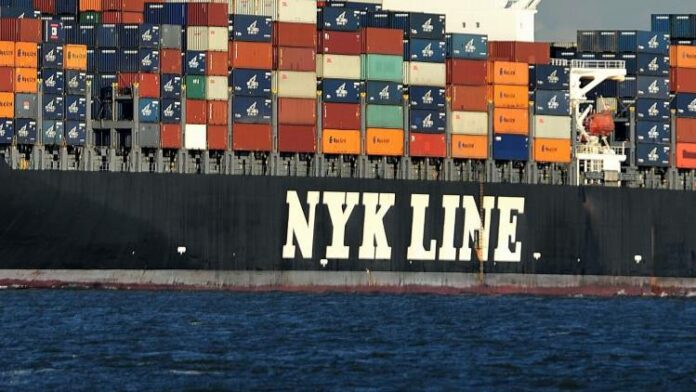
NYK and MLC integrate management of the four NYK Group terminal operation companies in Japan

0

Nippon Yusen Kaisha (NYK) and Mitsubishi Logistics Corporation (MLC) announced on August 30, 2018, to integrate management of the four NYK Group terminal operation companies in Japan through a new joint holding company that will be established by NYK and MLC, the company said in a press release.

Necessary proceedings have delayed integration, so NYK and MLC today announced an update to the schedule, in addition to an overview of the new holding company and joint company of UNI-X Corporation (UNI-X) and Nippon Container Terminals Co. Ltd. (NCT).

New Integration Dates (scheduled)
December 17, 2018 Establish holding company
April 1, 2019 Merge UNI-X and NCT

Overview of New Holding Company
Tradename MY Terminals Holdings Limited
Location 3-2, Marunouchi 2 Chome, Chiyoda-ku, Tokyo
Shareholders NYK 51%, MLC 49%
President, Representative DirectorHidetoshi Maruyama
Representative Executive Director Yoshiji Ohara

Joint Company of UNI-X and NCT
Tradename UNI-X NCT Corporation
Location 28-1, Oi 1 Chome, Shinagawa-ku, Tokyo
Shareholders MY Terminals Holdings Limited 100%
President, Representative Director Yoichiro Hara

Source:portnews

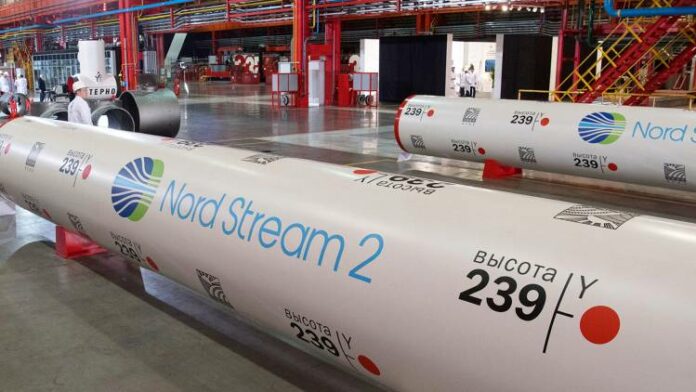
Gazprom Management Committee reviews progress of Nord Stream 2 project

0

The Gazprom Management Committee reviewed the progress of the Nord Stream 2 project, Gazprom says in a press release.

It was noted that construction of the gas pipeline was proceeding as scheduled, with a total of about 300 kilometers of pipes laid in the Baltic Sea to date. Most notably, with both strings built to completion in the coastal area of Germany, pipelaying is underway in Germany’s territorial waters and exclusive economic zone, as well as in the exclusive economic zone of Finland.

Particular attention at the meeting was paid to the ongoing preparations for pipelaying in the Russian section.

The Management Committee was instructed to continue the implementation of the Nord Stream 2 project until its commissioning in accordance with the schedule.

Nord Stream 2 is the construction project for a gas pipeline with the annual capacity of 55 billion cubic meters from Russia to Germany across the Baltic Sea.

Source:portnews

Damen, Adriatic Marinas and the Montenegrin Government sign contract for redevelopment of Bijela shipyard

0

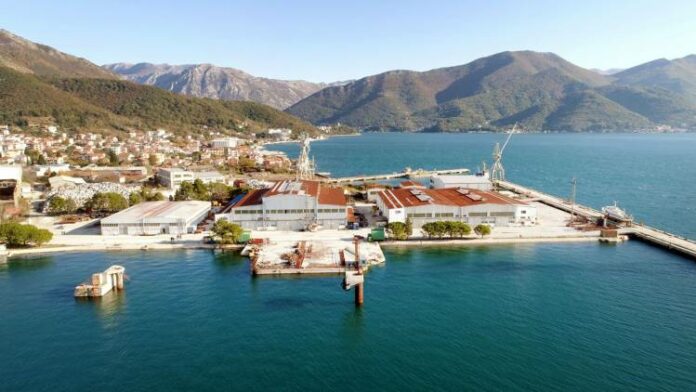
The consortium of superyacht marina development and operating group Adriatic Marinas and the global ship and superyacht builder Damen, have been working with the Government of Montenegro. Since 2012 the parties have been developing plans to bring about the redevelopment of the former Bijela shipyard in Boka Bay, Montenegro.

The recent completion of technical surveys and the placing of a contract by the government and the World Bank for the remediation of the site has paved the way for the signing of the Concession Agreement for the yard on 30th November. Following completion of the remediation works in early 2020, it will be transformed by the consortium over the following 12 months into a superyacht repair and refit facility.

This initiative has been challenging, but the resulting benefits to the economy of Montenegro are potentially significant with over 300 people eventually expected to return to the marine industry. Bijela, Herzeg Novi, is the historic homeland of the sector in Montenegro and with this the region will once again deliver Montenegro’s renowned skills to the Mediterranean marine market.

The planning of recruitment and training through the reputable apprenticeship programme that DAMEN operates throughout its global network of shipyards is already underway. So too are plans for the production of new, state-of-the-art lifting and repair equipment to be brought to the facility following completion of remediation works.

In the meantime, it is hoped that interim arrangements can be agreed with the Government of Montenegro and its remediation contractor Valgo, to allow a preliminary yachting service to be operated in the western portion of the Bijela site. This could commence as early as winter 2019/20.

Rene Berkvens, Damen’s CEO, commented: “We are happy that today marks the beginning of a new lease of life for the shipyard in Bijela. Together with our partners we take a long-term view on making yacht maintenance and refit in Montenegro a success. A strong customer base at Porto Montenegro and yacht maintenance and refit skills within the DAMEN Group will contribute to the success of this venture. Considering the yard’s current condition, we face a challenging period. However, with the continuous full support of the Montenegrin Government, and in close cooperation with our strong partner and the local community, we aim to restore the yard’s health, increase employment, and pursue fitting commercial opportunities both locally and internationally that will contribute to rebuilding activity levels.”

Adriatic Marinas Managing Director David Margason stated: “The teams at Adriatic Marinas and DAMEN have been working for a very long time with the Government of Montenegro to realize this challenging and exciting project. We are delighted that this next major step has been achieved and believe that this initiative is an ideal example of how Montenegro’s fast-growing tourism and marine leisure industry can convert back into the generation of jobs in associated creative and production industries to offer a comprehensive, integrated and sustainable range of employment opportunities to future generations in the country.

Source:portnews

Security Forces May Accompany China’s Belt and Road Abroad

0

Last week’s attack on the Chinese consulate in Karachi by Baluchi separatists underlines China’s growing vulnerabilities in connection with its Belt and Road Initiative (BRI). These are likely to get worse and may ultimately lead to China assuming a new and quite different security role in the region.

On November 23, a group of Baluchi separatists attacked a Chinese consulate, resulting in an hour long-shoot out with Pakistani police and security guards that left seven people dead. This is the 12th attack this year on Chinese interests in Pakistan by the Baluchi Liberation Army, which claims that it is fighting the “exploitation of Baluchistan’s mineral wealth and occupation of Baluch territory” by China.

The protection of BRI projects and Chinese nationals will likely become an increasingly important factor in China’s engagement in the region.

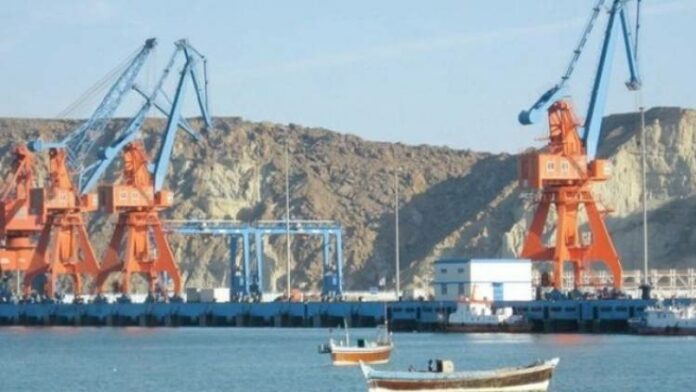
Indeed, the China-Pakistan Economic Corridor (CPEC), which involves building a series of road, railways, and pipelines from China through Pakistan to the Baluchi port city of Gwadar on the Indian Ocean, promises to transform Baluchistan in many ways.

In Gwadar, a Chinese company has announced plans to build housing for up to 500,000 Chinese workers. If it proceeds, there are plans to build a gated community where, among other things, locals without a permit would be excluded. Chinese companies have also been invited by the Pakistan government to “open up” the mineral rich Baluchistan province, to the great displeasure of some.

While these attacks are unlikely to stop CPEC’s progress, they may well have a cumulative effect of altering the nature of China’s security presence in the region. Many BRI projects are located in very insecure regions, and the Chinese government and companies may have previously underestimated security threats. This is now changing, and the protection of BRI projects and Chinese nationals will likely become an increasingly important factor in China’s engagement in the region.

In protecting Chinese people and assets, Beijing’s first preference will be to rely on local security forces in order to minimise its on-the-ground security footprint. The effectiveness of this will depend on the security environment, the quality of local security forces, and the nature of China’s relationship with the host government. As part of the CPEC, Pakistan established a special security force of around 15,000 troops to protect Chinese projects – but this is unlikely to be enough.

Chinese companies may rely heavily on private security contractors, especially Chinese contractors that employ former PLA personnel. Chinese contractors are preferred not only for language and cultural reasons but also to safeguard confidential information. In Pakistan, Chinese contractors work with local contractors, with Chinese personnel typically acting as security managers inside Chinese compounds, while Pakistani soldiers and security contractors work on the outside.

Chinese private security contractors sometimes play more active roles. They have been particularly active in Sudan and South Sudan, including participating in a Sudanese army mission to rescue 29 kidnapped Chinese nationals.

But the use of security contractors also carries risks. Unregulated and relatively inexperienced contractors may, for example, exacerbate security problems or take actions that have adverse consequences for China’s reputation. Nor can it be assumed that they will always have the same interests as Beijing.

Chinese security personnel

The failure of local security forces or contractors to protect Chinese nationals and investments could necessitate the direct involvement of Chinese military personnel. This may have already occurred in Pakistan, where there are reports of a Chinese security presence in Pakistan-occupied Kashmir to protect transport infrastructure and construction units.

There are indications that China’s Marine Corps could become its principal ready response force in the region.

The Marine Corps, modeled on the US Marines, is under the command of China’s South Sea Fleet, which has responsibility for the Indian Ocean. According to a report by the US Department of Defense, China’s Marine Corps is currently undergoing a major expansion from 20,000 to 100,000 personnel. A Marine company is already deployed to the Chinese base at Djibouti (which has facilities to accommodate up to 10,000 personnel) and there has been speculation about future deployments to Gwadar.

China’s Marine Corps or special forces deployed in the region or based in China would allow the country to respond to contingencies throughout the region. Several Chinese military exercisesin the Indian Ocean region are openly focused on using Chinese forces to protect BRI projects.

But in protecting people and assets, China may also increasingly find itself drawn into the local security affairs. As China’s Global Times recently argued, "China has always adhered to the principle of non-interference in the internal affairs of other countries, but that doesn’t mean Beijing can turn a deaf ear to the demands of Chinese enterprises in protecting their overseas investments."

This would represent a fundamentally new mission for Chinese security forces. Never before has China publicly contemplated using the PLA to protect Chinese citizens and assets beyond its borders.

Importantly, there will also be a risk of mission creep. As we’ve seen with other countries, the existence of the military capabilities may create temptations to use them to protect and advance China’s other interests in the region.

Dr David Brewster is with the National Security College at the Australian National University, where he specialises in South Asian and Indian Ocean strategic affairs. He is also a Distinguished Research Fellow with the Australia India Institute. His previous career was as a corporate lawyer working on complex cross-border transactions and he practiced for almost two decades in the United States, England, France and Australia. 

Source:maritime-executive

Workers evacuated from Shell’s platform in North Sea after power outage

0

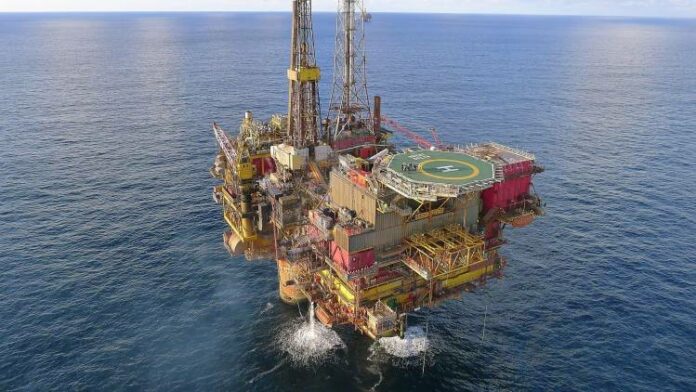
More than 130 workers were evacuated from Shell's 'Brent Charlie' oil platform in North Sea, due to power outage, on 27 November. Crew men onboard 'Brent Charlie', located 185km North East of Lerwick, Shetland, contacted the HM Coastguard in the early morning hours of Tuesday reporting that they had lost power and were running on backup batteries.

According to data provided by HM Coastguard, the platform had limited power, with no lighting or heating, while weather conditions were inclement at the time. As such, the company declared an emergency decided to evacuate the 135 non-essential crew out of a total of 184 for safety reasons.

An HM Coastguard Search and Rescue helicopter was deployed to evacuate the crew to two neighbouring platforms, Brent Alpha and Brent Bravo. The Helicopter spent two hours evacuating the crew and completed four trips to Brent Charlie. The Brent Charlie platform was shut down for maintenance. Early the next day, power was restored, and the 48 crew remained onboard.

The Brent oil and gas field has been a cornerstone of the UK oil and gas industry for 40 years. The field lies off the north-east coast of Scotland, midway between the Shetland Islands and Norway. It is one of the largest fields in the North Sea and is served by four large platforms – Alpha, Bravo, Charlie and Delta.

To date, the Brent field has produced around three billion barrels of oil equivalent. At its peak in 1982, the field was producing more than half a million barrels a day. Its production that year would have met the annual energy needs of around half of all UK homes.

The Brent Charlie was the last of four platforms installed in the area in 1978. Three of the four Brent platforms have now stopped production, with Charlie planned to stop in the near future.

Source:safety4sea

Equinor advances New Jersey plans

0

Norwegian company Equinor has named a planned offshore development off the coast of New Jersey Boardwalk Wind.

The company, formerly known as Statoil, also plans to bid the project in the US state's offshore wind solicitation round.

Equinor said it will deploy a wind measurement buoy at the proposed project site shortly.

The company will also open an office in New Jersey in the near future.

Source:renews

Party time at Rampion

0

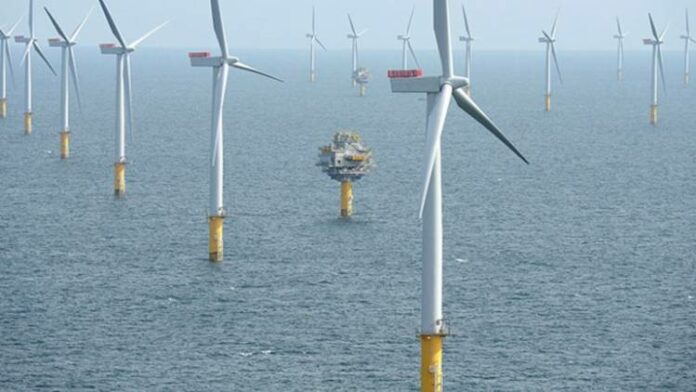
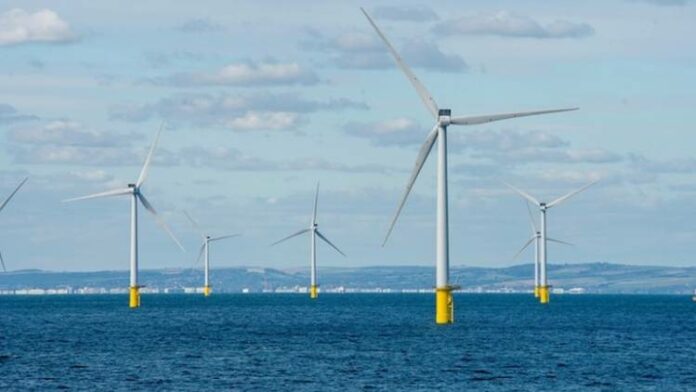
Eon has officially opened the 400MW Rampion offshore wind farm off the south coast of England.

The project features 116 MHI Vestas V112 3.45MW turbines located between 13km and 20km off the coast of Sussex.

Rampion has taken three years to construct, with 750 people working on the project at peak times.

It has been fully operational since the Spring of this year and is the first Round 3 to be completed, Eon said.

Other shareholders in the wind farm are Canadian company Enbridge and a consortium comprising the Green Investment Group, Macquarie European Infrastructure Fund 5 and the Universities Superannuation Scheme.

Eon UK chief executive Michael Lewis said: “Wind power, both onshore and offshore, continues to prove itself as a key part of the UK’s future energy mix and sits as a cost-effective alternative to higher carbon forms of power generation.“

Not only will Rampion play a vital role in helping the UK meet its commitment to decarbonise the energy sector but it will continue to support the local economy, sparking the regeneration of Newhaven port, sustaining highly skilled roles including apprenticeships as well as introducing the £3.1m Rampion Fund for community organisations and projects over the next decade.

Project investment will continue into next year with the opening of a visitor centre on the Brighton seafront by summer 2019.

The centre will house interactive displays for visitors to learn more about climate change, offshore wind and Rampion.

UK energy and clean growth minister Claire Perry said: “It's great to see the south coast's first offshore wind farm opening, powering around 350,000 homes, creating hundreds of high quality jobs and building on our reputation as a world leader in this sector.“

As part of our modern Industrial Strategy we’ve set out a further £557m of funding for new renewable projects like this, helping to tackle climate change and deliver clean growth to local economies.

We’re putting the finishing touches to our offshore wind sector deal that will see this sector go from strength to strength for years to come.

Green Investment Group associate director Matt Porter said: “As the UK’s world leading offshore wind fleet continues to grow in size and complexity, it’s becoming increasingly critical to match the right capital with the right project.“

That’s what we’ve achieved here with Rampion, enabling the first offshore wind project off the UK’s south coast to come to life.

Projects like Rampion simply aren’t possible without the skill, dedication and vision of a huge number of people. Together, we’ve delivered a world class development which will bring low-carbon electricity to the UK for many years to come. We’re incredibly proud of Rampion and I hope, like its namesake, it’s a source of pride for the whole of Sussex.

Enbridge chief development officer Vern Yu said: “The opening of Rampion today represents a milestone for Enbridge.“

This project is our first offshore wind farm and a significant achievement for our company and our partners. Rampion is a key part of our commitment to Enbridge’s future in European offshore renewables, as we continue to progress additional investments in Germany and France.

Source:renews

Gothia Tanker Alliance Delivers FureValö

0

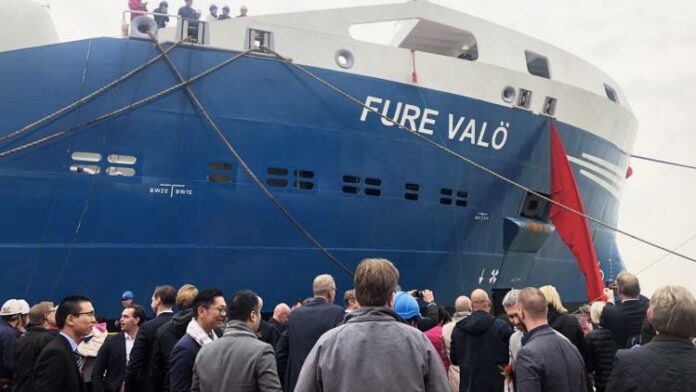
Europe's leading network for smaller and intermediate size tankers Gothia Tanker Alliance announced the delivery of the fourth vessel LNG-fueled vessel  Fure Valö.

The vessel was named on the 17th of November and delivered to owners Furetank on November 27, the company tweeted. Fure Valö has been delivered at the Chinese Avic Dingheng shipyard.

Fure Valö is vessel number four in a the serie of six climate smart, high quality new buildings that will join the Gothia Tanker Alliance.

It is a part of the six-vessel series ordered by the Gothia Tanker Alliance members Furetank, Älvtank and Erik Thun, Gothia Tanker Alliance said.

Furetank Rederi AB, Rederi AB Älvtank and Thun Tankers BV are building six intermediate size tankers at Avic Dingheng Shipbuilding Ltd. The vessels – of which Furetank will own three, Älvtank two and Thun Tankers one, two have been delivered (Fure Vinga and Ramanda) and the other four are expected in 2018-2019.

The vessels are built to a design, developed by FKAB together with Furetank with special focus on minimal impact on the environment, with close to 50 % reduction of CO2 emissions.

The vessels fulfills the Tier III rules, have dual fuel/LNG propulsion including LNG in port consumption, LNG for Inert gas production, power production with floating frequency, battery backup (UPS) for all vital functions to minimize use of auxiliary engines, installed ballast water cleaning system, ice class 1A and Alternative Propulsion System.

Source:marinelink