5.8 C
New York
Home Blog Page 122

Damen delivers Europe’s first fully electric tug to Port of Antwerp-Bruges

0

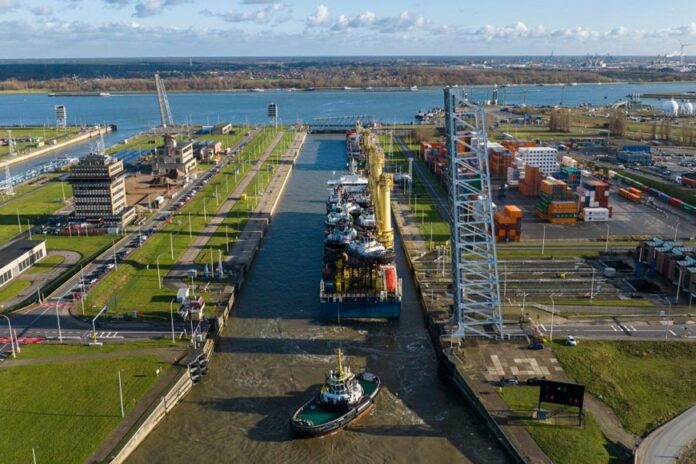
Damen Shipyards Group has delivered six RSD Tugs 2513 to the Port of Antwerp-Bruges in Belgium. The delivery consists of five RSD Tugs 2513 and one RSD-E Tug 2513 – the first fully electric tug to operate in a European port. 

With its fully electric propulsion, the RSD-E Tug 2513 paves the way to zero emission operations. The remaining five vessels are also contributing to cleaner operations. The vessels’ onboard Damen Marine NOX Reduction Systems remove harmful emissions from exhaust gases, ensuring IMO Tier III compliance. 

The Port of Antwerp-Bruges is pursuing a number of sustainable initiatives towards its goal to become carbon neutral by 2050. Measures taken include fleet renewal, with both increasingly efficient newbuilds and the conversion of existing tonnage to run on clean, alternative fuels. 

In its scope of total maritime solutions provider, Damen has delivered and commissioned the electric tug’s 1.5 megawatt charger and onshore electric infrastructure. The tug is able to perform a minimum of two towage operations on a single charge, and can be fully recharged in just two hours. 

This broad scope additionally includes Damen Services’ extensive support, covering every phase from delivery and start-up to maintenance management and the standard 1-year Damen Warranty. This support includes an extensive training package with simulator-based, technical, and onboard training, initiated well in advance to prepare the crews for the arrival of all new vessels. The training programme is set to continue over the next five years.

“We are thrilled to welcome the six state-of-the-art tugs, including an electric model, into our fleet. With each new addition, we move closer to achieving our emission targets towards a greener future,” says Rob Smeets, Chief Operational Officer of Port of Antwerp-Bruges.

Damen Sales Manager Benelux Vincent Maes said,

“On behalf of Damen, I would like to congratulate the Port of Antwerp-Bruges on the delivery of their new vessels – including Europe’s first fully electric tug. The pioneering steps towards increased sustainability they have taken are commendable and will, I am sure, serve as inspiration for other ports. I am looking forward to continuing to build on our relationship, as both Damen and the Port of Antwerp-Bruges continue to pursue solutions towards a sustainable maritime future.” 

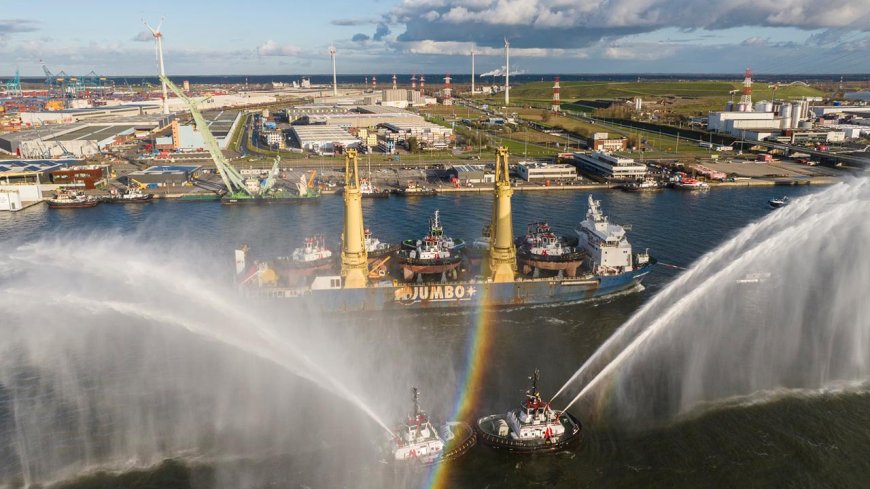
The six tugs formed part of a shipment of vessels transported from Damen’s yard in Vietnam aboard Jumbo Kinetic. Upon arrival in North Sea Port’s Vlissingen harbour, the heavy lift vessel was greeted by tugs from the Port of Antwerp-Bruges and escorted along the Western Scheldt river on its final approach to the port.
Damen signs LOI with Herman Sr. for new Multi-Purpose Vessel 4916

0

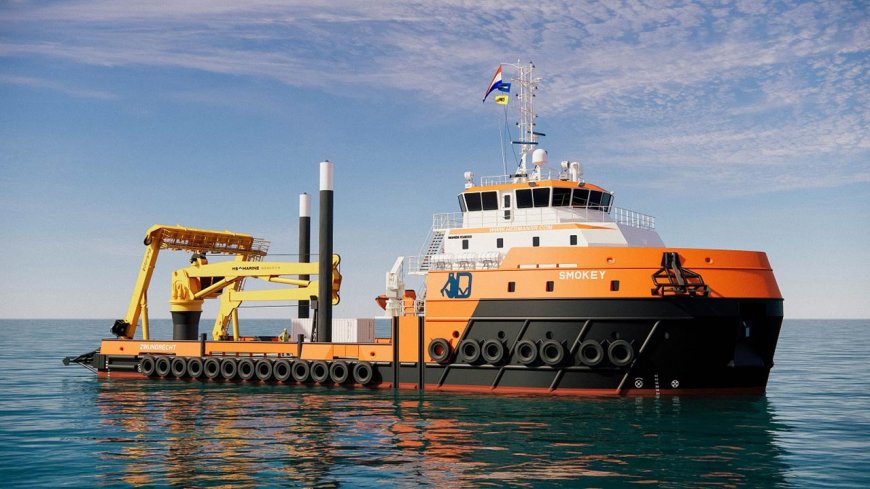
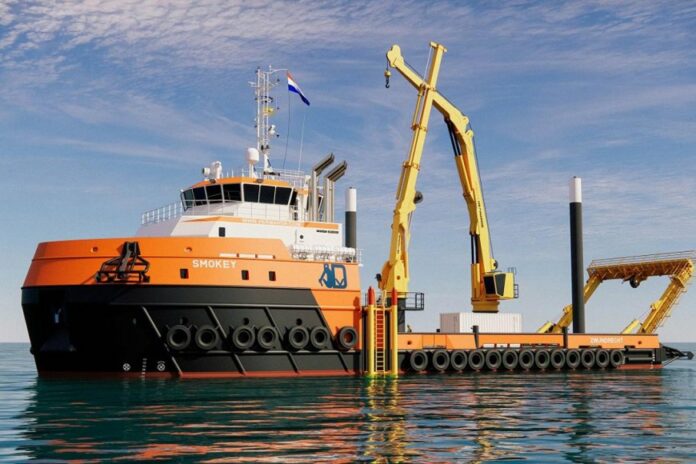
Damen Shipyards Group and Herman Sr. have signed a letter of intent (LOI) for the construction of a new Multi-Purpose Vessel (MPV) 4916. The LOI was signed during the Offshore Energy exhibition in Amsterdam on 26 November by Jeroen van Woerkum on behalf of Damen and Chris and Erwin van Dodewaard of behalf of Herman Sr. 

The vessel’s versatility results from numerous factors. These include its multiple means of positioning such as spud poles, four-point mooring, DP2, and even beaching. With this, the vessel is able to maintain position in all circumstances, in waters shallow and deep. 

The 16-metre beam ensures the stability to accommodate an array of equipment, hosted by the vessel’s ample deck space. This includes a moveable, hydraulic A-frame, and two knuckle boom cranes, the aft crane featuring an active heave compensated winch. 

The MPV 4916 provides accommodation for up to 34 persons. The safety and comfort of those on board is assured with the vessel’s SPS code accreditation, and full MLC2006 compliance. The MPV 4916 also boasts COMF-3 notation thanks to its extreme low levels of noise and vibration. 

As a result of its flexible nature, the MPV 4916 is able to undertake a broad scope of work. Amongst the operations it can perform are transportation of cargo, and maintenance duties for the offshore energy sectors, diving support operations, pipeline work, and cable maintenance and repair. 

Plus, with the capability to carry its own 14-metre carousel containing approximately 350 tonnes of cable, the vessel can undertake cable laying operations in areas larger vessels cannot operate. This includes, with its beaching capability, connecting cables to shore. 

The design is also future proofed with an eye on advancing maritime sustainability. Initially, the MPV 4916 will be powered by a diesel-electric propulsion system. A Damen Marine NOX Reduction System ensures its compliance with IMO Tier III requirements. 

The vessel is also prepared for conversion to full electric propulsion in the future. Additionally, the design provides the necessary space to convert to use of dual-fuel methanol engines when the associated technology reaches maturity in the coming years. 

APM Terminals Suape breaks ground on Latin America’s first fully electrified terminal

0

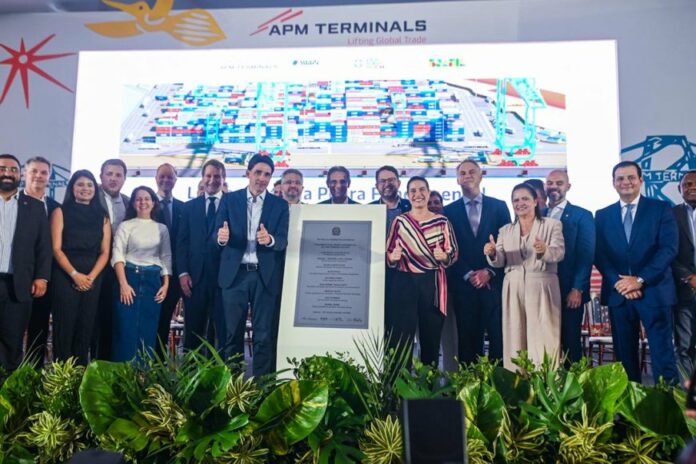
The groundbreaking ceremony, held on November 22, was attended by an esteemed group of officials and executives, including Silvio Costa Filho, Minister of Ports and Airports; Raquel Lyra, Governor of Pernambuco; Marcio Guiot, President of the Suape Industrial Port Complex; Leo Huisman, Managing Director of APM Terminals Americas; Ricardo Rocha, Managing Director of Maersk for the East Coast of South America; Daniel Rose, Managing Director of APM Terminals Suape and Pecem; and Leonardo Levy, Investments Director for APM Terminals.

Also present were Herllon Rossato Rossdeutscher, Head of Business Integration at APM Terminals Suape; Guilherme Cavalcanti, Secretary of Economic Development of Pernambuco; Eduardo Nery, President of the National Waterway Transportation Agency; Alex Ávila, National Secretary of Ports; Célia Sales, Mayor of Ipojuca; Mário Ricardo and Romero Sales, Members of the Legislative Assembly of Pernambuco; Ossessio Silva, Member of the Brazilian Chamber of Deputies; and Mariana Pescatori, Executive Secretary of the Ministry of Ports and Airports.

APM Terminals Suape is one of three projects currently being implemented by APM Terminals worldwide, a company with over half a century of experience and presence in 33 countries. With an initial investment of R$1.6 billion, the terminal will accelerate regional development by generating approximately 300 direct jobs and 2,000 indirect jobs. It will also strengthen Pernambuco’s connection with other international ports and introduce pioneering initiatives in port sustainability.

“Investments like this strengthen the Port of Suape. Our goal is to grow Suape by 5% this year, generating more jobs and income for the people of Pernambuco. This is a commitment from President Lula,” highlighted Minister of Ports and Airports Silvio Costa Filho.

“The new terminal will allow the Port of Suape to handle even more cargo, ensuring new business opportunities for Pernambuco and the potential for increased exports. Suape, already in a prime location and one of the largest public ports in the country, will gain more competitiveness, enhancing its leadership in the Northeast. This significant investment will create direct and indirect jobs and contribute to the state’s development. It aligns with other initiatives aimed at improving the quality of life for our people,” said Pernambuco Governor Raquel Lyra.

According to APM Terminals Americas Managing Director Leo Huisman, proactive investment is essential for future growth. The new terminal will create significant opportunities for the Northeast. “This development will provide importers and exporters with more choice. With the terminal set to begin operations in 2026, we will expand berthing windows for our customers, allowing them to introduce new services that connect Pernambuco to numerous global ports.”

APM Terminals Suape and Pecem Managing Director Daniel Rose emphasized the importance of the project’s previous stages and next steps.

 “The first phase was the largest demolition project in Pernambuco, lasting 222 days. Recently, we invested R$241 million in modern equipment to consolidate the project and reinforce our commitment to leading the modernization of the port sector in Brazil. The next phase will involve selecting companies responsible for constructing the quay, yard, and buildings. It is worth noting that with the start of operations, we will increase container handling capacity by 55%.”

“Suape deserves a second container terminal. The APM Terminals project will ensure efficiency and provide more competitiveness, enabling the port to be included in new international routes and bringing the latest in port operations, such as electrified operations. This terminal will be the first 100% electric terminal in Latin America. It is a significant advantage for us and aligns with sustainable projects being developed to expand our activities in harmony with environmental protection,” stated Port of Suape President Marcio Guiot.

Saipem awarded an offshore EPCI contract by bp in Indonesia

0

Saipem, together with its consortium partner PT Meindo Elang Indah, has been awarded an offshore EPCI contract by BP Berau Ltd. 

The EPCI contract is part of an integrated project known as Tangguh UCC Project comprising of Ubadari field development, enhanced gas recovery through carbon capture, utilization and storage (EGR/CCUS) and onshore compression, operated by BP Berau Ltd and located in Papua Barat Province, Indonesia. The value of the contract is approximately 1.2 billion USD and Saipem’s share amounts to approximately 1 billion USD.

The Tangguh UCC project encompasses the production of natural gas resources from the Ubadari offshore field and its transportation to the onshore LNG plant where it will undergo a CO2 separation process. The captured CO2 will then be sent into an offshore platform for re-injection into the reservoir, helping to extract additional natural gas resources.

Saipem’s activities include the engineering, procurement, construction and installation of two wellhead production platforms, a wellhead platform for the re-injection of CO2 and approximately 90 km of associated pipelines.

The platforms will be fabricated locally in Karimun, Saipem’s largest yard worldwide and one of the largest in the Southeast Asian region, with over 5,000 employees and approximately 1.4 million square meters area including the marine base and docks.

The award of this important contract in Indonesia consolidates Saipem’s position in the segments of natural gas and of CO2 capture and storage projects, thanks to a unique combination of world-class assets with engineering and technological know-how.

Oldendorff successfully installs Flettner Rotors

0

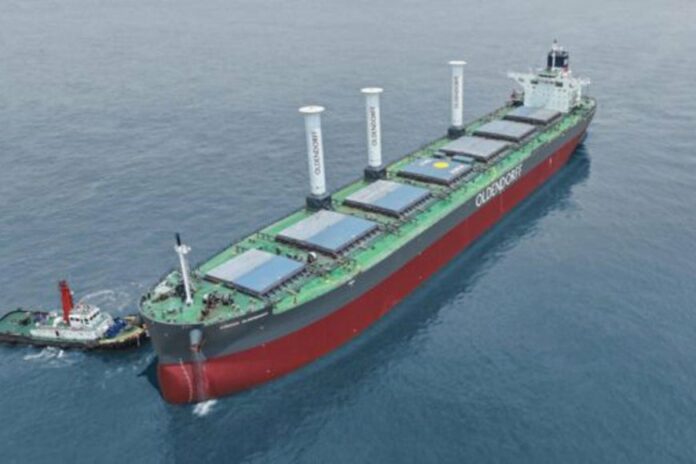
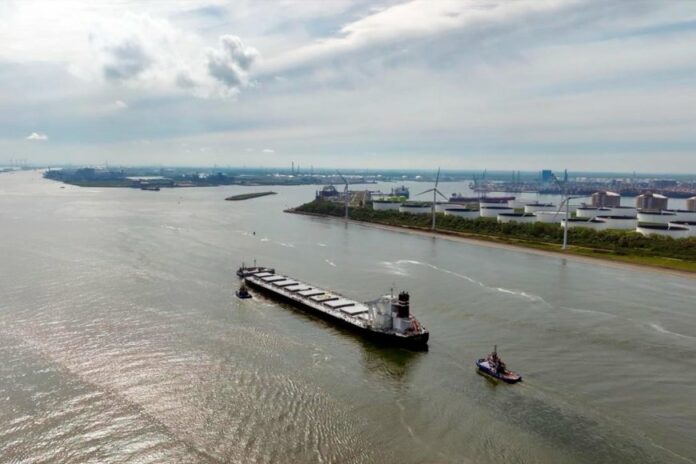
Through a joint agreement first announced in December 2023, the Chinook Oldendorff transports Elk Valley Resources (EVR) steelmaking coal from the Port of Vancouver to customers across the Pacific Ocean.

“The collaboration with EVR on this project exemplifies how partnerships can drive meaningful progress,” said Russ McNeil, Managing Director of Oldendorff Vancouver. “The Chinook Oldendorff reflects our commitment to deliver practical environment conscious solutions that align with our clients’ needs and our long-term sustainability goals.”

Equipped with Norsepower Rotor Sails™, the Chinook Oldendorff harnesses wind energy to generate additional thrust, expecting to reduce fuel consumption on transpacific routes by about 10-15%.

“We applaud Oldendorff Carriers and Elk Valley Resources for their leadership to reduce emissions from the shipping industry. Their innovative efforts are in line with the Vancouver Fraser Port Authority’s ongoing commitment to environmental protection, and we are pleased to welcome the Chinook Oldendorff at the Port of Vancouver.”, commented Jennifer Natland, Vice-President, Properties and Environment, Vancouver Fraser Port Authority.

Originally built in 2020 as the Dietrich Oldendorff, this Post Panamax vessel was renamed the Chinook Oldendorff to reflect the synergy between the Rotor Sail technology and the natural wind patterns in the Pacific Northwest. The word “Chinook” originates from the First Nations people of the Pacific Northwest referring to a type of wind with coastal and inland variations. Coastal Chinooks are southwesterly winds blowing in from the ocean, while the inland Chinooks are warm, dry winds that descend the eastern side of the Rocky Mountains. The name references the innovative use of mother nature to lower emissions on the vessel’s journeys.

This initiative also aligns with global efforts to create greener supply chains and reduce the industry’s carbon footprint, marking a key step toward decarbonizing maritime operations.

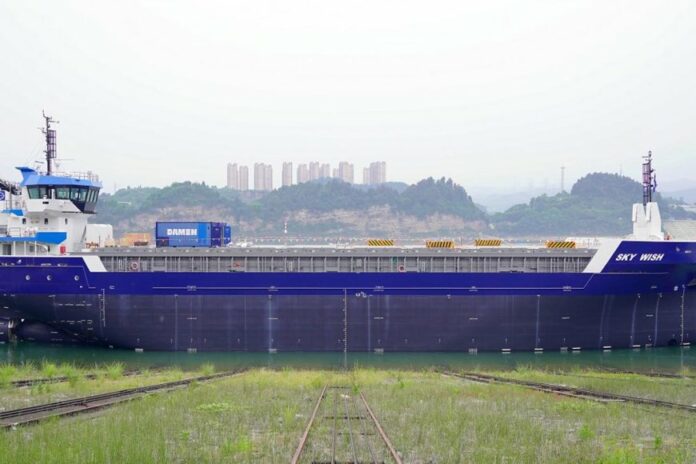
First Damen Combi Freighters 5000 on maiden voyage to Squtrixo General Trading

0

During the maiden voyage of the two CF 5000 vessels, Damen is monitoring performance via its onboard IoT system, Damen Triton. This award winning system collects and analyses data from thousands of sensors located around the vessel. 

Based on ship design criteria and benchmark information, this data then provides valuable insight into maintenance requirements and vessel performance, amongst other things. 

In this instance, Damen is using the data provided by Triton to assess the performance of the new vessels and to gather information to ensure the continual evolution of the design. 

Damen Commercial Director Cargo Vessels Remko Bouma says,

“We are delighted to welcome Squtrixo as a first time Damen client, and the launching customer of the CF 5000. Based on the information from the Damen Triton system onboard, we can see that the vessels are performing as expected. We are also confident that the CF 3850 will perform to the full satisfaction of Squtrixo. This delivery will mark the 27th of the new, improved CF 3850. The next generation vessel has rapidly, and repeatedly, proven itself to be a thoroughly efficient and reliable platform.”

The CF 3850 has long been a popular vessel in Damen’s portfolio. In recent years, the shipbuilder has relaunched the design with improved efficiency, suitable for current and forthcoming emissions regulations. In addition to the increased efficiency of the standard design, Damen offers a range of additional options to further boost the sustainable credentials of the vessel. 

This includes various hybrid propulsion arrangements, as well as the possibility to operate on bio-diesel. The vessels are also prepared for installation of innovative technologies such as wind assisted propulsion, to further reduce fuel consumption and emissions. 

Due to the rising demand for the popular CF 3850, Damen began a partnership with the Ba Son Shipyard in Vietnam to construct the design, in addition to the production of the vessel at the Damen Yichang Shipyard in China. 

Like the CF 3850, the CF 5000 is designed for fuel economy. The new design features many of the same features as the CF 3850, but with an increased cargo capacity. The new series boasts a hold capacity of 7000m3 and can carry up to 5160 tonnes of cargo. À subdivision with grain bulkheads and tween decks increases loading possibilities. 

WinGD seals ammonia-fuelled X-DF-A engine orders for Chinese gas carriers

0

The engines, to be built at Yuchai Marine Power Co, will be delivered for a total of seven 25,000m3 and 41,000m3 LPG/ammonia carriers ordered by Tianjin Southwest Shipping. The vessels will deploy 5- and 6-cylinder versions of the 52-bore X-DF-A engines and are scheduled to enter service from Q3 2026.

The orders will be built by Huangpu Wenchong Shipbuilding, a shipyard with strong experience in the construction of small- and medium-sized gas carriers. The new orders highlight WinGD’s growing stake in the gas carrier market, which is a vital link in the emerging global supply chain for green ammonia as well as a pioneering segment for the uptake of ammonia as marine fuel.

WinGD Director Sales, Volkmar Galke said:

“The demand for gas carriers is growing rapidly as the central role of ammonia in the hydrogen economy is becoming clear. WinGD has already reported multiple orders of its new X-DF-A engine in this segment, and these new orders – a result of our strong relationships in the Chinese shipping market – further the transition towards a sustainable shipping industry that can operate on the zero-carbon energy sources it carries.”

WinGD has been developing its X-DF-A ammonia technology since 2019, following a systematic approach that prioritises safety and a deep understanding of the fuel’s combustion characteristics. The concept has been granted approvals in principle from several leading classification societies, giving ship operators the assurances they need to deploy them safely, with the first engines set to enter service in 2026.

WinGD has secured close to 30 orders to date for ammonia-fuelled X-DF-A engines, with sizes ranging from 52- to 72-bore, for vessels including bulk carriers, gas carriers, container vessels and oil tankers.

NORDEN signs sustainable maritime fuel offtake agreement with Meta

0

Danish shipping company NORDEN has announced a sustainable maritime fuel agreement with Meta aimed at advancing the decarbonisation of the maritime industry.

“We are proud to include Meta to our growing list of customers looking to decarbonise their maritime supply chains,” says Anne Jensen, COO at NORDEN. “Both Meta and NORDEN share a commitment to high standards and to the further development of the decarbonisation of maritime freight, as demonstrated by our involvement in the Book and Claim Community’s Governing Board.”

NORDEN’s emissions reduction solution offers a pathway for decarbonisation of maritime freight, in an environment with limited geographic biofuels availability. The emissions reduction solution NORDEN follows – known as Book & Claim – works by burning biofuel on a NORDEN operated vessel and the emission reduction being allocated to a third-party customer, in this case Meta, using a book and claim chain of custody system. NORDEN uses the Smart Freight Centre’s Voluntary Market Bases Measure Framework for Logistics Emissions Accounting and Reporting as the basis for transferring the environmental attributes (emission reductions) of biofuels used in our operations to our clients with a high degree of transparency and assurance. The ISCC certified biofuel has 80-90% life cycle emission reduction potential and is a drop-in substitute which can be utilised by existing vessels. The emissions reduction is authenticated by an independent verifier, Normec Verifavia and transacted on an external registry through 123Carbon.

“Our Book & Claim solution allows customers of marine transportation across the globe to take advantage of emissions reductions from biofuels, even when biofuels are not physically available to be bunkered on a specific trading route or voyage,” Anne Jensen adds.

The solution is developed to enable NORDEN’s direct customers and clients in other industries which are dependent on marine transportation and seeking to decarbonise their supply chains to credibly invest in maritime decarbonisation.

“At Meta, we have a goal to reach net zero emissions across our value chain in 2030. To achieve that goal, we’re working to address emissions sources across the supply chain – including the upstream emissions associated with the maritime transportation of supply chain goods such as computing equipment and construction materials. Innovative solutions such as those that NORDEN is providing are critical for companies like Meta to decarbonise our value chain at the pace and scale required to achieve our emissions reduction targets,” said Devon Lake, Head of Net Zero Strategy at Meta.

Vard to build five Walk-to-work vessels

0

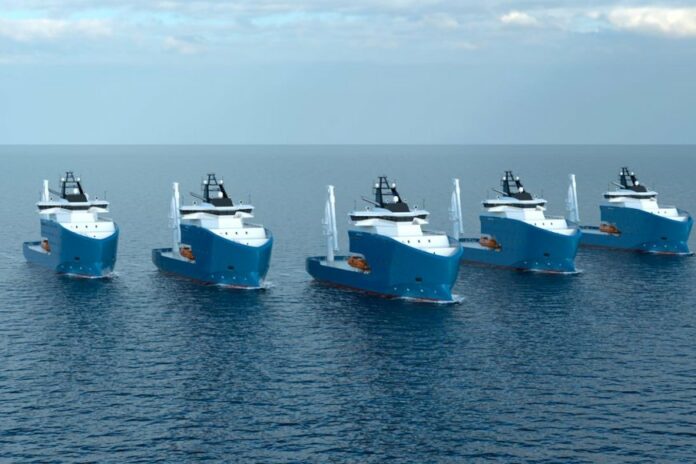
The units will provide supply, maintenance and operational services to offshore platforms in the oil and gas sector. They will be constructed according to VARD’s 3 32 design which has been developed by VARD in close collaboration with the customer. The design is based on VARD’s world-leading portfolio of proven SOV designs, optimized for low fuel consumption as well as high operability and comfort.

All the units will be built, outfitted, commissioned and delivered from Vard’s shipyard in Vietnam, Vung Tau. The first four vessels are expected to be delivered in the second half of 2027, with the final unit in the first quarter of 2028.

They will be approximately 88 meters long with a beam of about 19,8 meters, equipped with a diesel/electric and battery-hybrid propulsion system, a 3D motion compensated gangway system, and a 3D motion compensated crane. The Walk-to-work vessels will also feature comprehensive accommodation for 190 people, providing high levels of comfort and excellent working conditions for the crew and technicians on board.

The vessels are highly versatile for offshore support operations focusing on onboard logistics, comfort, large storage capacities and superior operability. The fully electric propulsion system provides future compatibility to known energy sources.

Pierroberto Folgiero, CEO and Managing Director of Fincantieri, commented:

“We are very pleased to further consolidate our role as a trusted partner and leader in the specialized vessels sector, an area fully aligned with our Industrial Plan for sustainable growth. Crew safety and operational efficiency remain our top priorities. These new vessels will integrate the most advanced technologies and tailor-made solutions to ensure optimized performance and reduced fuel consumption. Another step forward in fulfilling Fincantieri’s commitment to excellence and sustainability as our order book continues to expand”.

Entrion Wind awarded patent for deep water monopile technology

0

Entrion Wind has announced the issuance of a U.S. patent for its innovative Fully Restrained Platform (FRP) monopile. Officially granted by the U.S. Patent and Trademark Office on October 29, 2024, the patent is the first of six filed by Entrion Wind to be awarded, marking a major milestone in the company’s ongoing efforts to revolutionize offshore energy technology. 

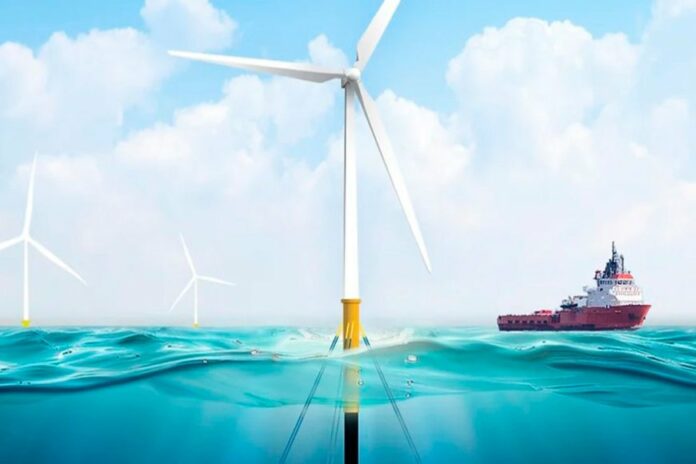
Entrion Wind’s revolutionary design of the FRP monopile extends the range of traditional monopile technology up to 100 meters water depths, while offering improved economics compared to other foundation systems. The design integrates proven technologies with Entrion Wind’s proprietary Top Mooring Assembly (TMA) system. The TMA improves the stability of the monopile by increasing stiffness without impacting installation or operational efficiency. 

“This patent is a major achievement for Entrion Wind,” said Li Lee, VP and Co-Founder of Entrion Wind. “Our FRP monopile is designed to deliver exceptional performance in water depths that were previously inaccessible to monopile technology. This innovation will help drive down costs and enable the growth of offshore wind energy in deeper waters.”

Entrion Wind continues to test the viability of the FRP monopile with comprehensive feasibility studies and demonstration projects. Companies can assess whether the FRP monopile concept works for a specific site, estimate impacts on LCOE from CapEx and OpEx, and evaluate project risks and opportunities. Demonstration partners have the opportunity to test the FRP Monopile technology first-hand in the field, as either a full deployment or retrofitted design.