3.3 C
New York
Home Blog Page 121

Damen Shiprepair Oranjewerf advances sustainable dockings with Shore power

0

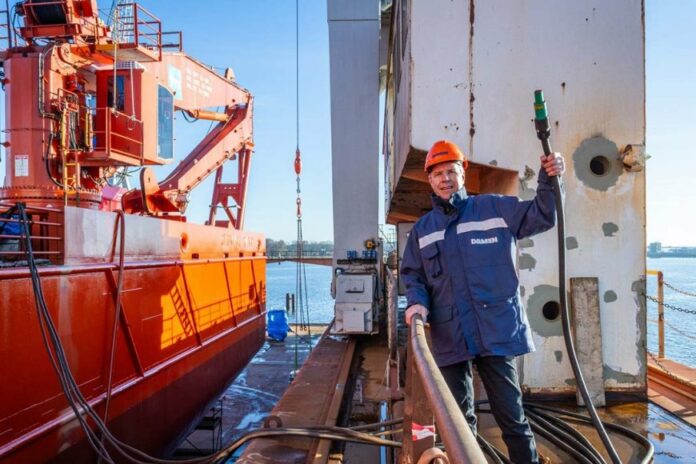
Damen Shiprepair Oranjewerf is giving a green boost to ship repair, maintenance, conversion and refit projects with a recent shore power installation. 

The yard had already installed shore power suited to many of its projects. However, with this latest installation, developed by Elma Systems, the availability of clean on-shore power converted to 60Hz has been widened to cover all types of vessel that call at the yard. 

As part of Damen Shipyards Group’s mission to become the most sustainable maritime solutions provider, the Amsterdam yard has provided shore power for many years. In this way, the yard provided low emissions energy to vessels undergoing work in its docks. It was, however, not a solution compatible with all vessels. 

Commercial Manager Damen Shiprepair Oranjewerf Jeen van der Werf explains,

“Previously, we were able to provide shore power with 50 hertz. However, we get a lot of offshore, navy and fishing vessels come to the yard for work, and many of these vessels operate on 60 hertz.”

As a result, he says, they often had to hire in a diesel powered generator, something the environmentally conscious yard was keen to avoid. 

“We’re always keen to play our part in advancing maritime sustainability so, when we heard about a 35% temporary subsidy for sea goings vessels from the RVO (Dutch Enterprise Agency) for shore power installations, we were very happy to take part with an investment of our own.”

First, the yard needed to find a company that could think along with them to create the right solution; one that would cover all the diverse vessels the yard caters for, and which would be optimally reliable. 

It was at this point that Damen Shiprepair Oranjewerf began discussions with Elma Systems. Together, the two companies set about the development of a solution in tune with the yard’s needs. Elma came up with a rotary convertor which converts the shore power to the desired 60hz (hertz). 

The shore power system of 355A (Ampere), which is installed to the yard’s floating dock, can support up to 250kVA. However, should more power be required, there is an option to add a battery or secondary power source. The Rotary Converter is therefore also equipped with a load sharing system. With this new shore power system, Damen Shiprepair Oranjewerf expects to see a reduction in carbon emission, making a significant contribution towards its sustainability ambitions. 

As an additional benefit, the wider use of shore power means that the yard no longer has to hire in costly diesel generators, and is, therefore, able to offer its clients a more competitively priced project. 

Marco Roman, of Elma Systems said,

“We’re very grateful to Damen Shiprepair Oranjewerf for placing their trust in us to develop this customised solution. Also, we value the collaboration that we experienced during this project, from development till installation. It has resulted in a solution that will help, not only Damen, but also the maritime industry as a whole to conduct operations in a cleaner, more environmentally conscious manner in a very smart way.”
PSA Singapore and EMC establish joint venture for container terminal operations in Singapore

0

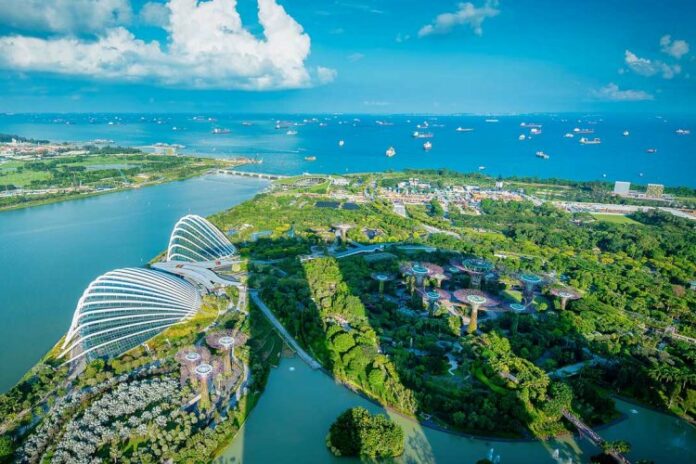
PSA Singapore (PSA) and Evergreen Marine Corporation (EMC) have established a joint venture in Singapore, aiming to enhance operational excellence and achieve greater synergies in container operations.

This strategic partnership will offer long-term terminal capacity assurance to EMC’s fast expanding global vessel fleet in PSA Singapore.

PSA and EMC will continue to deepen their collaboration to enhance operational efficiency, drive digital innovation, and advance sustainability efforts. This strengthened partnership, with a shared commitment to leading technological advancements and innovation, will ensure PSA and EMC consistently deliver exceptional service and exceed customer expectations.

Mr Ong Kim Pong, Group CEO of PSA International, said, 

“Trade flows are the lifeblood of the global economy, fueling markets, driving growth and connecting communities worldwide with ports and shipping lines acting as its key enablers. PSA is proud to announce our latest collaboration with Evergreen Marine, a like-minded partner dedicated to advancing global trade and connectivity. Together, we see immense opportunities to embark on initiatives that will not only enhance supply chain resilience but also reimagine how ports and shipping lines can work in unison, as part of our Node-to-Network (N2N) strategy so as to ensure global trade flows as smoothly as water.”

Mr Nelson Quek, Regional CEO Southeast Asia, PSA International, said, 

“PSA is pleased to form this strategic joint venture with EMC, building on our longstanding relationship to enhance collaboration and meet the rapidly changing needs of the maritime industry. By integrating our strengths and capabilities, this mutually beneficial partnership will deliver greater value and deepen the synergies between the two organisations over the long term.”

Mr Y.I. Chang, Chairman of EMC, said, 

“Environmentally friendly ships and efficient terminals are at the core of our operations. As the company’s business expands, we are always looking for like-minded partners to build high-efficiency terminals in important locations. With the culmination of everyone’s hard work comes the launch of Evergreen Marine’s first joint venture terminal with PSA. This achievement not only strengthens our operations in Asia but also marks the beginning of a deeper global partnership between us.”

Major Bangladeshi conglomerate selects Wärtsilä`s solution for new LPG Carrier vessel

0

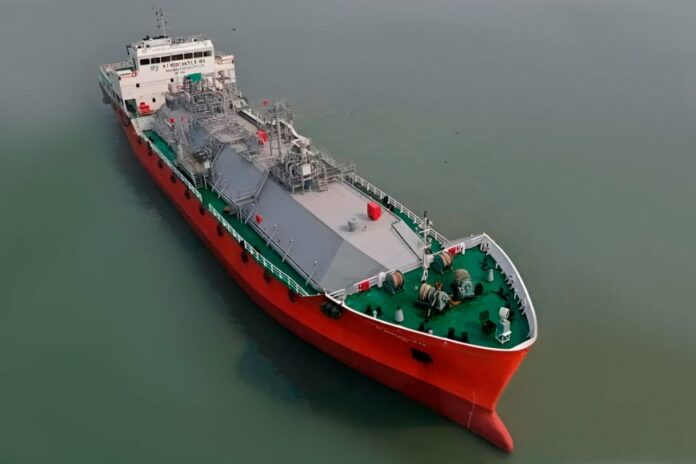
The group is one of the country’s largest industrial conglomerates, and in addition to being the owner of the new ship, it also owns the shipyard where the vessel is constructed and is the owner of the energy industries that the vessel will serve. The order was booked by Wärtsilä in October 2024.

The Wärtsilä scope for the complete cargo handling system covers three main parts: the engineering scope, the material scope, and the supervision, commissioning and gas trial scope. The materials to be supplied include the machinery on deck, LPG piping, instrumentation, interface materials linking the cargo tanks and hull, as well as the cargo control system. Wärtsilä will also provide on-site assistance at the shipyard during construction of the vessel.

Wärtsilä Gas Solutions has made four earlier projects with Meghna Group of Industries.

“We are delighted to continue our excellent relationship with Meghna Group. This latest order represents an endorsement of the continuous support, the quality of our product designs, and the functionality of the systems that Wärtsilä delivers. Bangladesh is a rapidly developing country, and we at Wärtsilä are honoured to contribute to this growth with our solutions,” comments Knut-Erik Heggem, Sales Manager, Wärtsilä Gas Solutions.

When delivered, this vessel will operate both on inland rivers as well as on deep-sea oceans. The design is therefore specifically tuned for both applications. The ship is expected to enter service in 2026.

North Sea Port becomes hub for sustainable aviation fuel and chemicals production

0

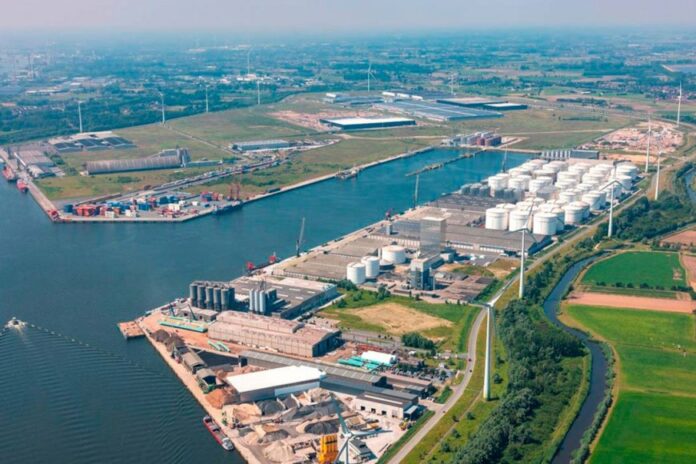
North Sea Port and Ghent-based Terra Mater BV are collaborating with the Brazilian group Petrom to produce sustainable aviation fuel and basic chemicals. 

Under the agreement, Petrom, a major Brazilian petrochemical group, will supply Terra Mater with the necessary bio-based raw materials for five years. These materials will be used to produce sustainable aviation fuel (SAF) and sustainable chemicals. On Tuesday, November 26, 2024, the three parties signed an agreement in São Paulo as part of the Belgian economic mission currently visiting Brazil. 

“With our technology, we contribute to the goal of making aviation emission-free by 2050. Achieving this requires a massive leap in the production of sustainable aviation fuels,” said Kapil Shyam Lokare, CEO and co-founder of Terra Mater. 

The company has been testing its 2X Alcohol-to-Jet technology at a pilot plant at the Kluizendok in the Ghent section of the port area. This technology enables the conversion of various waste streams and alcohols into sustainable jet fuel and basic chemicals, which are utilized in green applications. Terra Mater is now prepared to scale up production. 

The agreement strengthens the already close ties between North Sea Port and Brazil. South America’s largest country consistently ranks in the top five of the port’s most significant trading partners. Last year, goods throughput between the two amounted to 4.5 million tons, primarily driven by raw material imports. 

North Sea Port serves as a key gateway to the European market for Brazilian fruit juice. In addition, the port and Brazil collaborate extensively in biofuels. North Sea Port hosts Belgium’s largest biofuel cluster, while Brazil is a global leader in biofuel production and usage. 

Innovation with sustainable microgrid technology will strengthen Ports of Stockholm

0

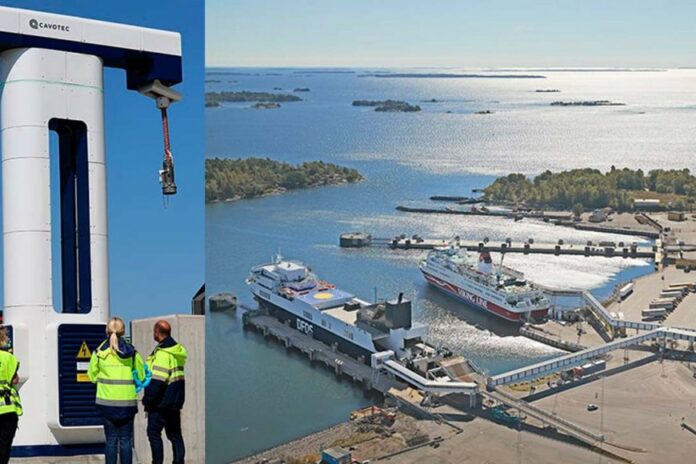
Ports of Stockholm and its partners are now launching an innovative project that combines onshore power supply (OPS) and microgrid technology. The initiative will reduce emissions, improve energy efficiency and increase port capacity to meet future demands for sustainable energy use.

The project, funded by the Swedish Innovation Agency Vinnova within the program System Demonstrator Sustainable Port, is led by the University of Skövde in collaboration with Stella Futura and Ilmatar. By integrating renewable energy and advanced energy management systems, energy efficiency can be improved, emissions reduced and the operational resilience of the port increased. The system demonstration, carried out in Port of Kapellskär, will show the way for future green port solutions.

Onshore power is an important solution that allows ships to connect to the port’s electricity grid while at berth, allowing auxiliary engines to be switched off. This reduces emissions, noise levels and fuel consumption in the port environment.

“We are working strategically to meet EU regulations that require onshore connection for ships by 2030. This places high demands on the electricity grid, especially in Port of Kapellskär where the current capacity is limited. In Kapellskär, the OPS facility already enables environmental benefits today. By integrating microgrids with OPS, we create a robust and sustainable solution that reduces the port’s environmental impact and strengthens our competitiveness,” says Staffan Forsell, Chief Strategy and Development Officer at Ports of Stockholm.

To meet current challenges, such as limited grid capacity and increased loads, while optimizing OPS needs, the project will develop a comprehensive microgrid solution that combines solar cell systems, battery energy storage systems (BESS) and an advanced energy management system (EMS). The solution will ensure a reliable power supply, reduce greenhouse gas emissions and strengthen the port’s resilience to disruptions.

“This project is an important step towards greener and more efficient port operations. By using the latest microgrid technology, we are meeting the demands of the future while contributing to sustainable development,” says Mostafa Kermani, Senior Lecturer in Electrical Engineering at the University of Skövde.

The project, called Innovative Microgrid Design for Sustainable Onshore Power Supply: Port of Stockholm case study, runs between 2024 and 2027. The system demonstration is taking place in Port of Kapellskär and is part of a long-term strategy to create sustainable port environments.

Ilmatar is an independent power producer (IPP) and a leading player in the Nordic renewable energy market. They generate clean energy from wind and solar, in a large-scale, long-term sustainable and efficient way. With energy storage capacity, they also contribute to a more flexible energy ecosystem.

Stella Futura works on the design, integration and financing of renewable energy systems with a focus on energy storage for commercial and industrial use.

Green passenger ferry with COSCO SHIPPING paintwork starts operation in Hamburg

0

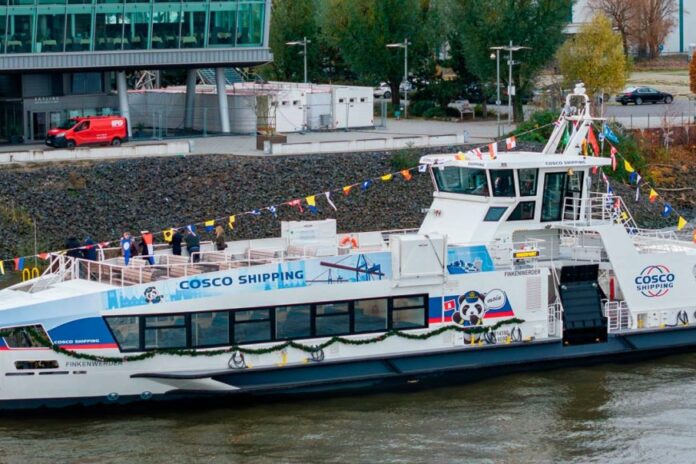
The 33-metre-long ferry has a capacity of up to 250 passengers and will be used on HADAG’s routes in the Port of Hamburg and on the Elbe. Its name “Finkenwerder” derives from the name of a Hamburg city district.

The ferry’s paintwork, developed by COSCO SHIPPING Europe, brings the message of friendship between the shipping company and the city of Hamburg to the local people for at least the next three years. On one side, the silhouette of Hamburg and its port can be seen, while COSCO SHIPPING’s mascot Captain Panda welcomes the passengers by waving the Hamburg flag. On the other side, Hamburg’s role as a ‘gateway to the world’ is emphasised by connections on a world map, while Captain Panda holds a green leaf to underline the shared mission for a green and sustainable future.

“COSCO SHIPPING’s container ships have been an integral part of Hamburg’s cityscape for more than 40 years. Together we connect countries, people and cultures. In 1989, we opened our first office outside China in Hamburg as our new home in Europe. With the design of the new HADAG hybrid ferry, we are expressing our long-standing and close ties with Hamburg and supporting the city on its way to becoming a green metropolis”, said Fu Xiangyang, Chairman COSCO SHIPPING (Europe) GmbH during the official christening ceremony.

More than 200 invited guests from politics, authorities, the consulate and the media as well as partners and customers of COSCO SHIPPING and HADAG attended the ceremony and had the privilege of being the first passengers on an exclusive tour around the Port of Hamburg.

Auramarine secures order for two hybrid diesel and biofuel supply systems for Meriaura

0

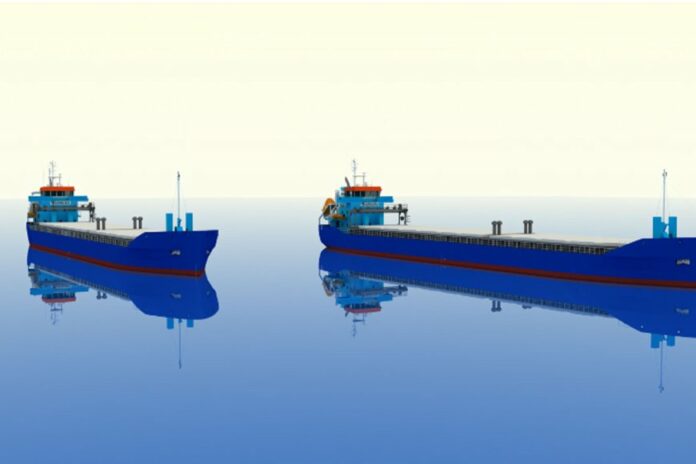
The Auramarine fuel supply systems will be used onboard two Meriaura cargo ships (hull numbers BN832 & BN833), which will be built by Dutch shipyard Royal Bodewes, and support Meriaura in enhancing operational reliability, performance, maintenance and safety. 

The systems will be manufactured at Auramarine’s Shanghai factory with deliveries to the shipyard in May 2025 and March 2026. The fuel supply systems will supply fuel oil to the engine and help ensure the fuel meets the set temperature and viscosity requirements.

The Ecotrader ships are 105 meters long, 1A ice classed 6750 DWT and designed to achieve the lowest possible emission levels. This makes them approximately 30 percent larger than the earlier EcoCoaster vessels (Eeva VG and Mirva VG), improves the economic efficiency and lightens the environmental burden of transport. Like the EcoCoaster vessels delivered in 2016, the Ecotraders can be operated with biofuel made from recycled raw material produced by Meriaura’s subsidiary VG-Ecofuel, giving ship operators greater flexibility on their fuel choice.

Auramarine’s fuel supply systems are designed for different types of biofuels in mind. This enables owners and operators to manage the health of the vessel when handling fuel temperature and viscosity, which is essential to avoid costly damage, unplanned downtime and associated safety issues. 

Commenting on the development, John Bergman, CEO of Auramarine, said:

“We’re proud of our long-standing partnership with industry leaders like Meriaura. Through close collaboration with shipowners as well as shipyards, we’re able to develop tailored and reliable solutions that ensure effective fuel management and ongoing safety.

“As shipping navigates a multifuel future, quality is key. This means that fit for purpose systems are key to giving shipowners the confidence to make long-term investments in the operational integrity of their vessels.”

Beppe Rosin, CEO, Meriaura added:

“Meriaura has set an ambitious goal to reach carbon neutrality within the 2030s. Instead of adopting a “wait-and-see” approach to potential future alternative fuel solutions, we have proactively developed our own biofuel and invested in technology that enables its use on our vessels. 

“As a pioneer in large-scale utilization of biofuels on ships, we are very pleased to collaborate closely with a well-reputed and local technology provider like Auramarine.”

Peel Ports to invest £30m in new RoRo berth at Port of Sheerness

0

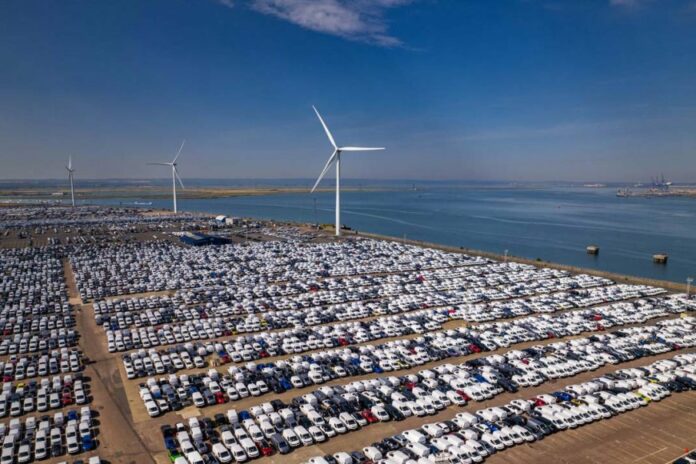
The project will see a new in-river vessel berth and floating pontoon developed, which will increase capacity for RoRo cargo handling at the port, catering for larger vessels exceeding 230m LOA.

The new berth and pontoon will cater for RoRo vessels arriving at the port, carrying commodities such as automotives, paper reels and timber, construction machinery and building materials, project cargo, agribulks, and steel.

With on-site construction set to begin in March 2025, the development will support the continued growth of its customers such as Volkswagen and CEVA, who use Sheerness as the primary location for their Southern UK operations.

Currently in the design and manufacturing phase, construction for the project will begin next year with the removal of existing infrastructure before piling is installed, followed by installation of a new  pontoon. The new berth is expected to be operational in the summer of 2025.

In addition to supporting larger vessels, the pontoon will support Quarter Ramp vessels on both sides, plus Stern Ramp vessels on the adjacent berth.

The Port of Sheerness plays a crucial role in driving supply chains across the country, particularly for the automotive industry, with  300,000 vehicles being processed at the site each year.

The new berth and pontoon highlights Peel Ports’ ambition to deliver a comprehensive automotive service, including a proposed rail siding connected to the main port estate via the Wildfire Bridge.

The automotive industry is just one sector which will be positively impacted, with the construction and paper industries benefiting from the new infrastructures also, and adjacent berths being freed up to increase volume capacity for various cargos.

Richard Goffin, Port Director, Peel Ports Great Yarmouth and London Medway, said: “The Port of Sheerness plays a hugely important role in the handling and processing of a broad range of commodities, whether it is automobiles, paper, or construction materials, ensuring that they reach their destination without delay.

“This £30 million project not only shows our ambition to grow our offering to a range of industries, it also represents the next stage of significant investment into the port’s infrastructure which will bolster our position as a leader in handling RoRo vessels.”

Peel Ports’ investment in the new berth comes after Finnlines launched a new freight service in September from Finland to the Port of Sheerness, with further connections available to Belgium, Spain, and Ireland, which will be operated with three Finneco-class hybrid RoRo vessels.

With each vessel holding cargo capacity of 5,800 lane metres, equivalent to around 400 trailers, the service improves the route network, providing customers with shorter transit times and increased cargo capacity, as well as enabling faster and more efficient loading and unloading operations.

Hitachi Energy to integrate ScottishPower wind farm to power almost one million homes in the UK

0

Hitachi Energy’s advanced solutions will support the reliable transfer of clean energy to the national electricity grid.

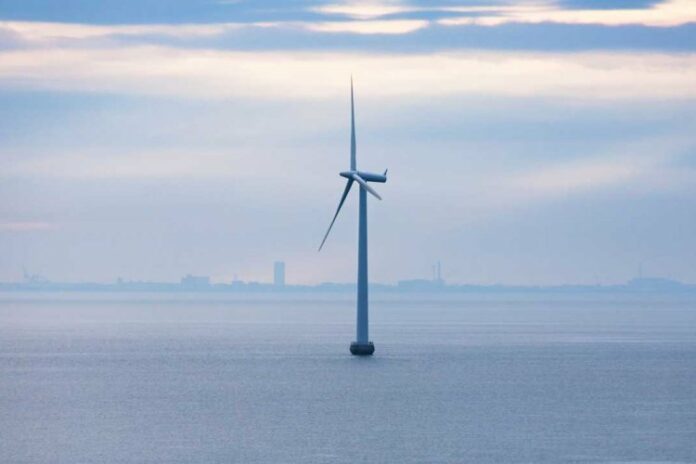
Hitachi Energy will provide onshore and offshore grid connection equipment and power quality solutions to ScottishPower Renewables, part of the Iberdrola Group, a global leader in renewable energies. The project will enable the integration of 960-megawatt (MW) of renewable electricity from the East Anglia TWO (EA TWO) wind farm, located 32 km off the Suffolk coast of England. This will provide enough green power for the equivalent of almost one million homes and significantly contribute to the UK’s 2030 energy targets.

The energy landscape is growing at an unprecedented pace, and integrating renewables into the grid at scale reveals new challenges, such as lack of inertia, power imbalances, limited interconnections, and voltage instability. Through projects like EA TWO, Hitachi Energy’s domain expertise and large installed base in power quality solutions are helping countries overcome these challenges to enhance the use of renewable energy and meet carbon neutrality targets.

In this spirit of collaboration and co-creation, Hitachi Energy and ScottishPower Renewables have set new advanced solutions and quality standards to accelerate the energy transition through offshore wind.

Connecting the clean, green generation from our turbines to the grid is a vital part of any renewables project and it’s great to be in such capable hands with Hitachi Energy for East Anglia TWO.

Ross Ovens, ScottishPower Renewables’ Managing Director for Offshore, said:

“This £4 billion windfarm will have the capacity to power almost one million homes with green electricity and will help drive the country forward on its clean energy mission. We can only achieve that by partnering with leading companies like Hitachi Energy and we look forward to working together to make that happen.”

Niklas Persson, Managing Director of Hitachi Energy´s Business Unit Grid Integration, said:

“We are proud to work with ScottishPower Renewables to accelerate the clean energy transition. Integrating bulk renewables such as wind power is critical to accelerating the energy transition and is also an effective and long-term solution to decarbonize power. We are playing our part in integrating renewables and enabling Europe to become the world’s first climate-neutral continent by 2050.”

Hitachi Energy will provide Grid-eXpand™ Offshore solutions and onshore grid connection equipment using an EconiQ™ gas-insulated switchgear. The Grid-enSure™ power quality solution, SVC Light STATCOM, will play a key role in using power electronics and advanced control systems to ensure reliable, flexible, and stable power despite the intermittent nature of wind power.

Hitachi Energy’s leading grid integration equipment and power electronics solutions continue laying the foundation for a resilient and flexible grid, supporting the European energy system’s transformation to sustainable power.

Towngas and CPN sign green methanol MOU to supply Hong Kong’s green port project

0

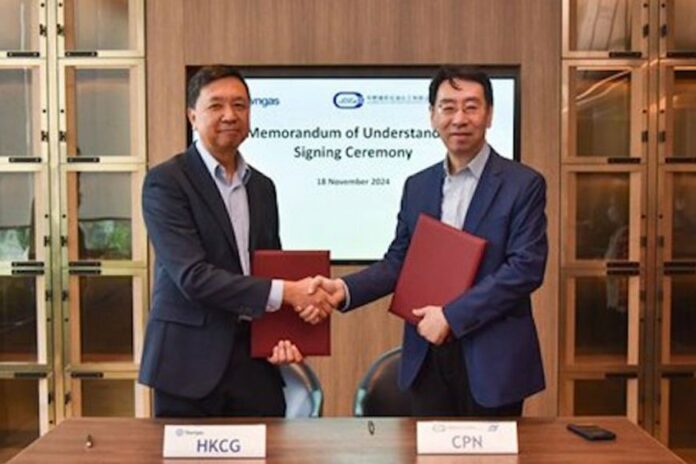
The Hong Kong and China Gas Company (Towngas) and Chimbusco Pan Nation Petro-Chemical Company Limited (CPN) have recently signed a Memorandum of Understanding (MOU). 

Both parties agreed to establish a long-term partnership to jointly develop domestic and international green methanol marine fuel markets and promote the maritime industry’s green transition.

Towngas and CPN will collaborate on green methanol fuel distribution. Towngas will supply CPN with its self-produced green methanol, which has obtained ISCC EU and ISCC PLUS certifications. CPN will be responsible for distributing the green methanol fuel to its customers. Towngas will also provide support in handling technical enquiries and providing product certification documents.

Edmund Yeung Lui-ming, Executive Director & Chief Financial Officer of Towngas, who witnessed the signing ceremony, noted that demand for green methanol as marine fuel will continue to rise as governments and international organisations worldwide implement decarbonisation requirements for the shipping industry.

“Towngas is committed to expanding its green methanol production capacity and, through industry collaboration, responding to the Government’s recently promulgated Action Plan on Green Maritime Fuel Bunkering to contribute to Hong Kong’s development as a green maritime fuel bunkering centre.”

Calvin Chung Dik-hong, Director & Deputy General Manager of CPN, stated,

“Implementing green methanol development is a crucial step in realising the Action Plan on Green Maritime Fuel Bunkering. As Hong Kong’s largest bunker fuel supplier and trading house, CPN actively pursues long-term development plans for alternative marine fuels with partners, helping to strengthen and enhance Hong Kong’s maritime industry advantages and contribute to establishing Hong Kong as a green port.”

Towngas is the first enterprise on the Chinese mainland to receive ISCC EU and ISCC PLUS certifications for green methanol. The Company’s methanol production plant in Ordos, Inner Mongolia, uses proprietary technology to convert biomass and municipal waste into green methanol. Production is expected to reach 150,000 tonnes annually in 2025, serving both the maritime and chemical industries. Through retrofitting existing facilities and other measures, the Company plans to gradually increase the annual production capacity to 300,000 tonnes, supporting the International Maritime Organization (IMO)’s target to reach net-zero carbon emissions from international shipping by or around 2050.