5.8 C
New York
Home Blog Page 123

RoRo vessel Rotra Futura launched

0

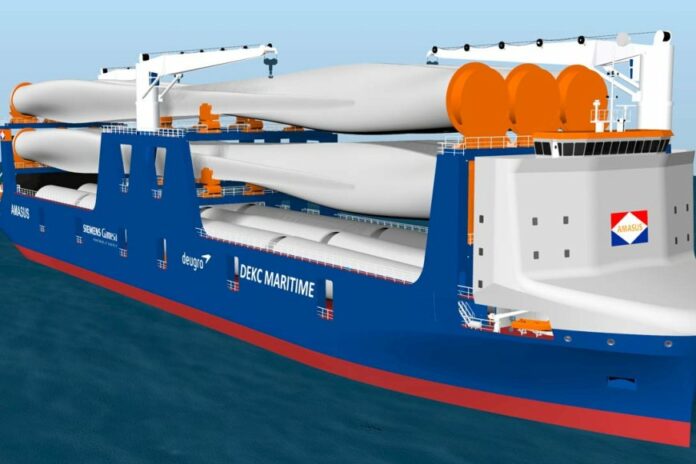
Concordia Damen announces its collaboration with Amasus, deugro Danmark, Siemens Gamesa, and DEKC Maritime in the development and construction of two new and advanced Offshore Wind RoRo vessels: Rotra Futura and Rotra Horizon. 

These vessels, of which the first one launched yesterday at Jiangsu Zhenjiang Shipyard, are specifically designed for the transport of large, and ever growing, wind turbine components. 

The development of the Rotra Futura and Rotra Horizon is the result of a partnership. At the basis there is the wish – and a concrete charter agreement – of Siemens Gamesa, Deugro Danmark and Amasus to stay ahead in the market with a new Rotra concept that aims to become a vital link in the logistics chain of the growing wind energy industry. With the design, engineering, project management and shipbuilding capabilities of DEKC Maritime and Concordia Damen added, the five companies worked hard to create a new, cost- and energy-efficient vessel type.

Together, the five partners have accurately mapped the requirements and challenges of the offshore wind industry and created a future-proof and sustainable design that meets the highest standards for safety, efficiency, and flexibility. 

The design of the Rotra Futura and Rotra Horizon builds on the previous vessels in the Rotra concept, the Rotra Mare and Rotra Vente, which were also developed by Concordia Damen, and have been successfully operating since 2016. 
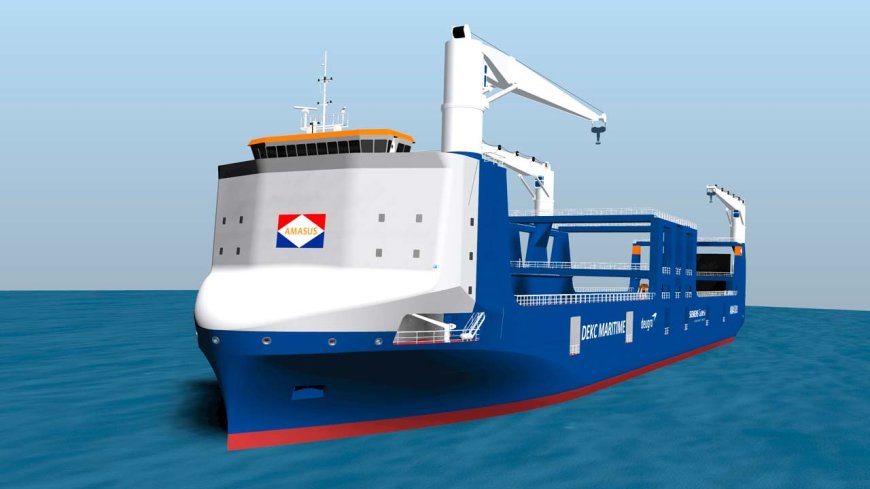
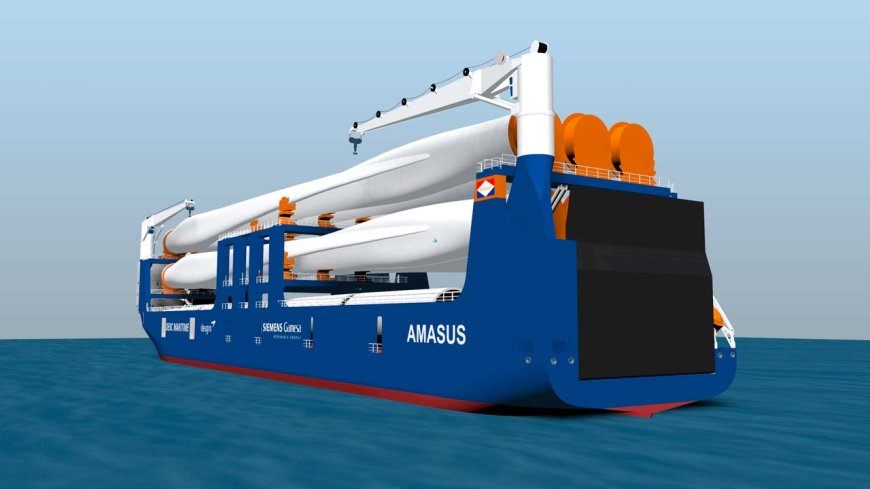
The new vessels are equipped for the latest generation of wind turbine components, which are becoming larger and heavier. Thanks to the unique RO/RO system (Roll-On/Roll-Off) and an innovative ramp, these vessels can safely and efficiently transport larger loads. Additionally, the three Liebherr cranes and the special ramp system enable turbine blades to be stowed in three tiers, providing greater flexibility in loading methods and cargo configurations.

With dimensions of 167.6 x 26 meters, and the wheelhouse and accommodation strategically located at the front of the ship, the new Rotra design maximizes cargo capacity while ensuring optimal loading without obstructing visibility. These vessels are specifically designed to meet the increasing demand for larger and more powerful offshore wind turbines.

“At Concordia Damen, innovation is central to our ship designs, allowing us to effectively respond to the growing demand for more sustainable solutions,” says managing director Chris Kornet. “For the Rotra Futura and Rotra Horizon, we, along with our partners, have focused extensively on energy savings and an environmentally friendly design. The aerodynamic and hydro-optimized hull design, combined with a special low-resistance coating, contributes to lower fuel consumption. Furthermore, the vessels are equipped with an advanced Wärtsilä main engine, which consumes 15 percent less fuel and has a smaller CO₂ emission footprint than current standards.”

With these innovations, the five companies ensure that the new Rotra vessels meet today’s and tomorrow’s sustainability standards. In addition, the vessels feature a hybrid propulsion system that complies with the highest IMO Tier 3 standards. An efficient waste heat recovery system further enhances energy savings, contributing to the sustainability of logistics within the offshore wind industry.

According to Concordia Damen, the Rotra Futura and Rotra Horizon represent a significant step in making logistics solutions more sustainable and support the development of large-scale wind energy projects. Chris Kornet:

“By continuing to focus on innovation and collaboration with our partners, suppliers and customers, we aim for Concordia Damen to remain a reliable player in the maritime sector, both for the inland shipping and the offshore wind industry.”
SBM Offshore completes US$1.5 billion financing of Jaguar

0

The project financing was fully secured by a consortium of 16 international financial institutions. The Company expects to draw the loan phased over the construction period of the FPSO. The project loan is in line with the duration of the construction phase.

The FPSO Jaguar’s design is based on SBM Offshore’s industry leading Fast4Ward® program that incorporates the Company’s seventh new build, multi-purpose floater hull combined with several standardized topsides modules. The FPSO is designed to produce 250,000 barrels of oil per day, will have associated gas treatment capacity of 540 million cubic feet per day and water injection capacity of 300,000 barrels per day. The FPSO will be spread moored in water depth of about 1,630 meters and will be able to store around 2 million barrels of crude oil.

The project is part of the Whiptail development, which is the sixth development within the Stabroek block, circa 200 kilometers offshore Guyana. ExxonMobil Guyana Ltd, an affiliate of ExxonMobil Corporation, is the operator and holds a 45 percent interest in the Stabroek block, Hess Guyana Exploration Ltd. holds a 30 percent interest and CNOOC Petroleum Guyana Limited, holds a 25 percent interest.

Douglas Wood, CFO of SBM Offshore, commented:

“I am proud of our teams which have successfully secured the project financing of FPSO Jaguar, the Company’s first project under the sale and operate model. We are demonstrating once again the value of our unique lifecycle offering not only from an execution and operation standpoint but also in our ability to continue to provide material financing solutions for our clients. We appreciate the continued support from the 16 financial institutions.”

First onshore wave energy project in the US gets official nod

0

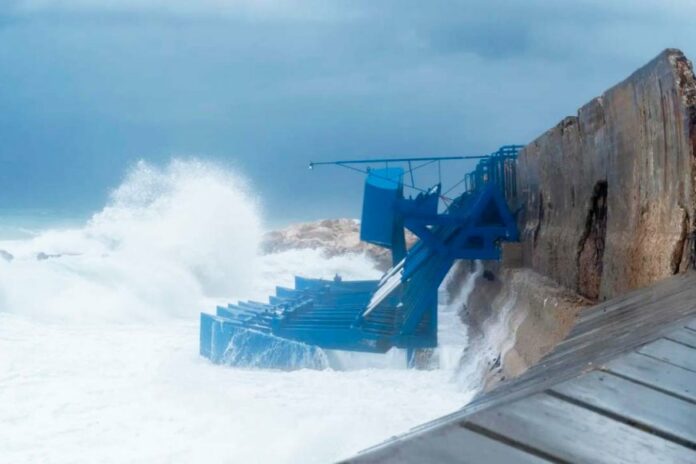
The permit, issued under NWP 52 for Water-Based Renewable Energy Generation Pilot Projects, authorizes Eco Wave Power to install eight wave energy floaters on the piles of an existing concrete wharf structure on the east side of Municipal Pier One.

The system will also include an energy conversion unit, comprised of two 20-foot shipping containers, which will be placed on the wharf deck and connected to the floaters. With the conversion unit already shipped and located on site, Eco Wave Power plans to complete installation by the end of Q1 2025.

In addition to securing the final permit, this achievement marks the completion of two key milestones under Eco Wave Power’s agreement with Shell International Exploration and Production Inc (“Shell”), which is expected to boost the Company’s revenues in Q4, 2024

The agreement between the parties was announced in April 2024, according to which, Eco Wave Power and Shell will collaborate for the development of a wave energy pilot in the Port of Los Angeles. Now, with the permit in place, the parties will enter the execution phase of the project, as per the terms of the agreement.

“We are thrilled to receive this final permit and move one step closer to bringing wave energy to the U.S.,” said Inna Braverman, Founder and Chief Executive Officer of Eco Wave Power. “This project represents not only a technological breakthrough but also a crucial step in advancing the global transition to renewable energy. We are deeply grateful for the support of AltaSea, the Port of Los Angeles, Shell MRE, and the U.S. Army Corps of Engineers as we work to make wave energy a key part of the sustainable energy landscape.”

The U.S. Department of Energy’s National Renewable Energy Laboratory estimates that wave energy has the potential to generate over 1,400 terawatt-hours per year—enough to power approximately 130 million homes. With this project, Eco Wave Power is advancing the commercialization of wave energy as a reliable and clean source of renewable power, further strengthening its position as a leader in the industry.

Two new state-of-the-art hybrid ferries delivered to Hong Kong & Kowloon Ferry Limited

0

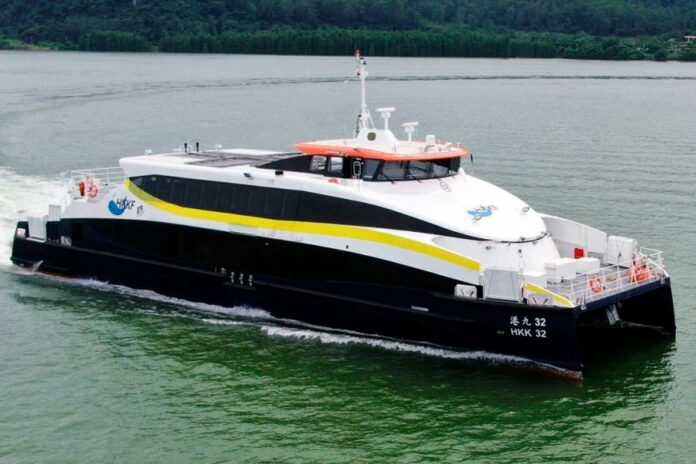
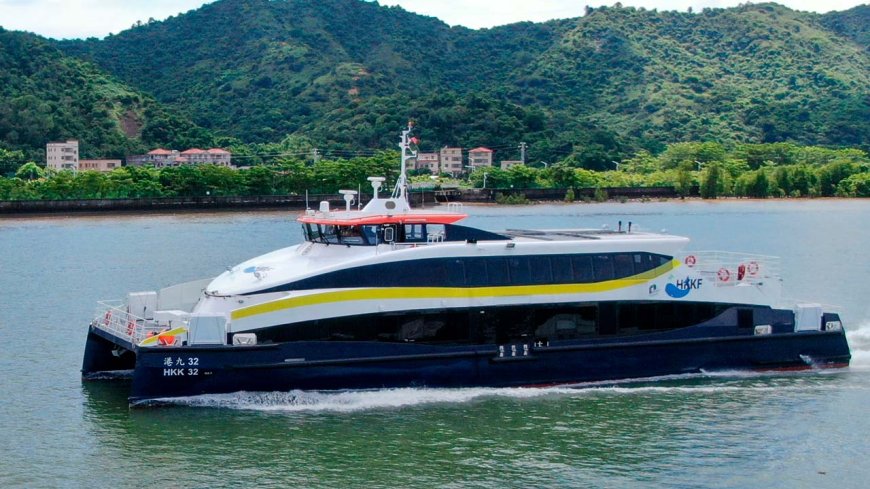
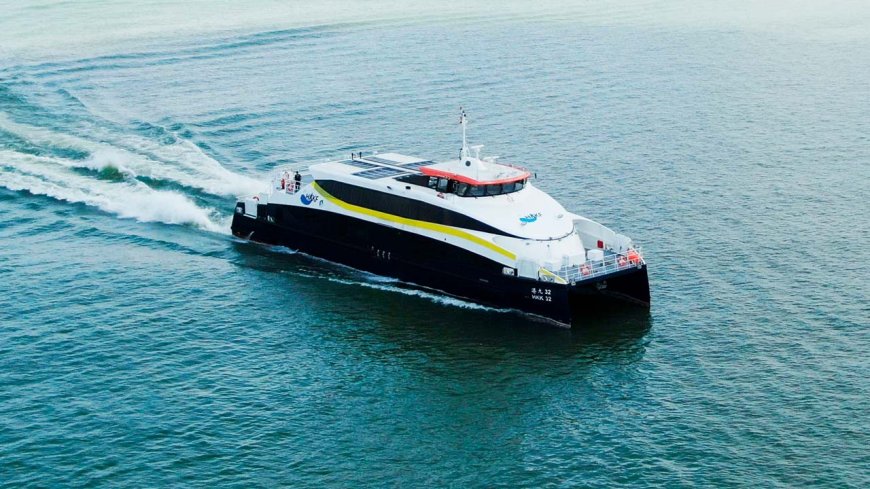
Hong Kong & Kowloon Ferry Limited (HKKF) has taken delivery of two new state-of-the-art hybrid ferries, designed by global digital shipbuilder Incat Crowther and built by Hong Kong-based Cheoy Lee Shipyards. 

The two new ferries, one of which is a carbon-hulled vessel and the other an aluminium-hulled vessel, are part of a nine-vessel order and will form part of a trial by the Hong Kong Government as it seeks to reduce emissions from the local shipping sector. Each of the vessels boasts a hybrid drive train and lithium-ion energy storage systems allowing them to operate in zero-emissions mode during slow speed transit, berthing and manoeuvring.

In a further bid to reduce the environmental footprint of the new vessels, each ferry is fitted with exhaust treatment technology and approximately 30 square metres of solar panels supported by battery technology to provide zero-emissions onboard power.

The operational and sustainability performance of both the carbon-hulled and aluminium-hulled vessel will be measured over the coming years.

In addition to sustainability benefits, each of the new vessels has been designed to provide an elevated customer experience. Each vessel is capable of transporting 300 passengers on its main deck and another 150 on the upper deck, while they also include bike hangers, lavatory facilities, a 10m2 cargo hold on the main deck and additional luggage storage on the upper deck.

Sam Mackay, Technical Manager at Incat Crowther, said the delivery of the two new vessels was a key milestone in the project.

“The successful on-budget delivery of these two hybrid vessels is a testament to the strong collaboration between the teams at Incat Crowther, Cheoy Lee Shipyards, and Hong Kong & Kowloon Ferry. This project continues our 20-year relationship with Hong Kong & Kowloon Ferry, and we are proud to be playing a role in helping to modernise and transition their fleet toward lower-emission solutions,” said Mr. Mackay.

“Together, we’ve brought a future-focused ferry platform to life, helping to meet Hong Kong’s growing demand for more sustainable maritime transport options. As operators like HKKF look to reduce their environmental footprint, projects like this showcase the potential of hybrid technologies to contribute to the sustainable expansion of fleets around the world,” said Mr. Mackay.

Incat Crowther and Cheoy Lee Shipyards will deliver HKKF nine new vessels as part of this project – seven 40-metre (two of which are hybrid vessels) and two 35-metre vessels. The successful delivery of the two hybrid vessels comes after the delivery of two conventional diesel-powered 40-metre vessels. The final five vessels in the fleet are under construction and expected to be delivered by 2025.

The new ferries will modernise HKKF’s conventionally powered fleet, also designed by Incat Crowther in the late 1990s.

AI to combat illegal fishing and enhance vessel tracking

0

In the past, when a fishing vessel disappeared over the horizon, that was it. Only the captain and crew knew what happened as gear was set and hauled. But as global landings have flatlined, illegal fishing has increased, sparking a need to track fishing vessels in an effort to stop IUU fishing.

Early this year, a study released in the digital journal Nature showed that around 75 percent of the world’s fishing fleets were operating under the radar. But in mid-October, another group of researchers released a paper describing how AI can expand surveillance of those fleets. 

“IUU fishing results in up to $25 billion in annual economic losses, and fishing vessels engaged in IUU often commit human rights violations like human trafficking and modern slavery,” lead author Heather Welch, writes in the paper, Harnessing AI to map global fishing vessel activity. To combat abuse and overexploitation of the world’s fisheries, Welch notes that advances in AI are making it possible to more easily locate dark vessels, identify fishing activity, and process data produced by new monitoring techniques.

“A primary use of AI in fisheries tracking is the identification of fishing versus non-fishing activities; understanding when and where vessels fish is essential for monitoring fishing effort and enforcing regulations,” Welch and her co-authors write. “Vessels exhibit distinctive movement patterns that allow for the classification of their activities into categories such as fishing, resting, and transiting.”

Observers can now use computer vision to analyze data from various sources, including satellites that monitor lights, satellites that surveil vessels in daylight, satellites that can see through clouds, and, in some cases, shore-mounted cameras. In addition, they are gathering data from underwater hydrophones, onboard cameras, air and sea drones, and even seabirds fitted with radar detectors to pick up emissions from navigation equipment.

What the authors point out is that advances in AI and machine learning now make it possible to process the vast amount of data produced by these sources and more accurately identify fishing activity all over the world, particularly in the waters around Asia and Africa where vessel monitoring is less prevalent, and where it is believed most IUU fishing occurs. “Illuminating the locations and activities of untracked vessels—particularly those equipped with vessel tracking systems that then go dark—is a powerful first step toward identifying instances of IUU,” they write.

The authors’ main drawback is that AI can make mistakes and display biases towards certain vessel sizes, ports, and gear types based on past enforcement actions. “To minimize harm, AI should enhance, rather than replace, human capabilities,” they point out. “Human oversight in the decision-making process remains essential for developing ethical AI systems, particularly with regard to value judgments.”

Source: National Fisherman

MOL, KEPCO sign MoU for joint study of liquefied hydrogen carrier

0

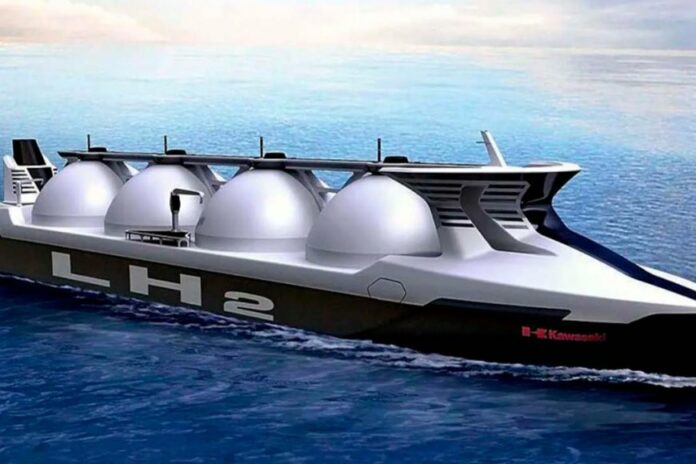
Mitsui O.S.K. Lines and The Kansai Electric Power Company, Incorporated have announced the signing of a memorandum of understanding (MoU) for the joint study of a liquefied hydrogen carrier.

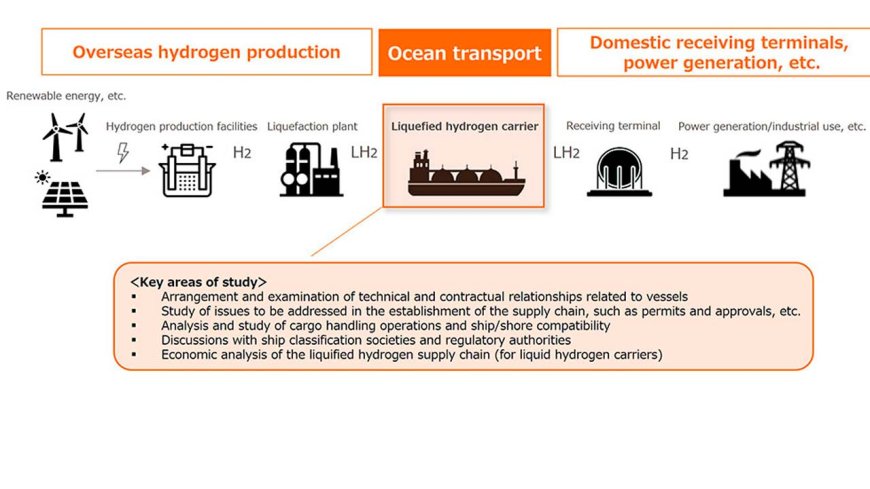
This is the first such agreement in Japan between a shipping company and a power generation regarding marine transport of liquefied hydrogen, which is a key element in the establishment of a hydrogen fuel supply chain.

Under the MoU, the two companies will conduct a detailed study and review of the optimal vessels and operations in the liquefied hydrogen supply chain, as well as the safety of such vessels. The companies will also analyze international laws and regulations related to the marine transport of liquefied hydrogen.

MOL and KEPCO will continue to study the specifics of marine transport of liquefied hydrogen and work toward the establishment of a hydrogen supply chain and the realization of a zero-carbon society.

Bakkafrost orders world’s largest-capacity feed barge

0

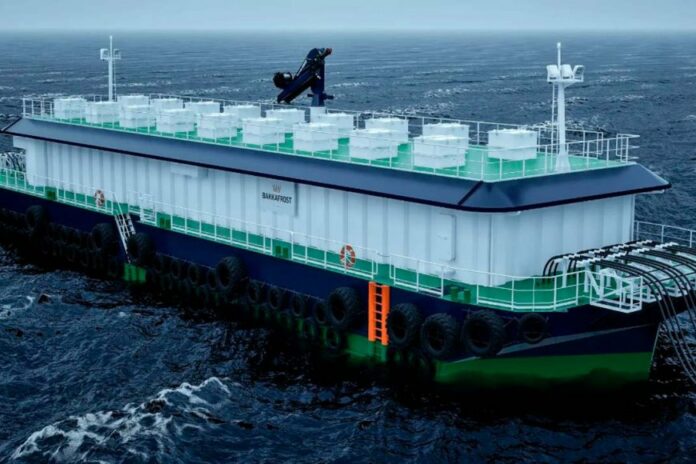
GroAqua and Faroese salmon farmer Bakkafrost have signed an agreement to build the world’s largest feed barge in terms of feed storage capacity and the number of feed lines.

The feed barge will hold 1,100 tonnes of feed and will have 24 feed lines, allowing for the simultaneous feeding of 24 pens. The barge will be equipped with GroAqua’s newest technology, GroVision, making it automatic and unmanned.

This feed barge is the second of two large feed barges GroAqua is set to build for Bakkafrost at this time.

“We at GroAqua are proud to have made a historic agreement with Bakkafrost to build two large feed barges,” said Ólavur Thomsen, who works on this project for GroAqua. “The project is attracting attention worldwide, as these are groundbreaking feed barges in terms of size and onboard technology.” 

GroAqua in Poland is responsible for building the feed barges which are expected to be delivered by next summer.

Large feed barges are the norm in the Faroes, where rough weather and exposed sites mean that it is not always possible to restock them. Larger-capacity barges equipped with remote operation reduce the possibility that fish will run out of feed.

In June, GroAqua delivered a feed barge with a silo capacity of 1,000 tonnes to salmon farmer Mowi Faroes, which is using it at one of its high energy sites. The barge has 16 feed lines.

Aquaculture industry suppliers JT electric and Sterner AquaTech UK rebranded as GroAqua last year, and in January this year it merged with Havida, an innovative aquaculture technology company that holds a strong market position in north and central Norway. GroAqua has its headquarters in the Faroe Islands, along with companies in Poland, Scotland, and Norway, employing a total of 100 people.

Source: fishfarmingexpert 

SBM Offshore awarded contracts for the GranMorgu field development

0

SBM Offshore announces that it has been awarded contracts for the GranMorgu field development project located in Block 58 in Suriname by the Operator, TotalEnergies EP Suriname B.V., an affiliate of TotalEnergies. 

Under these contracts, SBM Offshore will, in partnership with Technip Energies, construct and install a Floating Production, Storage and Offloading vessel (FPSO). The award follows completion of front-end engineering and design studies, and the final investment decision on the project by the Joint Venture operated by TotalEnergies EP Suriname B.V. SBM Offshore is expected to operate the unit under an operations and maintenance agreement.

The GranMorgu project is the first development within Block 58, circa 150 kilometers offshore Suriname. TotalEnergies is the operator holding a 50 percent interest in Block 58, alongside APA Corporation. Staatsolie has announced its intent to exercise its option to enter the development project with up to 20% interest.

The FPSO will be the first large deepwater project development in Suriname with an expected production capacity of up to 220,000 barrels of oil per day and associated gas treatment capacity of up to 500 million cubic feet per day. The FPSO will be spread moored in water depth of about 400 meters and will be able to store around 2 million barrels of crude oil. First oil is expected in 2028.

Thanks to the joint expertise of Technip Energies and SBM Offshore, this all-electric drive FPSO will also be designed to eliminate routine flaring, in line with TotalEnergies objectives and SBM Offshore’s goal to deliver carbon efficient units.

Øivind Tangen, CEO of SBM Offshore commented:

“Extending our Fast4Ward® value proposition to TotalEnergies supports our client’s fast-track development strategy for Block 58. This award demonstrates the strength of SBM’s cost-effective and low emission deepwater offering and calls on our proven track record in time-to-market. By entering Suriname, we are delivering on our strategy to advance our core and pioneer more. The award also highlights our partnerships capabilities. On this, I express my appreciation to TotalEnergies for this award and to the team at Technip Energies who share our commitment in making this project a success. Together, we’ll de-risk project execution and accelerate time to first oil.”

Ocean Winds installed Siemens Gamesa wind turbines in Moray West, Scotland

0

Ocean Winds has successfully installed the 60th and final Siemens Gamesa SG 14-222 DD wind turbine at the Moray West offshore wind farm project in the Moray Firth region of northern Scotland.

Each wind turbine, equipped with Power Boost, can generate up to 14.7 MW, making them the largest commercial offshore wind turbines in Europe.

The 882 MW Moray West wind farm is expected to be fully operational in 2025. It will position Ocean Winds as the largest offshore wind operator in Scotland once completed.

The project has stuck to its schedule despite challenges such as extreme weather, grid connection and supply chain constraints.

Moray West project director Pete Geddes said:

“Moray West has set the bar very high in terms of technological innovation and robust project execution. More importantly than ever, the project has been delivered on time, on budget and to the highest level of quality.”

Siemens Gamesa, part of Siemens Energy’s wind business, managed the pre-assembly of the turbines and manufactured all 180 blades at its facility in Hull, UK.

Component assembly of the turbines took place at the port of Nigg, with the heavy-lift vessel Cadeler Wind Orca handling the installation and Siemens Gamesa technicians overseeing the commissioning of each turbine.

Following the installation of the primary components, including foundations, substations and cables, the project will enter its commissioning and testing phase, with the aim of achieving full acceptance in 2025.

Moray West, part of Ocean’s 6 GW portfolio, is expected to be completed in 2020. Winds in the UK, contributes more than £800 million ($1.01 billion) to the Scottish economy and creates 1,500 full-time equivalent years (FTE) in Scotland, with more than 60 long-term operational roles in Buckie.

Adam Morrison, Country Manager for Ocean Winds in the UK, said:

“This is a fantastic milestone marking the installation of all wind turbines at Moray West. The project still has a long way to go before it is fully operational, however, this milestone demonstrates Ocean Winds’ commitment to successful delivery through our fantastic, professional and safe teams.

“With two more projects in development in the UK and Moray East already operational, we are proud to be a leader in the UK’s energy transition. I am pleased that our collaboration with Siemens Gamesa has reached this milestone on this state-of-the-art offshore wind project.”

More than half of Moray West’s investment and operating costs will benefit the UK economy, highlighting Ocean Winds’ commitment to local supply chains.

Two undersea cables in Baltic Sea cut, Germany and Finland fear sabotage

0

Two undersea fibre-optic communications cables in the Baltic Sea, including one linking Finland and Germany, were severed, raising suspicions of sabotage by bad actors, countries and companies involved said on Monday.

The episode recalled other incidents in the same waterway that authorities have probed as potentially malicious including damage to a gas pipeline and undersea cables last year and the 2022 explosions of the Nord Sea gas pipelines.

The 1,200-kilometre (745-mile) cable connecting Helsinki to the German port of Rostock stopped working around 0200 GMT on Monday, Finnish state-controlled cyber security and telecoms company Cinia said.

A 218-km (135-mile) internet link between Lithuania and Sweden’s Gotland Island went out of service at about 0800 GMT on Sunday, according to Lithuania’s Telia Lietuva, part of Sweden’s Telia Company group.

Finland and Germany said in a joint statement that they were “deeply concerned about the severed undersea cable” and were investigating “an incident (that) immediately raises suspicions of intentional damage.”

Europe’s security is threatened by Russia’s war against Ukraine and “hybrid warfare by malicious actors,” the joint statement said, without naming the actors.

“Safeguarding our shared critical infrastructure is vital to our security and the resilience of our societies,” Germany and Finland said.

A spokesperson for Telia Lietuva, Audrius Stasiulaitis, said the other cable was severed as well. It is owned and operated by Sweden’s Arelion to carry Telia Lietuva’s internet traffic, the Telia spokesperson said.

“It is absolutely central that it is clarified why we currently have two cables in the Baltic Sea that are not working,” Carl-Oskar Bohlin, Sweden’s minister of civil defence, told Swedish public broadcaster SVT.

Located in northern Europe, the Baltic Sea is an active commercial shipping route and is ringed by nine countries including Russia.

The damage to the Finland-Germany cable occurred near the southern tip of Sweden’s Oland Island and could require five to 15 days to repair, Cinia’s chief executive, Ari-Jussi Knaapila, told a news conference.

Last year a subsea gas pipeline and several telecoms cables running along the bottom of the Baltic Sea were severely damaged in an incident raising alarm bells in the region.

Investigators of the 2023 cases in Finland and Estonia have named a Chinese container ship that they believe dragged its anchor and caused the damage. But they have not said whether the damage was accidental or intentional.

In 2022 the Nord Stream gas pipelines linking Russia to Germany in the Baltic Sea were destroyed by explosions in a case that remains under investigation by German authorities.

Source: Reuters