4.2 C
New York
Home Blog Page 1193

Lamprell to receive two jackup drilling units contract

0

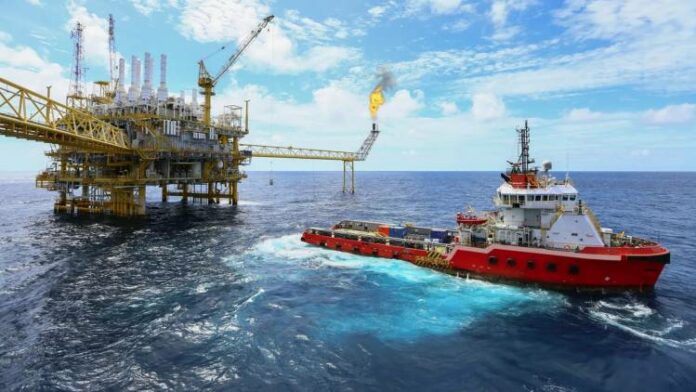
Lamprell is pleased to announce that it has received a letter of intent ('LOI') from International Maritime Industries Company ('IMI'), the Saudi maritime joint venture in which Lamprell is a partner, confirming the intent to award Lamprell the contract for the construction and delivery of two jackup drilling units, Lamprell said in a press release.

The rigs will be built collaboratively between the IMI and Lamprell for delivery to IMI's end client. There are ongoing discussions between end client, IMI and Lamprell to conclude the specifications and contract terms which, once determined, will result in final contract signing for the rigs. Lamprell will provide a further announcement upon contract signing.

The rigs will be built according to the stringent Schedule G requirements for operations in Saudi Arabian waters. Lamprell will undertake most of the fabrication work for both jackup rigs at its Hamriyah yard, in the United Arab Emirates while maximizing work in Saudi Arabia to approximately 15% of the scope of work.

Christopher McDonald, CEO, Lamprell, said: "I am very pleased to receive this letter of intent from IMI for the first 2 jackup rigs to be built by IMI and Lamprell. This is a significant step forward for the Saudi maritime yard. Following Lamprell's recent announcement regarding its ascension to Saudi Aramco's long term agreement programme, this is a further demonstration of the importance of the Saudi Arabian market to our strategic aspirations. The developing relationship between IMI and Lamprell will continue to be enhanced as we construct these rigs and we are excited by the opportunity to collaborate with them on such an innovative and important project."

Lamprell PLC, based in the United Arab Emirates ("UAE") and with over 40 years' experience, is a leading provider of fabrication, engineering and contracting services to the offshore and onshore oil & gas and renewable energy industries. The Group has established leading market positions in the fabrication of shallow-water drilling jackup rigs, liftboats, land rigs, and rig refurbishment projects, and it has an international reputation for building complex offshore and onshore process modules and fixed platforms.

Lamprell employs more than 3,000 people across multiple facilities, with its primary facilities located in Hamriyah, Sharjah and Jebel Ali, all of which are in the UAE. In addition, the Group has facilities in Saudi Arabia (through a joint venture agreement). Combined, the Group's facilities cover approximately 812,000 m2 with 1.6 km of quayside.

Artificial intelligence makes waves

0

Artificial intelligence and machine learning are exerting a growing influence on port operations through applications such as remote monitoring, maximising the productivity of terminal machinery and addressing many of the inefficiencies inherent in the maritime supply chain.

Juho Vihonen, Cargotec’s AI & analytics architect observes that artificial intelligence is already shaping product development as forward-thinking customers increasingly view the use of machine learning technology as a prerequisite.

“Machine learning and artificial intelligence transform data into a monetisable asset, providing a high degree of competitive advantage,” Vihonen says. “For example, data-driven robotics is expected to open up new possibilities in terms of performance improvements. That is, it will be possible to synthesise motion controllers in a cost-effective way by example-guided learning, reducing the need for manual engineering.

Machine learning and artificial intelligence tackle real needs in cargo handling operations. For example, all new equipment built across the Kalmar range now includes a gateway solution that connects the machine securely over the internet to the Kalmar Cloud and continuously collects telemetry data.

To leverage this data, predictive condition monitoring has been deployed on approximately 1000 Kalmar reachstackers. This monitoring automatically analyses telemetry readings – enabling frontline experts to proactively address customers’ recurring issues – and because it resides in the cloud it is optimised for distributed computing, scalability and speed.

The potential of artificial intelligence to disrupt comes discreetly in small steps from domains in which it has already shown success, such as object recognition in imaging,” explains Vihonen. “This will result in safer terminal and port spaces, where virtually all cargo handling products will operate independently without a human operator.”

Increased terminal efficiency is the key
According to McKinsey & Company, better use of data could massively improve the coordination of arrivals at port where 48% of container ships arrive more than 12 hours behind schedule, wasting carriers’ fuel and underutilising terminal operators’ labour and quay space, as well as leaving machines idle.

Increased terminal efficiency is a key driver of machine learning deployment at Kalmar, as is evident from the fuel consumption model developed for the Kalmar Eco Reachstacker. This new range of reachstackers significantly improve the eco-efficiency of operations, thereby contributing to a healthy environment. And by leveraging telemetry data and use machine learning to predict fuel consumption, a fuel consumption guarantee can be issued for each machine and will state how many liters of fuel the reachstacker will consume per hour.

Strict emission goals
To offer the guarantee, Kalmar requires only three customer-specific input parameters. These parameters describe typical cargo handling patterns and enable the machine learning technology to characterise fuel consumption in advance. The fuel saving guarantee is reviewed after 12 months of use, and if the agreed fuel consumption is not met, Kalmar will pay back a one-time compensation to the customer.

Vihonen observes that future competitiveness in the port and terminal equipment industry will be largely defined by data exchange between systems, subsystems and open interfaces that are linked to high levels of autonomy.

“This will result in the development of products relying on data sharing and artificial intelligence-enabled predictive analytics for high uptimes,” he concludes.

Source:hellenicshippingnews

Aker Arctic delivers bronze propellers for ice operations

0

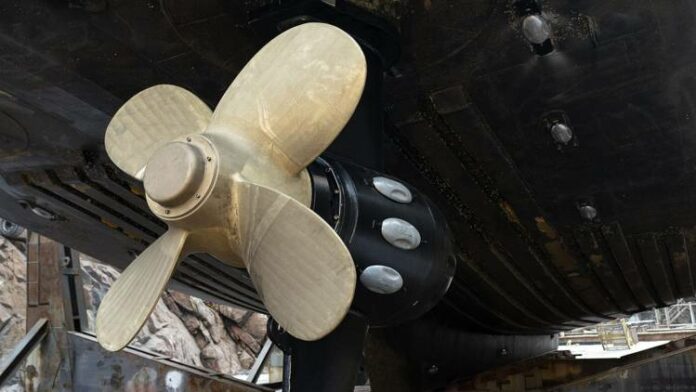
Bronze has been the preferred material for open water and low ice class ship propellers for decades. Few years ago, Aker Arctic began investigating the possibility of using it also in high ice class vessels. In November 2018, the first bronze propellers based on the new strength dimensioning criteria were installed on the Finnish ice class 1A ASD tug Calypso, the company says in a press release.

While bronze is not as strong as stainless steel, it has a number of benefits in marine applications such as good resistance against corrosion and cavitation damage. The material is also easy to work with both during manufacturing as well as when carrying out maintenance and repairs. Compared to a similarly-sized stainless steel propeller, a bronze screw is also cheaper.

Few years ago, Aker Arctic began investigating the possibility of using bronze propellers in high ice class vessels in co-operation with the Finnish propeller manufacturer TEVO. The new propeller strength dimensioning criteria, which takes both the ice load and the material properties into account, was verified in full-scale ice trials with a prototype propeller during the winters of 2016 and 2017.

When the Finnish towage and salvage specialist Alfons Håkans decided to equip their ASD tug Calypsowith new propellers for icebreaking operations, the company opted for bronze propellers designed according to Aker Arctic’s new propeller strength dimensioning criteria. In the future, the ice class 1A vessel will be used to push a detachable icebreaking bow in Lake Saimaa. Calypso was drydocked at Western Shipyard in Teijo, Finland, in November 2018 and is now operating with the bronze propellers designed and supplied by Aker Arctic.

Transocean Signs Contract With Chevron For ‘Game-Changing’ Newbuild Drillship

0

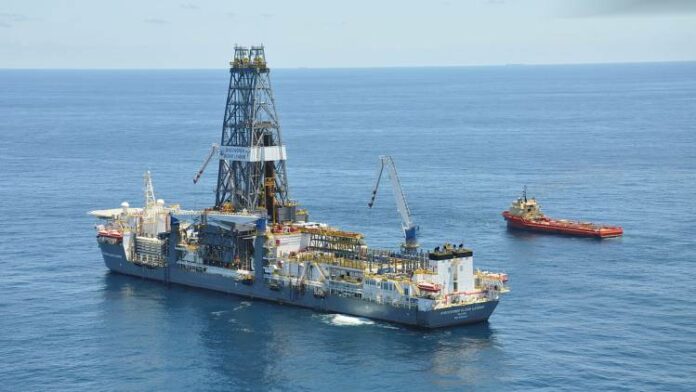
Transocean Ltd. said Dec. 28 it agreed to supply a Chevron Corp. affiliate in the Gulf of Mexico with what Transocean’s CEO calls “the industry’s most capable ultra-deepwater drillship.”

The agreement, which includes a five-year drilling contract with Chevron USA Inc. worth $830 million, is for one of Transocean’s two dynamically positioned ultra-deepwater drillships currently under construction at the Jurong shipyard in Singapore.

The rig will be the first ultra-deepwater floater rated for 20,000 pounds per square inch (psi) operations and is expected to commence operations in the Gulf of Mexico in the second half of 2021.

Jeremy Thigpen, Transocean president and CEO, said members of Chevron and Transocean teams helped develop this “game-changing solution.”

The drillship will feature the most advanced capabilities and state-of-the-art technology available, according to the Transocean press release, including dual 20,000 psi blowout preventers, net hook-load capacity of three million pounds, 165-ton active heave compensating crane and an enhanced dynamic positioning system. The rig’s high-reliability power plant will also be configured to comply with Tier III International Maritime Organization emissions standards.

“Transocean has a long and storied history of introducing new technologies that enable our customers to safely and efficiently access the world’s most challenging reservoirs,” Thigpen said in a statement. “Adding to that history, we are proud to be delivering the industry’s first rig capable of drilling and completing wells requiring subsea equipment rated to 20,000 psi.”

In the event of termination for convenience by the customer, Transocean will be compensated for its incremental 20,000 psi subsea investment in the rig. Additionally, a termination for convenience occurring after April 2020, would result in a substantial termination fee.

Source:epmag

Using Big Data to Transform Digital Navigation

0

This year, the maritime industry witnessed an important milestone in safety and situational awareness at sea, with the introduction of an ADMIRALTY high-density contour Electronic Navigational Chart (HD-ENC) for the UK’s Bristol Channel. 

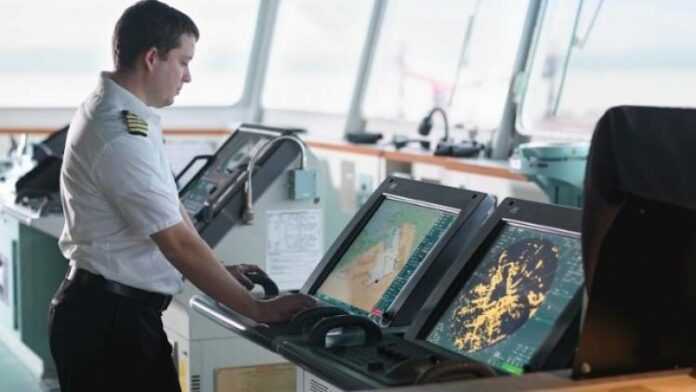
Supported by recent advancements in big data technologies and a wealth of marine geospatial data collected and stored by the UK Hydrographic Office (UKHO), these sophisticated charts support navigation through shallow water by displaying depth contours at one-meter intervals, allowing ECDIS to set safety contours at corresponding levels and with more granularity than has been previously seen with other charts.

As they continue to spread, these advancements in digital navigation are likely to unlock economic benefits for many ports around the world, and have a profound impact on the safety of crews and cargoes.   

The journey from paper to digital

When nautical charts were transferred from paper to digital, many of the best practice cartographic standards for creating clear, demarcated visual guides in paper chart production were adopted “as is.” At the time, this was an obvious transition – giving mariners certainty and familiarity whilst learning new passage planning processes. 

However, adopting paper chart standards for drawing contours in an electronic navigational chart (ENC) does not realize the full safety benefits of the ECDIS. 

In an ECDIS the mariner sets his safety contour value, which corresponds to his under keel clearance. The safety contour in ECDIS is a clear boundary between what is deemed to be safe water and areas that are too shallow to guarantee passage for that ship. Based on the mariner safety contour input and the ENC data available, the system will choose the deepest contour interval that is closest to the mariner setting. 

For example, a vessel that sets a safety contour of 13 meters may find an ECDIS defaulting to 20 meter contours, putting seven meters of safe, navigable water ‘out of bounds’ for maneuvering, with the system sounding an alarm to help prevent groundings when none is needed.

For vessels using ECDIS, this means that a clear route – that is, a route that can be safely navigated given the characteristics of a particular vessel – could be displayed as potentially out of bounds or a very narrow passage. Even more challenging is that this could lead to mariners knowingly crossing safety contour to reach their destination, with all the clear safety ramifications that this possesses.

An example of this in practice is “The Bridge” in the UK’s Bristol Channel. In this area, silt collects on the seabed to form an area that is markedly shallower than the rest of the Channel. All manner of vessels must pass over this shallower ground to get to the Port of Bristol – one of South West England’s most important trading ports – or continue on to Gloucester.

Despite being safe to transit, this area falls beyond the safety contour for most ships. This means that mariners entering the Port of Bristol have to knowingly cross the contour, which sets off multiple alarms, causes major disruption and creates significant paperwork that the master must subsequently explain.

Supporting navigational safety through ADMIRALTY HD-ENCs

To help overcome this, the UK Hydrographic Office (UKHO) has started to use automated contouring processes to produce ENC data of areas where there is restricted depth to a definition of one-meter contours. 

Automatic contouring can only be done when the underlying survey data is of a high-resolution and has been collected via multibeam surveying. The charts produced are then validated within the software to ensure compliance with IHO international standards for ENC production and are subsequently manually checked by a UKHO cartographer to confirm accuracy.

With a greater variety of depth contours within the ENC, the ECDIS can set safety contours at one-meter intervals. This overcomes the safety, alarm and paperwork challenges encountered in this area previously. It reduces stress on the bridge and can give crews more confidence on the approach for the safety of cargo and ship.

One of the other key advantages of ADMIRALTY HD-ENCs is that they can be used by both pilots in portable pilot units (PPUs), as well as by mariners in ECDIS, ensuring that both are using the same official data. Furthermore, these advances in data production require no change in ECDIS software to use – a big advantage for users who have just adopted a fresh set of IHO Presentation Library updates. 

The new charts also mean that data collected from this area by the Port of Bristol Authority via multibeam sonar can now be more quickly processed to deliver updates for vessels navigating the channel. 

Bringing ADMIRALTY HD-ENCs to the Dover Strait

Following the success of its work in the Bristol Channel, the UKHO is now developing a unique ENC to improve situational awareness and safety for ships transiting the Dover Strait – one of the world’s busiest waterways.

Using data gathered from routine surveys conducted as part of the Civil Hydrography Programme, the ENC will cover areas of the Dover Strait within the UK’s territorial waters, where traffic safety is a critical issue. This area of the seabed is notoriously narrow and complex, with constantly moving sand waves forcing ships to take part in a traffic separation scheme to ensure that they transit safely through the area. 

To create this HD-ENC, the UKHO is applying similar techniques to those used for the Bristol Channel, working with billions of bathymetric data points to draw one-meter contours.

The future of digital navigation

With many of the “big-ticket” technologies like fully autonomous vessels still in their infancy, much of the debate in 2018 around shipping’s digital transformation has tended to focus on the abstract and the hypothetical.  

However, the work carried out by UKHO in the Bristol Channel and the Dover Strait provides evidence of the ways in which marine geospatial data is already being used to drive continuous improvement throughout the maritime industry.

Taken as a proof of concept, the UKHO’s work on HD-ENCs opens up the opportunity to create similar charts for other areas in UK waters and beyond, paving the way for safer navigation and a deeper understanding of the world’s oceans. 

Thomas Mellor BSc, CMarTech, FIMarEST is Head of OEM Technical Support and Digital Standards at UKHO. 

Source:maritime-executive

2018 Becomes Record Year For Port Of Antwerp

0

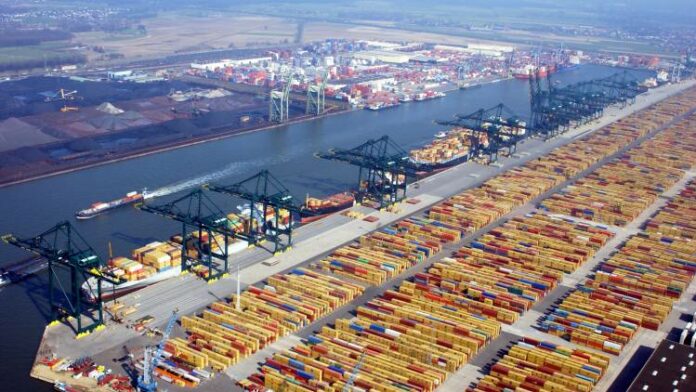
2018 looks set to be a record year for the Port of Antwerp for the sixth time in a row, with growth in all types of cargo and a recent wave of investments. This confirms the port’s attraction and further establishes its position as a world-class player that is also home to the largest integrated chemical cluster in Europe.

Crucially it also assures the continuity of the port’s role as the main engine of the Belgian economy. In 2019 the Port Authority will keep to the same course, further building a sustainable future for the port. In pursuit of this goal it is concentrating heavily on structural solutions to challenges such as mobility, the energy transition, digitisation and innovation.

Unparalleled growth in all segments

With expected growth of 5.1% compared with 2017, the earlier forecasts of a 6th successive record year have been confirmed. The expected total freight volume in 2018 comes to 235 million tonnes, a new record, with unparalleled growth in all types of cargo. The large expansion in container freight continues, reaching 130 million tonnes (up 5.8%) or 11 million TEU (up 5.5%). Liquid and solid bulk for their part are up by respectively 4.5% (to 76.5 million tonnes) and 5% (to 12.8 million tonnes), while breakbulk has experienced growth of 1.8% (to 15.6 million tonnes).

Wave of investment confirms attraction of chemical cluster

In 2018 leading international players in the chemical industry including among others Borealis, INEOS, Nippon, Sea-Mol and Oiltanking/AGT brought a huge wave of investment to the port, amounting to more than 2 billion euros. Their choice of Antwerp further confirms the port’s attractiveness for chemical companies, as the largest integrated chemical cluster in Europe. Indeed it makes Antwerp even more attractive for them.

Port Authority CEO Jacques Vandermeiren declared: “With these excellent growth figures and the recent surge of investment, in 2018 the port has once more confirmed its role as the main engine of the Belgian economy. Now we will continue on the same course as before, towards a sustainable port of the future. But to keep growing in a sustainable way, we together with the whole port community must strain every effort to meet the challenges facing us today. The port of the future must have enough capacity and be accessible, sustainable, smart and secure to remain attractive for investors.”

Need for additional container capacity

While the new record year and the investment surge together confirm the vitality of the port, they also confirm earlier forecasts that the maximum container capacity will very soon be reached so that additional container handling capacity is urgently needed.

Port Authority CEO Jacques Vandermeiren outlined the situation: “We are already far beyond the optimum capacity limits in the terminals below the locks, with serious consequences for efficiency. We therefore continue to insist that additional container capacity below the locks is urgently needed. The Port of Antwerp is doing very well, which is good news for the economy. But it is also very important to keep up this impetus and to build the necessary capacity as soon as possible. The most recent draft version of the Preference Decree for creation of additional container capacity represents the last straight towards a breakthrough in this complex project. We are therefore very pleased with the efforts by the Flemish administration, and are glad to work constructively on further development of Alternative 9 which is now being considered. This alternative now has to be further tweaked in nautical and operational terms in order to make it sufficiently feasible and attractive for the economic operators while limiting the environmental impact to the absolute minimum.

An accessible port: initiatives to promote the modal shift

With roadworks about to start on the Oosterweel interchange, structural solutions to mobility problems in and around Antwerp are more urgent than ever. The Antwerp Port Authority is facing up to its social responsibilities in this area, collaborating with the rest of the port community to develop structural solutions for reducing the pressure on mobility both for freight and for private transport.

For freight transport the aim is to achieve a significant modal shift by 2030, reducing the proportion of freight that travels by road from 55% to 43%. The parallel aim is to double the proportion of rail transport, bringing it to 15%. Railport – a joint initiative by Antwerp Port Authority, the Left Bank Development Corporation and the industry associations essenscia Vlaanderen and Voka Alfaport – assumed responsibility for this in 2018. In the meantime constructive discussions are under way with Infrabel (rail track operator) to develop a new operating model for rail infrastructure in the port with a view to raising the flexibility and efficiency of rail transport.

The proportion of freight carried by barge is set to increase from the already high level of 38% to 42%. Earlier this year the port community signed a Container Barge Action Plan based on three main foundations, namely collaborative scheduling of barge movements, consolidation of container volumes and digitisation. The interplay of these various measures should make container barge transport more efficient, with consequent benefits for all participants in the supply chain.The first pilot projects for centralised barge scheduling have led to positive reactions in the market.

In another initiative the Port Authority has held workshops with other members of the port community for night-time logistics, to make better use of the existing facilities outside peak hours. The Night Logistics Action Plan was set up in October with all the parties involved. After a test phase in the first half of 2019 the aim is to begin operation by the summer, to coincide with the start of the Oosterweel roadworks.

To remain accessible for the 60,000 employees in the port, the Port Authority is working on various initiatives aimed at encouraging people to leave their car at home and make use of sustainable alternatives. The Water Bus and Bike Bus are good examples of promoting a sustainable modal shift for commuter transport.

‘DeWaterbus’ plies on the Scheldt as an alternative means of transport for those travelling to Antwerp from Hemiksem and Kruibeke. 396,972 people have made use of the service since it was introduced on 1 July 2017. In October this year the southern route was extended with a northern section serving the port area. An eastern route to the Albert canal will enter service at the beginning of 2019. In summer next year a first electric Water Bus will be introduced, with the ambition of offering 100% electrically-powered transport on the Albert canal after six months of operation. This will be an absolute first.

With 77,541 passengers since it started in April this year the ‘Fiets Bus’ has also been a success. To offer an alternative for even more commuters an interlinking system of commuter bus transport and collective electric bikes is planned for the port area next year.

35 million euros for transition projects

The transition to a circular low-carbon economy is another main objective of the Antwerp Port Authority. Over the next three years the Port Authority will therefore invest no less than 35 million euros in innovative sustainability projects. One good example of this is the declared ambition of making onshore power supplies available for seagoing ships at berth in the Deurganck dock in the near future, which will lower NO2 (nitrogen oxide) emissions by 36%. In addition, we seek to promote alternative sustainable fuels such as LNG and hydrogen. This year the CMB shipping company won the Sustainability Award with the “Hydroville,” the first hydrogen-powered passenger ferry. Given the very promising sustainability potential of hydrogen, we are currently studying the feasibility of setting up a hydrogen fuel station in the port. Earlier this month a hydroturbine was installed in the Kallo lock to generate electricity from water power. The aim is to use this advanced technology to make all sea locks in the port energy-neutral in the longer term.

A smart, innovative and secure port thanks to digital transformation

The port of the future will also be a smart port, with the emphasis on innovation and digitisation. The Port Authority has therefore assumed a pioneering role in digital transformation, aimed at becoming an open and innovative hub for the introduction of new technologies. The ambition is to install a digital nervous system covering the entire port with among other things smart cameras, sensors and drones to give full monitoring, which in turn will make it possible to respond directly to events in the port. In addition, data is being made transparent and available to all players in the supply chain thanks to NxtPort, the data platform for the port that was set up nearly two years ago.

In the words of Jacques Vandermeiren: “With the growing importance of data and the gains in efficiency that we seek to derive from it, in future the Port Authority will build further on the foundations that it has already laid with NxtPort. The increased participation in NxtPort by the Port Authority underlines this confidence. We strongly believe that digitisation will smooth the way for smart, efficient and lower-cost logistics and that it will also play an increasingly important role in terms of mobility and monitoring emissions.”

A new alderman takes the helm

As the year 2018 comes to an end so also does the career of Marc Van Peel. After 12 years as alderman for the port and chairman of Antwerp Port Authority, this veteran politician will take leave of Port House for the last time and begin his well deserved retirement. In his honour the new Wagen room on the ground floor has been renamed in his honour: henceforth it will be called “Event Hall in honour of Marc Van Peel, President of the Antwerp Port Authority from 2007 to 2018.”

At the same time, we will welcome Annick De Ridder as the new port alderman at the beginning of the year. “I am confident that we can look forward to constructive collaboration,” Jacques Vandermeiren concluded.

Source:marineinsight


Rotterdam constructs a floating solar park in Rijnhaven

0

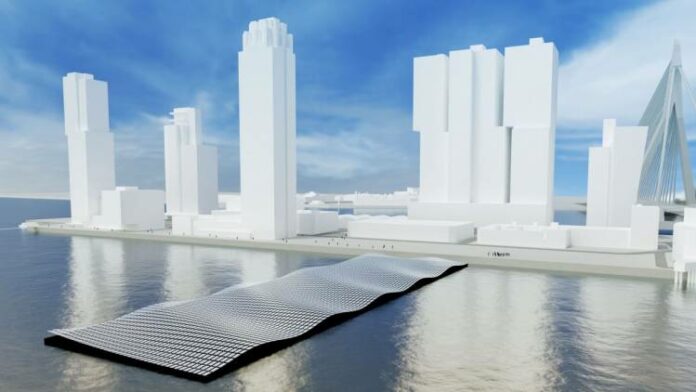
Municipality of Rotterdam and BV Sunny Site Up have signed a letter of intent for the construction of a floating solar park at the Rijnhaven or the surrounding areas. There will be 3,770 solar panels which will be located in the water, together generating sufficient electricity to provide 285 households with clean energy.

Solar energy is one of the key elements in the plans for energy transition developed by the Rotterdam city council. With the commitment to clean energy and energy saving, CO2 emissions must be reduced by at least 49% by 2030. The arrival of the floating solar park is one of the projects that will significantly contribute to this reduction.

"Solar energy is on the rise. We want to offer more space for generating clean energy in the city. Also in unexpected places, such as on the water."

Arno Bonte, a Rotterdam municipality official, stated in the announcement.

It is expected that the floating solar park will be completed by the end of 2019. At the start of 2019, BV Sunny Site Up, which consists of a collaboration between Mothership, Greenchoice and Texel4Trading, will present the design and the license application will be submitted.

The art producing company Mothership is responsible for the design of the floating solar park. The panels are going to be shaped like a gigantic concentric wave, mimicking a pebble effect. This floating solar park is expected to create a stepping stone for a new look at solar power. The project can be admired during the day but even more so in the evening, when soft lights create a beautiful atmosphere.

Furthermore, the municipality will start a public participation campaign. Local residents can buy a share of one or more solar panels of the floating solar park.

Source:safety4sea

HII gets additional $228m for Enterprise

0

The US Naval Sea Systems Command has awarded Huntington Ingalls Industries’s Newport News Shipbuilding a $228.m million contract modification to purchase additional long lead time material to be used for the construction of Enterprise.

Long lead time materials contracts allow the shipbuilder to purchase parts and equipment in advance and thereby speed up construction.

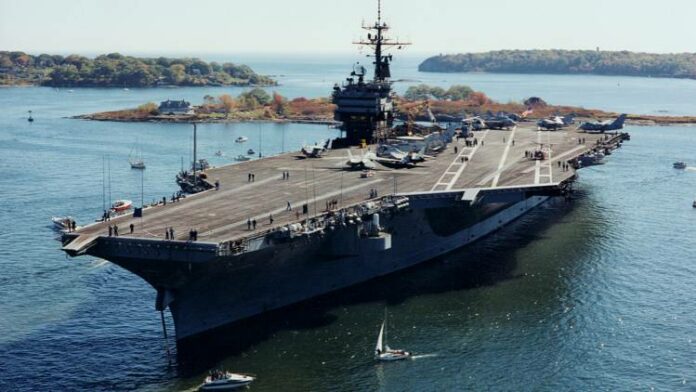
Enterprise is the third Gerald R. Ford-class aircraft carrier which started construction with a steel cutting ceremony in August 2017.

Designed to replace Nimitz-class carriers, the Ford class features a new nuclear power plant, a redesigned island, electromagnetic catapults, improved weapons movement, an enhanced flight deck capable of increased aircraft sortie rates, and growth margin for future technologies.

A contract for the construction start of CVN 80 is expected to be awarded in early FY 2019. Advanced planning and initial long-lead-time material procurement for the ship began in May 2016.

HII is the sole builder of US Navy aircraft carriers and is currently constructing the second ship in the class, the future USS John F. Kennedy (CVN 79), after delivering the lead ship in the class to the navy in June 2017.

Virginia plots strategic offshore role

0

The state of Virginia has released a roadmap document setting out its potential for establishing an offshore wind supply chain to serve projects on the US East Coast.

The report, produced by BVG Associates for the Department of Mines, Minerals and Energy (DMME), analyses Virginia’s potential strategic role in the rapidly emerging US offshore wind industry.

The roadmap details the large pipeline of offshore wind projects along the East Coast and provides insight into the areas the industry regards as priority, including a reliable, broad-based supplier network coupled with regionally optimised logistics.

Recommendations include establishing a regional supply chain collaborative with neighbouring states, creating a Virginia Office for Offshore Wind, soliciting anchor tenant suppliers, and expanding workforce development opportunities.

State Governor Ralph Northam said: “Virginia has a clear opportunity to act as a leader in driving the development of the US offshore wind industry.”

Unique advantages of Virginia that make it a suitable for hosting a supply chain hub due, include port infrastructure, location, maritime capacity, and workforce.

Northam added: “Growing the supply chain sector at this early stage will prepare Virginia to competitively deliver the development of our own offshore wind resources in the coming years.”

Secretary of Commerce and Trade Brian Ball said: “As offshore wind projects accelerate rapidly along the East Coast, Virginia can lead in attracting the supply chain industry to support this development."

According to Ball offshore wind has the potential to provide thousands of local jobs, and the report highlights efforts to attract this industry.

“Those efforts include the creation of a state office focused on offshore wind as well as regional collaboration to help ensure that offshore wind projects on the East Coast come online as cost competitively and quickly as possible,” Ball said.

BVGA advisory director Andy Geissbuehler said: “Regional collaboration will deliver the most effective offshore wind supply chain."

It is critical that Virginia’s leaders keep the momentum going toward developing a regional supply chain cluster in order to make the most of the opportunities presented as states to the North develop their wind energy areas first.

To produce the roadmap BVG Associates partnered with DMME, the Virginia Economic Development Partnership, the Port of Virginia, and Virginia’s maritime industry trade associations.

DMME director John Warren said: “The Commonwealth’s lead-by-example effort to align businesses interested in offshore wind with an industry at the early stages of development is the most important step in enabling the East Coast offshore wind build-out."

A timely supply chain entry will equip Virginia with the skills and infrastructure needed to participate in this major industry growth opportunity.

The team engaged Hampton Roads-area local government, economic, and workforce development officials in its opportunity analysis.

Source:renews

Japanese join Formosa 1

0

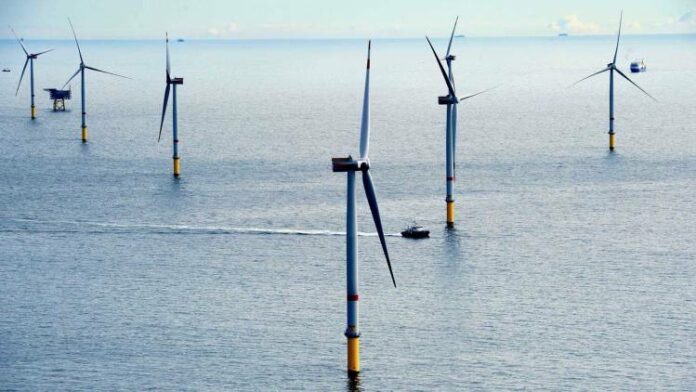
Japan-based energy company JERA is taking a stake in an offshore wind project being developed off the coast of Taiwan.

JERA will acquire a 32.5% share of Formosa 1, having entered into an agreement with Macquarie Capital and Swancor.

The transaction remains subject to regulatory approvals.

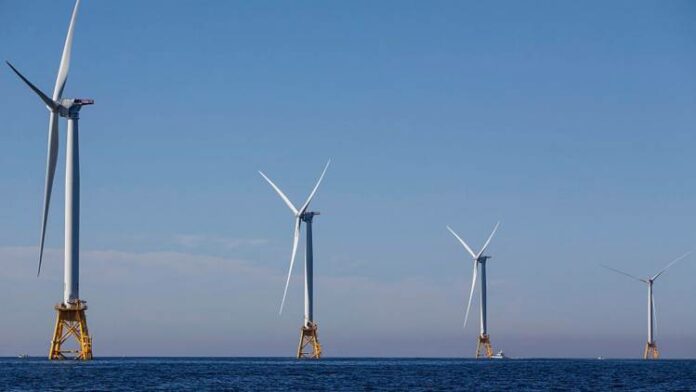
The 128MW Formosa 1 project, off the north-west coast of Taiwan, represents the island’s first utility-scale offshore wind farm.

The first phase of 8MW has been in operation for over 18 months. The additional 120MW is under construction with the aim of starting operations by the end of 2019.

While offshore wind is a mature industry in Europe, JERA recognises the sector is at an early stage in Asia, including Japan, with room for growth.

JERA, a joint venture between Tokyo Electric Power Company and Chubu Electric Power Company, will also bring to the project its business scale and expertise in conventional power project development. 

The company will establish an operations base in Taiwan to expand business activity.

The project has secured the support of Taiwan Power Company under a 20-year power purchase agreement based on the feed-in tariff scheme.

Through its participation in the Formosa 1 project, JERA will gain knowledge and experience in construction and operation of the offshore wind power generation and leverage this to move forward with projects in Japan and abroad.