2.3 C
New York
Home Blog Page 1186

MOL president: we know exactly what to do to improve ONE’s earnings

0

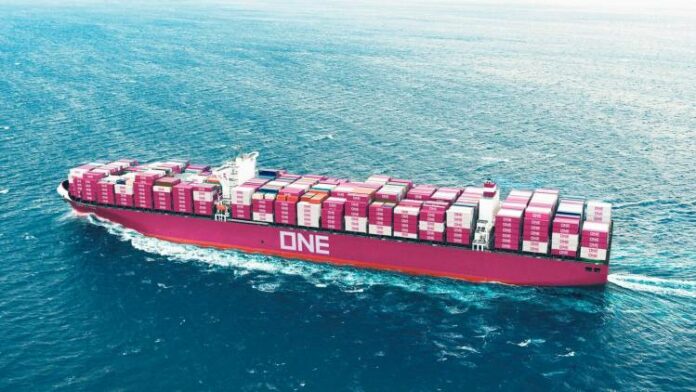
Ocean Network Express (ONE) “set sail in choppier waters than we had expected”, MOL president and chief executive Junichiro Ikeda said in his 2019 New Year message addressed to all officers and employees.

He said that ONE – which combined the container operations of Japanese carriers MOL, NYK and K Line from April 2018 – did not reach its projected liftings due to disruptions in initial operations.

He added “However, the cost savings derived from integrating the container ship operations have surpassed estimates before the integration. We also know exactly what must be done to improve cargo volume liftings and earnings. We will closely heed the lessons we have learned from ONE’s results to date as we fulfill our governance responsibilities as an investing company of this business venture.”

He emphasised “In the process, I will redouble my commitment to ONE and provide any support necessary to ensure the venture’s success.” 

Back in August it was reported that ONE had fallen into the red with a net loss of US$120M for Q2 2018 (Japanese Q1 financial year) in its first set of financial results since the launch of the joint venture. Revenue totalled US$2.1Bn.

Elsewhere Mr Ikeda mentioned challenges ahead. “The external environment has become increasingly uncertain in terms of the global political and economic picture, mainly due to strained US-China relations and the possibility of a hard Brexit.”

He singled out the enforcement of new sulphur oxide emissions regulations in January 2020. “It is no exaggeration to say that the enforcement of these regulations will mark a major turning point that will have a crucial bearing on the success of the MOL Group as well as the marine transport industry as a whole,” he said.  

Mr Ikeda said that MOL needs to re-examine whether its preparations are “adequate on the sales and marketing fronts and identify any hidden risks”.

He summed up “As professionals in the marine transport business, we will draw on the MOL Group’s full range of experience and knowledge to rise above these changes.”

Source:containerst

Watch: Eduart Toll transiting the NSR

0

Eduard Toll entered the open water in the Chukchi Sea and voyaging to the Chinese port of Jiangsu Rudong. Eduard Toll is the fourth of 15 Arc7 LNG carriers built for the Yamal LNG project and Teekay’s first of six LNG carrier newbuildings contracted to service the project.

Russia’s largest independent natural gas producer, Novatek, has deployed specific ice-class tankers to ship the chilled fuel from its Yamal LNG project via the Northern Sea Route.

One of the vessels that made the first Northern Sea Route transit, carrying a Yamal LNG cargo to Asian-Pacific markets in July.

Source:safety4sea

Turkey launches ship-to-ship LNG transfer

0

Turkey launched the world's biggest ship-to-ship LNG transfers on January 2 in the mediterranean port of Dortyol, Mehmet Tecimen, oil utilities regional director of Turkish Petroleum Pipeline Corporation (BOTAS) announced.

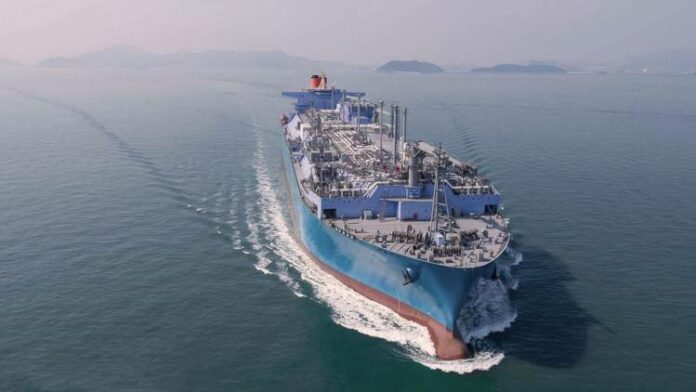
Specifically, Mehmet Tecimen, noted that this FSRU vessel anchored in Dortyol, is the largest FSRU globally, reaching the 345 meters in length, according to Anadolu Agency.

In February 2018 Turkey launched this second FSRUwith 20 million cubic meters of send-out capacity per day in the Dortyol port. The unit has 263,000 cubic meters of LNG storage capacity, the largest capacity worldwide.

According to Tecimen, Al Sadd vesse, which transfers LNG from Qatar to the Dortyol terminal and has a capacity of 206,000 cubic meters, and BOTAS's vessel are both the largest vessels in their field and it will take two days to conduct the world’s largest ship-to-ship LNG transfer operation in which natural gas converted from LNG will be injected into Turkey’s natural gas pipeline system.

Concluding, Turkey aims to limit dependency on pipeline gas through FSRUs, and therefore, these units dock at ports close to regions with higher gas demand.

Source:safety4sea

SCA: signing a partnership agreement with DP soon for the establishment of International Sukhna Co.

0

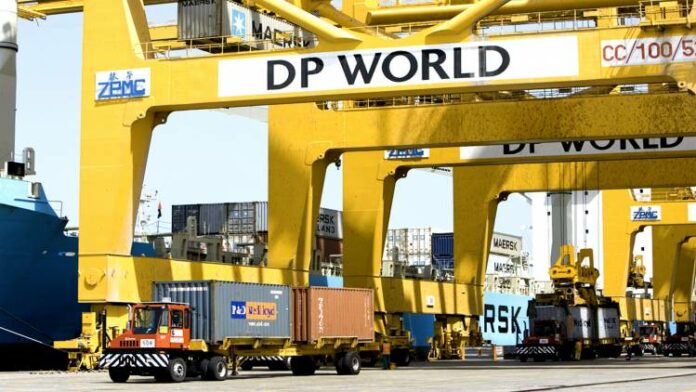
Vice admiral/ Mohab Mameesh, head of SC authority and of SC Economic Zone has announced the Zone signing a partnership agreement with Dubai Ports “DP” soon for the establishment of a company for developing 45 Km square at Industrial zone at Sukhna, affiliated to SC Economic authority, this after accomplishment of study procedures and technical debates of international Sukhna project and assigning of one of the international bureaus for the project’s study. With a distinguished accelerating installment system, and payment system up to 10years to fulfill all needs.  

Mameesh has assured concern of political authority in Egypt and Emirates to support such huge project which makes of Sukhna region an international logistic center and fulfills the Economic Zone vision  through establishment of a number of factories  in the field of small and very small industries, in addition to  construction, textile, catering and electronics industries.  

On the other hand, Mameesh denied  DP overpower of Economic Zone projects or cancelling partnership  with Dubai; assuring  that negotiations are ongoing normally  and steadily, pointing out that unhurriedly is required and also study and debate  is one of priorities for the two parties interest.

He also negated holding any recent meetings between DP and deputy head of SC authority, assuring that no one is concerned with such subject except Economic Zone administration and that Suez Canal authority is not concerned with any subjects concerning the Zone; being an independent authority with different concerns and targets.

Source:portnews

Kalmar to supply Norfolk Southern intermodal terminals with four RTGs and process automation technology

0

Kalmar, part of Cargotec, has signed a deal to supply Norfolk Southern with four Kalmar SmartPower rubber-tyred gantry cranes (RTGs) equipped with a suite of process automation solutions. The order was booked in Cargotec's 2018 Q4 order intake with delivery scheduled to be completed by the end of Q4 2019. 
 
Norfolk Southern Corporation is one of the USA's leading transportation companies. Its Norfolk Southern Railway subsidiary operates approximately 19,500 route miles in 23 states, serves every major container ports in the eastern United States and provides efficient connections to other rail carriers. In addition to containers, the company is also a major transporter of coal, automotive products and industrial goods.
 
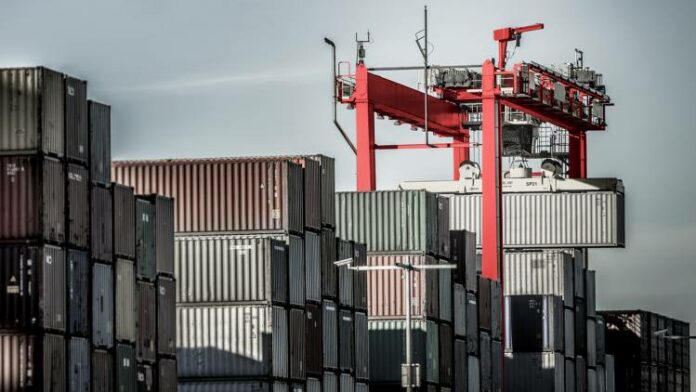
The Kalmar SmartPower RTGs will be installed to extend capacity at the company's intermodal terminals at Landers in Chicago, Illinois and Rossville in Memphis, Tennessee. Two cranes will be installed at each terminal. The cranes will have a span of approximately 25 metres and will be equipped with Kalmar's electro-mechanical anti-sway system and a rotating Bromma spreader. 
 
The cranes will also feature a number of Kalmar SmartPort process automation solutions for safer, faster and more efficient container handling. These include the Kalmar SmartRail automated gantry steering solution and Kalmar SmartStack to eliminate the problem of lost containers as well as the Kalmar SmartMap visualisation tool. An optical character recognition solution will enable the cranes to automatically identify containers, while the user interface will support operators to help streamline the stacking process, improve mobility and efficiency thought the yard, and decrease truck waiting times.
 
The Kalmar SmartPower RTG uses up to 10 litres less fuel per hour than most diesel RTGs on the market, thanks to its significantly smaller diesel engine and intelligent power management system.
 
Troy Thompson, Vice President, Sales, Kalmar Americas: "We are very pleased to be able to continue our collaboration with Norfolk Southern and to support them with the optimisation of their intermodal operations. The proven Kalmar SmartPower RTG provides the perfect balance between productivity and cost efficiency in a variety of container-handling applications."

Source:portnews

Netherlands Seeks Damages for MSC Zoe Cargo Cleanup

0

Authorities in the Netherlands intend to seek damages from number-two ocean carrier MSC for the cleanup costs stemming from the container ship MSC Zoe's recent cargo loss. They have also opened a criminal inquiry into whether the casualty was the result of any criminal acts – in particular, whether the country's domestic Pollution Prevention Act may have been violated. The inquiry is expected to last at least several weeks. 

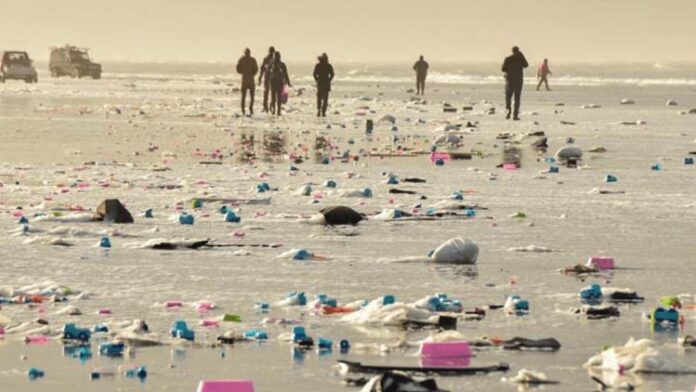
270 containers fell off the Zoe in heavy weather off the coast of the Netherlands on Wednesday. The incident occurred near the German island of Borkum, and the containers floated south-west, towards the Dutch islands of Terschelling.

About 35 missing containers have been found to date, and  and the loose cargo is still washing up on the islands of Terschelling, Vlieland, Ameland and Schiermonnikoog. Most of the debris is relatively benign – plastic toys, blankets, shoes, tires, furniture, packaging and other sundry goods – but the volume is significant. Residents and sightseers have visited the scene to remove items of value, but the balance of undesired cargo will have to be disposed of. Images of the scene show beaches heavily littered with plastics and debris. Local volunteers are assisting with the work, and about 100 Dutch troops have been deployed to assist with the cleanup. 

"First, we thought it was funny," said visitor Beau Oldenburg, speaking to CNN. "I even found a pair of sandals that fit my size and kept them. But then we realized it was actually a catastrophe."

One missing container was carrying dangerous goods: 280 bags of dibenzoyl peroxide powder, which can pose a danger to human health in large quantities. Two bags have already been found and safely removed, and the authorities have warned residents and cleanup crews not to touch anything resembling the hazardous bags. An official hotline was briefly overwhelmed with calls after comparably-shaped bags filled with plastic beads washed up on shore, and an additional bulletin was issued with specifics about the hazardous material's packaging (below).

Source:maritime-executive

Petrochemical Leak Hits Local Aquaculture Industry in Fujian

0

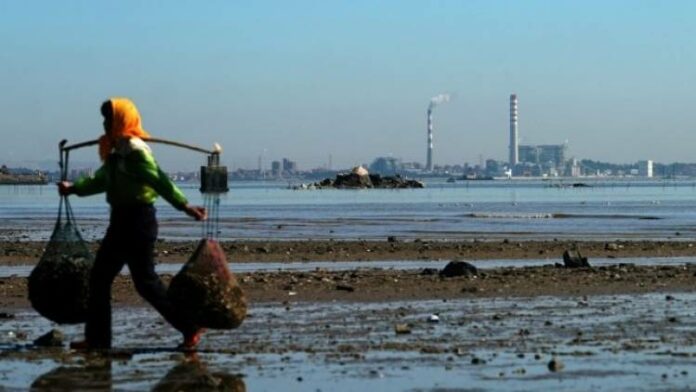
One lunchtime in November last year, Zhang Yan, from Xiaocuo, a village in Quanzhou, Fujian province, walked into his kitchen and was met by an acrid odour that made him nauseous. He was cooking sea bass from the family fish farm, near the site of a major chemical leak earlier that month. 

Despite official notices that local water and air quality are up to standard and aquatic products safe to eat, Zhang is adamant that the leak, of “C9 aromatic solvent”, was to blame for his ruined lunch. He and others from the area are still worried. Xiaocuo has a population of 8,000 and is the closest village to the site of the incident. The local fish farms sell to Quanzhou’s port district, and to Quanzhou and Fuzhou cities.

The accident

Early in the morning of November 4, workers at Donggang Petrochemicals were hosing C9 aromatic solvent onto a tanker at Quanzhou’s port. The hose broke and 69 tonnes of the substance leaked into the ocean. C9 is an industrial solvent of similar toxicity to petrol and is an irritant to the skin, eyes and respiratory tract. The chemical leak has been blamed on breaches of rules by staff and the company’s failure to identify potential risks.

Zhang, 40, spends most of the year working in Xiamen, but returns to Xiaocuo once a month to help on the family’s fish farm. He and his three brothers have a stable income and have all built their own houses. But the chemical leak has upset their usually calm lives.

The villagers mostly make a living by fishing or aquaculture, building net cages in calmer waters that are supported by floats. These are often tied together in rows.

“I heard the news in the morning. There was a big slick of yellow oil on the sea and a foul smell. The whole village was out discussing it. The stuff was melting the floats on the cages, so we knew it wasn’t any ordinary chemical,” Zhang said. “We were worried that the fish would get polluted and news would get out. How would we sell the fish then?”

C9 soon became the main topic of village discussion. Many of the port’s fishermen needed hospital treatment following the leak. The chemical dissolved the floats on the fish cages, which then sank. The fish either died or escaped. A government notice said that 0.6 square kilometres of ocean was affected, with impact on fish farming concentrated in Xiaocuo: 152 fish farmers and 0.2 square kilometres.

The traders don’t dare buy fish from Xiaocuo now.

The fish cages are the only asset many families have, and a row of them can be worth up to a million yuan (US$145,000). Xiao Wei, 58 and also a local, found his family’s cages had sunk. He tried to attach new floats, but “the new ones melted quickly as well.” Xiao has been fish farming for 28 years. Close proximity to the pollutant meant his chest felt tight the next day and he was taken to hospital.

Damage to the fish farms

Despite an official announcement that water quality is now good enough for fish farming, it is hard to assess the long-term impact. According to a report in Caijing magazine, fish farmers spend over one million yuan a year on juvenile fish, food and equipment. But concerns about pollution will make consumers wary of fish from here. In an interview with Xinhua, Xiaocuo villagers said “the traders don’t dare buy fish from Xiaocuo now. They’ve heard it’ll be months before the pollution is gone, so everyone is worried”.

To rebuild confidence, local officials arranged a live broadcast of people eating fish in the Xiaocuo village square. But privately the locals wondered if the fish were even produced locally. “What we want to know is what impact the pollution will have on the fish and the environment,” said Zhang. “When will we be able to sell our fish like normal? Who’s responsible for compensating us?”

Compensation problems

The company official directly responsible for the leak has been detained. But more than a month later there is no decision on compensation for the villagers’ losses.

On November 11, the Quangang district government arranged an emergency transfer of 5.5 million yuan – 1,000 yuan per fish cage – as compensation for losses to fish farmers. Data on losses have been compiled for fish farmers in Xiaocuo but not for ocean-going fishermen and others. Zhang thinks the emergency transfer was insufficient: “Some households have lost millions of yuan in fish cages alone.

Professor Liu Xiang, of the China University of Politics and Law’s (CUPL) Centre for Legal Assistance to Pollution Victims, told chinadialogue that currently the authorities will be going through procedures to identify who is responsible and working to have that party pay compensation. But that does not mean all damages will be made good, and the locals could also seek relief through the courts.

Wang Canfa, professor at CUPL’s School of Civil, Commercial and Economic Law, said that under the Marine Environment Protection Law and the Tort Liability Law the locals could seek compensation through the courts for losses such as fish cages, and for clean-up costs and loss of earnings. However, he added that the legislation does not allow for compensation to be paid for reduced sales due to reputational damage.

Environmental organisations are also considering bringing public interest lawsuits, as the company involved had not carried out the proper procedures and the facility had been built before approval was granted. Wang Wenyong, chief legal advisor to the China Biodiversity Conservation and Green Development Foundation, said that it was gathering evidence and may bring a case.

Since the chemical link, nobody knows what to do with the fish left on their farms.

Ma Yan, associate professor at CUPL’s School of Civil, Commercial and Economic Law, said that marine pollution issues are complex, particularly in China, where the sea is owned by the state, but usage rights transferred to various other parties. Overlapping interests can often lead to conflict over environmental protection and safety.

Nobody’s going out fishing now, as the fish just aren’t selling. Nobody knows what to do with the fish left in the fish farms,” Zhang said. He is worried for the future: “How long after a pollutant like that gets into the water will the fish be safe to eat?”

The villagers of Xiaocuo are doing everything they can to protect their rights. While waiting for compensation proposals, they have had the village committee ask the company to pay 200 yuan per villager in annual health insurance costs, as compensation for the impact on their health. No agreement has yet been reached.

Source:maritime-executive

Container Fire Breaks Out Aboard Hapag-Lloyd Boxship

0

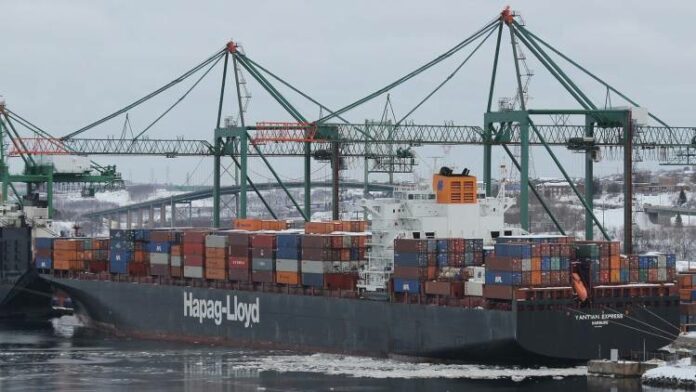
Ocean carrier Hapag-Lloyd reported Friday that a cargo fire has broken out on the deck of the boxship Yantian Express. The blaze began in one container and has since spread to others, and the full extent is not yet known. 

The 7,500 TEU Yantian Express is operating on Hapag-Lloyd's East Coast Loop 5 (EC5) service and is under way from Colombo, Sri Lanka to Halifax, Nova Scotia. She is presently located about 650 nm off Canada's eastern coast. 

Hapag-Lloyd reports that the vessel's eight officers and 15 seafarers are unharmed, and they remain on board. According to the carrier it is still too early to make a precise estimate of the damage to the vessel or its cargo. 

Efforts to extinguish the fire in the containers were launched immediately, but these operations had to be suspended due to a deterioration of the weather conditions. According to German media, the master has ordered the vessel turned into the wind to prevent the spread of the fire. 

One good samaritan vessel, identified by the U.S. Coast Guard as the cargo ship Happy Ranger, is nearby in the event that the Yantian requires emergency assistance. The Ranger is an AMVER participant, and she agreed to divert upon a request from the Coast Guard. A rescue tug is under way to the scene to provide firefighting support. 

According to the latest surface forecast, a developing storm over the U.S. eastern seaboard will arrive off Nova Scotia January 6, bringing winds of about 40 knots to the area where the Yantian Express is presently located. 

Source:maritime-executive

Oneka gets $2M boost for its wave-powered desalination unit

0

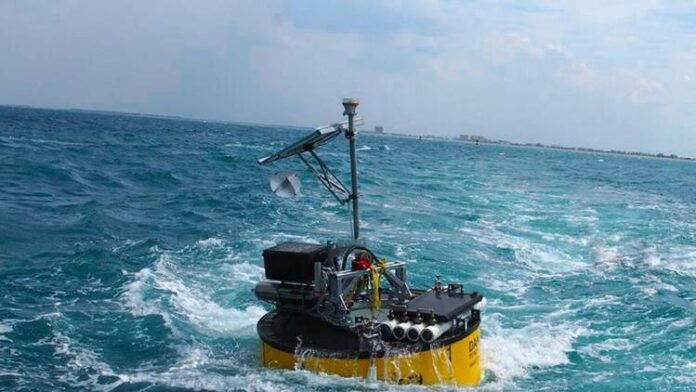
Oneka Technologies, a designer of autonomous desalination buoys that uses wave energy to produce drinking water, has recently completed its second round of financing in collaboration with Anges Québec.

This inflow of capital of 2 million dollars should allow the company to launch their product, starting with the Caribbean market.

We would like to thank all of the investors who believe in our technology and the urgent need to improve the lives of millions of people around the world,” said Dragan Tutic, cofounder of Oneka Technologies. “We’re thrilled to move into this new phase—bringing our product to market is the first step to unleashing its full potential.”

The company also recently completed the sea trials for the fourth generation unit. The unit achieved a performance of 5 to 10 cubic meters per day (5,000 to 10,000 Liters per day) of drinking water depending on the conditions. Waves of 0.6 meters to 1.2 meters of height are needed for such productions. The unit has been taken out for the engineering team to focus on the first commercial unit.

Launch of winterised oil skimmer for arctic sea conditions

0

Norwegian equipment supplier H. Henriksen has developed a winterised version of its standard FoxTail mop skimmer to clean up oil spills, specially modified for use in arctic conditions.

Dubbed Arctic FoxTail, the new equipment is a major redesign of the company’s standard VAB (Vertical Adhesion Band) sorbent mop skimmer with integrated transfer pump, insulated cover and a hydraulic heating system.

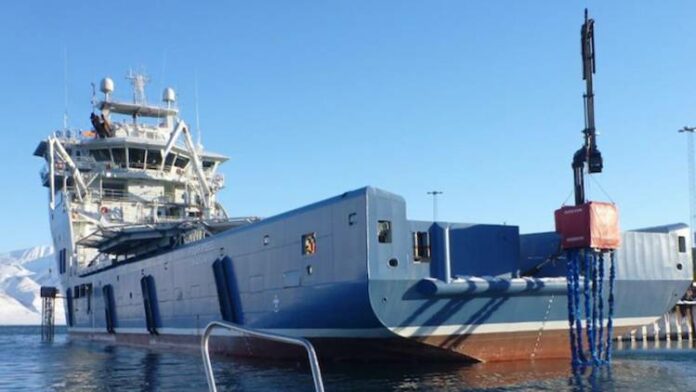
The winterised version successfully underwent recent testing on board the vessel Polarsyssel in Longyearbyen, Svalbard, during which it proved capable of stable and continuous operation in sub-zero arctic conditions, reports the company.

The standard FoxTail can operate in temperatures down to -6ºC, it says, while Arctic FoxTail is capable of operation at -21ºC under the same sea temperatures and wind conditions.

A first Arctic FoxTail device is now being delivered to the Norwegian Coastal Administration (NCA), informs Trygve Egenes, md of Tonsberg-based H. Henriksen.

Development of the winterised skimmer began as part of a programme to enhance Norway’s oil spill preparedness launched by the Norwegian Clean Seas Association for Operating Companies (NOFO) and NCA back in 2015.

Source:seatrade-maritime