0.7 C
New York
Home Blog Page 1176

BP, Eni Team Up In Pursuit Of Exploration Opportunity In Oman

0

BP and Eni have signed a heads of agreement with the Ministry of Oil and Gas of the Sultanate of Oman to work jointly toward a significant new exploration opportunity in Oman, BP said in a news release Jan. 14.

Under the agreement, the two companies will work with the government of Oman toward the award of a new exploration and production-sharing agreement (EPSA) for Block 77 in central Oman, the release said. BP and Eni will now enter discussions with the ministry to finalize details of the EPSA.

Block 77, with a total area of nearly 3,100 sq km, is located in central Oman, 30 km east of the BP-operated Block 61 which contains the already-producing Khazzan gas project as well as the Ghazeer project currently under development.

LLOG expects three field start-ups in 2019

0

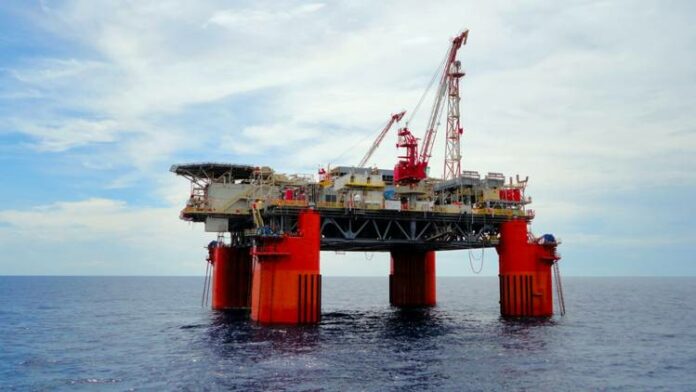
LLOG Exploration Co., L.L.C. has provided an update on the status of its recent successes and ongoing projects in the deepwater Gulf of Mexico.

In 2018, the Nearly Headless Nick discovery in Mississippi Canyon block 387 was drilled by LLOG using the ultra-deepwater drillship Rowan Resolute. The well was drilled to target Upper Middle Miocene sands in water depths of more than 6,500 ft (1,981 m) and 150 mi (241 km) southeast of New Orleans.

The well encountered oil pay in high quality Miocene sandstone reservoirs and is expected to be tied back to the nearby LLOG-operated Delta House facility in Mississippi Canyon block 254. LLOG’s partners in the discovery include BP, Centaurus, Kosmos Energy, and Ridgewood. The Nearly Headless Nick field is expected to be brought online in 2019.

Five LLOG-operated deepwater Gulf of Mexico discoveries (eight wells) were placed on production in 2018.

The LaFemme prospect in Mississippi Canyon block 427 was discovered in mid-2016 and was successfully appraised by a follow up well in late 2016. The Blue Wing Olive prospect in Mississippi Canyon blocks 427-471 was drilled in late 2016 with a discovery well encountering two oil and natural gas reservoirs in the Miocene. The Red Zinger prospect in Mississippi Canyon block 257 was drilled in 2016 and found multiple Miocene targets. LaFemme, Blue Wing Olive, and Red Zinger wells were tied back to the LLOG-operated Delta House facility.

LLOG’s partners in LaFemme and Blue Wing Olive are Beacon Offshore Energy Operating, LLC, Red Willow Offshore, LLC, Ridgewood Energy, and Houston Energy. LLOG’s partners in Red Zinger are Beacon Offshore Energy Operating, LLC, Red Willow Offshore, LLC, and Ridgewood Energy.

The Claiborne prospect in Mississippi Canyon block 794 had a discovery well drilled in 2015 and was successfully appraised with a second well in late 2016. Both wells were tied back to the Walter-operated Coelacanth platform in Ewing Bank block 834. The Crown & Anchor discovery in Viosca Knoll blocks 959, 960, 1003, and 1004 was drilled by LLOG as operator in 2015 and had a second well drilled in 2016; both wells targeted multiple Miocene sands. The wells were tied back to the Anadarko-operated Marlin facility in Viosca Knoll block 915, and both came online in early June.

The company’s partners in Claiborne are Ridgewood Energy, Red Willow Offshore, LLC, CL&F Offshore LLC and Beacon Offshore Energy Operating, LLC. Its partners in Crown & Anchor are Beacon Offshore Energy Operating LLC and Ridgewood Energy.

LLOG expects nine wells to be brought online in 2019, which include four development wells at Who Dat, Mandy, and Red Zinger. In addition, five wells from three new fields, Stonefly, Buckskin, and Nearly Headless Nick, are forecasted to be brought online in 2019.

The company said that it continues to progress 10 other developments and has an extensive pipeline of follow up development drilling to prior exploratory successes.

Philip LeJeune, president and CEO of LLOG, said: "At our Delta House FPS, our continued discoveries and new well productivity has exceeded our expectations, resulting in our Delta House platform currently operating at maximum capacity."

“In 2018, there were nine new fields brought online across the GoM, and we are proud that LLOG was the operator of five of those fields. All of these accomplishments are evidence of our ability to continue to execute on our strategy of generating deepwater prospects in areas of proven success near existing infrastructure that can be drilled, developed, and placed on production efficiently and economically.”

Source:offshore-mag

Rauma Marine Constructions Signs LOI for Hybrid Ferry

0

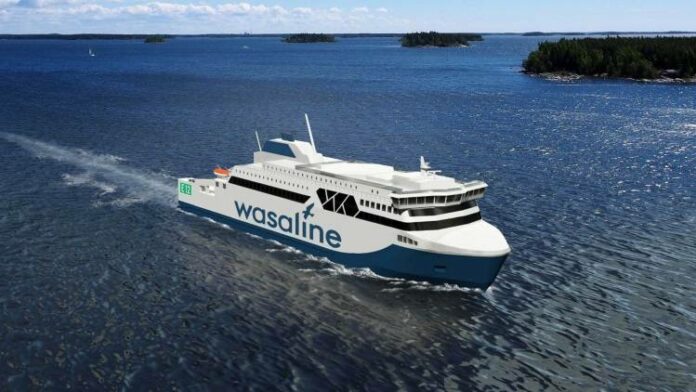
Finnish shipbuilder Rauma Marine Constructions (RMC) has signed a letter of intent with the ferry operator Kvarken Link for the construction of a dual fuel ferry.

The vessel order will have a value of approximately EUR120 million (USD137.63 million), said a press release.

The vessel commissioned by Kvarken Link, a company owned by the cities of Umeå (Sweden) and Vaasa (Finland), will operate between the two cities.

he vessel order will have an impact on employment totalling around 800 person-years. The formal construction agreement is to be signed in early 2019, with the design and construction work set to start immediately thereafter, says Jyrki Heinimaa, CEO of RMC.

”RMC won the public international tender thanks to our expert knowledge and technology. RMC specialises in the design and construction of car and passenger ferries. We are therefore both pleased and proud to have showcased our competence in this area. We are also very grateful for the confidence that the customer has shown in RMC, having commissioned this ferry from us.”

The vessel order comes at an appropriate time for RMC, seeing as the design and construction will mainly be carried out before the construction of the Tallink Shuttle-vessel begins. The letter of intent for the ferry was signed in October last year.

The ferry, commissioned by Kvarken Link, will accommodate some 800 passengers and has a freight capacity of 1,500 lane metres for lorries. The vessel will be designed to be environmentally friendly, with a machinery running on a dual fuel and battery solution, and the main source of fuel being liquefied natural gas. The vessel will also be able to utilise, for example, biogas produced in Vaasa.

Car and passenger ferry M/S Hammershus, commissioned by Danish ferry operator Molslinjen, is RMC’s first newbuilding vessel and began operating in September. In comparison to Hammershus, the new ferry between Vaasa and Umeå will be more comprehensively outfitted; it will house more cabin space, as well as a more varied restaurant offering, to name just a few extra touches.

The ferry has an ice class of 1A Super, in order to guarantee that the vessel is able to navigate in the challenging ice conditions of the Kvarken region as independently as possible. RMC’s aim is to ensure the reliability of its vessels in all operating conditions.

Kvarken Link is owned by the city of Umeå and the city of Vaasa, both of whom serve as guarantors of the financing.

Rauma Marine Constructions, which operates from Rauma Shipyard, has seen rapid growth. During autumn, the shipbuilding company has signed letters of intent regarding both a new ferry for Tallink to operate the Helsinki-Tallinn route, and four combat vessels, as part of the Squadron2020 project. In addition, RMC is also currently building blocks for a cruise ship at Turku Shipyard.

Due to the growing number of orders, RMC has actively been recruiting new workforce for the shipyard. The recruitment efforts will continue in the near future, with the aim being to recruit both nationally as well as internationally.

Source:marinelink

MSC Starts Clean up in Dutch Waters after Container Spill

0

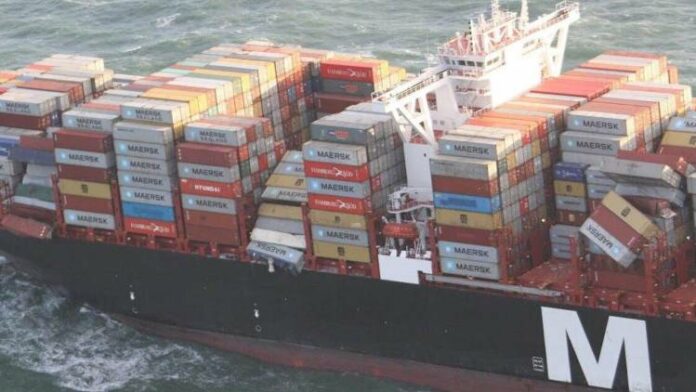
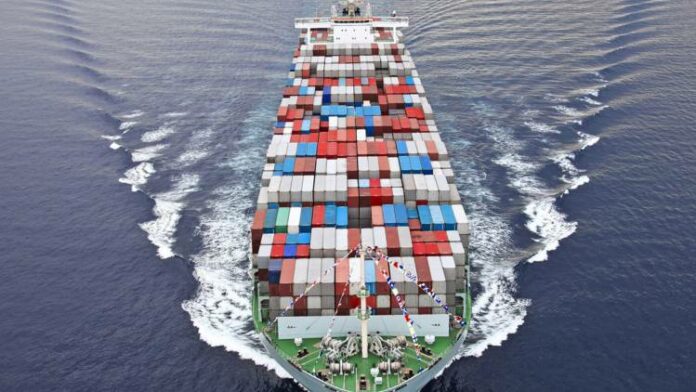
MSC has started cleaning up Dutch sea waters, 10 days after it lost nearly 300 containers from one of its largest cargo vessels in a storm.

"The clean up will likely take months," Dutch water authorities spokesman Edwin de Feijter said. "The largest part of the debris has been located, but there are still parts missing."

291 containers, some holding hazardous chemicals, fell off one of the world's largest container ships, the MSC Zoe, on Jan. 2 in German waters near the island of Borkum during a North Sea storm.

Two salvage ships left the harbor at IJmuiden, near Amsterdam, heading towards a container north of the tiny Rottumerplaat island, which is blocking an important shipping route between Germany and the Netherlands.

Work was planned to start at midday on Saturday, but rough weather looked set to delay the operation, De Feijter said, adding that 238 objects had been identified in the water so far.

"Those objects are not all entire containers, they can also be part of the cargo lost from broken ones."

Seventeen containers washed up on shore on the Dutch islands of Terschelling, Vlieland, Ameland and Schiermonnikoog, with the debris of many others littering the islands' beaches.

MSC, the world's no. 2 container shipping group, on Wednesday said it had made significant progress on the Dutch islands, with a total of 1,220 tonnes of debris collected so far.

Dutch authorities last week said they would hold MSC liable for the cost of cleaning up the waters.

Roughly 100 soldiers joined the clean-up operation last week, while local authorities and volunteers had already gathered up tonnes of waste from several kilometers of coastline.

Source:marinelink

Summary of the regulatory landscape in 2019

0

Gard Club summarizes the 2019 maritime regulatory landscape. The marine industry experienced many regulations coming into force on 2018, with the same expected to happen in 2019. These regulations regard crew, safety, environment, cargo, and certification.

1 January 2019

  • Escape Route Signs and Equipment Location Markings: To ensure uniformity of safety signs with ISO standards, the IMO has established updated signs and graphic symbols to be used to mark the location of ways of escape, life-saving systems, and mandatory action signs for launching lifesaving equipment.
  • Information to be included in bunker delivery note: The current bunker delivery note (BDN) limits the supplier’s declaration to stating that the fuel oil supplied complies with MARPOL Annex regulation 14.1, which reduces the global limit from 3.5% to 0.5% from 1 January 2020, or regulation 14.4 covering limits for emission control areas. It does not cover the supply of high sulphur fuel oil to ships with scrubbers or those with an exemption. Text of the BDN was amended to allow such supply.
  • Baltic Sea and the North Sea Emission Control Areas for NOX Tier III control: The Baltic Sea and North Sea emission control areas (ECA) will be extended to cover NOx in addition to SOx. Engines with power output over 130kw installed on vessels constructed on or after 01 January 2021 must be Tier III certified if operating inside these two areas. The regulation also regards non-identical replacement engines or additional engines installed on existing ships on or after 1 January 2021.
  • Amendments to the International Maritime Solid Bulk cargoes (IMSBC) code: New schedules for some cargoes have been introduced and some existing ones have been amended. Coal will now be classified as both Group A and B cargo unless otherwise tested.
  • IMO Data Collection System (DCS) and Ship Energy Efficiency Management Plan (SEEMP Part II): All ships of 5,000 gross tonnes and above, engaging in international voyages should collect consumption data for each type of fuel oil they use. The data is reported to the flag State after the end of each calendar year and the flag State issues a Statement of Compliance to the ship. SEEMP Part II must describe the methodology that will be used to collect the data and the processes that will be used to report the data to the ship's flag State.
  • Emissions control requirements in China, Taiwan and Hong Kong: In China, from 1 January 2019 vessels must change to fuel with a sulphur content not exceeding 0.50% before entering China’s territorial sea; In Taiwan, ships without scrubbers must burn fuel with a sulphur content not more than 0.50% when entering its international commercial port areas; Hong Kong’s current Fuel at Berth Regulation requiring ships to burn fuel with a sulphur content not exceeding 0.50% while at berth will be replaced by a regulation extending the standard to ships operating in Hong Kong waters. Ships without scrubbers will need to burn fuel with a sulphur content not exceeding 0.50% within Hong Kong waters.
  • China Regulation on Data Collection for Energy Consumption of Ships (RDCECS): Ships of 400 GT or more, or powered by main propulsion machinery over 750 kW of propulsion power calling a port in China should report energy consumption data of last voyage to China MSA before leaving a port.

8 January 2019

2016 Amendments to Maritime Labour Convention 2006 (MLC): Amendments related to Regulations 4.3 and 5.1

  • Regulation 4.3: The MLC Guideline B4.3.1, about the provisions on occupational accidents, injuries and diseases, now includes harassment and bullying;
  • Regulation 5.1: Standard A5.1.3 allows an extension of the validity of the Maritime Labour (ML) Certificate for not more than five months in cases where ships have passed the renewal inspection but a new full term ML Certificate cannot be issued immediately and provided on board. The new certificate will remain valid for a period not exceeding five years from the date of the current one.

9 April 2019

Electronic exchange of information: Electronic exchange of information will be mandatory for public authorities with a transition period of no less than 12 months from the date of the introduction of such systems.

30 April 2019

EU MRV shipping Regulation 2015/757: submission of CO2 emissions report: Companies must submit to the EU Commission and to the authorities of the flag States, an emissions report about the CO2 emissions and other information for the reporting period for each ship under their responsibility. By 30 June 2019 all vessels must have a document of compliance onboard.

1 June 2019

Baltic Sea special area: Passenger ships must not discharge untreated sewage in the Baltic Sea. To discharge treated sewage, ships must have onboard an approved  sewage treatment plant meeting the requirements set out in Resolution MEPC.227(64).

30 June 2019

Carriage of Document of Compliance (DOC): Ships arriving or departing from an EU port and which have conducted voyages during that reporting period must carry onboard a DOC issued by an accredited verifier. The DOC must be valid for a period of 18 months from the end of the reporting period.

1 July 2019

  • New requirements for compressed air breathing apparatus used in fire fighting: Compressed air breathing apparatus on ships built before 1 July 2014 must have an audible alarm and a visual or other device that will alert the wearer before the volume of the compressed air in the cylinder has been reduced to no less than 200 liters. Compliance nust be verified at the first safety equipment survey on or after 1 July 2019. For ships built on or after 1 July 2014, these requirements have to be met on delivery.
  • Amendments to the International Aeronautical and Maritime Search and Rescue (IAMSAR) Manual: Ships should be supplied with up-to-date copies of the IAMSAR Manual Vol.III. Crew members should be informed of the changes introduced in the new version of the publication.
  • Amendments to the Performance Standards for EGC and NAVTEX Equipment: MSC.430(98) includes amendments to the performance standards for Enhanced Group Call and MSC.431(98) for NAVTEX. This equipment must be onboard as per SOLAS IV/7 and it must meet the relevant performance standards in SOLAS IV/14. Equipment installed on or after 1 July 2019, should be type approved according to the SOLAS IV/14 performance standards.
  • Emissions control area in China – shore power: Vessels capable of receiving shore power, must use shore power if they berth for more than three hours in ports in the coastal ECA that have shore power capabilities and more than two hours in ports with such capabilities in the Inland ECAs.

1 September 2019

EEDI for ro-ro cargo ships and ro-ro passenger ships: IMO has decided to increase the reference line, defined as a baseline EEDI for each ship type, representing reference EEDI as a function of ship size, by 20% and to introduce a deadweight threshold value. This new reference line will apply from 1 September 2019.

13 October 2019

  • Implementation schedule of ballast water management for ships: The implementation schedule for compliance with D-2 biological standard remains unchanged. Namely ships built on or after 8 September 2017 should have a ballast water treatment system (BWTS) installed upon delivery, while for ships constructed before this date, the phase-in schedule depends on the IOPP renewal date after 8 September 2019.
  • Endorsements of additional surveys on the International Ballast Water Management Certificate: Regulation E-1 of the Ballast Water Management Convention now clarifies that additional surveys will require endorsement on BWM certificate. Regulation E-5 also clarifies that requirements for Annual survey schedule also applies to Intermediate surveys.

Source:safety4sea

5 easy tips for organisations to protect from malware

0

While increased automation and artificial intelligence seem to open new routes for shipping, vulnerability of systems is another area of concern shipping has to encounter. Malicious software (also known as 'malware') is software or web content that can harm an organisation. The most well-known form of malware is viruses, which are self-copying programs that infect legitimate software.

In mid-2017, the industry was shaken by a major cyber-attack against Maersk, the world’s largest container shipping company, which led the sector to adopt a new look at cyber security issues. The 2018 validated this trend as cyber incidents continued affecting operators, ports, and shipbuilders.

The UK National Cyber Security Centre has cited 5 simple and easy-to-implement tips for organization to protect from malware:

Tip #1: Install (and turn on) antivirus software: 

  • Antivirus software – which is often included for free within popular operating systems – should be used on all computers and laptops. For your office equipment, you can pretty much click 'enable', and you're instantly safer.
  • Smartphones and tablets might require a different approach and if configured in accordance with the NCSC's EUD guidance, separate antivirus software might not be necessary.

Tip #2: Prevent staff from downloading dodgy apps:

  • You should only download apps for mobile phones and tablets from manufacturer-approved stores (like Google Play or Apple App Store). These apps are checked to provide a certain level of protection from malware that might cause harm.
  • You should prevent staff from downloading third party apps from unknown vendors/sources, as these will not have been checked.
  • Staff accounts should only have enough access required to perform their role, with extra permissions (i.e. for administrators) only given to those who need it.
  • When administrative accounts are created, they should only be used for that specific task, with standard user accounts used for general work.

Tip #3: Keep all your IT equipment up to date (patching):

  • For all your IT equipment (so tablets, smartphones, laptops and PCs), make sure that the software and firmware is always kept up to date with the latest versions from software developers, hardware suppliers and vendors. Applying these updates (a process known as patching) is one of the most important things you can do to improve security – the IT version of eating your fruit and veg.
  • Operating systems, programmes, phones and apps should all be set to 'automatically update' wherever this is an option.
  • At some point, these updates will no longer be available (as the product reaches the end of its supported life), at which point you should consider replacing it with a modern alternative.

Tip #4: Control how USB drives (and memory cards) can be used:

  • It only takes a single cavalier user to inadvertently plug in an infected stick (such as a USB drive containing malware) to devastate the whole organisation. When drives and cards are openly shared, it becomes hard to track what they contain, where they've been, and who has used them. You can reduce the likelihood of infection by:

    -blocking access to physical ports for most users
    -using antivirus tools
    -only allowing approved drives and cards to be used within your organisation – and nowhere else

  • Make these directives part of your company policy to prevent your organisation being exposed to unnecessary risks. You can also ask staff to transfer files using alternative means (such as by email or cloud storage), rather than via USB.

Tip #5: Switch on your firewall

  • Firewalls create a 'buffer zone' between your own network and external networks (such as the Internet). Most popular operating systems now include a firewall, so it may simply be a case of switching this on.

Source:safety4sea

Moray East set to clear the way

0

Scottish outfit Utility ROV Services is to provide boulder relocation for EDPR's 950MW Moray East offshore wind farm off the coast of Scotland.

The work, which is scheduled to kick off in the first quarter of this year, will result in six additional staff being hired by Utility ROV Services.

Utility ROV Services managing director Patrick Crawford said: “This contract is a welcome start to 2019 for the company, and is the result of the hard work and efforts by the whole team here at URS."

The award reflects our commitment to safety and excellent track record in delivering subsea projects, as well as illustrating confidence in the local Scottish supply chain, to deliver first class services to the offshore wind industry.

Moray East project director Oscar Diaz said: “Utility ROV were successfully selected through our competitive tender process, and we are pleased to have them onboard as a key supplier in this phase of the project development."

Moray East are committed to providing opportunities to local companies with a robust safety record and technical excellence in their field, and URS delivered on both these points, providing confidence in their abilities to execute the scope of work effectively.

Source:renews

TenneT inks Hollandse Kust Zuid 1&2 links

0

Dutch transmission system operator TenneT and Vattenfall have signed agreements for the offshore grid connection for the 700MW Hollandse Kust Zuid 1&2 project off the coast of the Netherlands.

The deal covers the links between Vattenfall's wind farm and TenneT's Hollandse Kust Zuid Alpha offshore platform.

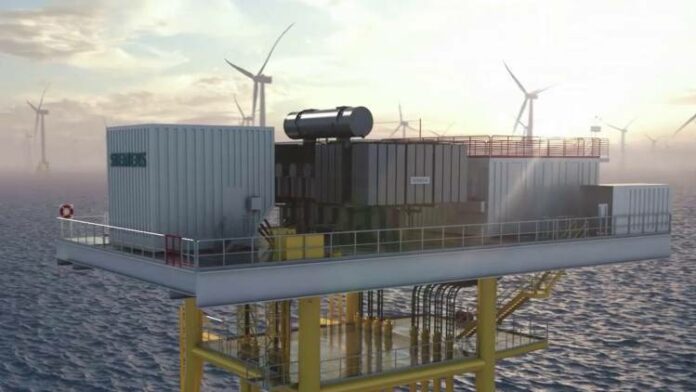
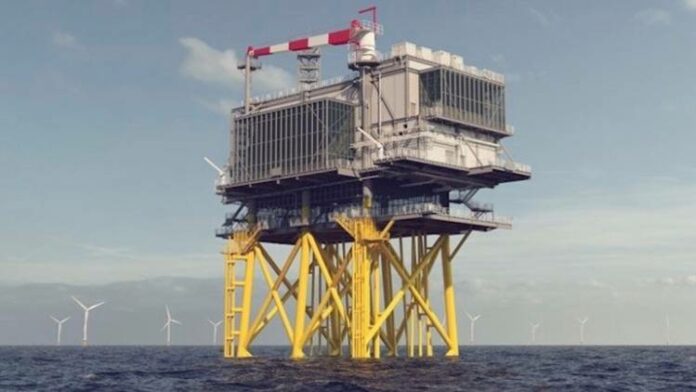
TenneT said the Hollandse Kust Zuid offshore grid will comprise two 700MW transformer platforms at sea, two 220kV AC cables per platform, an onshore substation and an expansion of the existing Maasvlakte HV substation that connects to TenneT’s Randstad 380kV Zuidring.

One link will become operational in 2021, with the second coming online the following year, it added.

TenneT senior manager offshore Nederland Marco Kuijpers said: “This agreement is another fantastic step towards making the Dutch electricity system sustainable."

The offshore grid is now really taking shape, first with 1400MW in the Borssele wind area, followed by Hollandse Kust Zuid and finally Hollandse Kust Noord in 2023.

In the meantime, we’re preparing for the next North Sea projects in consultation with the Ministry of Economic Affairs & Climate.

Vattenfall head of business area wind Gunnar Groebler said: “This is a big milestone for the project and we’re glad that it is advancing well."

“Contracts are signed well ahead of the deadline in March this year. We are looking forward to continue our cooperation with TenneT and materialise this project as a big contribution to the Dutch energy transition.”

Source:renews

SurfWEC to Tap Ocean Wave Power

0

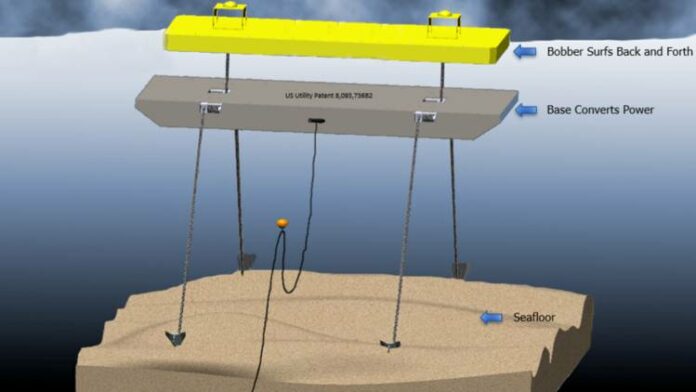
New Jersey based marine engineering firm Martin & Ottaway together with industry partners, has formed a new company, SurfWEC LLC, that will develop Wave Energy Converters (WECs) using patented features that are expected to increase energy recovery rates by an order of magnitude over legacy WEC systems.

The marine consultancy firm said in a press release that SurfWEC has broken through the barriers holding back wave energy recovery technologies from successfully and economically harnessing power from ocean waves.

SurfWEC avoids wave damage associated with equipment located in surf zones and stationary mooring systems offshore. The proprietary technology conquers the challenge of highly variable wave sizes that faced past ocean-based efforts by converting wavelength to wave height, it said.

The patented shoaling feature, invented by SurfWEC Chief Technology Officer, Michael Raftery, while performing research at Stevens Institute of Technology, allows offshore waves to be converted to surging surf waves and thereby allows much more effective wave energy recovery. This increase in effectiveness is the first technically viable opportunity for utility size offshore wave electricity generation and expands the commercially viable wave energy regions to milder wave climates.

SurfWEC LLC is located in Tinton Falls, NJ and expects to take advantage of the confluence of the present favorable US East Coast sustainable energy investment climate, favorable Atlantic Ocean waves and water depths, and local technical resources to make rapid progress towards utility level power generation.

SurfWEC is partnering with Stevens Institute of Technology, Bosch Rexroth Inc., ISCO Pipe, HYDAC, Airline Hydraulics, Wire Co./Lankhorst Ropes, InterOcean Systems LLC, and other industry leaders in prototype development.

At the formation reception of SurfWEC at the New York Yacht Club on December 14, 2018, Chief Technology Officer Michael Raftery said: “The formation of SurfWEC is a unique opportunity to take a big tent approach to the deployment of these wave converters. There is so much wave power out there and to be able to use this power to develop a sustainable energy economy is a dream come true. I am particularly excited about the economics of co-location of SurfWECs with offshore wind projects.”

On December 18, 2018 SurfWEC Chief Executive Officer Rik van Hemmen and Mike Raftery made the first formal presentation of the concept at a joint meeting of the Society of Naval Architects and Marine Engineers (SNAME), the Institute of Marine Engineering, Science and Technology (IMarEST), the Society of Marine Port Engineers (SMPE) and the American Society of Naval Engineers (ASNE).

Source:oedigital

Bibby HydroMap collaborating with Nekton Deep Ocean Research Institute

0

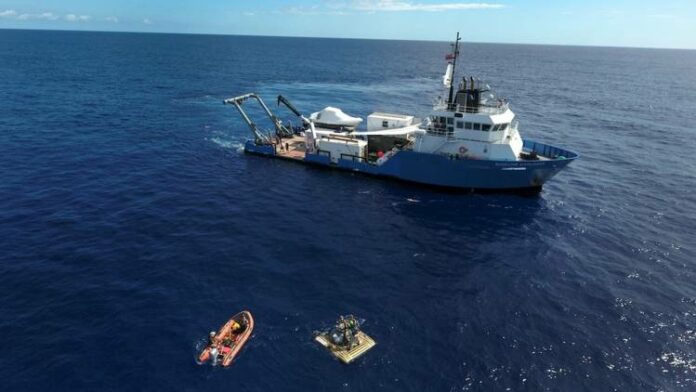
Bibby HydroMap are delighted to announce that the company will be providing survey support to Nekton Deep Ocean Research Institute for their Seychelles Expedition in March 2019. Having understood the vision of the assignment, Bibby HydroMap were keen to be part of this extraordinary project and to offer our support and be involved with others who work in the marine conservation.

Our work environment, seas and oceans, are exciting places to be explored and just maybe such explorations could not only help find many unsolved mysteries but also possible opportunities to help marine conservation and preservation. By supporting marine exploration and advancing the academic nature of our work it can also provide our staff with essential skills and knowledge.

Bibby HydroMap are happy to be providing a Hydrographic Surveyor, in a specialist capacity, to take part in this amazing scientific discovery opportunity to help make a difference, specifically undertaking bathymetric surveys during the expedition. Seabed mapping will play an important part as the data collected will assist with planning visual surveys to determine the heterogeneity of the sites and enable Nekton to ground -truth assumption made for Seychelles marine spatial planning.

The purpose of the expedition is to explore Seychelles' deep waters to study ocean health and marine biodiversity. The Seychelles covers an exclusive economic zone of 1.4 million square kilometres. The expedition is expected to be carried out in specific areas within the plateaus of designated outer islands with depths of 500 metres.

The Mission:

  • Starting in March 2019 it will continue for 7 weeks
  • 50 descents are planned
  • 13 scientists on board
  • Visual surveys will be carried out by two pioneering submersibles (maximum depth 300 metres) and one high tech ROV (maximum depth 500 metres)
  • 2.5 billion people live in the countries surrounding the Indian Ocean and are dependent on the health of the ocean for food and water
  • The last depth surveys around parts of Aldabra were carried out by lead line in the 1870s
  • These waters have only been seen to scuba depth of 30 metres