1.1 C
New York
Home Blog Page 1177

Blockchain based bills of lading project to move to the next phase

0

After ZIM’s first-ever pilot of paperless Bills-of-Lading based on blockchain technology, ZIM and selected customers are testing the new platform as a way for trade activities on multiple shipping lanes.

After the successful pilot, ZIM is evaluating the platform in different trade lanes with more customers. The exploratory transactions showed that the blockchain technology can not only replace paper but also enhance current activities which depend on emails, fax and other existing tools.

In two recent transactions, Original Bill of Ladings were transferred to the receiver in less than two hours from the ship's departure. Moreover, all documentation processes were carried out over the blockchain-based platform. Namely, one consignment was shipped from Vietnam to the US East Coast, and a shipment of 11 high-cube special containers were loaded in Koper and shipped to Haifa.

After successfully completing many shipments, ZIM wants to start the next phase by moving to eB/L to all ZIM customers in selected trades. In the first quarter of 2019, ZIM aims to give emphasis on the Asia-South Africa and North America-Mediterranean trades. These trades were chosen because of their diverse activities and involved players.

"Digitizing the shipping documentation process will have a tremendous effect of reducing the time, complexity and costs for all parties involved."

Source:safety4sea

Russia gradually cuts oil output in line with OPEC+ deal

0

Russia is slowly decreasing its oil production following the OPEC+ deal and is on track to reach approximately the fifth of the way towards its pledged cut on January, according to Bloomberg. Russian data reveal that the nation's output has already decreased by more than 30.000 barrels per day, similar to October's levels, as reported by Alexander Novak, Energy Minister.

He continued stating that "The companies have said they can decrease total production by 50,000 barrels per day in January.."

In addition, Russia has concluded to an agreement with the Organization of Petroleum Exporting Countries to steadily pass a cut of 228.000 barrels per day by the end of the first quarter, in comparison to October's production of 11.418 million bpd.

Moreover, Russia opened the taps prior to the restrictions, reaching a post-Soviet record of 11.45 million barrels per day in December. Meaning that the month-to-month output reduction will be sharpen.

In the OPEC+ agreement, Russia has the possibility to cut its oil output gradually as the harsh climate and complex geology of Siberia, its main oil province, prevent swift field shutdowns.

On the contrary, Saudi Arabia reported that it has already fully implemented it production cut and has dive deeper, pumping 10.2 million barrels per day.

Bloomberg supports that Russia's decreases are plain in comparison to its partners' cuts.

Concluding, in December OPEC production plunged by 530,000 barrels a day, the most in almost two years. The OPEC+ alliance agreed to trim output by a total 1.2 million barrels a day in the first half of 2019.

Source:safety4sea

Ultra large container vessel battle is over: Drewry

0

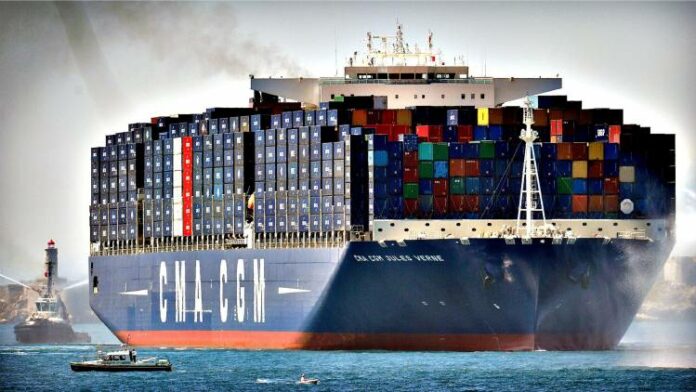
Major lines have sated their appetite for ultra large container vessels, with UK consultants Drewry slashing its projected boxship order forecasts from 2020 onwards.

The latest edition of Drewry’s Container Forecaster looks at how top lines are increasingly focused on spending to become all-round supply chain companies rather than beefing up their fleets.

“We believe that the industry’s supply-demand balance will benefit from a reduced appetite for ultra large container vessels (ULCVs) among the major carriers, some of which now have their eyes fixed on a bigger prize of becoming global logistics integrators. Aside from feeder ship replenishment, there has been no reaction from other lines to HMM’s mega-ship order and as such we have greatly reduced our projected new orders for 2020 onwards,” said Simon Heaney, senior manager, container research at Drewry and editor of the Container Forecaster.

This subsequently feeds into a much brighter supply-demand index forecast for carriers through 2022, although the index is still expected to remain below the important 100 marker, indicative of a tighter but still over-supplied market. Ultimately, we believe that these adjustments on the supply side will be sufficient to cushion the blow from slowing demand growth and will contribute to better freight rates and profits,” Heaney added.

Drewry is predicting global boxport growth of 4% this year. It notes that more original 2018-19 newbuilds have been pushed out to 2020. Combined with an expected increase in demolitions the net addition to the fleet is expected to be only half that of 2018, leading to a fleet growth rate of just 2.5%.

Additionally, supply-side moves associated with the IMO’s upcoming 2020 low sulphur fuel regulation have the potential to curb capacity, at least on a temporary basis. A growing tendency towards retrofitting scrubbers could see a number of ships taken out of service for a number of weeks at a time, while more generally Drewry expects shipowners to idle and eventually scrap more older and uneconomic ships before the January 1 deadline. Wider use of slow steaming will also help to absorb new capacity and reduce the often negative influence of the cascade on the supply-demand balance, Drewry stated.

“Last year was one of the most unpredictable the container shipping industry has faced, and this year is likely to be similarly volatile with question marks still hanging over the US-China trade war and new fuel regulations. However, despite being dogged by uncertainty, Drewry is predicting another solid year for the market,” Heaney predicted.

Source:splash247

CDP, Fincantieri and Snam team up to innovate port facilities in Italy

0

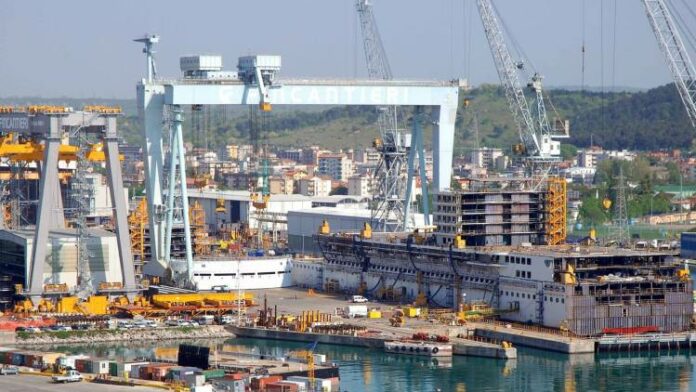
Cassa depositi e prestiti (CDP), Fincantieri and Snam have signed a preliminary collaboration agreement aimed at identifying, defining and implementing medium-term strategic projects for the innovation and development of port facilities in Italy, as well as for the development of sustainable technologies applied to maritime transport, in line with the provisions of the National Integrated Energy and Climate Plan Proposal (PNIEC), Fincantieri said in its release.

In particular, the agreement focuses on:
 
 Ports and coastal areas – projects for building infrastructure for the supply, transformation and use of liquefied natural gas (LNG) and alternative energy sources in maritime transport within port facilities or coastal areas;
 
 New technologies and innovative energies – research, development and implementation of maritime transport systems based on new technologies (turbines for LNG modules, containment and management of liquid and gaseous methane systems), innovative energy sources (LNG, hydrogen, fuel cells);
 
 Engineering – sharing operating models and best practice between the respective engineering and construction departments;
 
 Energy efficiency – initiatives to increase consumption efficiency, with a particular focus on the naval and industrial sectors.
 
As part of the agreement, Fincantieri and Snam will share their technical skills by launching dedicated workshops. CDP will support these initiatives from an economic and financial point of view, in line with its institutional mission to support projects that have a positive impact on the country.

The agreement may be subject to subsequent binding agreements that the parties will define in compliance with the applicable regulatory profiles, including those relating to transactions between related parties.

Norway audits Maersk Drilling’s procedures

0

The Petroleum Safety Authority Norway (PSA) and the Norwegian Labour Inspection Authority have audited Maersk Drilling's routines for handling notifications of censurable conditions (whistleblowing) at work.

Notification concerns the reporting of censurable conditions at the workplace. Through their employment, employees may become aware of matters that are or could oppose to:

  • Legal acts and regulations;
  • The company’s policies;
  • The general perception of what is justifiable or ethically acceptable.

The Working Environment Act gives workers the right to notify censurable conditions. The notification rules in the Working Environment Act cover cases where an employee notifies censurable conditions in his or her own company. The Act also entitles contracted employees to notify censurable conditions in the contracting company.

The employer must prepare procedures for internal notifications or implement other measures to enable the right to notify censurable conditions. This right should contribute to enhancing employees’ genuine freedom of expression in the workplace.

In its response, Mærsk Drilling describeds the procedure for notifying, and receiving and handling notices of, censurable conditions. It is assessed that the content of the notification routine meets the requirements in Section 2A-3 (5) of the Working Environment Act.

It appears from the response that the routine was not prepared in collaboration with the employees and their representatives. The audit detected one non-conformity regarding deficient employee participation in the preparation of the routine.

Source:safety4sea

UK Opens National Decommissioning Center

0

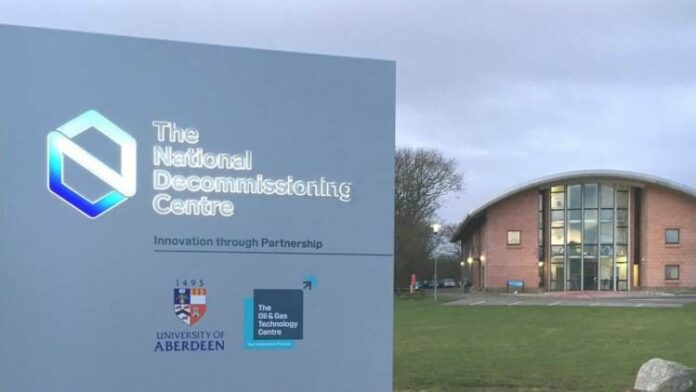
The National Decommissioning Centre (NDC) is opened by Lord Duncan, UK Government Minister for Scotland and Paul Wheelhouse MSP, Scottish Energy Minister, in Newburgh, in North-East Scotland’s Energetica Corridor.

The Centre aims to work in partnership with companies to become the global leader in research and development (R&D) focused on reducing costs, extending field and asset life, and transforming the traditional approach to decommissioning.

100 offshore platforms and 5,700km of pipeline are forecast to be decommissioned or reused over the next decade on the UK Continental Shelf. With the Oil and Gas Authority estimating the total cost of oil and gas decommissioning to be £58bn, the NDC will help industry deliver the 35% cost reduction target set by the regulator in 2016.

The National Decommissioning Centre (NDC), a global technology R&D hub that is a partnership between the University of Aberdeen and Oil and Gas Technology Centre was opened by Lord Duncan, UK Government Minister for Scotland and Paul Wheelhouse MSP, Scottish Energy Minister, in Newburgh, in North-East Scotland’s Energetica Corridor.

The government ministers joined industry and civic leaders to celebrate the launch of this long-term £38m partnership, which is part of the Aberdeen City Region Deal.  The NDC is focused on reducing costs, extending field life and science-based thought leadership.

Combining industry expertise with academic excellence, the Centre aims to work in partnership with companies to become the global leader in research and development (R&D) focused on reducing costs, extending field and asset life, and transforming the traditional approach to decommissioning.

The NDC builds on the world-leading R&D capability at the University of Aberdeen in areas such as decommissioning technologies, predictive modelling, environmental assessment and the economics of decommissioning.

The Centre is in advanced discussions with several anchor partners, focused on bringing together academic researchers, experts from industry and business partners with the best experience, ideas and equipment to create a unique environment for collaborative R&D.

The NDC is home to the most powerful industrial laser at any UK academic institution, a state-of-the-art digital visualisation and collaboration suite, and a supercomputer cluster enabling the fast simulation and modelling of innovative decommissioning scenarios.

This includes facilities for technology trials and rapid prototyping, with a hyperbaric testing vessel that can simulate ocean conditions of 6,500m, an indoor freshwater immersion tank, environmental chambers for temperature testing from -40C to +180C and hangar space for the design and construction of decommissioning technology.

Led by Professor Richard Neilson from the University of Aberdeen and the OGTC’s Dr Russell Stevenson, the NDC is developing a wide-ranging, industry-led research programme, with dedicated access to the brightest and best PhD and MSc students, and several projects are already underway.

Source:marinelink

Australian frigate lands CMF’s first drug seizure of 2019

0

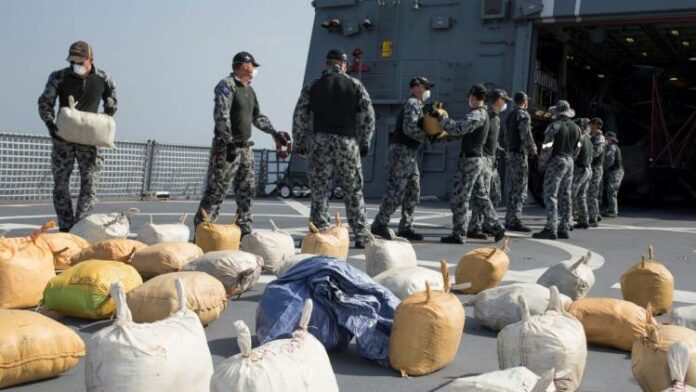
Royal Australian Navy frigate HMAS Ballarat seized over 3.1 tons of hashish in the Arabian Sea during an operation that took place on January 8 and 9.

The seized drugs are worth an estimated $155 million and are the first narcotics seized by a Combined Maritime Forces member in 2019.

The fishing vessel, known as a dhow, was believed to be engaged in illegal activity when Combined Task Force 150 (CTF 150) of the Combined Maritime Forces (CMF) directed Ballarat to board the vessel and conduct a flag verification check.

Ballarat’s boarding team searched the dhow and seized the hashish. The drugs were transferred to Ballarat for disposal.

Commanding officer of HMAS Ballarat, Commander Paul Johnson, said the boarding team conducted the night-time boarding professionally. He said the team found the drugs hidden in voids around the vessel.

“The seizure is a reflection of the continued trade in illegal narcotics which has the potential to fund terrorist groups across the region,” Commander Johnson said.

“HMAS Ballarat is contributing to the Australian government’s mission to ensure Middle East regional maritime security. Ballarat and her crew remain ready to continue that mission during our deployment on Operation Manitou.”

Commander CTF 150, Commodore Darren Garnier of the Royal Canadian Navy, said the seizure would disrupt revenue supplies to terrorist organisations and was a good start to the new year.

“As CTF 150 marks its sixth seizure in six weeks, our successes demonstrate the value of the coordinated efforts of the CMF international naval partnerships,” Commodore Garnier said.

ExxonMobil and IBM to Advance Energy Sector Application of Quantum Computing

0

ExxonMobil said that it has signed a partnership agreement with IBM to advance the potential use of quantum computing in developing next-generation energy and manufacturing technologies. The new partnership was formally announced during the 2019 Consumer Electronics Show (CES) in Las Vegas.

As part of the agreement, ExxonMobil becomes the first energy company to join the IBM Q Network, a worldwide community of Fortune 500 companies, startups, academic institutions and national research labs working to advance quantum computing and explore practical applications for science and business.

“The scale and complexity of many challenges we face in our business surpass the limits of today’s traditional computers,” said Vijay Swarup, vice president of research and development for ExxonMobil Research and Engineering Company. “Quantum computing can potentially provide us with capabilities to simulate nature and chemistry that we’ve never had before. As we continue our own research and development efforts in the areas of energy and chemical manufacturing, our agreement with IBM will allow us to expand our knowledge base and potentially apply new solutions in computing to further advance those efforts.”

Advances in quantum computing could provide ExxonMobil with an ability to address computationally challenging problems across a variety of applications, including the potential to optimize a country’s power grid, and perform more predictive environmental modeling and highly accurate quantum chemistry calculations to enable discovery of new materials for more efficient carbon capture.

“The advancement of new breakthroughs, coupled with the creative application of current technologies available to us from outside the energy sector, will be critical in addressing the dual challenge of producing energy to fuel economies and meeting consumers’ needs while managing the risks of climate change,” Swarup said. “Much of the success in our own ingenuity is facilitated by the innovation of others outside our industry, from three-dimensional printing to quantum computing. The many partnerships we lead or participate in around the world provide us with opportunities to exchange ideas and collaborate, applying our own unique experiences, knowledge and strengths toward a potentially successful breakthrough in lower-emission energy production or a more efficient manufacturing process.”

ExxonMobil’s partnership with IBM expands the company’s collaborative efforts with other companies and academic institutions that are focused on developing an array of new energy technologies, improving energy efficiency and reducing greenhouse gas emissions. The company currently works with about 80 universities in the United States, Europe and Asia to explore next-generation energy technologies.


Jan De Nul successfully completes first major umbilical installation project

0

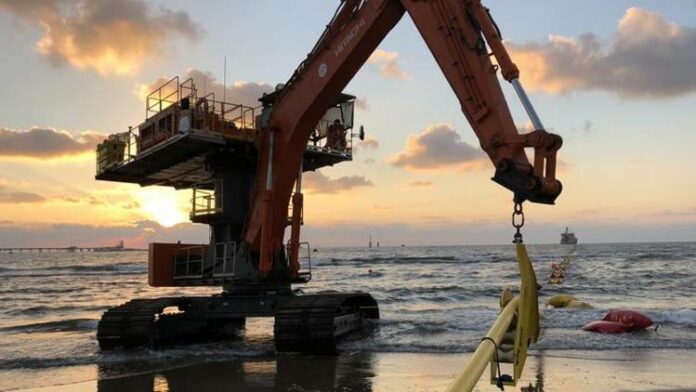
Jan De Nul Group has successfully completed the installation and burial of the two main subsea umbilicals for the exploitation of new gas fields in the West Nile Delta concessions, located in the North Alexandria region.

Specifically for this project, Jan De Nul Group reconfigured its multi-purpose vessel Willem de Vlamingh into an efficient Umbilical Installation Vessel. The two umbilicals, with a total length of 69 km, were loaded in Norway in May 2018 and transported to Egypt. The challenging installation campaign started with a 3-km beach pull for which the Willem de Vlamingh positioned in water depths of only 7 m. Water depths significantly increased along the route. The campaign was successfully finalized early August 2018 with the precise installation of the Umbilical Termination Assembly at 600 metres water depth.

In order to safeguard the critical main umbilical, installation and burial were performed in parallel: Willem de Vlamingh installed the umbilical onto the seabed, directly followed by Isaac Newton for simultaneous burying of the umbilical using the jet trenching method.


MHI Vestas expands Ostend horizons

0

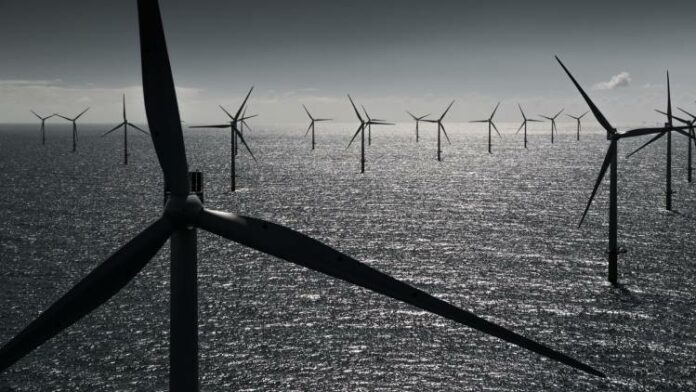
MHI Vestas has opened a new office in the Port of Ostend to expand its offshore wind operations at the Belgian port.

The new €2m building has 1300 metres squared of office space and will help deal with the 67 turbines that are planned to be built this year at the Norther and Northwester 2 projects.

The company will monitor and maintain a total of 244 machines from Ostend by 2020, with MHI Vestas turbines already operating at the Northwind, Belwind and Nobelwind projects.

Port of Ostend took care of the full investment for the new office, with MOP Urban Design the architects for the building and the traffic development plan.

The main contractor was Alheembouw from Oostnieuwkerke with subcontractors Van Vooren covering electricity and SPIE the HVAC.

MHI Vestas Belgium regional director Aart Bark said: “Because we will be servicing no fewer than 244 wind turbines at sea from the Port of Ostend by 2020, we were in urgent need of expansion."

“This new location offers room for our new employees. Meanwhile, we now have over 100 employees in our Belgian branch.”

Port of Ostend chief executive Dirk Declerck said: “We proactively contribute to the expansion of the offshore wind business in our port."

By establishing the needs of the market early on, we can invest in the necessary infrastructure so that the present partners can expand and new companies are attracted.

“This translates into permanent jobs, making the offshore wind sector even more interwoven in the region.”

Source:renews