0.7 C
New York
Home Blog Page 1175

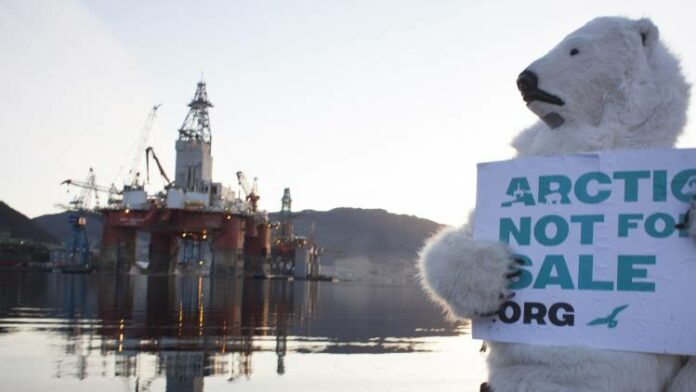
Barclays Rejects Arctic Drilling

0

U.K.-based international bank Barclays  announced a new energy policy that significantly restricts the bank’s financing for the exploration or extraction of oil and gas in the Arctic.

The policy  rules out funding for companies seeking to drill in the Arctic Refuge as well as other climate change threats.

According to the British multinational investment bank and financial services company headquartered in London, arctic oil and gas refers to new exploration and extraction of oil and gas in the area within the Arctic Circle which is subject to sea ice, and includes the Arctic National Wildlife Refuge (ANWR) and the Coastal Plains.

The ANWR is a particularly fragile and pristine ecosystem which is central to the livelihoods and culture of local indigenous peoples.

Barclays Energy and Climate Change Statement said: “Any client conducting new exploration of or extraction of Arctic oil and gas will be subject to Enhanced Due Diligence (EDD),” and the bank “will conduct EDD on any financing transaction directly connected with the exploration or extraction of oil or gas in the Arctic.” Critically, the policy notes that “under the EDD framework, we would not expect such project finance proposals to meet our criteria.”

The announcement from Barclays is the latest in a series of major financial institutions rejecting drilling in the Arctic. Some of the world’s largest banks have made similar commitments, including HSBC, BNP Paribas, Royal Bank of Scotland, Societe Generale, and others.

Recently leaders from the Gwich’in Steering Committee and the Sierra Club have met with representatives from Barclays to discuss the threats fossil fuel operations pose to the Arctic Refuge and why action by the financial industry is necessary, said Sierra Club.

Major financial institutions are beginning to stand with the overwhelming majority of Americans and doing what the Trump administration refuses to do: protect the Arctic Refuge. Drilling in the Refuge would be disaster for wildlife, the climate, and the human rights of the Gwich’in Nation,” said Lena Moffitt, Senior Director of the Sierra Club’s Our Wild America campaign.

“Barclays’s announcement is further proof that drilling in the Arctic Refuge would be a bad bet for any company foolish enough to pursue it,” Lena added.

Source:marinelink

Equinor Extends Esvagt Contract

0

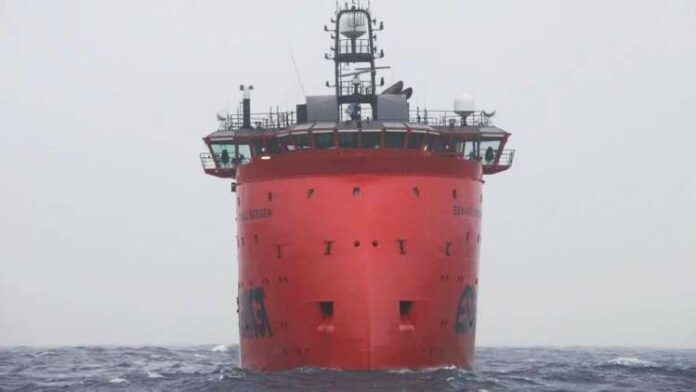
Norwegian multinational energy company Equinor ASA and the provider of emergency rescue and response vessels Esvagt have extended their cooperation in the southern part of the Norwegian sector.

The vessel provider said on Tuesday that the cooperation with Equinor was extended by a minimum of three years.

"Over the next three years, the Esvagt Bergen and the Esvagt Stavanger will be servicing Equinor in the southern part of the Norwegian sector," it said.

Eight years of mutual trust and cooperation are about to be extended, as Equinor and Esvagt add a minimum of three years to their cooperation in the southern part of the Norwegian sector.

Here, the Esvagt Bergen and her sister vessel the Esvagt Stavanger have, since 2011 and since 2012 respectively, provided standby duties for Equinor, and both parties wish to prolong their cooperation, thereby modifying the contracts’ end date to 2022.

"We are delighted to continue the mutual cooperation that we have had with Equinor and the trust that it demonstrates. The two vessels have allowed us to firmly establish our presence in the Norwegian market, and we look forward to build upon that", says Ib Hansen, Head of Commercial at Esvagt.

Esvagt will carry on with tasks such as standby duties, supply duties, oil spill response, and firefighting. These tasks impose certain expectations on the crew and on the equipment.

Both the ‘Esvagt Bergen’ and the ‘Esvagt Stavanger’ are built in a way that enables them to speed up, even in rough weather, and they can hereby cover an area of a considerable size, and both vessels also have daughter crafts on board, which widens the possible outreach.

"Equinor is a significant player who challenges us and makes us better. Equinor has high expectations to for instance quality, safety and environmental considerations – these are demands that help us develop and sharpen our competences", says Ole Ditlev Nielsen, Business Development Manager at Esvagt.

Source:marinelink

Siemens Gamesa launches 10MW offshore turbine

0

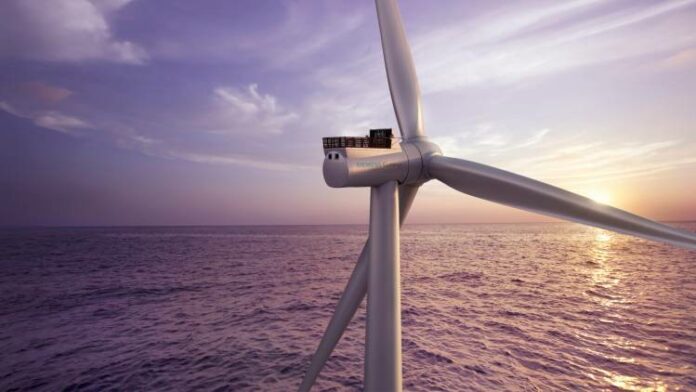
Siemens Gamesa has taken the wraps off a new 10MW offshore wind turbine that offers up to 30% more annual energy production than its current 8MW offering.

The SG 10.0-193 comes with a 193-metre rotor and 94-metre blades.

Units will be market-ready in 2022 and a prototype is due to go up this year.

Siemens Gamesa said it will use components from previous platforms in the new machine.

“The new SG 10.0-193 DD combines experiences and knowledge from five generations of proven direct drive technology in one 10MW turbine,” said chief executive Markus Tacke.

“A showcase of strong performance, swift time-to-market, and low risk in the offshore wind energy market.”

Nacelles will “initially” be manufactured in Cuxhaven, German

“Siemens Gamesa has been applying its knowledge and experience directly into offshore wind turbines for decades,” added offshore chief executive Andreas Nauen.

Utilizing proven components and concepts provides us with a strong, established value chain, with clear processes and skilled employees ready to go, leveraging on a fully- developed and industrialized supply chain.

He added: “The Levelized Cost of Energy from offshore wind continues to decrease as industry scale and performance grow. New markets are developing across the globe, all of which require cost-efficient, reliable, and clean power for generations."

The SG 10.0-193 DD enables us as market leaders to meet these needs in close cooperation with our customers, stakeholders, and society-at-large.

Source:renews

Norway grants record number of 83 offshore licenses

0

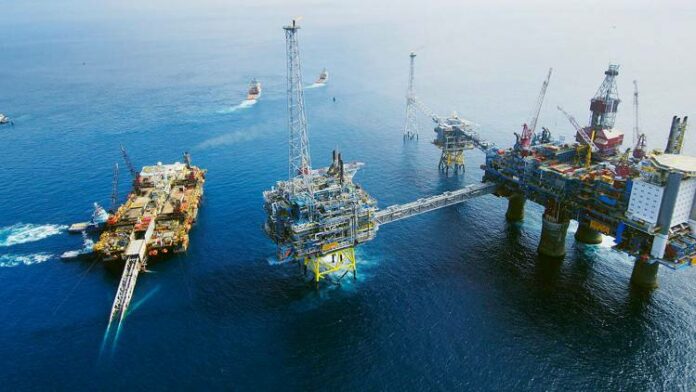
Norway granted 83 blocks to explore for petroleum resources in the Norwegian continental shelf. The number of the blocks offered is a record, something that indicates a rising interest from oil companies in Norway’s oil sector.

A lack of large discoveries on the Norwegian continental shelf has raised concerns that Norway’s oil sector could be declining. For this reason, the government aspires that more licenses could lead to more activity.

Namely, 38 oil companies submitted bids for acreage offshore Norway in the predefined areas (APA) licensing round by last September’s application deadline.

Norway, granted 37 licenses in the North Sea, 32 in the Norwegian Sea and 14 in the Barents Sea. In total, 21 oil firms received operatorships.

Of them, Equinor received the majority, with 13, while Aker BP and Lunding received 11 and 9 operatorships respectively.

In addition, DNO and Faroe Petroleum together won 9 operatorships, with DEA and Wintershall, after agreeing to merge, receiving a combined of five operatorships, Reuters reports.

The other companies that received operatorships include Total, Shell and ConocoPhillips, as well as Eni’s subsidiary Vaar Energy.

Norway announced the round last May, and expanded the pre-defined areas near the existing discoveries by 103 blocks.

Source:safety4sea

Russian Navy places more than 30 underwater drones on combat duty

0

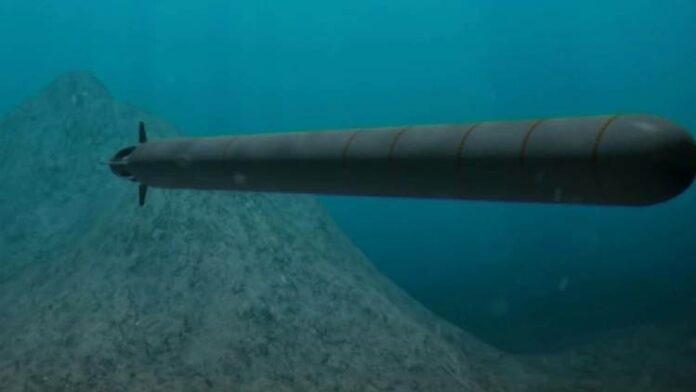
According to TASS, the Russian Navy aspires to put more than 30 Poseidon strategic nuclear-capable underwater drones on combat duty.  The ‘Poseidon,’ also known under Ocean Multipurpose System Status-6 or “Kanyon” by the U.S. intelligence community, is propelled by a miniaturized nuclear reactor.

Mainly, according to their source in the domestic defense industry, two Poseidon-carrying submarines are to begin operation with Russia’s Northern Fleet and the other two will join the Pacific Fleet later on.

In addition, each of the submarines will carry up to eight drones. As a result, the total number of Poseidons on combat duty may reach 32 vehicles.

The nuclear-powered submarine Khabarovsk, that is currently being built at the Sevmash Shipyard, is to become one of the organic carriers of the Poseidon nuclear-capable underwater drone.

Moreover, submarines and Project 949A nuclear-powered underwater cruisers operational in the Russian Navy may be used as the carriers after their appropriate upgrade.

However, TASS has no official confirmation for the information.

President Vladimir Putin mentioned for the first time the country’s efforts to develop a nuclear-powered unmanned underwater vehicle that can carry both conventional and nuclear warheads and is capable of destroying enemy infrastructural facilities, aircraft carrier groups and other targets.

Concluding, Poseidon drones along with their carriers combine the so-called oceanic multipurpose system. The drone was named after open voting on the website of Russia’s Defense Ministry.

Source:safety4sea

Subsea 7 acquires multi-purpose offshore construction and dive support vessel

0

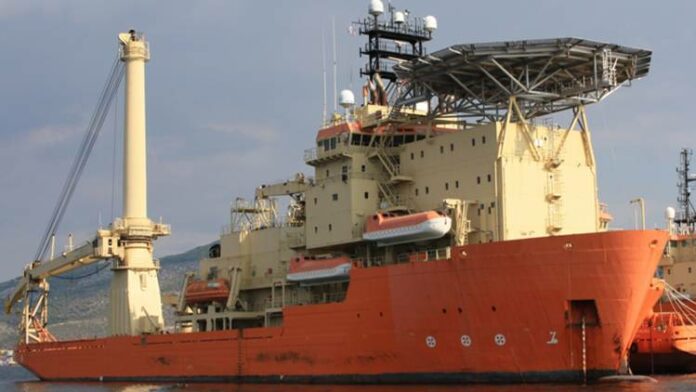
Subsea 7 has finalised the acquisition of Toisa Pegasus, a multi-purpose offshore construction and dive support vessel. The 2009-built vessel is to be renamed Seven Pegasus and will primarily support Subsea 7’s operations in the North Sea and Asia Pacific.

John Evans, Chief Operating Officer said: “This acquisition reinforces our leading diving capabilities and reflects our strategy to actively manage our fleet composition to meet our client’s requirements and market conditions.”

The versatile vessel can perform both heavy and light construction work scopes. Designed and built by IHC, this highly capable DP3 vessel features a twin-bell 18-person saturation diving system and benefits from a 400T crane enabling it to support a range of construction projects. Additionally, its large and flexible 1,200mback deck provides further scope for a variety of applications.  

The vessel will undergo a docking and crew familiarisation programme before commencing operations in quarter two 2019.


ABS Advanced Solutions and Fleet Management Limited partner on cyber security

0

ABS Advanced Solutions and Fleet Management Limited signed an agreement to implement the ABS industry-leading cyber security solution for Fleet Management’s 220-vessel liquid cargo fleet.

Fleet Management Limited is one of the world’s leading ship management firms, and their decision to select the ABS FCI Cyber Risk™ model underlines its position as an industry leader,” said Russell Medeiros, Vice President, ABS Advanced Solutions. “Working together, we will provide a comprehensive cyber security solution to assist in ensuring compliance with the International Maritime Organization (IMO), as well as additional cyber-security related guidelines and requirements—creating a safer fleet.”

“Our safety consciousness and value-added services have always been key drivers of our 24-year growth” said Kishore Rajvanshy, Managing Director, Fleet Management Limited. “New digital technologies not only bring about considerable opportunities to the maritime industry, but also introduce potential new vulnerabilities. That’s why we are continually innovating and investing in technology to stay ahead of the curve and ensure our vessels operate to the highest safety and technical standards”.

The IMO requires cyber security to be addressed in Safety Management Systems by January 2021; TMSA3, SIRE, BIMCO, IACS and Rightship have specified additional industry guidelines and commercial requirements. The ABS groundbreaking FCI Cyber Risk model supports compliance with all of these requirements.

The ABS FCI Cyber Risk model was developed following a two-year research contract between ABS and the Maritime Security Center—a U.S. Department of Homeland Security Center of Excellence—led by Stevens Institute of Technology and the US Department of Defense. Launched in June 2018, the ABS FCI Cyber Risk approach quantifies cyber security risk, and gives owners and operators a practical, actionable strategy to reduce cyber risk onboard a vessel.

“Until now, cyber risk assessment methods were largely qualitative. The ABS FCI Cyber Risk model calculates a cyber risk score and demonstrates how specific FCI alterations reduce the level of risk,” said Medeiros.

Source:portnews

ITF and WMU Release Automation 2040 Report

0

Every year 62.7 trillion ton-miles of cargo are transported around the world, and looking to the future, the International Transport Workers’ Federation (ITF) and the World Maritime University (WMU) have released the first ever, independent and comprehensive assessment of how automation will affect the future of work in the transport industry. 

The forward-looking assessment, produced by WMU, investigates how the global transport industry will change as a result of automation and advanced technologies, forecasting and analyzing trends and developments in the major transport sectors – seaborne, road, rail and aviation – to 2040 with an emphasis on the implications for jobs and employment for transport workers.

Seafarers

Foresight simulations conducted for maritime transport show that the introduction of highly automated ships will reduce the growing rate of demand for seafarers globally by 2040 compared to baseline projections based on current technology. The introduction of highly automated ships could reduce the global demand for seafarers by 22 percent. The simulations show that such effects are not compensated for by the increase in volume of seaborne trade projected for 2040 – this reduces the effect of automation eight percent. 

Despite the percentage decline, in absolute terms, the number of seafarers required by 2040 is expected to be significantly higher now. What technology is expected to do is to slow down the increase in the number of seafarers needed to carry out global trade.

The Pace of Change

The report concludes that the introduction of automation in global transport will be “evolutionary, rather than revolutionary,” and that “despite high levels of automation, qualified human resources with the right skill sets will still be needed in the foreseeable future.” 

Technological advances are inevitable, but will be gradual and vary by region. This will make their effects on employment predictable. Low- and medium skilled workers will be exposed to the high risk of automation. However, the pace of introduction and diffusion of technologies will depend on differences in the development stage of countries and their comparative advantages.

Changing Trade Patterns

The report states that China's growth rate may decrease with time. Another factor is that growth rates for many of the developed countries may differ. France and Germany, for example, will decrease their current level of transport demand, while demand in others, like the United States, is expected to grow until 2040. Emerging economies, such as those of Mexico and India, may enjoy higher growth rates since trends in transportation follow trading patterns.

New and emerging patterns of transportation routes will be reflecting the volume in global trade; seaborne transport will still remain the dominant mode of transport for world trade. Today, seaborne transport accounts for more than 80 percent of international trade in terms of ton-miles. Deep-sea cargo-carrying ships dominate transport services, and four-fifths of vessel traffic is currently deployed in the northern hemisphere serving the West-East trade routes.

In line with the new pattern of transportation routes, vessel traffic will see an increase in the Indian and the Pacific Oceans, and seaborne transport growth is likely to be focused in the Asia and Indian Ocean regions, thereby highlighting the importance of Asian trade. Because of the changes in trade routes resulting in the growth of Asia’s share in global trade, the transport services facilitating this trade will also increase in volume in those regions.

In the European Union, the percentage share of inland waterway navigation together with rail transport in the transport sector is forecast to increase as a result of the development of technology, emission control policies and renewable energy policies. For instance, by 2040, the inland waterway transport system is expected to increase up to 14.4 percent in 2040 compared to 4.3 per cent in 2015. 

Training

IMO Secretary-General Kitack Lim has highlighted the need to consider seafarer training and standards as shipping faces increasing levels of technology and automation. Speaking at IMO Headquarters at the launch of a new report Transport 2040: Automation, Technology and Employment – the Future of Work, Lim set out key questions that will require focus from all stakeholders:  “How will the seafarer of the future manage the challenges related to an increasing level of technology and automation in maritime transport? How will the new technologies impact on the nature of jobs in the industry? What standards will seafarers be required to meet with respect to education, training and certification to qualify them for the jobs of the future?”

An important strategic direction for IMO is the integration of new and advancing technologies into the regulatory framework – balancing the benefits  derived from new and advancing technologies against safety and security concerns, the impact on the environment and on international trade facilitation, the potential costs to the industry and their impact on personnel, both on board and ashore. “Member States and the industry need to anticipate the impact these changes may have and how they will be addressed,” Lim said.

The report is available here.

Source:maritime-executive

Cyber Joins Business Interruption as Leading Global Risk

0

In the wake of mega data breaches and privacy scandals, major IT outages and the introduction of tighter data protection rules in the European Union and other countries, cyber risk is now a core concern for businesses in 2019 and beyond.

According to the Allianz Risk Barometer 2019, Cyber incidents (37 percent of responses) jointly leads with business interruption (37 percent of responses) as the top business risks globally. climate change (#8 with 13 percent of responses) and shortage of skilled workforce (#10 with nine percent of responses) are the biggest climbers globally. Companies are more worried year-on-year about changes in legislation and regulation (#4 with 27 percent of responses) resulting in impacts such as Brexit, trade wars and tariffs. 

The annual survey on global business risks from Allianz Global Corporate & Specialty (AGCS) incorporates the views of a record 2,415 experts from 86 countries, including CEOs, risk managers, brokers and insurance experts.

Business interruption threats continue to evolve

Business interruption remains the top threat for businesses worldwide for the seventh year running and is the top risk in countries such as the U.S., Canada, Germany, Spain, Italy and China. Potential BI scenarios are becoming ever more diverse and complex in a globally connected economy, including breakdown of core IT systems, product recalls/quality issues, terrorism, political rioting or environmental pollution.

Both cyber and business interruption risks are increasingly interlinked as ransomware attacks or accidental IT outages often result in disruption of operations and services costing hundreds of millions of dollars. Cyber incidents rank as the business interruption trigger most feared by businesses (50 percent), followed by fire (40 percent) and natural catastrophes (38 percent). At the same time, business interruption is seen as the biggest cause of financial loss for businesses after a cyber incident (69 percent).

Cyber – growing awareness, growing losses

Increasing concern over Cyber incidents follows a watershed year of activity in 2018.

Cyber crime now costs an estimated $600 billion a year – up from $445 billion in 2014.This compares with a 10-year average economic loss from natural catastrophes of $208 billion. While criminals use more innovative methods to steal data, commit fraud or extort money, there is also a growing cyber threat from nation states and affiliated hacker groups targeting critical infrastructure providers, stealing valuable data and/or trade secrets from companies.

Cyber incidents are increasingly likely to spark litigation, including securities and consumer class actions. Data breaches or IT outages can generate large third party liabilities as affected customers or shareholders seek to recoup losses from companies.

Rising threats

Natural catastrophes (28 percent) again ranked third in this year’s top 10 ranking of global business risks with 2018 being a more benign version of 2017’s peak catastrophe losses, although economic losses still totaled close to $150 billion. Ongoing uncertainty over Brexit, global trade wars and tariffs fuel corporate concerns about changes in legislation and regulation (#4 with 27 percent).

Climate change (#8 with 13 percent of responses) and shortage of skilled workforce (#10 with nine percent of responses) are the biggest climbers globally in this year’s survey. Climate change could not only be a harbinger of increasing losses and disruption from extreme weather events and natural catastrophes but is also likely to have big implications for regulation and liability considering rigid emission targets and new reporting and disclosure requirements in many sectors.

Shortage of skilled workforce appears for the first time among the top 10 business risks globally as well as for many countries in Central and Eastern Europe, the U.K., U.S., Canada and Australia. It is driven by factors such as changing demographics, Brexit uncertainty and a shallow pool of talent in the digital economy.

The report is available here.

Source:maritime-executive
Offshore wind market to reach $50 bln by 2023

0

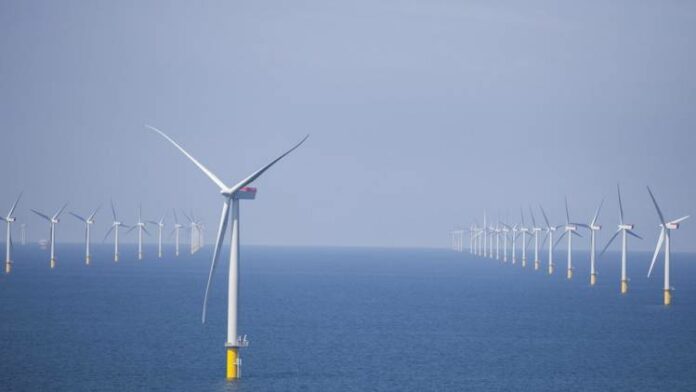
The global offshore wind energy market is expected to develop over USD 49.74 billion by 2023 at an estimated CAGR of around 11.12% during the period 2017 to 2023. An important factor of the growth in this sector, is the high demand on clean and reliable energy, aiming to decrease carbon emissions and keep an environmentally-friendly balance. According to a report from Market Research Future, electricity is to be generated mostly by renewable resources.

Mainly, offshore wind energy farms are constructed offshore on continental shelf to harvest wind energy to generate electricity. As offshore winds are comparatively of higher current as compared to land winds, a higher amount of electricity can be generated through these installations.

The offshore wind market in the Europe region is the leader for the time being and followed by North-America and Asia-Pacific market.

But it is expected that North-America will grow at the highest CAGR, owing to the approval of various offshore wind farm projects in countries such as U.S and Canada, where there has been a substantial investment towards the growth of non-conventional electricity generation.

Yet, high capital cost of the projects with high maintenance cost and logistics issues, can sabotage the offshore wind market.

Also, high tidal winds and bad weather conditions are making it difficult to access the offshore wind farms even for problem rectification and preventive maintenance will restrain the global offshore wind market.

Concluding, the key players of global offshore wind market are Siemens AG (Germany), Vestas Wind Systems A/S (Denmark), General Electric Company (U.S), Senvion SA (Germany), Areva (France), Clipper Windpower, LLC (U.S), ABB Ltd. (Switzerland), Sinovel Wind (Group) Co., Ltd. (China), Doosan Heavy Industries & Construction (South Korea), Suzlon (India), A2SEA (Denmark) and EEW-Group (Germany).

Source:safety4sea