0.7 C
New York
Home Blog Page 1172

Port Canaveral Moves Ahead with Cruise Terminal 3

0

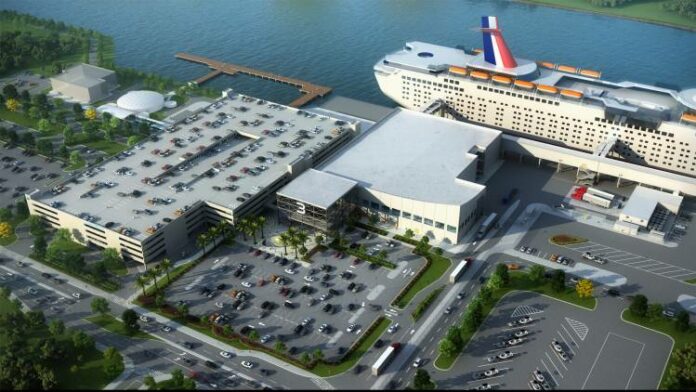
Florida's Canaveral Port Authority has awarded a $108.5m contract to Ivey’s Construction for building its new Cruise Terminal 3 project.

The contract agreement has been approved by the Canaveral Port Authority Board of Commissioners.

Ivey’s was the low bidder to build a two-story, 188,000-square-foot terminal as part of the Port’s largest single construction project in its 65-year history – a $163 million complex that will become the homeport for Carnival Cruise Line’s biggest and largest cruise ship, the Mardi Gras, when finished in May 2020.

“We're creating a world-class cruise terminal, and with these contract awards, the project is mobilizing and moving ahead,” stated Port CEO Captain John Murray. “We are confident that this state-of-the-art facility will be constructed on schedule and on budget.”

A five-member Port Canaveral selection committee favored Ivey's for the cruise terminal project over a partnership of H.J. High Construction of Orlando and Suffolk Construction of West Palm Beach, which bid $83 million. Committee members gave Ivey's top scores based on factors such as pricing and construction schedule. Ivey's received an average score of 93.8 out of 100. The Suffolk/H.J. High partnership earned an average score of 86.2. Ivey's also submitted the lone bid on the parking garage project.

Because both bids exceed original project estimates, the Port is using "value engineering" to analyze design features for cost-saving options.

“The goal of the value engineering process is to partner with the design and contracting teams to provide the most cost-efficient structure while maintaining the original design intent and function of the facility.” said Bill Crowe, Vice President, Engineering, Construction and Facilities for Port Canaveral.

The Port has taken several measures to ensure minimal impact to surrounding recreation areas during the construction period, including the installation of a seismic monitoring system in the surrounding area during the pile-driving process.

Source:marinelink
Ørsted Collaborates with US Fishing Coalition on Offshore Wind

0

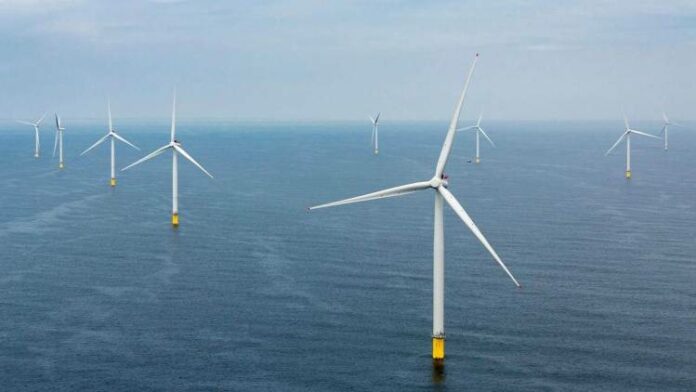
Global developer of offshore wind farms Ørsted U.S. Offshore Wind has entered into a partnership agreement with Responsible Offshore Development Alliance (RODA) to improve communications between the seafood industry and offshore wind energy developers.

“This first-of-its-kind partnership will create an unprecedented opportunity for commercial fishermen to provide direct input to the wind energy industry on matters of significant interest to their businesses,” according to the statement issued in Boston by the RODA, originally organized by scallop fishermen and others to protect their interests as the federal government leases large offshore tracts to build wind turbines.

Under this partnership, both industries will remain autonomous but provide a platform to move towards workable solutions. While non-binding in nature, it is RODA and Ørsted’s hope that discussions will prove beneficial to all parties involved.

“Partnering with Ørsted is a significant step forward as we look to strengthen our ongoing dialogue between commercial fishermen and offshore wind developers,” said RODA Executive Director Annie Hawkins. “RODA believes that we need to develop solutions for offshore wind energy and commercial fishing to coexist, and today’s announcement will support future sustainability for both industries.”

“We are proud to be the first offshore wind developer to partner with RODA, which is an important part to the future of offshore wind,” said CEO of Ørsted U.S. Offshore Wind and President of Ørsted North America Thomas Brostrøm. “The fishing community must be considered as offshore wind development continues in the U.S. Through this partnership, we will be able to share our concerns in a productive way and develop practical solutions as we all seek to coexist and thrive for a better tomorrow.”

“It is extremely vital that our nation’s fishermen are heard when offshore wind projects are being developed,” said RODA Chairman and Director of Sustainability at Atlantic Capes Fisheries Peter Hughes. “Ørsted has made it clear that they want to be partners with the fishing industry, and we are optimistic that our work with them will set a standard ensuring that fishermen have direct input into wind farm designs and ensuring that their concerns are fully embraced by developers.”
 

Source:renews

CMA CGM bids adieu to the MacAndrews brand

0

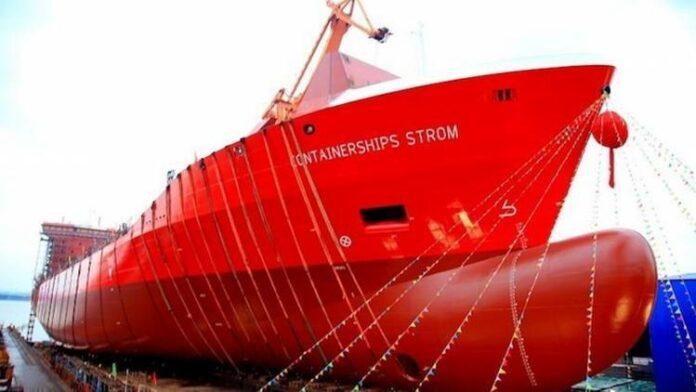
France’s CMA CGM is folding the MacAndrews brand into its other intra-European subsidiary, Containerships, effective April 1.

Acquired by CMA CGM last year, Containerships is present in the Baltic markets, Russia, Northern Europe, North Africa and Turkey.

MacAndrews, meanwhile, was bought by CMA CGM in 2002 and merged with OPDR last year. It mainly connects North and Central Europe with the Iberian Peninsula, the Canary Islands and Morocco.

Guillaume Lathelize, an SVP at CMA CGM, said the move was part of the group’s strategy in “densifying” regional coverage and developing land and logistics services.

“We will thus be able to offer our customers tailored end-to-end solutions and better cater to their expectations and their needs,” Lathelize said.

Source:splash247

Kalmar AutoRTG system gains ground in Europe

0

Kalmar, part of Cargotec, has won a tender to supply a complete AutoRTG system to Belfast Container Terminal (BCT) in Northern Ireland. The system will comprise eight automated rubber-tyred gantry cranes (AutoRTGs) controlled by the Kalmar Terminal Logistic System (TLS) and new-generation remote control (RC) desks. The order was booked in Cargotec’s Q4 2018 order intake, with delivery of the system scheduled to commence at the end of 2019.

Belfast Container Terminal (BCT), the largest in Northern Ireland, is owned by and located in Belfast Harbour and is operated under concession by Irish Continental Group. Belfast Harbour is Northern Ireland’s principal maritime gateway, handling approximately 70% of Northern Ireland’s seaborne trade and 20% of the trade for the island of Ireland as a whole. The AutoRTG system will replace the manually operated rail-mounted gantry crane (RMG) system currently in use at the terminal. The cranes will be factory pre-tested and they will be delivered to BCT fully erected.

The cranes at BCT will operate fully automated within the container stack, receiving orders from the Kalmar TLS which performs planning, routing and execution for all operations based on orders from the terminal operating system (TOS). Crane gantry operation will be automated with supervision from the operator at the RC desk in the control room. Truck handling will be remote controlled, and the system will feature a truck positioning system to ensure accurate alignment of trucks under the RTGs. As part of the project scope, Kalmar will be responsible for the integrations between the TLS, the TOS and other relevant systems.

Trevor Anderson, Belfast Harbour’s Operation’s Director: “The Kalmar AutoRTG system will provide significant benefits in terms of maximising both the safety and efficiency of operations. Kalmar’s proven track record in complex port automation projects and their experience with AutoRTGs convinced us that they were the right choice. Their technical solution perfectly matched the needs of the terminal.”

Ilkka Annala, Vice President, Intelligent Crane Solutions, Kalmar: “The Kalmar AutoRTG system allows terminals of all sizes to reap the rewards of greater operational efficiencies, a safer working environment and better predictability in their day-to-day operations. We have supported BCT with equipment maintenance services for several years already, so we are delighted that BHC have chosen to partner with Kalmar as they begin their automation journey.”


UK Shipping Minister supports equal rights for seafarers

0

Seafarers should have the same sort of working conditions and welfare rights as people who work ashore, UK shipping minister Nusrat Ghani said during a meeting at the Houses of Parliament on 16 January.

Speaking at the launch of the Apostleship of the Sea's Life at Sea report, the minister mentioned that it is crucial to establish a working environment in which seafarers feel valued and able to give their best.

"I believe it is critical that those who work at sea have comparable employment, social and welfare rights to those on land."

To support such principles, UK is planning to extend National Minimum Wage legislation to all mariners on all vessels in UK territorial waters.

Ms. Ghani also noted her concerns about the high rate of suicide among seafarers and the role that fatigue may play in this. She specifically said that fatigue is a key concern for the UK, so the country has developed a three-pronged strategy through culture change, enforcement of regulations and education.

The Apostleship of the Sea's report sheds light on the continued importance of ship visiting services and pastoral care for crews, with details of cases involving abandonment, non-payment of wages, stress and mental health problems, bullying and harassment, medical emergencies, and refusal of shore leave.

Key points in the report include:

  • 15% of deaths at sea are by suicide;
  • More than one-third of seafarers say they have no one to talk to onboard;
  • More than 1,300 seafarers were abandoned between 2012 and 2016;
  • The number of seafarers taken hostage has increased by 62% over the past year.

Source:safety4sea

IMO: Guidance on ship implementation plan for 2020 compliance

0

At its latest Marine Environment Protection Committee (MEPC 73), IMO approved, among others, the guidance on the development of a ship implementation plan for the consistent implementation of the 0.50% sulphur limit, also known as the 2020 sulphur cap, under MARPOL Annex V.

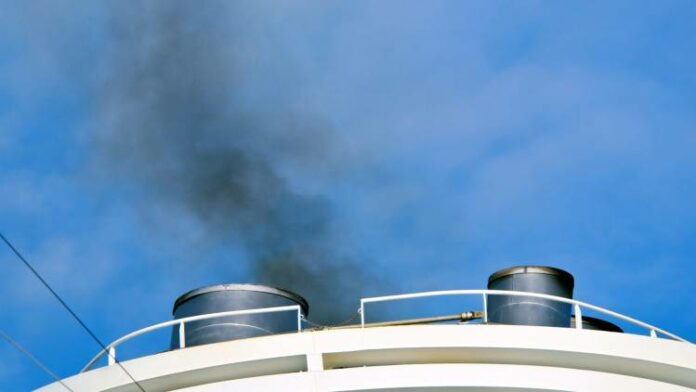
IMO's sulphur cap, to take effect from 1 January 2020, mandates that ships must run on fuel containing no more than 0.5% m/m of sulphur, unless having scrubbers installed. Namely, the options available for operators to achieve compliance are four:

  • The use of low-sulphur fuel
  • Installation of scrubbers
  • The use of LNG
  • The use of other new developed fuels

In this context, MEPC 73 in October agreed that Administrations should encourage ships flying their flag to develop implementation plans, outlining how the ship may prepare, in order to comply with the regulation.

The plan could be complemented with a record of actions taken by the ship in order to be compliant by the applicable date.

""Administrations and port State control authorities may take into account the implementation plan when verifying compliance with the 0.50% sulphur limit requirement."

It is advised that ship operators schedule for each of their managed vessels a compliance plan in order to achieve compliance prior of 31st of December 2019 in respect of % content in emissions.

Ship implementation plan

Under the new guidance, the ship implementation plan for 2020 could cover various items relevant for the specific ship, including, as appropriate, but not limited to:

  1. risk assessment and mitigation plan (impact of new fuels);
  2. fuel oil system modifications and tank cleaning (if needed);
  3. fuel oil capacity and segregation capability;
  4. procurement of compliant fuel;
  5. fuel oil changeover plan (conventional residual fuel oils to 0.50% sulphur compliant fuel oil); and
  6. documentation and reporting

Issues relating to use of sulphur compliant fuel oil

-All fuel oil supplied to a ship shall comply with regulation 18.3 of MARPOL Annex VI and chapter II/2 of SOLAS. 
-Meanwhile, operators could consider ordering fuel oil specified in accordance with the ISO 8217 marine fuel standard.

The following potential fuel-related issues may need to be assessed and addressed by ships in preparation for and implementation of the 0.50% sulphur limit requirement:

  • technical capability of ships to handle different types of fuel (e.g. suitability of fuel pumps to handle both higher and lower viscosity fuels, restrictions on fuels suitable for use in a ship's boilers, particularly the use of distillate fuels in large marine boilers);
  • compatibility of different types of fuels e.g. when paraffinic and aromatic fuels containing asphaltenes are commingled in bunkering or fuel oil changeover;
  • handling sulphur non-compliant fuels in the event of non-availability of sulphur compliant fuels; and
  • crew preparedness including possible training with changeover procedures during fuel switching from residual fuel oil to 0.50% compliant fuel oils.

Additionally, the ship implementation plan could be used as the appropriate tool to identify any specific safety risks related to sulphur compliant fuel oil, as may be relevant to the ship, and to develop an appropriate action plan for the organization to address and mitigate the concerns identified. Examples should include:

  • procedures to segregate different types of fuel and fuels from different sources;
  • detailed procedures for compatibility testing and segregating fuels from different sources until compatibility can be confirmed;
  • procedures to changeover from one type of fuel to another or a fuel oil that is known to be incompatible with another fuel oil;
  • plans to address any mechanical constraints with respect to handling specific fuels, including ensuring that minimum/maximum characteristics of fuel oil as identified in ISO 8217 can be safely handled on board the ship; and
  • procedures to verify machinery performance on fuel oil with characteristics with which the ship does not have prior experience.

It is noted that a ship implementation plan is not a mandatory requirement.

Source:safety4sea

LA and Long Beach Post Record Annual Volumes

0

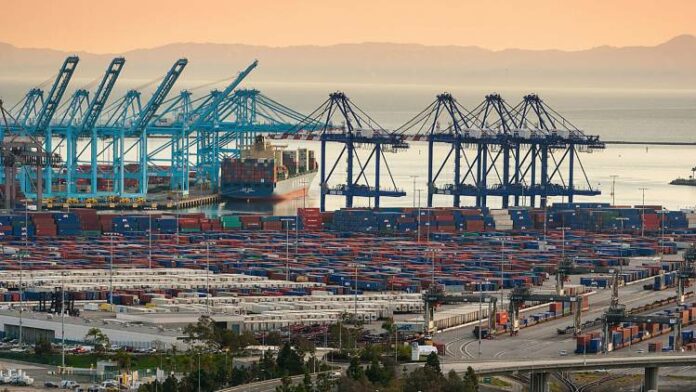
The twin ports of Los Angeles and Long Beach both posted their highest container volumes ever in 2018, with growth driven by importers' concerns over a looming trade war. 

The Port of LA handled 9.5 million TEU in 2018, setting a new record for the third year in a row. The increase can be attributed in part to international politics: about half the port's trade is with China, and due to the Trump administration's threat to increase tariffs on Chinese goods, many importers accelerated their activity in order to stockpile China-sourced products. 

"This is a rush of cargo based on political trade policy," said Port of LA director Gene Seroka, speaking to VOA. "Many people were fearful that we were going to go from a 10 percent tariff on certain items to 25 percent on January 1."

The distribution of peak cargo volumes correlated with the timeline of the trade dispute. Last month, the port processed more than 900,000 TEUs, the busiest December in the port’s 111-year history and a 16 percent jump year-over-year. It was the sixth consecutive month of volumes exceeding 800,000 TEUs.

This pattern has played out at multiple container ports across the U.S., according to National Retail Federation VP Jonathan Gold. NRF estimates that America's largest ports handled a total of 21.6 million TEU last year, an increase of 5 percent over 2017, due to importers' desire to stock up. "Retailers have . . . brought in much of their spring merchandise early to protect consumers against higher prices that will eventually come with tariffs," said Gold. 

However, that rush could mean less business for ports in 2019, according to NRF research partner Hackett Associates. "We are projecting declining volumes in the coming months and an overall weakness in imports for the first half of the year," said founder Ben Hackett in a statement.  

Source:maritime-executive

FSRU Commences Operation at Kaliningrad

0

Russia's President Vladimir Putin inaugurated a LNG import terminal in Kaliningrad on the Baltic Sea earlier this week.  

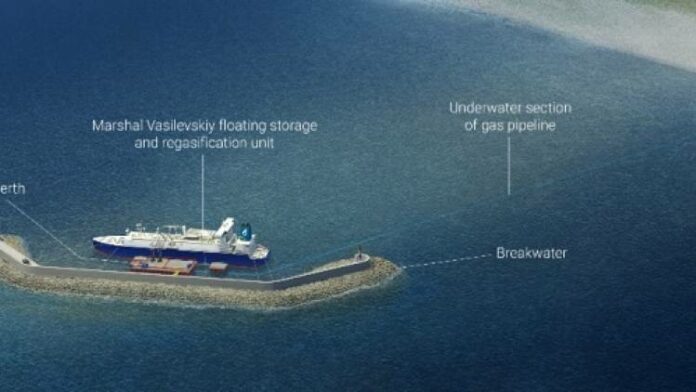
The facility is an offshore gas receiving terminal hosting the floating storage and regasification unit (FSRU) Marshal Vasilevskiy. The new facilities will enable up to 3.7 billion cubic meters of gas to be delivered by sea annually, enough to meet the current and future needs of the Kaliningrad region, says Gazprom.

The 174,000 cubic meter Marshal Vasilevskiy is the only FSRU in Russia. The FSRU has three regasification lines (including one backup line). The Arc 4 ice-class vessel has the capacity to independently navigate in ice with a thickness of up to 0.8 meters.

The regasification process starts at the FSRU as soon as the vessel is moored at the berth. Liquefied gas is converted to gaseous form and fed into the existing gas transmission system via a newly-built 13-kilometer pipeline.

The offshore terminal is a fixed marine berth with a breakwater, a first for Russia, and it is located five kilometers from shore in waters about 19 meters deep. The berth is a 125.5-meter monolithic slab of high-strength concrete resting on 177 piles. From the seaward, the berth is protected with a 728-meter C-shaped breakwater. 

The breakwater designed to protect the berth has a complex structure, with 29 metal cylinders (20 meters in diameter, 21 meters in height, and weighing over 200 tons each) placed along the full length of the stone foundation that rests on the seabed. The cylinders are filled with rubble, and their outer surface has an anti-corrosion polymer coating. From the seaward, the cylinders are bolstered by a mound of rocks (weighing up to six tons each) and more than 20,000 special reinforced concrete blocks (tetrapods weighing from 7.8 to 25 tons).

The new facilities are an attempt to improve the reliability of gas supplies to the Kaliningrad region, says Gazprom. The company set up the Kaliningradskoye underground gas storage facility in 2013 and has since increased the throughput capacity of the Minsk – Vilnius – Kaunas – Kaliningrad gas pipeline, the only route for gas deliveries to the region until now.

The Kaliningradskoye underground facility, Russia’s first storage created in salt caverns, has a number of advantages over storage facilities made in depleted reservoirs or aquifers, says Gazprom. Salt caverns are ideal leak-proof containers as salt domes are fully impermeable to gas. It is possible to promptly switch Kaliningradskoye from injection to withdrawal and vice versa (multiple cycling capability), as well as to bring the facility to its peak performance in a short time.

At present, the Kaliningradskoye facility has four storage reservoirs in operation, with the working gas inventories of 174 million cubic meters. The gas storage is being expanded further and is expected to accommodate 800 million cubic meters by 2025.

Neighbours to Kaliningrad, Poland and Lithuania, have sought to reduce their dependence on Gazprom’s pipeline gas. The nations are among the E.U.'s most vocal opponents to the Gazprom-led Nord Stream 2 pipeline project.

Source:maritime-executive

Chemical Company Announces Mega-Investment in Antwerp

0

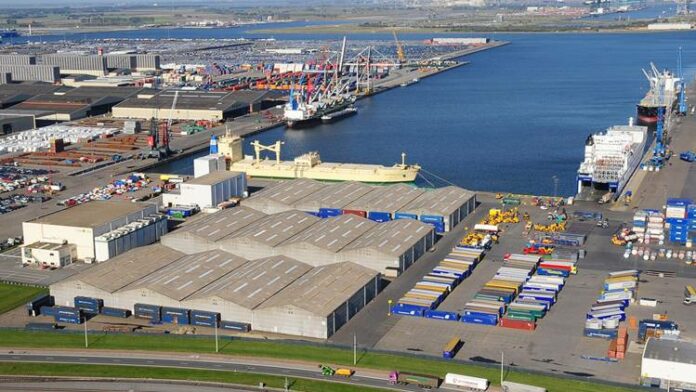
INEOS, one of the largest chemical concerns in the world, has chosen the Port of Antwerp as the location for a mega-investment of three billion euros ($3.4 billion). 

The capital outlay is the largest in the European chemical industry in the past two decades. 

Earlier this year INEOS announced that it planned a large-scale investment for further expansion of its chemical production facilities. Various European locations were considered, but ultimately the British chemical group opted for Antwerp.

INEOS plans to build a propane dehydrogenisation (PDH) plant and an ethane cracker unit in Antwerp. These will respectively convert propane into propylene and ethylene as the raw materials for chemical products used in many industries including car manufacturing, building construction, clothing, cosmetics and personal grooming products, pharmaceuticals, electronics and packaging materials.

The plants will be built on the existing INEOS site in Lillo in the port area, and INEOS will also take over unused parts of concessions held by neighboring companies. The new plants will be connected by pipeline to various INEOS ethylene and propylene derivative units elsewhere in Europe.

The new production plants are expected to be operational by 2024. Once the plants are up and running they will provide 400 full-time jobs directly and five times that number indirectly. Some 3,000 people will be employed during the construction phase.

The investment brings the total amount of new capital expenditure at the Port of Antwerp over the past year to more than five billion euros ($5.7 billion). 

Frank Beckx, managing director of essenscia Flanders (chemical industry association), says: “After Borealis similarly opted for Antwerp a few months ago, this decision by INEOS puts the chemical sector in Flanders even more firmly on the world map.”

The "Welcome Team for the Chemical Sector" was set up earlier this year by Flanders Investment & Trade (FIT) and essenscia Flanders. This initiative brings together a team of experts offering intensive support to foreign chemical companies, helping them with investment projects and highlighting the advantages for the chemical industry in Flanders in terms of innovation, tax policy and investment support, among others. With some 300 investment projects since 2010 the chemicals and life sciences sector represents around half of all foreign investment in Flanders.

Source:maritime-executive

Ningbo-Zhoushan passes Shenzhen to become third largest container port globally

0

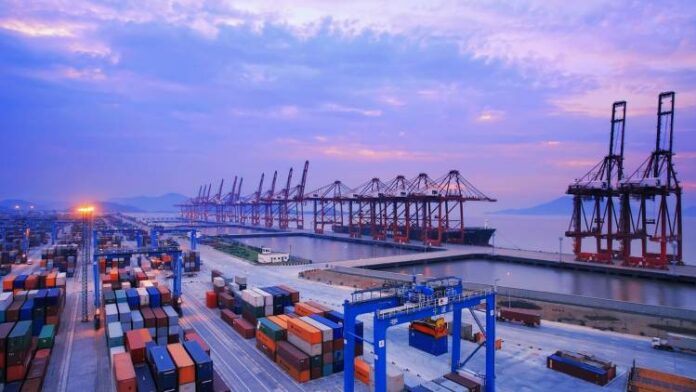
China’s Ningbo-Zhoushan port reported a container throughput of 26m teu in 2018, pushing it up into the ranks world’s top three container port for the first time.

The volumes of 26m teu handled by Ningbo-Zhoushan sees its surpassing Shenzhen, which reported a throughput of 25.74m teu last year, to become the world’s third largest container ports.

To improve container throughput, Ningbo-Zhoushan port has been actively co-operating with shipping alliances on shipping routes deployment and local resources expansion and strengthening its position as a hub port for international shipping business. The port operates 246 shipping routes as the end of 2018.

The fast growing of sea-railway combined transportation in Ningbo-Zhoushan port has greatly driven the increasing of its container throughput. The port opened nine sea-railway combined routes last year, including seven routes with over 5,000 teu volume monthly. In 2018, the port completed over 600,000 teu sea-railway cargo volume, a growth of 50% year-on-year.

The Chinese port comes in behind Singapore as the second busiest container port in the world and Shanghai in the number one spot for the ninth consecutive year with a volume of 42.01m teu last year.

Ningbo-Zhoushan port recorded 24.64m teu container throughput in 2017. It is also a hub port for domestic iron ore, crude oil, coal and liquid chemical products transit and storage.

Source:seatrade-maritime