0.7 C
New York
Home Blog Page 1173

Equinor Makes Gas, Condensate Discovery In Norwegian Sea

0

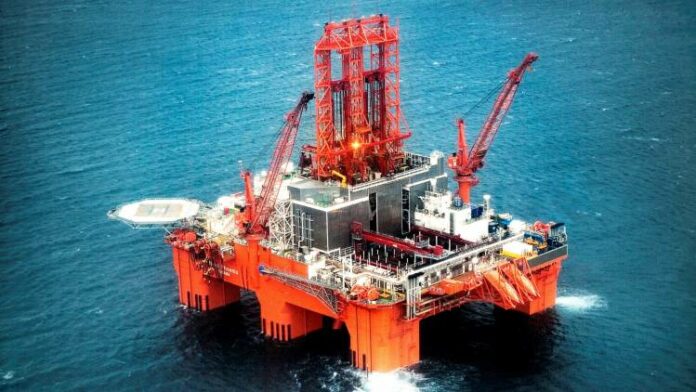
Equinor said Jan. 16 the Ragnfrid North (6406/2-9 S) exploration well discovered gas and condensate in the Norwegian Sea.

Recoverable resources are estimated at between 6 million barrels of oil equivalent (MMboe) and 25 MMboe, the company said.

The well’s primary exploration target was to prove petroleum in Middle to Lower Jurassic reservoir rocks in the Garn and Ile formation and in the Tofte formation, respectively, according to the Norwegian Petroleum Directorate (NPD). The secondary exploration target was to prove petroleum in Upper Cretaceous reservoir rocks—the Lange formation—and in the Lower Jurassic—the Tilje Formation—if a discovery was made in the overlying Tofte Formation.

In the primary exploration target, the well encountered a gas and condensate column of about 10 m in the Tofte Formation with moderate reservoir properties. The entire Tofte formation totals about 140 m. This includes 120 m of effective reservoir rocks with sandstone of poor to moderate reservoir quality, the NPD said in a separate news release. The Garn and Ile formation came in at about 85 m and 70 m respectively, with effective reservoir rocks of 75 m and 65 m and mainly poor to moderate reservoir quality. Both formations are aquiferous.

The NPD said the well encountered several 1- to 5-m thin gas-bearing sandstone layers, with poor reservoir quality, in the secondary exploration target in the Lange formation. The uppermost layer has a 3-m gas column. The upper part of the Tilje Formation is about 105 m, including 75 m of effective reservoir rocks with aquiferous sandstones, mainly with poor reservoir quality.

The well, located about 20 km south of the Kristin platform, was drilled by the West Phoenix rig in production license 199.

“Exploring for resources close to existing infrastructure is a central part of Equinor’s strategy to further develop the Norwegian Continental Shelf (NCS). We need this kind of discoveries in the years to come,” Nick Ashton, Equinor’s senior vice president for Norway and the UK, said in the company's release. “Ragnfrid North will, together with the former discoveries Lavrans and Erlend East, give a more detailed picture of the potential in this area of the Norwegian Sea.”

Source:epmag
Potential Of AI-powered Directional Drilling

0

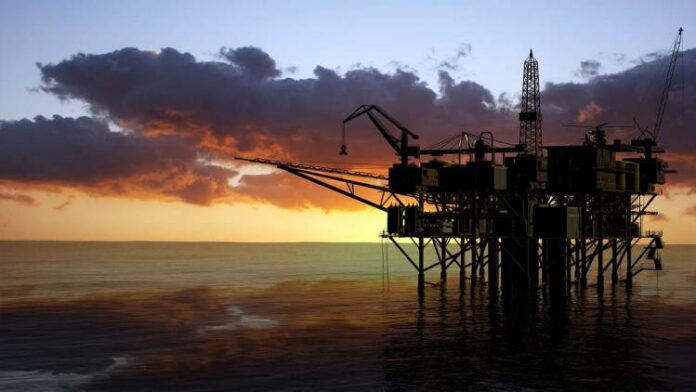
Directional drilling is a challenging task even during the best of conditions, with many aspects described as more art than science. Successful and cost-effective directional drilling often comes down to an expert who has a good feel of how to navigate thousands of feet underground, site unseen. Therefore, the art of drilling often comes down to the artists, who are in high demand and short supply.

To address this scarcity, improve the economics and deliver consistently better outcomes, Oceanit was challenged to develop an artificial intelligence (AI)- driven system that performed as well as the experts and could augment or replicate their capabilities. The result is a system that, so far, delivers results within a 1.5% margin of expert drillers. Oceanit’s AI drilling system is playfully referred to as “Deep Thought,” a reference to the fictional computer in The Hitchhiker’s Guide to the Galaxy.

Deep Thought is capable of continuously learning and improving on its directional drilling decision-making. The scalable capabilities it provides can significantly reduce costs for operators while increasing high-performance outcomes through its reinforcement learning, replication and optimization of drilling mechanics.

Minimizing deviation, tortuosity

Working with Shell International Exploration, Oceanit developed Deep Thought to optimize value in directional drilling by minimizing deviation from planned wellbore trajectory, minimizing tortuosity, maximizing the ROP and reducing the number of personnel onboard, all factors that have serious impacts on the bottom line.

With directional drilling, expert teams maintain a stationary drillstring at the surface to achieve a curved hole. There are two main categories of systems used in directional drilling: bent-sub downhole motors and rotary steerable systems. Oceanit focused on the prior, as bent-sub downhole motors are generally more costeffective and prevalent in shale plays.

It is incredibly challenging to control the angular orientation of the drillbit toolface while ensuring adequate ROP. Eliminating trajectory deviations and the associated, costly corrective measures are imperative for improved outcomes. To reduce deviations, Oceanit used machine learning techniques in training Deep Thought to replicate the decisions of expert drillers.
A multilayer perceptron neural network is a class of ANNs that uses a supervised learning technique called backpropagation for training and can distinguish data that are not linearly separable.
Source:epmag

Lamprell to book $71m loss for 2018

0

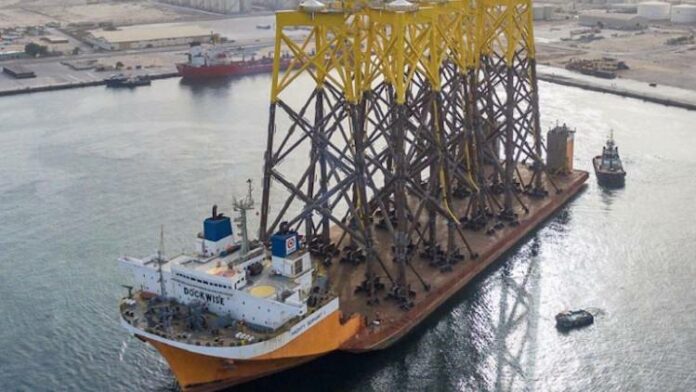
UAE fabricator Lamprell is likely to book a $71m net loss for 2018 due partly to no “margin contribution” from its work supplying jacket foundations to ScottishPower Renewables’ 714MW East Anglia 1 wind farm off east England.

The company said in a pre-close trading statement it has “actively managed” and allocated “additional resources” to subcontractor Harland and Wolff in the UK, which is assembling 18 jackets for the project.

This has helped “ensure overall project performance stays in line with the previously announced guidance”, said Lamprell, which has shipped a further 42 foundations for the project.

“The forecasted project completion remains on track to meet the installation campaign set by ScottishPower Renewables.” EA1 is due online in 2020.

The company also blamed other “margin pressures” for the slipping into the red for the year. Revenue for 2018 was around $235m.

Lamprell has meanwhile swelled its order backlog to $540m at end-December, up from $61.7m in the first half of 2018, thanks in part to the $200m-plus deal with GeoSea to supply 48 foundations for the 950MW Moray East wind farm off Scotland.

Revenue for 2019 is forecast to hit between $250-400m.

"Despite the challenges of the market environment in 2018, we have delivered against the objectives that we set out earlier in the year,” said chief executive Christopher McDonald. 

We finished the year with a major renewables project added to our order book and two new build jack-up rigs committed for construction at Lamprell's yards in the UAE.

The company is meanwhile bidding on work worth $6.8bn including in renewables as well as oil and gas jobs.

“Whilst the market continues to be highly competitive, we remain focussed on converting our pipeline of opportunities into contract wins, executing them successfully and continuing to make progress towards our strategic objectives,” said Lamprell.

Source:renews

Ocean Alliance: CMA CGM Unveils New Unmatched Service Offer

0

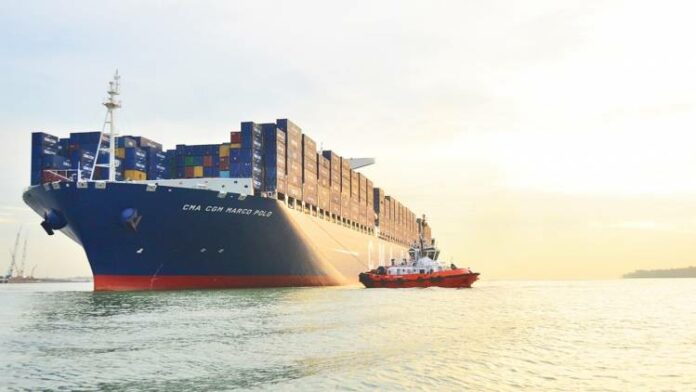
The CMA CGM Group, a worldwide leading shipping group, is pleased to announce that Rodolphe Saadé, Chairman and Chief Executive Officer of the CMA CGM Group, signed with the executives of COSCO SHIPPING, Evergreen and OOCL the launch of Ocean Alliance Day 3 Product, which will further strengthen the CMA CGM Group’s service offer. The new offer will start in April 2019.

  • Rodolphe Saadé, Chairman and CEO of the CMA CGM Group, signs with his partners the launch of Ocean Alliance Day 3 Product, which will start in April 2019
  • Ocean Alliance, the world’s largest operational agreement between shipping companies
  • 111 ships out of Ocean Alliance’s 330 container ships will be deployed by the CMA CGM Group

Building on the success of the previous Ocean Alliance’s product, the Day 3 Product will bring the CMA CGM Group’s clients an optimized offer through:

  • the use of around 330 container ships, 111 of which will be operated by the CMA CGM Group, which continues to play a major role within the alliance,
  • 38 services,
  • estimated carrying capacity of around 3.8 million TEUs (Twenty-foot Equivalent Unit).

The evolution of the product Ocean Alliance highlights the commitment of CMA CGM to serve its customers even better:

  • The largest service offer on the Transpacific trade with 19 services,
  • A strengthened offer between Asia and Europe with the addition of a 7th service,
  • A large offer between Asia and the Mediterranean with 4 services,
  • 2 Transatlantic services linking North Europe to the East Coast of the United States and the Gulf of Mexico,
  • The only alliance offering 4 services between Asia and the Middle East,
  • 2 Asia-Red Sea services.

On the occasion of this announcement, Rodolphe Saadé, Chairman and Chief Executive Officer of the CMA CGM Group, stated:

“This new agreement with our Asian partners will enable us to propose to our customers an unrivaled and competitive service offering. It is a milestone in our development strategy. It reinforces the CMA CGM Group in its key position within the industry.”

Ocean Alliance

  • The world’s largest operational agreement between shipping companies
  • 4 major actors in the shipping industry: CMA CGM, COSCO SHIPPING, Evergreen and OOCL
  • Launched in Spring 2017
  • Long Term duration agreement

Source:cma-cgm

DSME Wins Order for Four VLCCs

0

South Korean shipyard Daewoo Shipbuilding & Marine Engineering Co. (DSME) has clinched a $366 million order to build four units of very large crude carriers (VLCCs) from an unidentified shipper in the Oceanian region.

According to a regulatory filing, the four tanker vessels which will be delivered in 2021. This marks the second large VLCC order in under a month.

According to Yonhap, DSME is aiming to win $8 billion worth of new orders this year, up 10 percent from last year's order target of $7.3 billion.

Last year, the shipyard clinched deals valued at $6.81 billion.

South Korean shipyards snatched up deals to build 34 VLCCs last year, accounting for 83 percent of the total placed around the globe for such ships.

Source:marinelink

Blockchain MoU to Reinforce Vessel Safety

0

BlocBox, a company specializing in maritime safety, has signed a Memorandum of Understanding (MoU) with Zeaborn Ship Management to collaborate on a blockchain-based project.

The agreement, which aims to ensure the safety of seafaring vessels, was signed in Singapore by Saurish Nandi, Co-Founder and CTO of BlocBox, and Captain Ninad Mhatre, Deputy Managing Director of the Singapore-based Zeaborn.

According to a statement, BlocBox has developed the world’s first blockchain protocol for maritime and aviation safety, offering an immutable distributed ledger that enables the easier retrieval of black box data and provides more transparency for the maritime industry.

A prototype of the interface has been developed by BlocBox and is currently undergoing a series of testing phases.

The MoU with Zeaborn stipulates that BlocBox will collect VDR data from a test ship allocated by Zeaborn Ship Management, to be stored and distributed in a blockchain network.

The simulated data will then be converted into BlocBox’s encryption format before it is analyzed by Zeaborn.

Nandi, commenting on the agreement, said: “Blockchain technology is the future and needs to be maximised to its full potential."

In 2017 alone there were 2,712 maritime incidents, causing insured losses of over 16.2 billion USD.

“The only way we can reduce these statistics is to study the reasons behind these incidents and pre-empt action.”

Captain Mhatre added: “Through studying this data, in time, the risk and likelihood of human error is reduced and existing implementations can be digitized and streamlined."

“Zeaborn Ship Management aims to be the pioneer in digitisation and this exclusive MOU with BlocBox is an indication of the same.”

Source:porttechnology

Port of Rotterdam to host the most powerful wind turbine in summer 2019

0

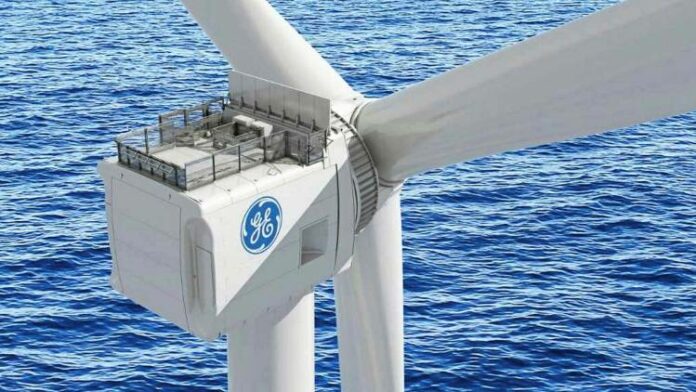
Port of Rotterdam published a statement on a partnership between Pondera Development and SIF Holding Nederland, 'GE Renewable Energy and Future Wind', concerning the installation of the first prototype of the Haliade-X 12 MW wind turbine at Rotterdam-Maasvlakte in the summer of 2019. The collaboration includes a 5-year-test period and a 15-year period of full operation and maintenance.

Mainly, the prototype of the offshore wind turbine is for the time being installed on the coast in order to be better tested. At the beginning, GE will collect data to obtain the Type Certificate, a major step to commercialize the product in 2021.

Moreover, the gondola of the Haliade-X 12 MW prototype will be assembled in Saint-Nazaire, the three 107 meter long LM rotor blades in Cherbourg and the masts in Seville. All parts are shipped to Rotterdam. There they are assembled and installed.

The prototype in Rotterdam is part of a 320 million euros investment in the Haliade-X project, that GE Renewable Energy announced in March 2018 to become a more competitive source of clean, sustainable energy.

Additionally, Allard Castelein, CEO of the Port Authority commented on the fact that GE opted for Rotterdam port as a test location:"This confirms the reputation of the port as an attractive partner for the offshore wind industry and as a driving force behind the energy transition."

Concluding, John Lavelle, VP & CEO of Offshore Wind at GE Renewable Energy addressed that the port of Rotterdam has proven to be a valuable force by providing all the necessary conditions to test the Haliade-X under the most drastic weather conditions.

Source:safety4sea

A cyber security guide for small business owners

0

An informative infographic by the UK National Cyber Security Centre (NCSC) summarizes five simple but key steps for small business owners, to protect their organizations from cyber threat, and therefore save time, money and ensure business reputation.

This guide cannot guarantee protection from all types of cyber attack, but the steps outlined can significantly reduce the chances of a business becoming a victim of cyber crime.

The five simple steps outlined are:

  • Backing up your data
  1. Identify what data you need to back up
  2. Keep your backup separate from your computer
  3. Consider the cloud
  4. Read NCSC security guidance
  5. Make backing up part of your everyday business
  • Protecting your organisation from malware
  1. Install (and turn on) antivirus software
  2. Prevent staff from downloading dodgy apps
  3. Keep all your IT equipment up to date (patching)
  4. Control how USB drives (and memory cards) can be used
  5. Switch on your firewall
  • Keeping your smartphones (and tablets) safe
  1. Switch on password protection
  2. Make sure lost or stolen devices can be tracked, locked or wiped
  3. Keep your device up to date
  4. Keep your apps up to date
  5. Don't connect to unknown Wi-Fi Hotspots
  • Using passwords to protect your data
  1. Make sure you switch on password protection
  2. Use two factor authentication for 'important' accounts
  3. Avoid using predictable passwords
  4. Help your staff cope with 'password overload'
  5. Change all default passwords
  • Avoiding phishing attacks
  1. Configure accounts to reduce the impact of successful attacks
  2. Think about how you operate
  3. Check for the obvious signs of phishing
  4. Report all attacks
  5. Keep up to date with attackers


Hong Kong marine department holds seminar to promote navigational safety

0

Hong Kong's Marine Department held the Navigational Safety Seminar 2019 on January 16, to enhance the awareness of navigational safety among members of the industry. The Deputy Director of Marine, Mr Wong Sai-fat, reminded coxswains and persons-in-charge of vessels that they have the responsibility to uphold safety at sea and fully comply with the marine legislation.

Specifically, during the seminar Mr Wong addressed that coxswains and crew members should take specific and adequate safety precautions and prepare contingency arrangements before setting sail. Vessels should have sufficient life-saving and fire-fighting equipment.

Also, seafarers should make sure that vessels, engines and equipment are efficiently maintained and are suitable for navigation.

Additionally, all seafarers should be informed of the contact numbers of the port traffic control unit and units that provide emergency services, and be fully aware of the latest weather conditions and related MD Notices.

He also focused on accidents that are caused by fatigue. He stated that owners and operators of vessels ought to make sure that the duty rosters of crew members, including coxswains, have sufficient rest periods to avoid fatigue at work.

Seafarers are to voyage at safe speed and follow the regulations in order to avoid and prevent any collisions at sea, during navigation in restricted visibility.

Because of the Super Typhoon Mangkhut and the damages it caused last year, coxswains and crew members were reminded to adopt appropriate safety enhancement measures before and during the passage of tropical cyclones.

In conclusion, Hong Kong Marine Department launched 'eSeaGo' application to display chart information on Hong Kong waters. The information are provided by the Hydrographic Office.

Source:safety4sea

Maersk warns about phishing scam danger

0

Maersk confirmed that on 3 January it identified that it had been the recipient of a phishing scam in Malaysia. Namely, a third party contacted the company's customers pretending to be Maersk.

The scammers requested the customers to change bank account for payment.

After that, Maersk contacted the email accounts that who may have received this email from Maersk.

"The e-mail has been contained and all measures have been taken to secure the Maersk network. Maersk IT is now investigating the incident"

Maersk informed.

The company also added that there are other phishing attempts circulating which appears to come from Maersk. However, this is not the case, and they are not related to the phising incident.

In light of the scam attempt, Maersk suggested all receivers of these phishing e-mails which appears to come from Maersk to remain careful.

In June 2017, A.P. Moller – Maersk fell victim to a major cyber-attack caused by the NotPetya malware, which also affected many organisations globally. As a result, Maersk’s operations in transport and logistics businesses were disrupted, leading to unwarranted impact.

2018 validated this trend as cyber incidents continued affecting operators, ports, and shipbuilders.

Source:safety4sea